What this tool does
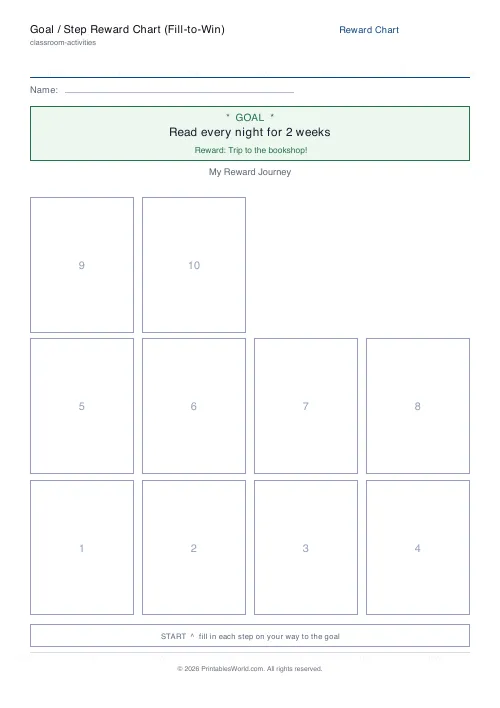
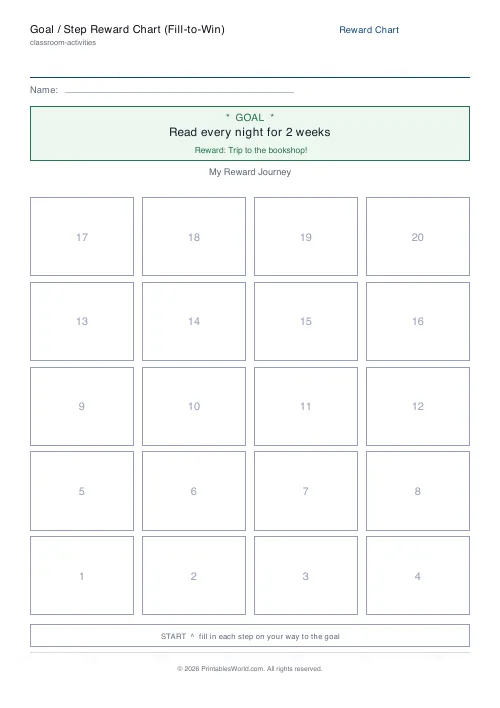
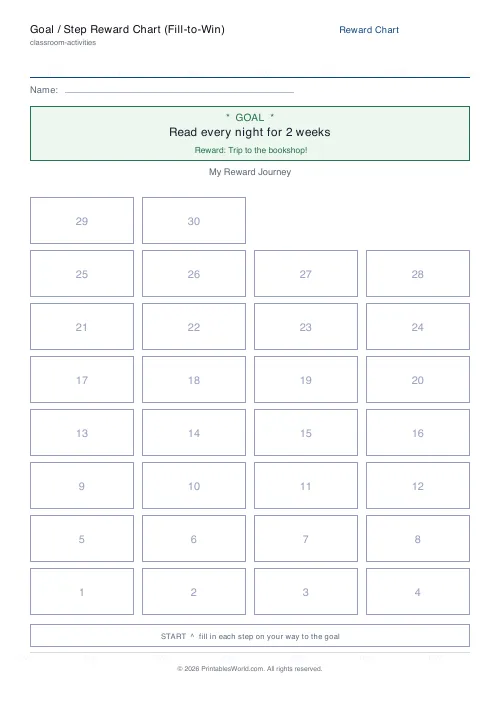
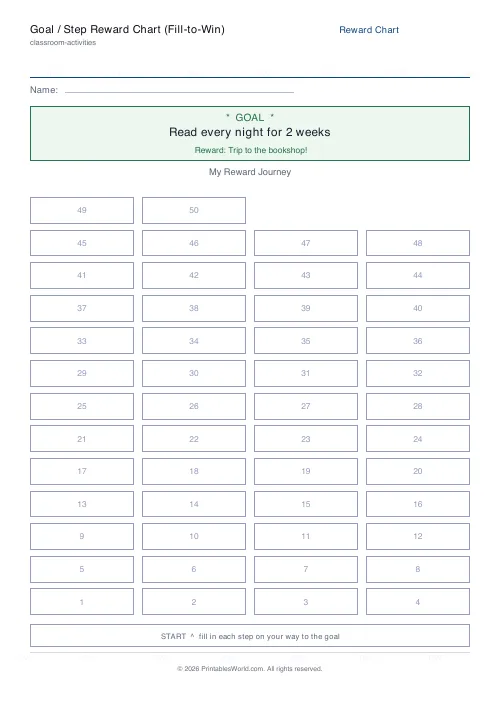
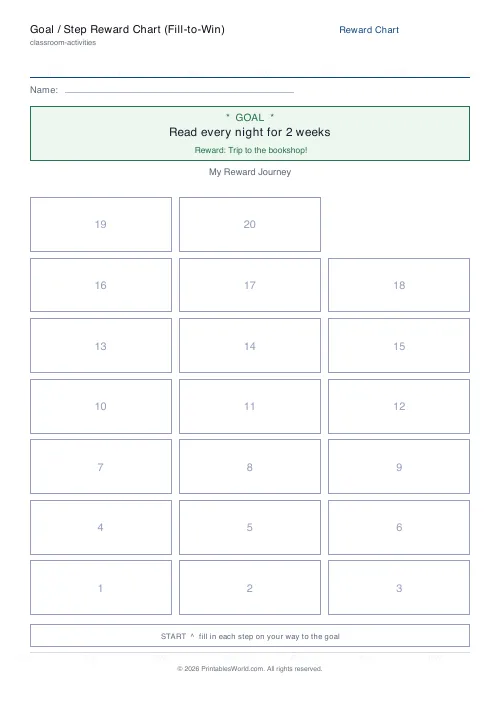
One big fill-in-the-steps chart. A goal banner at the top, a reward line, and a ladder of 10 to 50 numbered step boxes to colour in on the way up.
People also used
Reward Punch Cards / Loyalty Cards
Printable cut-out punch cards with numbered circles to mark each visit, reward or completed task.
Reward Coupons / Brag Tags
Print a sheet of cut-out reward coupons and brag tags.
Star of the Week Certificate
A bright "Star of the Week" certificate with a golden star frame.
Feedback
Spotted something off with this tool?
A ladder up the page
Start at the bottom, work upward, and the goal banner is waiting at the top with the reward written beside it. The steps in between are numbered boxes laid out across two to five columns — twenty by default, and anywhere from ten to fifty.
You write the goal and the reward. There is a name line at the top, and the numbering can be switched off if you would rather have plain boxes.
One journey, not a repeating card
This is deliberately different from a punch card or a weekly chart. It is a single sheet for a single named thing, and it ends.
That ending is what makes it work. Open-ended charts sag — there is always another week — while a visible top of the ladder gives a child something to point at and count towards. Reading every night for a fortnight. Fifty times tables practised. Thirty days without biting a fingernail.
Choosing the number of steps
Match it to something real, and be conservative.
Twenty steps at one a day is three weeks, which is a long time for a six-year-old and a reasonable stretch for a ten-year-old. Fifty is a term's worth and should only be used where each step is genuinely quick. If in doubt, print fewer steps and a second chart afterwards — two completed charts do far more good than one abandoned at box 31.
Writing the goal
Put it in the child's words and make it countable.
"Be better at reading" cannot be ticked off. "Read for ten minutes every night" can, and the difference decides whether the chart is usable at all. Same for the reward: name it exactly. A trip to the bookshop, chosen pizza toppings, an hour later at bedtime on Friday. Vague rewards get renegotiated and the renegotiation costs you the chart's credibility.
Filling it in
Colour, sticker, tick, stamp. Whatever it is, do it with the child rather than for them, and do it at the moment the step is earned.
Stick it somewhere it will be seen without being sought — a fridge, a bedroom door. The point of a wall chart is that it catches the eye of a child who was thinking about something else, which is precisely what a chart in a drawer cannot do.
When the goal is reached
Give the reward straight away, and keep the chart. It is evidence, and a child who can look at forty coloured boxes has something more durable than the reward itself.
For repeated short cycles instead, the reward punch cards suit better.
FAQs
Quick answers
How many steps can the chart have?
Pick between 10 and 50 steps. Match the count to the length of your goal. A two-week reading streak is about 14 steps.
Can I leave the goal and reward blank?
Yes. Leave either field empty and the chart prints a blank line so you can write the goal or reward in by hand.
Which way does the chart fill?
Steps count upward: step 1 is at the bottom by the START strip and the final step sits at the top, next to the goal banner, so progress climbs toward the reward.
Is it reusable?
Laminate it after printing and fill the steps with a whiteboard marker if you would like to wipe and re-use the same chart.
Related tools
Reward Punch Cards / Loyalty Cards
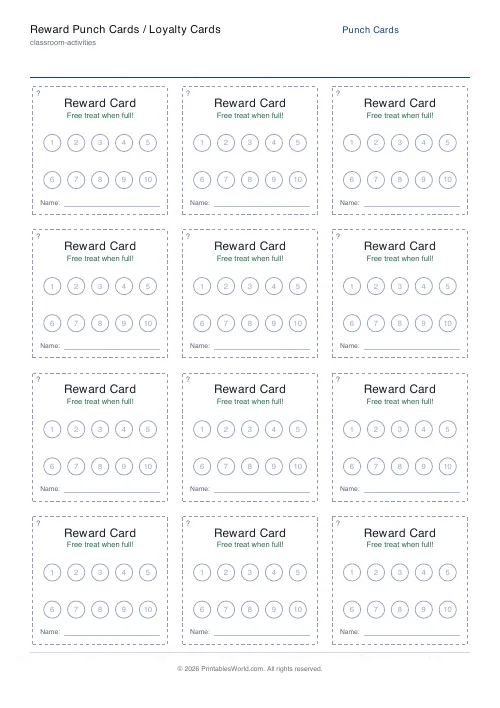
Printable cut-out punch cards with numbered circles to mark each visit, reward or completed task.
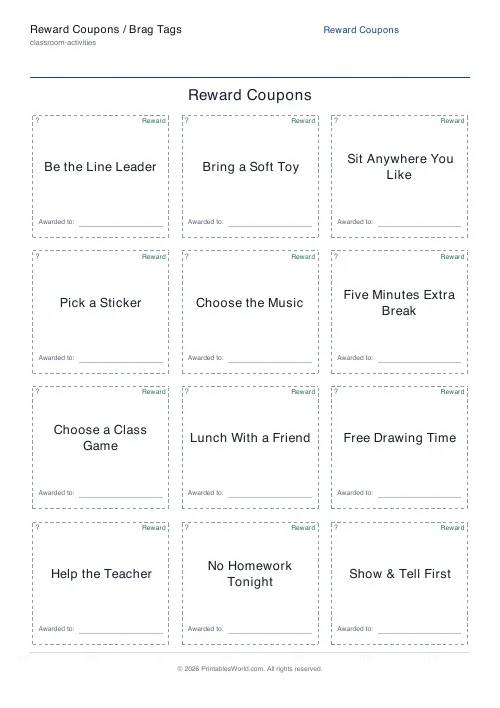
Reward Coupons / Brag Tags
Print a sheet of cut-out reward coupons and brag tags.
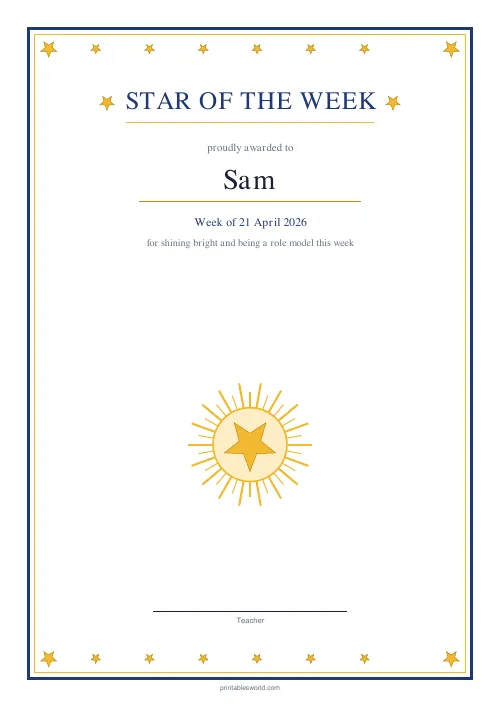
Star of the Week Certificate
A bright "Star of the Week" certificate with a golden star frame.
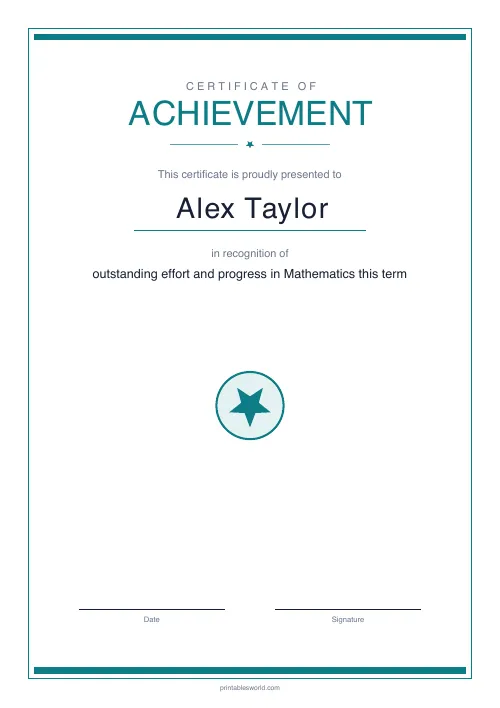
Certificate of Achievement
Formal classroom certificate with name, reason, date, and signature line.
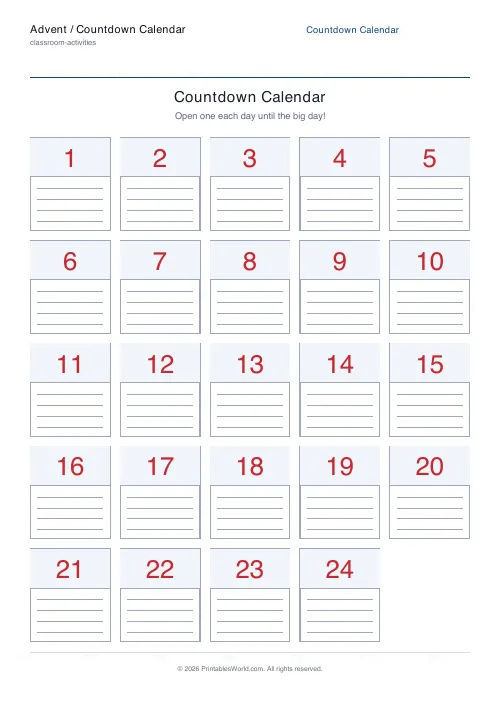
Advent / Countdown Calendar
Printable numbered countdown calendar with write-in boxes for each day.
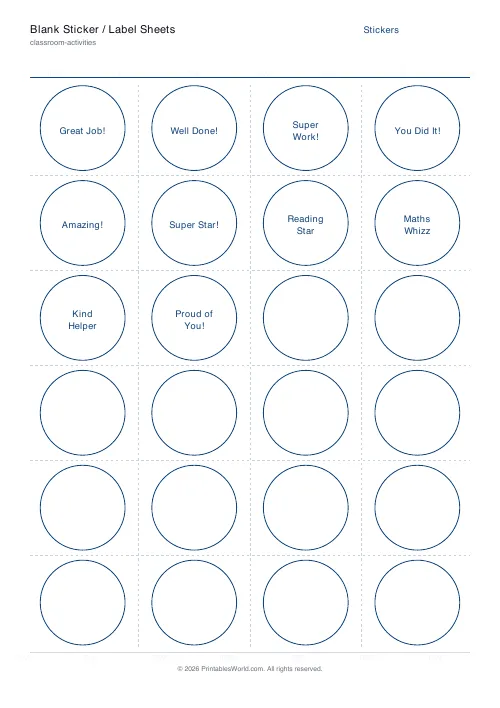
Blank Sticker / Label Sheets
Printable blank sticker, label and reward sheets you fill in yourself.
Further reading
Classroom Activities
Positive reinforcement in the classroom: charts that work
Reward charts work when they name a specific behaviour and fade over time. They backfire when they rank children publicly. Here is the difference in practice.
5 min read
Classroom Activities
20 classroom games that need zero prep
Games organised by the gap they fill: two minutes at the end of a lesson, ten minutes before assembly, or a whole wet lunchtime. Almost all need nothing but a voice.
6 min read