What this tool does
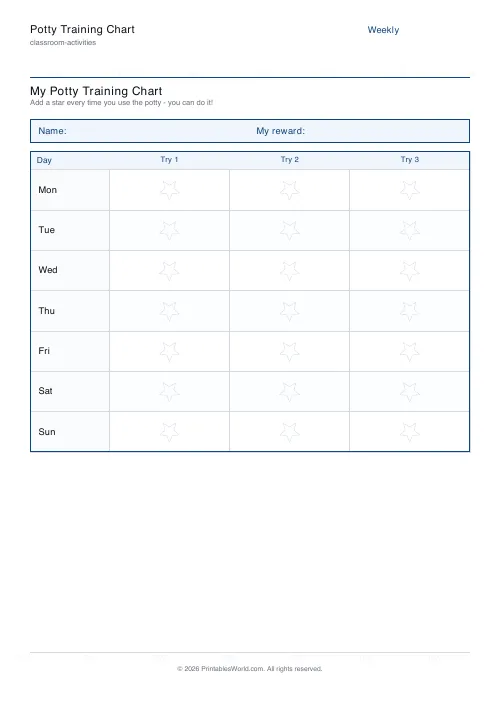
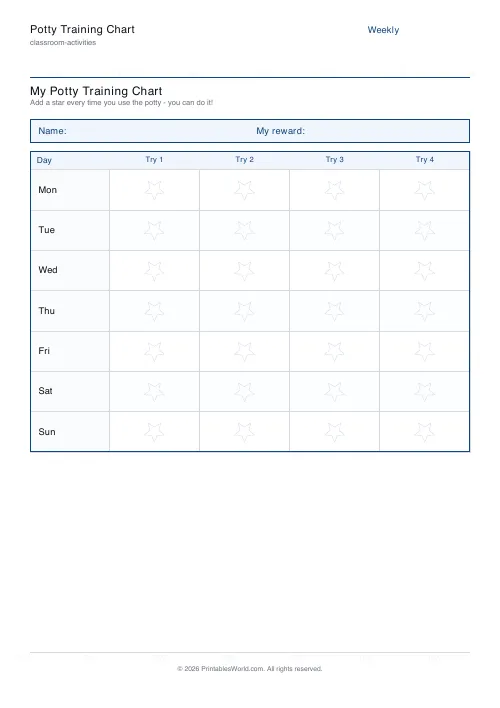
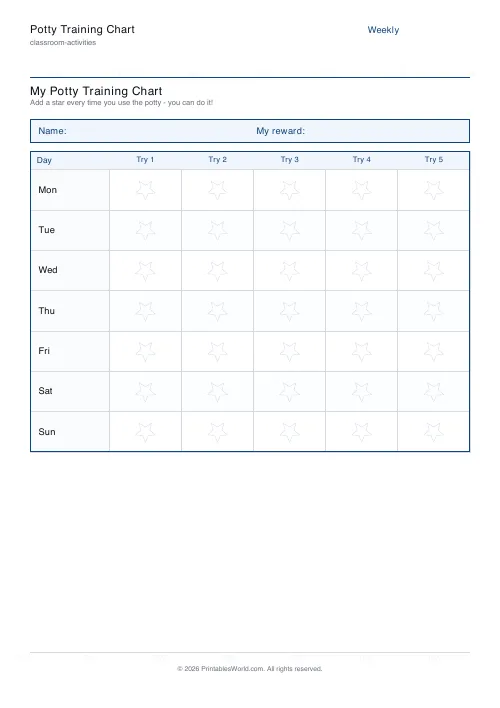
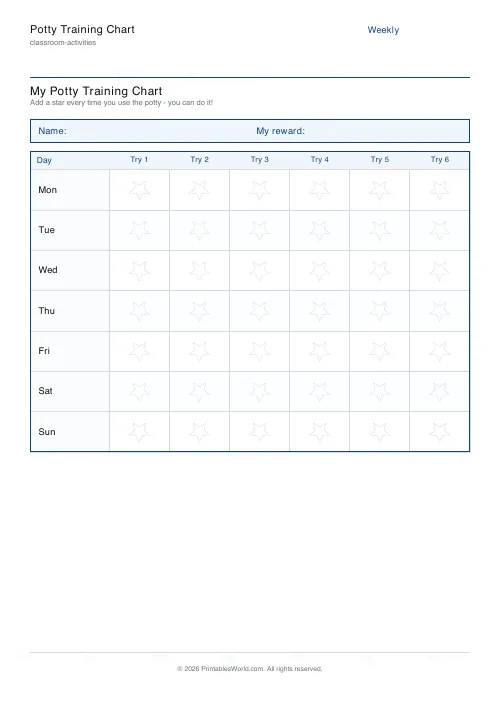
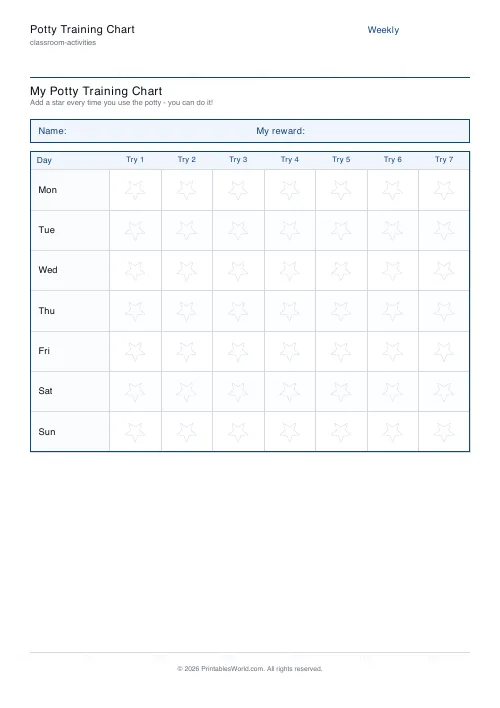
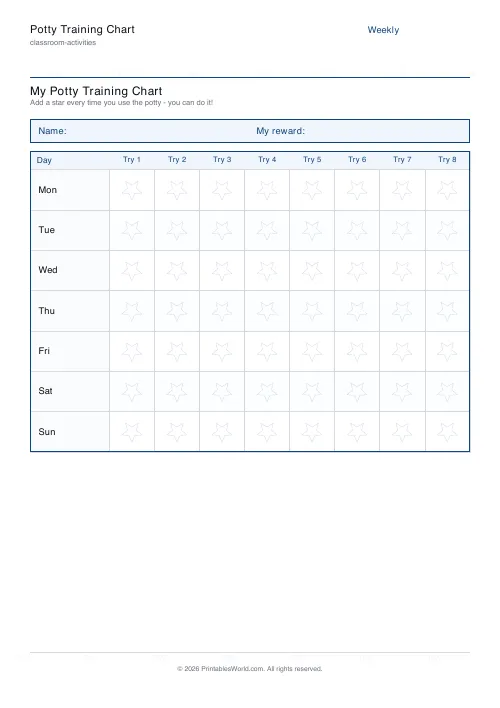
A seven-day grid with 3 to 8 potty times across each day and a soft star in every cell to tick, colour or sticker. The child's name and a reward line print at the top.
People also used
Feedback
Spotted something off with this tool?
Seven days across, potty times down
Type the child's name, an optional reward, and how many times a day you want marked. Three to eight. Every cell carries a faint star, there to be ticked or coloured in or covered with a sticker, depending on what your child currently finds most exciting.
The slot labels can be your own, so the grid can say After breakfast, Before nursery, Bath time rather than generic times.
Fewer slots than you think
Eight is available and rarely the right choice.
A grid with eight opportunities a day and a child having three good ones looks like failure on paper, to the child as much as to you. Set the slots to the moments you are actually working on — usually the predictable ones, after meals and before going out — and let the rest of the day be uncounted.
Three or four is a chart that fills up. That matters more than completeness.
The reward line, and how it goes wrong
Keep it small and immediate. Non-edible where you can manage it. A sticker on the chart is often reward enough, and anything much bigger quietly becomes the transaction rather than the habit you were trying to build.
The commonest mistake is a reward at the end of the week. A two-year-old has no useful relationship with Friday, so a prize for a full chart motivates nobody and produces a chart that stalls on Tuesday and never recovers. Reward the square, not the sheet.
Do not use it to record accidents
Only successes go on this chart, and the grid is designed that way — there is no column for failures.
Adding one is tempting and it is the point at which the chart stops helping. Accidents are part of the process and the entire evidence base on this is consistent: attention on the accident makes it more likely, not less. A chart that shows what went well and is silent about the rest is doing exactly what it should.
When to put it away
When it stops being interesting. For most children that lands somewhere between two and four weeks.
A chart that has become wallpaper is not helping, and taking it down while it is still going well is much better than letting it fade out. If progress stalls for a fortnight, the answer is usually a pause of a few weeks rather than a bigger reward — readiness is developmental and cannot be negotiated.
Settings and printing
Title, child's name, reward, slot count (3–8) and your own slot labels. A4 or US Letter, printed at 100%.
Put it at the child's eye height in the bathroom, not on the kitchen wall where the adults can see it. It is their chart.
FAQs
Quick answers
How many potty times per day should I choose?
Start with 3 to 5 for younger toddlers. Typically after waking, after meals and at bedtime. You can use up to 8 columns if you want to track more attempts across the day.
Can I print a blank chart and fill it in by hand?
Yes. Leave the column labels blank and the columns print as numbered tries (Try 1, Try 2…), or rename them to suit your child's routine.
What do the stars in each cell mean?
They are soft placeholder stars. Cover them with a sticker or colour them in every time your child successfully uses the potty.
Can I make one chart per child?
Yes. Change the name, reward and columns and generate a separate PDF for each child. The branded design stays consistent.
Related tools
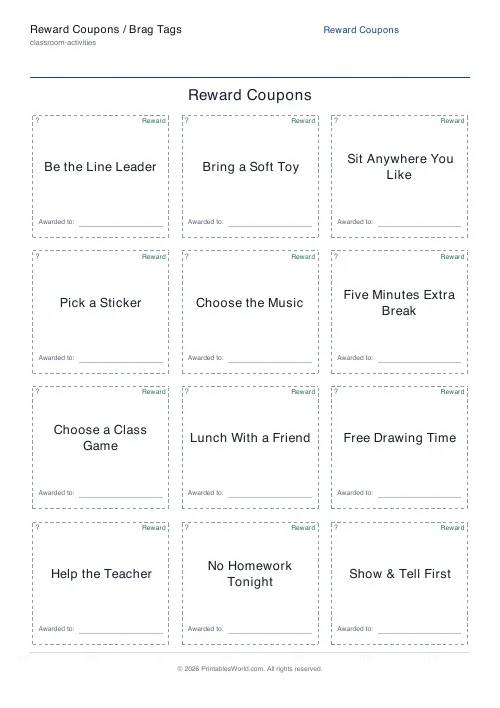
Reward Coupons / Brag Tags
Print a sheet of cut-out reward coupons and brag tags.
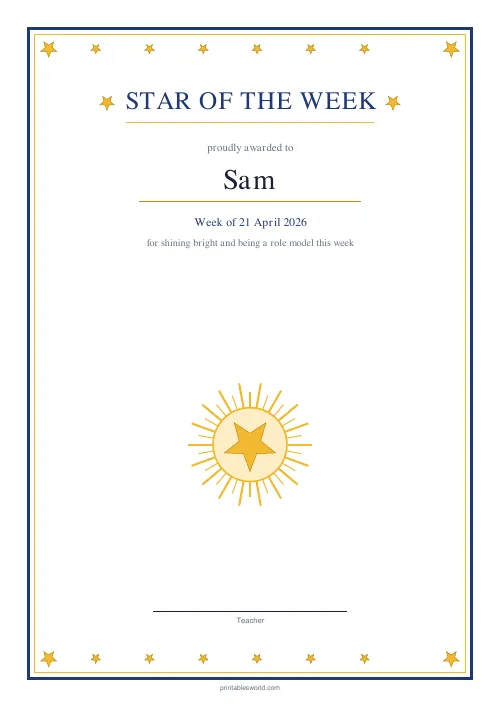
Star of the Week Certificate
A bright "Star of the Week" certificate with a golden star frame.
All About Me Worksheet
A back-to-school fill-in sheet for every pupil.
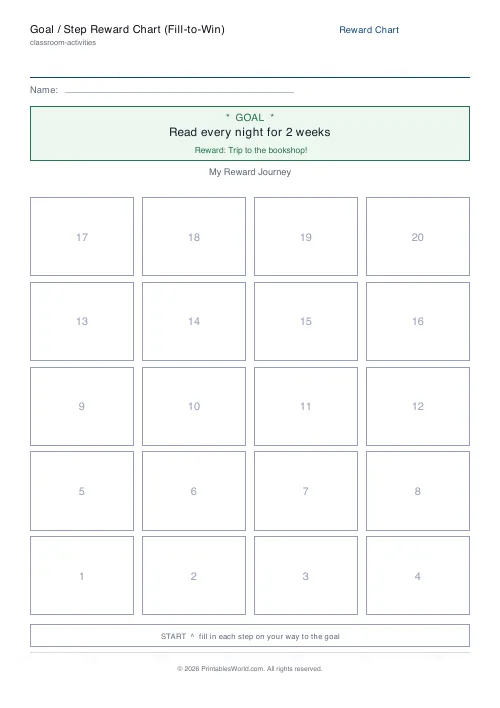
Goal / Step Reward Chart (Fill-to-Win)
Printable fill-to-win goal chart: colour in each numbered step on the way to a reward.
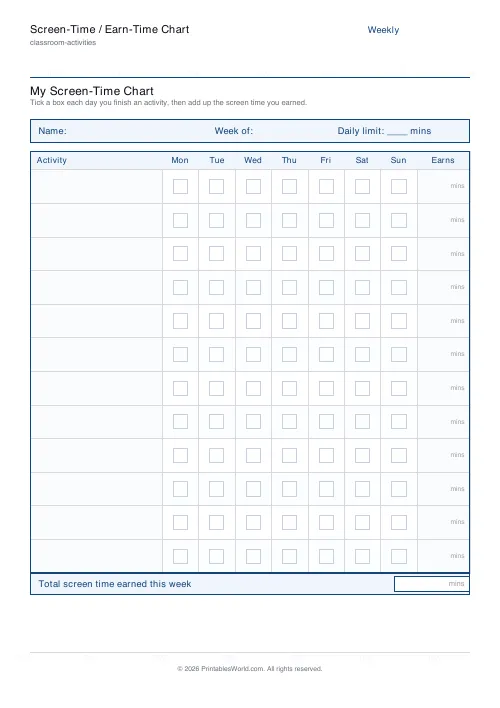
Screen-Time / Earn-Time Chart
Printable screen-time chart. Earn-time activities × 7 days of tick boxes, an earns column and a weekly total.
Further reading