What this tool does
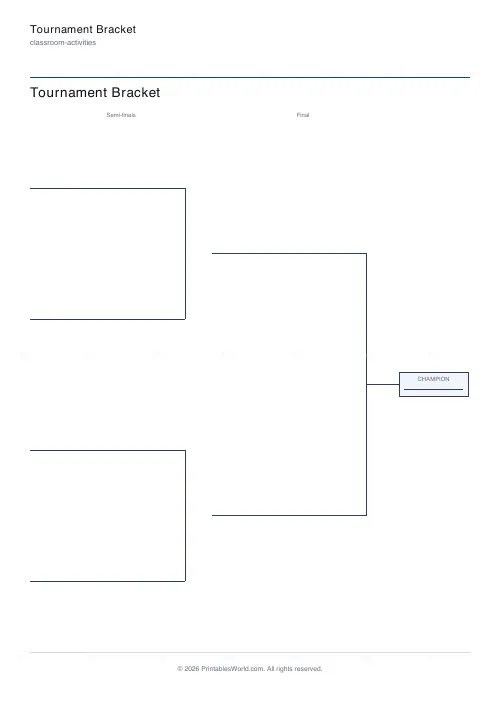
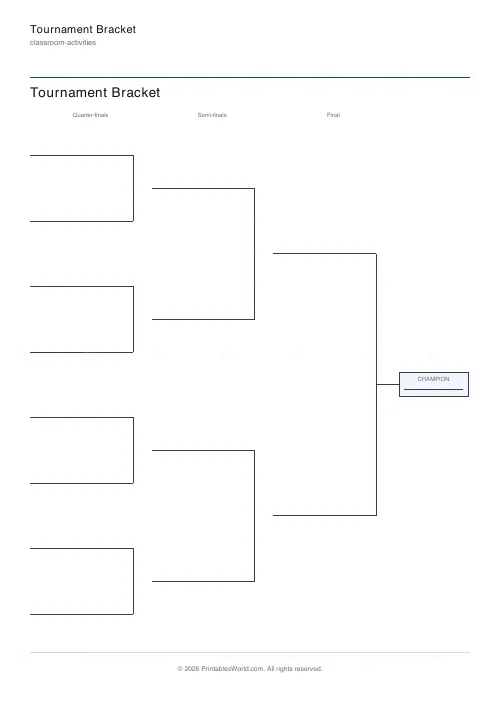
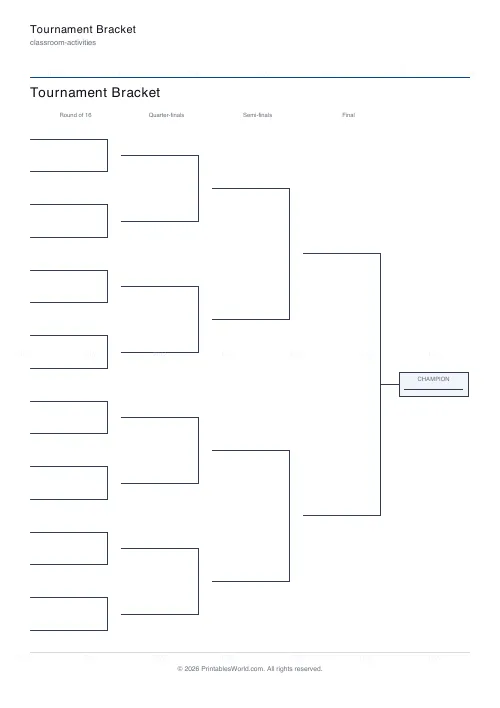
A single-elimination bracket sized to the number of entrants, printed with round labels and a champion box. Type names in seed order or leave the slots empty to fill in on the day. The larger brackets print two-sided so they fit a portrait page.
People also used
Feedback
Spotted something off with this tool?
Bracket sizes
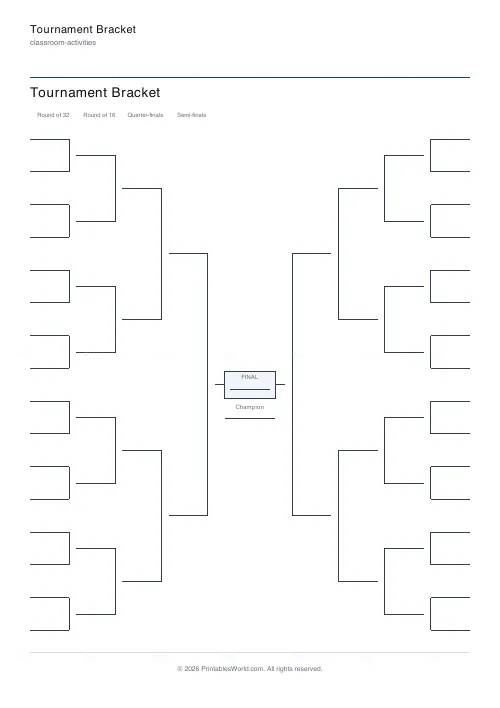
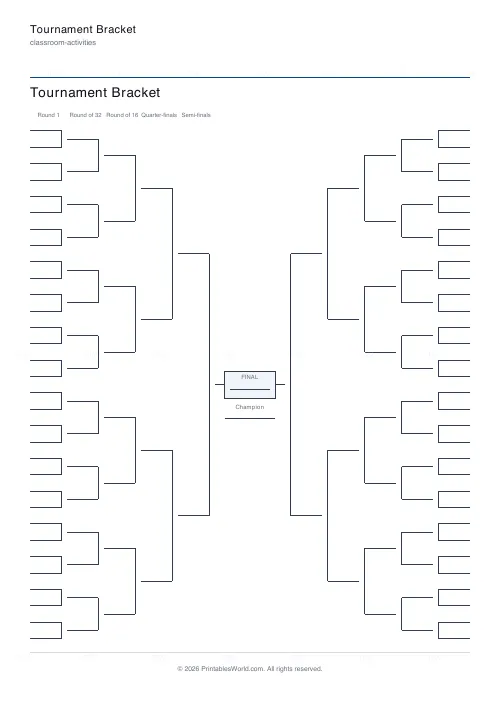
Brackets come in powers of two, because every round halves the field. Four, eight and sixteen slots print in the familiar left-to-right shape with the champion box on the right. Thirty-two and sixty-four are drawn two-sided: the top half of the draw flows in from the left, the bottom half from the right, and the final sits in the middle. That is how the big printed brackets do it, and it is the only way sixty-four names fit legibly on a portrait sheet.
Fewer entrants than slots is normal. Leave the spare slots blank and treat them as byes: the entrant paired with an empty slot goes straight through.
Names or blanks
Paste names one per line and they print into the first-round slots in the order given, so put them in seed order if seeding matters. Leave the box empty for a blank bracket to write into at the event. Long names are trimmed with an ellipsis rather than overflowing into the next slot.
Round labels and extras
Round labels along the top read Final, Semi-finals, Quarter-finals, Round of 16 and Round of 32, counted back from the end so they are right whatever the size. A third-place match box can be added under the final. The round-robin option adds a second page: a fixture grid where everyone plays everyone once and the score goes where row meets column, for up to sixteen entrants. It is the fairer format when you have time for it.
What it does not do yet
Double elimination, where a team has to lose twice to go out, is not drawn. It needs a losers' bracket that is a different shape at every size, and it is on the list. For now the round-robin table is the way to give every entrant more than one match.
Where it gets used
Class spelling bees and reading competitions, school sports days, office table-tennis ladders, club chess knockouts, gaming nights. The March basketball season is the big spike, but the sheet is the same in October.
FAQs
Quick answers
What sizes are available?
4, 8, 16, 32 and 64 slots. With fewer entrants than slots, leave the extras blank as byes.
Can I fill in the names before printing?
Yes. Enter one name per line in seed order. Names print in the first round; later rounds stay blank for the results.
Why do 32 and 64 look different?
They print two-sided, with each half of the draw flowing towards a final in the centre. Sixty-four slots down one side of a portrait page would be unreadable.
Is there double elimination?
Not yet. The round-robin table is the current way to give everyone more than one game.
What is the round-robin page?
A grid with every entrant down the side and across the top. Each pair meets once; write the score in the cell. It suits up to sixteen entrants.
Can I print it landscape?
The sheet is portrait. Sixteen and below leave room to spare; the two-sided layout is what keeps the larger ones readable without turning the page.
Related tools
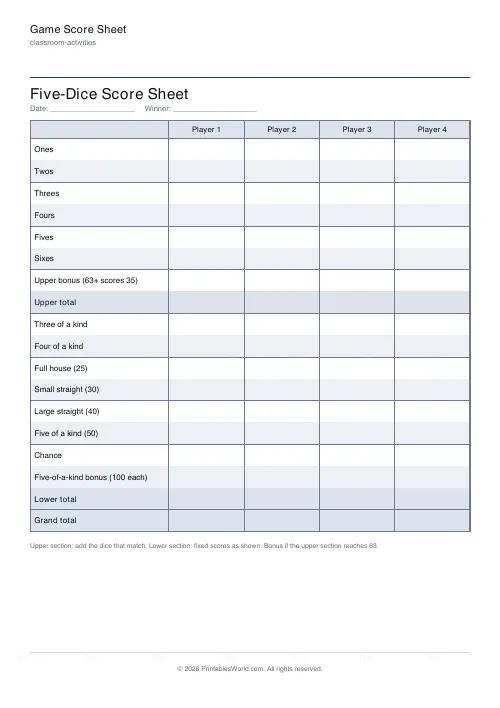
Game Score Sheet Generator
Score sheets for dice, card, tile and table games. Pick a game, set the players, print.
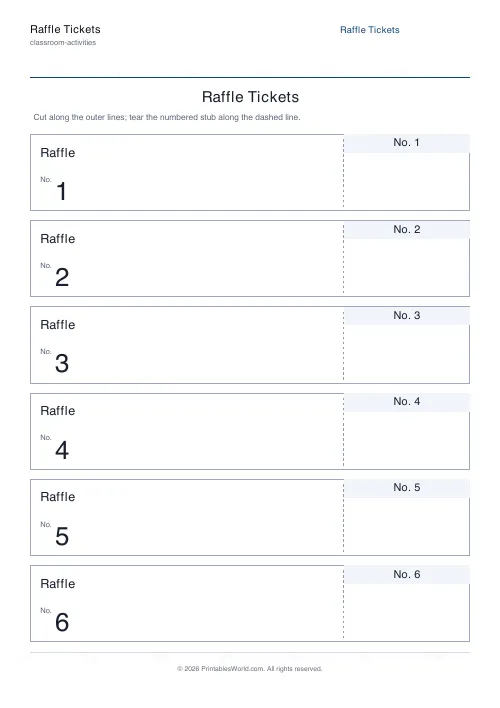
Raffle Tickets
Sequentially numbered tear-off raffle tickets with matching stubs.
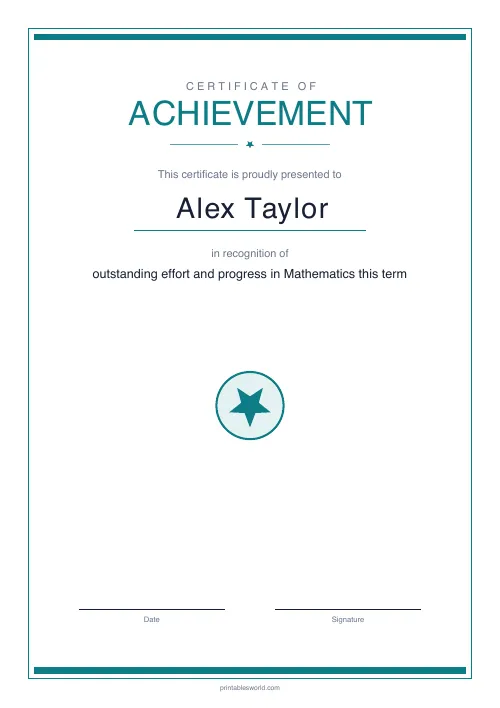
Certificate of Achievement
Formal classroom certificate with name, reason, date, and signature line.
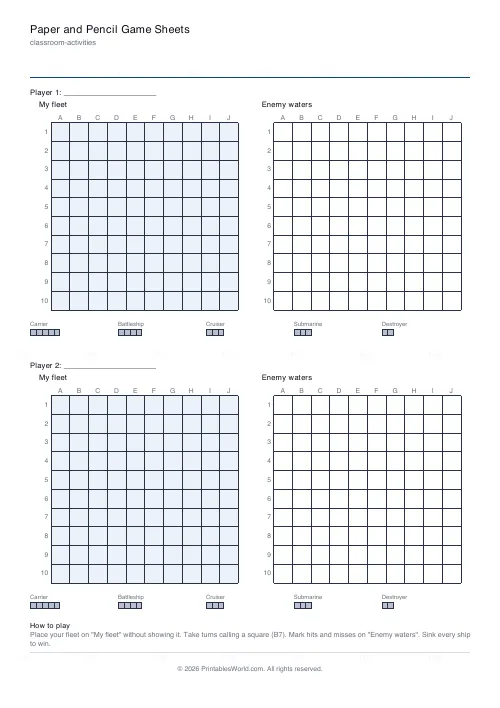
Paper and Pencil Game Sheets
Dots and Boxes, SOS, Bulls and Cows, Battleship and tic-tac-toe, ready-ruled.
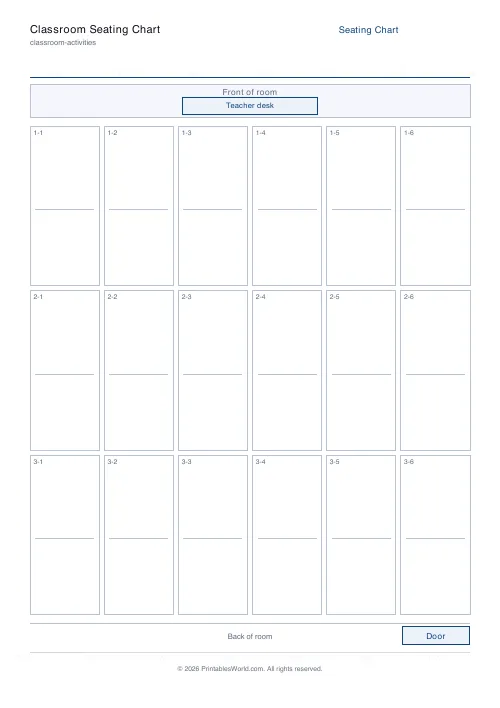
Classroom Seating Chart
Printable seating plan grid with configurable rows, columns, teacher desk, and door.