What this tool does
A score sheet is a grid with named rows, a column per player and a totals band, and that shape covers most games people keep score for. Pick from eighteen presets or type your own rows, set up to eight players, and print one or two sheets per page.
People also used
Printable Dice (Standard)
Foldable six-sided dice nets with pips or numbers, 1–6 per page.
Custom Dice Maker
Foldable six-sided dice nets with your own face labels. Words, letters, or emoji.
Tournament Bracket Generator
Single-elimination brackets for 4 to 64 entrants, blank or pre-seeded, with an optional round-robin table.
Feedback
Spotted something off with this tool?
One grid, eighteen games
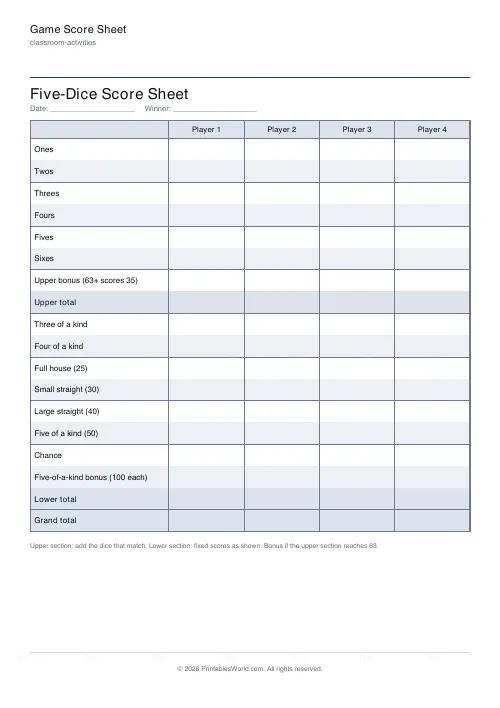
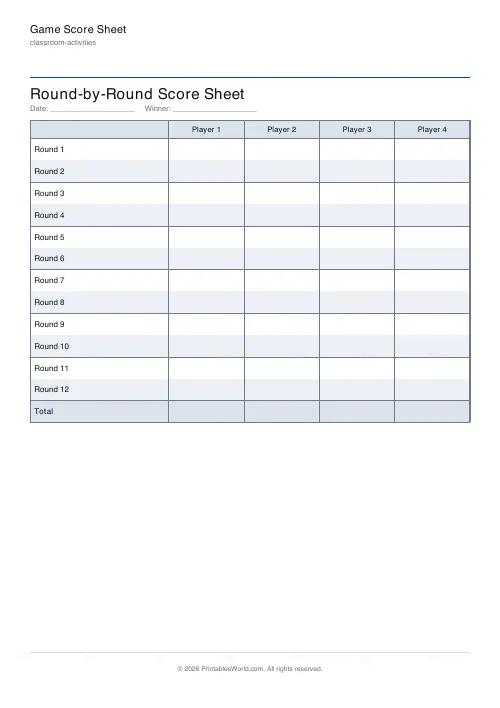
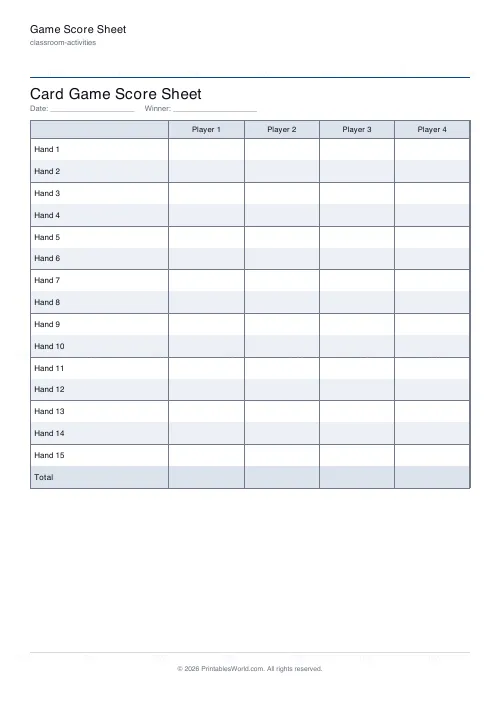
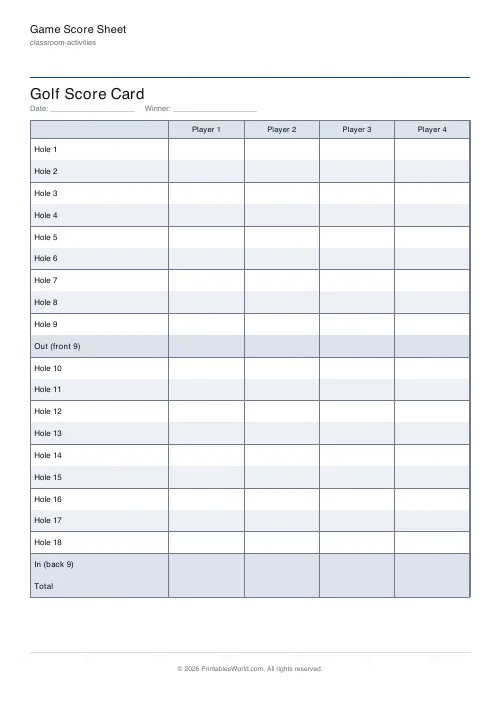
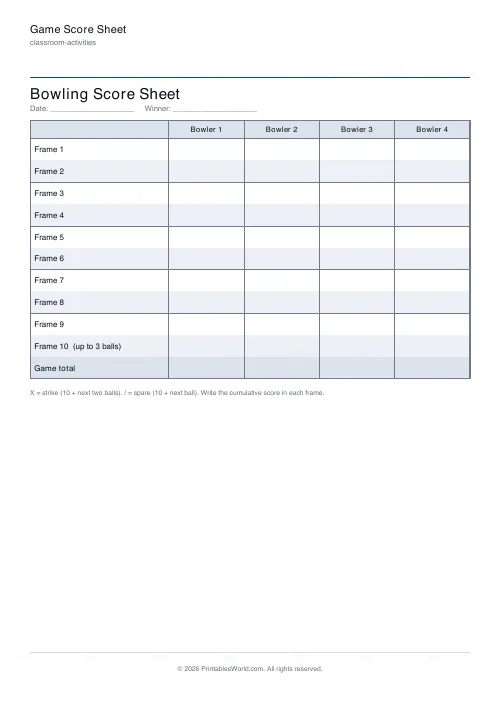
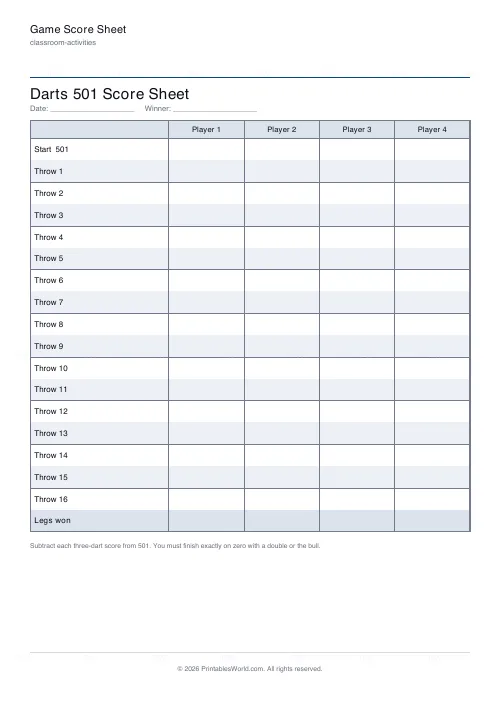
Every score sheet in the list is the same object underneath: a set of rows down the left, one column per player across the top, and a shaded total at the bottom. What changes is the rows. A five-dice game needs Ones through Sixes, an upper bonus, three and four of a kind, the straights and a chance line. Golf needs eighteen holes with an Out and an In. Bowling needs ten frames, with the tenth allowed a third ball. The generator holds those row lists as presets, so you choose the game and the grid fills itself.
The presets are named for what the game is rather than for any boxed product. A tile word game, a ten-phase card game, a five-dice game: the sheet works for the version you own, and it prints nothing it has no right to print.
What is on the sheet
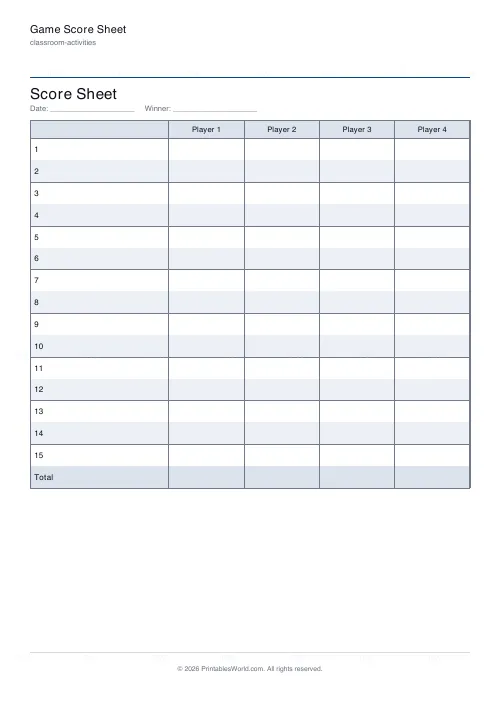
A title, a date and winner line, the grid, and (if the game has one) a short scoring reminder underneath. Rows that begin with an equals sign in the custom editor become total rows, drawn bold on a darker band so they stand out when the table is full of pencil. Alternate rows are lightly shaded to keep a row of numbers from drifting into its neighbour, which matters most on the twenty-row sheets.
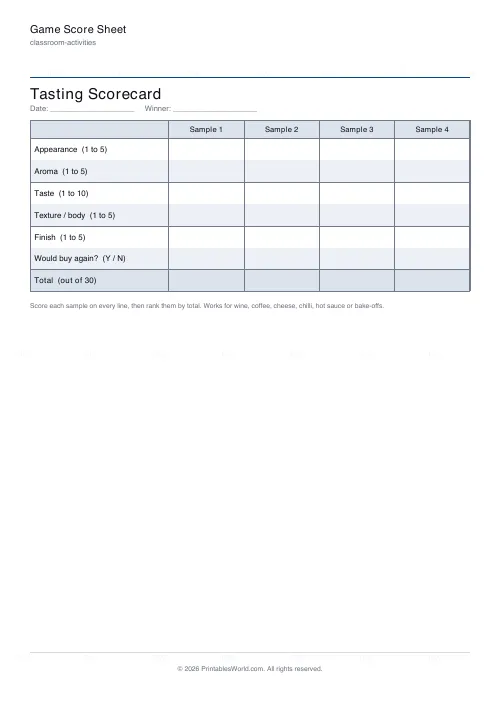
Player columns take names if you give them, or print as Player 1, Player 2 and so on. Tasting scorecards label their columns Sample instead, and the trick-taking and cornhole sheets say Team. Set anywhere from one column to eight; past six the cells get narrow on A4, so the two-sheets-per-page option is better used with four or fewer.
Custom rows
Choose Custom rows and a text box appears. One row per line. Start a line with = to make it a total. That is enough to build a sheet for a house game, a classroom points system, a book-club vote or a chilli cook-off with your own categories. The row count is capped at forty, which is about what fits on a page at a readable size.
Two sheets per page
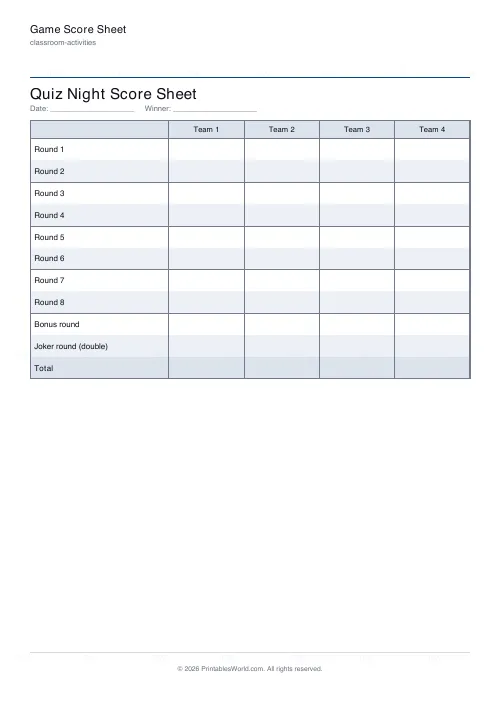
Short games do not need a whole sheet. Choose 2 and the page prints two identical copies stacked with a dashed cut line between them, each with its own title and date line. Handy for a stack of quiz-night sheets or a mini-golf outing where every group wants its own card.
Related sheets on this site
The dice makers print the dice; this prints what you keep score on. Bingo cards and the game spinner cover the classroom-party side, and the tournament bracket takes over when there are more than two teams and someone has to be eliminated.
FAQs
Quick answers
Which games have a preset?
Five-dice (upper and lower section), Ten Thousand, round-by-round, card game by hand, rummy, trick-taking with bid and made, ten-phase card game, tile word game, category word game, dominoes, ten-pin bowling, darts 501, golf, mini golf, cornhole, a table tennis or badminton match, quiz night, a tasting scorecard and a blank sheet. Anything else, use custom rows.
Can I type my own rows?
Yes. Pick Custom rows and enter one row per line. Begin a line with = to make it a bold total row. Up to forty rows fit on a page.
How many players fit?
One to eight columns. Up to six read comfortably on A4 with a full-height sheet. If you need eight, keep it to one sheet per page.
Why do the presets avoid brand names?
Several of the games people keep score for are trademarked products. The sheet describes the game generically (Five-Dice Score Sheet, Tile Word Game Score Pad) so it works with whatever set you own without printing a name that belongs to someone else.
Does the tasting scorecard work for anything other than wine?
It is deliberately general: appearance, aroma, taste, texture, finish and a yes-or-no on buying again, scored out of thirty. It has been used for coffee, cheese, hot sauce and bake-off judging without changing a row.
Is there a scoring guide on the sheet?
Presets that need one carry a one-line reminder under the grid: the upper bonus threshold, how strikes and spares count, cancellation scoring for cornhole. Untick Scoring reminder to drop it.
Related tools
Printable Dice (Standard)
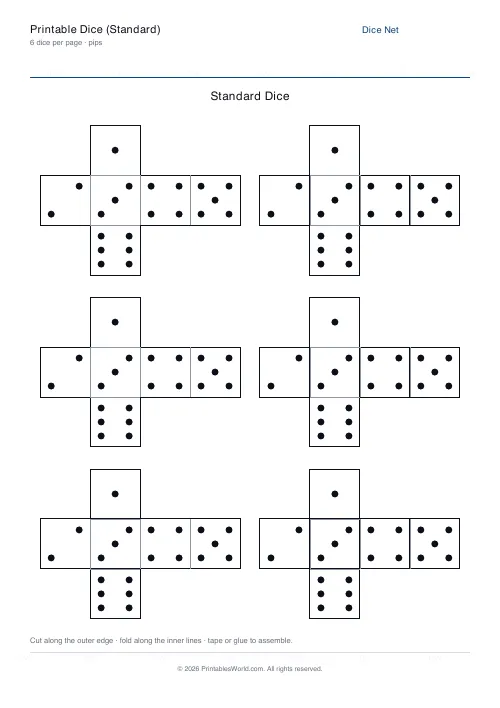
Foldable six-sided dice nets with pips or numbers, 1–6 per page.
Custom Dice Maker
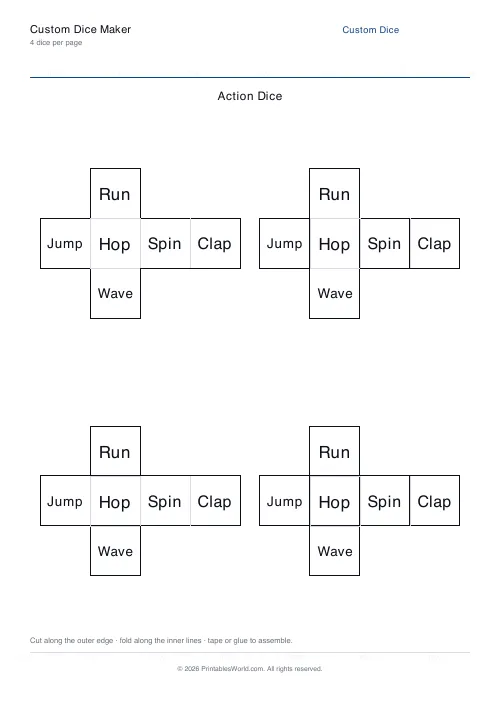
Foldable six-sided dice nets with your own face labels. Words, letters, or emoji.
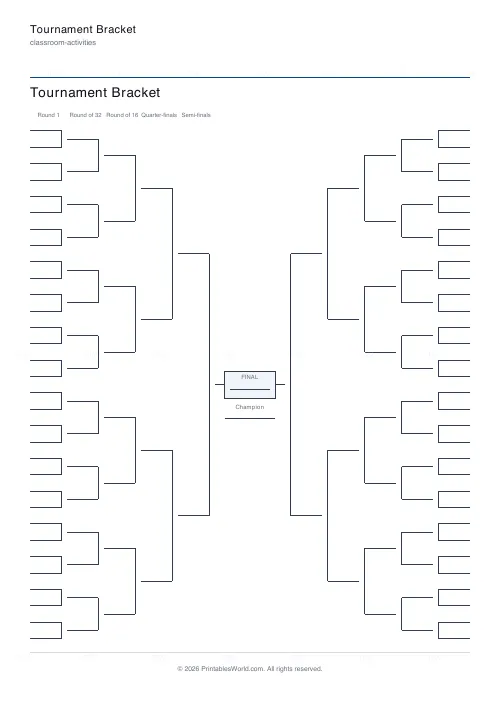
Tournament Bracket Generator
Single-elimination brackets for 4 to 64 entrants, blank or pre-seeded, with an optional round-robin table.
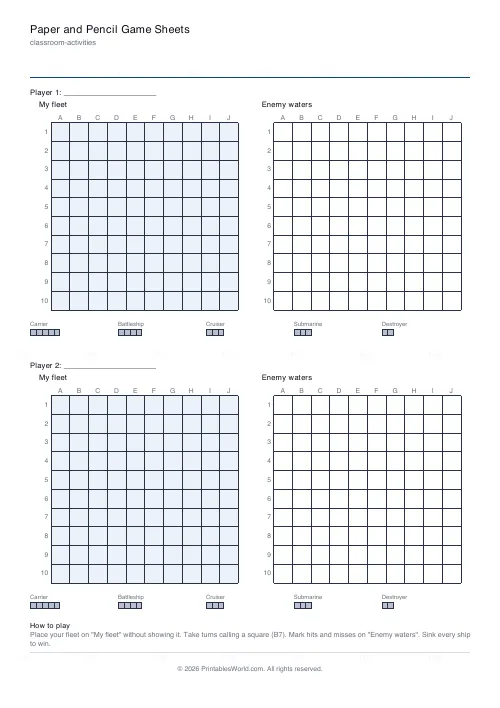
Paper and Pencil Game Sheets
Dots and Boxes, SOS, Bulls and Cows, Battleship and tic-tac-toe, ready-ruled.
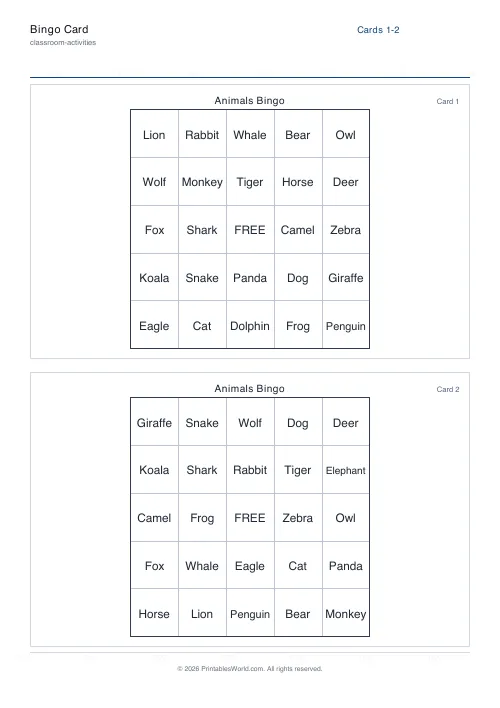
Bingo Card Generator
Generate unique printable bingo cards with custom words, FREE centre toggle, call sheet, and seeded shuffles.
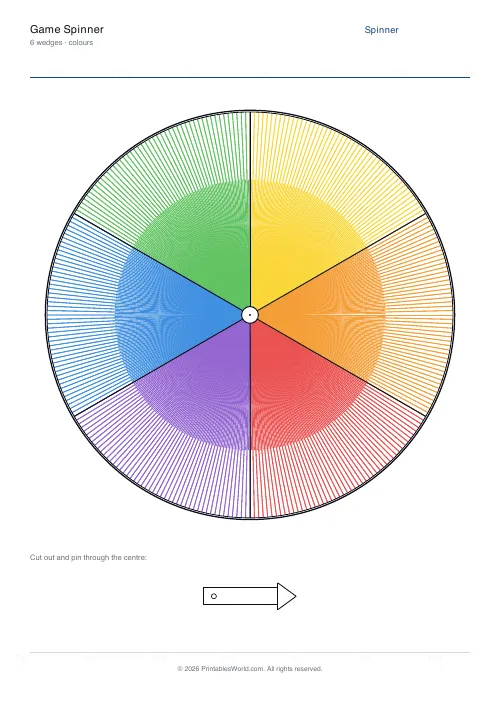
Game Spinner Generator
Printable spinner with 3–8 wedges plus a cut-out arrow template.
Further reading
Classroom Activities
20 classroom games that need zero prep
Games organised by the gap they fill: two minutes at the end of a lesson, ten minutes before assembly, or a whole wet lunchtime. Almost all need nothing but a voice.
6 min read
Classroom Activities
Bingo in the classroom: 10 subjects, one game
Bingo works in almost every subject because the mechanic never changes. Only the call does. Ten variations, and the one rule that turns it from a filler into retrieval practice.
4 min read
Classroom Activities
How to run a classroom economy (free printables)
A classroom economy teaches money, work and choice at once. But it collapses if the maths is wrong. Here is how to set the numbers, and the four pitfalls to avoid.
5 min read