What this tool does
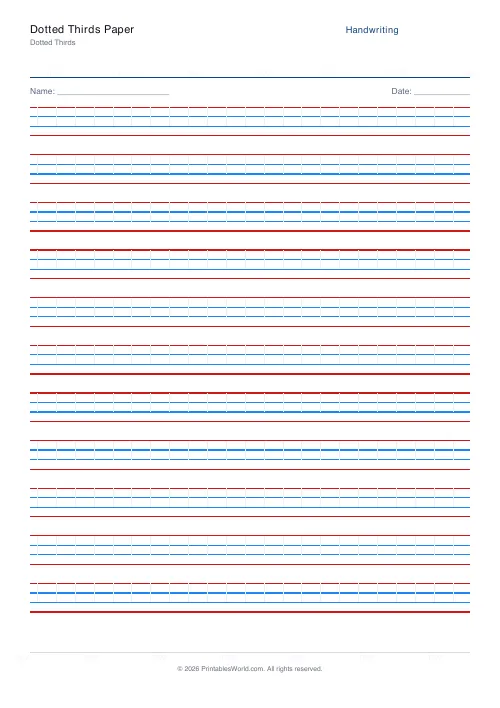
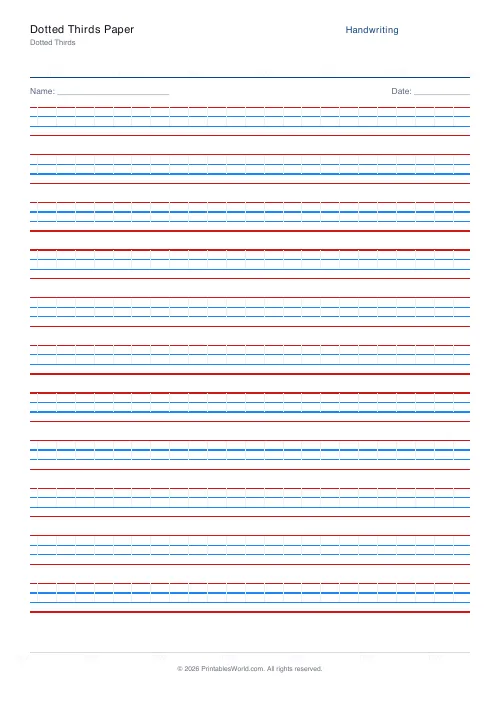
Dotted thirds ruling with a character box at every position, the layout Australian and New Zealand schools teach on. Blank, at whatever line height you set.
People also used
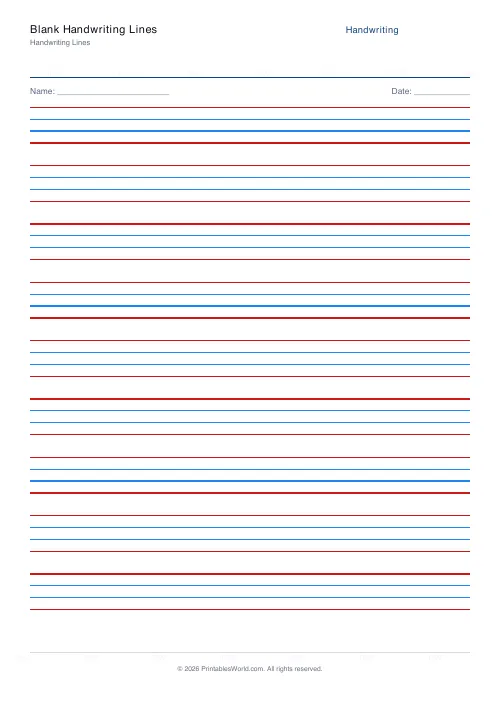
Blank Handwriting Lines
Empty 4-line ruling, top, mid, base, descender, for free practice.
Handwriting Practice Generator
Create custom 4-line handwriting practice sheets with trace rows, adjustable guides, and your own text.
Left-Handed Handwriting Guide
Adapted layout with right-side margin tips for left-handed writers.
Feedback
Spotted something off with this tool?
Thirds, with a box for every letter
Four-line ruling with character boxes printed across every row, so each letter has its own square to sit in. Nothing is printed inside them.
Dotted thirds is the standard ruling in Australian and New Zealand primary schools, where it is close to universal, and it turns up elsewhere as a remediation paper.
What the thirds do
The page is divided so that the middle third is where most lowercase letters live, the top third takes the ascenders, and the bottom third takes the descenders.
Dividing the writing space into equal thirds gives a child a proportional rule rather than a set of separate facts: an h is two thirds tall, an a is one third, a g occupies the middle third and drops into the bottom one. That is one idea instead of twenty-six.
The boxes are the other half
Height is only one of the two things that go wrong. The other is width and spacing, and a ruling alone does nothing about it.
A box per character forces even letter widths and even gaps, which is exactly what is missing in the handwriting people describe as cramped or as sprawling. A child whose letters vary from 2mm to 9mm across a single word has a spacing problem rather than a formation one, and boxes are the direct fix.
They are also a temporary fix, and should be treated as one.
When to take the boxes away
As soon as the spacing holds without them, which for most children is a matter of weeks rather than terms.
Boxes prevent joining, because a joined hand needs letters to touch and a box says otherwise. A child still writing in boxes when the class has moved to cursive is being held back by the paper.
The plain four-line ruling is the sheet to move to, with the height structure kept and the width constraint removed.
Line height
Four millimetres is this preset's default, which is smaller than the general handwriting sheets use, and it reflects the age this ruling is normally introduced at — a little later, once the very large early letters have been outgrown.
Raise it for a younger child or for anybody whose writing is still developing. There is no virtue in small.
Settings: line height, character boxes on or off, ruling colour. A4 or US Letter, printed at 100% — scaling changes the millimetre spacing, which is the one thing this paper is defined by.
FAQs
Quick answers
What are dotted thirds?
A standard ruling used in many primary schools. Three zones for ascenders, x-height and descenders, with vertical guide boxes between the top and base lines.
Why the vertical boxes?
The vertical guides help children space letters evenly and judge how wide each letter should be. Particularly useful at the early stage of writing.
Can I add tracing text?
Yes. Type any letters or words into the practice text and pick a trace style. Leave it empty for free writing.
How is this different from blank lines?
Blank-lines paper has no vertical guide boxes. Dotted thirds adds the vertical column guides on every row so letters can be spaced consistently.
Related tools
Blank Handwriting Lines
Empty 4-line ruling, top, mid, base, descender, for free practice.
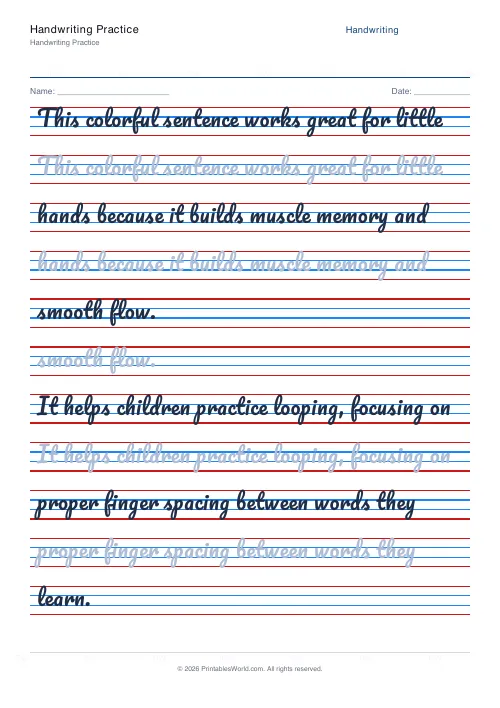
Handwriting Practice Generator
Create custom 4-line handwriting practice sheets with trace rows, adjustable guides, and your own text.
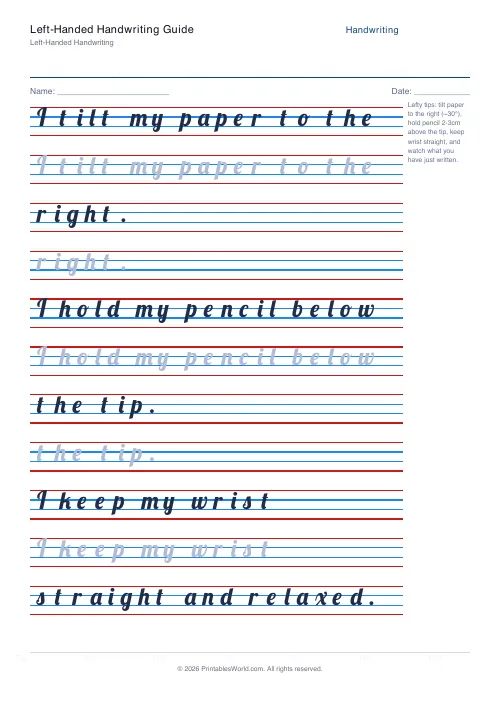
Left-Handed Handwriting Guide
Adapted layout with right-side margin tips for left-handed writers.
Further reading
Handwriting
Dotted vs solid trace lines: what works best for beginners
Each trace style removes a different amount of support. The mistake is staying on one too long. Tracing feels productive and teaches less than copying.
4 min read
Handwriting
How to fix reversed letters (b and d) in young writers
Reversing b and d is normal up to around seven. The fix is not more practice of both together. It is teaching them apart, by movement rather than by shape.
5 min read
Handwriting
How to teach handwriting to kids: a step-by-step guide
A practical order for teaching handwriting: get the body and the pencil right first, then teach letters in stroke families rather than alphabetically, and keep sessions short enough that the hand never tires.
7 min read
More like this
- Handwriting Practice Generator
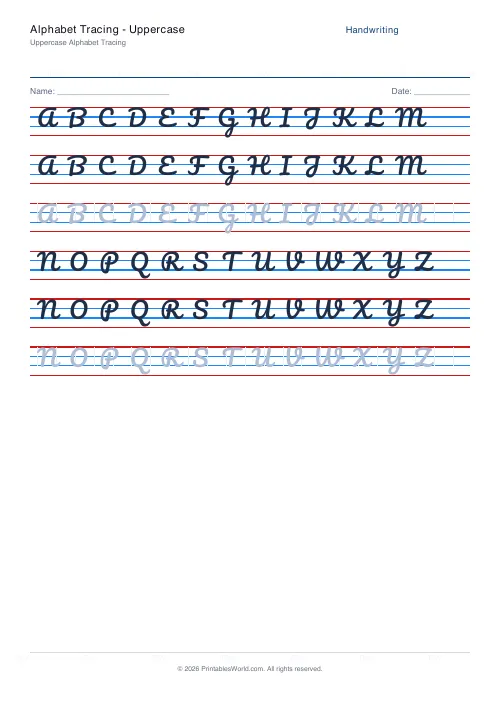 Alphabet Tracing: Uppercase
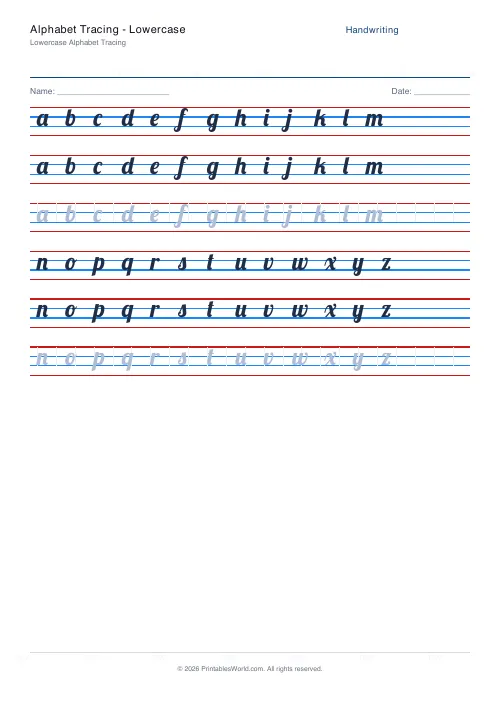 Alphabet Tracing: Lowercase
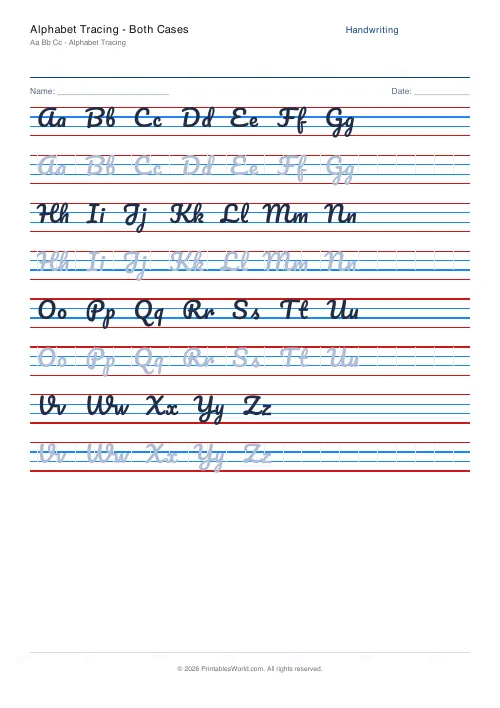 Alphabet Tracing: Both Cases
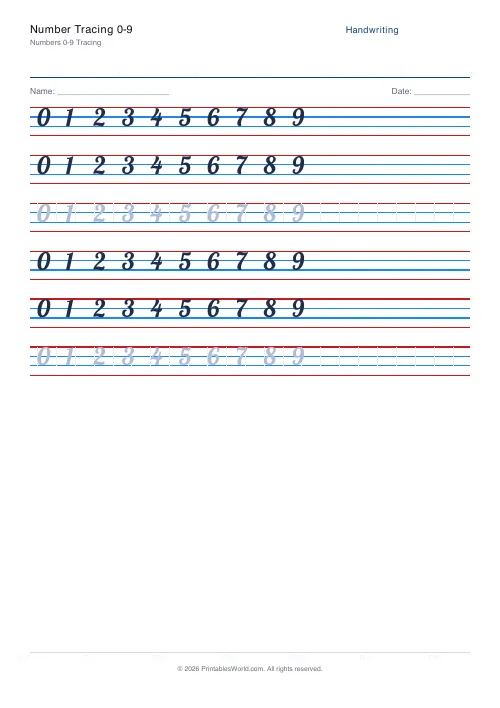 Number Tracing 0-9
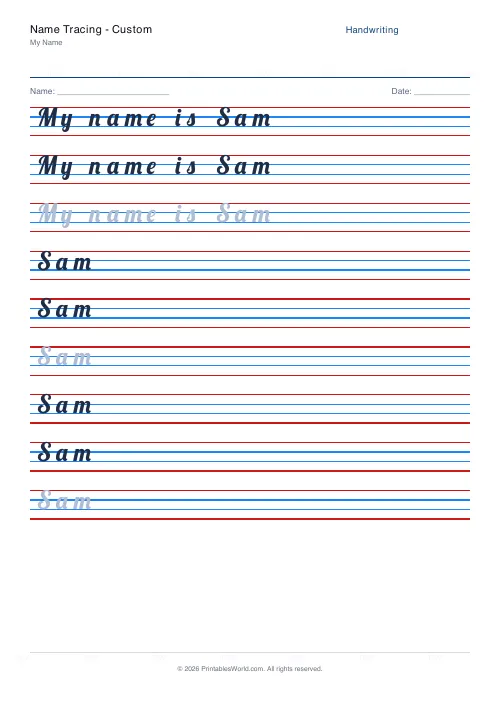 Name Tracing: Custom
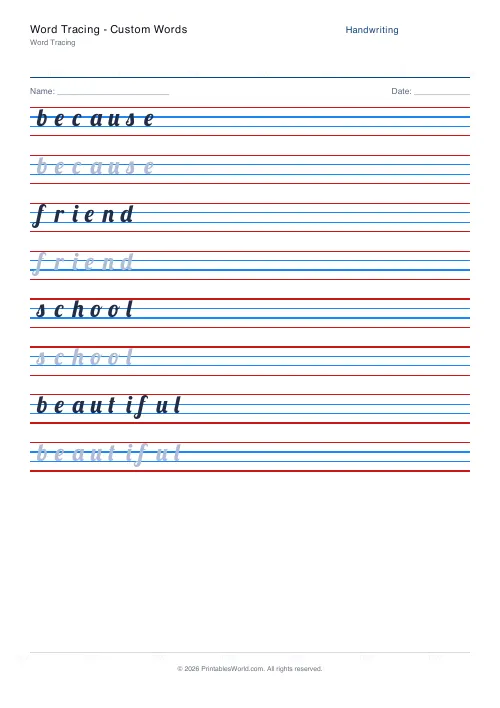 Word Tracing: Custom Words
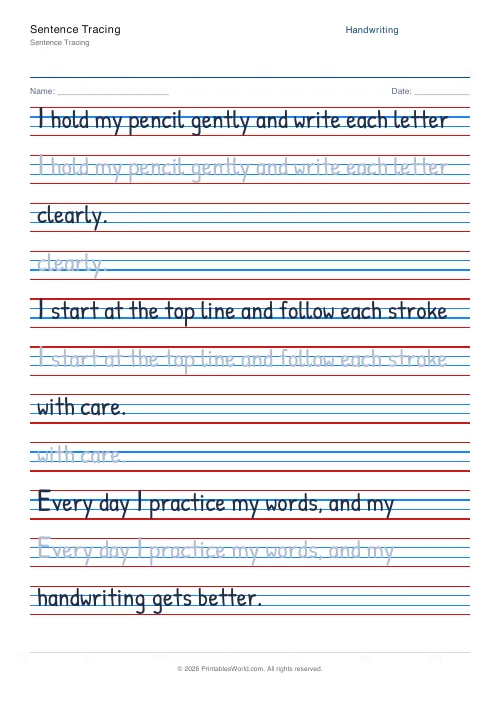 Sentence Tracing
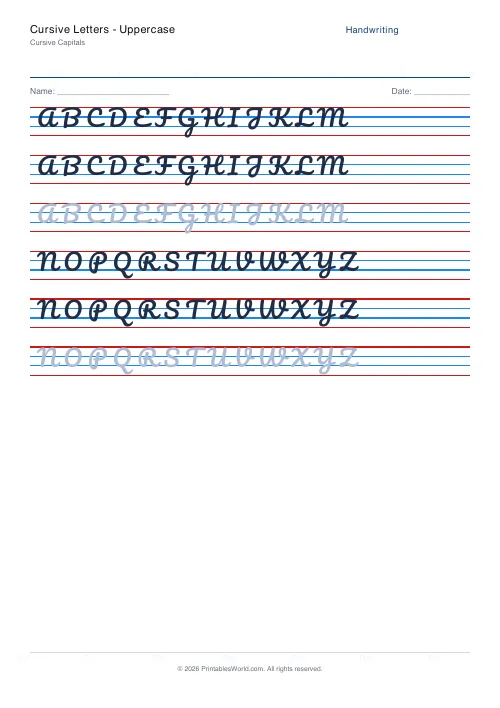 Cursive Letters: Uppercase
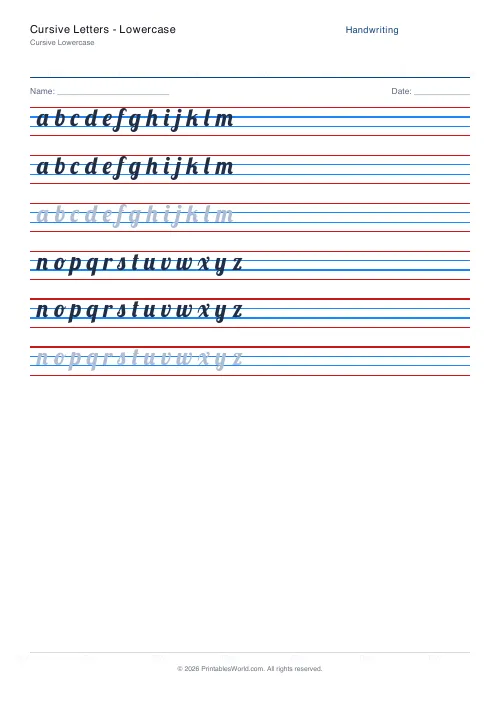 Cursive Letters: Lowercase
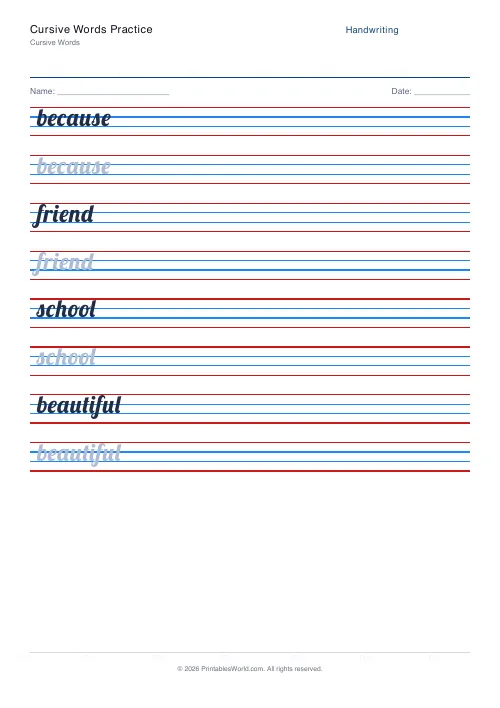 Cursive Words Practice
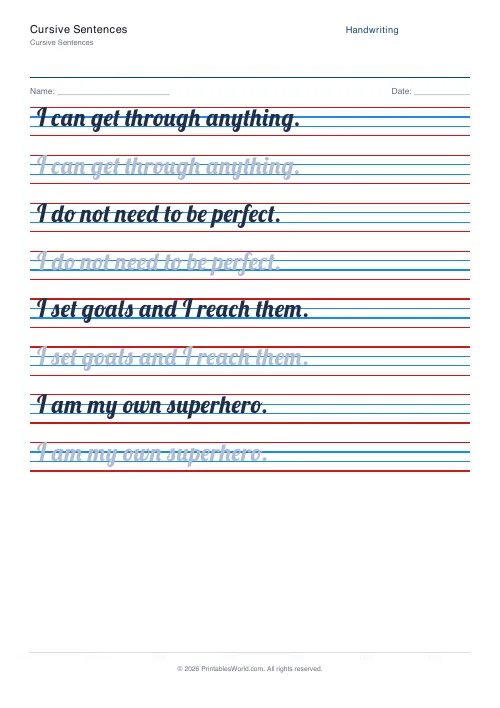 Cursive Sentences
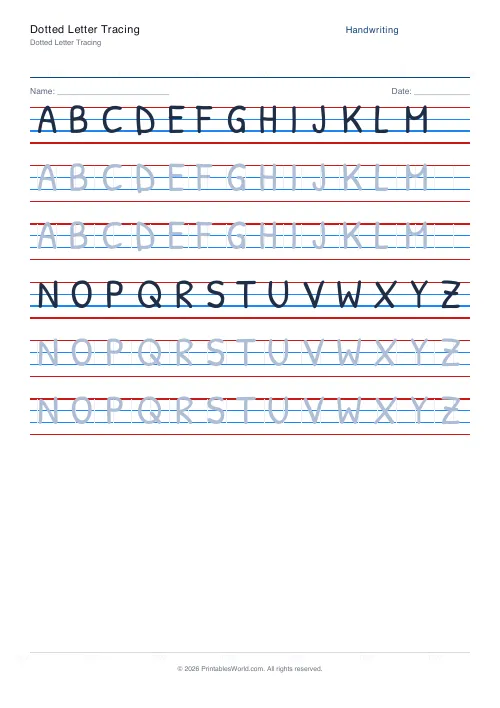 Dotted Letter Tracing
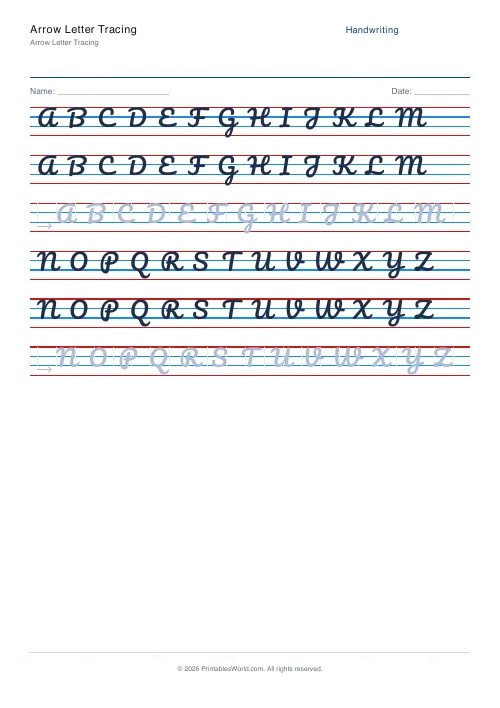 Arrow Letter Tracing