What this tool does
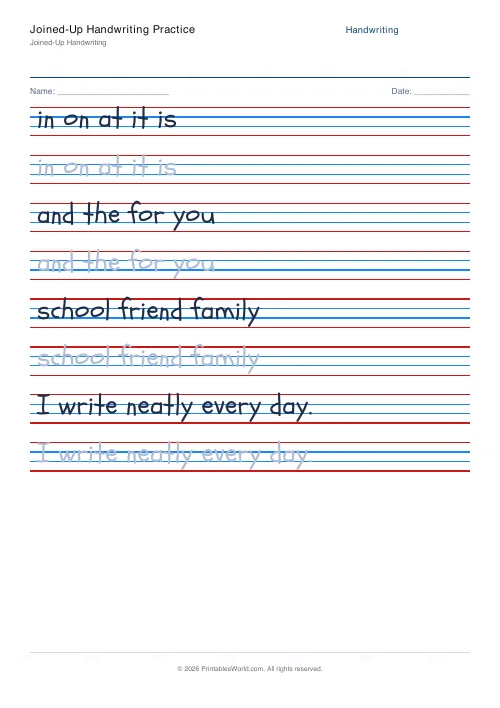
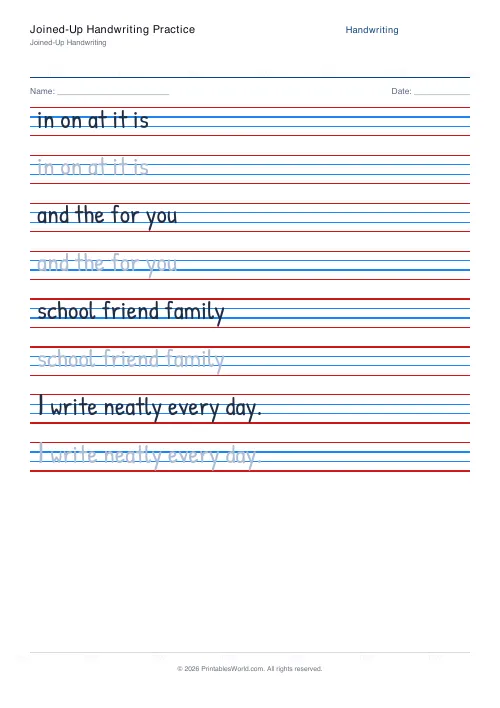
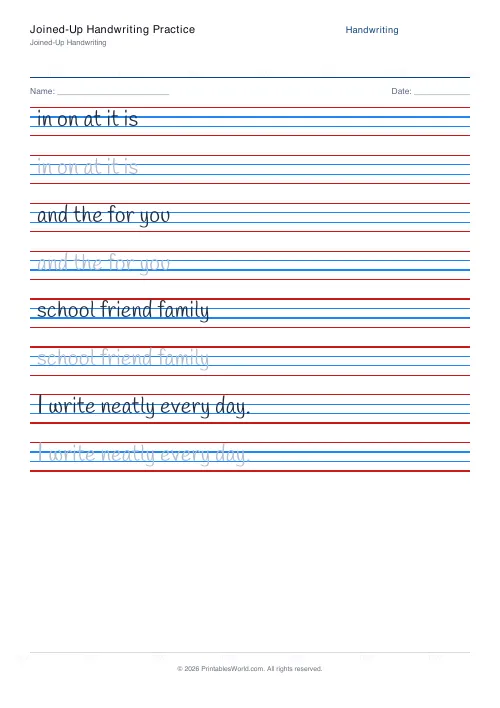
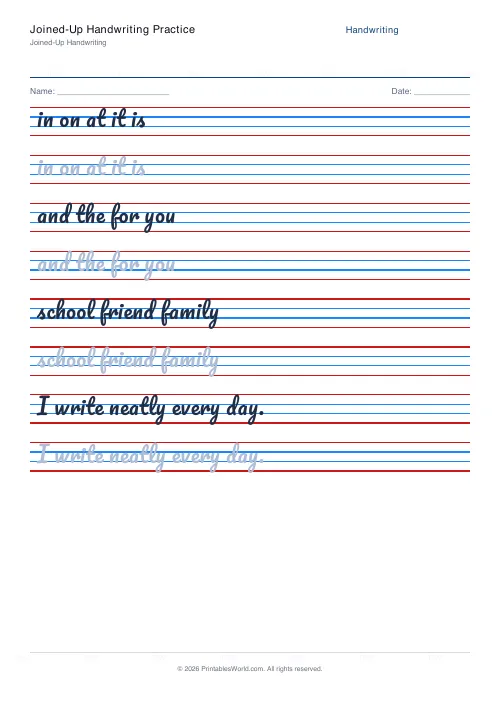
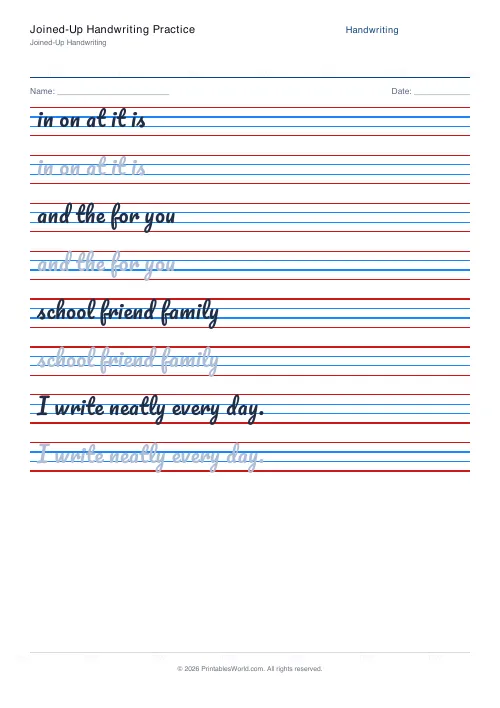
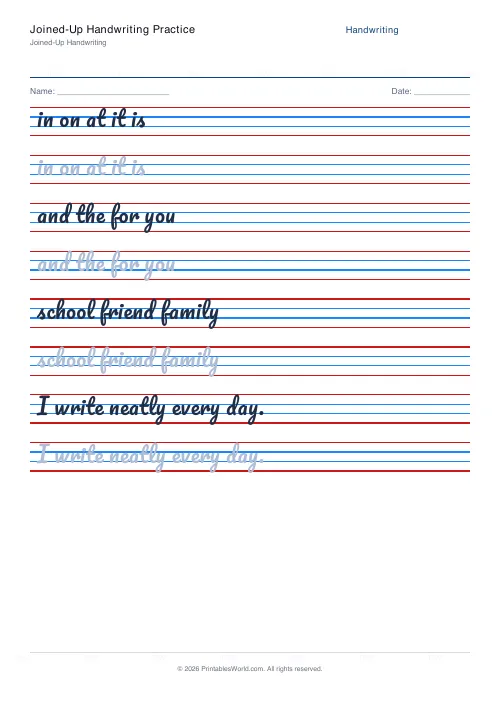
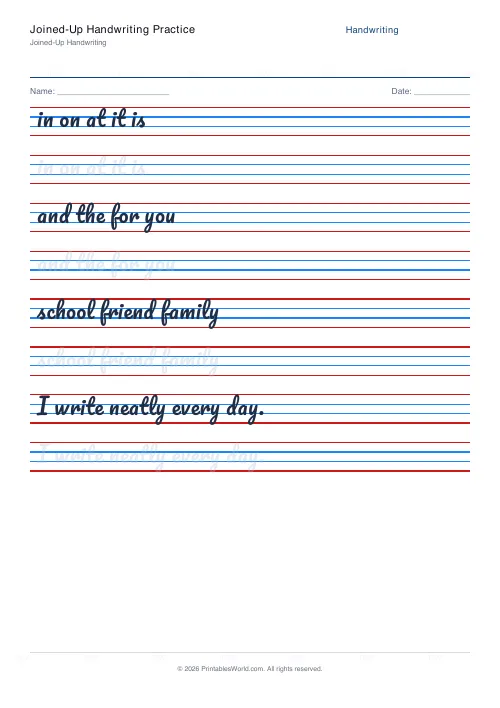
A transition sheet from print to joined writing: short words and a sentence set in a genuine connected cursive so the joins can be traced and copied.
People also used
Feedback
Spotted something off with this tool?
The step between print and cursive
The sheet starts with the easiest joins in the language — in, on, at, it, is — then common words, then a full sentence. Everything is set in PW Cursive, a real connected school hand rather than a display script, on four-line ruling.
Short words first is the whole design. A child meeting joins for the first time needs two or three of them per word, not eleven.
Why the order matters
in is two letters that both exit from the baseline, so the join is a single upward stroke and nothing else changes. on is harder, because o exits from the top and the join arrives high. school is harder again, and a sentence is harder than any of them because now spacing and slope have to stay consistent across a whole line.
Working through in that order gives a child a run of small successes. Starting with a sentence gives them one large failure.
The four letters that break the pattern
Most lowercase letters exit at the baseline. o, r, v and w exit at the top, so anything following them is joined from above.
Almost every messy join in a child's writing is one of those four. Teaching them as a named group — "the four that join from the top" — is quicker than letting each one be discovered separately over a term.
Speed is the reason, and it is worth saying out loud
Joined writing is faster than print, and the gap widens as writing gets longer. That matters in exams and in any situation where somebody has to write while listening.
It is also more legible for many children rather than less, because the joins impose spacing that would otherwise have to be judged letter by letter. But that only holds once the joins are automatic — the transition period is genuinely slower and messier than print, and children should be told that so they do not conclude they are getting worse.
Two things to check before starting
Are the print letterforms secure? Cursive on top of shaky letters produces neither.
Is the paper angled? Joined writing needs a forward slope, and the slope comes from paper position rather than from effort. The slanted guide sheets add diagonals for that.
What the generator asks for
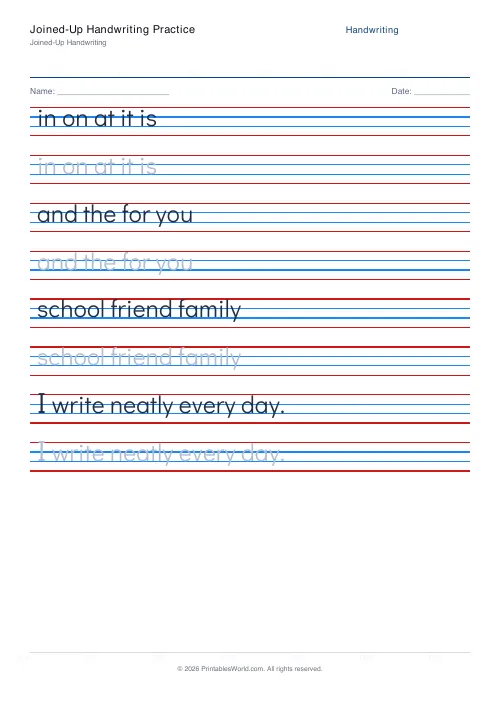
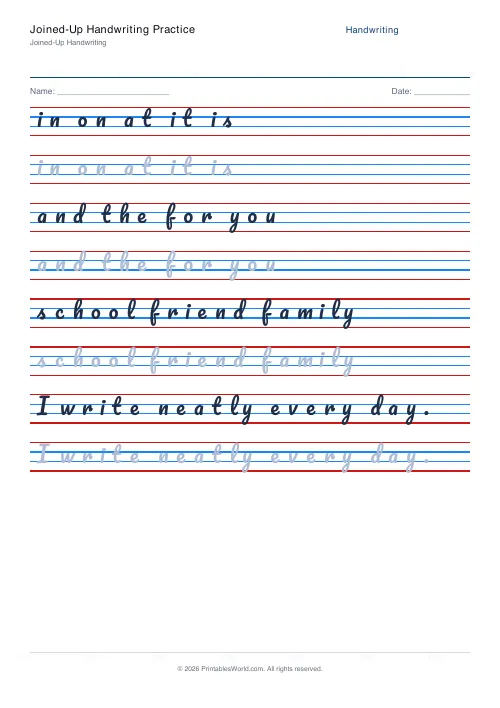
Practice text, the cursive face (GB or US — they differ in a few letterforms), trace style, rows per line, character boxes, ruling colour and line height. A4 or US Letter.
Replace the text with words the child actually writes. Their name, their address, the days of the week. Print at 100%.
FAQs
Quick answers
When do children start joined-up writing?
Most schools introduce joins around Year 2 / Grade 2 (age 6-7), once children can form individual letters confidently.
Why a script font for the trace?
A connected script font models the joins between letters so children can see and trace them. The key skill that distinguishes joined-up from print.
Can I use a different cursive font?
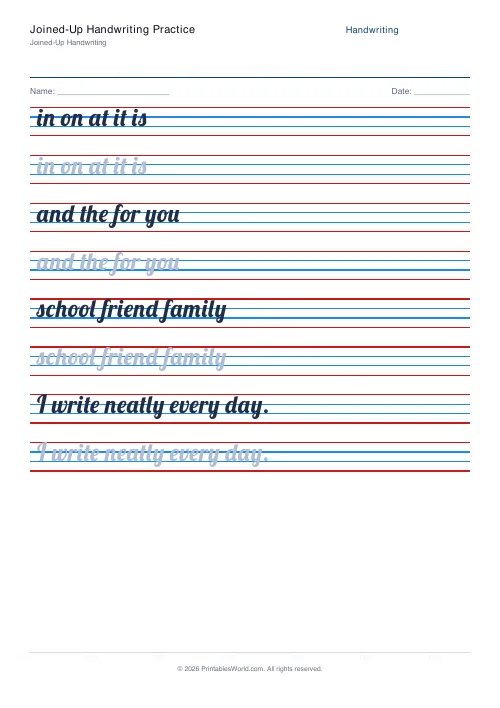
Yes. Lobster gives a bolder script. Switch fonts in the settings panel to compare letterforms.
How are sentences laid out?
Each line gets one trace row plus one copy row. Long sentences wrap to new rows automatically.
Related tools
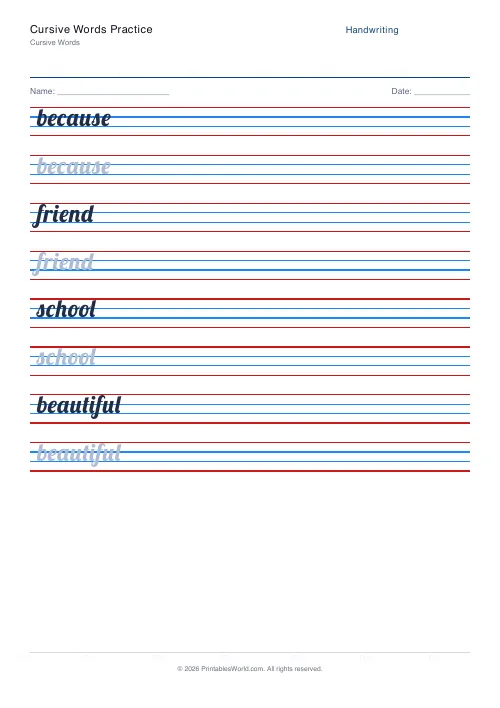
Cursive Words Practice
Practise writing common words in cursive script. Custom word input.
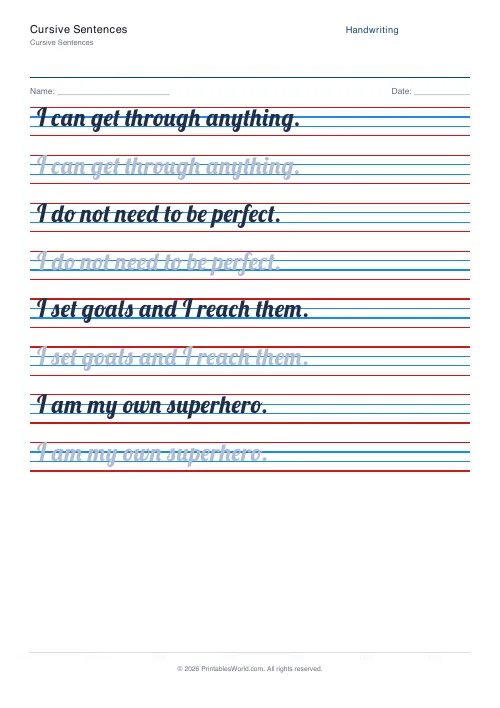
Cursive Sentences
Copy sentences in cursive. Includes well-known quotes and custom input.
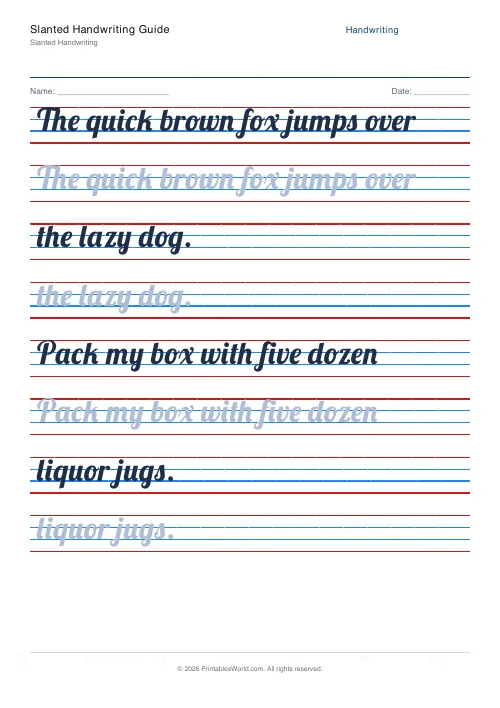
Slanted Handwriting Guide
Diagonal slant overlay supports consistent italic and cursive slope.
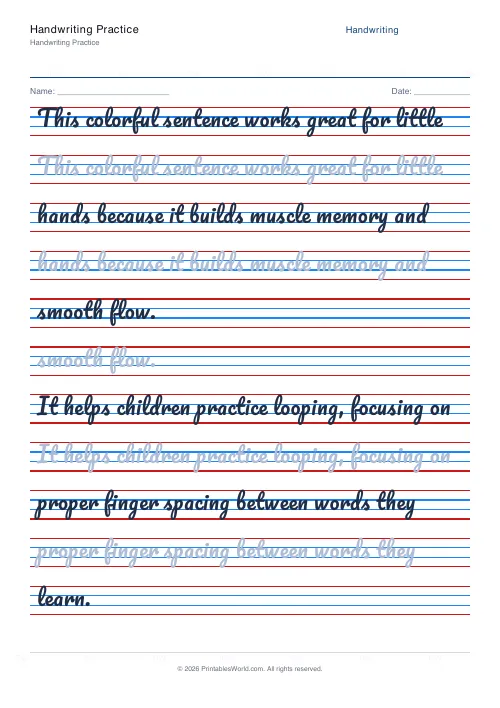
Handwriting Practice Generator
Create custom 4-line handwriting practice sheets with trace rows, adjustable guides, and your own text.
Further reading
Handwriting
Left-handed handwriting practice: free printable sheets
How to set up left-handed handwriting practice for comfort: paper angle, grip and page layout, plus free printable sheets designed for lefties.
7 min read
Handwriting
The best age to start handwriting practice
Age is the wrong question. Three readiness signs predict whether handwriting practice will help or frustrate. And what to do with the child who is not there yet.
5 min read
Handwriting
How to teach handwriting to kids: a step-by-step guide
A practical order for teaching handwriting: get the body and the pencil right first, then teach letters in stroke families rather than alphabetically, and keep sessions short enough that the hand never tires.
7 min read
More like this
- Handwriting Practice Generator
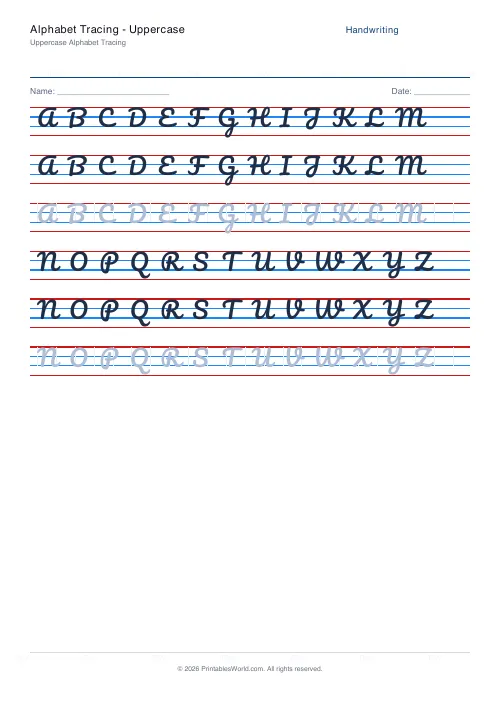 Alphabet Tracing: Uppercase
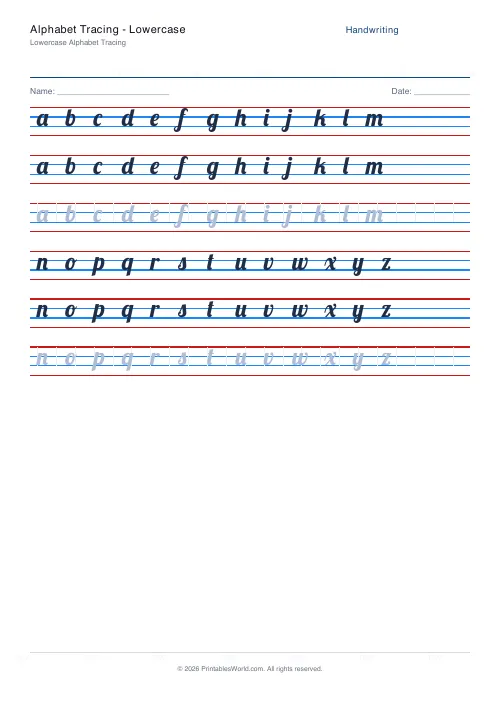 Alphabet Tracing: Lowercase
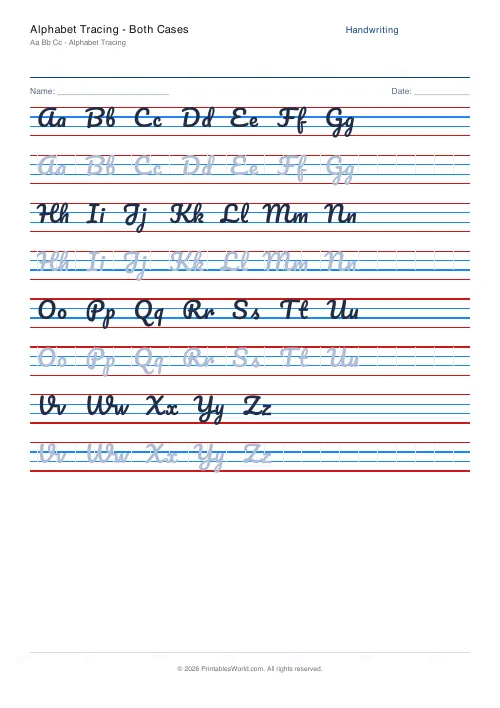 Alphabet Tracing: Both Cases
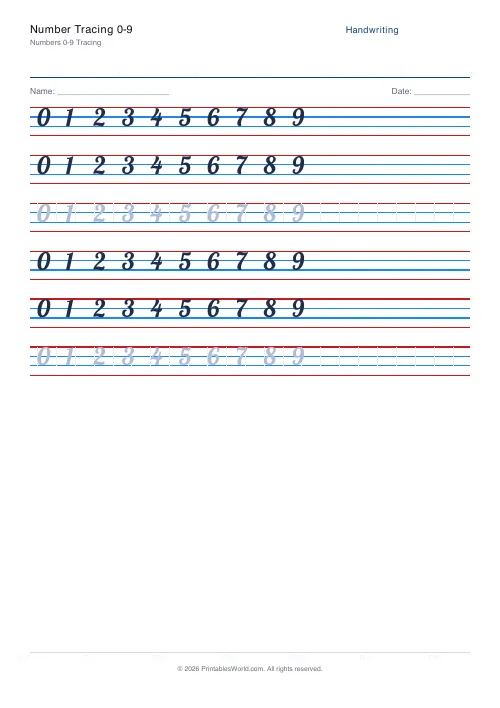 Number Tracing 0-9
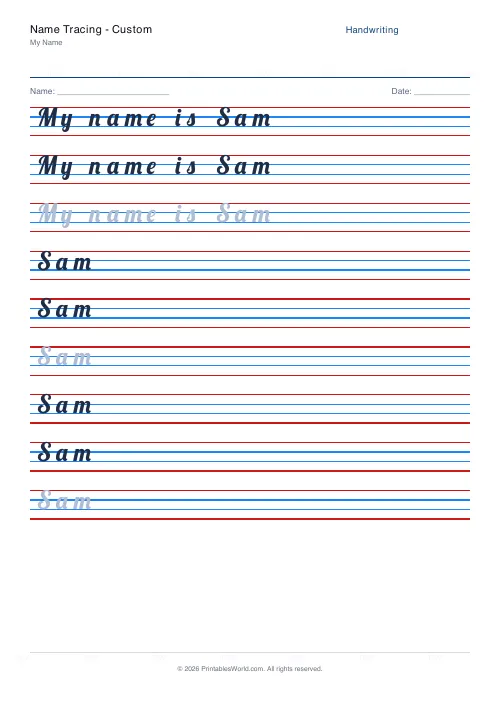 Name Tracing: Custom
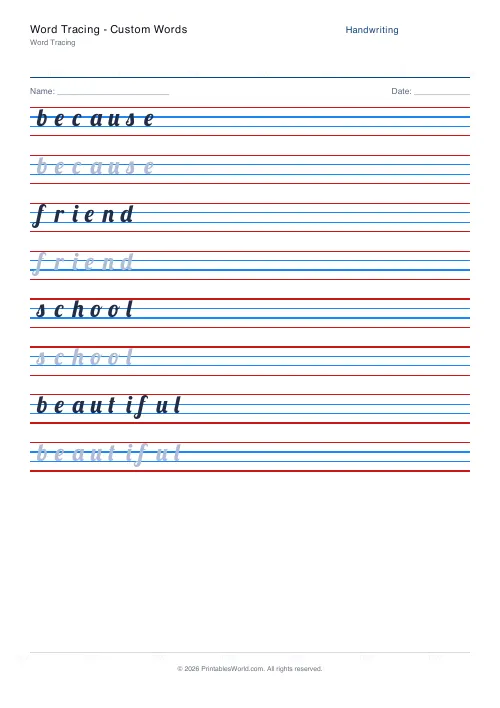 Word Tracing: Custom Words
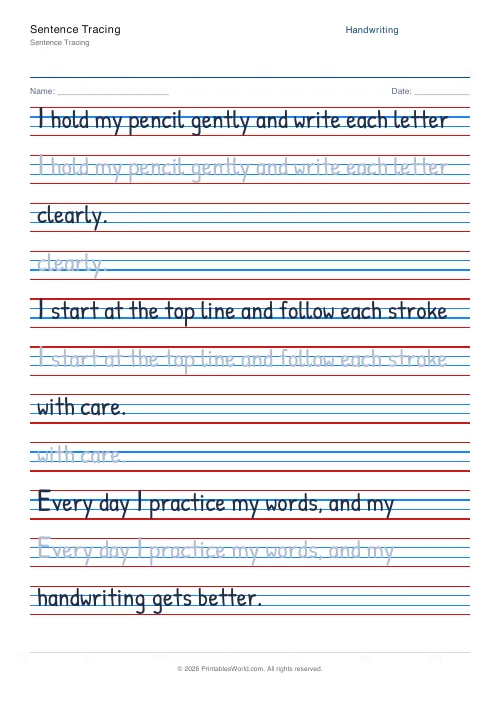 Sentence Tracing
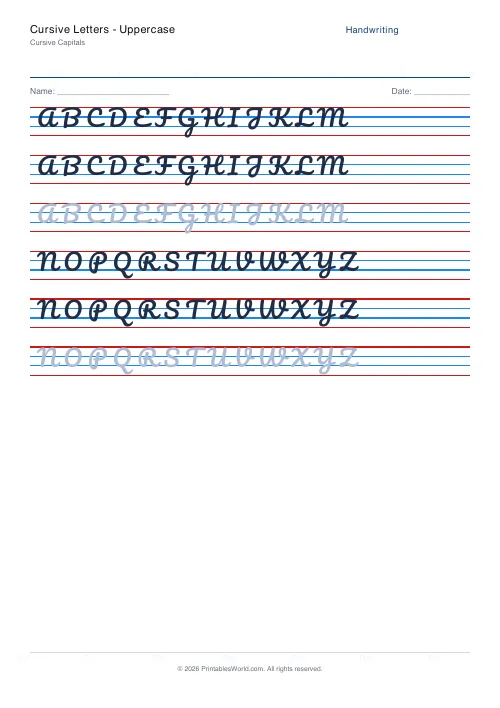 Cursive Letters: Uppercase
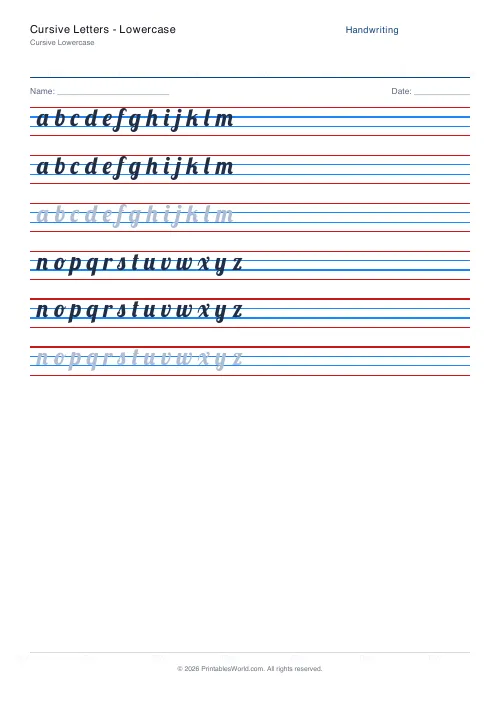 Cursive Letters: Lowercase
- Cursive Words Practice
- Cursive Sentences
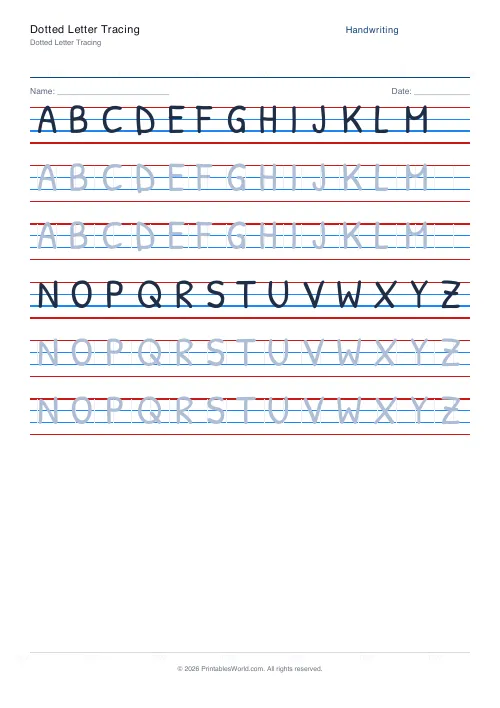 Dotted Letter Tracing
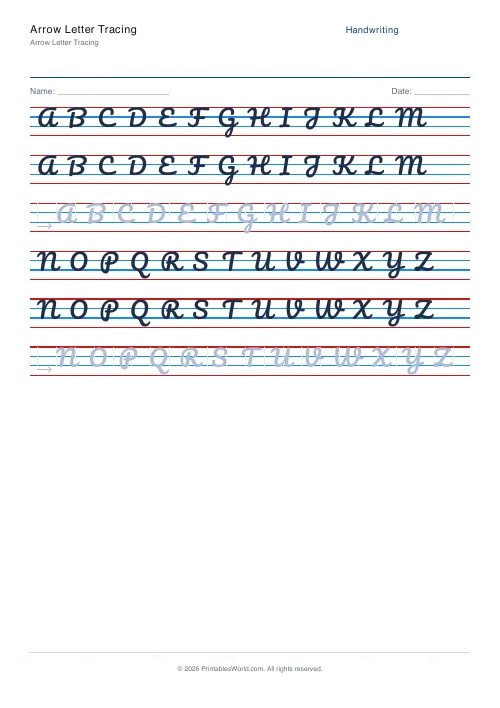 Arrow Letter Tracing