What this tool does
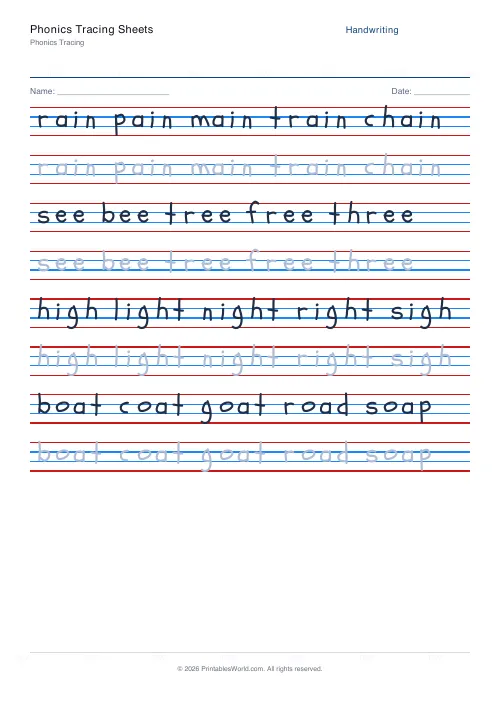
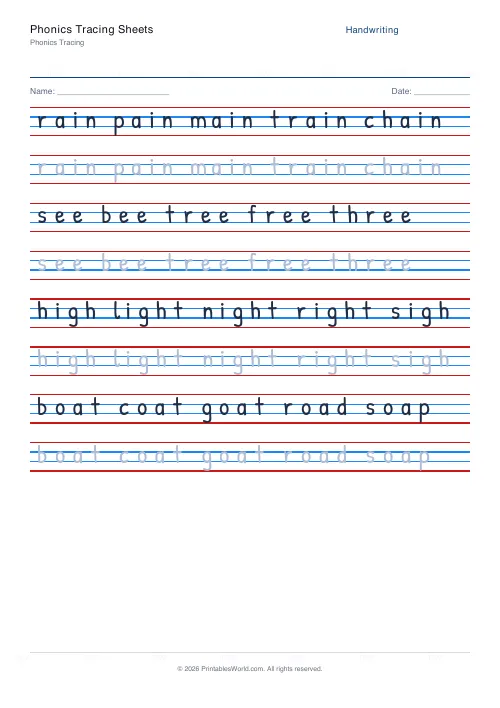
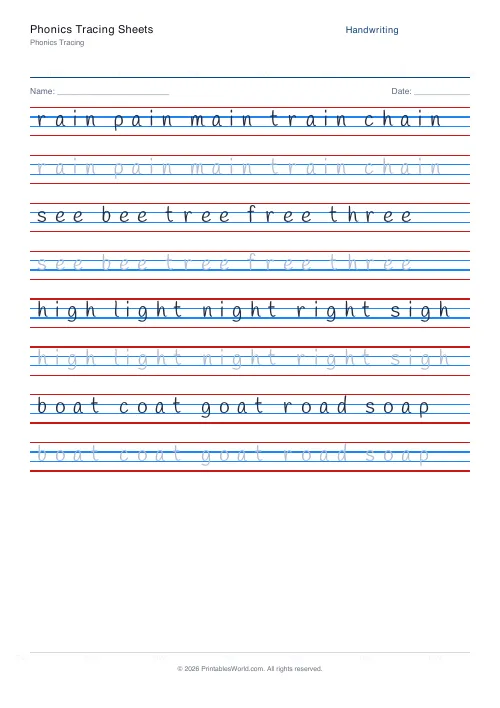
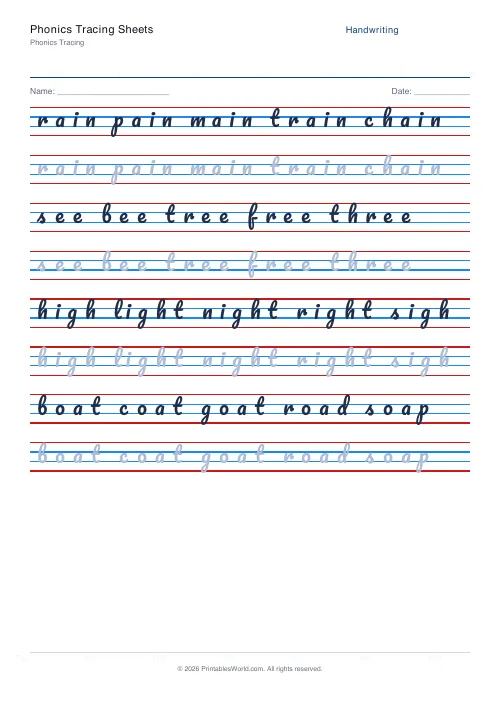
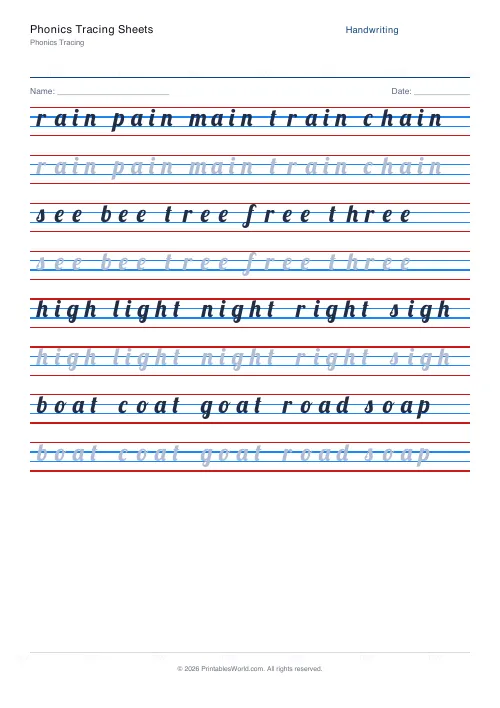
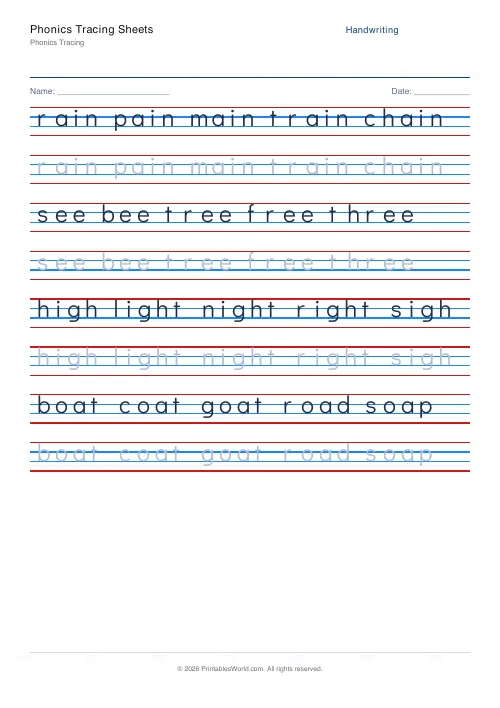
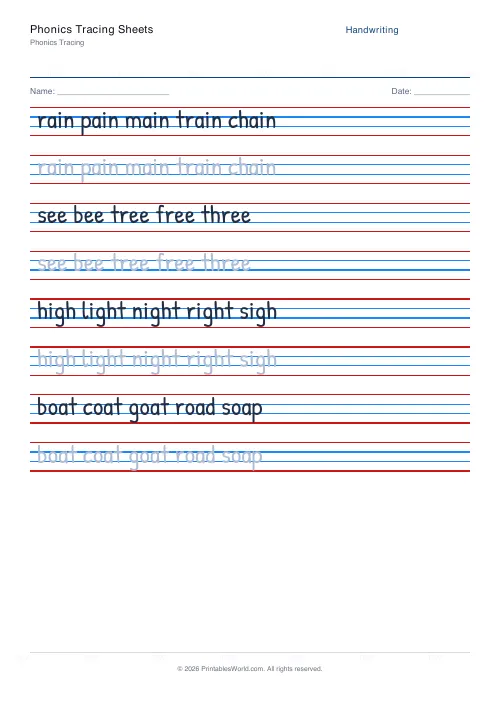
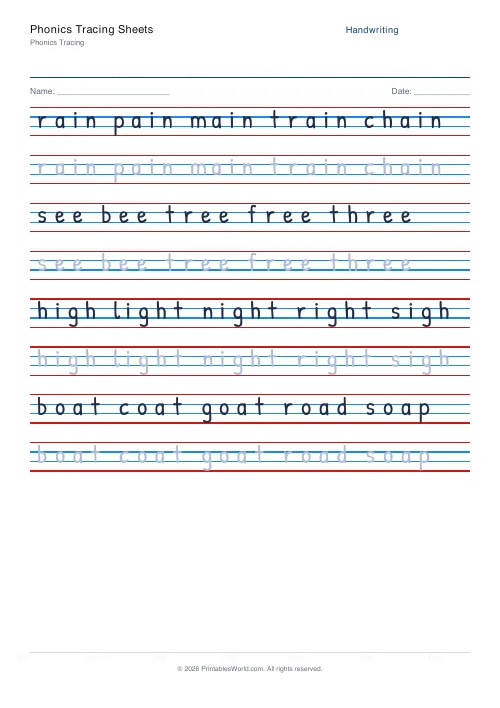
Short word lists grouped by the sound they share, such as ai, ee, igh and oa, set as trace-and-copy rows. Handwriting practice that reinforces the phonics while it happens.
People also used
Feedback
Spotted something off with this tool?
Words grouped by sound, not by topic
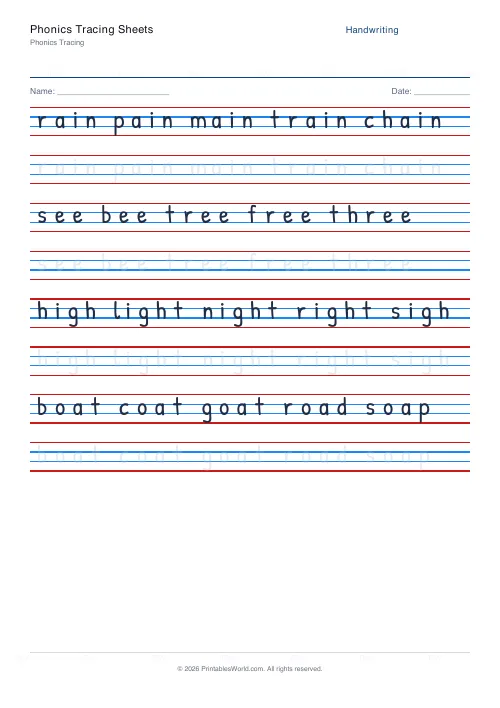
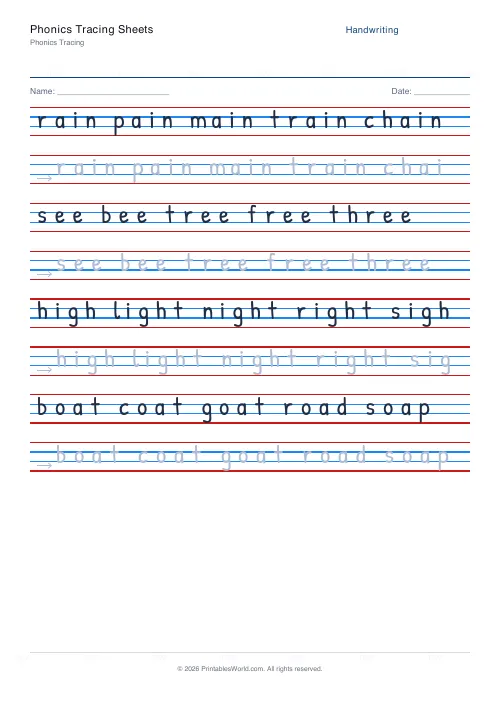
Each line holds a set of words sharing one vowel sound. Rain, pain, main, train, chain. Then see, bee, tree, free, three. Every line prints as a traceable model with a copy row underneath it on the standard four-line ruling.
The default sheet covers four sounds. The text is editable, so any grouping works.
The same sound spelled several ways
This is what a grouped list makes visible and a random word list hides completely.
The long a sound is written ai in rain, ay in play, a-e in cake and ei in eight. Those are four spellings of one sound, and a child who has met them scattered across a year has four unrelated facts rather than one pattern with variants.
Putting a group on one line, and then a different spelling of the same sound on the next, is the arrangement that shows the relationship. It is worth building a sheet that does exactly that.
Why handwriting and phonics belong together
Writing a grapheme is a different memory task from reading one, and the two reinforce each other.
Write igh forty times and there is now a motor pattern for it, available later when spelling a word never written before. Reading alone will not produce that. Recognition is easier than production, which is exactly why children spend years reading words they cannot spell.
It also slows them down at exactly the point where slowing down helps. Copying a word letter by letter forces attention onto the letters.
Say the sound, not the letter names
While tracing ai, say the sound it makes rather than "ay-eye".
Letter names interfere. The names of the two letters in a digraph have nothing whatever to do with the sound the pair makes, so a child spelling by letter name has no route at all from the sound in their head to the letters on the page.
Match the school's order
Phonics schemes teach graphemes in a specific sequence, and they differ from each other. A child taught ai this week will not have met igh yet under some schemes and will have met it under others.
Replace the practice text with whatever is on this week's sheet from school. Handwriting practice on a grapheme they have not been taught is handwriting practice, and nothing more.
Things you can change
The word list, font, trace style, rows per line, character boxes, ruling colour and line height. A4 or US Letter at 100%.
Four to six words a line and three or four lines a sheet. Longer than that and the copying goes on autopilot, which practises the wrong thing.
FAQs
Quick answers
Which sounds are covered?
Four common long-vowel digraphs / trigraphs by default, ai, ee, igh and oa, each represented by five model words. Edit the list to focus on different sounds.
Is it tied to a specific phonics scheme?
No. The sound groups suit Letters and Sounds, Read Write Inc., Jolly Phonics and most synthetic phonics programmes used in primary classrooms.
How are the rows arranged?
Each sound group prints on its own row with one trace pass and one copy pass. Increase Rows / sentence for additional repetitions.
Can I add my own sound list?
Yes. Type one row per sound, words separated by spaces, and the engine builds the worksheet.
Related tools
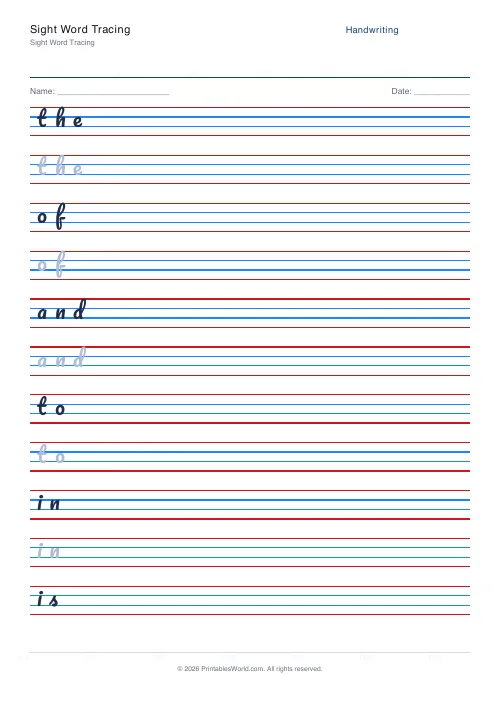
Sight Word Tracing
Trace and copy the most common high-frequency words.
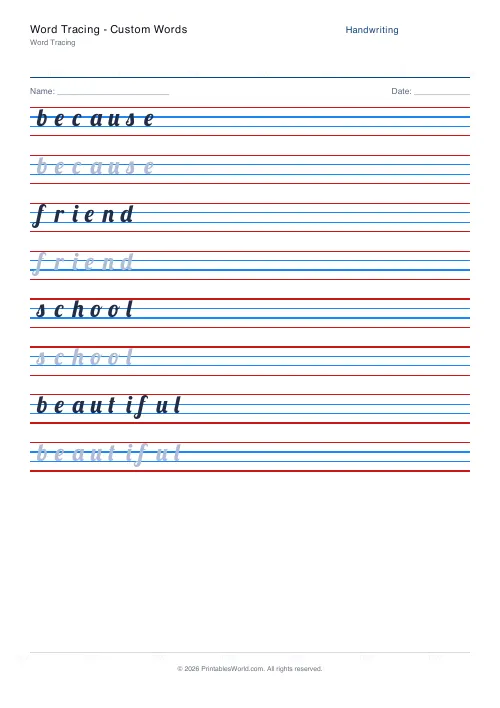
Word Tracing: Custom Words
Enter a word list and generate a tracing sheet on 4-line ruling.
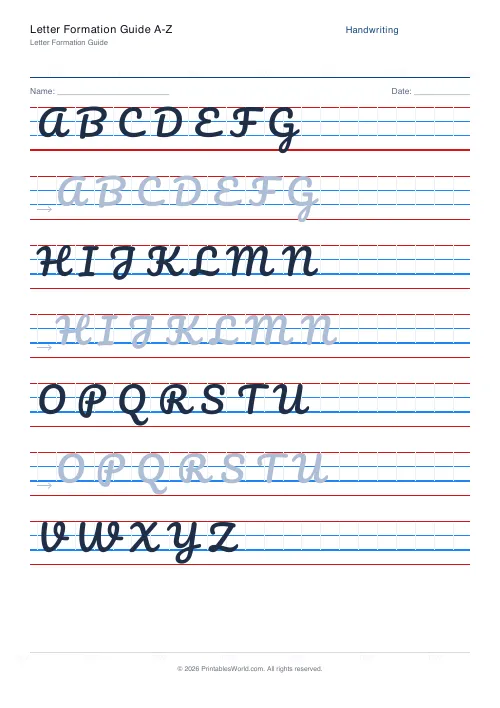
Letter Formation Guide A-Z
Full alphabet with directional arrows for stroke-order learning.
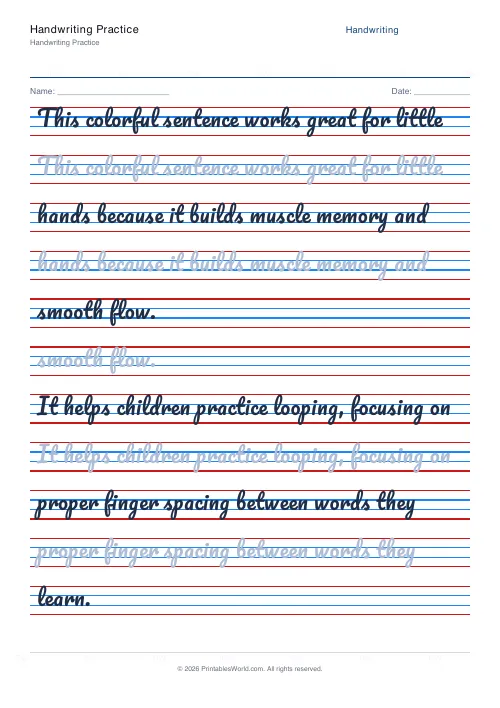
Handwriting Practice Generator
Create custom 4-line handwriting practice sheets with trace rows, adjustable guides, and your own text.
Further reading
Handwriting
Dotted vs solid trace lines: what works best for beginners
Each trace style removes a different amount of support. The mistake is staying on one too long. Tracing feels productive and teaches less than copying.
4 min read
Handwriting
How to fix reversed letters (b and d) in young writers
Reversing b and d is normal up to around seven. The fix is not more practice of both together. It is teaching them apart, by movement rather than by shape.
5 min read
Handwriting
How to teach cursive at home: a step-by-step plan
A simple step-by-step plan for teaching cursive at home, with letter families grouped by stroke, a four-week practice sequence, and free printable sheets to download.
8 min read
More like this
- Handwriting Practice Generator
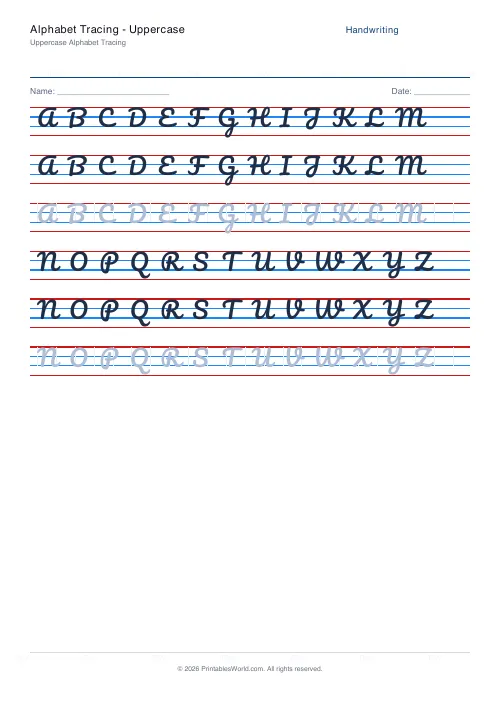 Alphabet Tracing: Uppercase
 Alphabet Tracing: Lowercase
 Alphabet Tracing: Both Cases
 Number Tracing 0-9
 Name Tracing: Custom
- Word Tracing: Custom Words
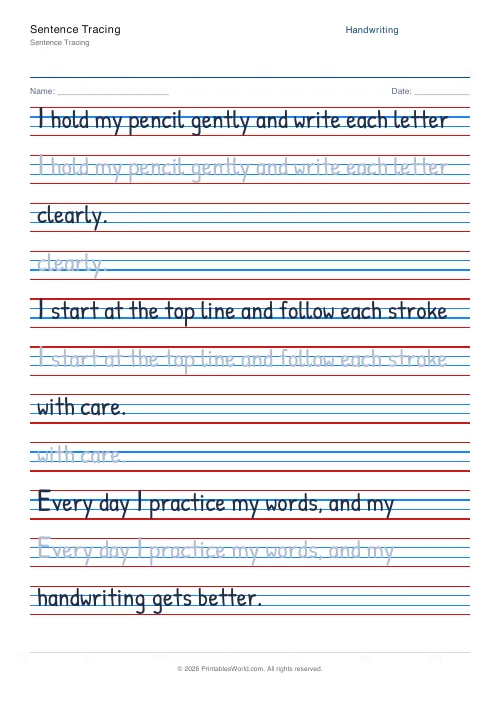 Sentence Tracing
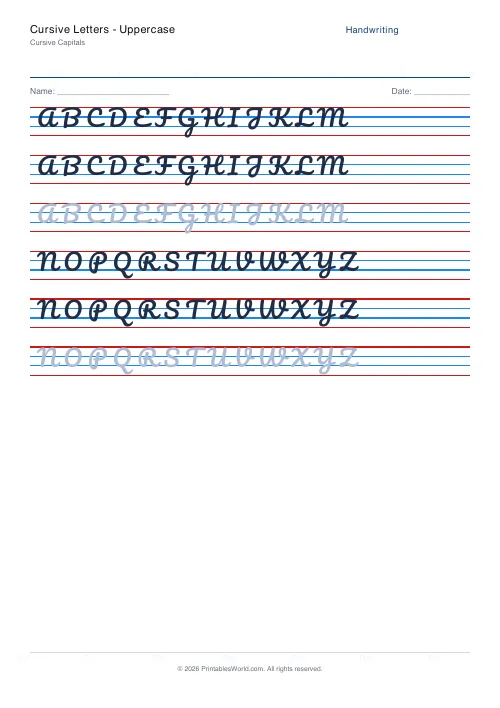 Cursive Letters: Uppercase
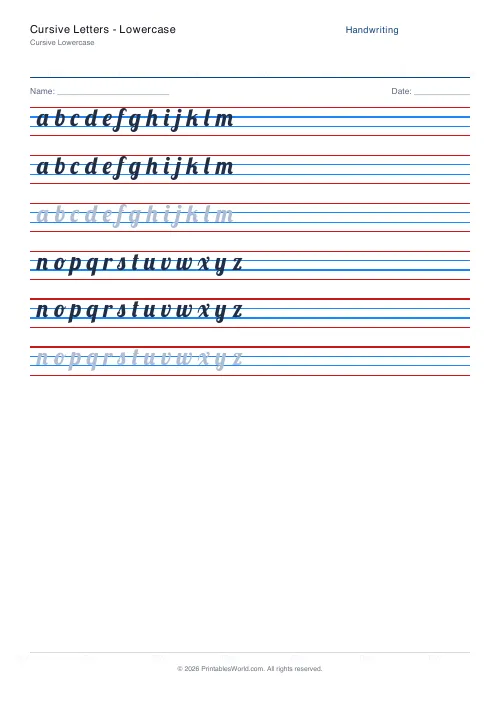 Cursive Letters: Lowercase
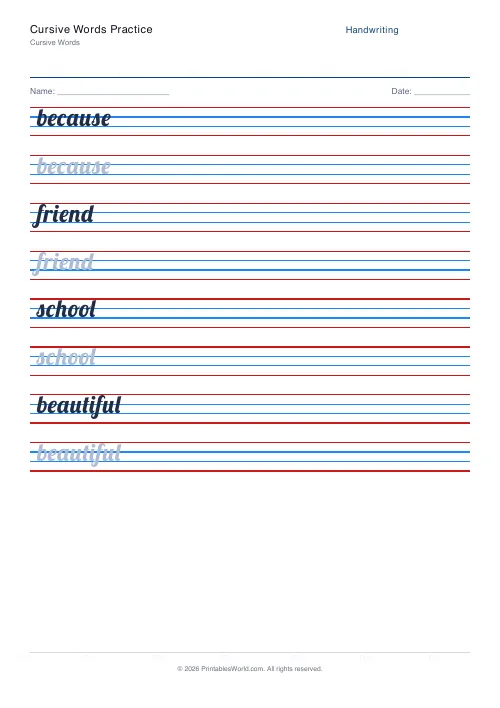 Cursive Words Practice
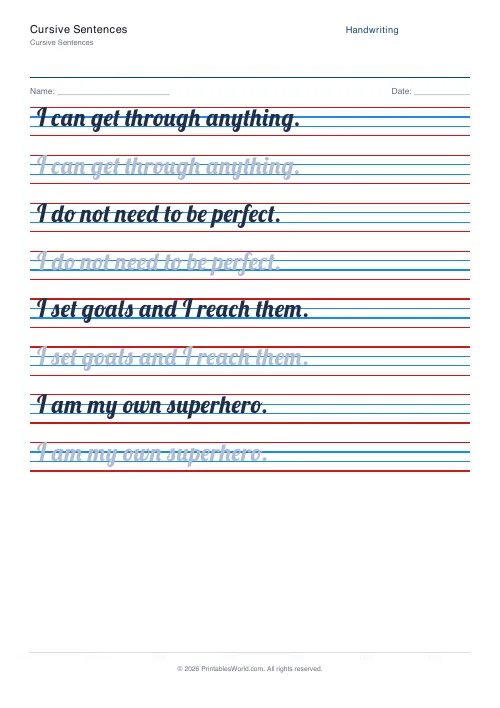 Cursive Sentences
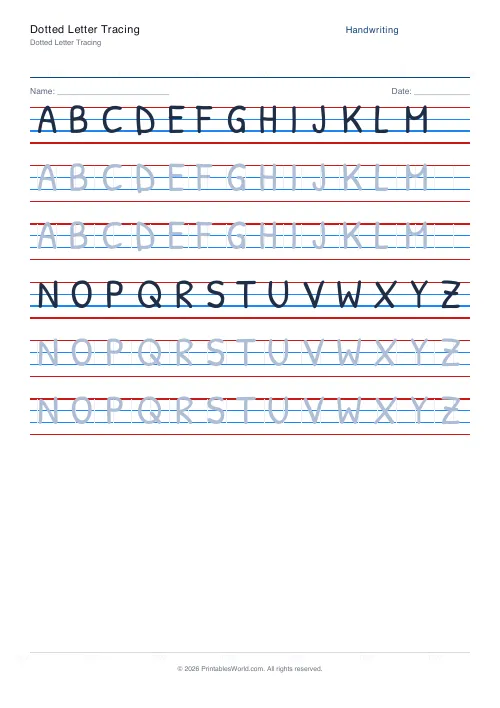 Dotted Letter Tracing
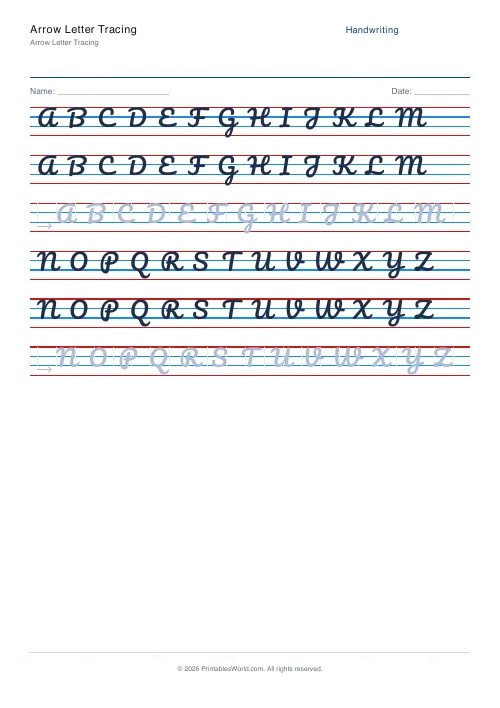 Arrow Letter Tracing