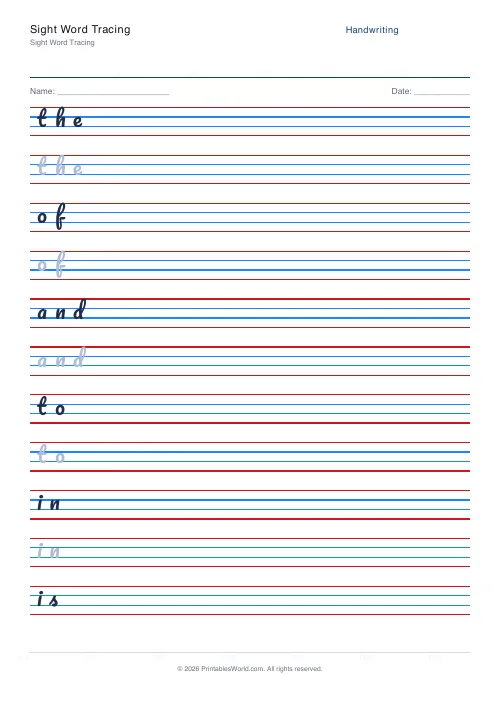
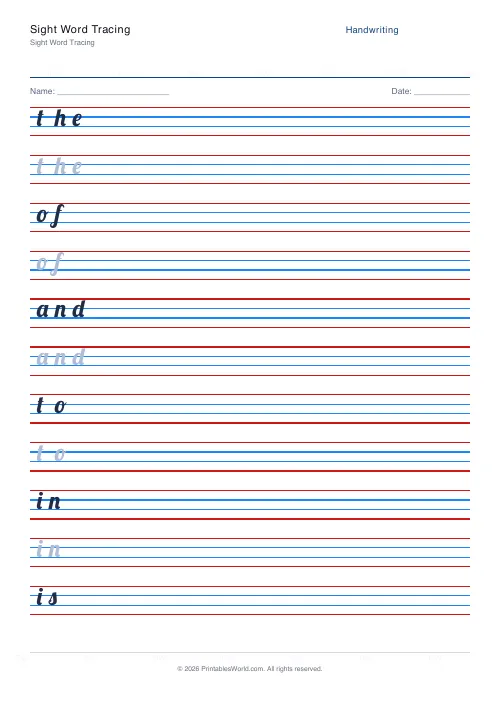
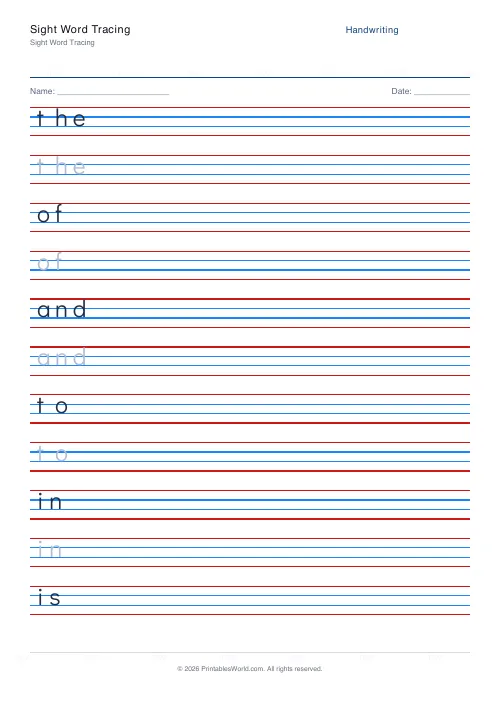
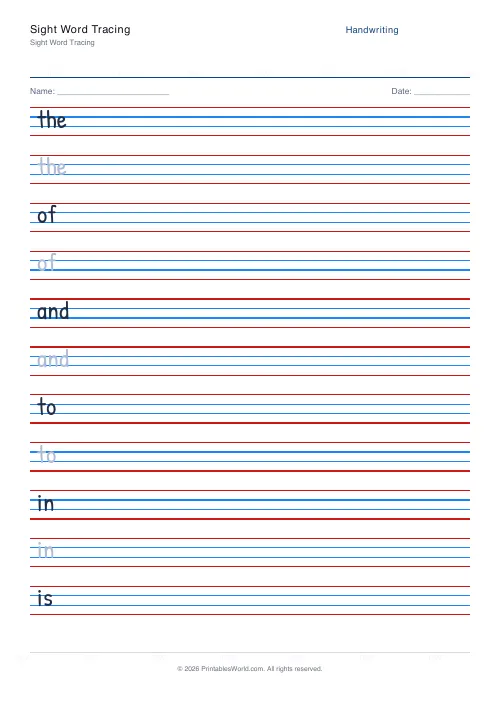
What this tool does
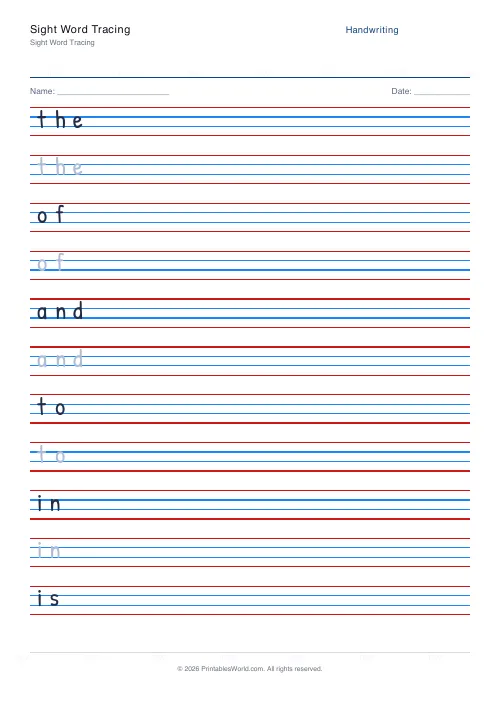
Trace-and-copy rows for high-frequency words, loaded with the Fry top 100. Swap in your school's own list; everything else on the handwriting generator is still adjustable.
People also used
Feedback
Spotted something off with this tool?
The words that make up a third of everything
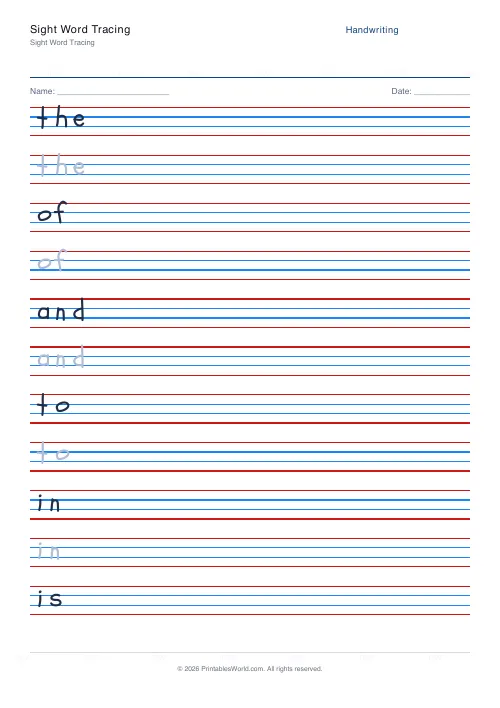
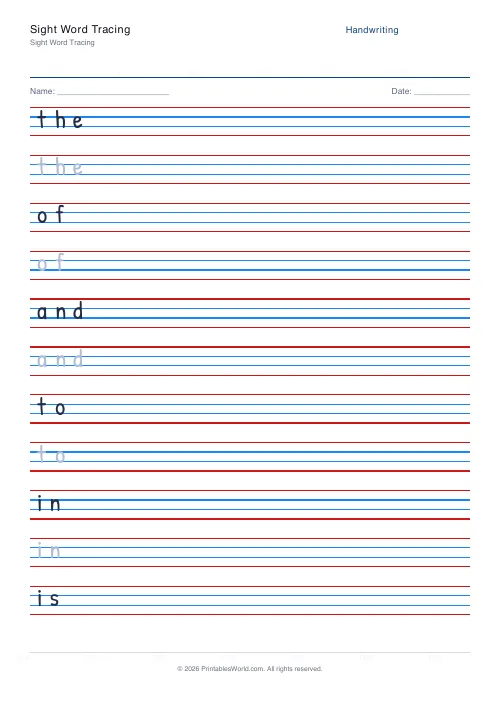
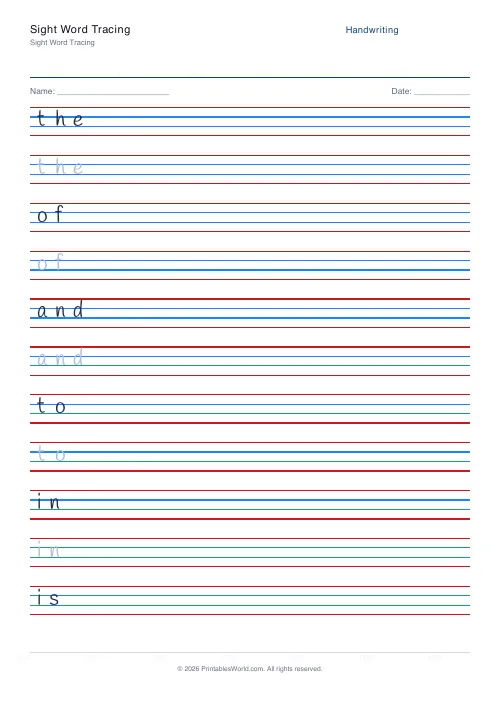
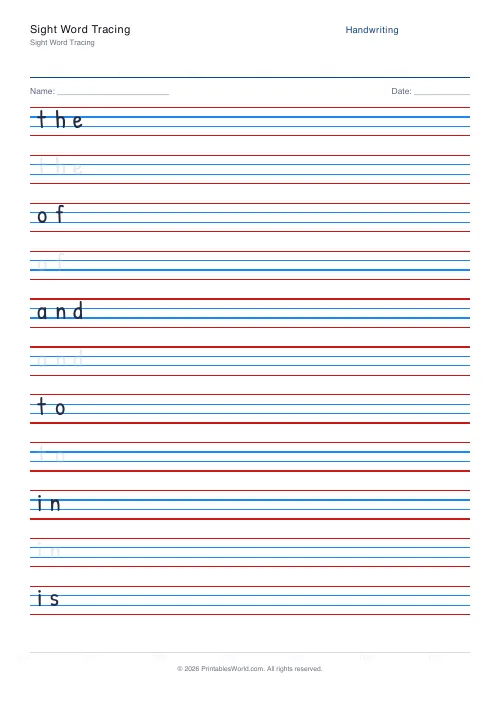
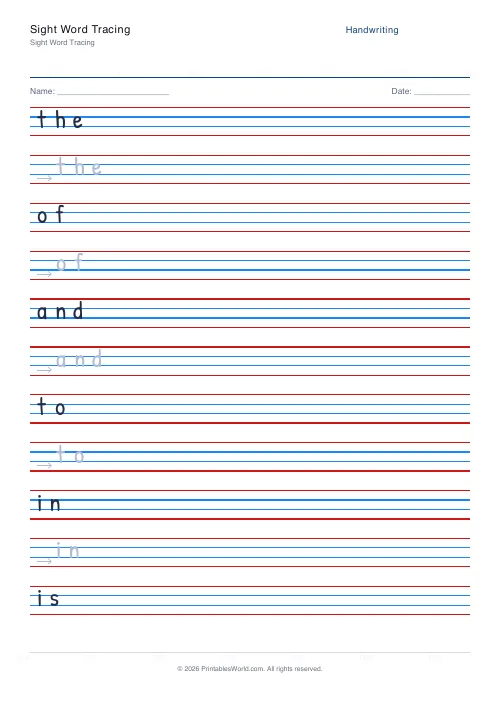
The sheet comes loaded with the start of the Fry list — the, of, and, to, in, is, you, that, it, was — each getting a traceable model row and a copy row on four-line ruling.
Between them the first hundred Fry words account for roughly half the words in ordinary English text. A child who writes them without hesitating has removed half the friction from every sentence they will ever write.
Why these words need handwriting practice, not just reading practice
Most of them cannot be sounded out. Of ends in a /v/. Was does not rhyme with gas. They, from, could — a child applying phonics gets each of them wrong.
Which means they have to be stored whole, and writing stores them differently from reading. The hand learns a sequence, and a sequence practised enough becomes automatic in a way that recognising a shape on a page does not. This is why sight words appear on handwriting sheets rather than only on flashcards.
Use your school's list instead
Fry is a sensible default and it is not what your child is being taught. Reading schemes each have their own list, in their own order, and a child working through one of those wants those words in that order.
Paste the list in and the sheet rebuilds around it. If you do not know which scheme is in use, the class teacher will have the list on a sheet already.
Five or six words, not fifteen
The temptation is to fit as many as possible on a page. It is the wrong instinct.
Sight-word learning depends on how many times a word has been met, not on how many words have been met once. Five words practised across three days will stick. Fifteen practised once will not, and that sheet takes three times as long to get through. Twenty words to cover means four sheets over four weeks.
Say it, trace it, cover it
Say the word aloud before each trace. Every time. A silent tracer is doing handwriting practice, which is fine, but the point here is to attach the shape to the sound.
Then cover the row and ask for the word written from memory on the back. That takes ten seconds and it is the only part of the exercise that tests anything — a completed sheet tells you the child can copy.
On the form
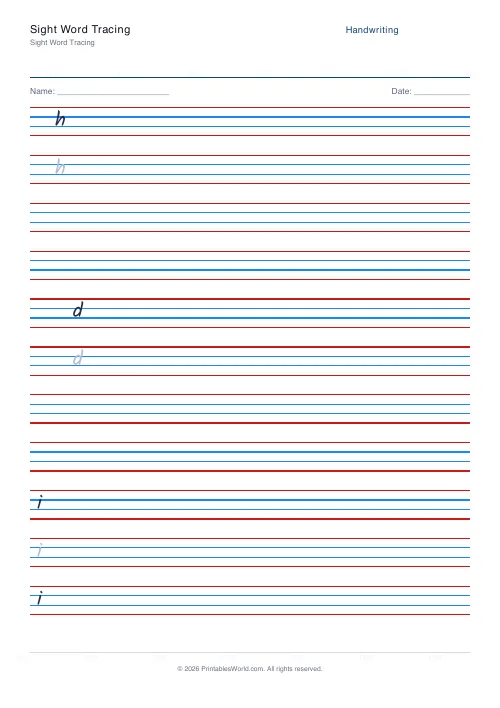
The word list. The font. Whether letters are joined. The trace style — solid, a hollow outline, dashed, or arrows marking stroke direction. Rows per word, character boxes, ruling colour, and the ruling itself. A4 or US Letter.
For a broader set organised by grade, the Dolch word sheets cover pre-primer to third grade with the same read-trace-write pattern.
Print at 100%.
FAQs
Quick answers
Which words are included by default?
The first fifteen of the Fry 100 high-frequency word list. The most common words children meet when learning to read.
How do I add my own list?
Type each word on its own line in the practice text box. The engine builds trace-and-copy rows for every word.
How are the rows arranged?
Each word gets one trace row plus one copy row by default. Increase Rows / sentence for additional practice.
Are these words for any age?
They suit ages 4-7. Early readers building automatic recognition of the most common words.
Related tools
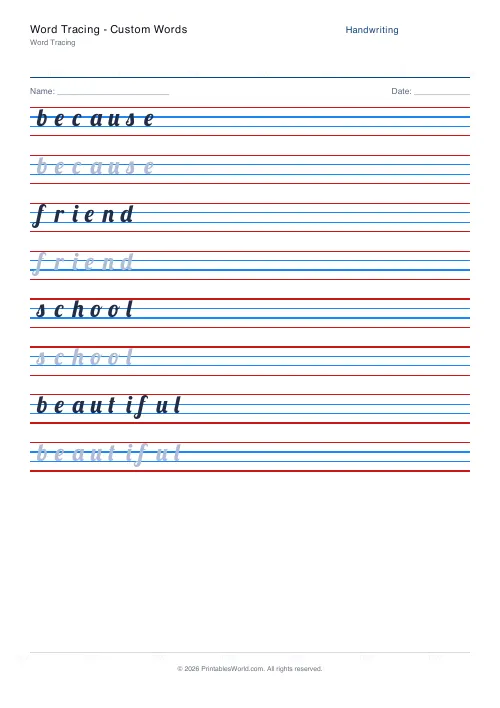
Word Tracing: Custom Words
Enter a word list and generate a tracing sheet on 4-line ruling.
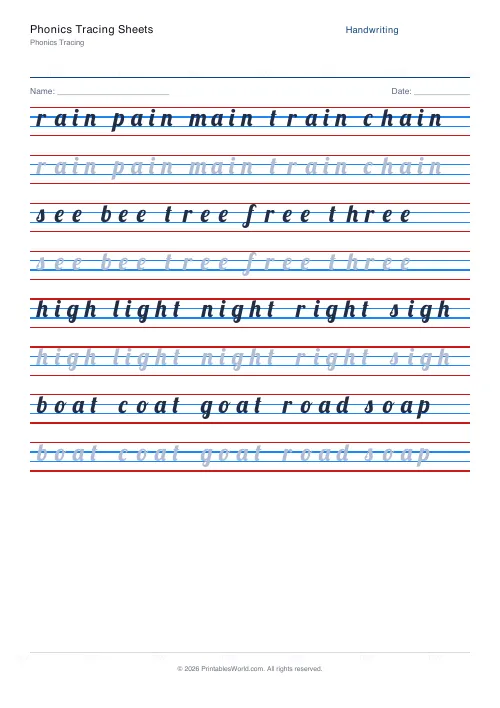
Phonics Tracing Sheets
Trace words grouped by phonics sound. Ai, ee, igh, oa and more.
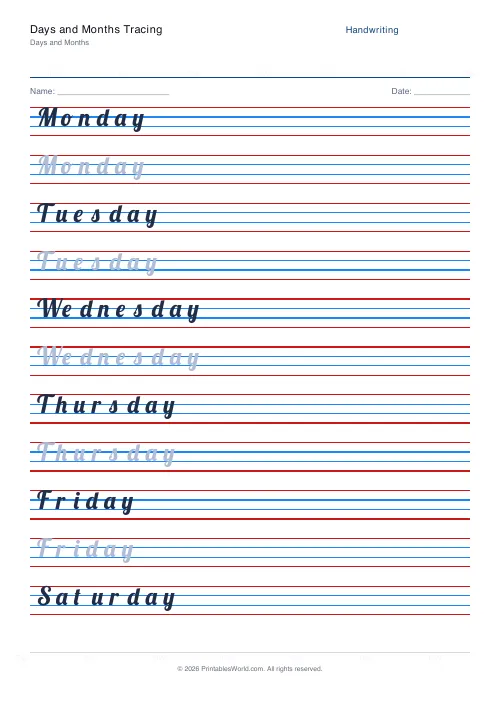
Days and Months Tracing
Trace and copy days of the week and months of the year.
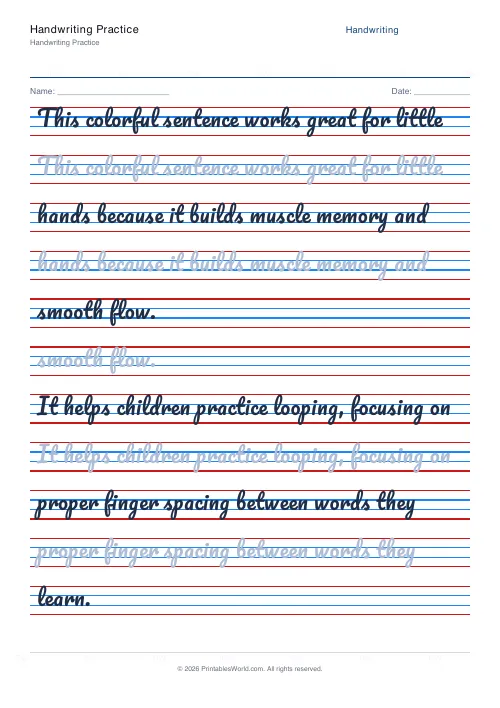
Handwriting Practice Generator
Create custom 4-line handwriting practice sheets with trace rows, adjustable guides, and your own text.
Further reading
More like this
- Handwriting Practice Generator
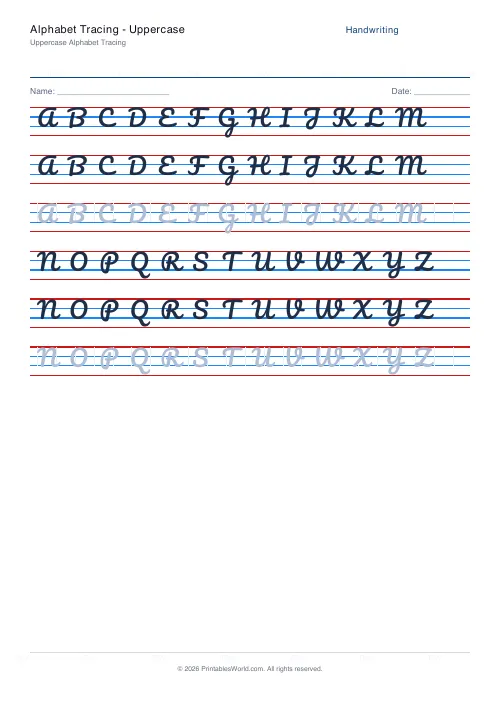 Alphabet Tracing: Uppercase
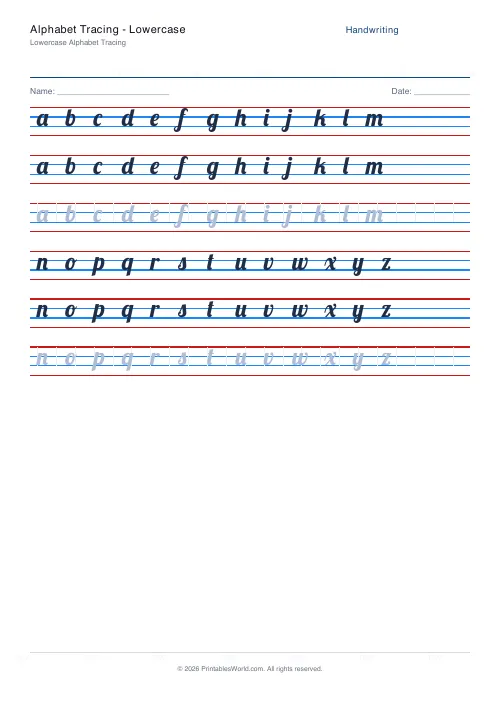 Alphabet Tracing: Lowercase
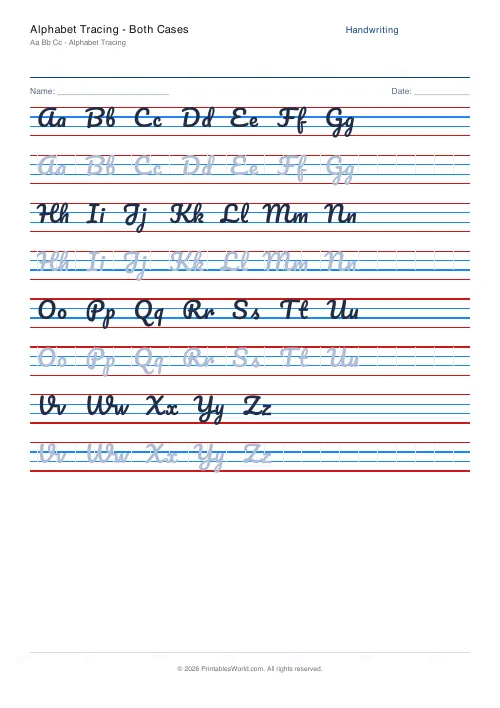 Alphabet Tracing: Both Cases
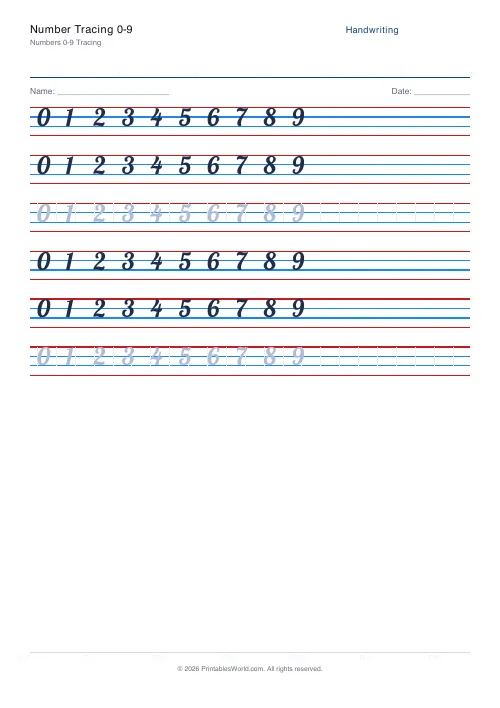 Number Tracing 0-9
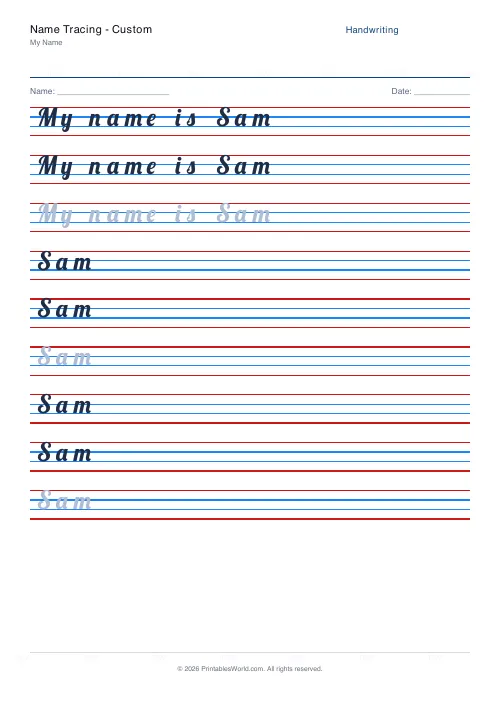 Name Tracing: Custom
- Word Tracing: Custom Words
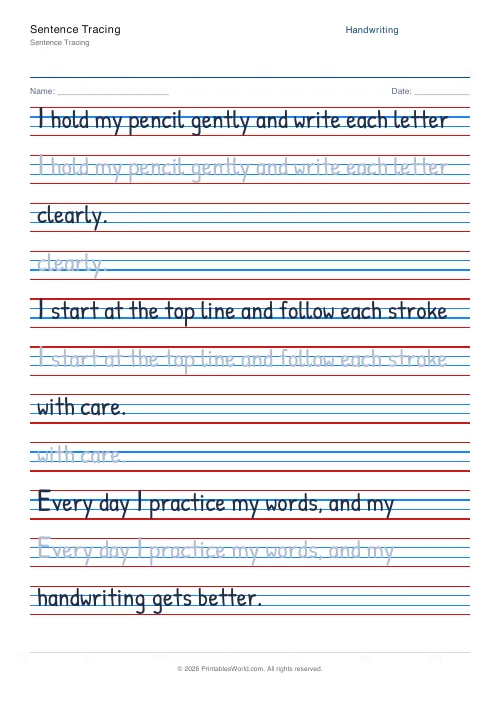 Sentence Tracing
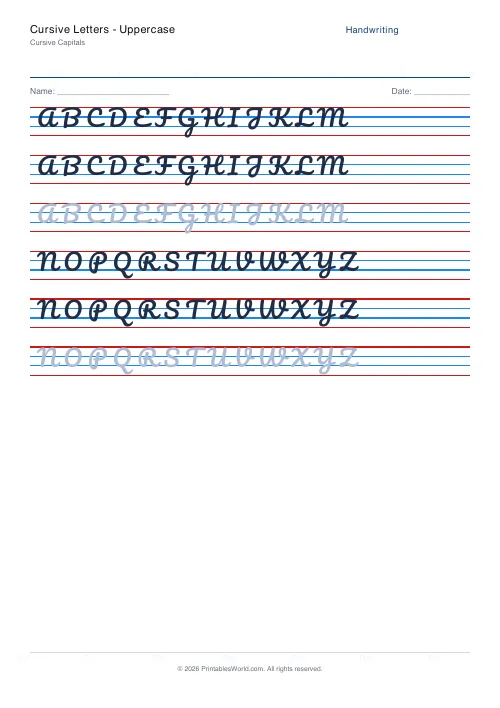 Cursive Letters: Uppercase
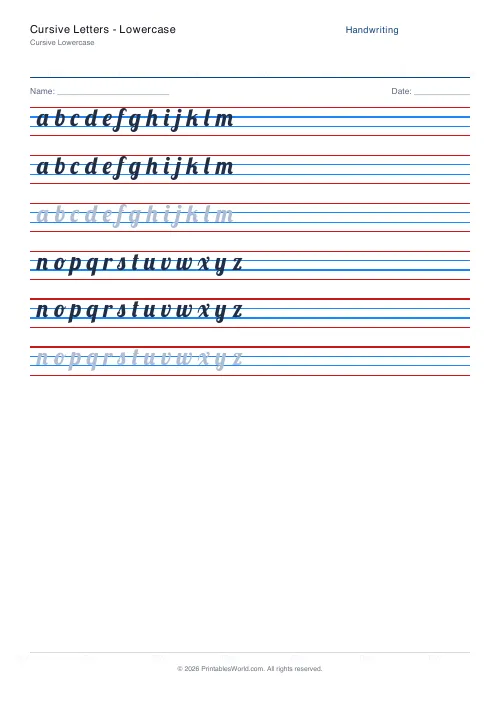 Cursive Letters: Lowercase
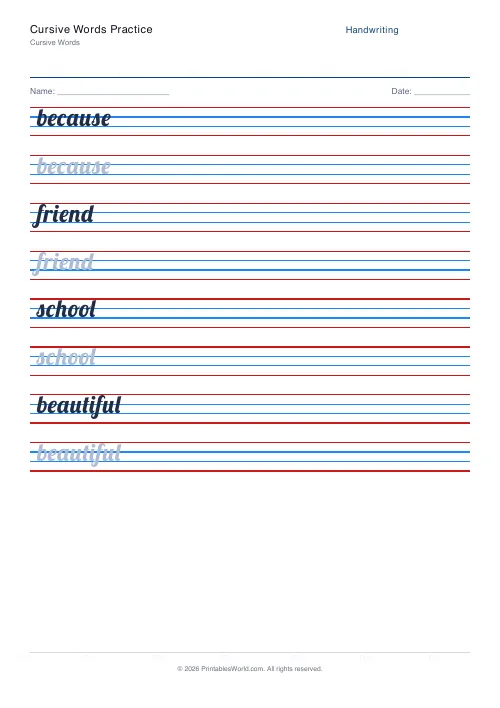 Cursive Words Practice
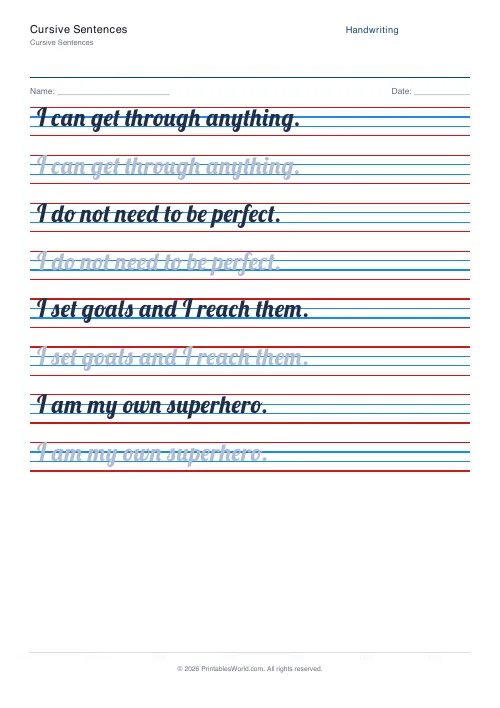 Cursive Sentences
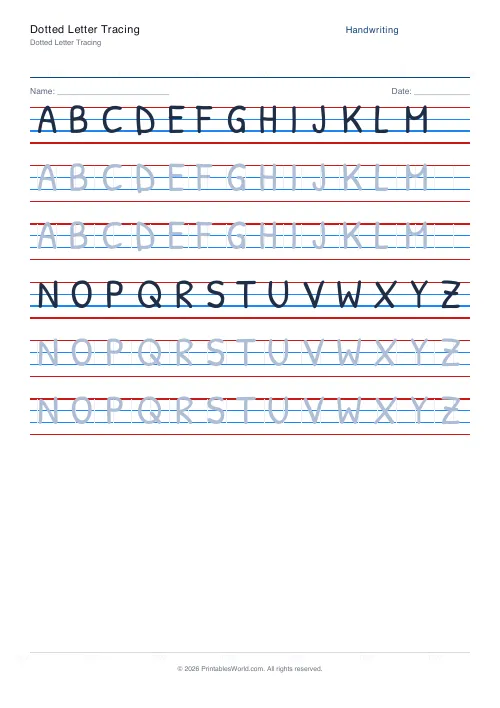 Dotted Letter Tracing
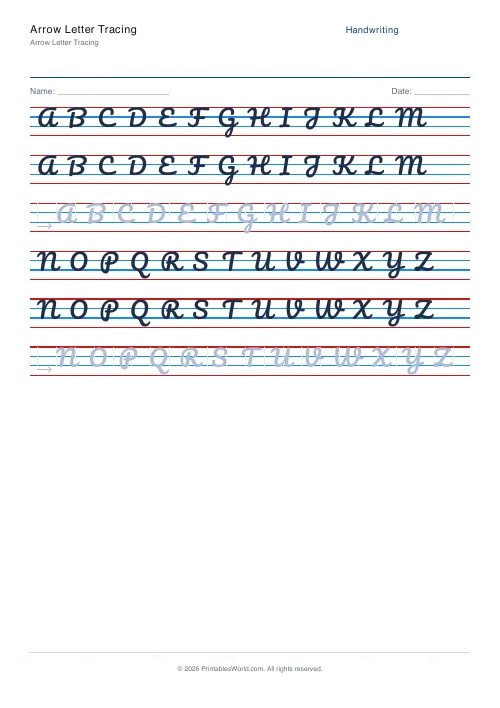 Arrow Letter Tracing