What this tool does
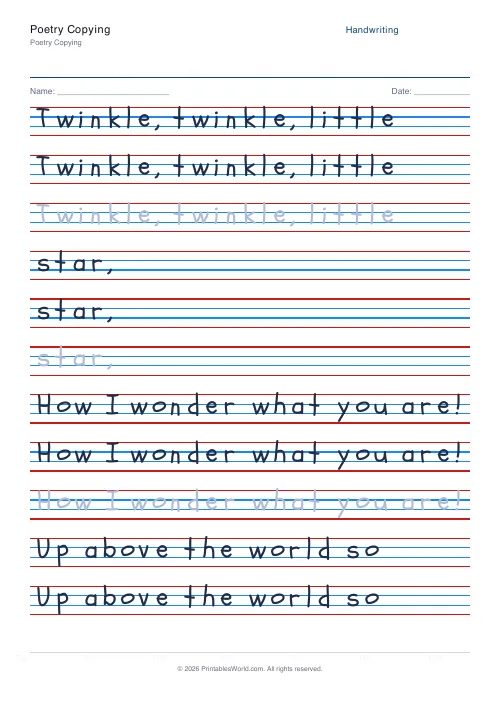
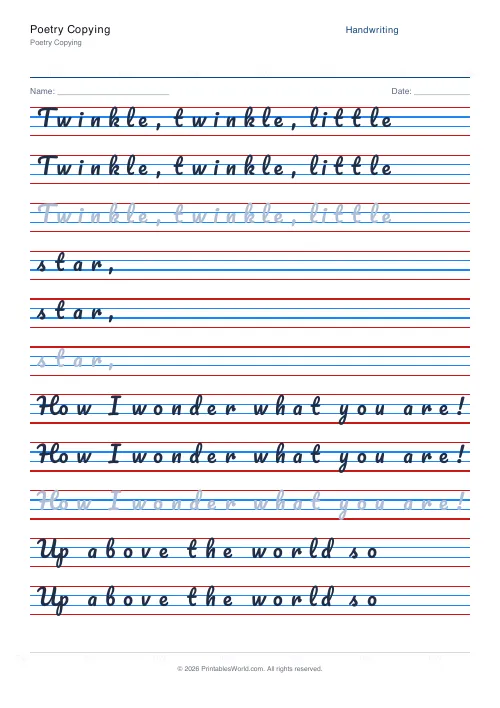
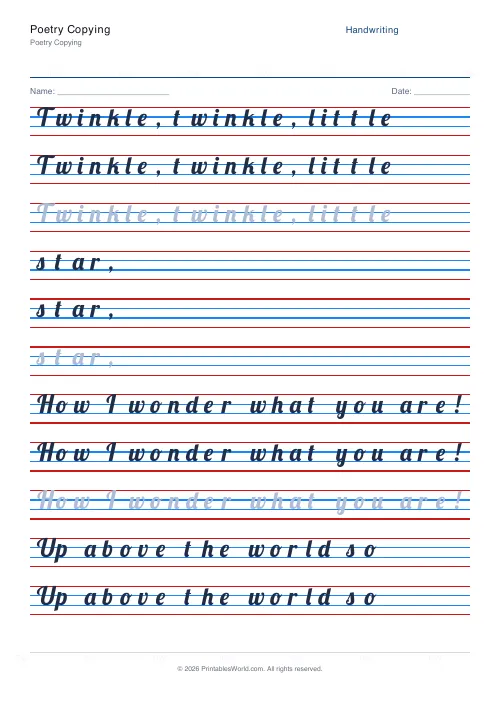
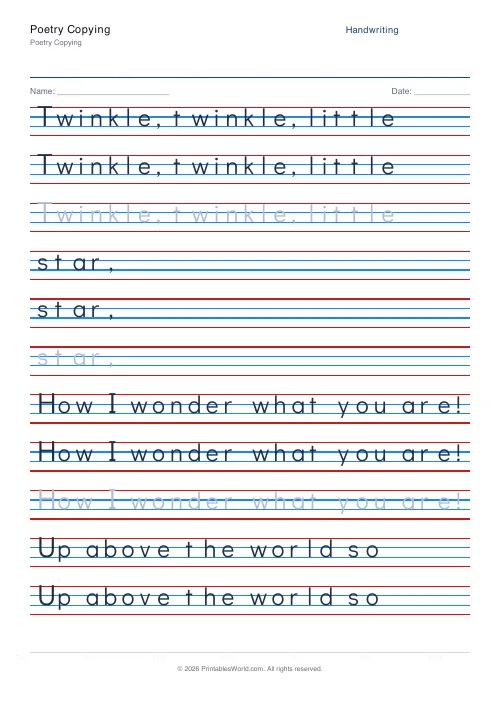
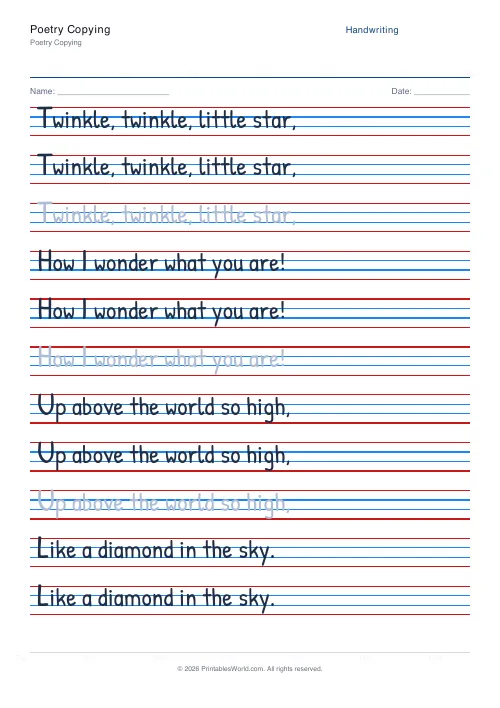
A short well-known poem laid out on handwriting lines. Handwriting practice that brings line breaks, rhythm and the punctuation conventions of poetry along with it.
People also used
Feedback
Spotted something off with this tool?
A poem on handwriting lines
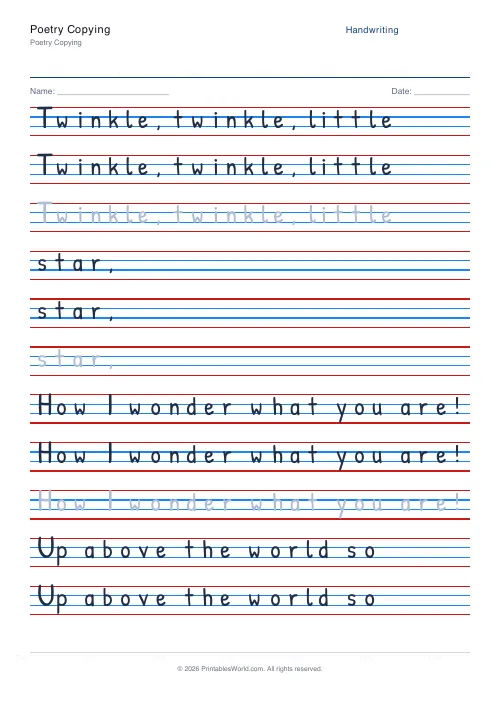
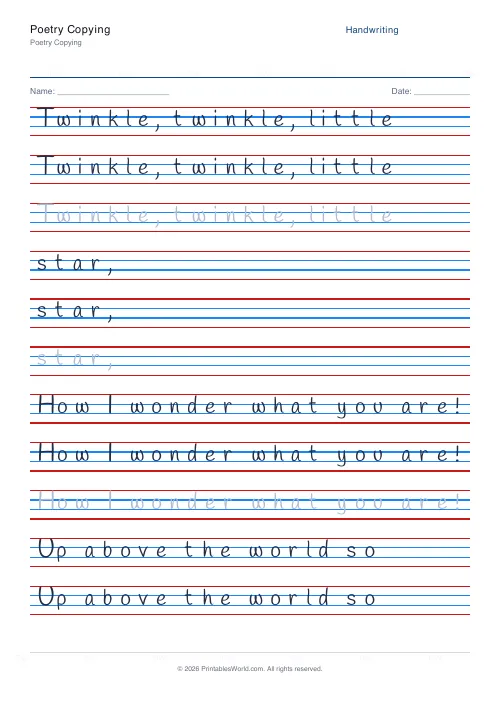
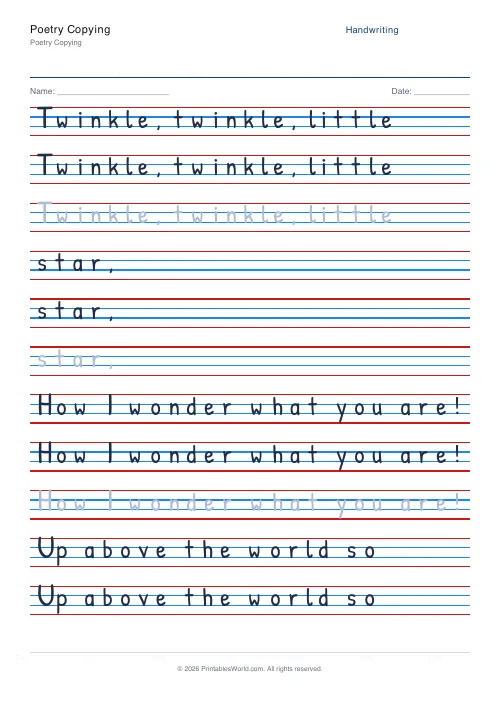
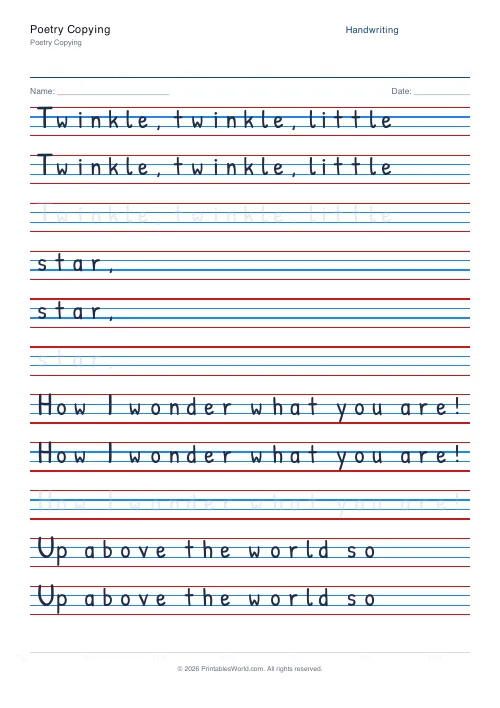
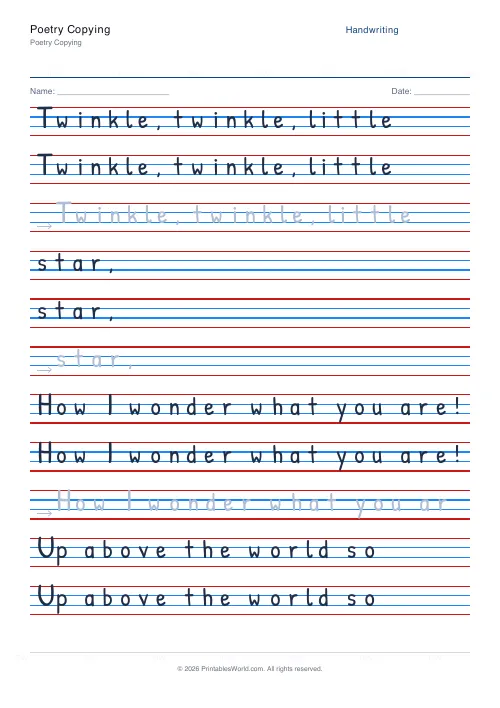
The preset loads the first verse of Twinkle Twinkle, set on four-line ruling with rows to copy onto. Paste in any poem instead.
The handwriting exercise is the same as any sentence sheet. What differs is the layout, and the layout is the lesson.
Line breaks are information
Prose wraps wherever the paper runs out. Poetry does not — every line ends where the poet decided it should, and copying a poem is the first time most children meet a line break that means something.
Which is why the instruction that matters here is: keep the lines as they are. A child who runs two lines together to save space has thrown away half of what makes it a poem, and has usually done it without noticing.
Point out the capital at the start of each line while you are there. It is a poetic convention rather than a grammatical one, and it looks like a mistake to a child who has just learned that capitals follow full stops.
Copying is how poems get into your head
Reading a poem takes seconds. Copying one is slow, and the slowness is the point.
Writing it out puts every word through the hand at the pace the line actually moves, which is close to how it sounds read aloud. Children notice rhymes they had skipped past, and they notice the rhythm because their hand is keeping time with it.
It is also how a verse gets memorised without anybody setting out to memorise anything. Copy one three times across a week and most children simply have it.
Choosing a poem
Short and rhyming, and worth having in a child's head afterwards. Four to eight lines fits comfortably.
Nursery rhymes work for the youngest. Beyond that: Edward Lear, Spike Milligan, Christina Rossetti, anything in the public domain that scans well. A poem with a strong beat is easier to copy than free verse, because the line lengths are even and the page looks orderly.
Avoid anything with unusual indentation. The engine sets each line from the left margin, so a shaped poem loses its shape.
Controls and printing
The poem, the font, whether letters join, trace style, rows per line, ruling colour and line height. A4 or US Letter.
Fewer rows per line than usual is worth it here, since the value is in getting through the whole verse rather than repeating one line four times.
Read it aloud before writing and again afterwards. A poem copied silently is a paragraph with odd line breaks.
Print at 100%.
FAQs
Quick answers
Which poem is the default?
The first verse of "Twinkle, Twinkle, Little Star". Short, well-known and easy to read aloud while writing.
Can I use a different poem?
Yes. Paste any poem (one line per line) into the practice text box. The engine wraps long lines and paginates onto extra pages as needed.
Why include punctuation in the model?
Punctuation is part of the layout. Copying commas, exclamation marks and capitalised line starts builds awareness of how poetry is written.
How are the rows arranged?
Each line of the poem becomes a row group: one trace row plus two copy rows by default. Increase Rows / sentence to extend.
Related tools
Sentence Copy Practice
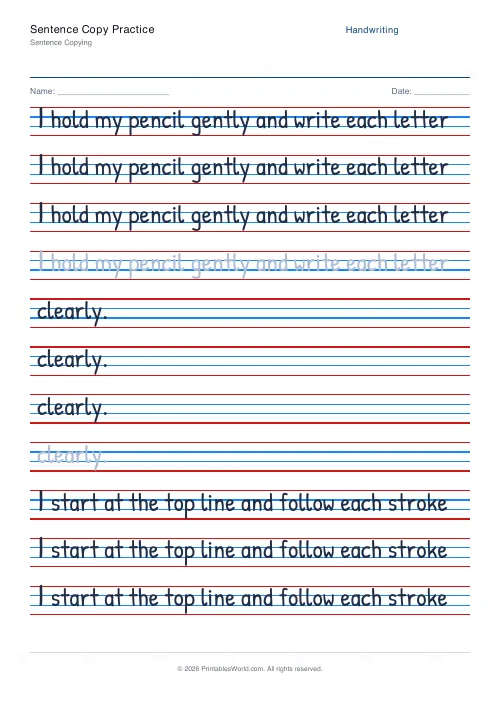
Copy a sentence from the model line onto blank lines below.
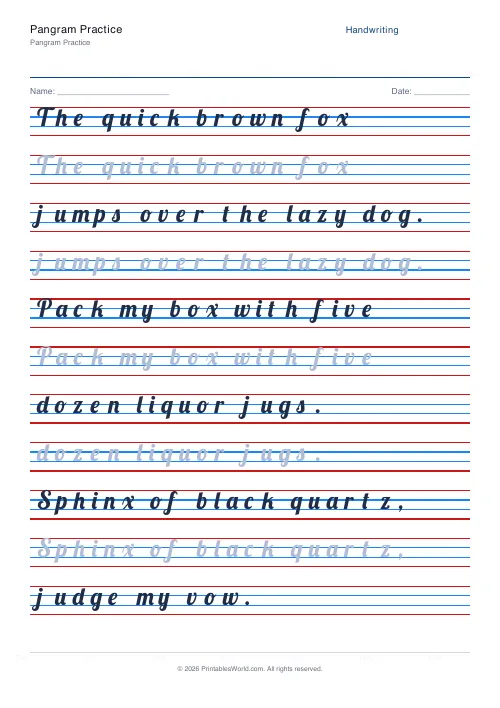
Pangram Practice
Practise sentences that contain every letter of the alphabet.
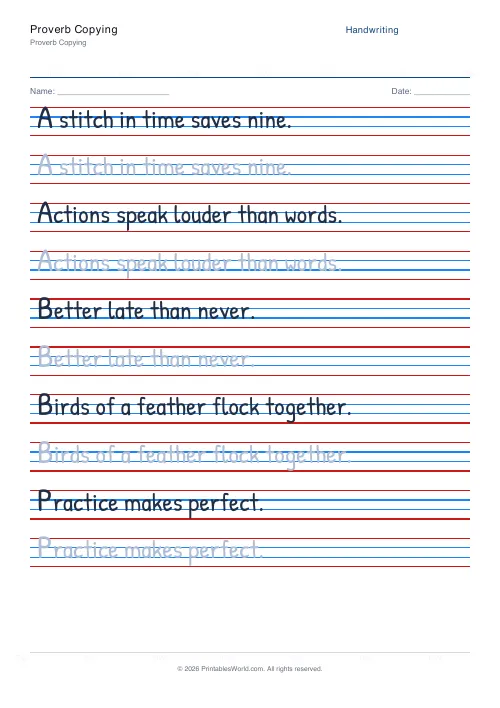
Proverb Copying
Copy classic proverbs and sayings, handwriting plus vocabulary.
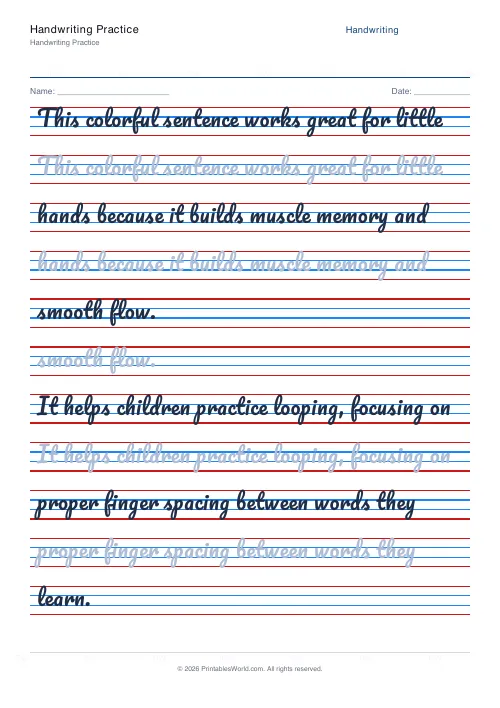
Handwriting Practice Generator
Create custom 4-line handwriting practice sheets with trace rows, adjustable guides, and your own text.
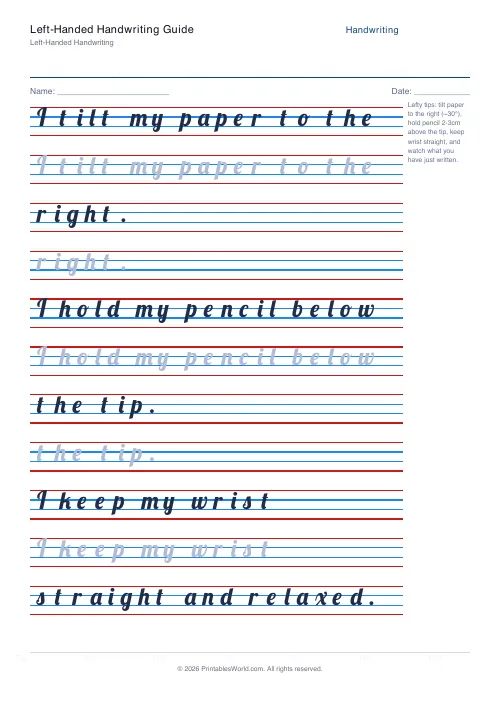
Left-Handed Handwriting Guide
Adapted layout with right-side margin tips for left-handed writers.
Further reading
Handwriting
Dotted vs solid trace lines: what works best for beginners
Each trace style removes a different amount of support. The mistake is staying on one too long. Tracing feels productive and teaches less than copying.
4 min read
Handwriting
Print vs cursive: which should children learn first?
Countries disagree, schools disagree, and the research is thinner than either side suggests. Here is what print and cursive each actually do well, and a practical way to decide for one child.
6 min read
Handwriting
How to teach handwriting to kids: a step-by-step guide
A practical order for teaching handwriting: get the body and the pencil right first, then teach letters in stroke families rather than alphabetically, and keep sessions short enough that the hand never tires.
7 min read
More like this
- Handwriting Practice Generator
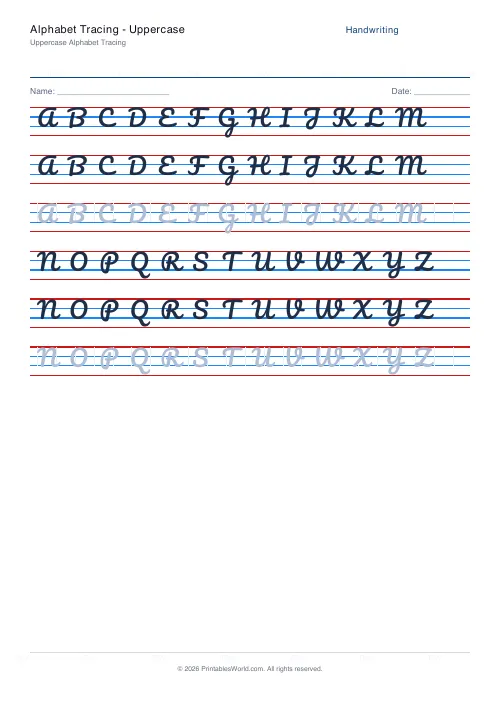 Alphabet Tracing: Uppercase
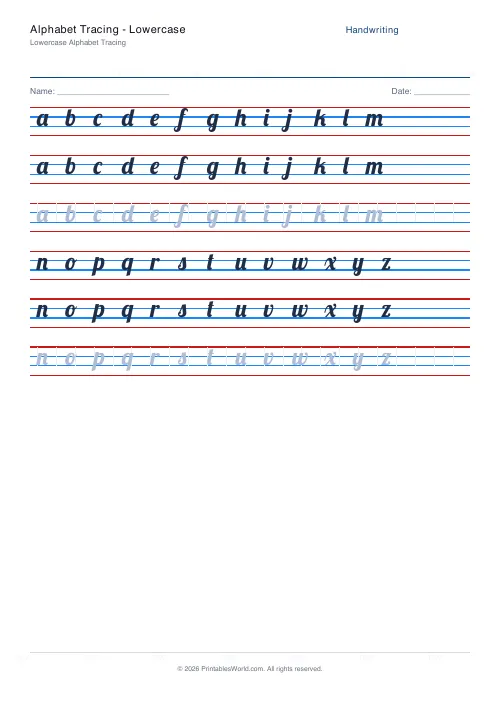 Alphabet Tracing: Lowercase
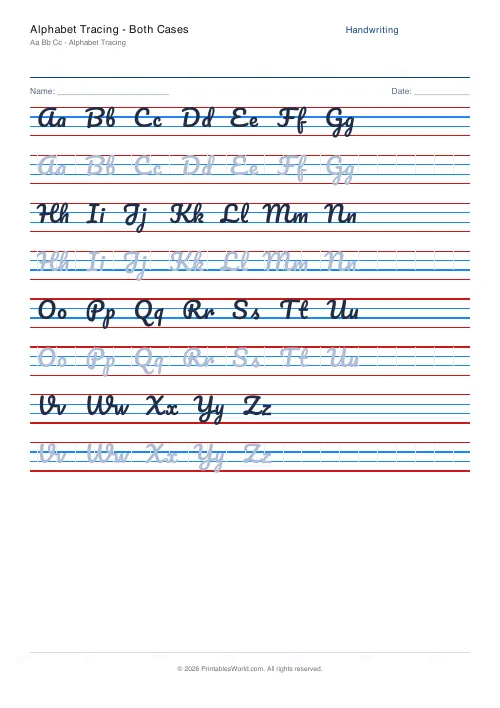 Alphabet Tracing: Both Cases
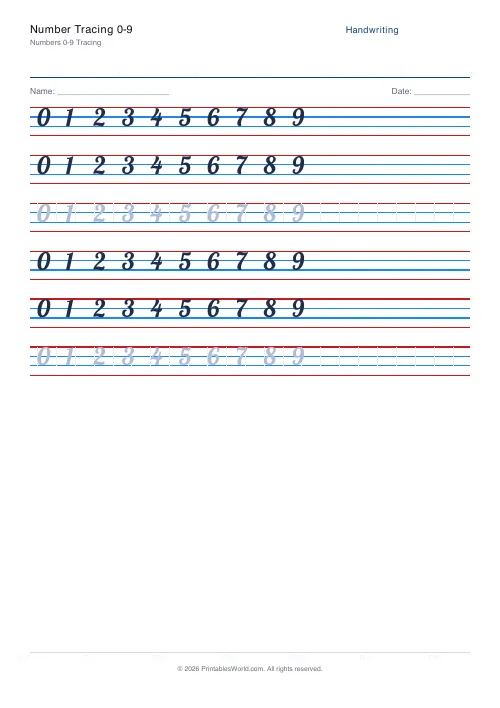 Number Tracing 0-9
 Name Tracing: Custom
 Word Tracing: Custom Words
 Sentence Tracing
 Cursive Letters: Uppercase
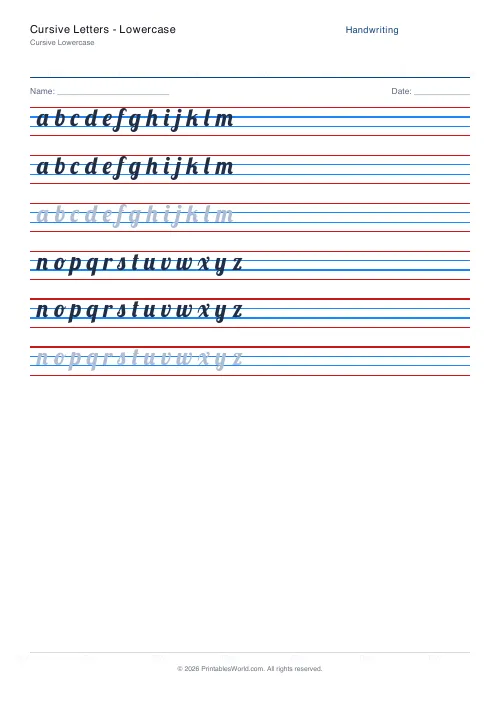 Cursive Letters: Lowercase
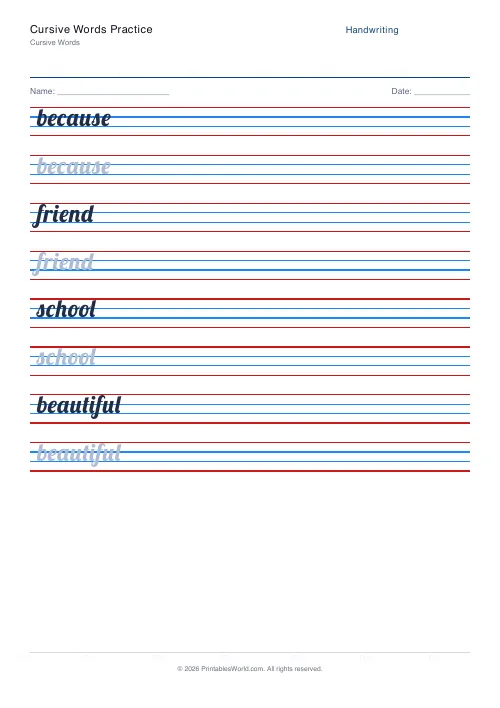 Cursive Words Practice
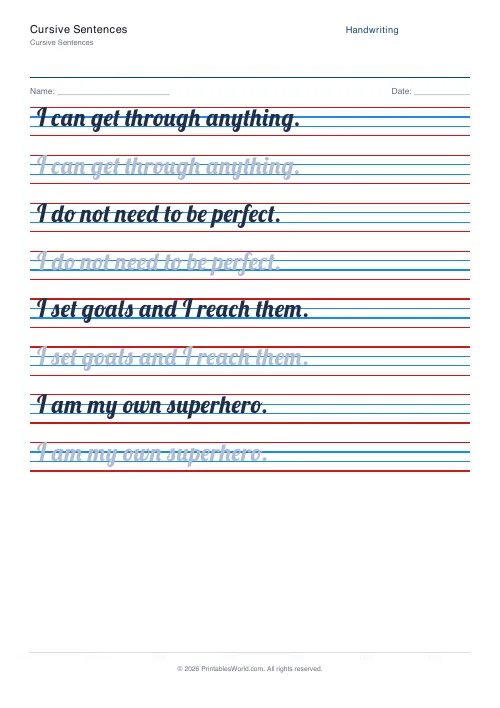 Cursive Sentences
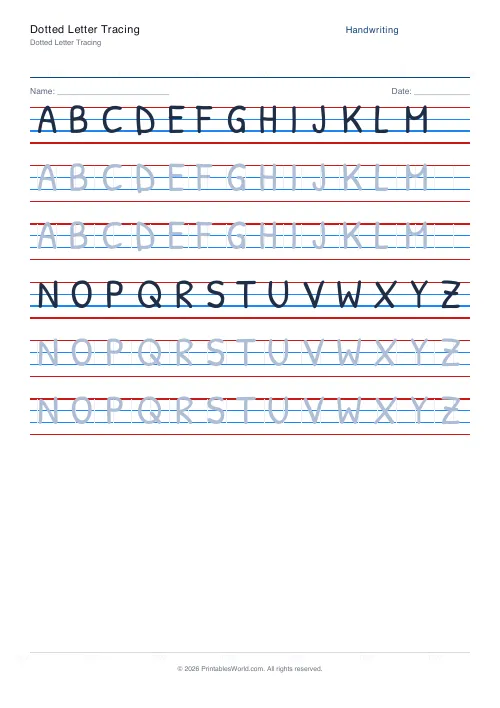 Dotted Letter Tracing
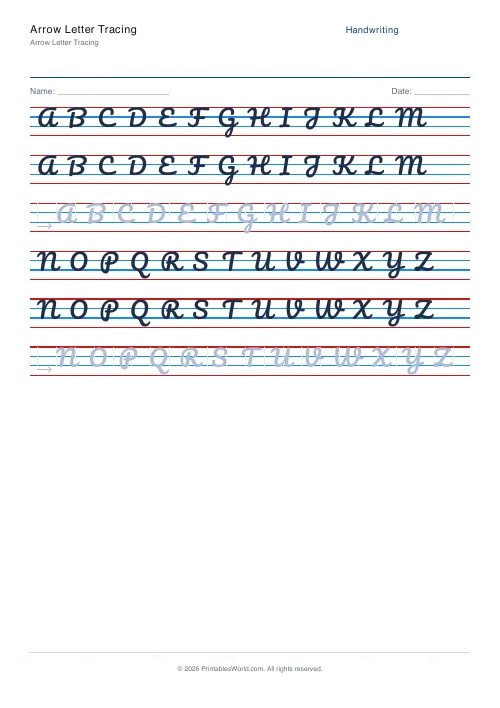 Arrow Letter Tracing