What this tool does
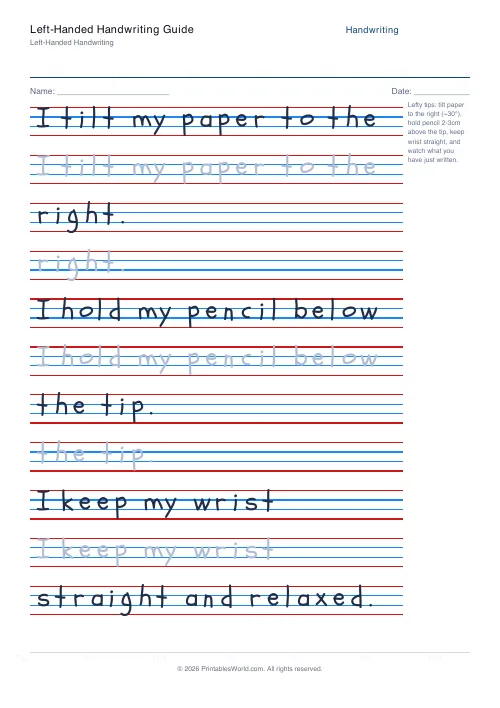
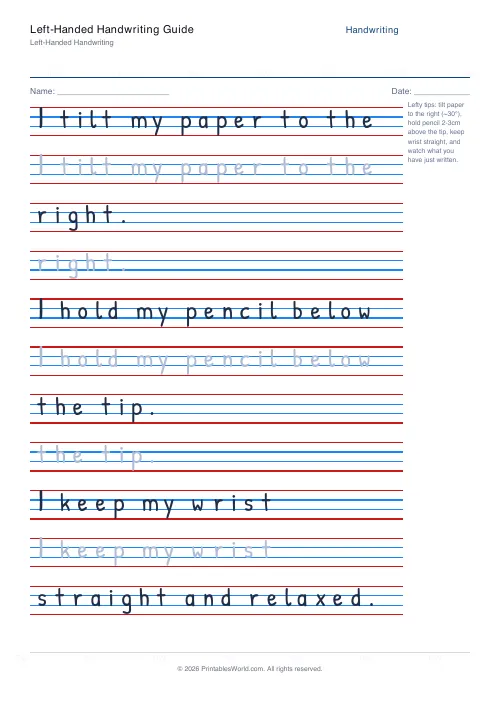
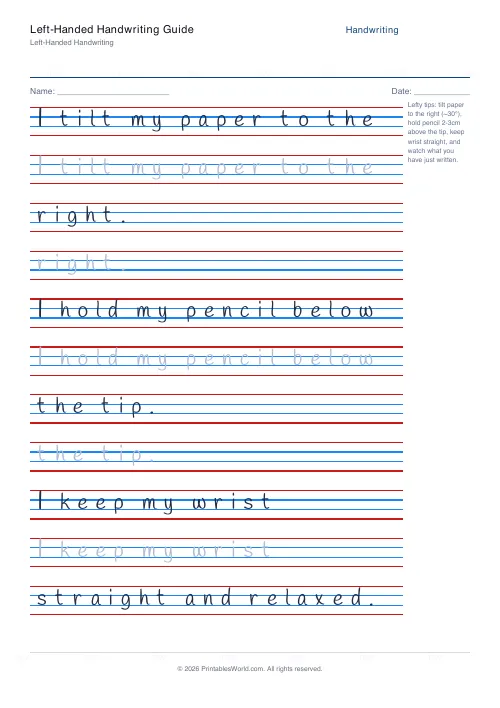
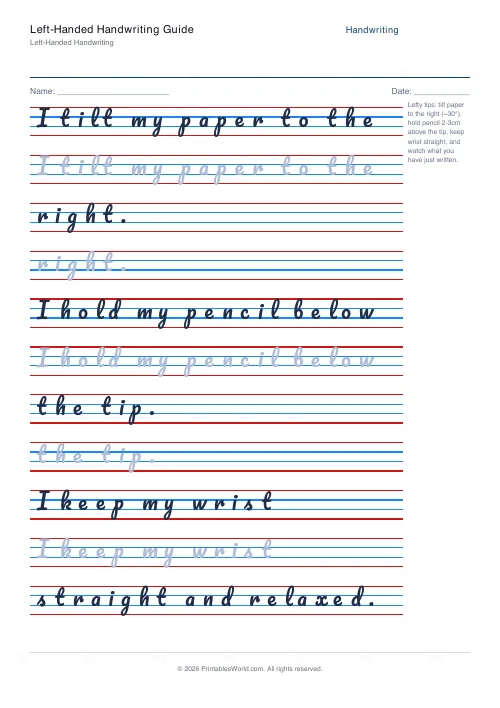
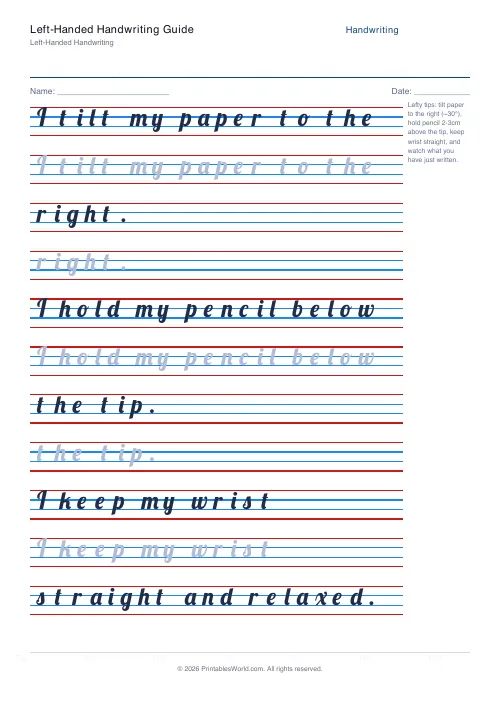
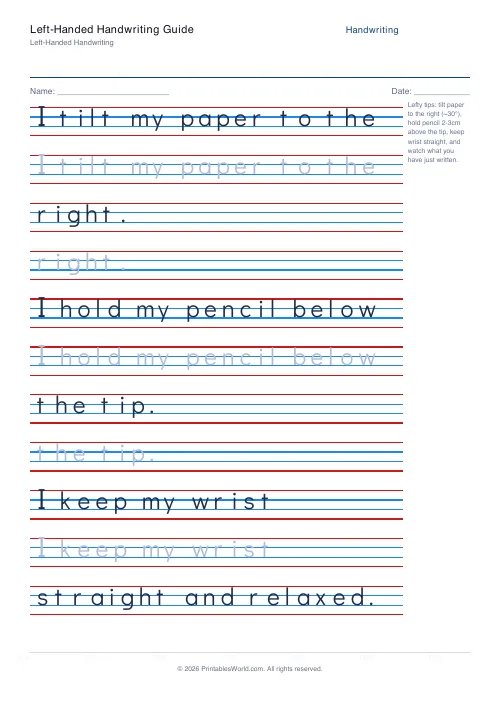
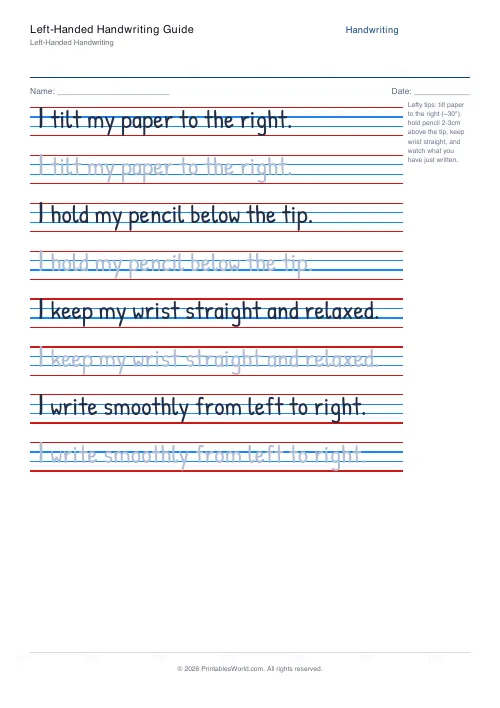
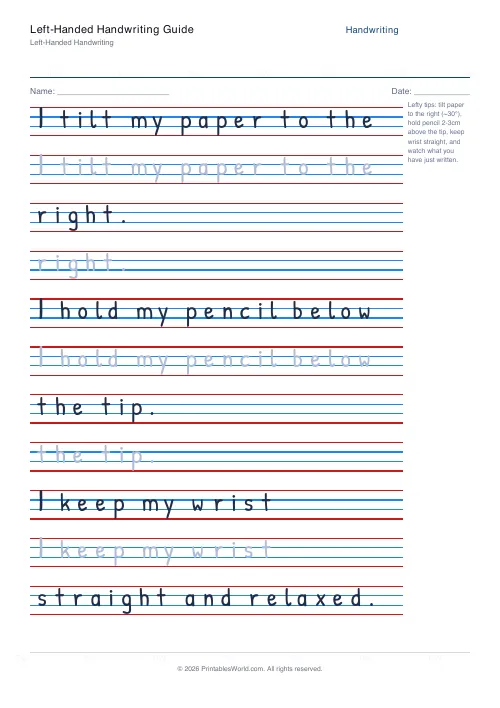
A handwriting sheet with a margin note down the right-hand side carrying the four things that actually help a left-hander: paper angle, grip height, wrist position and being able to see what you wrote.
People also used
Feedback
Spotted something off with this tool?
Ordinary practice rows, plus the advice in the margin
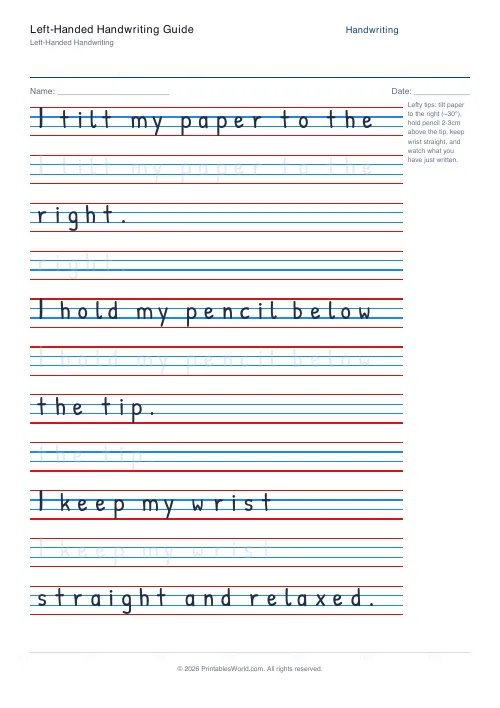
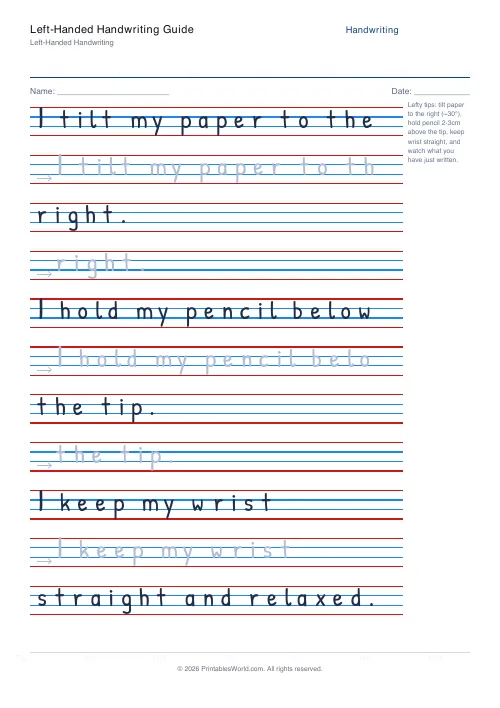
Trace-and-copy rows on four-line ruling, with a note printed down the right-hand gutter. The preset's practice sentences are about the technique itself, and both the sentences and the note are editable.
The four things that make the difference
Tilt the paper to the right. Clockwise, roughly thirty degrees, which is the mirror image of what a right-hander is doing. This single change fixes more left-handed handwriting than everything else on this page put together, and hardly any left-handed child is ever told it.
Hold the pencil higher. Two or three centimetres above the tip rather than right at it. A left-hander gripping low cannot see the letter they are forming, because their own hand is on top of it.
Keep the wrist straight. That hooked wrist — hand curled above the line — is what a child invents for themselves when the paper is square to the desk and they are trying to see past their own hand. Slower, more tiring, and hard to unlearn.
Sit so your writing hand is on the outside. Two children sharing a desk with the left-hander on the right will knock elbows all lesson.
Why the paper angle does so much
English is written left to right, which means a left-hander is pushing the pen away from the body while a right-hander pulls it. The hand also travels across what has just been written rather than away from it.
Tilt the page clockwise and the line sits at an angle where the hand travels below the writing instead of across it. The writer can see their own work, the wrist stays straight, and most of the smudging stops. All of that from turning a piece of paper thirty degrees.
Smudging is a real problem, not fussiness
A left-hander's hand passes over wet ink on every line. That is why so many are told off for messy work that is not their fault.
Practical fixes. A pencil, or a quick-drying pen instead of a fountain pen or a gel. Paper tilted so the hand rides below the line. And left-handed nibs exist, which are worth trying for anybody writing seriously in ink.
What not to correct
Slope. Plenty of left-handers write upright, or lean slightly backwards, and that is a perfectly legible hand rather than a fault to be corrected. Forcing a forward italic slant onto one is exactly where the hooked wrist comes from in the first place.
And never the hand itself. Switching a left-handed child to the right was standard practice within living memory, and it is now understood to have been actively harmful.
What the form offers
The margin note and the practice text are both editable, so this preset works as a template for any margin advice, not only handedness. Also font, trace style, rows per line, ruling colour and line height. A4 or US Letter at 100%.
FAQs
Quick answers
How is this different from a normal sheet?
A small right-hand margin holds practical tips for left-handed writers, paper angle, pencil grip, wrist position, so the advice is visible while practising.
Should lefties tilt the paper?
Yes. Tilting the paper around 30 degrees clockwise (top-right corner closer to you) lets the writing hand move more naturally and stops the wrist from hooking.
Can I edit the tips?
Yes. The right-margin note text is part of the tool data. Edit your own variant if you want different advice for your child or class.
Is the ruling different?
No. Same standard 4-line ruling as the other handwriting tools. The adaptation is in the layout, not the line spacing.
Related tools
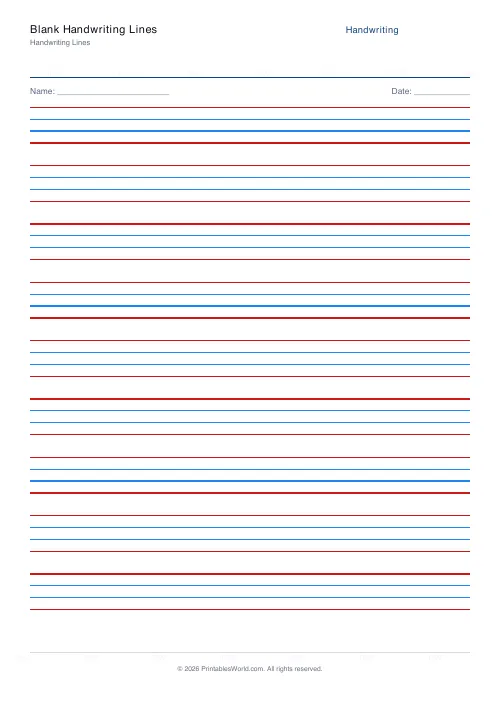
Blank Handwriting Lines
Empty 4-line ruling, top, mid, base, descender, for free practice.
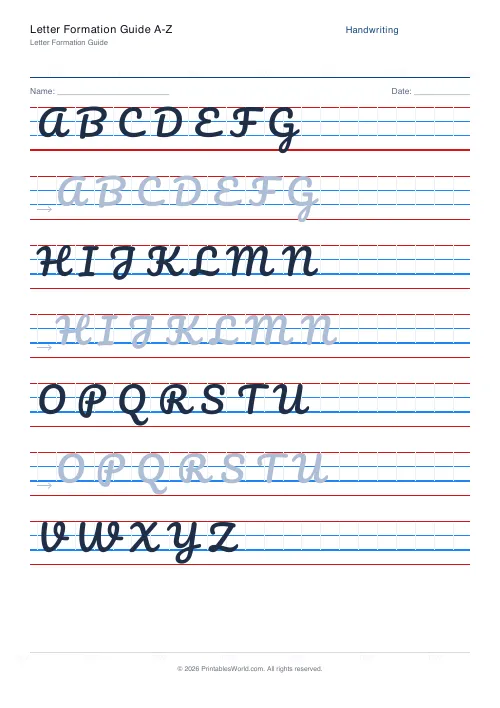
Letter Formation Guide A-Z
Full alphabet with directional arrows for stroke-order learning.
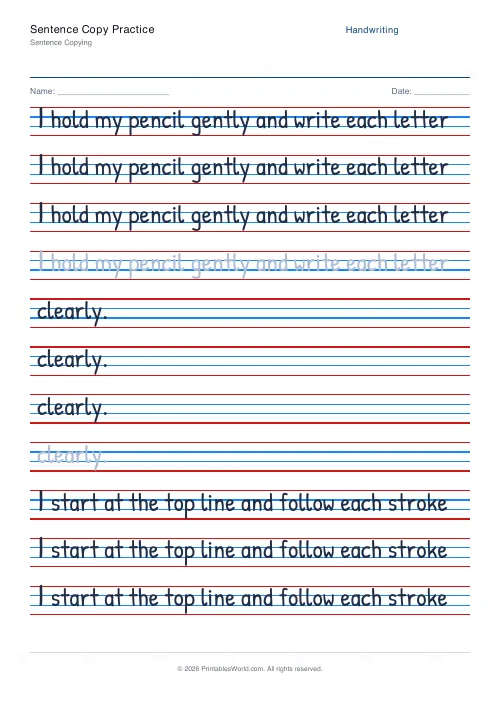
Sentence Copy Practice
Copy a sentence from the model line onto blank lines below.
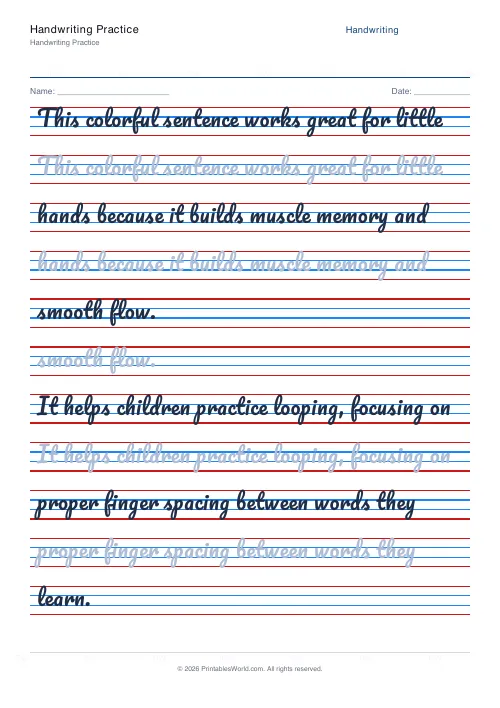
Handwriting Practice Generator
Create custom 4-line handwriting practice sheets with trace rows, adjustable guides, and your own text.
Further reading
Handwriting
Left-handed handwriting practice: free printable sheets
How to set up left-handed handwriting practice for comfort: paper angle, grip and page layout, plus free printable sheets designed for lefties.
7 min read
Handwriting
How to teach handwriting to kids: a step-by-step guide
A practical order for teaching handwriting: get the body and the pencil right first, then teach letters in stroke families rather than alphabetically, and keep sessions short enough that the hand never tires.
7 min read
Handwriting
The best age to start handwriting practice
Age is the wrong question. Three readiness signs predict whether handwriting practice will help or frustrate. And what to do with the child who is not there yet.
5 min read
More like this
- Handwriting Practice Generator
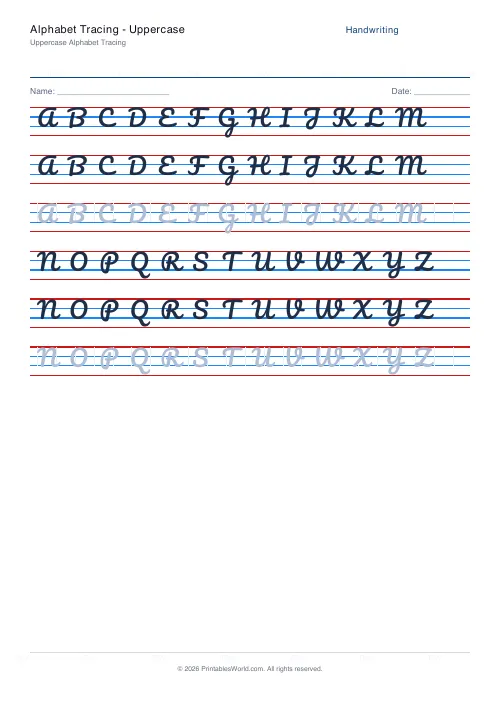 Alphabet Tracing: Uppercase
 Alphabet Tracing: Lowercase
 Alphabet Tracing: Both Cases
 Number Tracing 0-9
 Name Tracing: Custom
 Word Tracing: Custom Words
 Sentence Tracing
 Cursive Letters: Uppercase
 Cursive Letters: Lowercase
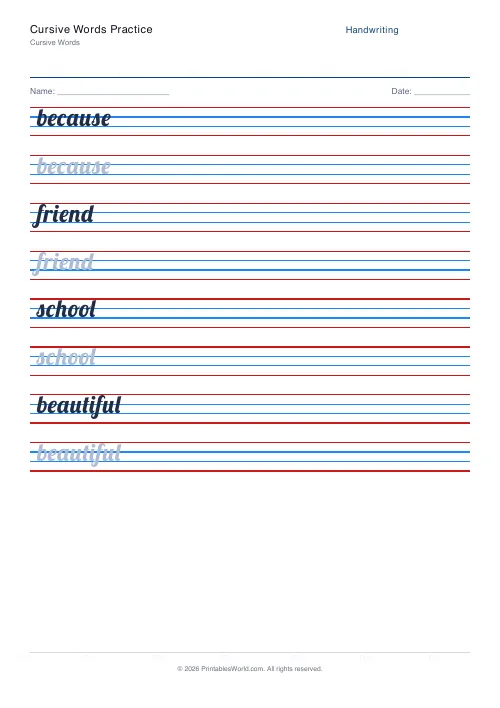 Cursive Words Practice
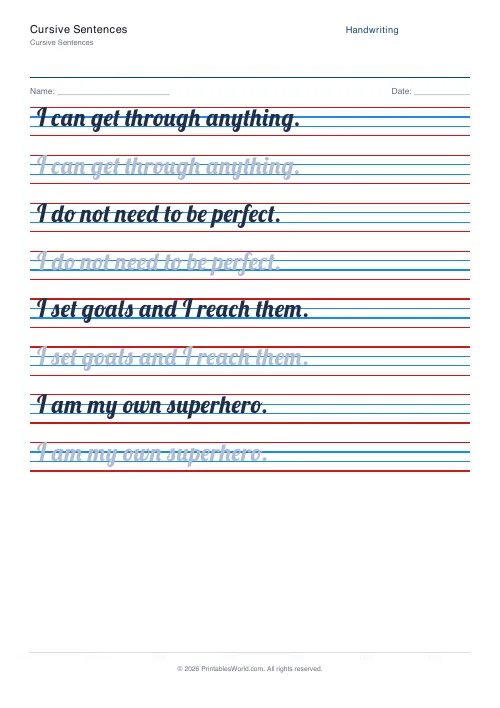 Cursive Sentences
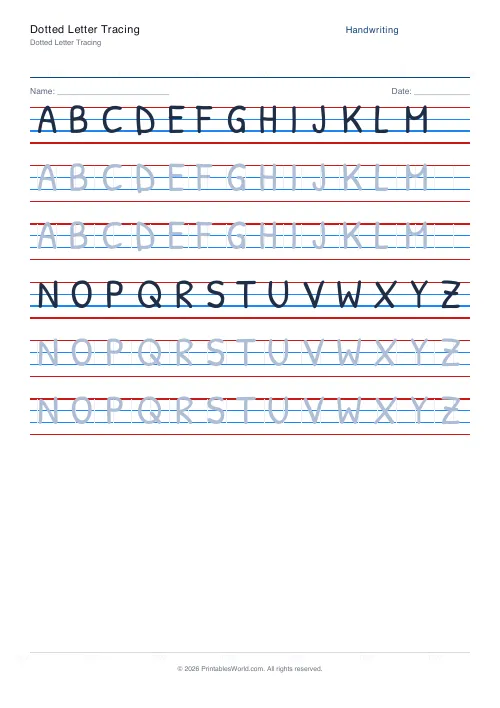 Dotted Letter Tracing
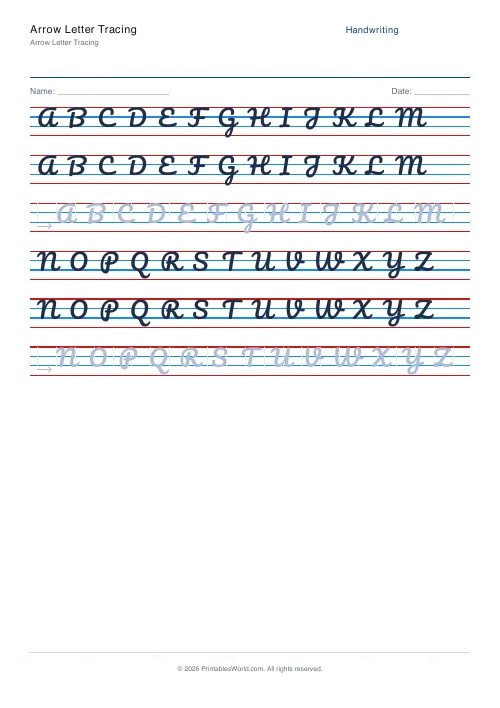 Arrow Letter Tracing