What this tool does
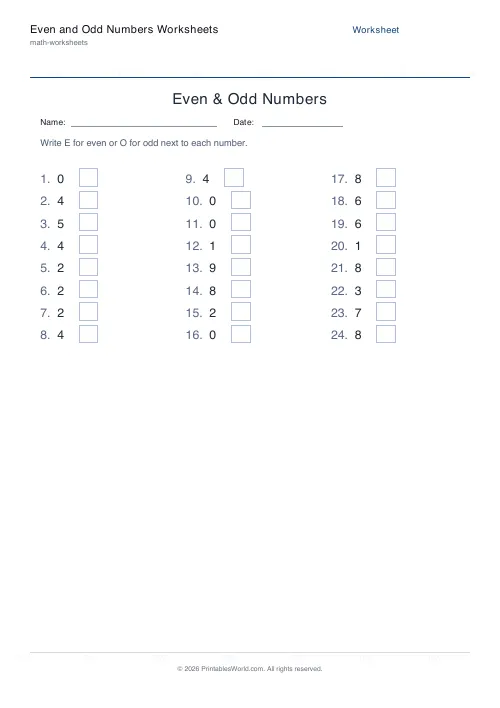
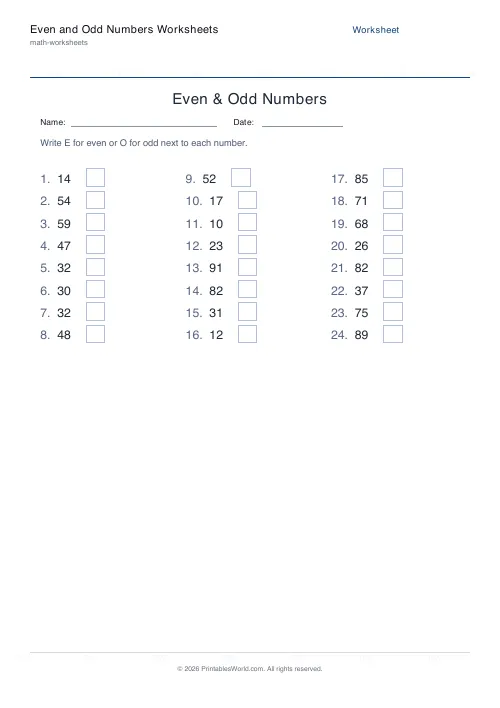
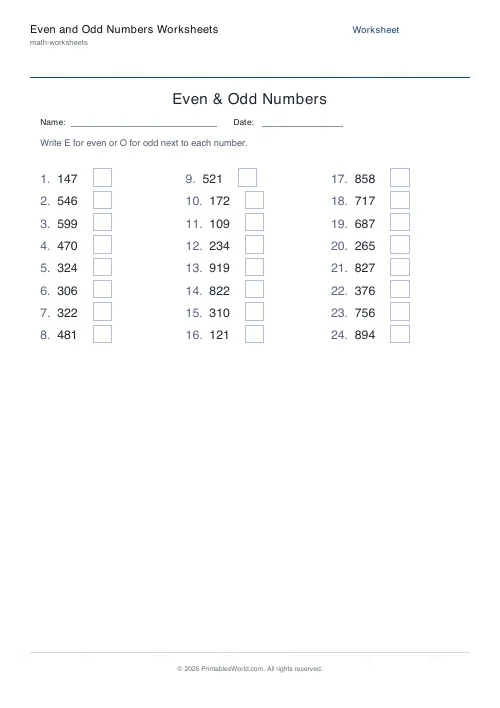
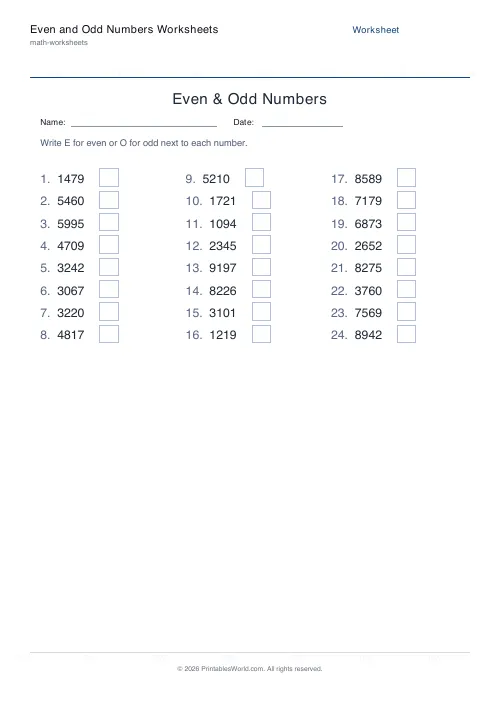
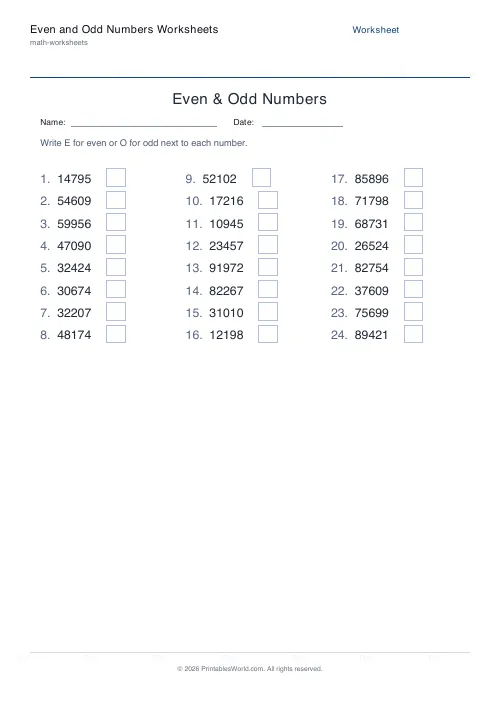
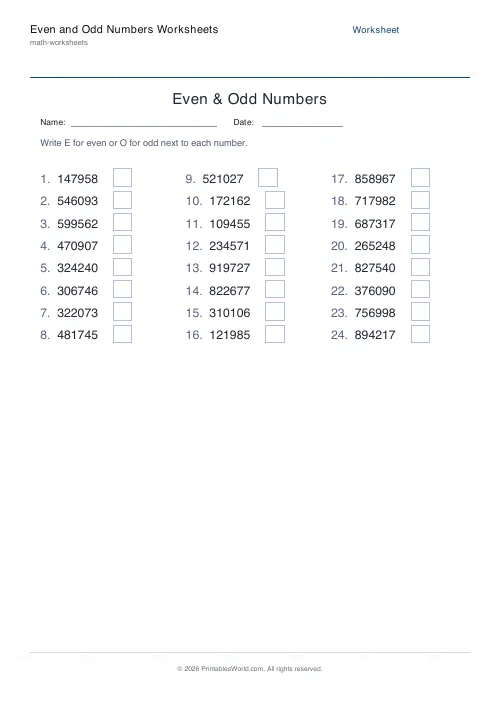
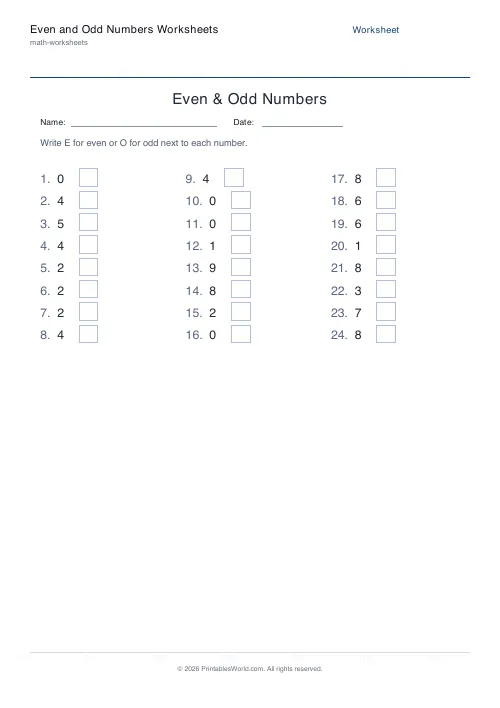
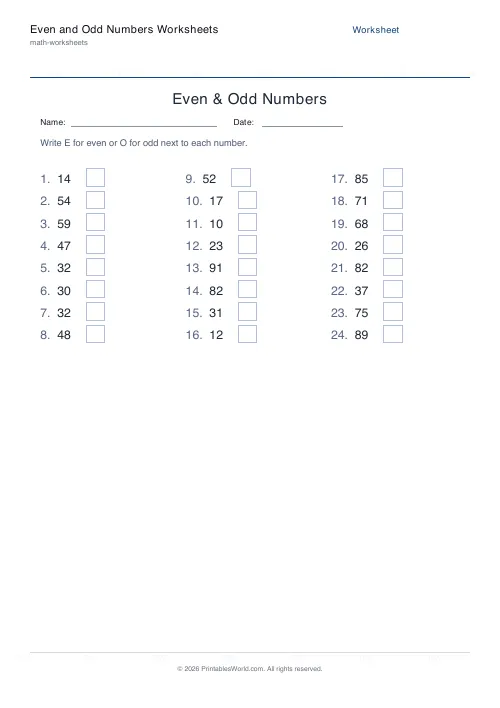
Printable even and odd worksheets. Numbers are drawn at random and the pupil writes E or O beside each one. Four to eighty numbers a sheet, one to six digits, and an answer key on request. Every generation is a fresh set.
People also used
Feedback
Spotted something off with this tool?
Write E or O, and nothing else
A list of numbers, a box beside each one. That is deliberately the whole task, with nothing to count and nothing to calculate.
Four to eighty numbers on a sheet, twenty-four by default, at anything from one digit to six. That range is what makes the same worksheet work for a five-year-old on single digits and a ten-year-old deciding whether 384,196 is even.
Only the last digit matters
Even numbers end in 0, 2, 4, 6 or 8, and they split into two equal whole groups. Odd numbers end in 1, 3, 5, 7 or 9, and they do not.
That is the entire rule, and the thing worth teaching is that it depends on nothing else. 1,234 is even. 5,671 is odd. Neither answer requires looking at any digit except the final one, and a child who has internalised that can classify a six-digit number as fast as a two-digit one.
Which is precisely why the digit setting is the useful control. Start on one digit so the rule is learned, then jump to four or five. The children who slow down are the ones still reasoning about the whole number rather than glancing at the end of it, and you cannot see that on a sheet of single digits.
What it feeds into
Place value, first. A child who understands that the last digit decides evenness has already met the idea that different positions inside a number do different jobs, and that idea is most of place value arriving in a single worked example they can check for themselves.
Then multiplication. Every multiple of two is even, which is the first time a times table has a property you can see instead of a list you have to hold. Then number patterns, where evens and odds alternate and go on alternating however far you count.
Ways to run it
Fold the page down the middle and have pupils list the evens on one side and the odds on the other, which turns a classification task into a sorting one and produces two columns you can talk about.
Or time it. One minute, as many as they can manage, then check against the key. Evens and odds is one of the few skills where speed genuinely indicates understanding, not merely hours put in. Either the rule has become a glance or it has not.
Answer key on by default. Press Generate New for a completely different set at the same settings, so thirty children can have thirty sheets and there is nothing to copy.
FAQs
Quick answers
How do you tell if a number is even or odd?
Look at the last digit. If it ends in 0, 2, 4, 6, or 8 the number is even; if it ends in 1, 3, 5, 7, or 9 it is odd. This works no matter how large the number is.
What year group is this for?
Even and odd numbers are usually introduced in Year 1–2 (Grade 1–2). Using larger digit counts extends the same worksheet for older pupils revising the rule with big numbers.
Is there an answer key?
Yes. Toggle the answer key on and the PDF adds a marked copy showing E or O for every number, so marking takes seconds.
Can I make every worksheet different?
Yes. Each generation uses fresh random numbers, so you can print a unique sheet for every pupil. Press Generate New to reshuffle the preview.
Related tools
Further reading
Math Worksheets
Ten frames and number bonds: early maths foundations
A ten frame is two rows of five. That arrangement does something a row of counters cannot. It makes quantities visible without counting, which is where number sense starts.
5 min read
Math Worksheets
Addition strategies: number lines, regrouping and more
Column addition is the destination, not the route. Here are the strategies that come before it, why each matters, and how to tell which one a child is actually using.
5 min read
Math Worksheets
How many maths worksheets per day? A parent's guide
The honest answer is less than most parents assume. And the number of questions matters less than whether the session ends well.
5 min read
More like this
 Addition Worksheets Generator
 Visual Addition Worksheets Generator
 Subtraction Worksheets Generator
 Multiplication Table Generator
 Mixed Tables Generator
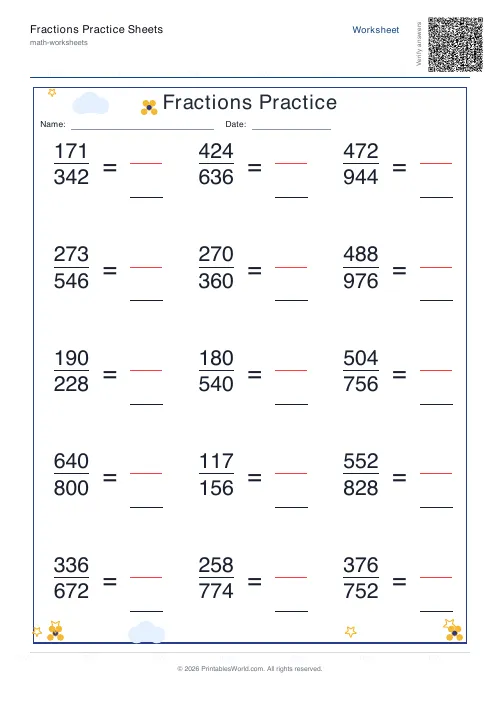 Fractions Practice Sheets Generator
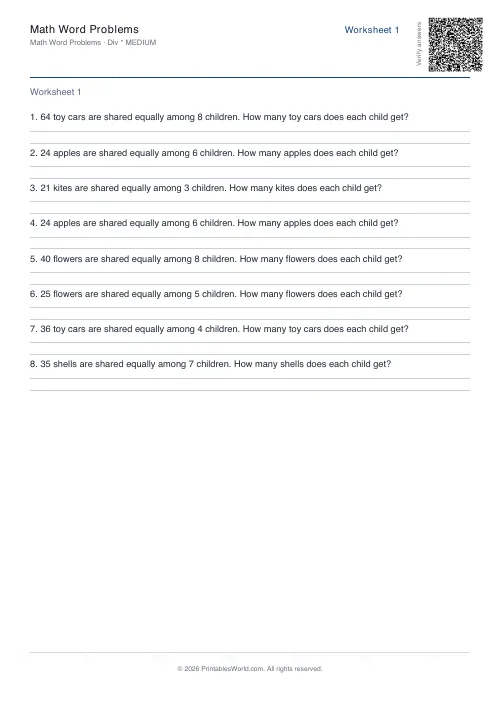 Math Word Problems Generator
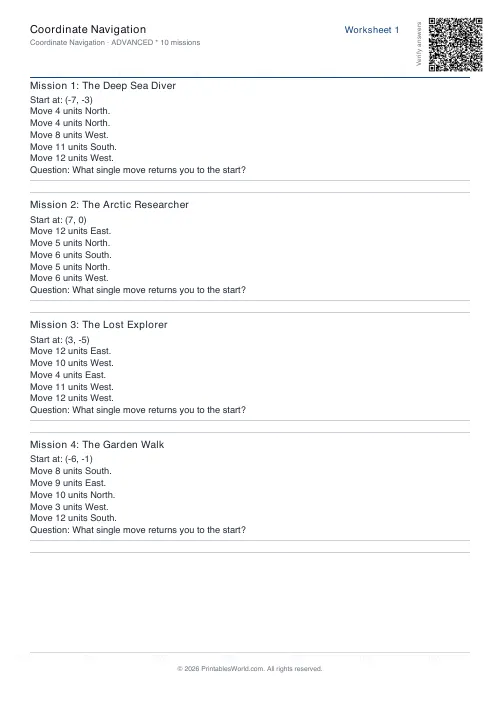 Coordinate Navigation Generator
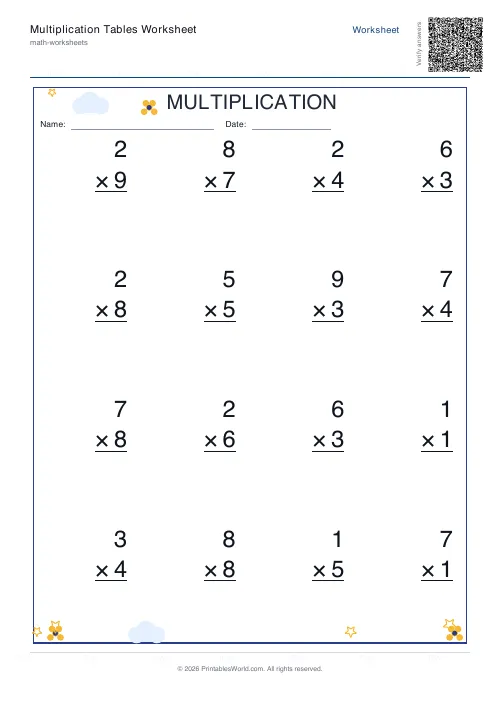 Multiplication Tables Worksheet
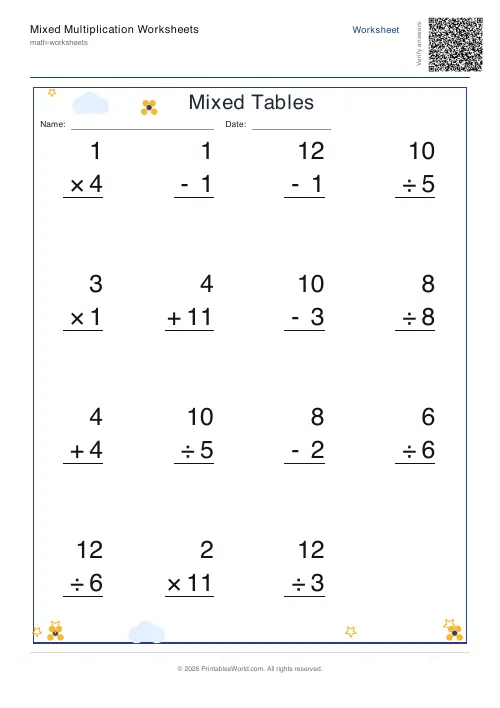 Mixed Multiplication Worksheets
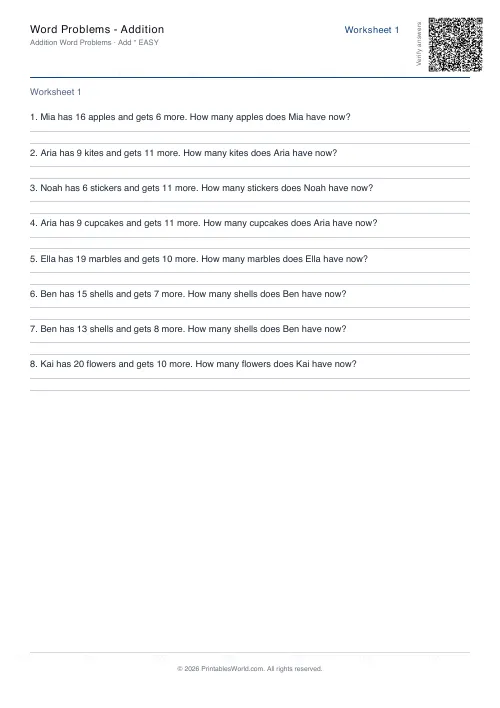 Word Problems: Addition
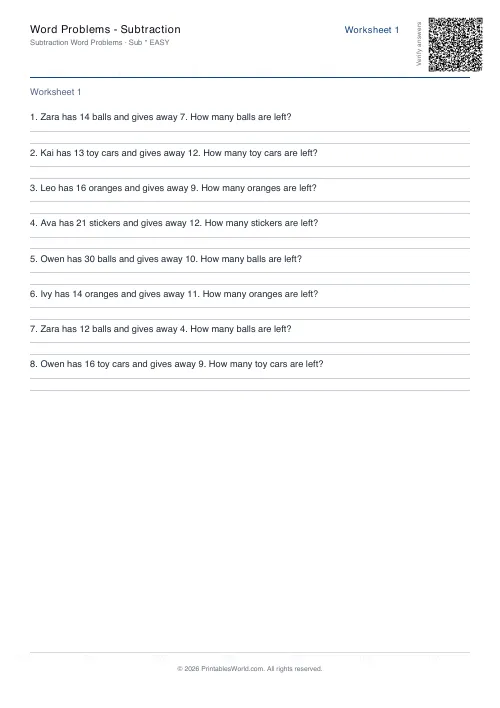 Word Problems: Subtraction
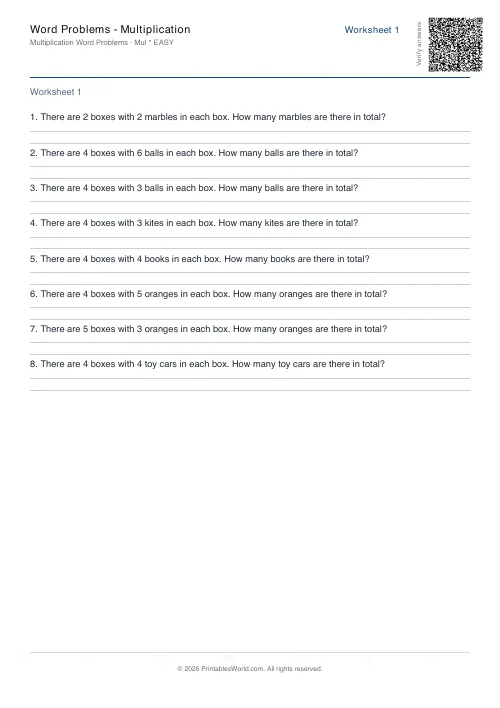 Word Problems: Multiplication
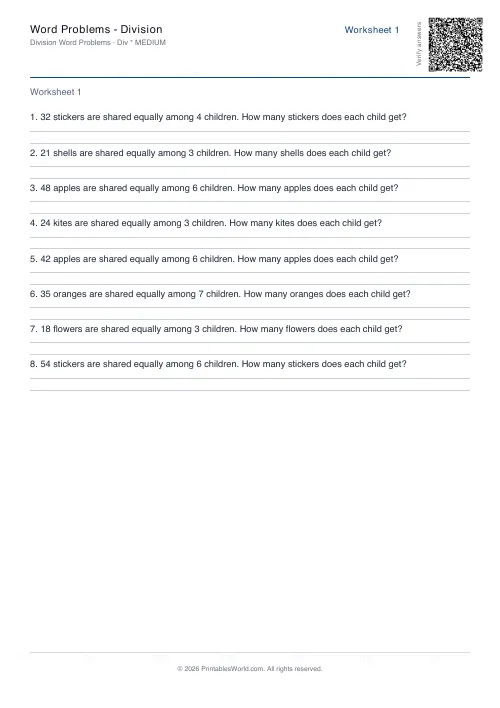 Word Problems: Division