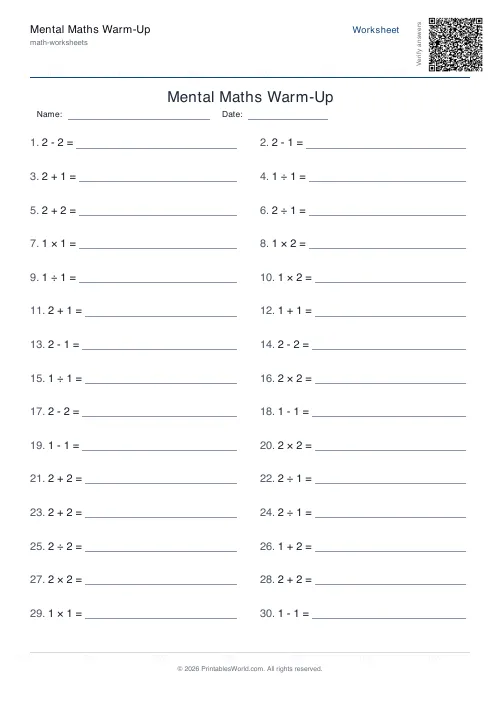
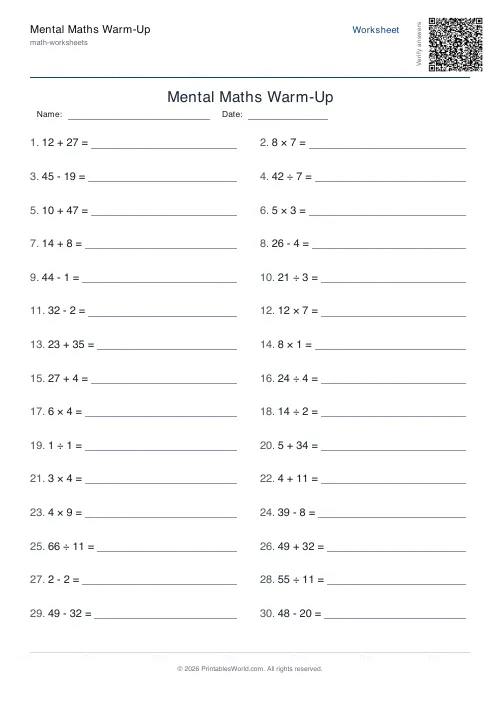
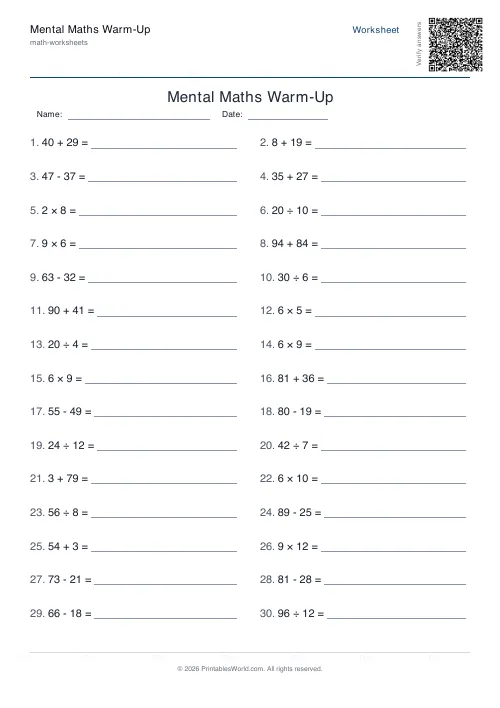
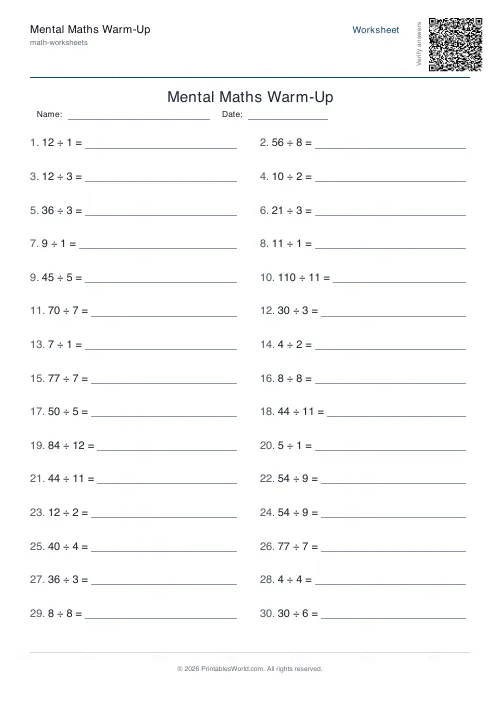
What this tool does
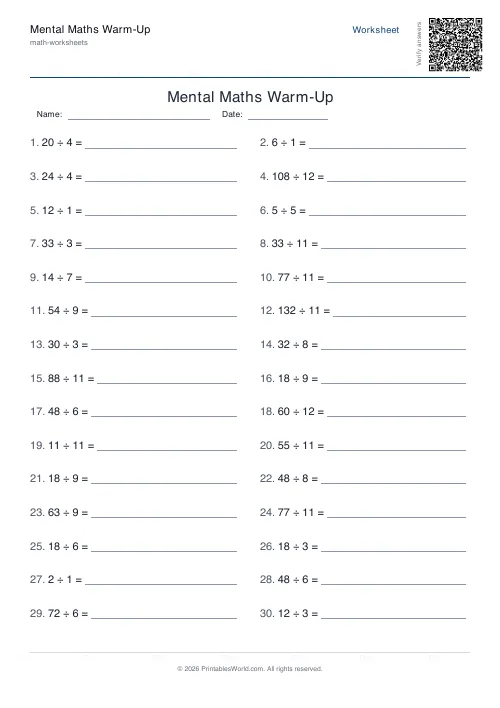
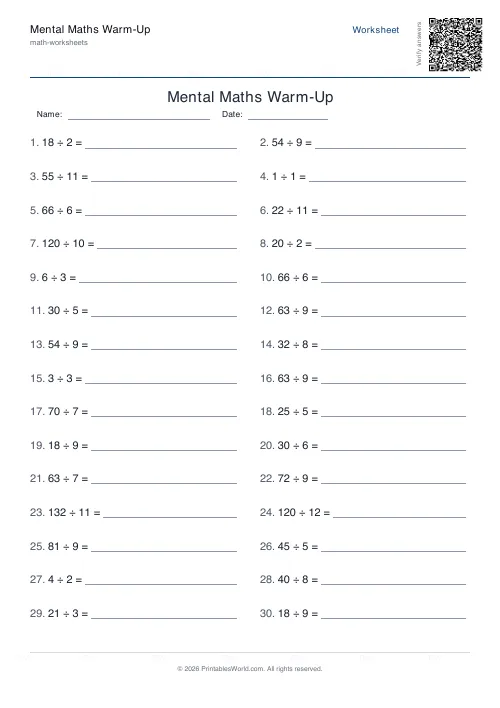
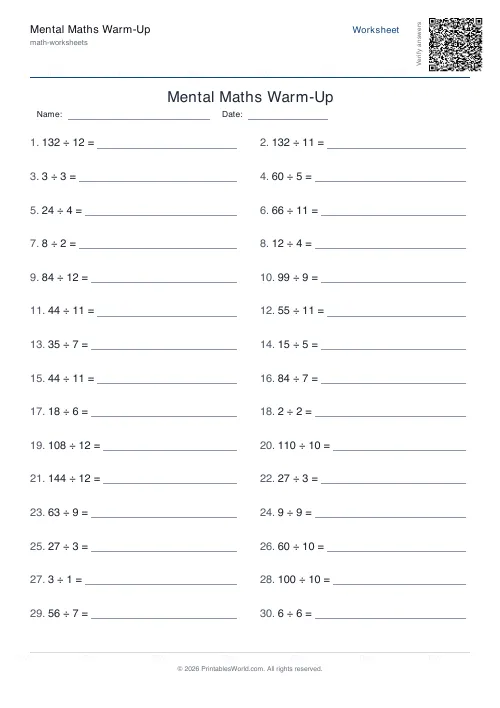
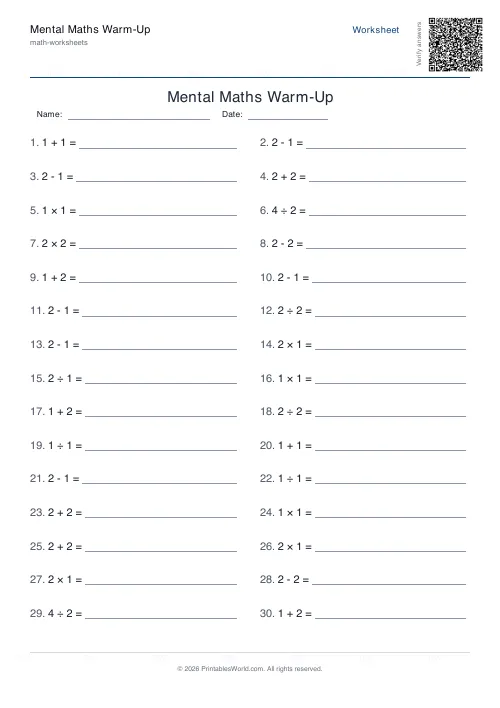
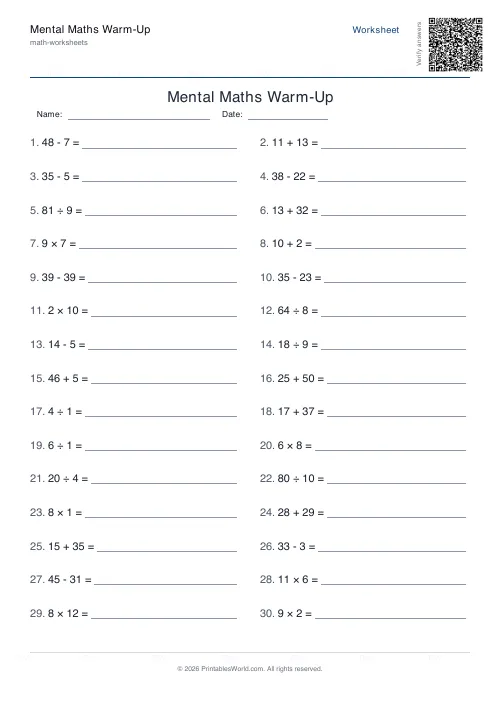
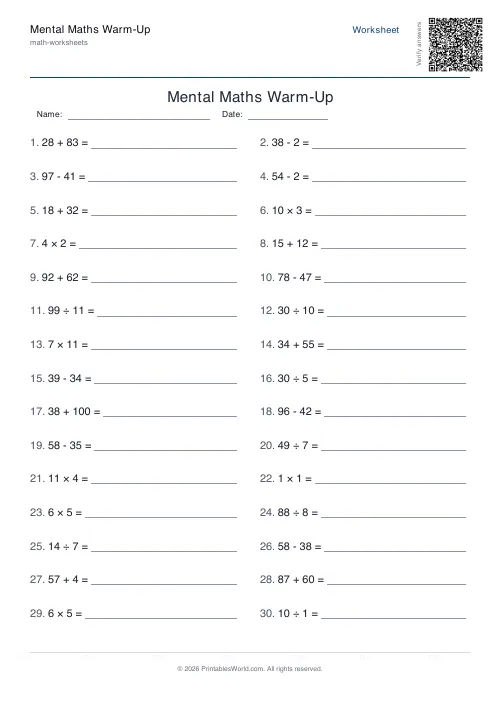
Generate a short mental-maths warm-up sheet with a mix of quick arithmetic questions. Choose which operations to include (addition, subtraction, multiplication, division), set the maximum number and decide how many problems appear. A built-in answer key option makes marking fast.
People also used
Timed Maths Drills Generator
Dense 50–100 question timed drills with a printed timer box and score line.
Mixed Operations Worksheets Generator
One printable sheet mixing +, −, ×, ÷ problems for combined-practice sessions.
Addition Worksheets Generator
Free printable addition worksheets in tables or line-by-line layouts.
Feedback
Spotted something off with this tool?
A five-minute drill you can print on the way to the photocopier
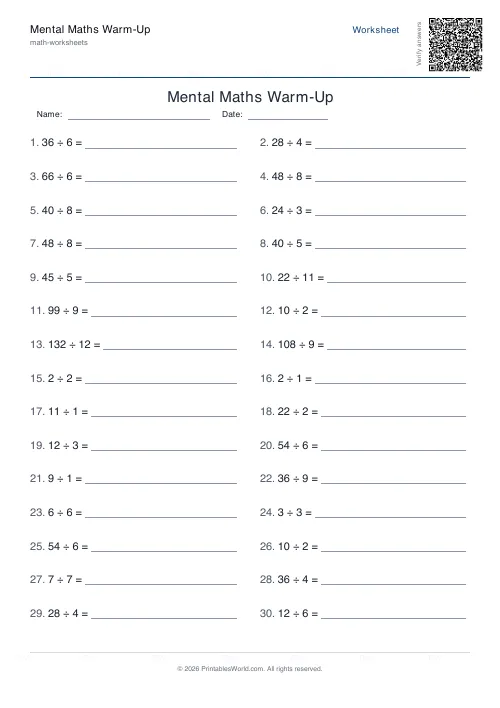
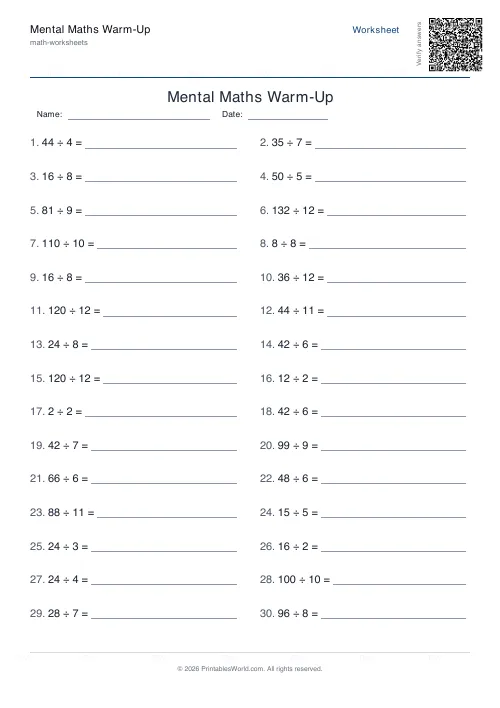
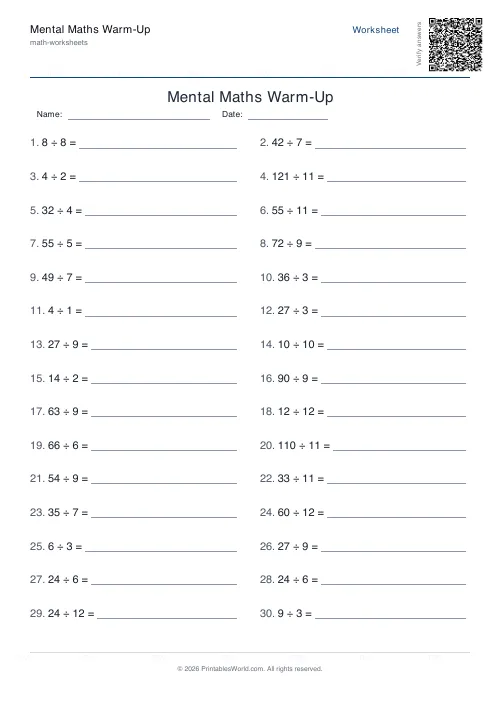
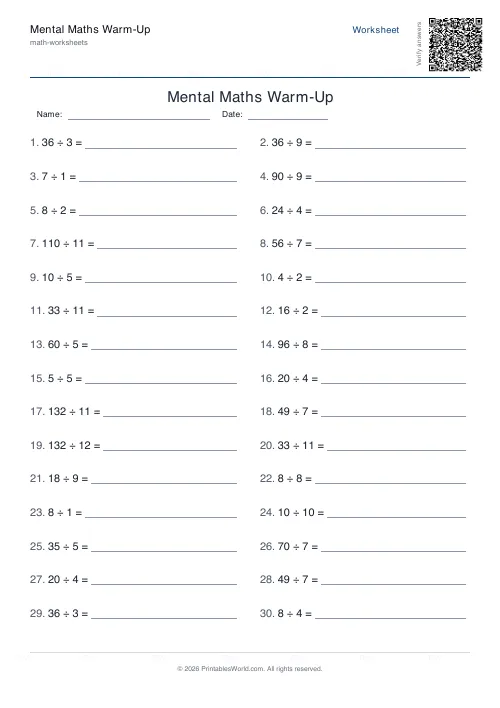
Tick the operations you want, set a ceiling and say how many questions, and this builds a two-column arithmetic sheet sized to a single page. Addition, subtraction, multiplication, division, in any combination. Out of the box you get all four up to 12, thirty questions, and an answer page behind the worksheet.
What it will not do is worth saying here rather than burying at the bottom. Division always lands on a whole number, so no remainders and no decimals appear anywhere on the sheet. Fractions, decimals and multi-step word problems belong to other generators. This one is deliberately narrow: quick recall, nothing to read, nothing to set out in columns.
Why the ceiling stops mattering above twelve
The maximum number takes any value from 2 to 100, and it governs addition and subtraction directly. Set it to 20 and sums like 17 + 14 start appearing. Multiplication and division quietly ignore anything above 12. That is deliberate. A warm-up built on 47 × 63 is no longer mental arithmetic, it is a written method with extra steps, so both operands stay capped at twelve however high you push the setting.
Question count runs from 4 to 60. Twenty to thirty fits a five-minute slot without half the class staring at a page they never reached.
Untick what you have not taught yet
Each operation is its own tick box, and the generator rotates only through the ones you leave on. A Year 2 sheet of pure addition and subtraction is two clicks. So is a tables-only drill for the group who need it, on the same layout, so nobody can tell at a glance who was handed which version.
The remaining switches are small. You can put your own heading where the default title sits, and you can drop the name-and-date boxes if the class answers on mini whiteboards rather than on the paper.
How each question is built
Addition and multiplication draw two random operands and print them as they come. Subtraction draws two and puts the larger first, so an answer never goes below zero. Division is the interesting one. Rather than dividing and hoping for a clean result, the generator picks a divisor and a factor, multiplies them, and shows you the product: 7 and 8 become 56 ÷ 7. Whole-number answers are a property of how the question was made, not the result of throwing bad ones away.
The finished list is then shuffled. Without that, a mixed sheet marches add, subtract, multiply, divide down the page in a pattern children spot by about question six.
What a week of this looks like in Year 4
Monday: addition and subtraction only, maximum 20, twenty-four questions, one copy per child. The class works on whiteboards while the register is taken. Three minutes later the answer page goes up on the board and they mark together.
Wednesday, nothing changes except the tick boxes. Multiplication and division at a maximum of 12, still twenty-four questions, still the same two columns, so the routine survives the change of content. By Friday all four are on and the shuffle does the differentiating.
What comes out of the printer
The two-column layout is measured to fit A4 and US Letter, and row height follows the question count rather than spilling over: sixty questions simply set tighter than twenty. Keep your printer at 100% scale and the ruling stays where it should be.
Turning the answer key on adds a second page carrying the same questions in the same order, with the answer printed where the ruled line was and Answers in the corner of the header. Hand out the first page, keep the second. The QR code in the footer returns to this generator, which is occasionally useful when a parent asks where the sheet came from and wants to make more.
FAQs
Quick answers
How many questions should I include in a warm-up?
Twenty to thirty questions suit a five-minute drill. Fewer than 20 feels too short; more than 30 can overwhelm slower workers.
Can I turn off certain operations?
Yes. Untick any of the four operations before you generate. If you want only addition and subtraction, leave multiplication and division unchecked.
Why are my division answers always whole numbers?
The generator builds each division problem by multiplying two factors, then dividing the product by one of them. This guarantees a whole-number answer suitable for mental arithmetic.
What happens if I set the maximum number above 12?
Addition and subtraction will use the full range, but multiplication and division stay capped at 12 because times-tables beyond that are less practical for quick warm-ups.
Can I print the same worksheet twice?
Save the PDF if you need duplicates. Each time you click Generate the questions are re-randomised, so a second click gives you a different set.
Does the answer key show working?
No, it lists the final answers only. Mental maths drills focus on recall speed, so detailed working is usually done orally or on scrap paper.
Will this print correctly on US Letter paper?
Yes. The two-column layout fits both A4 and US Letter without cutting off text or requiring manual scaling.
Related tools
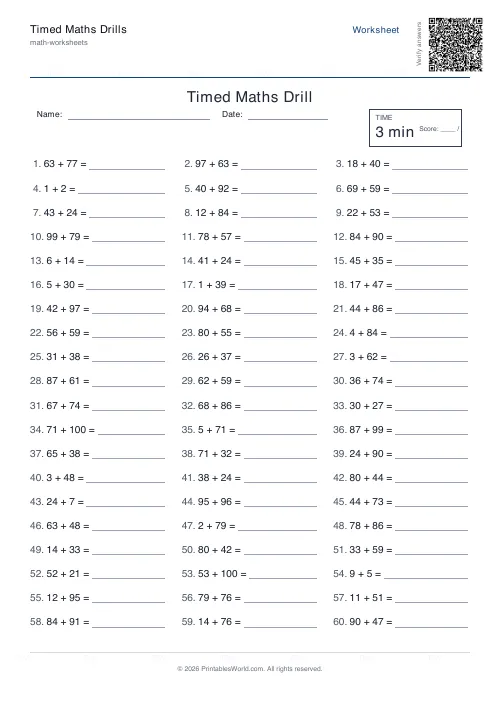
Timed Maths Drills Generator
Dense 50–100 question timed drills with a printed timer box and score line.
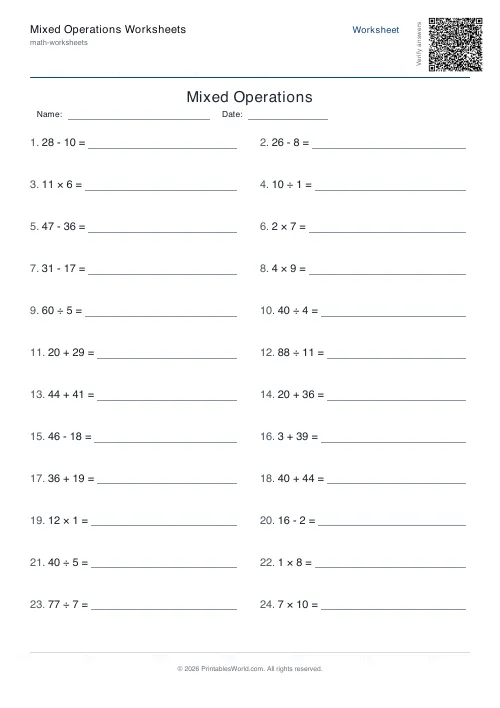
Mixed Operations Worksheets Generator
One printable sheet mixing +, −, ×, ÷ problems for combined-practice sessions.
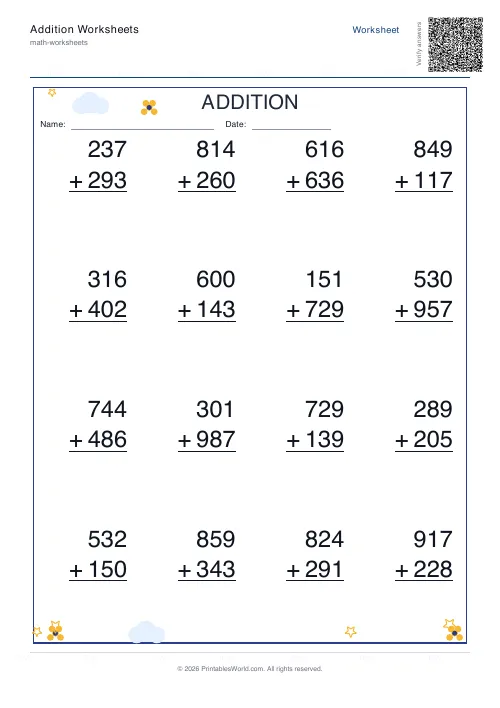
Addition Worksheets Generator
Free printable addition worksheets in tables or line-by-line layouts.
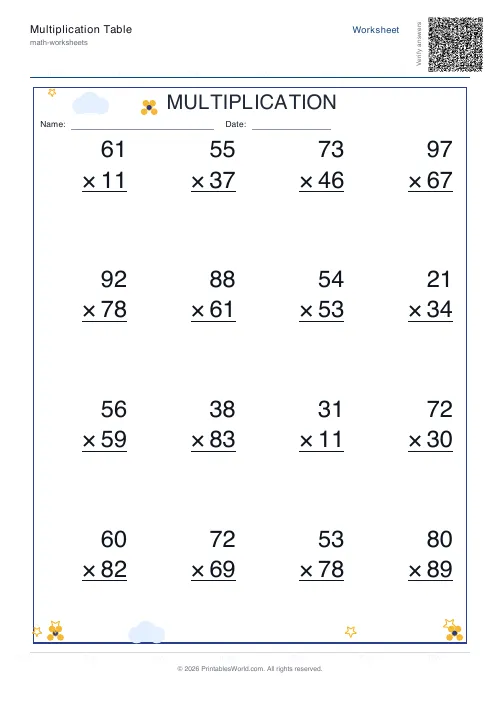
Multiplication Table Generator
Create free printable multiplication tables in table or line-by-line format with custom ranges and themes.
Further reading
Math Worksheets
Making maths fun: 15 ways to practise without tears
Maths tears are usually about difficulty, length or fear of being wrong, not about maths. Fifteen practical changes, grouped by which of those three problems they actually solve.
6 min read
Math Worksheets
How many maths worksheets per day? A parent's guide
The honest answer is less than most parents assume. And the number of questions matters less than whether the session ends well.
5 min read
Math Worksheets
Ten frames and number bonds: early maths foundations
A ten frame is two rows of five. That arrangement does something a row of counters cannot. It makes quantities visible without counting, which is where number sense starts.
5 min read
More like this
- Addition Worksheets Generator
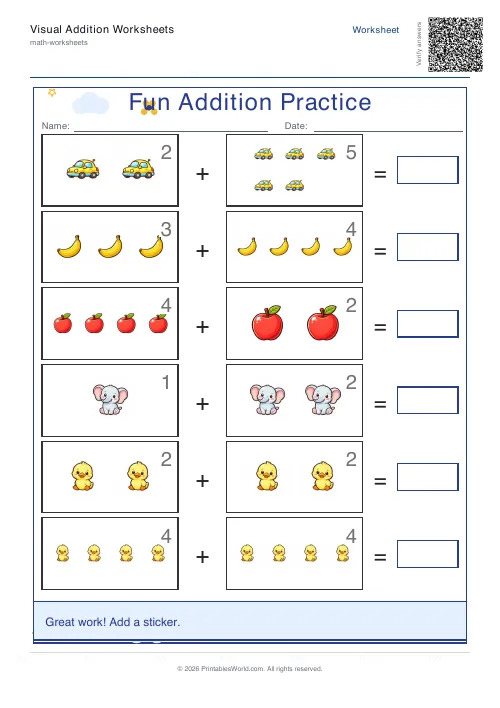 Visual Addition Worksheets Generator
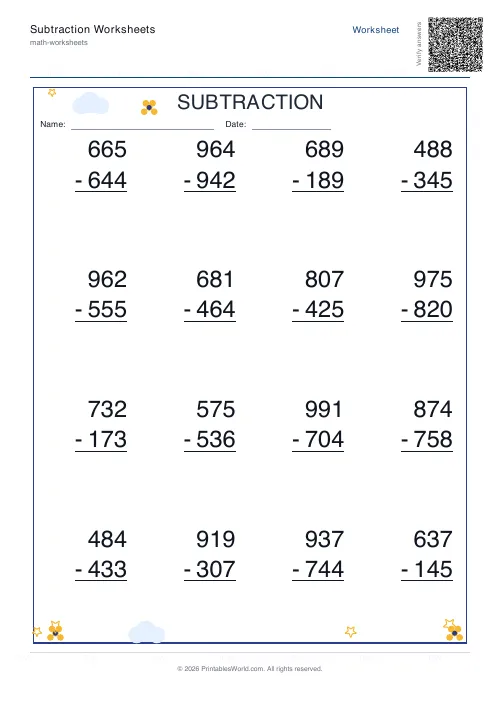 Subtraction Worksheets Generator
- Multiplication Table Generator
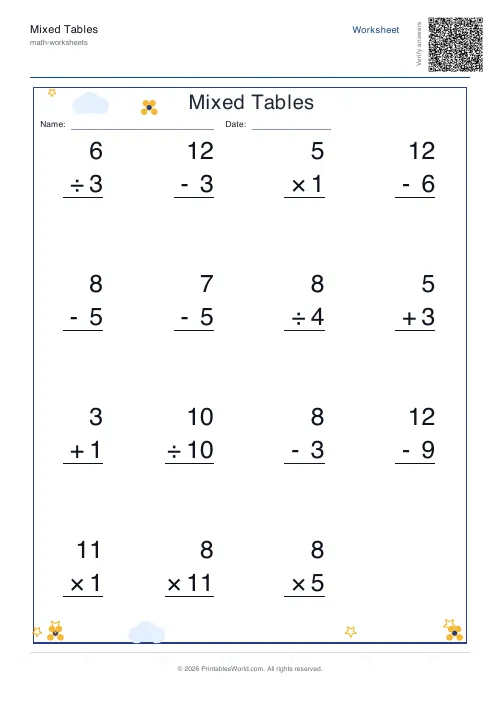 Mixed Tables Generator
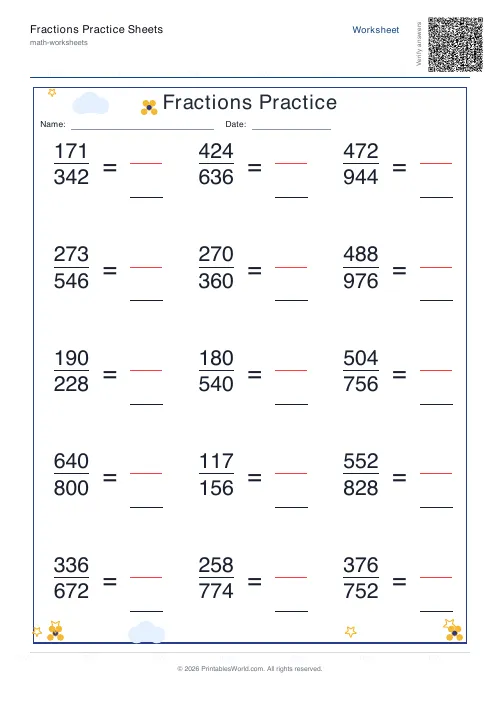 Fractions Practice Sheets Generator
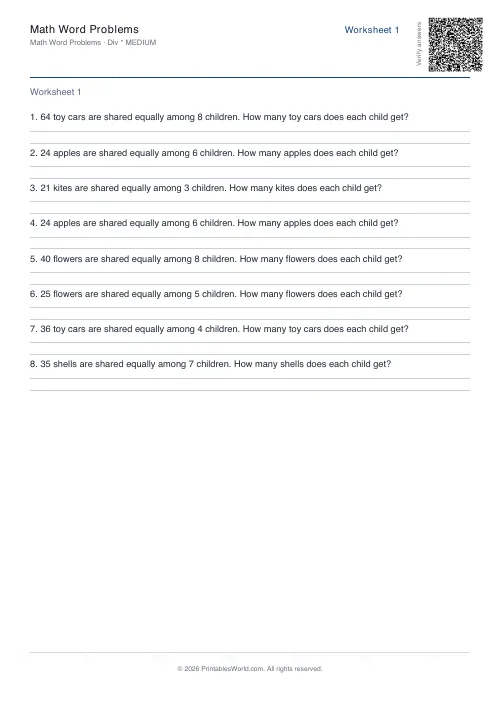 Math Word Problems Generator
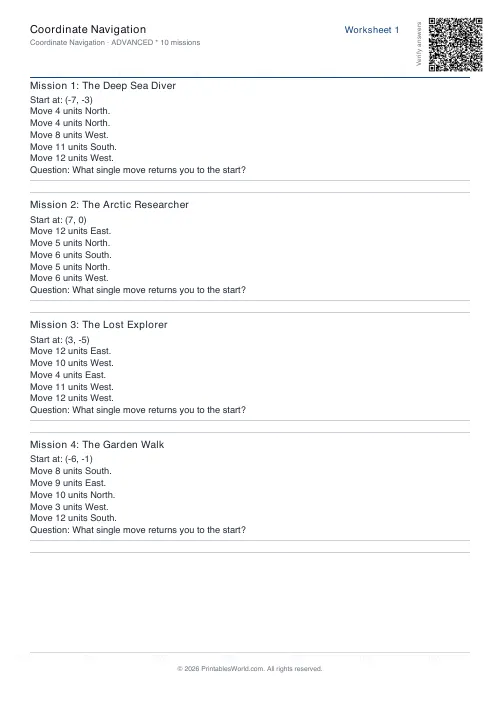 Coordinate Navigation Generator
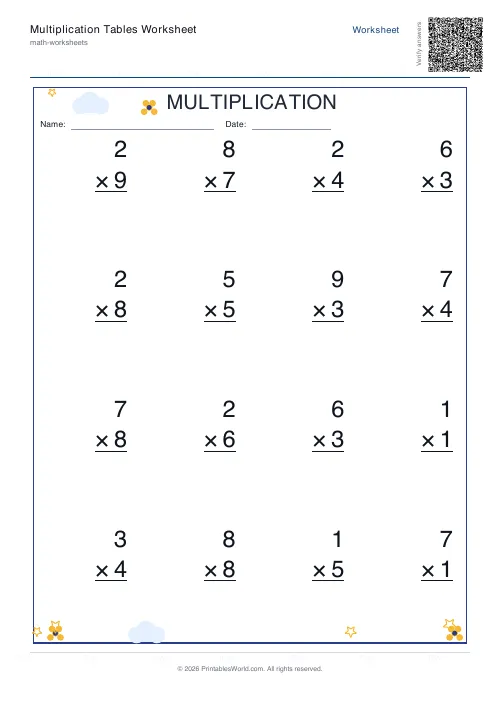 Multiplication Tables Worksheet
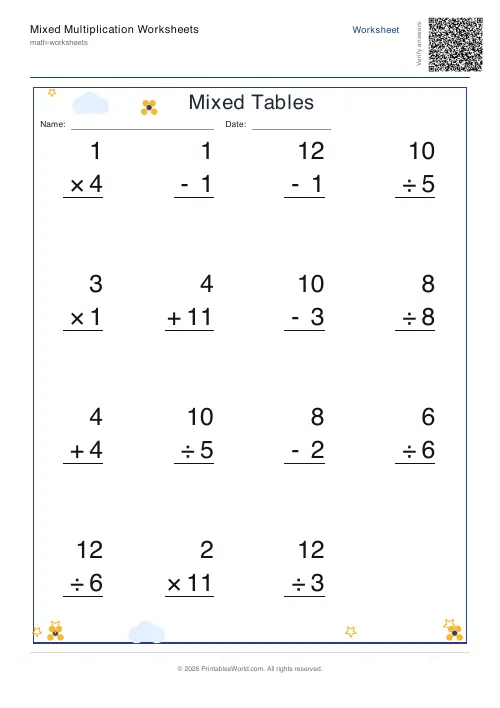 Mixed Multiplication Worksheets
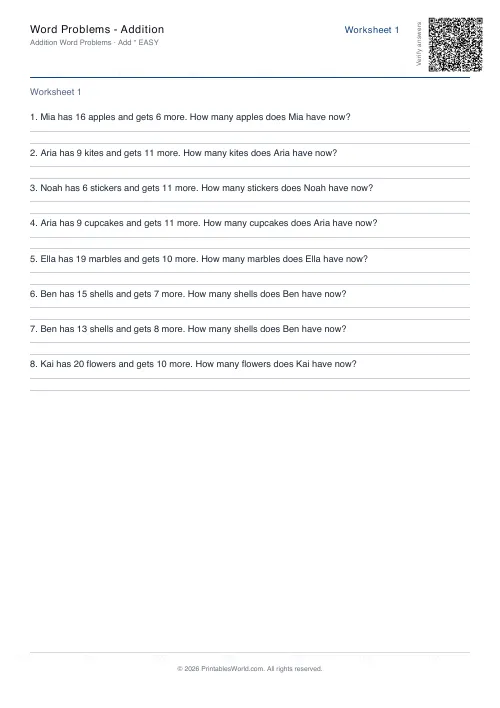 Word Problems: Addition
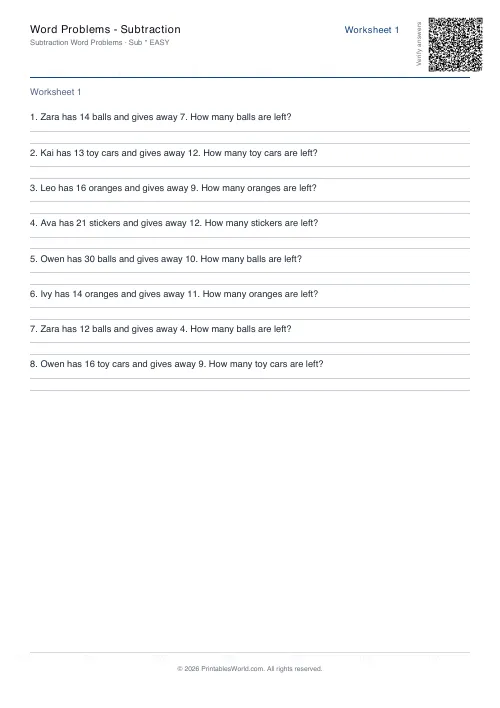 Word Problems: Subtraction
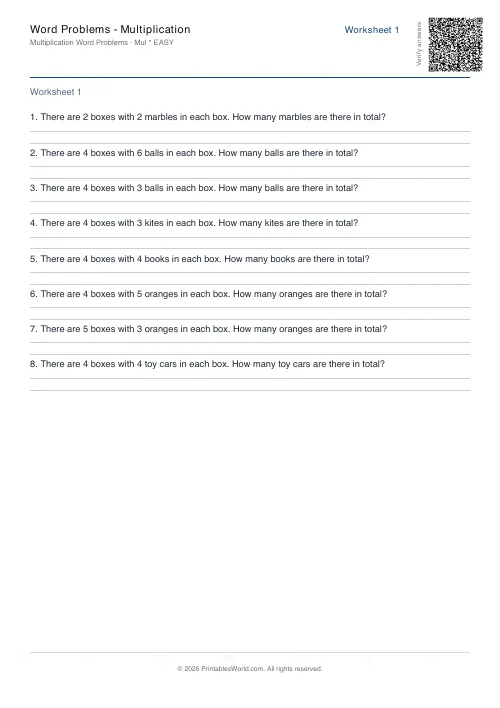 Word Problems: Multiplication
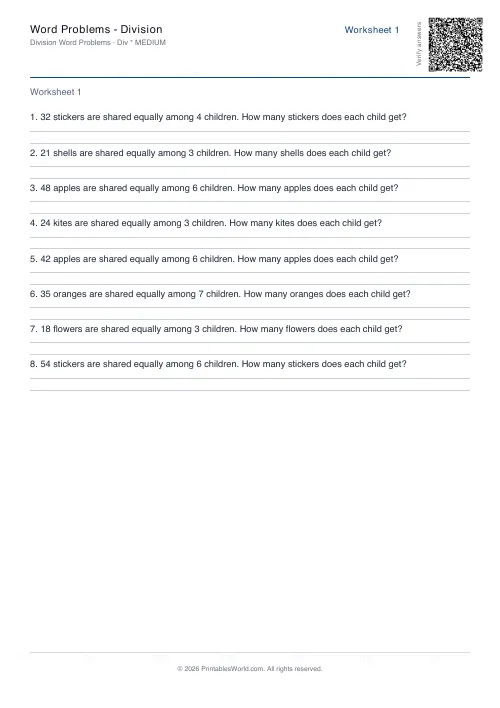 Word Problems: Division