What this tool does
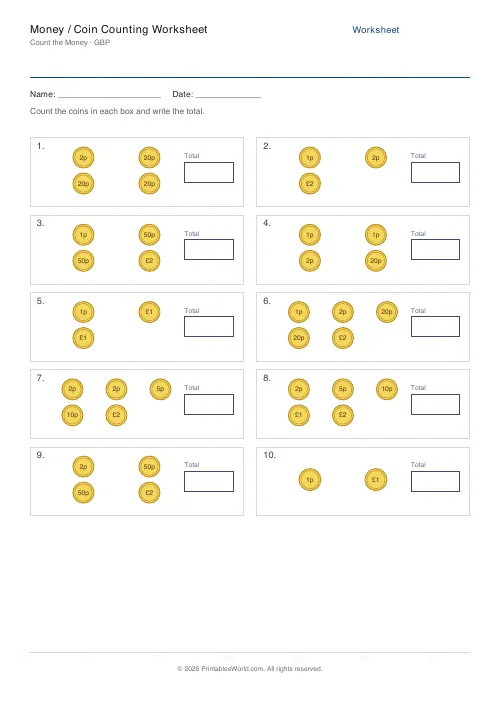
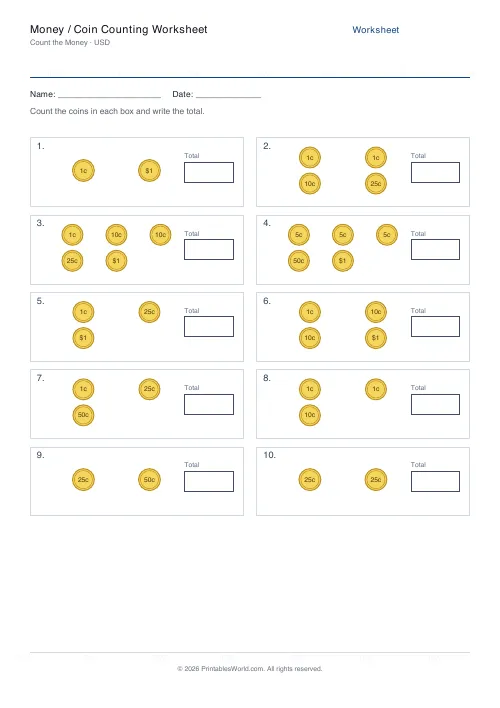
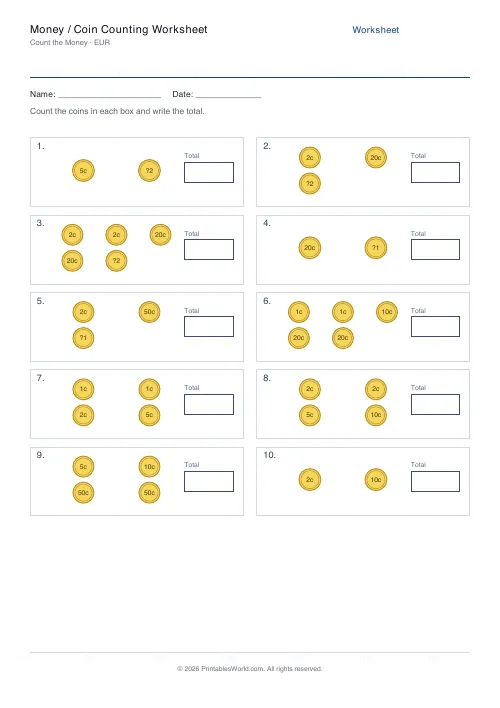
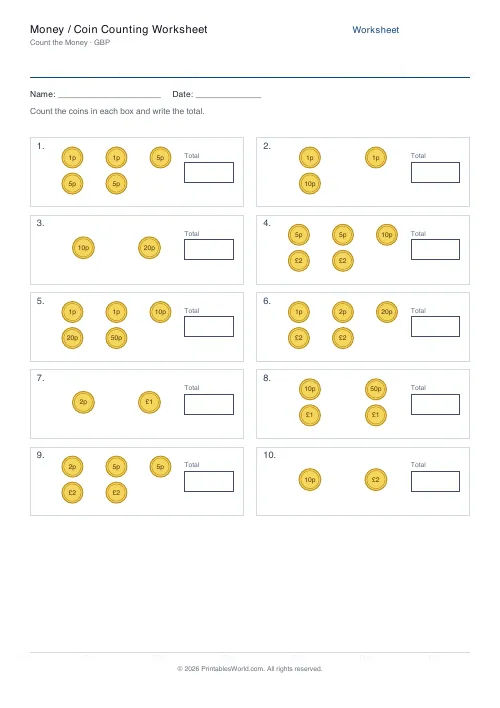
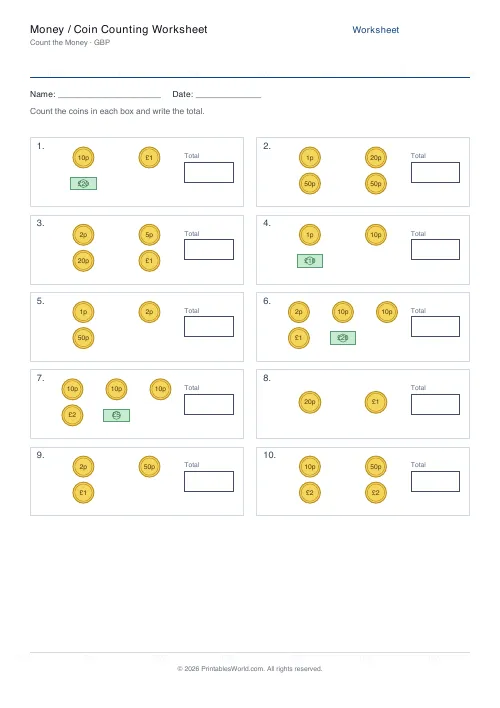
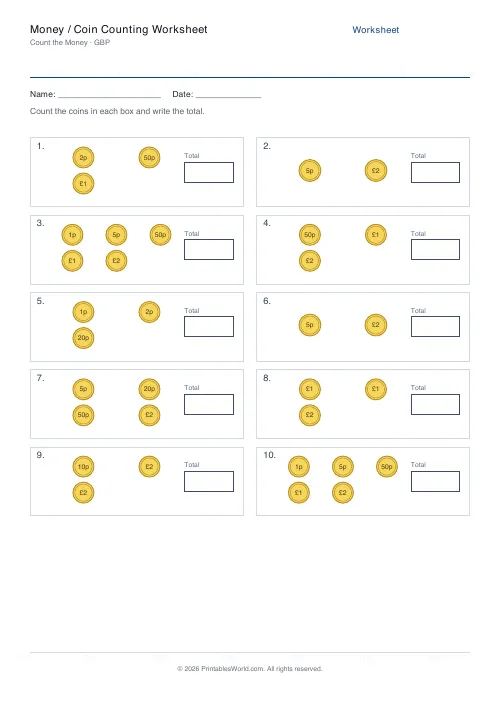
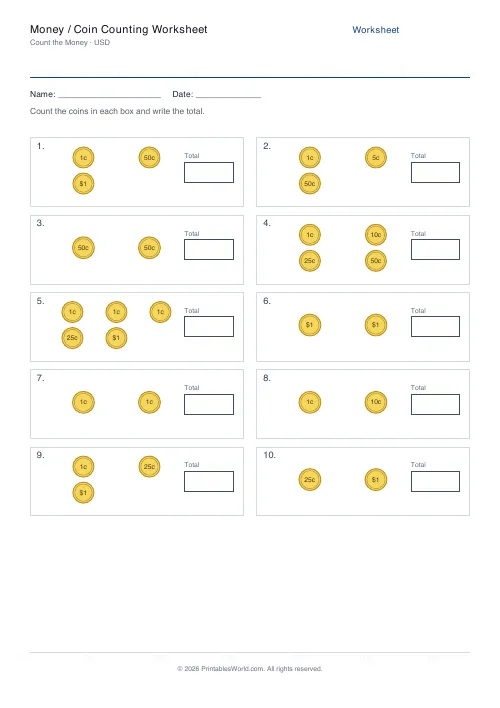
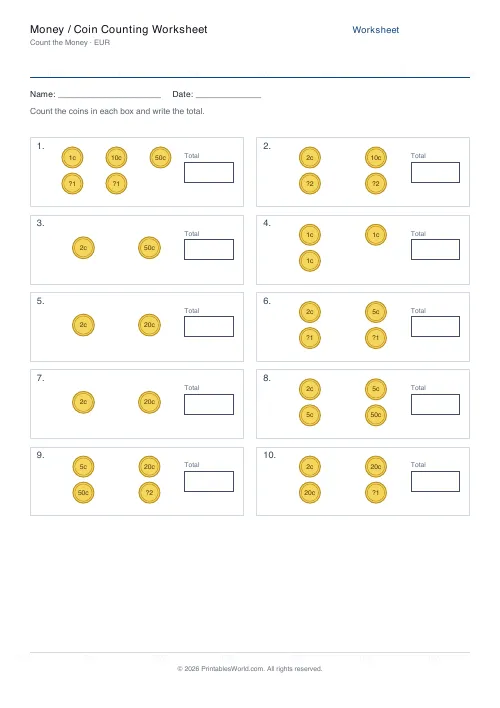
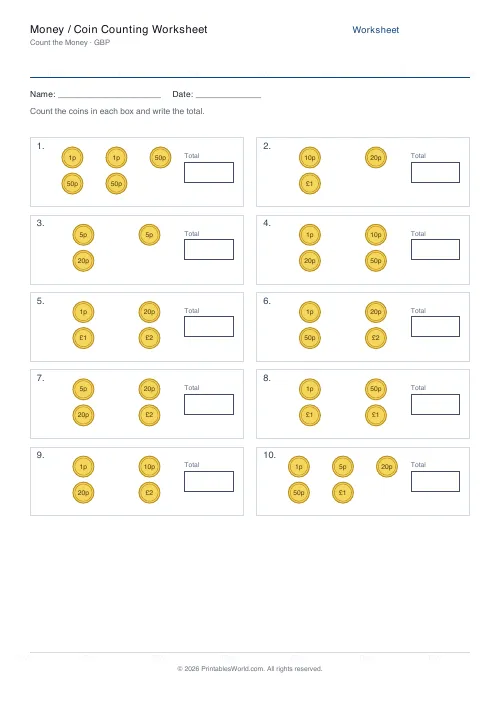
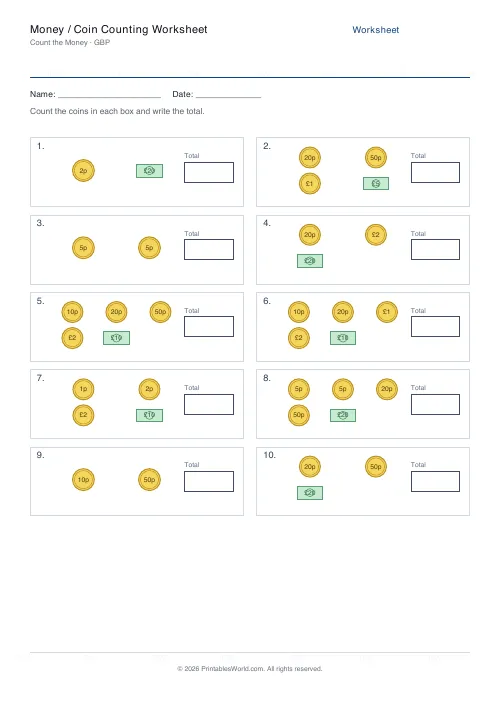
Coin-counting practice in sterling, dollars, or euros. Each question shows a handful of coins to total; the notes mode adds paper money. Set how many coins appear.
People also used
Feedback
Spotted something off with this tool?
Count what is on the table
Each question lists a set of coins and asks for the total. Choose the currency — sterling, dollars, euros — and the denominations change to match, so no child is asked to add up a coin their country does not have.
Up to five coins a question by default. Ten questions, answer key included. The notes mode adds paper money for larger totals.
Why counting money is harder than counting
Because the coins are not worth what they look like.
A child who can count to a hundred confidently still has to learn that a small silver disc is worth five of a larger bronze one, and that four of one thing equals one of another. Nothing about the size, the colour or the weight of a coin tells you its value, which is a genuinely unusual demand and the reason this takes longer than teachers expect.
Sort before adding
The method that works. It is worth insisting on it.
Put the coins in order, largest value first, then count on. Starting from the 50p and adding the smaller ones down is far more reliable than working up from the pennies, and it builds the same habit that makes mental addition work everywhere else in the subject.
Grouping helps too: two 20p coins is 40p in one step, not two.
Use real coins alongside
The sheet is practice, not a first lesson.
Handling the actual money is what teaches the values, because the mismatch between size and worth has to be felt to be believed. Print the worksheet for the recording and the arithmetic, and keep a tin of change on the table for the questions a child gets stuck on.
Setting the difficulty
Three coins is plenty for a first sheet. Five is the default and covers most of Key Stage 1. Push it higher and the addition becomes the hard part rather than the coin recognition, which may or may not be what you were after.
The notes mode is a step up rather than a variation: totals get larger, the arithmetic crosses a pound, and the decimal point arrives.
Beyond the classroom
This is one of the few worksheets that maps directly onto something a child will do that week. Pocket money, a shop, a bus fare.
Related: money maths for change and word problems, and the allowance chart for earning it in the first place.
FAQs
Quick answers
How is this different from your Money Maths worksheets?
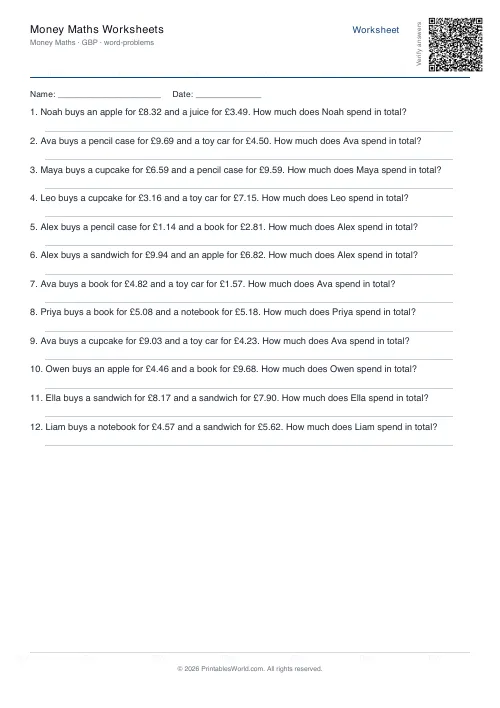
Money Maths presents amounts as written decimals (for example £2.35 + £1.67) for addition, change and word problems. The Money Counting Worksheet instead draws groups of coins and notes that the learner must count to find the total, so it also builds coin recognition and place-value skills.
Which currencies and coins are supported?
You can choose GBP (1p, 2p, 5p, 10p, 20p, 50p, £1, £2 and notes), USD (1c, 5c, 10c, 25c, 50c, $1 and notes), or EUR (1c through €2 and notes). Each coin is labelled with its denomination so children can read it as they count.
Can I control how hard the worksheets are?
Yes. Lower the maximum pieces per group and stay in coins-only mode for beginners. To make it harder, raise the piece count and switch to coins and notes, which mixes a banknote into some of the groups.
Is there an answer key?
If you tick Include Answer Key, the PDF adds a second page listing the correct total for every group in the same order, formatted with your chosen currency symbol.
Can I print the same worksheet again?
Each Generate click with the same settings produces a fresh set of coin groups. If you need identical copies, download the PDF once and reprint from that file as many times as you like.
Related tools
Money Maths Worksheets
Print money maths worksheets with coin addition, making change, and word problems in £, $, or €.
Making Change Worksheets
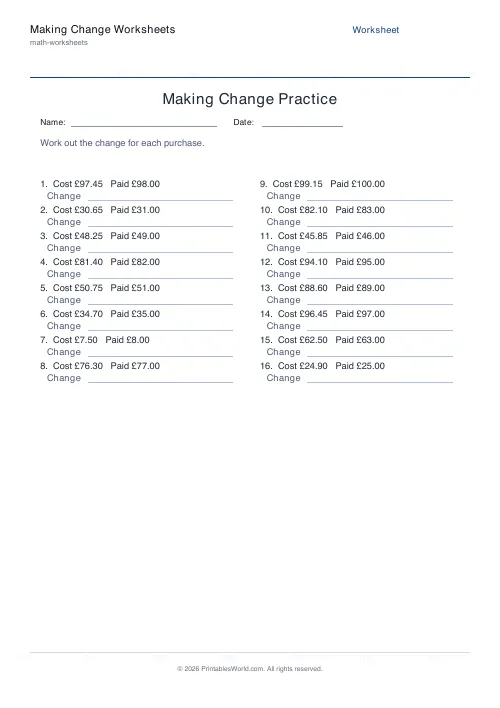
Calculate change from everyday money transactions.
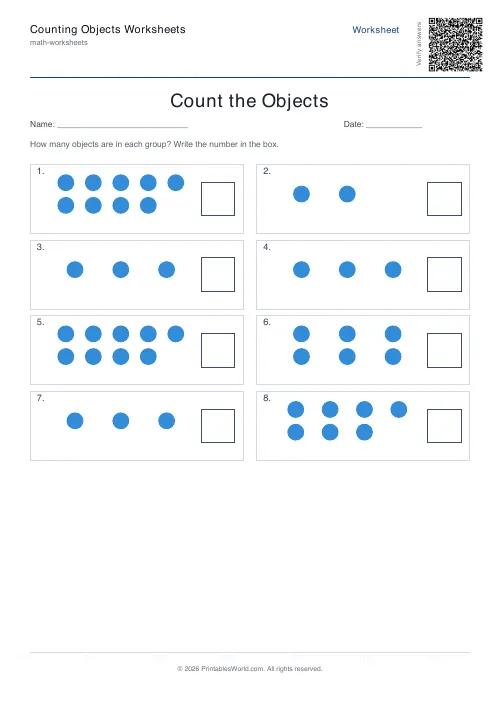
Counting Objects Worksheets
Printable count-and-write practice for early learners (1 to 20).
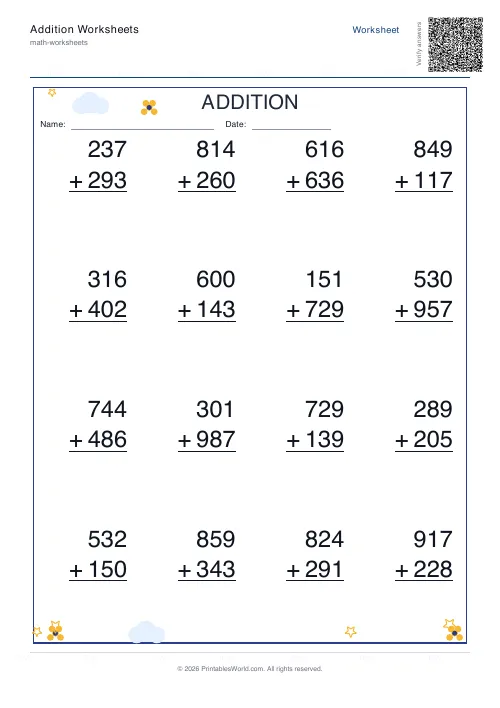
Addition Worksheets Generator
Free printable addition worksheets in tables or line-by-line layouts.
Further reading
Math Worksheets
Ten frames and number bonds: early maths foundations
A ten frame is two rows of five. That arrangement does something a row of counters cannot. It makes quantities visible without counting, which is where number sense starts.
5 min read
Math Worksheets
How to read and interpret bar charts with kids
Reading a bar chart is easy; interpreting one is not. Four questions turn a chart from something children decode into something they can reason about.
4 min read
Math Worksheets
Understanding BODMAS and PEMDAS: order of operations explained
BODMAS and PEMDAS describe the same rule in different words. The trouble is that both hide two facts the acronym cannot express. Which is where nearly every mistake comes from.
5 min read
More like this
- Addition Worksheets Generator
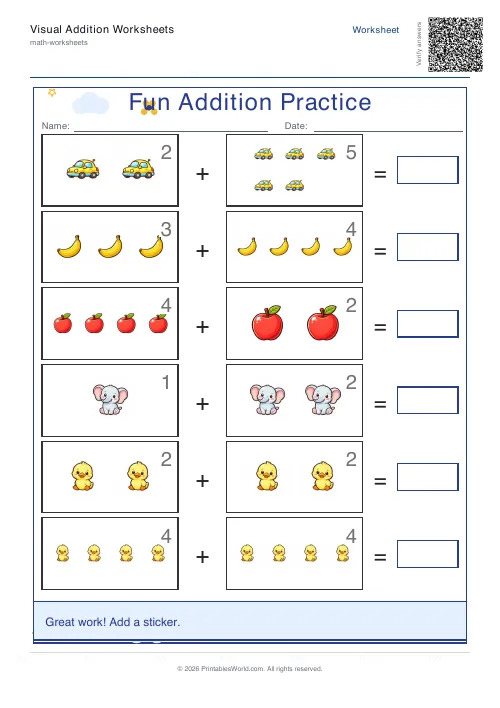 Visual Addition Worksheets Generator
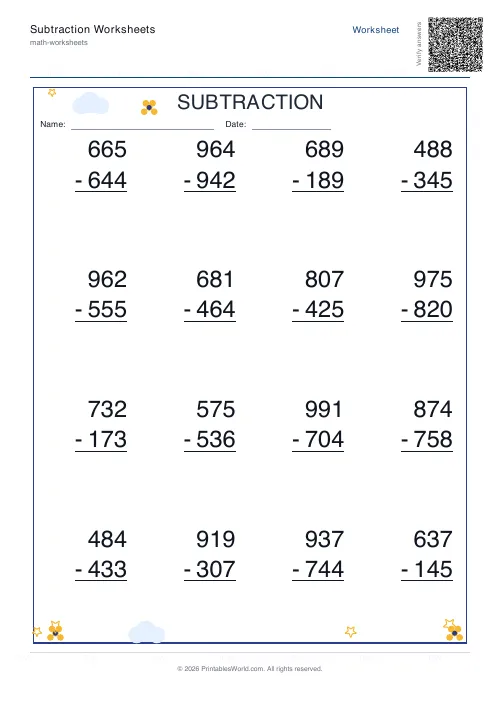 Subtraction Worksheets Generator
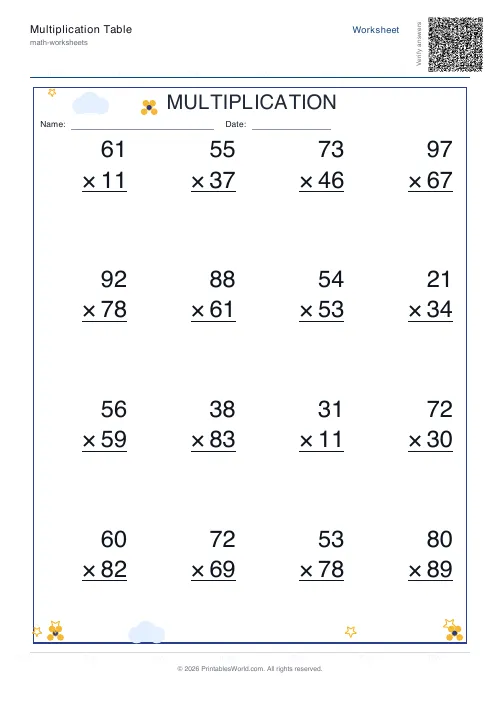 Multiplication Table Generator
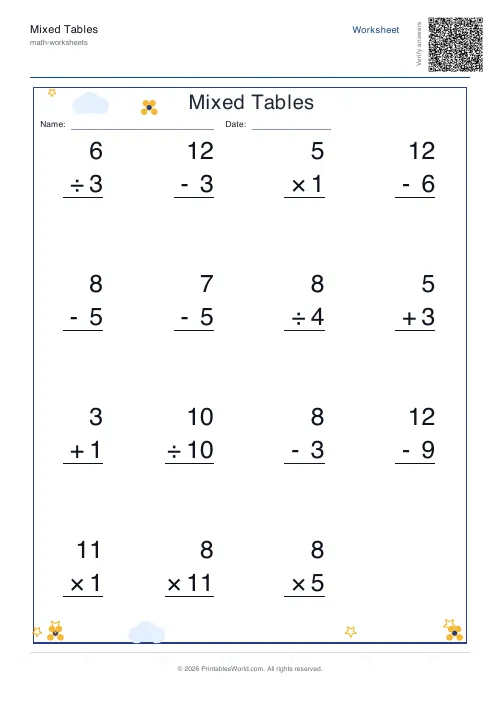 Mixed Tables Generator
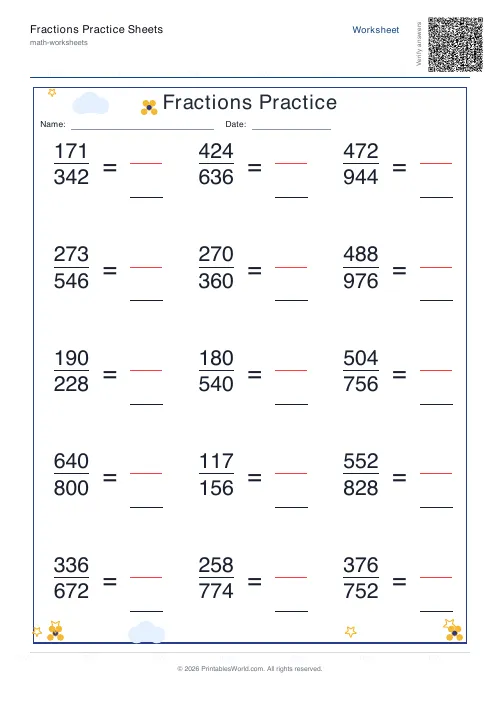 Fractions Practice Sheets Generator
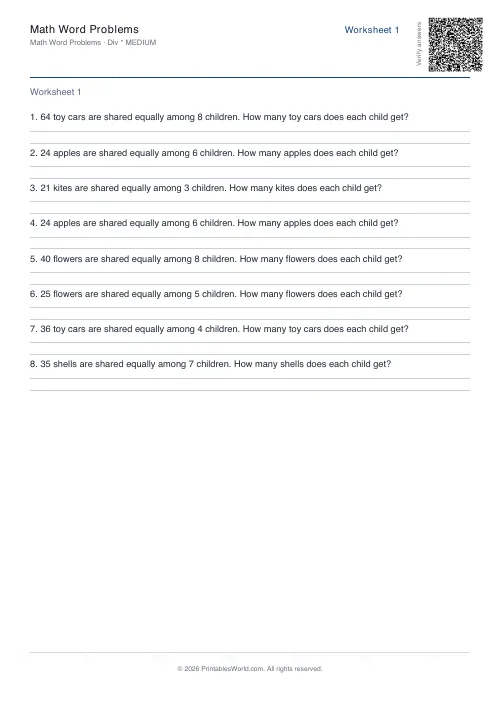 Math Word Problems Generator
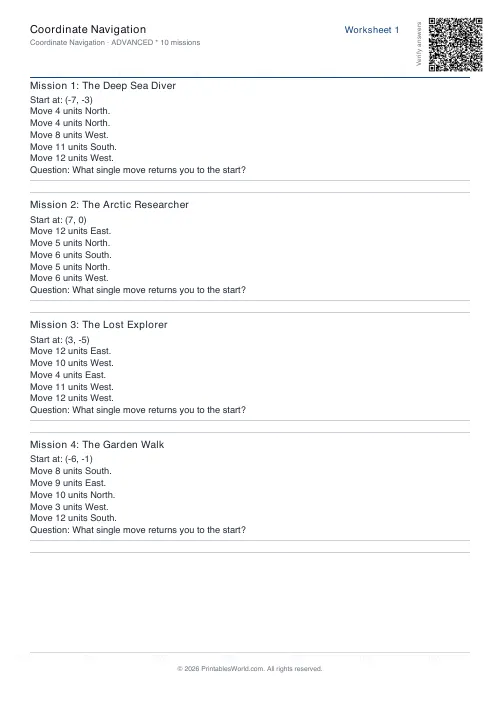 Coordinate Navigation Generator
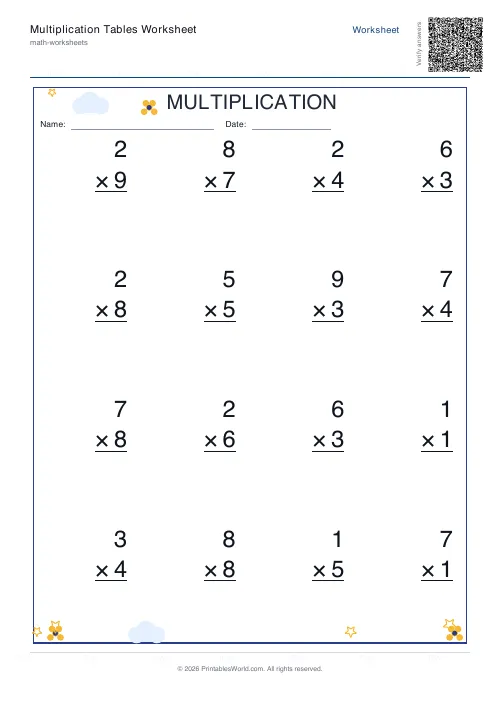 Multiplication Tables Worksheet
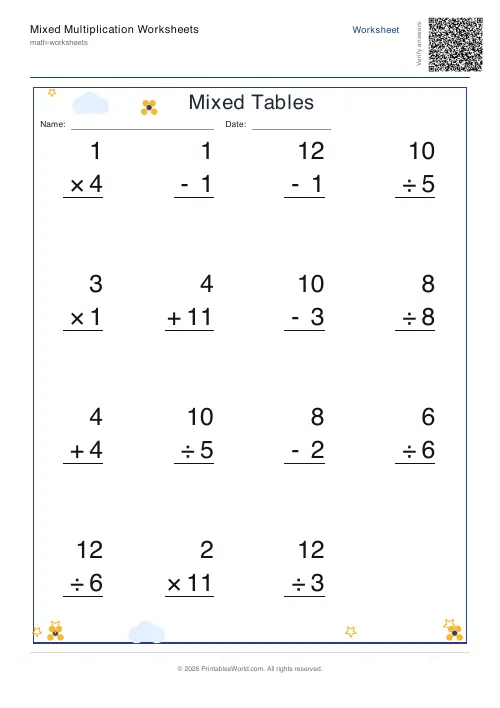 Mixed Multiplication Worksheets
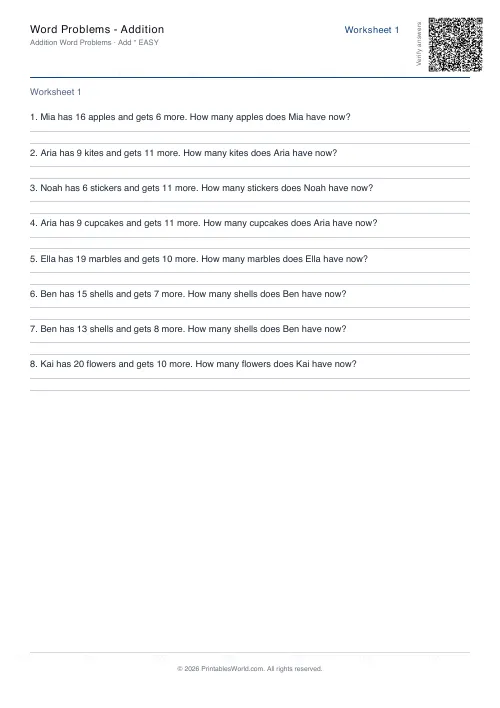 Word Problems: Addition
 Word Problems: Subtraction
 Word Problems: Multiplication
 Word Problems: Division