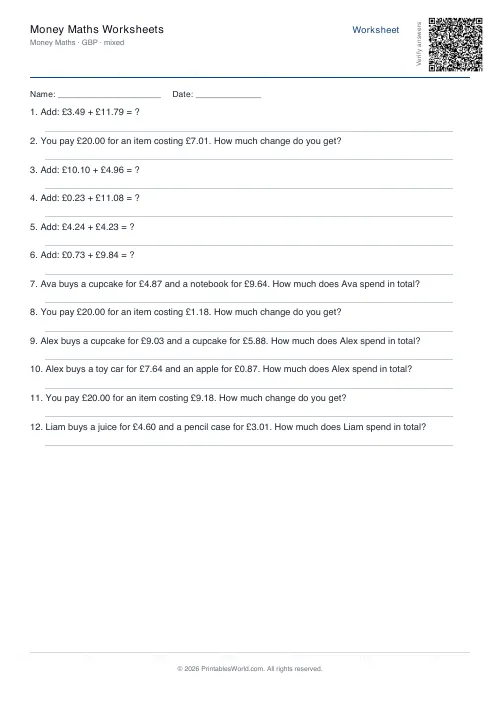
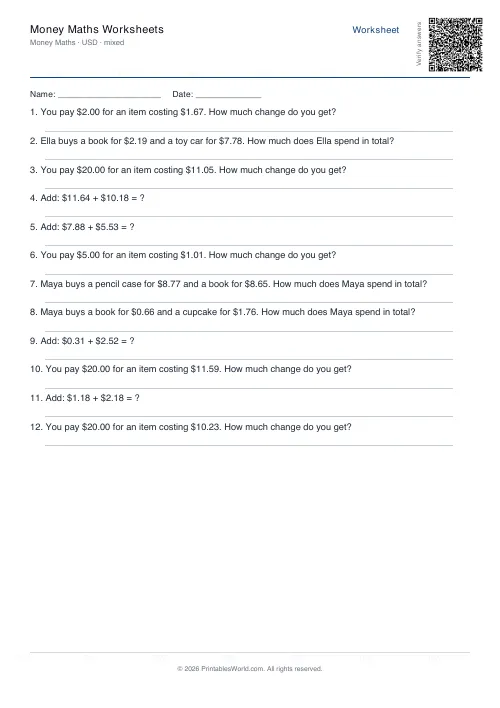
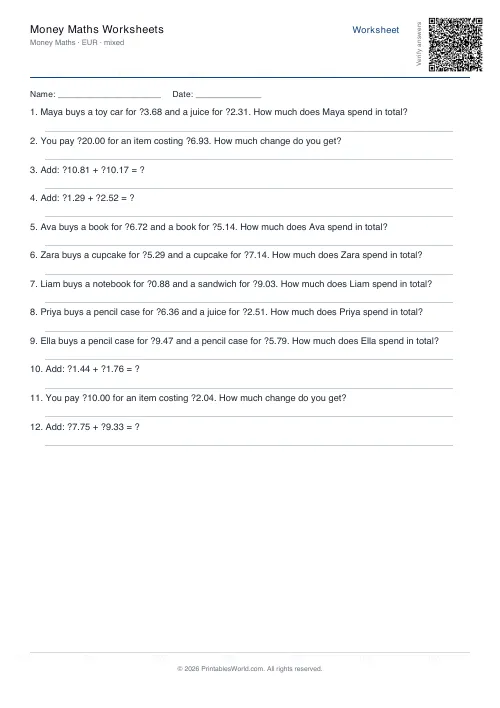
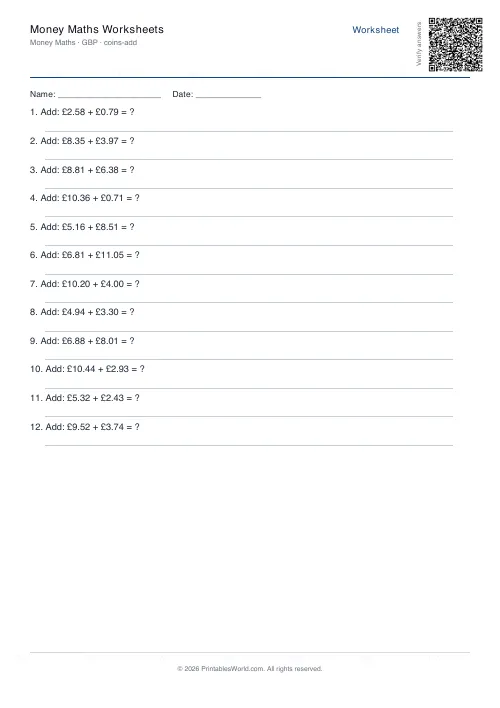
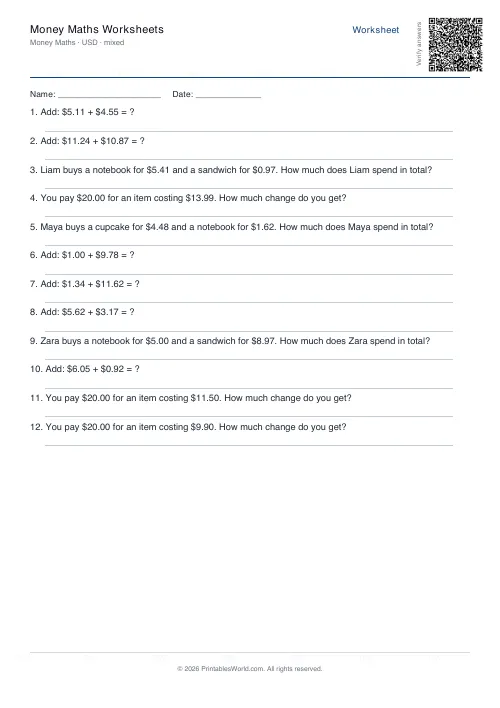
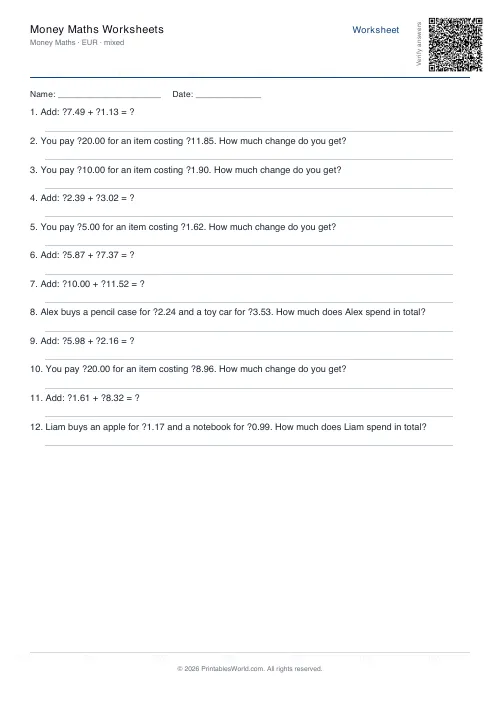
What this tool does
Money problems beyond counting: adding coins, working out change, or short word problems. Works in sterling, dollars, or euros, with a ceiling on the amounts involved.
People also used
Math Word Problems Generator
Generate printable math word problem worksheets with customisable topics, difficulty, and answer keys.
Measurement Worksheets
Convert length, mass, and volume units. Mm ↔ cm ↔ m, g ↔ kg, ml ↔ l.
Time Calculations Worksheets
Print elapsed-time, duration arithmetic, and analog-clock worksheets with 12- or 24-hour formats.
Feedback
Spotted something off with this tool?
Three kinds of question
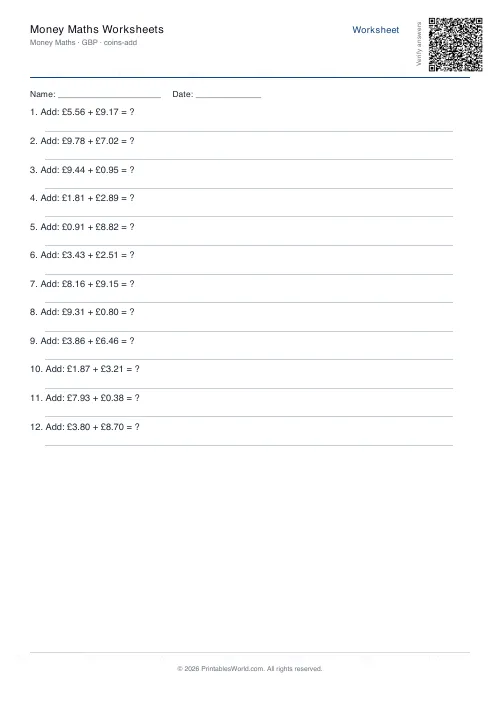
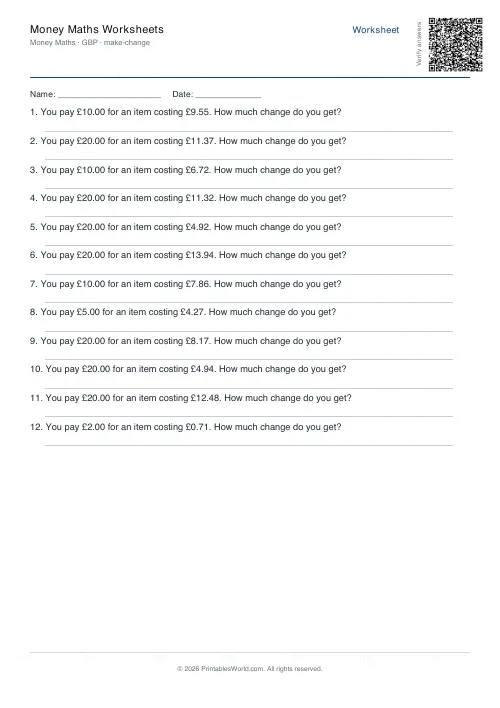
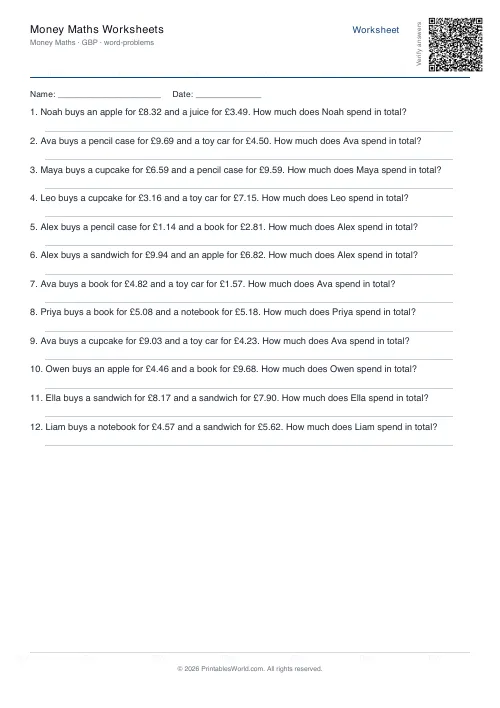
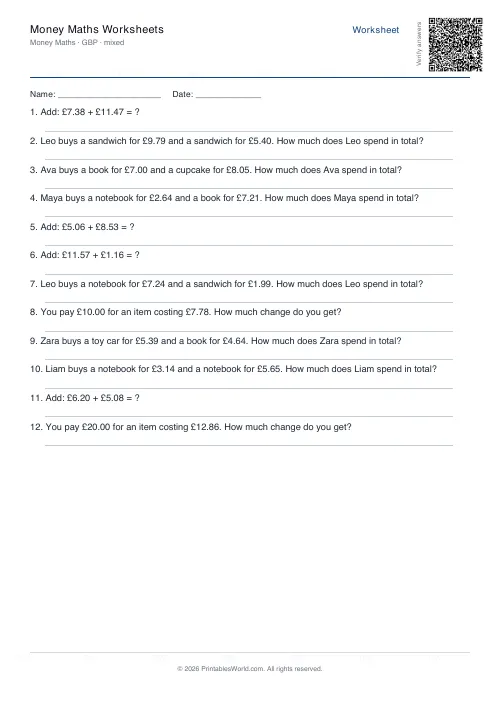
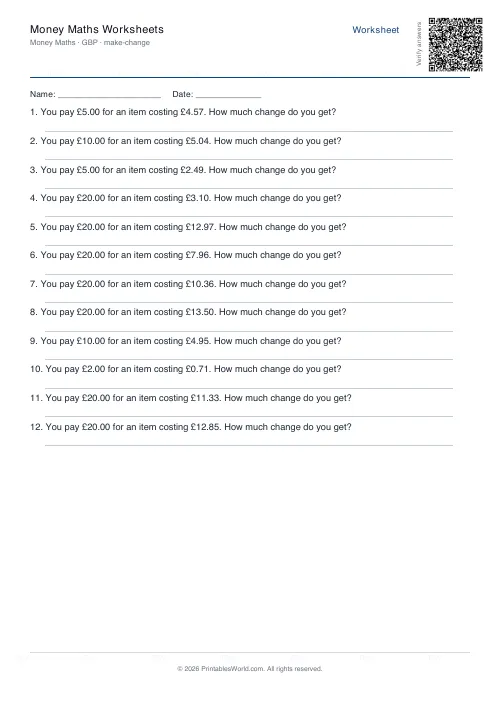
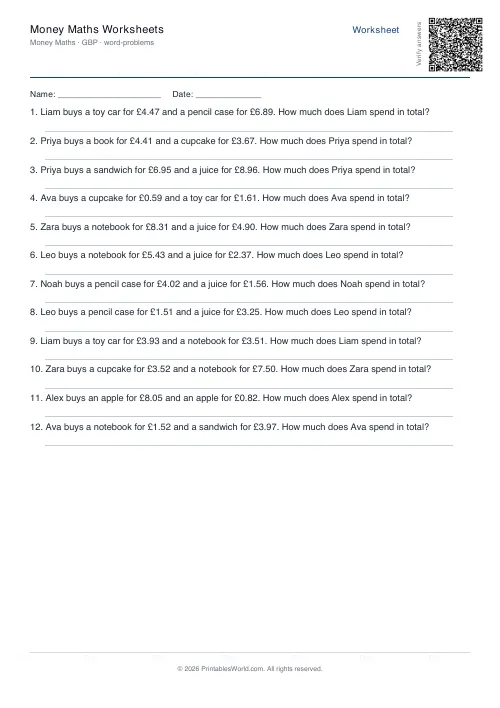
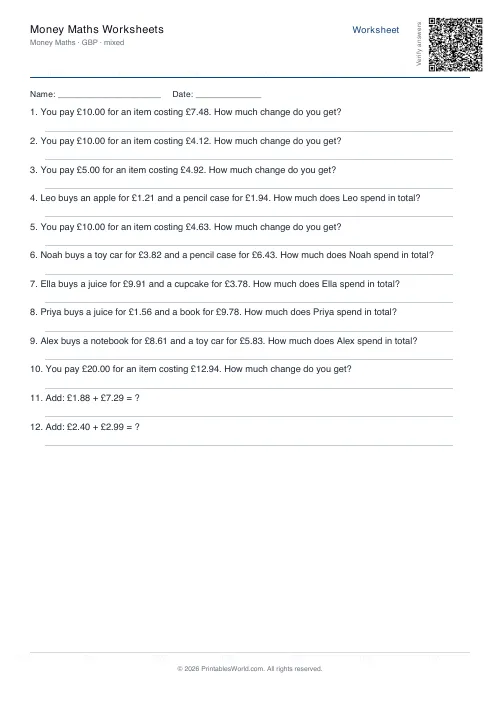
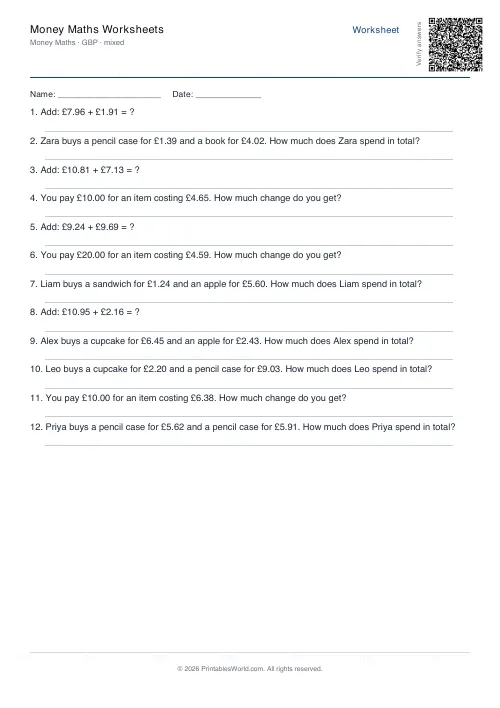
Adding coins totals a set. Making change asks what comes back from a payment. Word problems wrap the same arithmetic inside a short scenario that has to be read before it can be answered. Mixed rotates all three.
Currency can be sterling, or dollars, or euros. Amounts run to £20 by default, twelve questions, answer key optional.
Change is subtraction that nobody does by subtracting
Ask an adult for change from £20 on a bill of £13.40. Almost nobody sets out a column subtraction.
They count up: 60p gets to £14, six pounds gets to £20, so £6.60. That is the method to teach. It is faster, it is harder to get wrong, and it is precisely what shopkeepers did for a couple of centuries before any till was calculating it for them — while column subtraction across a decimal point with a borrow in it is exactly where children lose marks, and counting up sidesteps the whole business.
The decimal point is the real difficulty
Money is the first place most children meet decimals. They meet them in a slightly odd form, too.
£1.50 is not one and a half of anything obvious. It is one pound and fifty pence — two units sharing one notation. Writing £1.5, or £1.05, for one pound fifty is the standard error, and it comes of treating the digits after the point as an ordinary number instead of a fixed two-digit field.
Insist on two decimal places for every money answer. Always. It is a small rule that prevents a large class of mistakes.
The scenario questions earn their place
Slower to mark. They also test something the other two modes cannot: deciding which operation the question actually wants.
A child who adds coins fluently may still have no idea whether a given question wants addition or subtraction, and that gap is completely invisible on a page of bare sums, which is why it survives so long undetected and then surfaces in a test. It is also the half that transfers to real life, where nobody hands you a labelled calculation.
Setting the ceiling
Keep amounts under £5 for infants, where the arithmetic should not cross a pound at all. Twenty is the default and suits juniors: big enough for realistic shopping, small enough that the numbers stay manageable.
Go higher for older pupils, particularly on the scenario questions, where a realistic total is a good deal more persuasive than a shopping trip that comes to four pounds.
Realism helps
Use prices from a real shop where you can. Let children check the answers with real coins.
Related: money counting for the coin-recognition stage that comes first, and word problems for the general skill.
FAQs
Quick answers
Can I choose which currency symbol appears on the worksheet?
Yes. The currency drop-down lets you pick GBP (£), USD ($), or EUR (€). All amounts on the worksheet will use your selected symbol and standard decimal notation.
What is the difference between the four problem modes?
Coins-add generates simple addition of two amounts. Make-change presents a payment scenario where the learner calculates the difference. Word-problems wrap calculations in short narratives (for example, a character buying two items). Mixed mode combines all three types on one sheet.
How does the maximum amount setting work?
Maximum amount caps the largest value that can appear in any single problem. For example, setting 5.00 ensures no total exceeds five pounds, dollars, or euros. Individual problems will often be smaller to keep the arithmetic realistic for younger learners.
Will I get an answer key?
If you tick the Include Answer Key box, the PDF will have a second page listing all solutions in the same order as the questions. This makes marking faster and lets learners check their own work.
Can I print the same worksheet again later?
Each time you click Generate with the same settings, the seeded random-number generator produces a different set of problems. If you need identical copies, download the PDF once and print multiple times from that file.
How many problems fit on one page?
Six to twelve problems typically fit comfortably in portrait orientation on A4 or US Letter. If you choose a higher count, the font size may shrink slightly, or the layout may extend to a second question page before the answer key.
Are the word problems suitable for early readers?
Word problems use simple sentence structures and a small vocabulary (common names like Alex, Maya, and Leo; everyday items like sandwich, book, and pencil case). They are designed for Key Stage 1 and Grade 1–3 literacy levels, but you can read them aloud to pre-readers.
Related tools
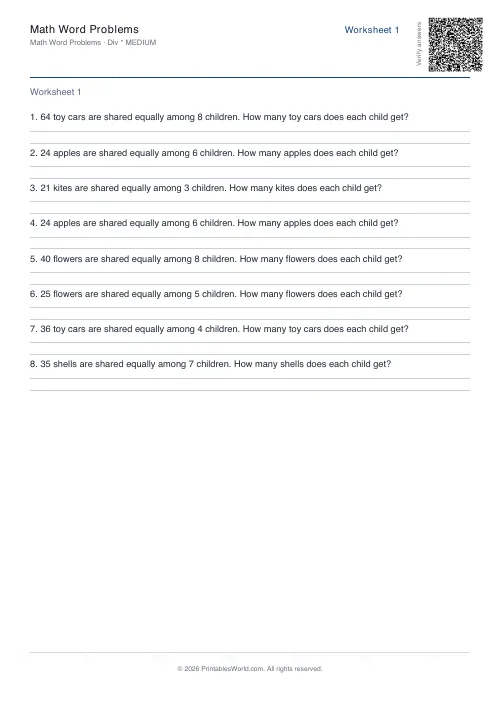
Math Word Problems Generator
Generate printable math word problem worksheets with customisable topics, difficulty, and answer keys.
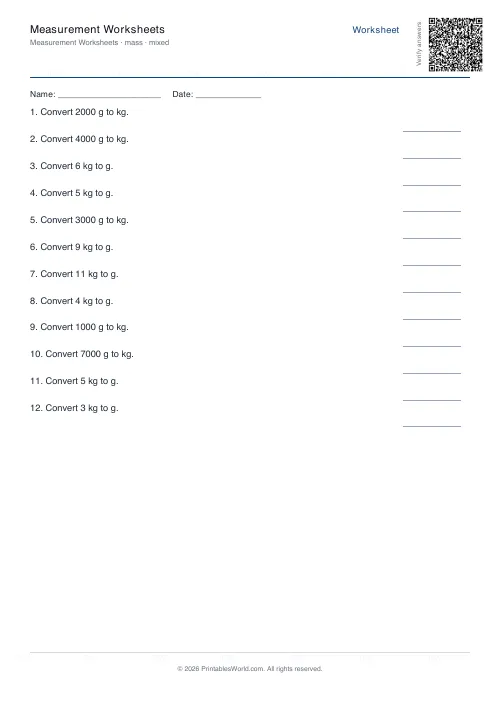
Measurement Worksheets
Convert length, mass, and volume units. Mm ↔ cm ↔ m, g ↔ kg, ml ↔ l.
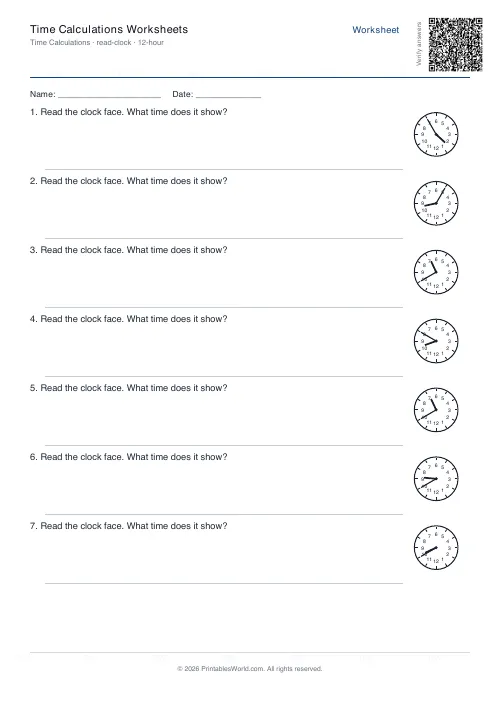
Time Calculations Worksheets
Print elapsed-time, duration arithmetic, and analog-clock worksheets with 12- or 24-hour formats.
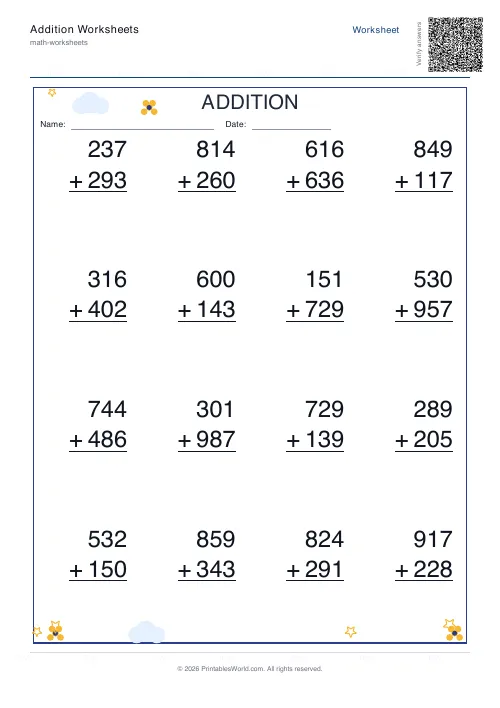
Addition Worksheets Generator
Free printable addition worksheets in tables or line-by-line layouts.
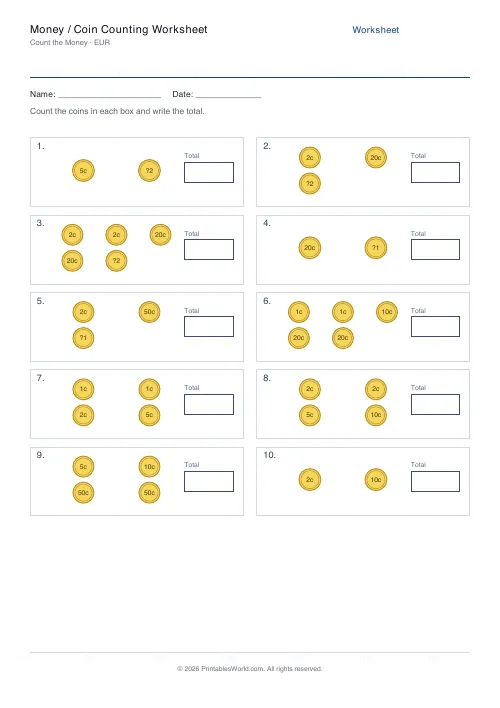
Money / Coin Counting Worksheet
Print coin counting worksheets where kids count groups of pictured coins and notes and write the total in £, $, or €.
Further reading
Math Worksheets
Making maths fun: 15 ways to practise without tears
Maths tears are usually about difficulty, length or fear of being wrong, not about maths. Fifteen practical changes, grouped by which of those three problems they actually solve.
6 min read
Math Worksheets
How many maths worksheets per day? A parent's guide
The honest answer is less than most parents assume. And the number of questions matters less than whether the session ends well.
5 min read
Math Worksheets
Ten frames and number bonds: early maths foundations
A ten frame is two rows of five. That arrangement does something a row of counters cannot. It makes quantities visible without counting, which is where number sense starts.
5 min read
More like this
- Addition Worksheets Generator
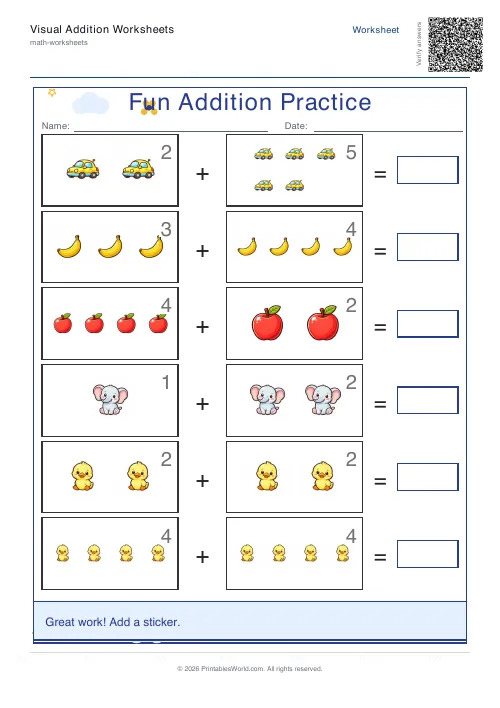 Visual Addition Worksheets Generator
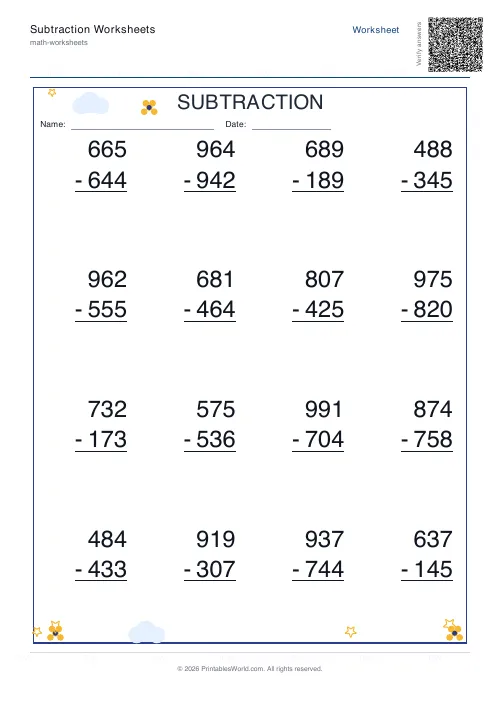 Subtraction Worksheets Generator
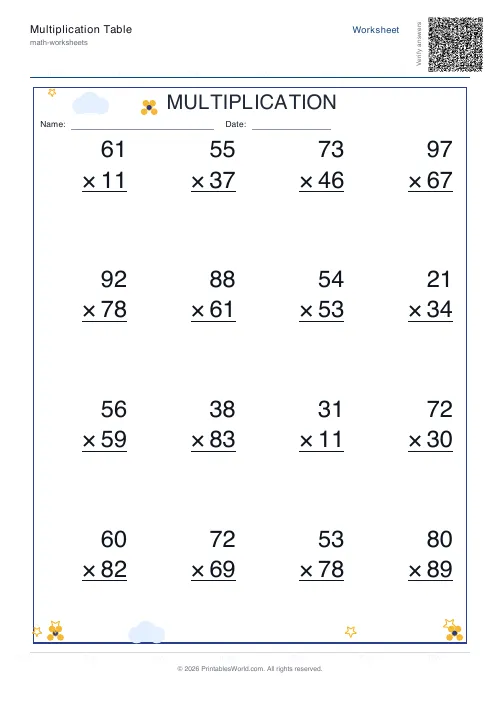 Multiplication Table Generator
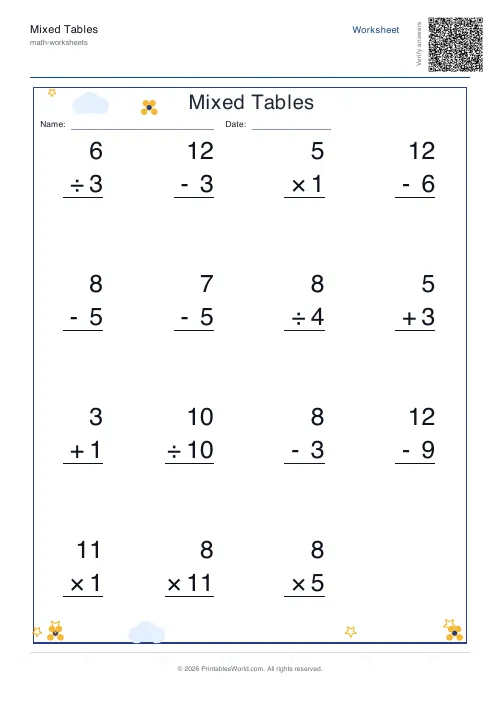 Mixed Tables Generator
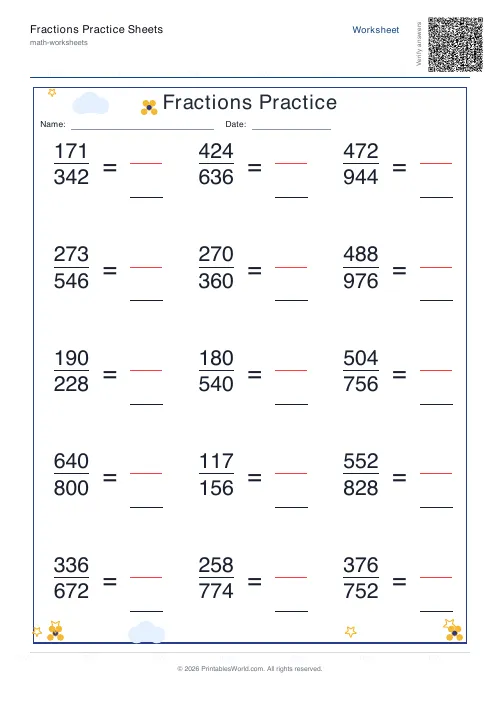 Fractions Practice Sheets Generator
- Math Word Problems Generator
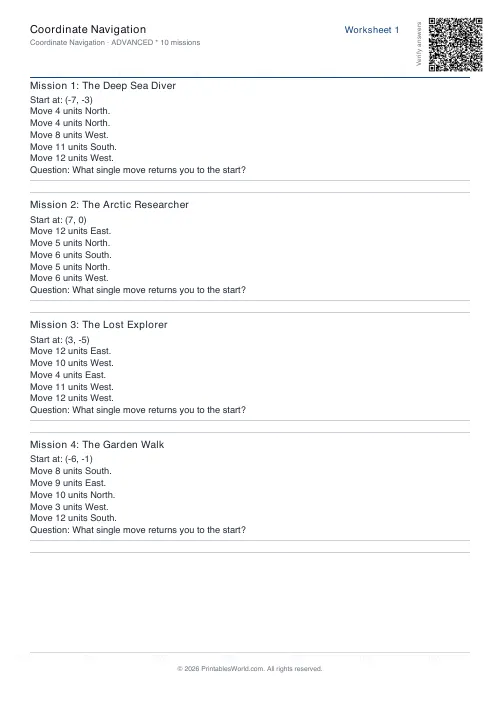 Coordinate Navigation Generator
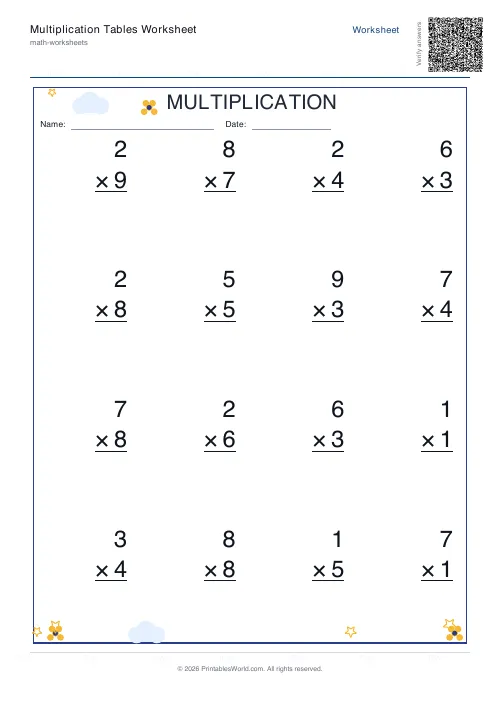 Multiplication Tables Worksheet
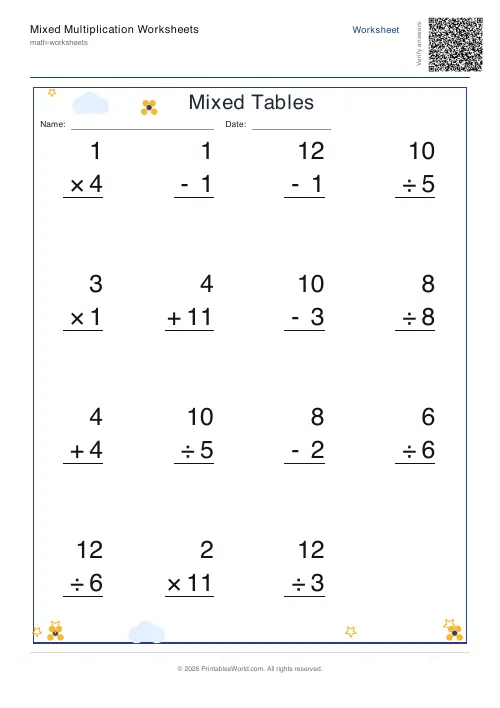 Mixed Multiplication Worksheets
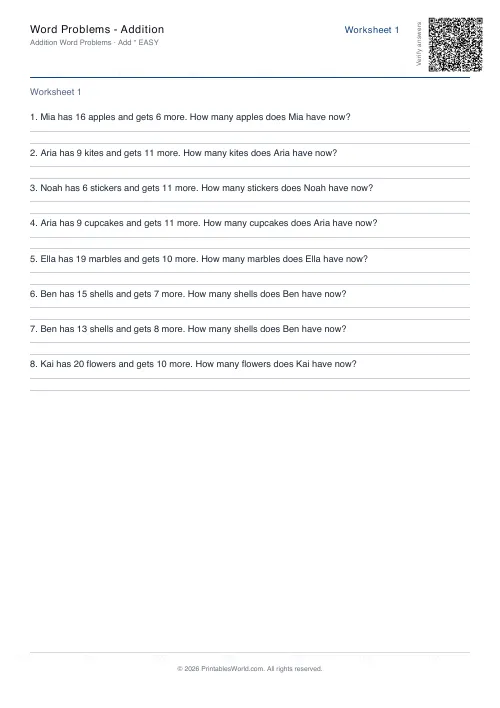 Word Problems: Addition
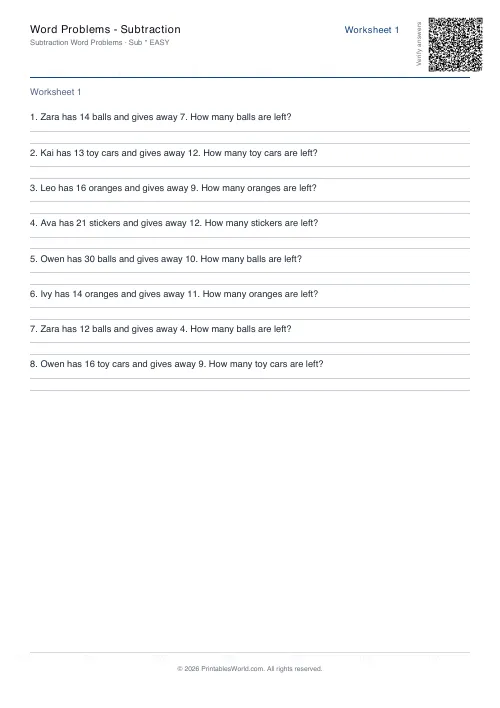 Word Problems: Subtraction
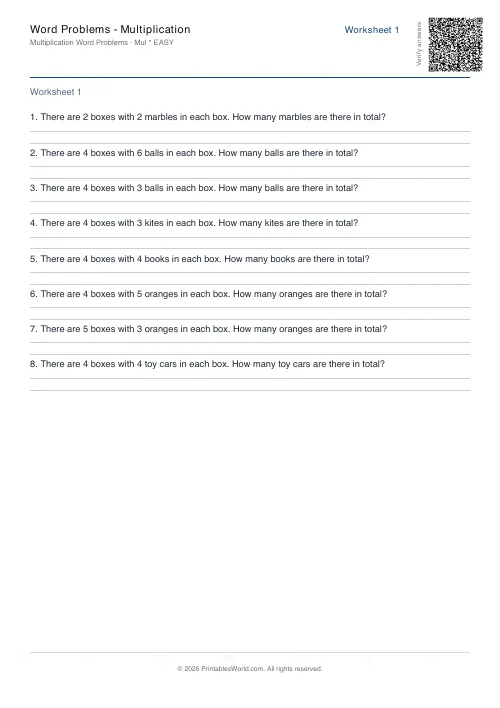 Word Problems: Multiplication
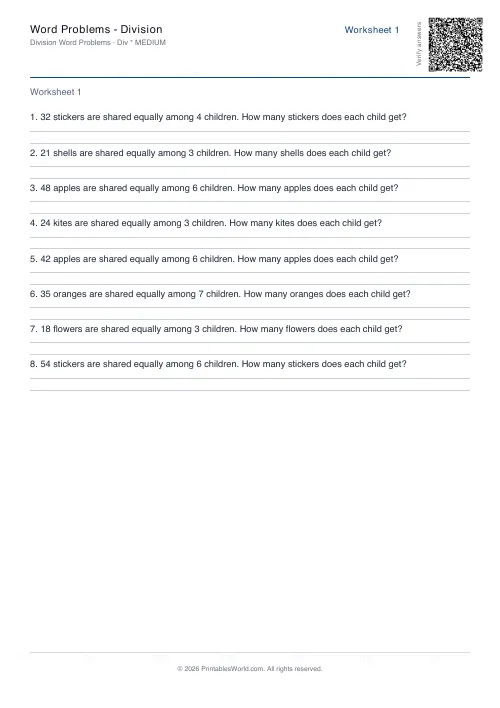 Word Problems: Division