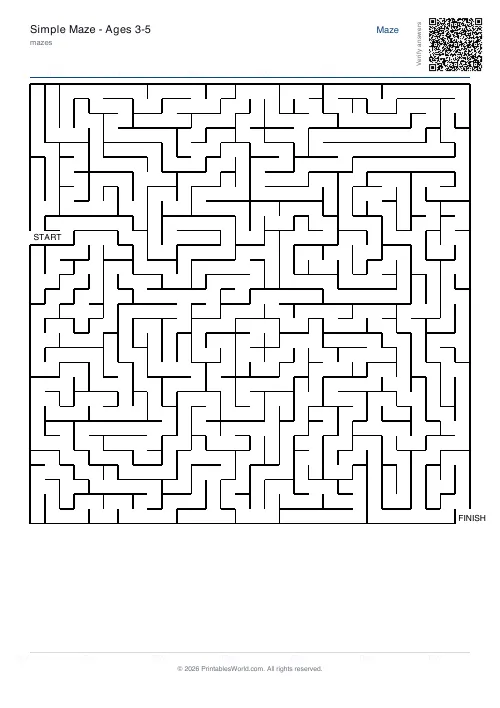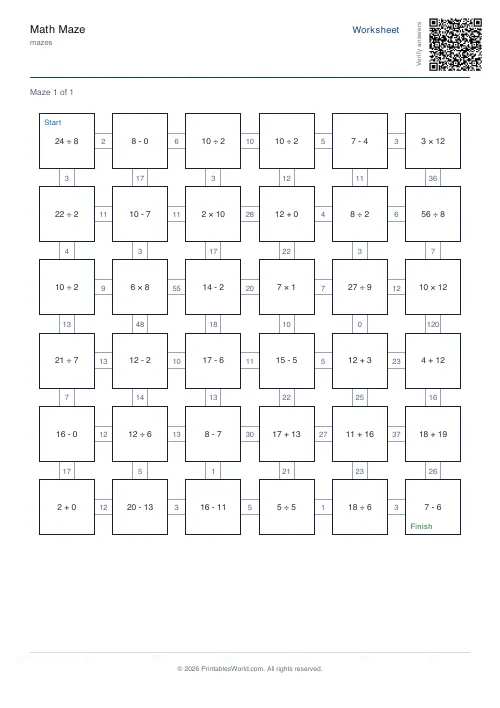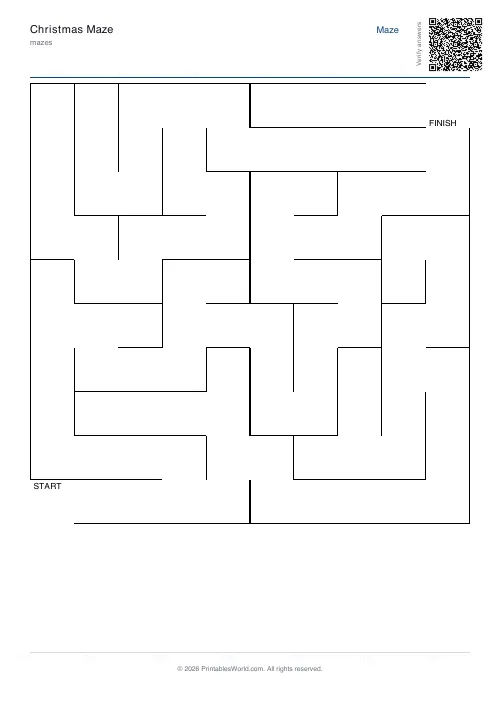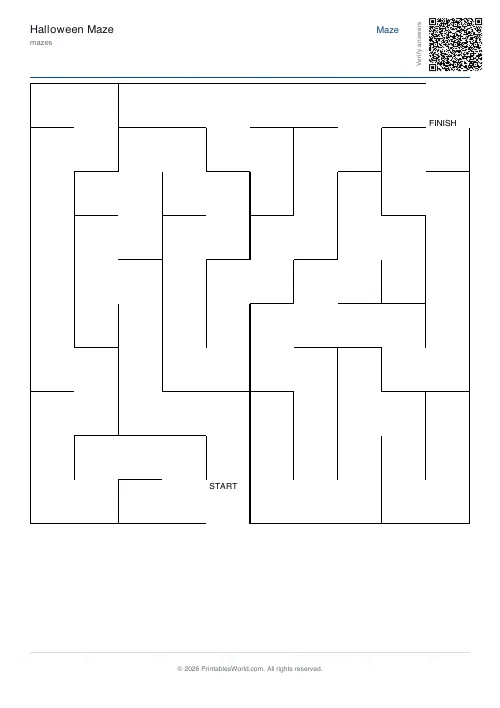
What this tool does
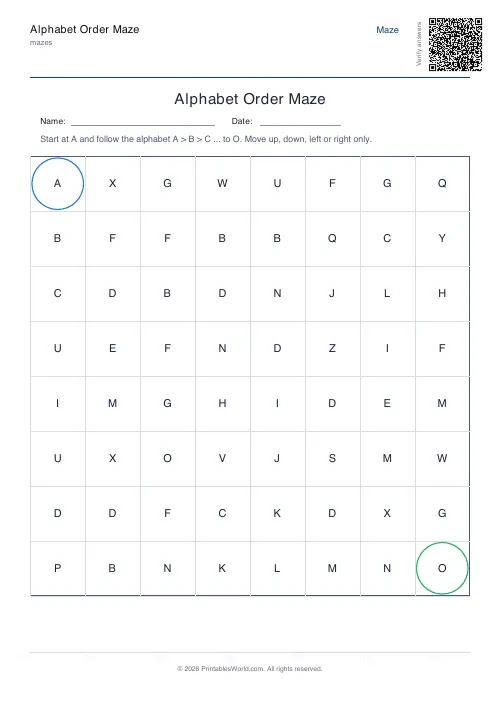
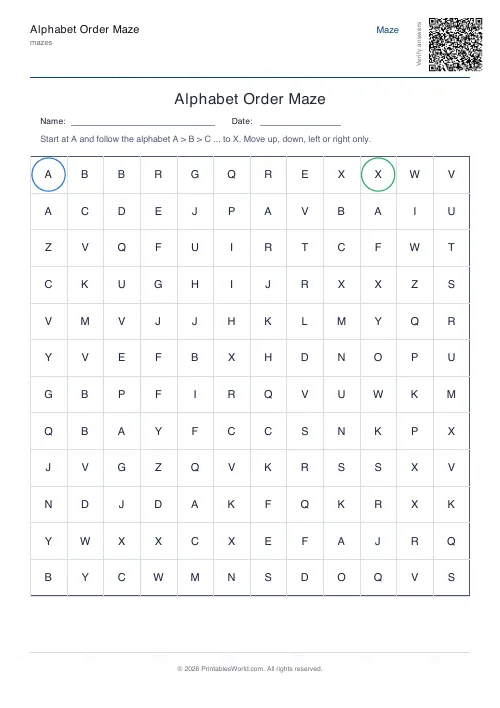
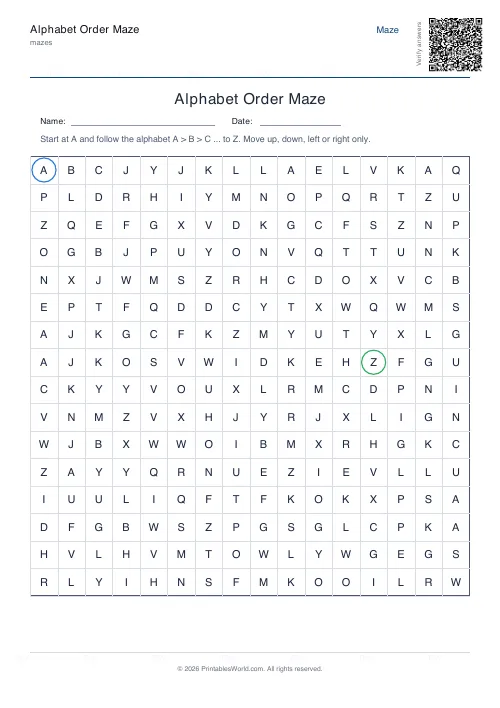
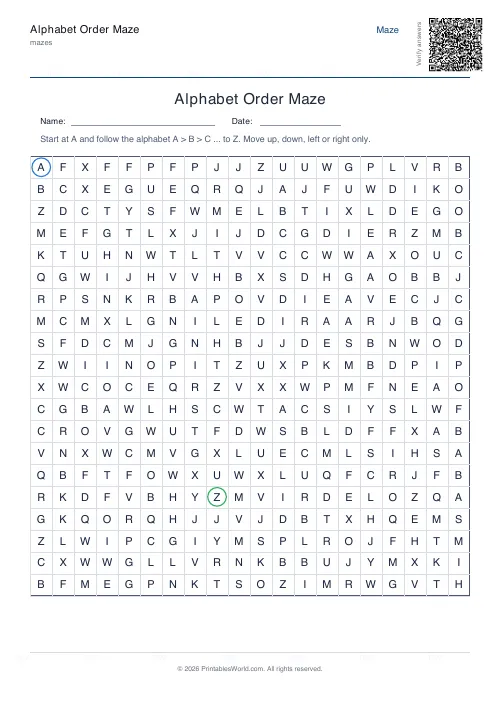
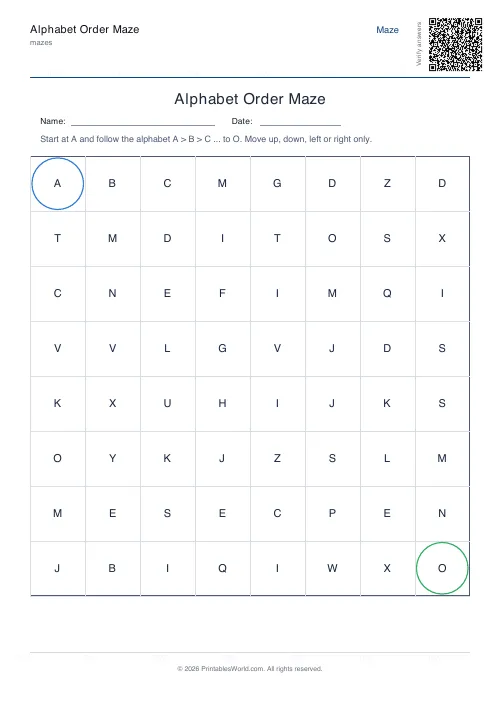
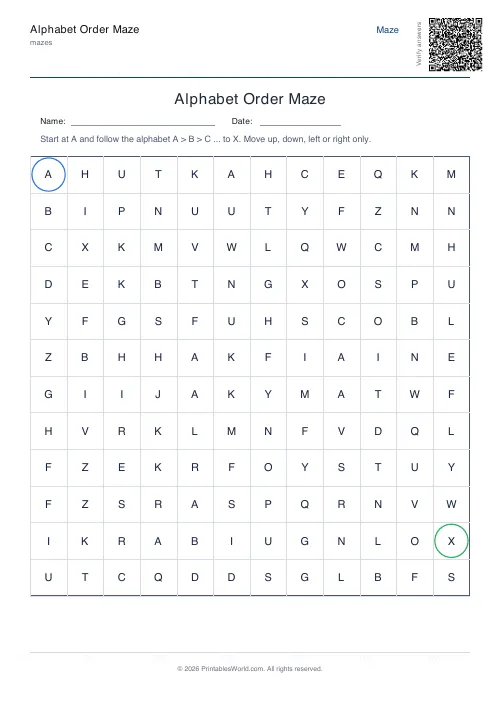
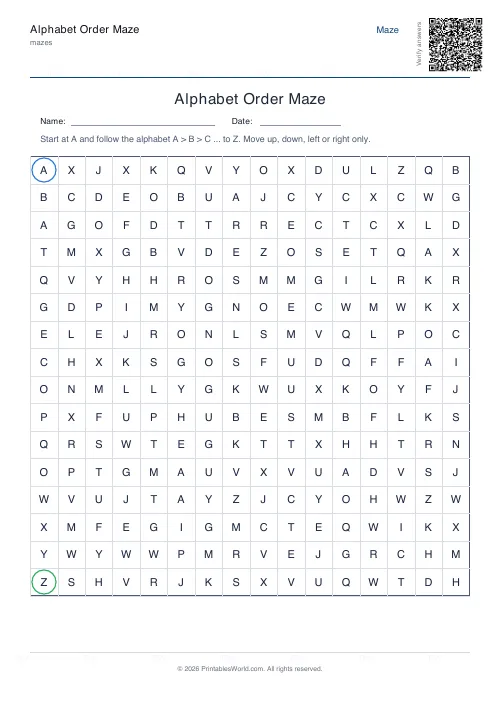
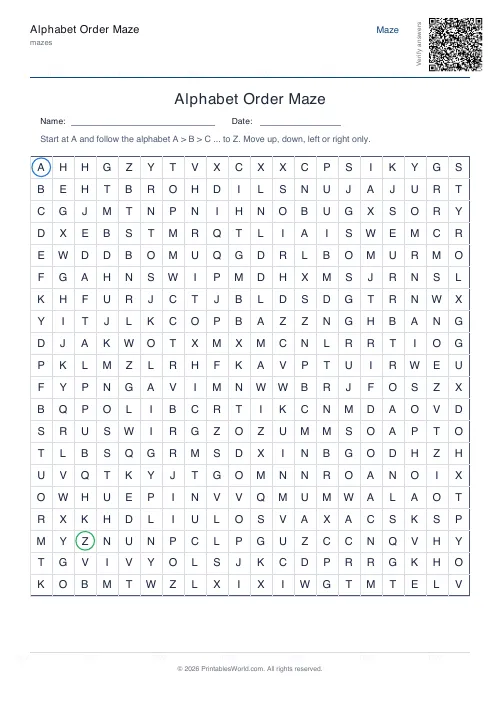
A printable alphabet maze. The child starts on the circled A and traces the alphabet in order through the grid, stepping only to a cell that shares an edge, never a corner, past distractor letters that never continue the sequence. Grids run from 8×8 to 20×20, and a highlighted solution page can print behind the puzzle.
People also used
Feedback
Spotted something off with this tool?
One route, and it spells the alphabet
The maze begins on a circled A. From there the child looks at the four cells touching it, finds the B, steps onto it, then hunts for the C. And onwards, one letter at a time, until the circled finish letter.
Every other cell in the grid holds a distractor. Those letters are chosen so that none of them ever offers a valid next step, which means there is exactly one path through and no point at which a careful child can be misled into a dead end that looked correct. The route is built first and the distractors are fitted around it, so a maze is never unsolvable and never ambiguous.
Grid size, and how far through the alphabet you get
Grids run from 8×8 up to 20×20, and twelve is the default. This is the setting that matters, and not only because a bigger grid is harder.
The path length is capped at twice the grid width, and at twenty-six. So an 8×8 maze runs A to P and stops. A twelve runs to X. Only at a 13×13 grid or larger does the puzzle actually reach Z, which is worth knowing if you specifically want a full-alphabet sheet rather than a sequencing exercise. For a four-year-old who has A to J secure, a small grid is the right choice and the short path is a feature.
Solving it, and checking it
Pencil, not pen. Children scan in four directions and will backtrack.
The solution page is on by default and draws the whole route in colour, which makes marking a glance rather than a trace. It is also the better way to hand the sheet to a child who has stalled: showing them the next two steps and covering the rest gets them moving again without giving the puzzle away.
What it is actually training
Three things at once, which is unusual for a sheet this simple. Letter recognition, because every cell has to be read. Sequencing, because the child must recall what follows without a chart in front of them. And visual scanning in four directions, which is the skill that later makes reading a line of text possible.
An alphabet frieze on the wall gives none of that, because the answer is always visible. Here the next letter has to come from memory before the eye knows what it is looking for. It works as a quiet starter, as early-finisher work, or as homework that does not feel like homework.
Press Generate New for a completely different maze at the same settings. Thirty children, thirty sheets.
FAQs
Quick answers
How does the alphabet order maze work?
Children start on the circled A and look at the four neighbouring cells for the letter B, then C, and so on. Moving only up, down, left or right, they follow the alphabet in order until they reach the finish letter.
Is there only one correct path?
Yes. The alphabet route is built first, then the remaining cells are filled with distractor letters chosen so they never offer a valid next-letter step. That guarantees a single solvable path.
What age group is it for?
It suits early years and Key Stage 1 children who are learning letter recognition and alphabet sequence. A larger grid makes a longer path that challenges older pupils.
Is there an answer key?
Yes. Toggle the solution on and the PDF adds a second page that highlights the full A-to-Z path in colour, so checking takes seconds.
Related tools
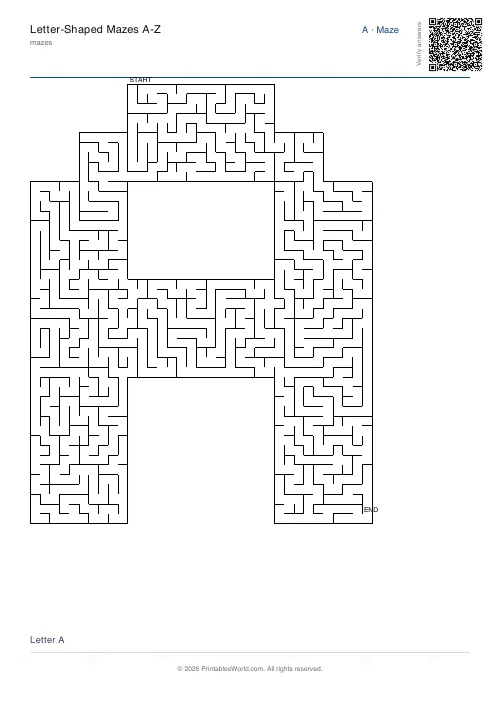
Letter-Shaped Mazes A-Z
Maze path contained within the shape of each letter of the alphabet.
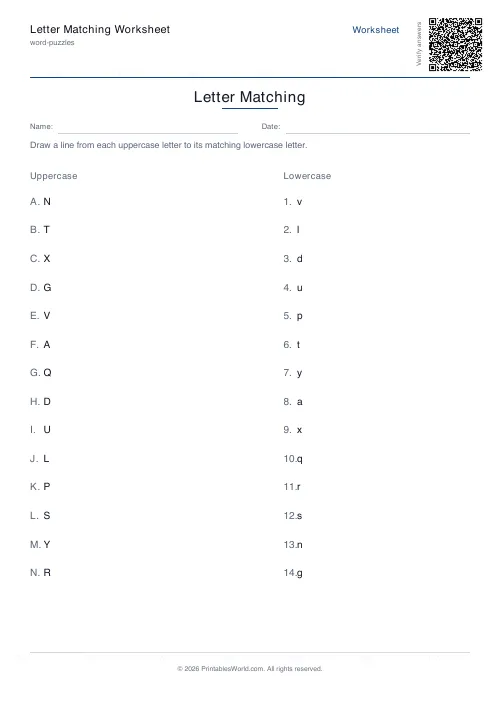
Letter Matching Worksheet
Match each uppercase letter to its lowercase partner.
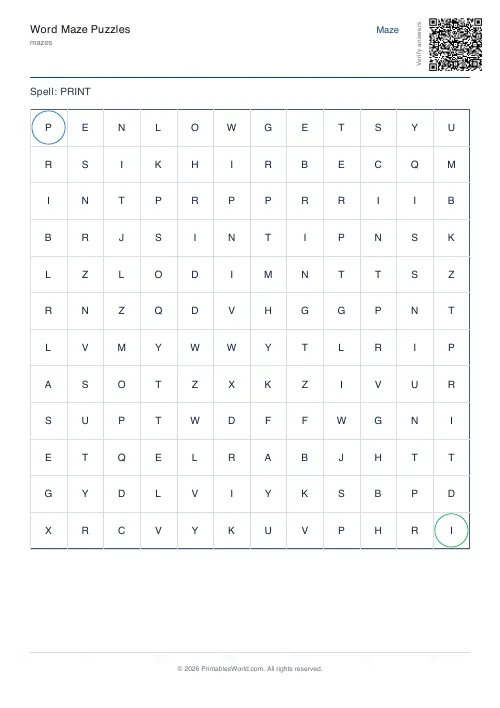
Word Maze Puzzles
Follow the correct spelling of a word through a grid of letters.
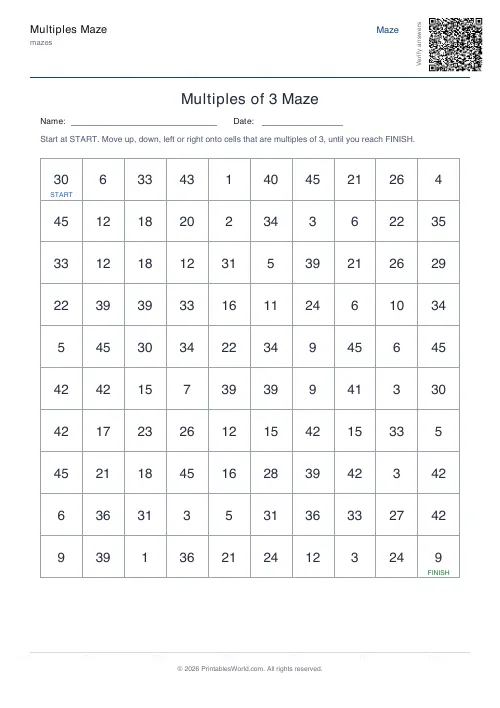
Multiples Maze
Find a path through the grid by stepping only on multiples.
Further reading
Mazes
Printable maze difficulty: matching mazes to ages
Maze difficulty has two independent dials, and confusing them is why a maze is either too fiddly or too easy. Here is which to turn for which child.
4 min read
Mazes
Why mazes are great for kids' development
Mazes are one of the few activities that exercise pencil control and forward planning at the same time. Which is why they suit the years just before formal handwriting.
4 min read