What this tool does
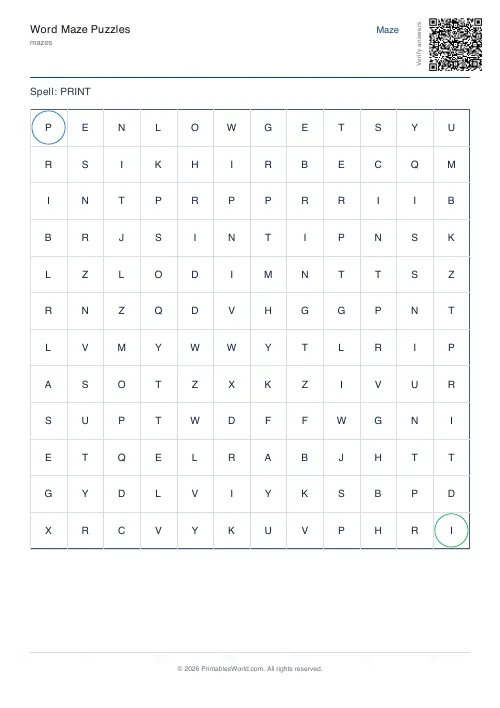
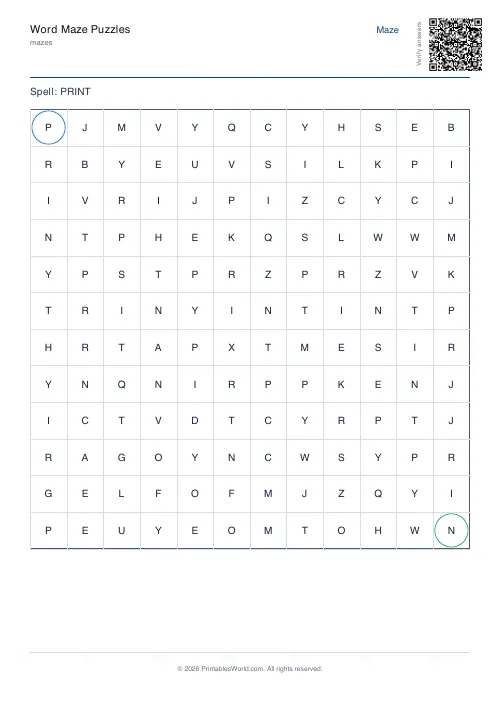
A grid of letters where the correct route spells your word over and over. Follow the letters in order and you reach the finish; every wrong turn breaks the spelling. Grids from 8 to 16.
People also used
Feedback
Spotted something off with this tool?
The path spells a word, again and again
Type a short word and the grid fills with letters. The route from start to finish spells that word repeatedly — P, R, I, N, T, P, R, I, N, T — and every other cell holds a letter that is deliberately wrong for its position.
So there are no walls. The rule is the spelling, and a step onto the wrong letter is a step off the path.
Why this is a better puzzle than a plain maze
A conventional maze is solved by looking. You scan for the corridor that gets through, and a fast solver barely reads the page at all.
This one cannot be scanned, because the constraint is invisible until you check it. At every cell you have to know which letter comes next in your word and look for it among the neighbours, which means holding your position in the spelling while you search. That is a different and considerably more demanding job, and it is why a word maze takes longer than a square maze of the same size.
Choosing the word
Short is better. Four to six letters keeps the cycle tight and the puzzle solvable; a ten-letter word means a solver who loses their place has a long way to count back.
Repeated letters make it harder in a useful way. In BANANA the solver cannot tell which A they are on from the letter alone and has to track their position, which is exactly the extra difficulty you want for an older child.
A child's own name works well, and so does the week's spelling word — solving the maze means writing the word out perhaps twenty times, without it feeling like writing it out twenty times.
Grid size
Eight to sixteen cells square. Eight is a short hunt; sixteen is 256 letters and a genuinely long solve.
The path length is capped relative to the grid, so a bigger grid gives a longer route as well as more decoy letters — both of which make it harder, and they compound.
Running it
A pencil, and expect to backtrack. Unlike a wall maze, a wrong turn here is not obviously wrong until the next letter fails, so solvers commit further before discovering the error.
Say the word aloud while tracing. It sounds childish and it halves the error rate, because the mouth keeps the position that the eye keeps losing.
What is under your control
The word, grid size, an optional solution page, a seed, and A4 or US Letter.
The seed reproduces an exact grid, which matters if a class is racing the same puzzle. Print at 100%.
FAQs
Quick answers
How does the puzzle work?
Pick a word like "PRINT". The grid is filled with that word in a snake pattern, so the path from start to finish spells it repeatedly.
Can I use my own word?
Yes. Type any short word. Lowercase letters are normalised to uppercase automatically.
Why does the path snake the whole grid?
In v1, the path covers the full grid in a snake pattern so every letter is correct in order. Future versions will add red-herring branches.
Can I print the solution?
Yes. Toggle the solution option to add a second page with the path overlaid.
Related tools
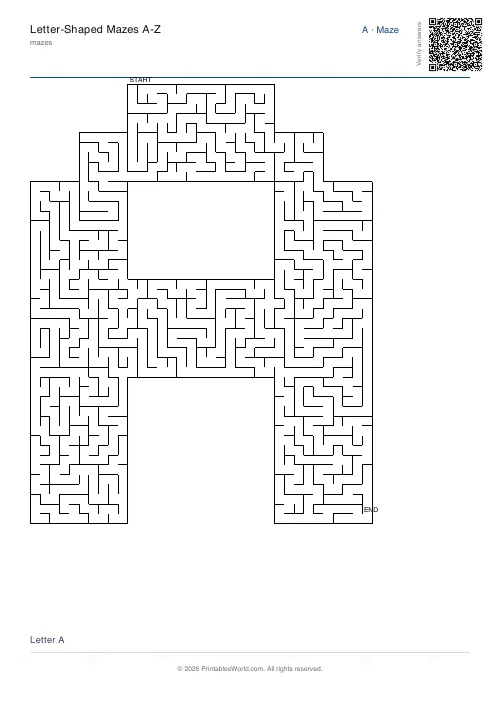
Letter-Shaped Mazes A-Z
Maze path contained within the shape of each letter of the alphabet.
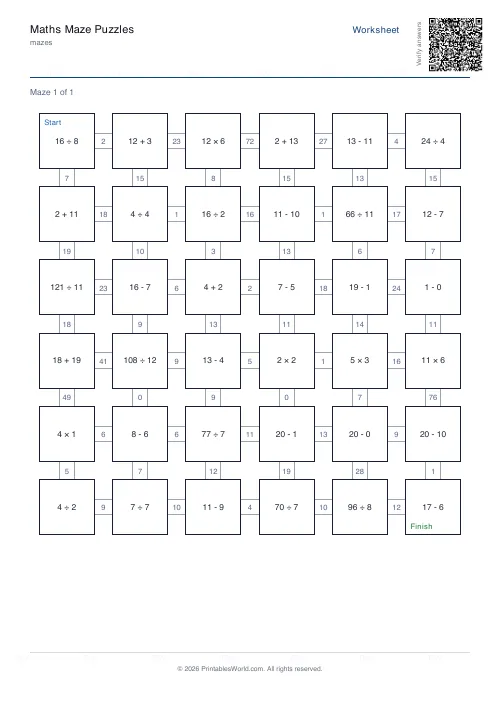
Maths Maze Puzzles
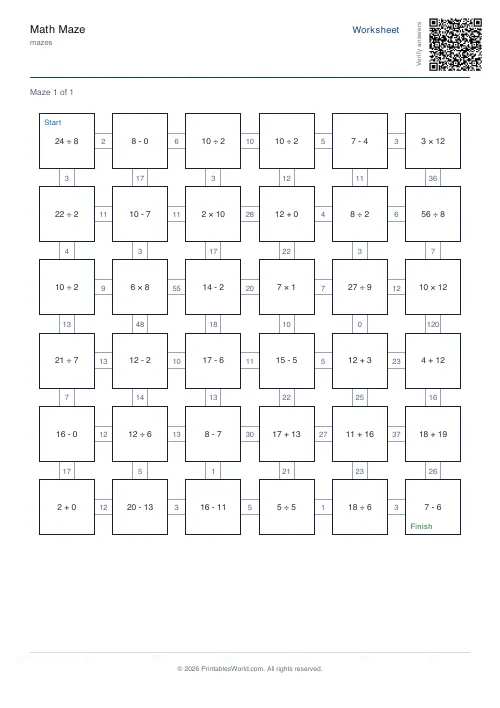
Solve arithmetic problems to choose the path through the maze.
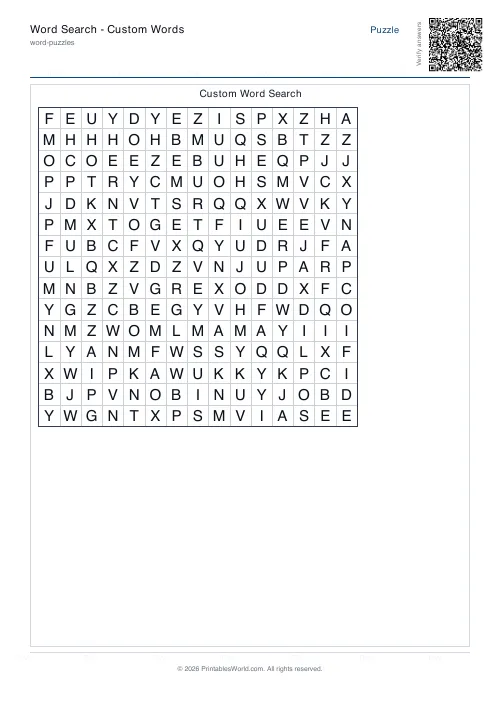
Word Search: Custom Words
Enter your own word list and generate a printable word search.
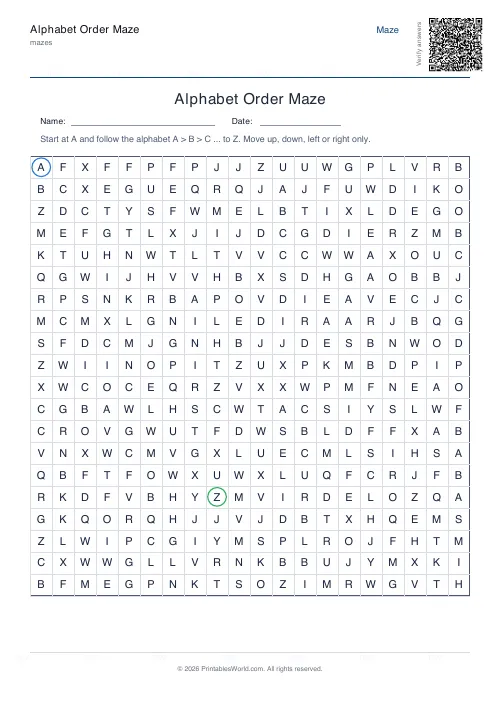
Alphabet Order Maze
Follow A to Z through a grid of letters.
Further reading
Mazes
Why mazes are great for kids' development
Mazes are one of the few activities that exercise pencil control and forward planning at the same time. Which is why they suit the years just before formal handwriting.
4 min read
Mazes
Printable maze difficulty: matching mazes to ages
Maze difficulty has two independent dials, and confusing them is why a maze is either too fiddly or too easy. Here is which to turn for which child.
4 min read