What this tool does
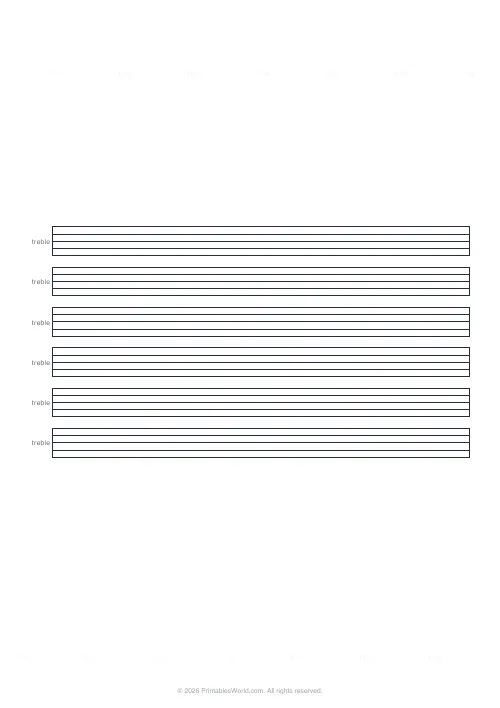
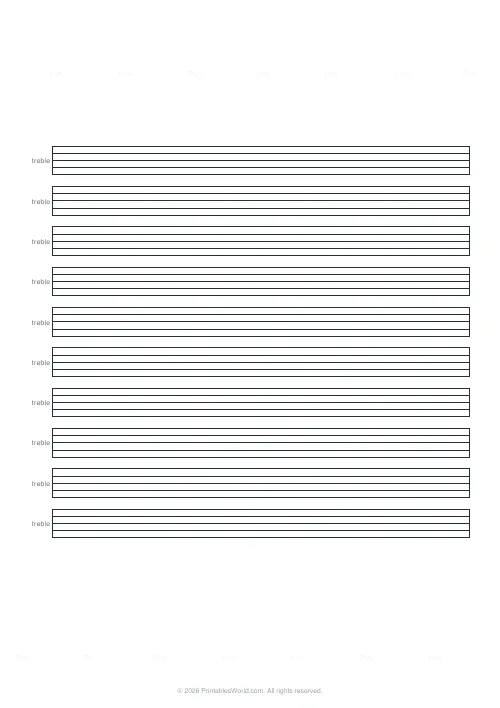
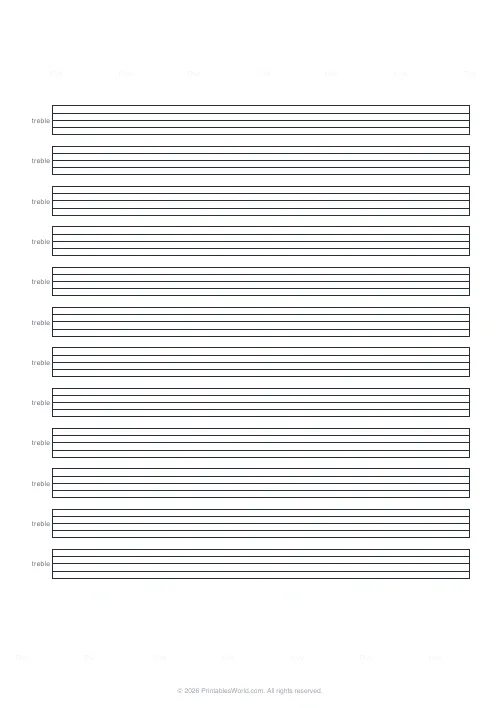
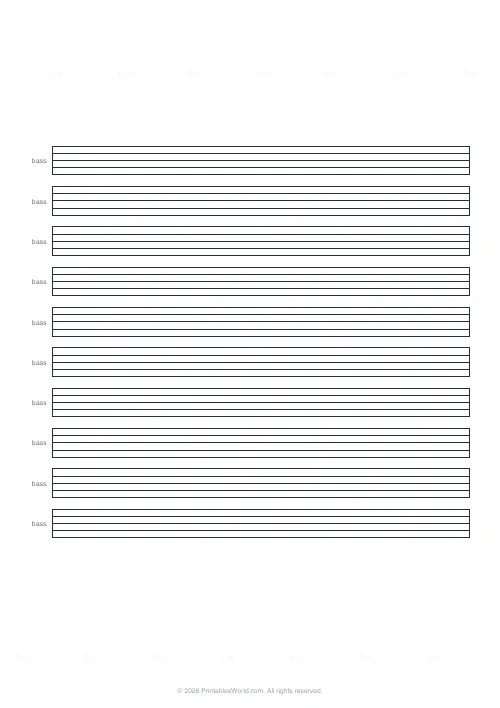
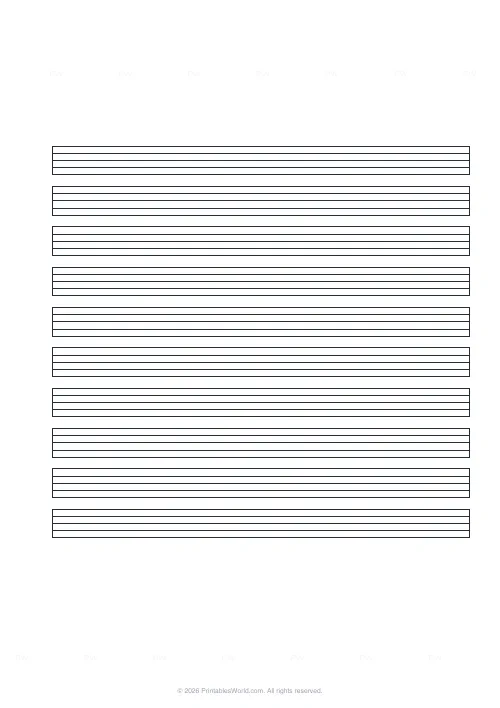
Five-line manuscript paper. Choose 6, 8, 10 or 12 staves a page and an optional treble or bass label at the start of each. Lines sit 3 mm apart, so a stave is 12 mm tall, with generous gaps between staves, so there is room for dynamics above and lyrics or chord symbols below. A4, US Letter or US Legal.
People also used
Feedback
Spotted something off with this tool?
Staves, spaced for a pen
Five parallel lines with 3 mm between adjacent ones, so a full stave occupies 12 millimetres. That is the size a standard pen or a 2B pencil writes comfortably at, and it is why a note head lands cleanly in a space instead of straddling two lines.
The gaps between staves are wide enough that ascenders from one and descenders from the next do not collide, which is the difference between usable manuscript paper and a page you have to write cautiously on.
Six, eight, ten or twelve staves to a page, ten by default.
What is deliberately missing
No clef glyph. A short treble or bass word sits at the start of each stave as a reminder, and you draw the clef yourself, which is the conventional practice for manuscript paper and not an omission.
No bar line at the end of the stave either. Pre-printing one forces a bar count on you before you have chosen a time signature, so the stave runs clean to the margin and the bar structure is yours to set.
Set the label to none for a completely unmarked page.
Choosing the stave count
Six gives a lot of room per line. That is the setting for an early learner, for anyone writing with a thick pen, and for work that needs lyrics or fingering underneath.
Twelve packs the most music onto a sheet and suits an experienced hand writing small. Ten is the all-purpose middle, and it has a specific advantage for keyboard work: ten staves is five pairs, which is five piano systems on one portrait page.
Drafting a piano piece
Ten staves, treble label, A4. Five pairs of staves, and you write a B beside every second one yourself to mark the bass of each system.
Draw the clefs, add a time signature, and start sketching. There is headroom above each system for dynamics and room below for pedal marks, which is what the generous inter-stave gap is buying you.
Why write by hand at all
Notation software makes you commit to a note before you can hear the phrase. Paper does not, and the difference in how a melody comes out is not small.
Hand manuscript suits sketching a longer musical thought. It suits harmony and counterpoint exercises. Aural dictation. Copying out a study score, transposing a part, or working out chord voicings when there is no keyboard anywhere in the room. It is also the only practical way to hand a whole class an identical stave layout to photocopy.
Writing on it
- A fine-line pen, or a 2B pencil. Anything thicker fills a 3 mm space entirely and the notation stops being readable at exactly the moment it gets interesting.
- Leave the first stave empty. Title, tempo marking.
- Pencil the notes in before you draw bar lines, so the spacing can still be adjusted.
- Taking dictation? Number the bars lightly above each stave before you start.
Print at full scale with fit-to-page off, which keeps the stave spacing identical on every sheet. That matters the moment you bind a stack together, and it matters between A4 and Letter too: the margins change, the staves do not.
FAQs
Quick answers
How many staves per page?
Choose 6, 8, 10, or 12. 10 is the most common choice for general writing.
Are clefs printed?
A short label ("treble" or "bass") sits at the start of each stave so you remember which clef applies. The clef glyph itself is not embedded. You draw it in.
Will it print on A4?
Yes. A4, US Letter, and US Legal are all supported.
Can I get tab paper instead?
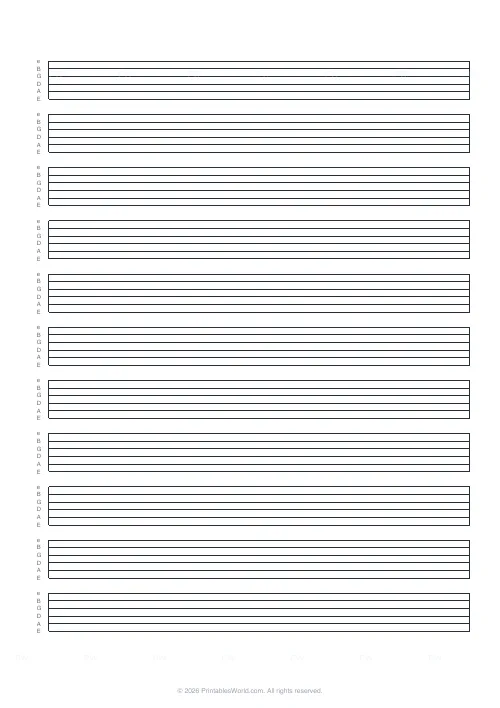
Yes. See Guitar Tab Paper for six-line tablature.
Related tools
Guitar Tab Paper
Six-line guitar tablature paper with string labels.
Blank Piano Keys Template
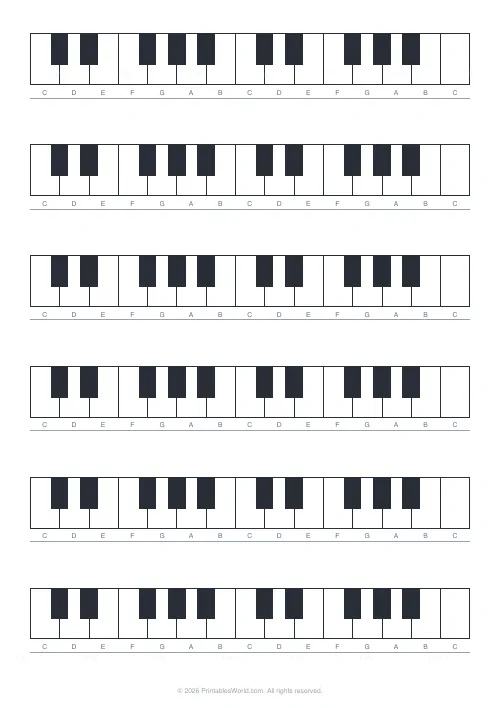
Printable keyboard diagrams for labelling notes and scales.
Lined Paper Generator
Generate custom ruled paper PDFs with adjustable line spacing, colours, margins, and primary ruling styles.
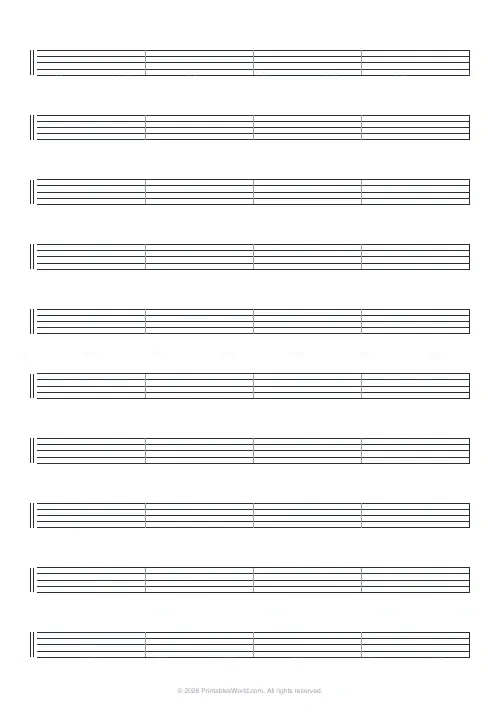
Drum Notation Paper
Blank five-line percussion staves with a drum-clef marker and measure bars.
Further reading
Printable Paper
Music manuscript paper: a guide for musicians
The number of staves on a page is not a style choice. It decides how much music fits and how legible it is at a music stand.
4 min read
Printable Paper
Bullet journalling with dot grid paper: a starter guide
The bullet journal was designed to be fast, not beautiful. Here is the original system, why dot grid suits it better than lines or blank, and the four pages you actually need.
5 min read