What this tool does
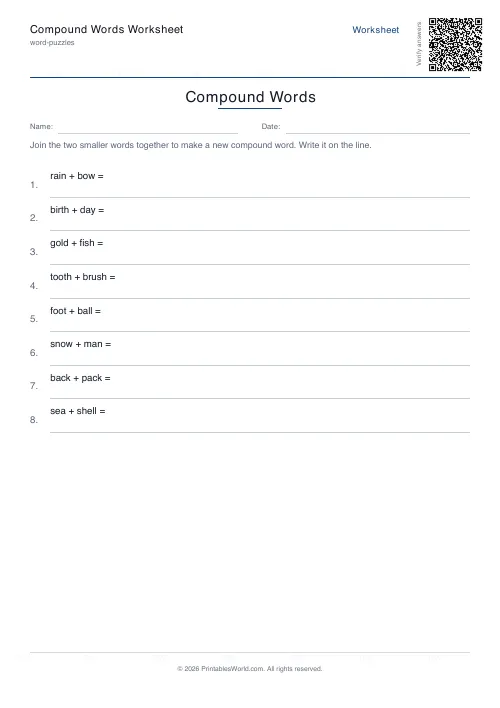
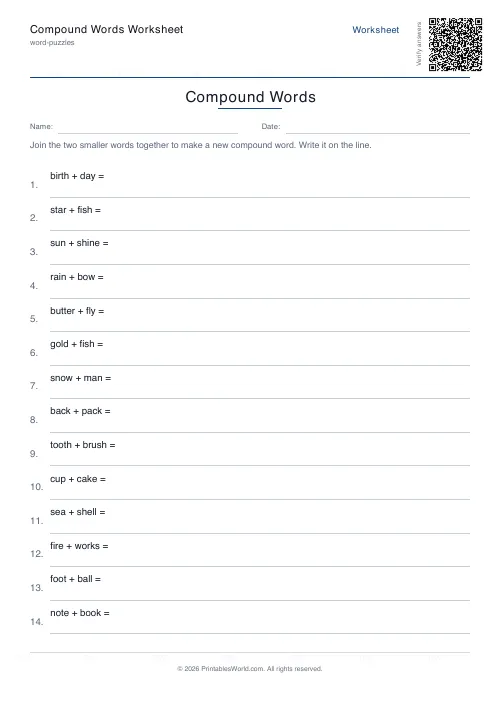
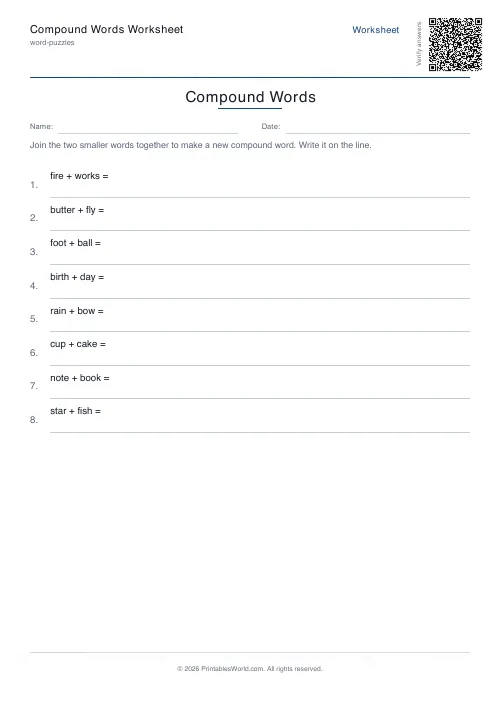
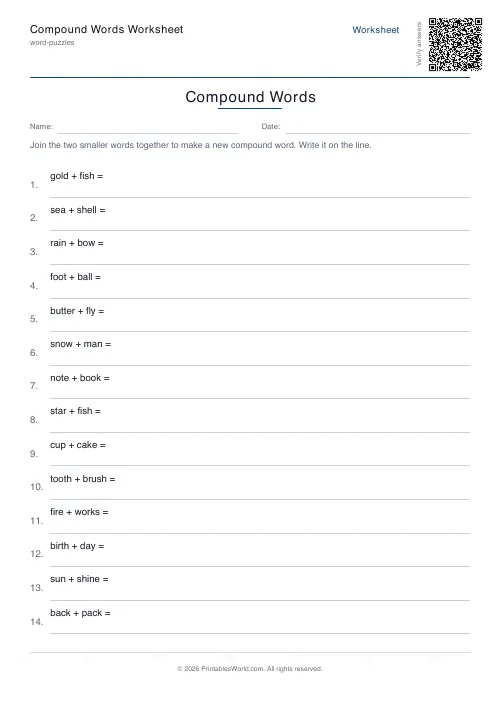
Two small words and a plus sign, with a line to write the compound they make. Six to fourteen problems a sheet, with an answer key.
People also used
Feedback
Spotted something off with this tool?
rain + bow = ___
Each row prints two words joined by a plus sign and a line to write the compound on. Six to fourteen rows a sheet, drawn from a bank of fourteen pairs and shuffled, with the answers on their own page.
Why compound words are worth a lesson
Because they are the first place a child sees that long words are made of shorter ones they already know.
A reader who has met butterfly as a single unfamiliar shape has to learn it whole. A reader who can see butter and fly inside it has decoded it from parts, and that is the same skill that later gets them through unhelpfulness and photosynthesis. Compound words are where the habit starts, and they start early because the parts are words a five-year-old already has.
The meaning is not always the sum
This is the interesting part and the part worth a conversation.
Some compounds mean exactly what their parts say. A toothbrush is a brush for teeth. A seashell is a shell from the sea. Others do not: a butterfly is not a fly made of butter, and a rainbow is not a bow that rains.
Ask a class which of the completed words on their sheet mean the sum of their parts and which do not. It takes five minutes, it produces some genuine argument, and it is the beginning of understanding that words carry history rather than logic.
Spelling: they join with nothing between
No hyphen, no space, no letters dropped. Foot plus ball is football, with both t's intact even though nobody pronounces them separately.
That is worth stating, because the words on this sheet are the well-behaved kind and English does not stay that tidy. Ice cream is two words. Well-known takes a hyphen. Which form a compound takes is largely a matter of how long it has been in the language, and the honest answer to "how do I know?" is that you look it up.
What the generator asks for
Problems from 6 to 14, a worksheet title, an instruction line you can rewrite, optional Name and Date fields, and the answer key. A4 or US Letter.
Extending it
Work backwards. Give a compound and ask for its parts, which is harder and catches children who completed the sheet by joining letters without reading either word.
Or take one part and collect compounds from it. Snow gives snowman, snowball, snowflake, snowstorm, snowdrop, and a class can usually find more than you expect.
Print at 100% on A4 or US Letter.
FAQs
Quick answers
What is a compound word?
Two smaller words joined to make a new word with a related meaning, like "rain" + "bow" = "rainbow".
How many compounds are included?
Choose between 6 and 14 problems per worksheet. About ten fits comfortably on one page.
Can I include an answer key?
Yes. Toggle the answer-key option for a second page that lists each completed compound.
What age is this for?
Best for ages 6–9, but useful for any new reader exploring how words combine.
Related tools
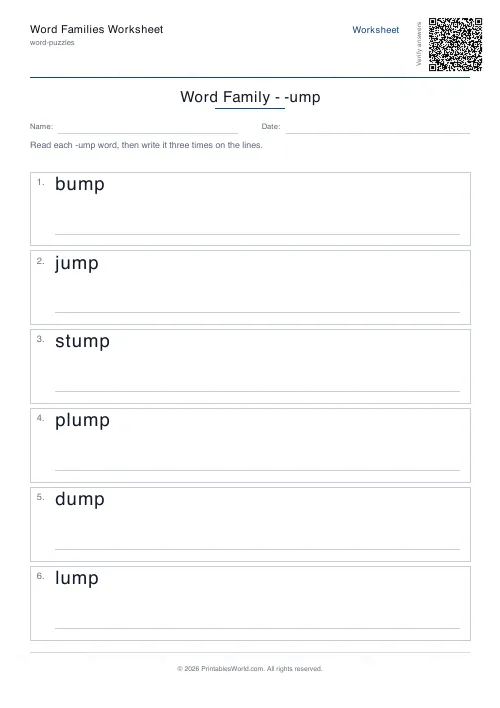
Word Families Worksheet
Read, trace and write words from a single word family.
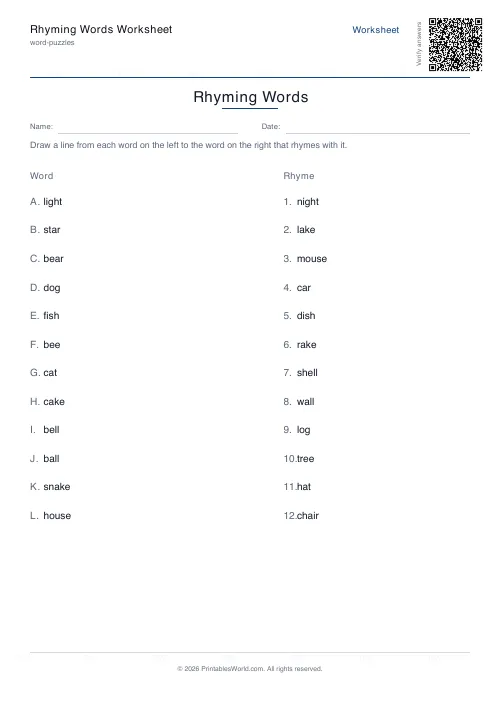
Rhyming Words Worksheet
Match each word on the left to its rhyming partner on the right.
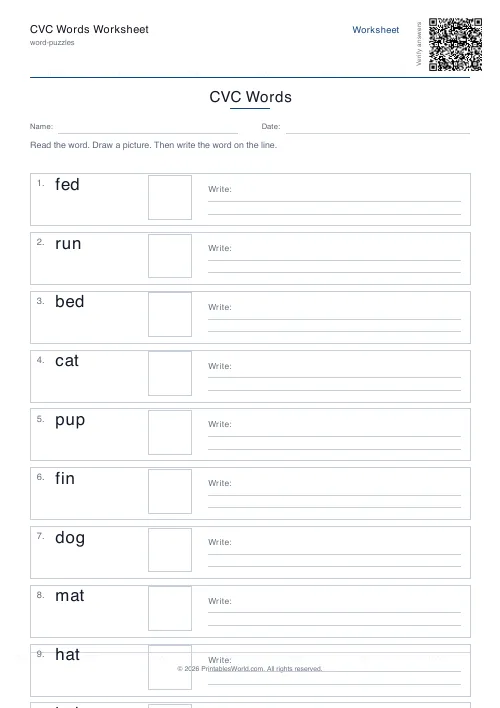
CVC Words Worksheet
Read, draw, and write consonant-vowel-consonant words.
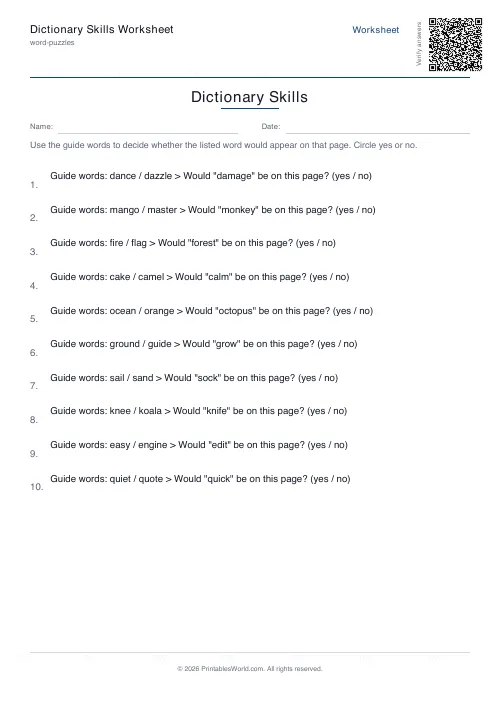
Dictionary Skills Worksheet
Use guide words to decide whether a word would be on the page.
Further reading
Word Puzzles
Sight words: the complete teaching guide
Sight words are usually taught as words to memorise. Most of them are partly decodable, and treating them that way works better. Here is how, and how many to teach at once.
6 min read
Literacy & Spelling
Do word searches help spelling? What works
Do word searches help spelling, or just fill time? What they practise, what the evidence suggests, and how to turn a spelling list into useful recall practice.
8 min read
Word Puzzles
Phonics at home: CVC words, blends and beyond
The order matters more than the materials, and one small thing, saying pure sounds rather than "buh" and "cuh", makes blending dramatically easier.
6 min read
More like this
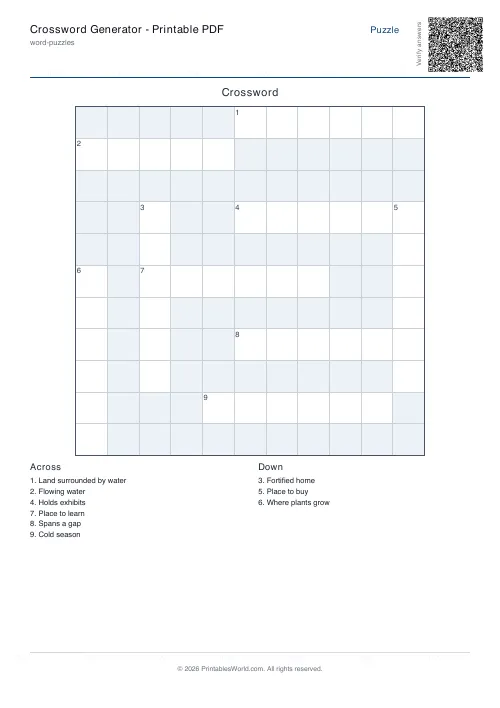 Crossword Generator: Printable PDF
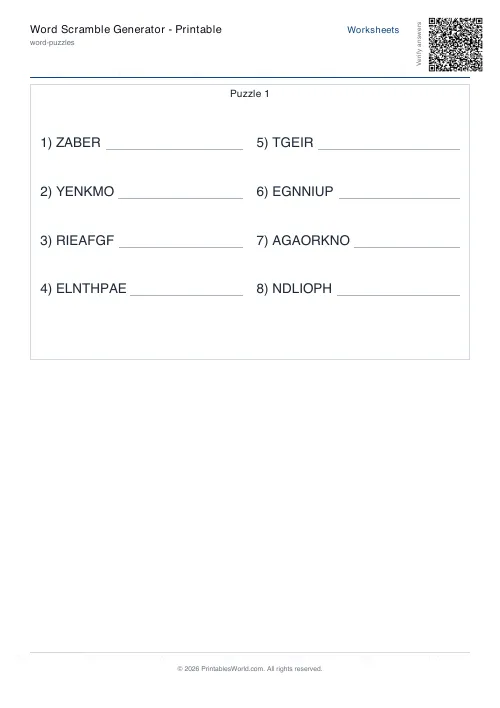 Word Scramble Generator: Printable
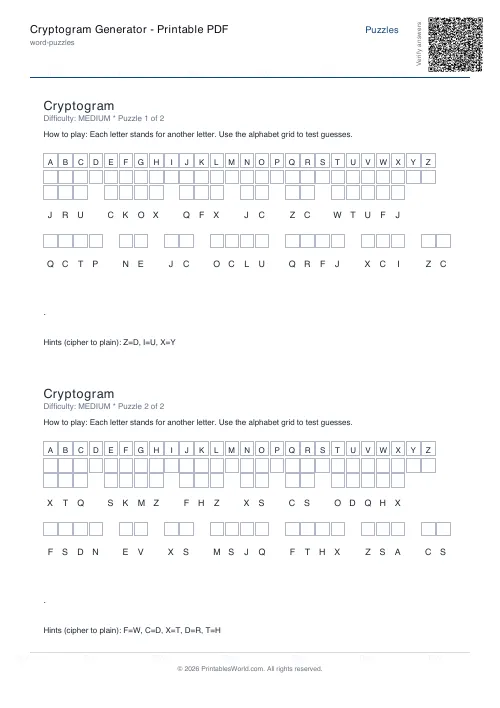 Cryptogram Generator: Printable PDF
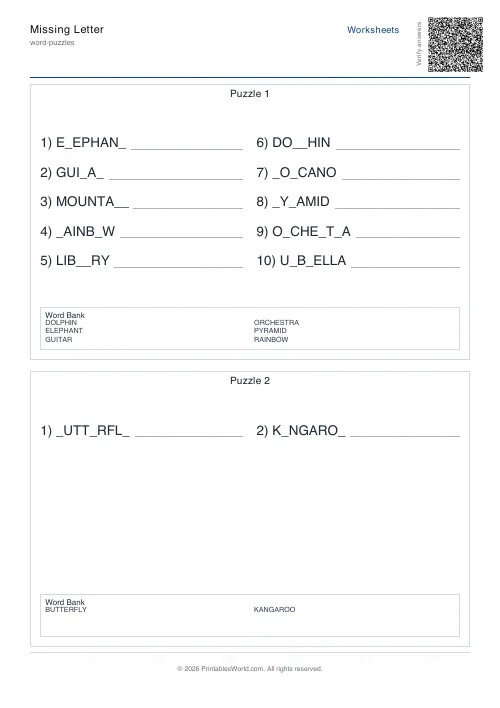 Missing Letter Generator
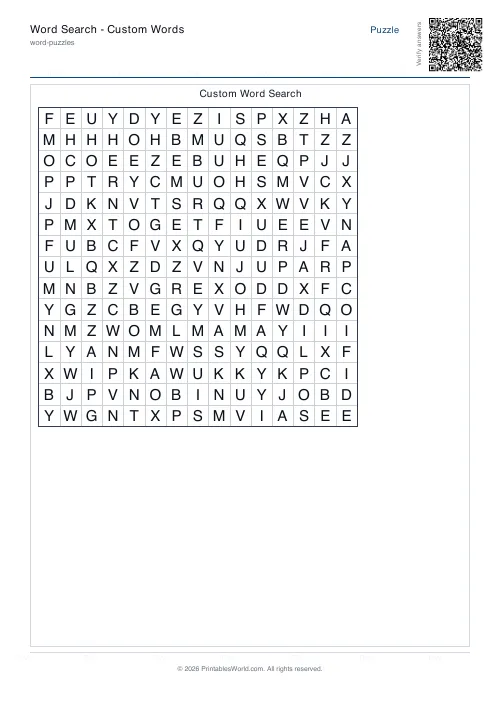 Word Search: Custom Words
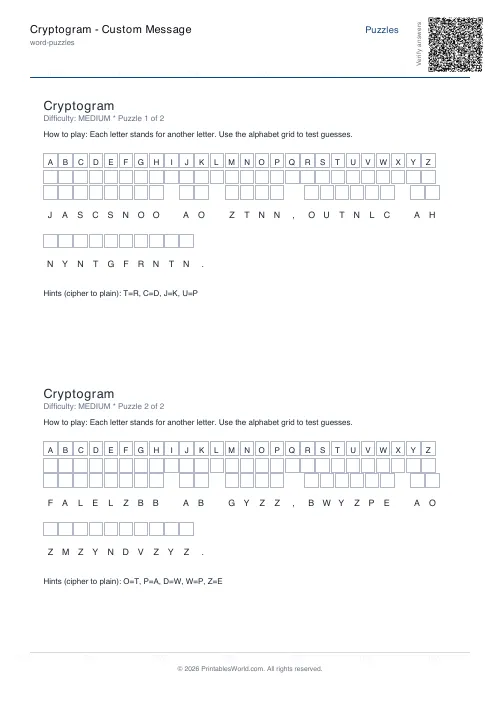 Cryptogram: Custom Message
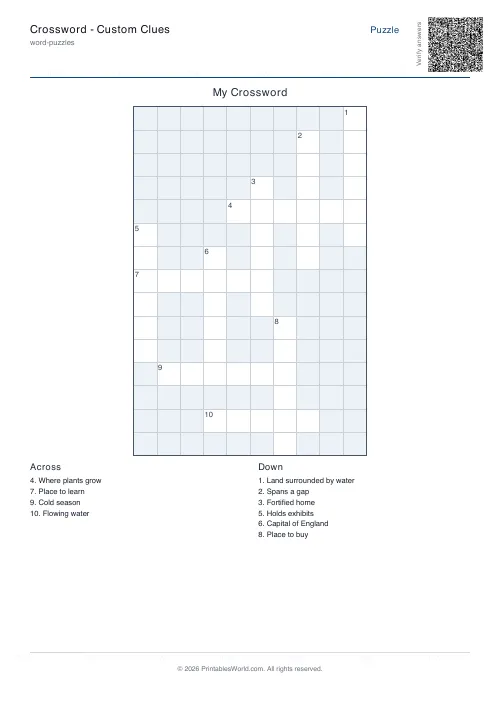 Crossword: Custom Clues
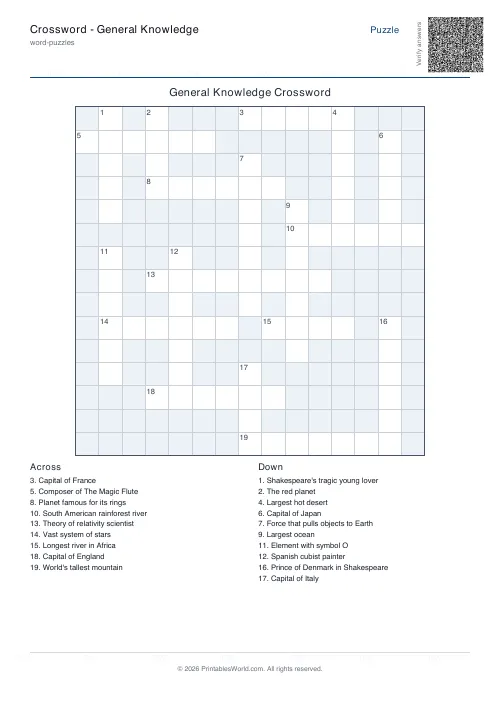 Crossword: General Knowledge
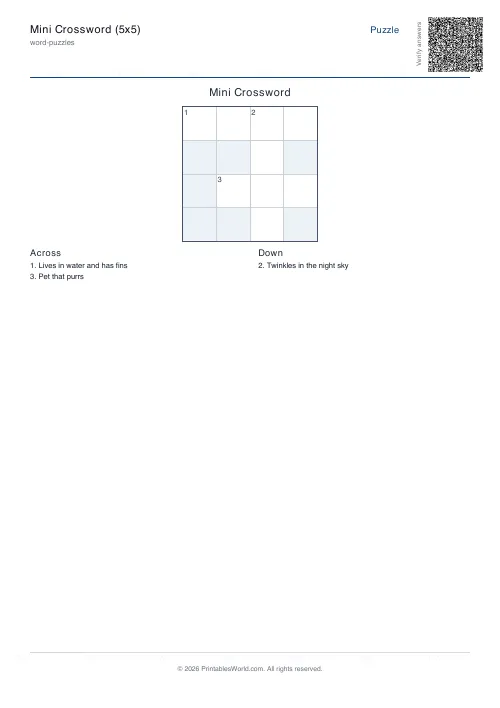 Mini Crossword
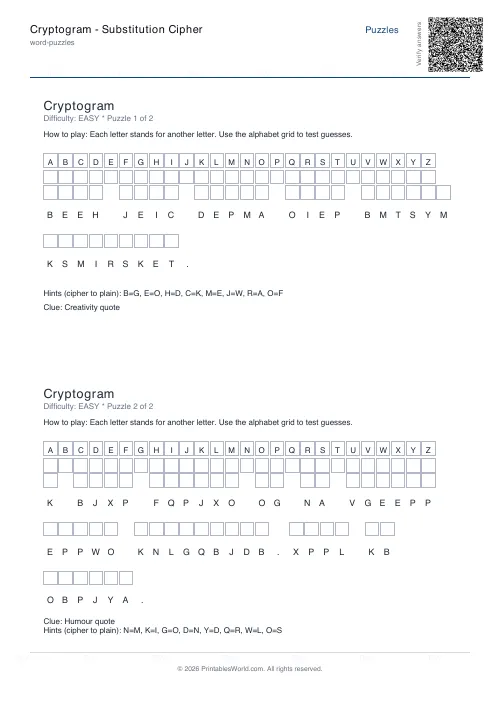 Cryptogram: Substitution Cipher
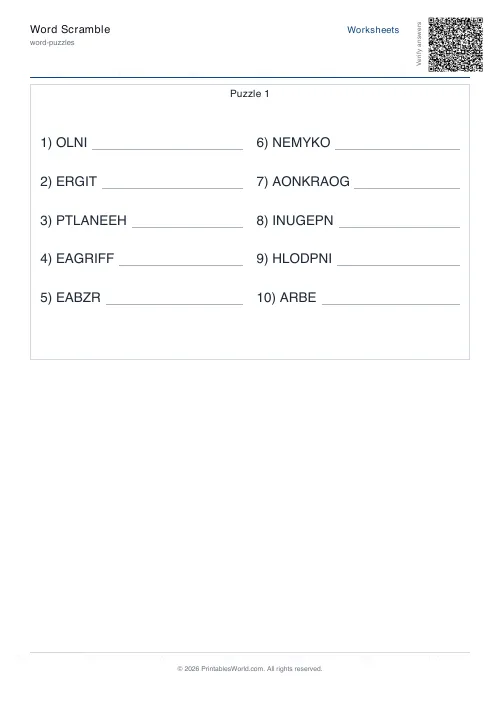 Word Scramble Generator
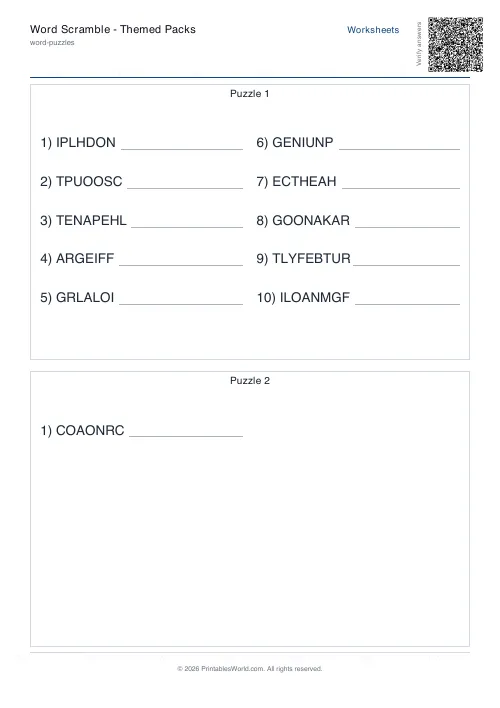 Word Scramble: Themed Packs
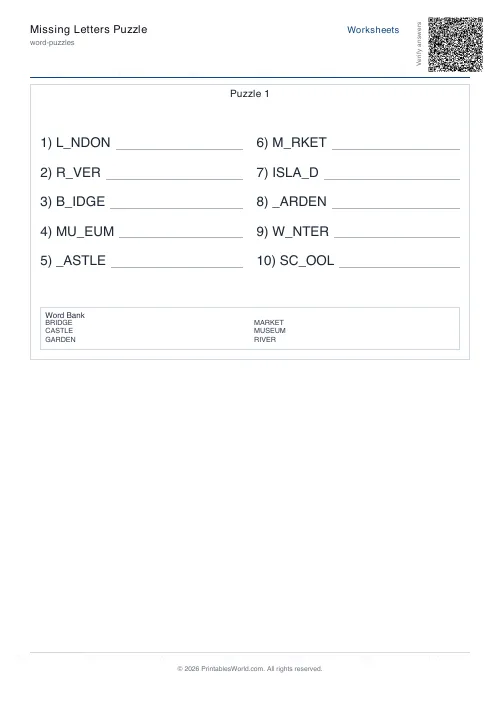 Missing Letters Puzzle
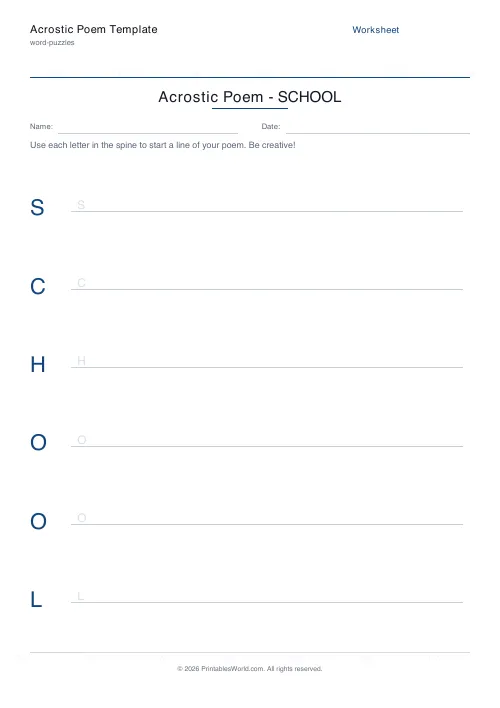 Acrostic Poem Template