What this tool does
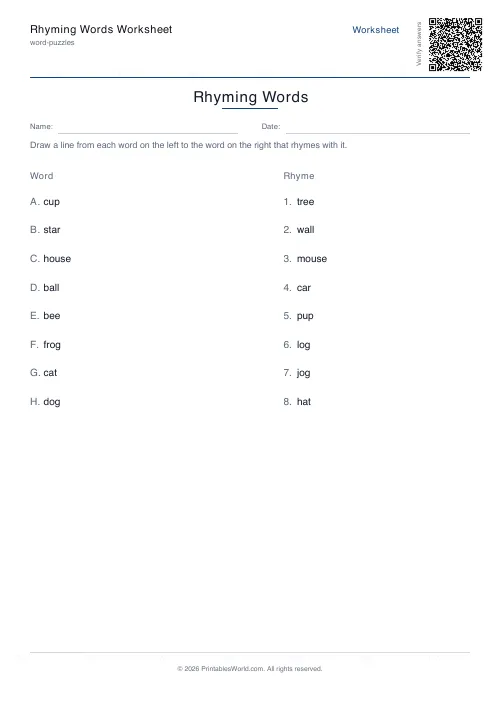
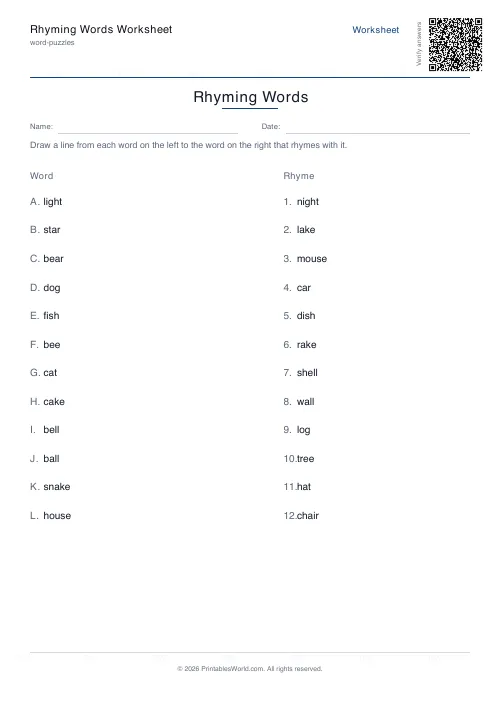
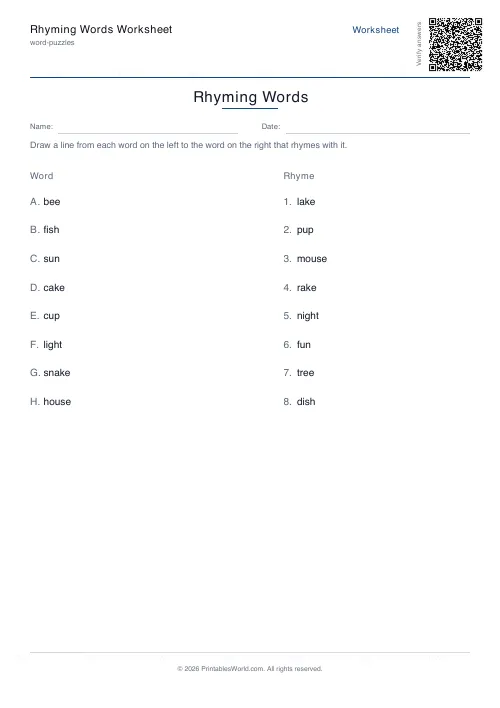
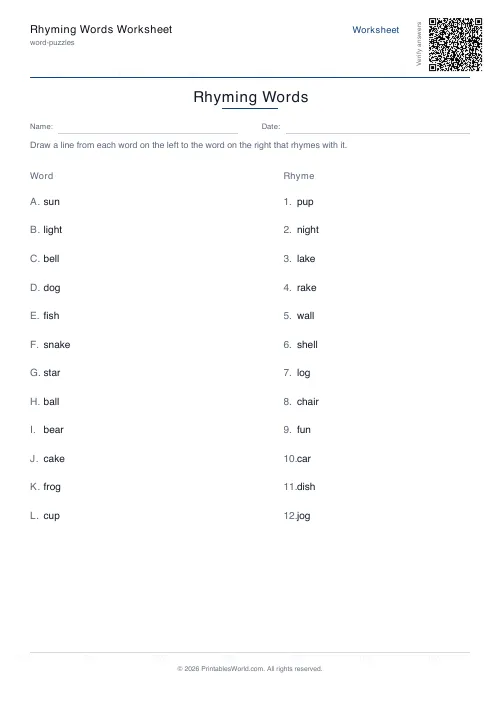
A two-column rhyme-matching sheet. Words on the left, their rhyming partners shuffled on the right, and a line to draw between each pair. Four to twelve pairs, answer key optional.
People also used
Feedback
Spotted something off with this tool?
Rhyme matching for Reception and Year 1
Words down the left, their rhyming partners shuffled down the right, and the child draws a line between each pair. That is the whole sheet, and the simplicity is the reason it works with a four-year-old who cannot yet read the words they are matching.
The point is hearing, not reading
Rhyme awareness is a listening skill and it arrives before decoding does. Cat and hat go together to the ear long before either word can be read off a page.
So run it out loud. Read the left column, read the right column, let the answer come by ear. Working silently turns the page into a spelling-pattern exercise instead, which is worth something but is a different skill entirely, and it will tell you the wrong thing about whether the phonological awareness is actually there.
That distinction matters because rhyme awareness at four is one of the better predictors of reading at seven. It is worth checking directly rather than inferring it from a completed page.
Sizing it
Four to twelve pairs. Four for a first attempt or a child who tires quickly, twelve for a full activity. There is a worksheet title, optional Name and Date fields, and an answer key that prints on its own page.
The pairs are drawn from a built-in bank of common rhymes and shuffled fresh each time, so the right-hand column is in a different order on every sheet even when the same pairs come up.
What to do when a child struggles
Two failures look identical on paper and need opposite responses.
Not hearing the rhyme at all means more listening and no worksheet. Nursery rhymes. Silly couplets. Songs. The game of finding words that sound like your own name. Paper will not fix this and it will make a small child feel stupid.
Hearing the rhyme but losing it in the column is a different problem: scanning and tracking, not phonology. Cover half the right-hand column with a finger and the sheet usually falls into place.
After the lines are drawn
Ask for a third word that rhymes with each pair. Producing a rhyme is considerably harder than recognising one, and it is where the skill actually gets used — a child inventing a rhyme has to run through sounds deliberately, which is exactly the manipulation that reading depends on.
Nonsense words count. Insisting on real words at this stage turns a phonological game into a vocabulary test.
Print at 100% on A4 or US Letter.
FAQs
Quick answers
Who is this rhyming worksheet for?
Early readers age 4–7, or anyone learning to hear and produce rhymes.
How are pairs matched?
Right-hand options are randomly reordered every time you regenerate the sheet, so the same pairs print in a different layout each round.
Can I include an answer key?
Yes. Toggle the answer-key option and a second page prints with the matching lines drawn in.
How many pairs fit on a page?
Up to twelve pairs sit comfortably on one A4 or Letter sheet.
Related tools
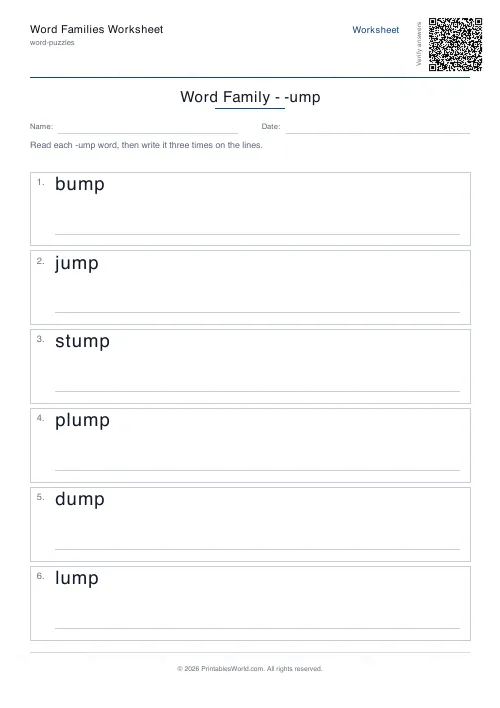
Word Families Worksheet
Read, trace and write words from a single word family.
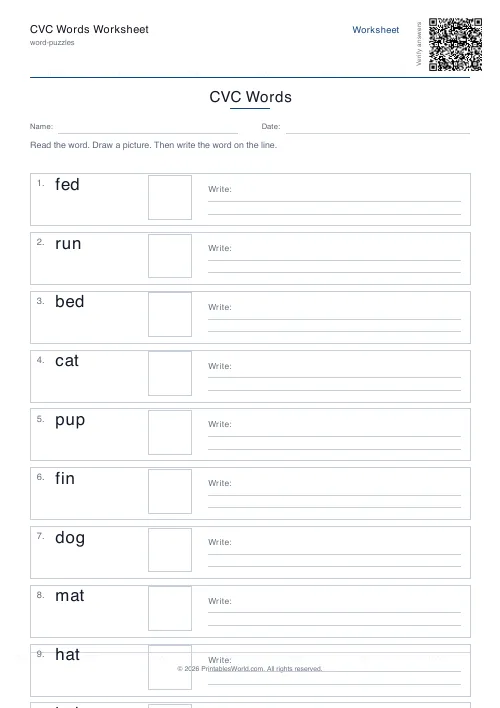
CVC Words Worksheet
Read, draw, and write consonant-vowel-consonant words.
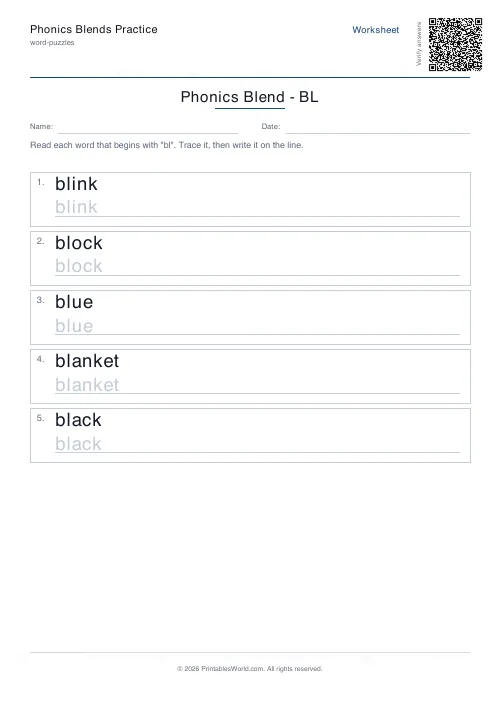
Phonics Blends Practice
Practise consonant blends. Bl, cr, str and friends.
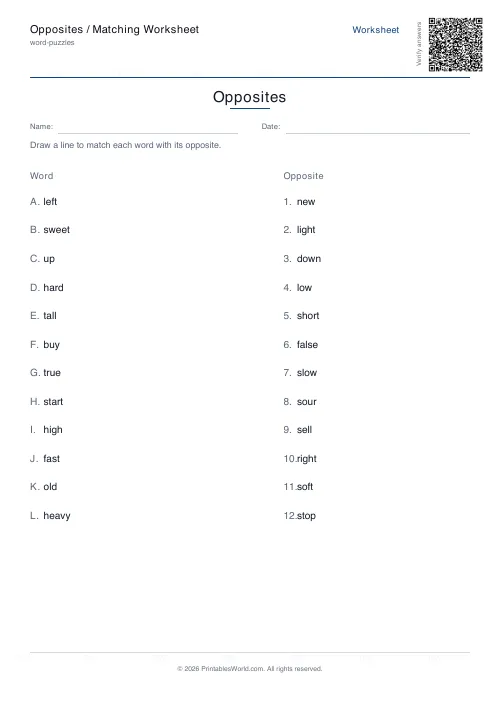
Opposites / Matching Worksheet
Draw a line to match each word with its opposite.
Further reading
Word Puzzles
Sight words: the complete teaching guide
Sight words are usually taught as words to memorise. Most of them are partly decodable, and treating them that way works better. Here is how, and how many to teach at once.
6 min read
Literacy & Spelling
Do word searches help spelling? What works
Do word searches help spelling, or just fill time? What they practise, what the evidence suggests, and how to turn a spelling list into useful recall practice.
8 min read
Word Puzzles
Phonics at home: CVC words, blends and beyond
The order matters more than the materials, and one small thing, saying pure sounds rather than "buh" and "cuh", makes blending dramatically easier.
6 min read
More like this
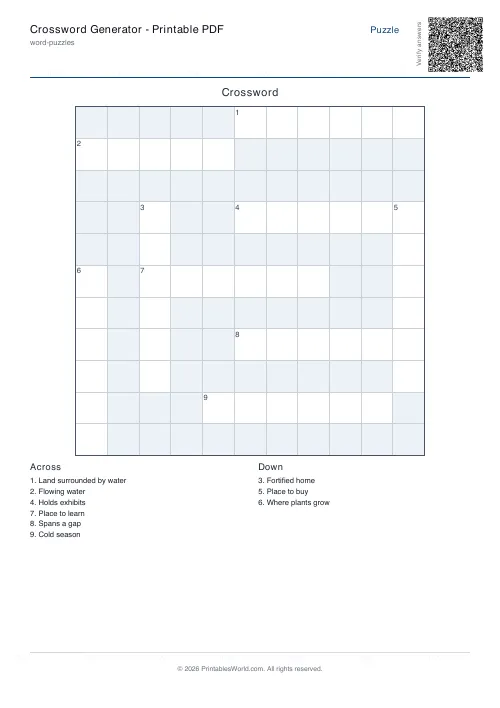 Crossword Generator: Printable PDF
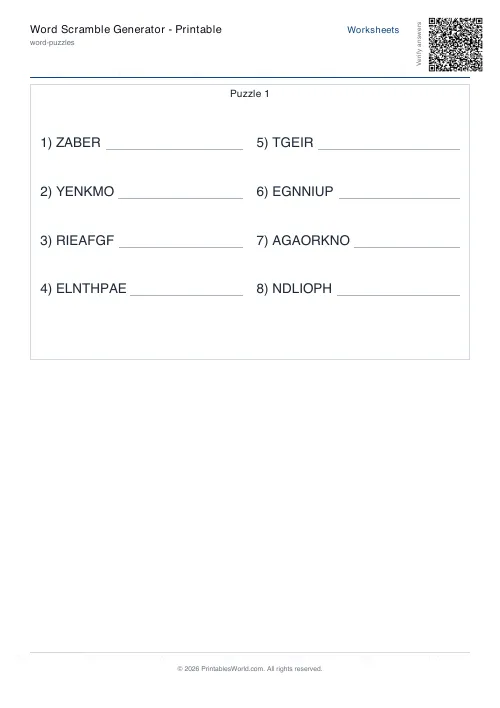 Word Scramble Generator: Printable
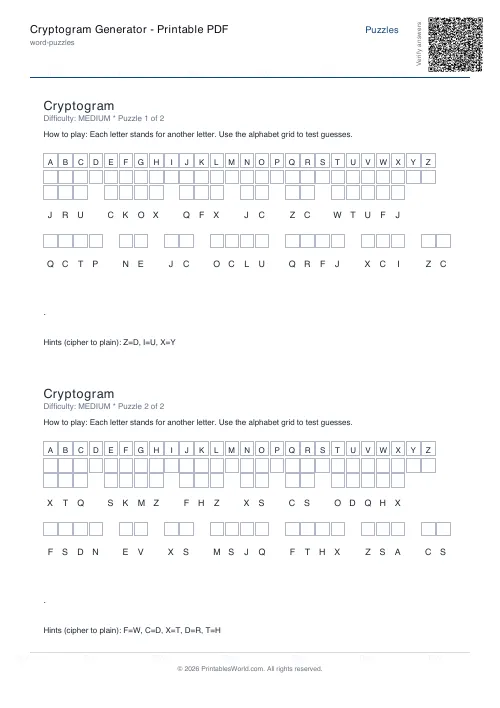 Cryptogram Generator: Printable PDF
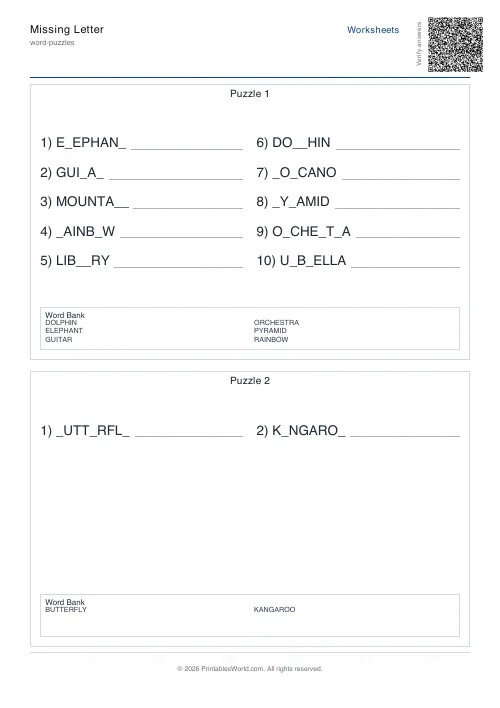 Missing Letter Generator
 Word Search: Custom Words
 Cryptogram: Custom Message
 Crossword: Custom Clues
 Crossword: General Knowledge
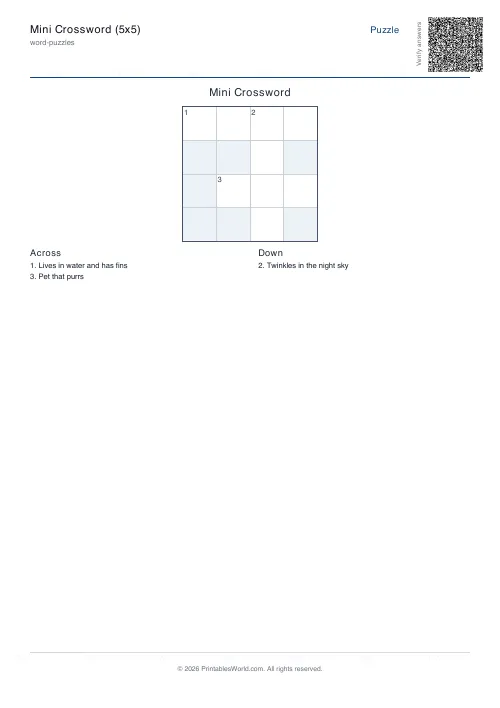 Mini Crossword
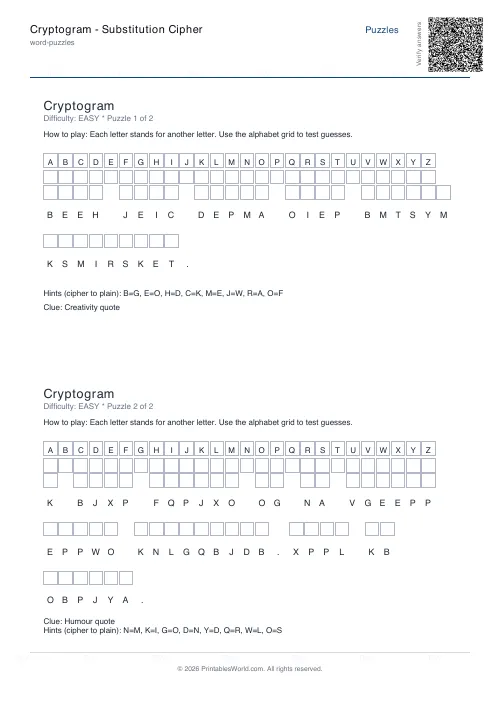 Cryptogram: Substitution Cipher
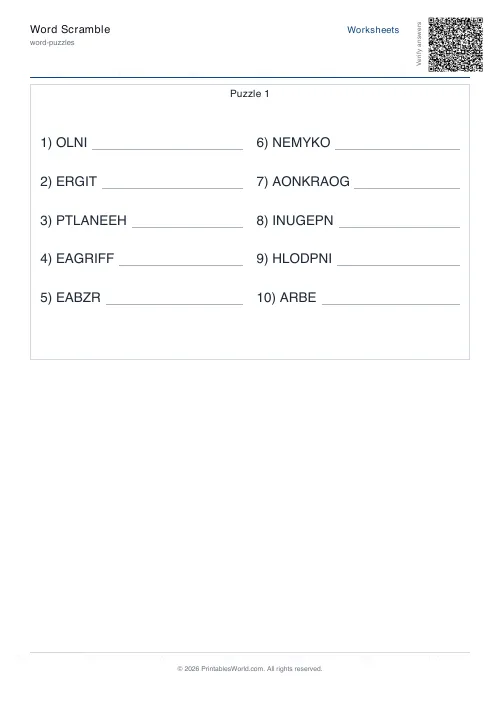 Word Scramble Generator
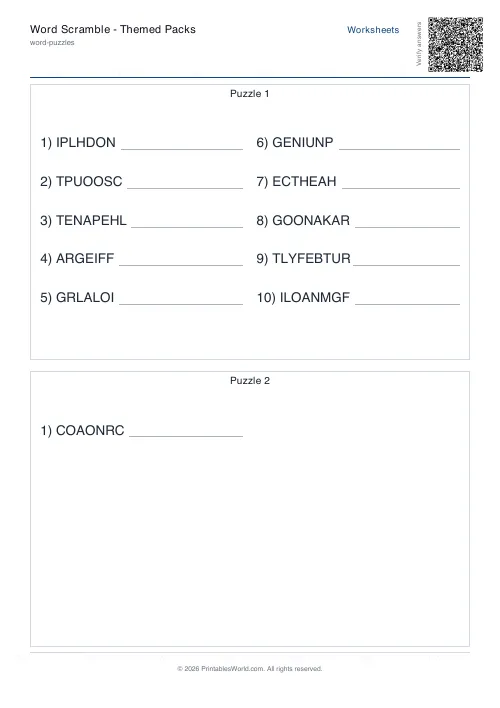 Word Scramble: Themed Packs
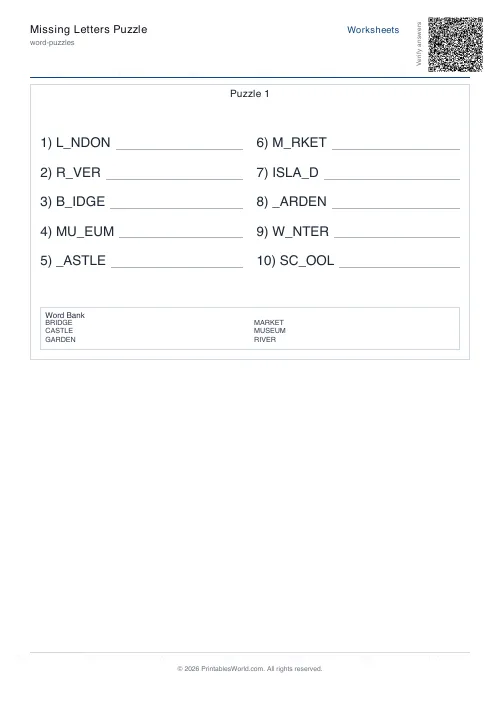 Missing Letters Puzzle
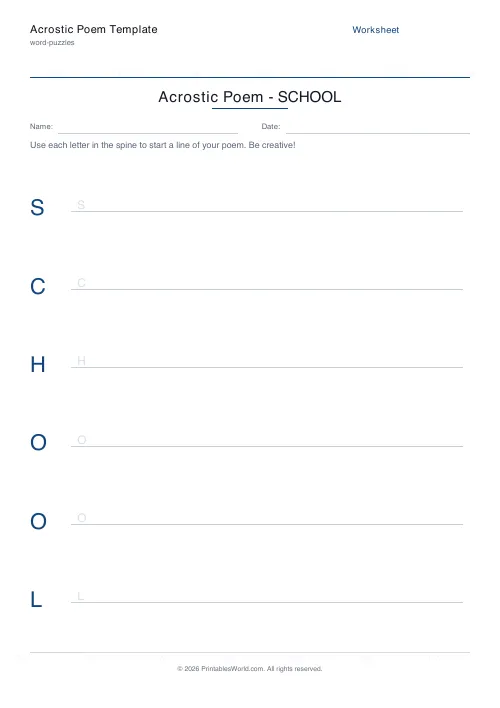 Acrostic Poem Template