What this tool does
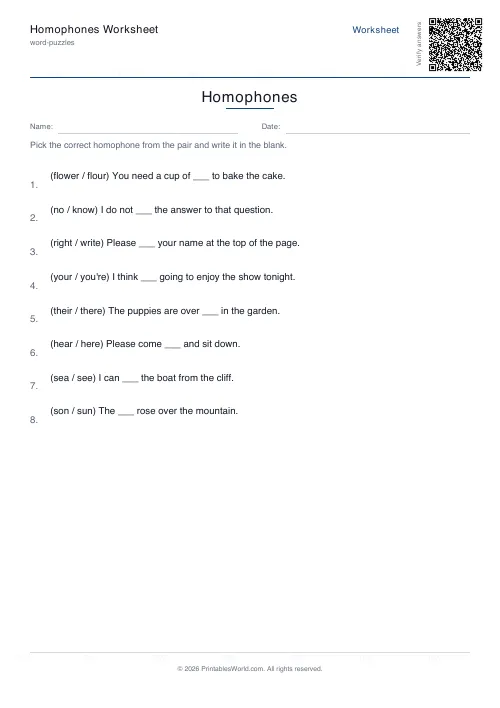
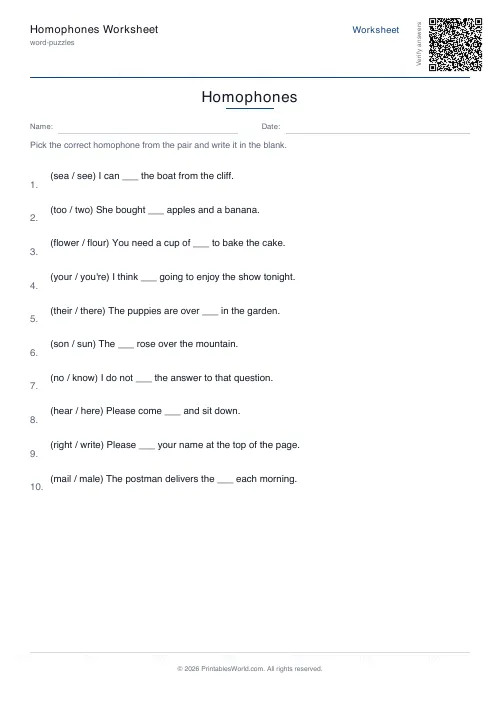
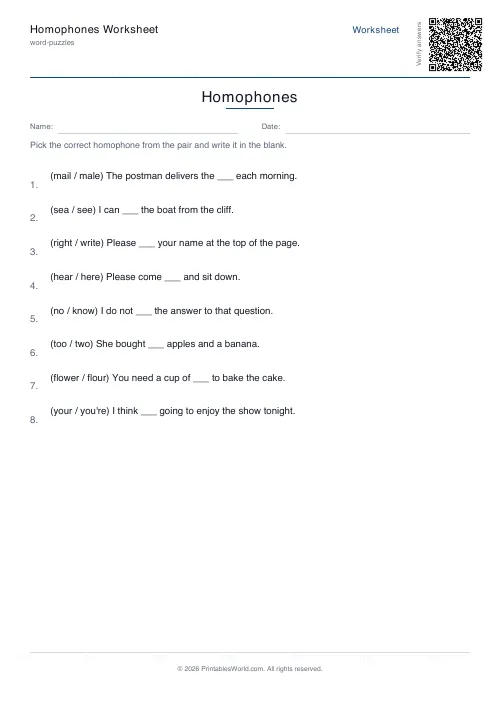
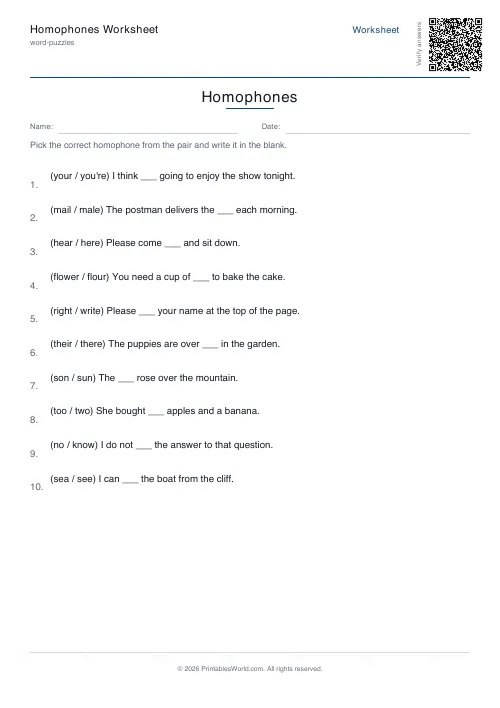
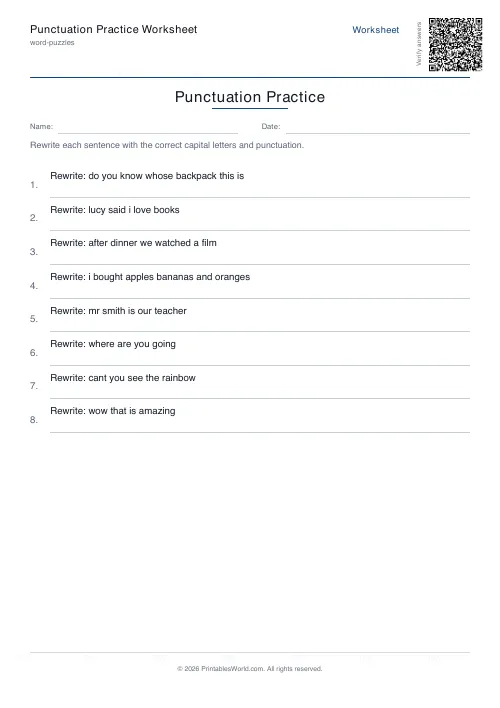
Sentences with two homophones offered in brackets and a blank to write the right one in. Five to twelve rows a sheet, with an answer key.
People also used
Feedback
Spotted something off with this tool?
Choose the right one and write it in
Each row gives a sentence with a gap and two similar-sounding words in brackets. The child writes the correct one on the line.
Five to twelve rows a sheet, drawn from a bank of ten pairs and shuffled, with the answers on a separate page.
Why homophones need their own sheet
Because reading aloud cannot fix them. The words sound identical. The ear gives no signal whatsoever, so a child who has been told to sound it out has been handed a method that is guaranteed not to work on this particular problem.
The only route is meaning. Their belongs to them, there is a place, they're is two words squeezed together. That has to be understood rather than heard, and it has to be checked in a sentence, which is what this sheet does.
The sentence is doing the work, not the pair
A child can recite the rule for there / their / they're and still write the wrong one in their own writing, because knowing the rule and applying it mid-sentence are different things.
So the useful part of this exercise is that the choice happens inside a real sentence with a real meaning. Ask them to say why for two or three rows — "it's the place one" — and you will find out quickly whether the answer came from understanding or from a coin toss.
The contraction test
Worth teaching alongside, because it settles half the pairs on its own.
Any word with an apostrophe in this family is two words joined: they're is they are, you're is you are, it's is it is. Read the sentence with the full two words in place. If it still makes sense, the apostrophe version is right; if it does not, it is the other one.
"They're going to their house over there" passes the test on the first word and fails on the other two. That is a rule a child can apply mid-sentence, which is more than most spelling advice manages.
Sizing it
Rows from 5 to 12, a worksheet title, an instruction line, optional Name and Date fields, and the answer key toggle. A4 or US Letter.
After the sheet
Have them find the pair in something they wrote last week. A homophone corrected in their own writing sticks in a way a worksheet does not, and by upper primary most children have a favourite one they get wrong every time.
Print at 100% on A4 or US Letter.
FAQs
Quick answers
What is a homophone?
Two or more words that sound the same but have different meanings (and usually different spellings). Like flower and flour.
Which pairs are included?
A built-in pool covers the most-confused pairs in classroom writing: there/their/they're, your/you're, too/two/to, hear/here, no/know and more.
How does the answer key work?
Toggle the answer-key option and a second page prints each sentence with the correct homophone written in.
How many sentences print per page?
Up to twelve sentences fit on a single A4 or Letter page.
Related tools
Further reading
Word Puzzles
Fun ways to build vocabulary in kids
Children learn most words by meeting them repeatedly in context, not by memorising lists. Here is what that means practically, and where word lists still earn their place.
5 min read
Literacy & Spelling
Do word searches help spelling? What works
Do word searches help spelling, or just fill time? What they practise, what the evidence suggests, and how to turn a spelling list into useful recall practice.
8 min read
More like this
 Crossword Generator: Printable PDF
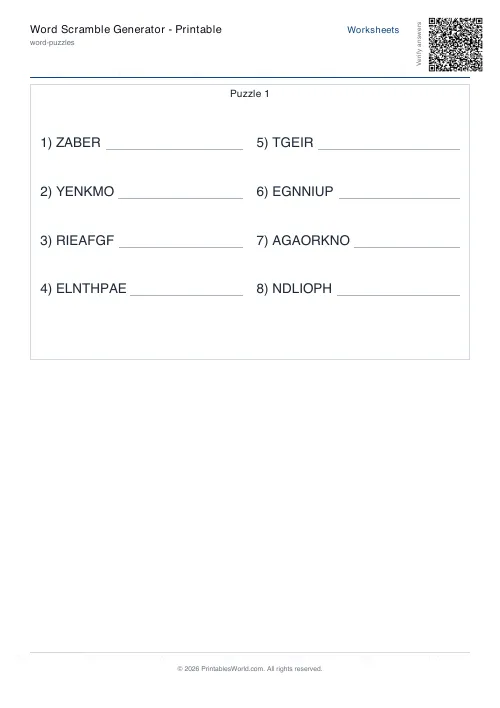 Word Scramble Generator: Printable
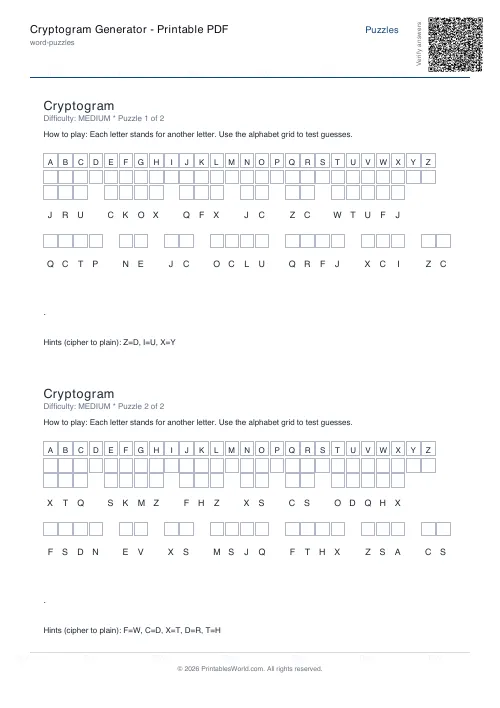 Cryptogram Generator: Printable PDF
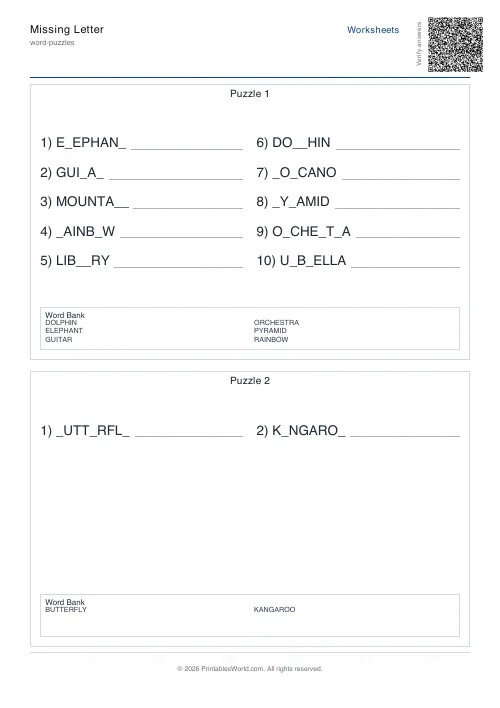 Missing Letter Generator
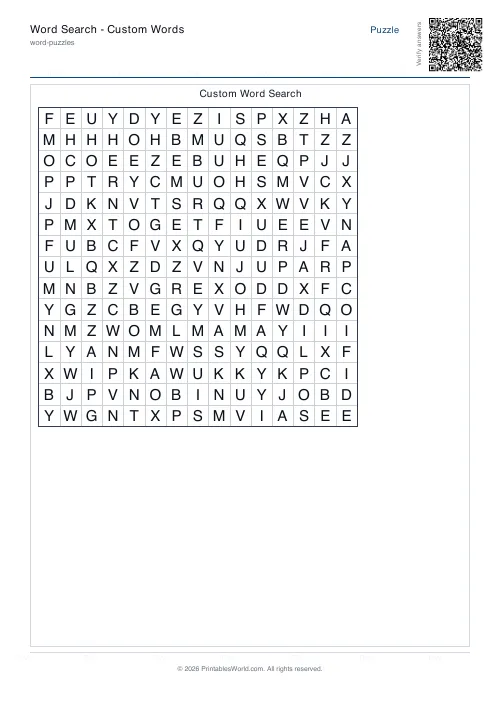 Word Search: Custom Words
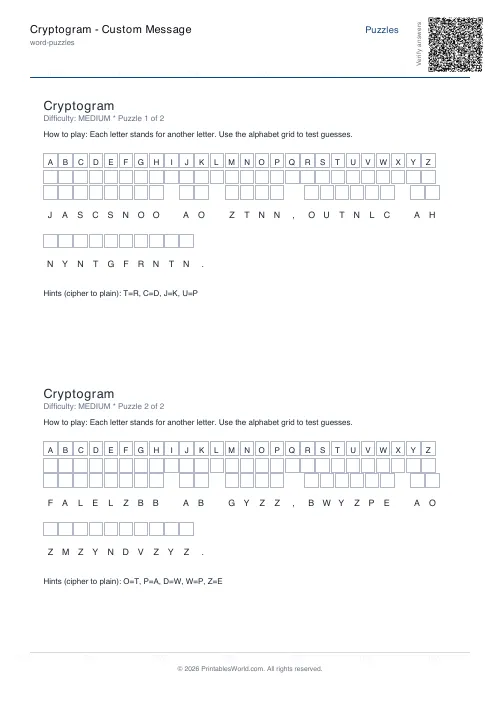 Cryptogram: Custom Message
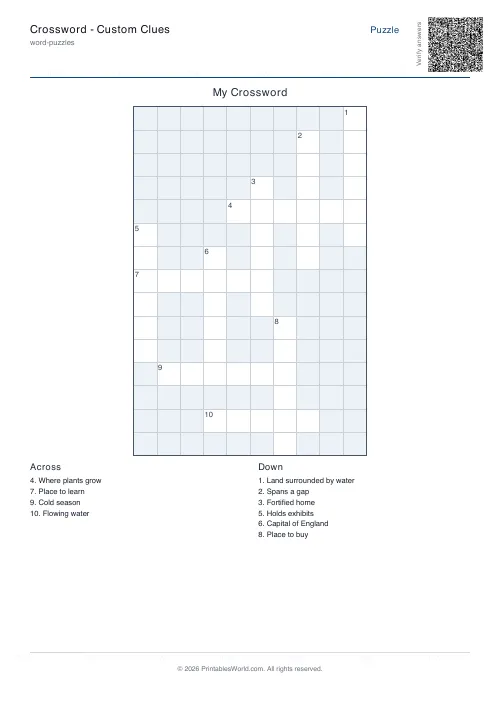 Crossword: Custom Clues
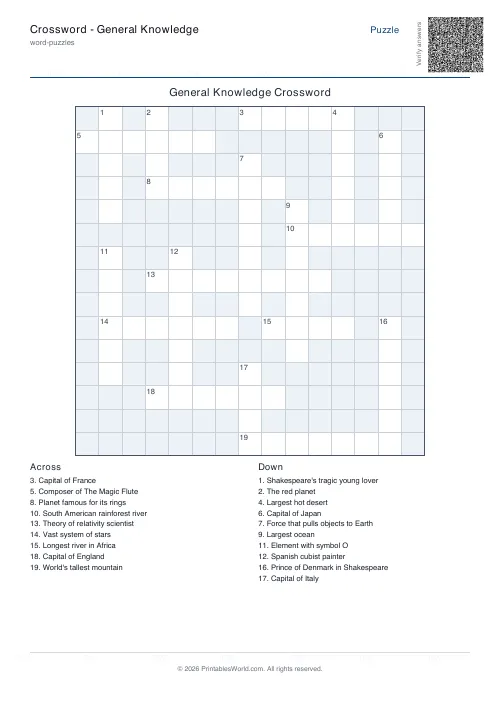 Crossword: General Knowledge
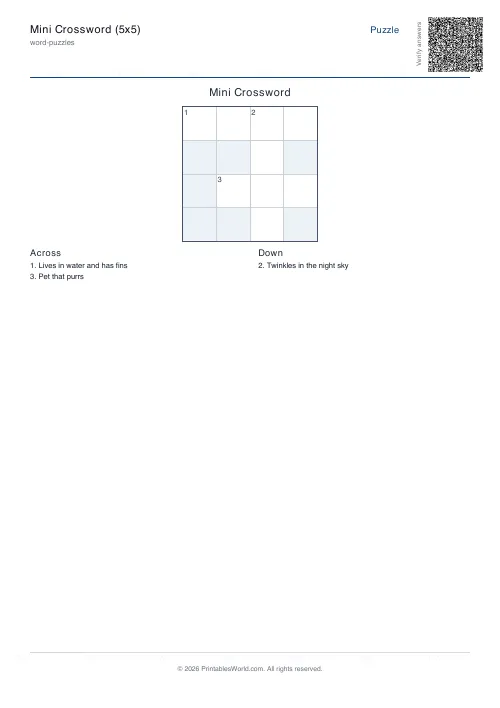 Mini Crossword
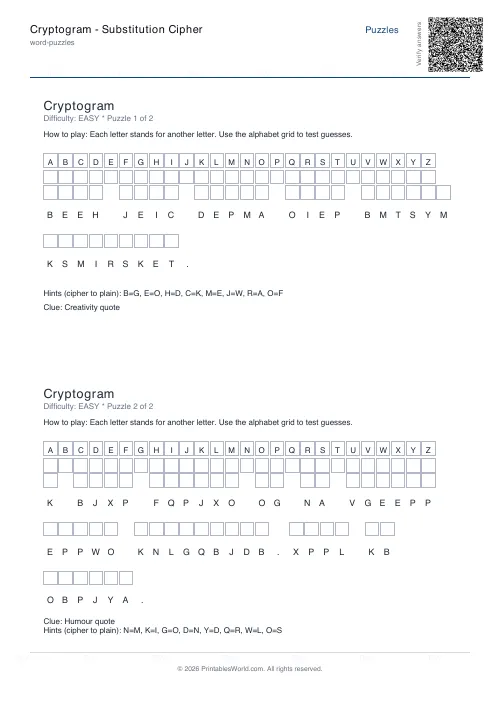 Cryptogram: Substitution Cipher
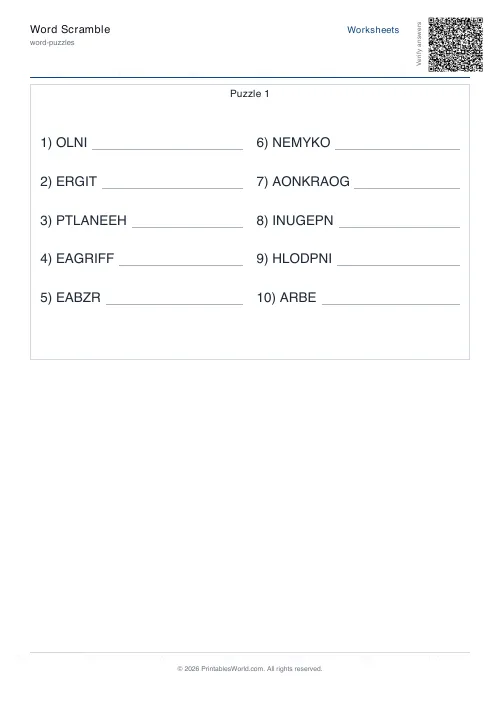 Word Scramble Generator
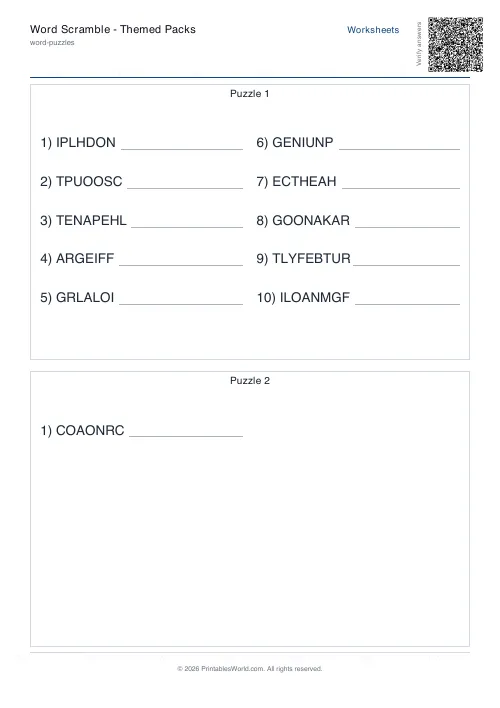 Word Scramble: Themed Packs
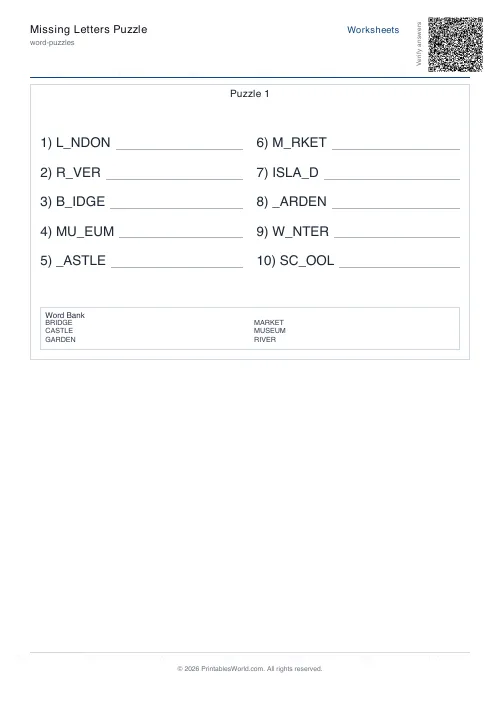 Missing Letters Puzzle
 Acrostic Poem Template