What this tool does
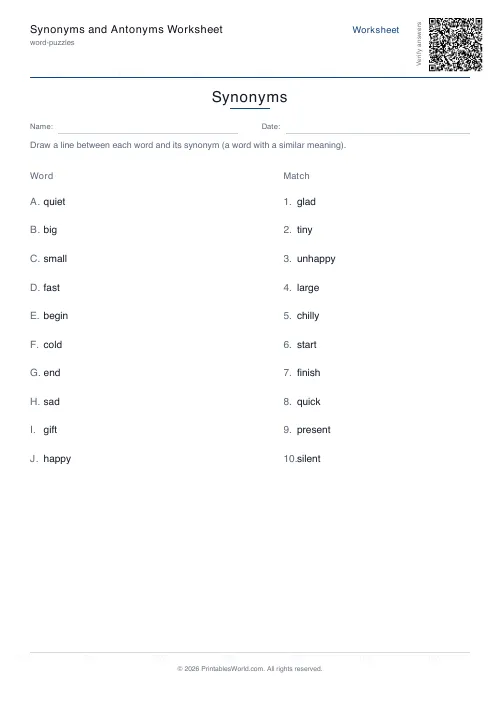
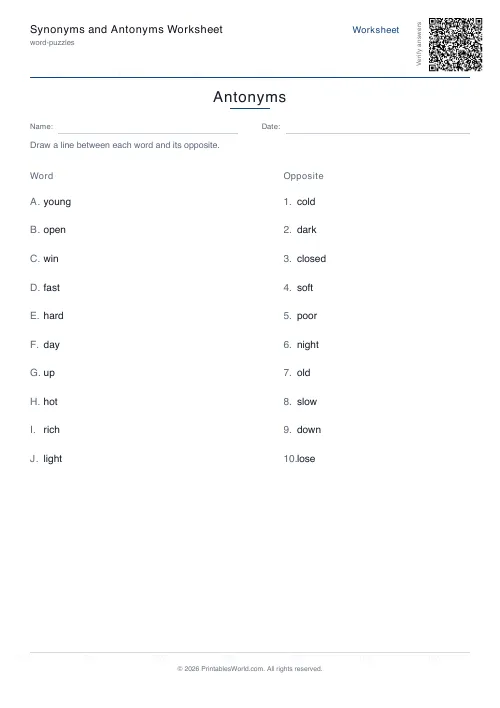
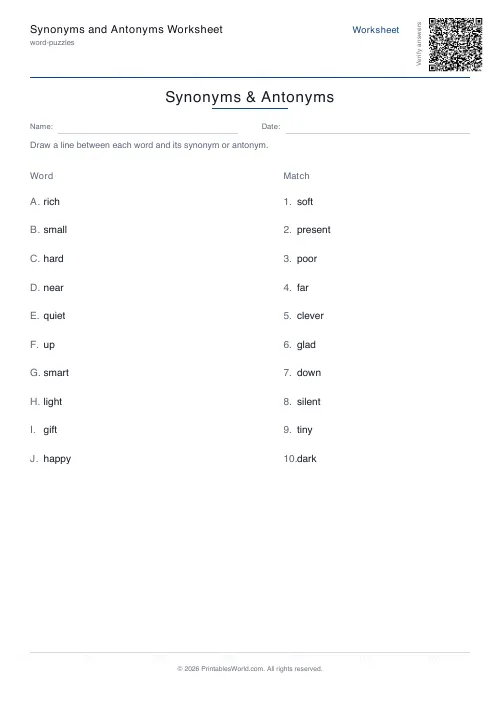
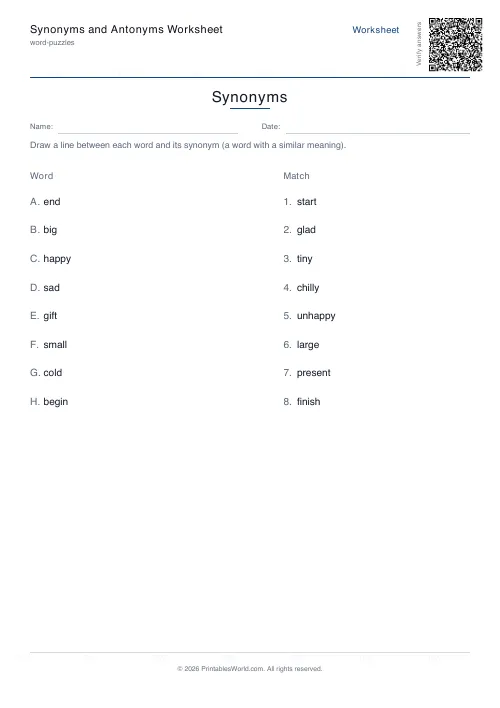
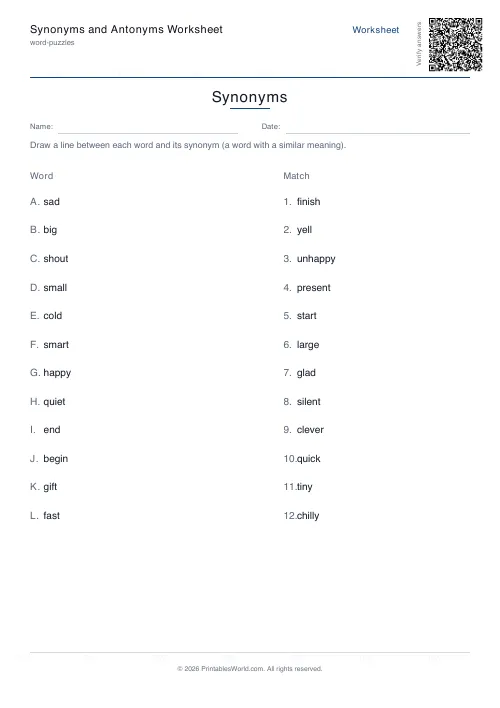
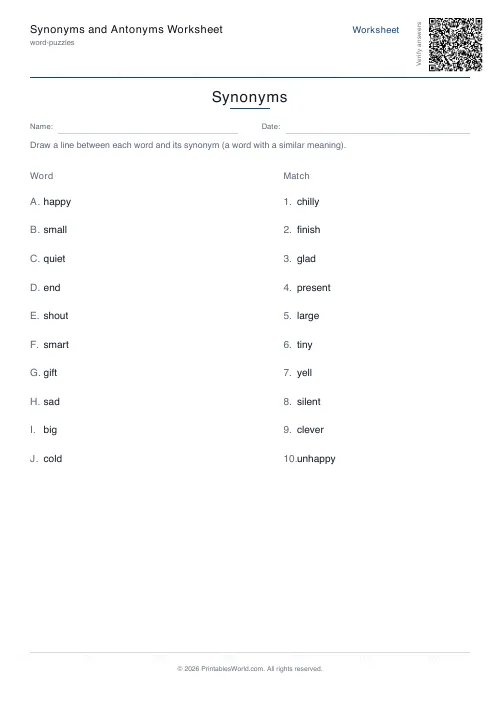
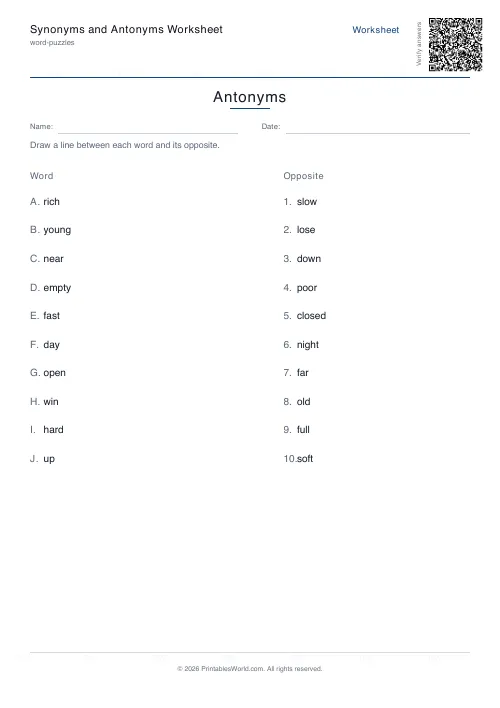
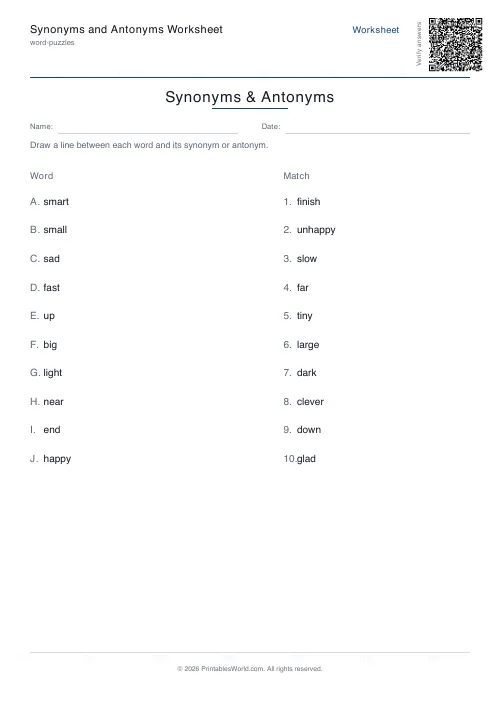
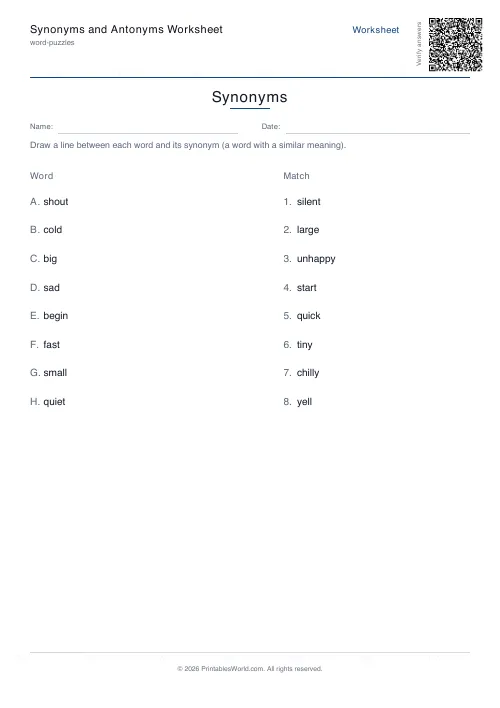
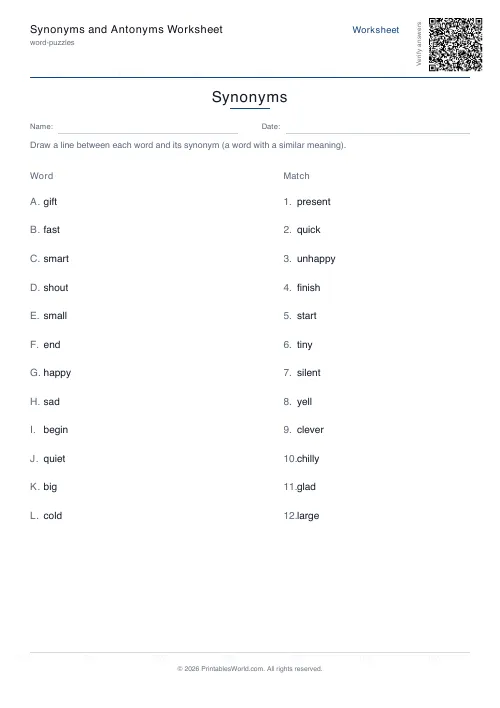
Two-column matching for words that mean the same and words that mean the opposite. Choose synonyms only, antonyms only, or a mixed sheet of both, with 4 to 12 pairs and an optional answer key.
People also used
Feedback
Spotted something off with this tool?
Synonym and antonym matching, three ways
Words down the left, their partners shuffled down the right, and a line drawn between each pair. Choose whether those partners mean the same thing, the opposite thing, or a mixture of both.
Four to twelve pairs per sheet. An answer key prints on a second page if you want it.
The mixed mode is the one that teaches
Synonyms alone and antonyms alone are both matching exercises, and a child can complete either without ever thinking about the relationship — they know what the task is before they read a word.
Mix them and the task changes. Now each pair has to be classified before it can be matched, and "same or opposite?" is the question that actually requires understanding both words. It is noticeably harder, and it is where children who have been pattern-matching get found out.
Start with the single modes if the concept is new. Move to mixed as soon as it is not.
A caution worth passing on
Synonyms are rarely exact, and a matching worksheet quietly implies that they are.
Big and large are close. Big and enormous are not interchangeable, and a child who learns that they are will write "an enormous mistake" when they meant a small one. So when the lines are drawn, the useful follow-up is to ask whether the two words could really swap places in a sentence — and the answer, often enough, is not quite.
Antonyms have the opposite problem: children over-apply them. Not-hot is not the same as cold, and the space between opposites is where a lot of precise vocabulary lives.
What is under your control
Mode, pair count from 4 to 12, worksheet title, instruction line, optional Name and Date fields, answer key on or off, and A4 or US Letter.
Pairs come from a built-in bank and are shuffled fresh for each sheet, so the right-hand column is in a different order every time even when the same words appear.
Where it fits
Synonym work is the standard route to lifting flat writing, and it is why every class has at one point been told to stop using "said" and "nice". That instruction is only half right — said is usually the correct word — but the underlying skill, having more than one option and choosing between them, is real and worth building.
Antonym work does something different: it defines a word by its edges. A child who knows what generous is the opposite of understands generous better than one who has only read the definition, and that is the cheapest way into a word whose meaning is abstract.
Print at 100% on A4 or US Letter.
FAQs
Quick answers
What is the difference between a synonym and an antonym?
A synonym means the same or nearly the same thing (big/large). An antonym means the opposite (hot/cold).
Can I switch modes?
Yes. Pick synonyms only, antonyms only, or a mixed sheet that draws from both word banks.
How many pairs fit per page?
Up to twelve pairs sit comfortably on one printable worksheet.
Are answers included?
Yes. Toggle the answer-key option for a second page that draws the correct connecting lines.
Related tools
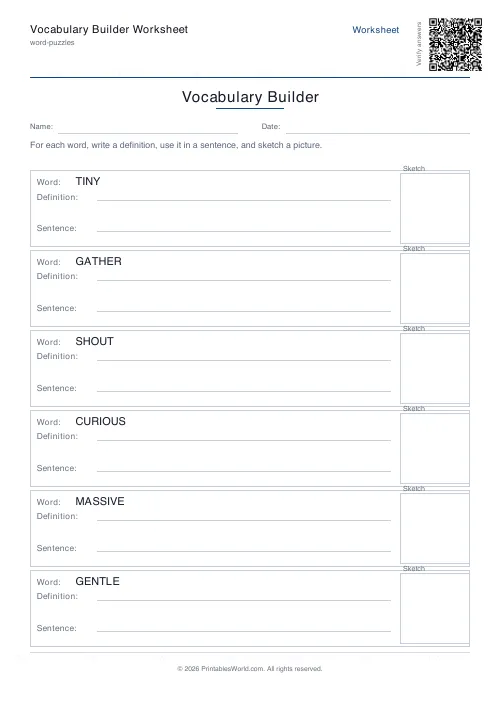
Vocabulary Builder Worksheet
Define, use in a sentence, and sketch. One word at a time.
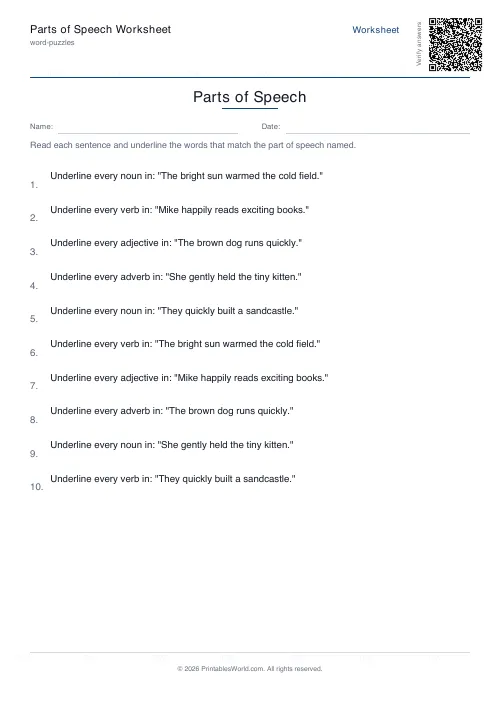
Parts of Speech Worksheet
Spot the nouns, verbs, adjectives and adverbs in each sentence.
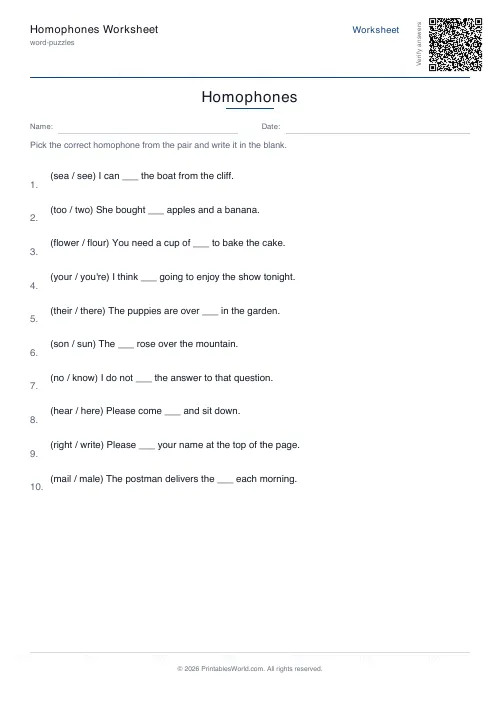
Homophones Worksheet
Pick the right homophone. There / their / they're and friends.
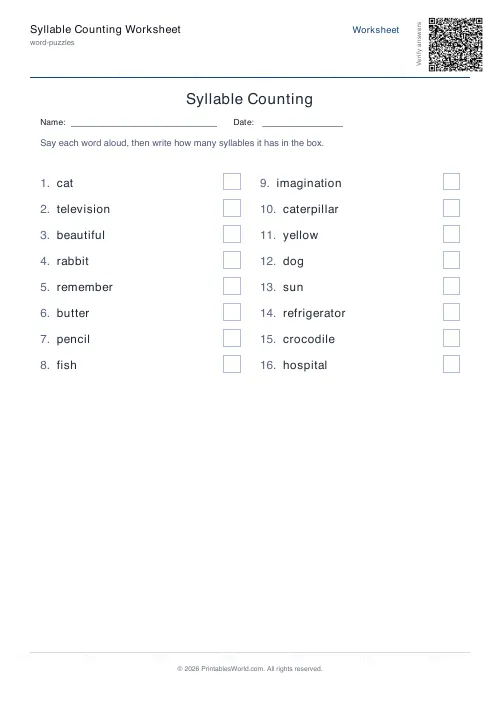
Syllable Counting Worksheet
Count the syllables in each word.
Further reading
Word Puzzles
Fun ways to build vocabulary in kids
Children learn most words by meeting them repeatedly in context, not by memorising lists. Here is what that means practically, and where word lists still earn their place.
5 min read
Word Puzzles
Sight words: the complete teaching guide
Sight words are usually taught as words to memorise. Most of them are partly decodable, and treating them that way works better. Here is how, and how many to teach at once.
6 min read
Literacy & Spelling
Do word searches help spelling? What works
Do word searches help spelling, or just fill time? What they practise, what the evidence suggests, and how to turn a spelling list into useful recall practice.
8 min read
More like this
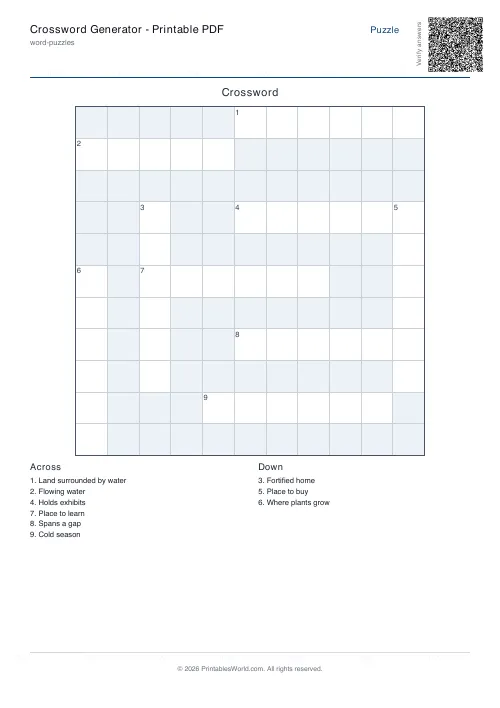 Crossword Generator: Printable PDF
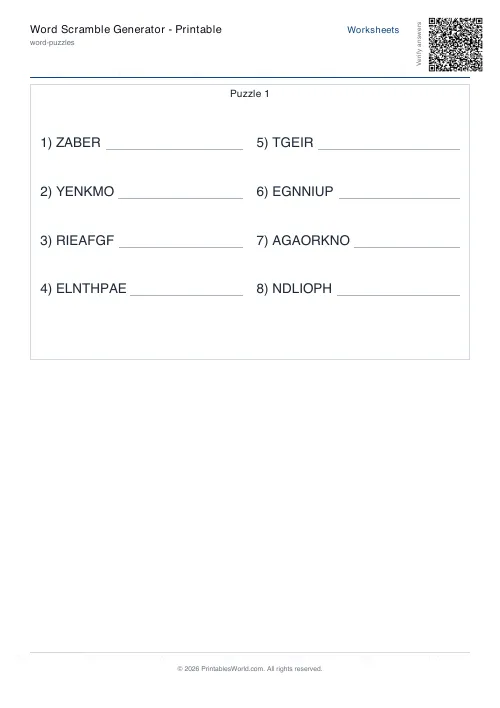 Word Scramble Generator: Printable
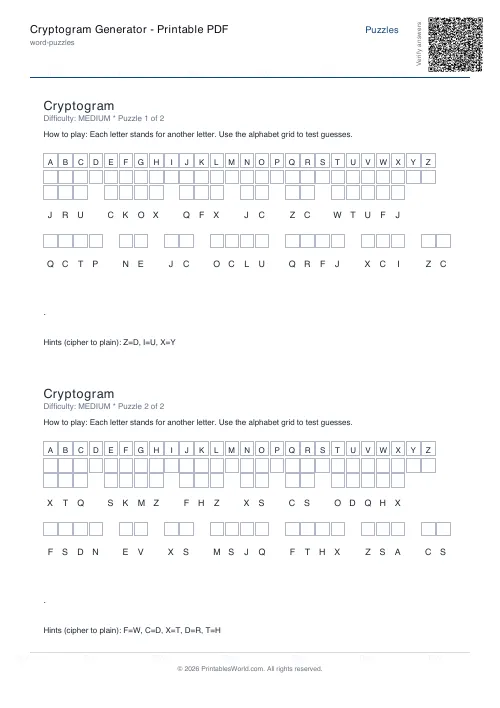 Cryptogram Generator: Printable PDF
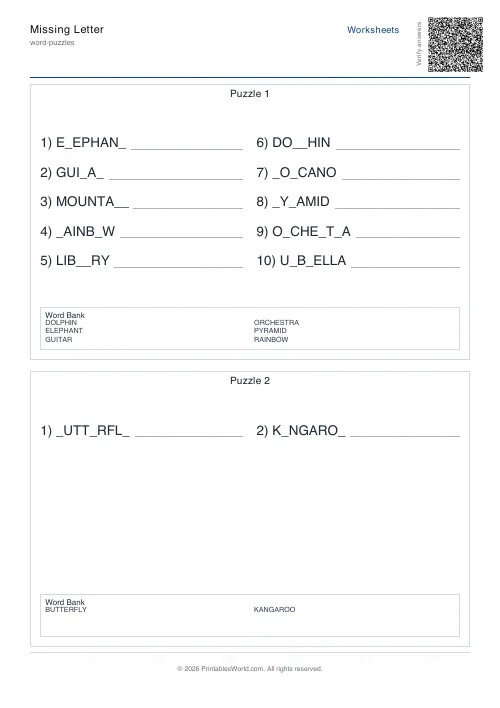 Missing Letter Generator
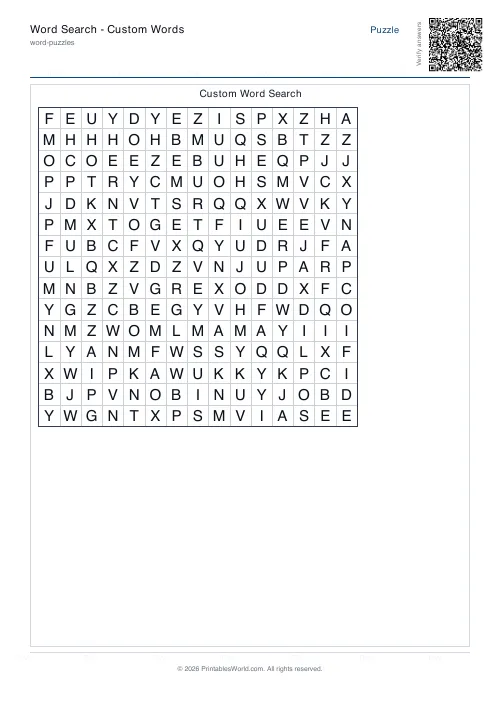 Word Search: Custom Words
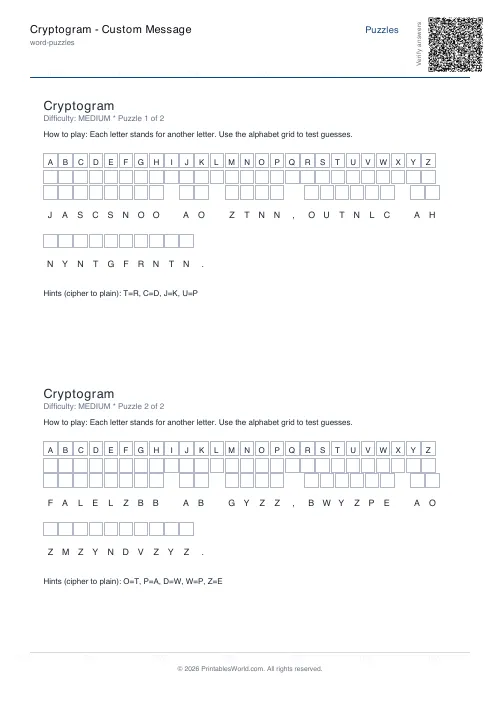 Cryptogram: Custom Message
 Crossword: Custom Clues
 Crossword: General Knowledge
 Mini Crossword
 Cryptogram: Substitution Cipher
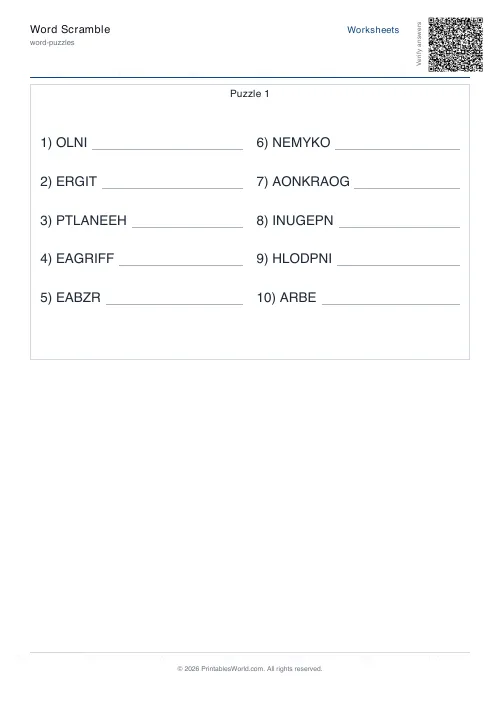 Word Scramble Generator
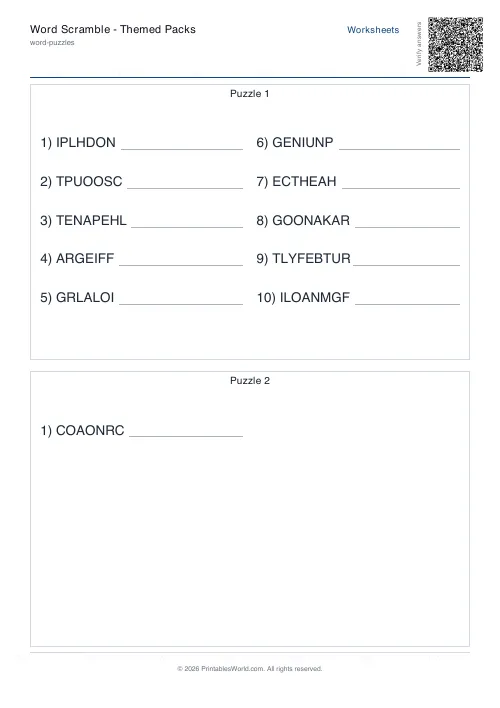 Word Scramble: Themed Packs
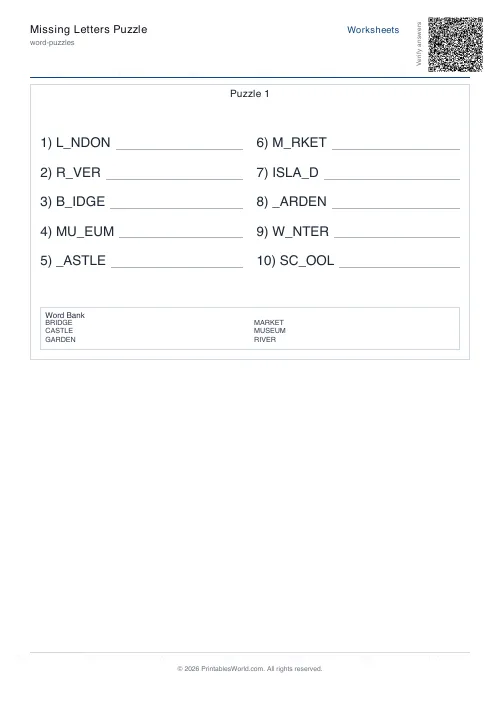 Missing Letters Puzzle
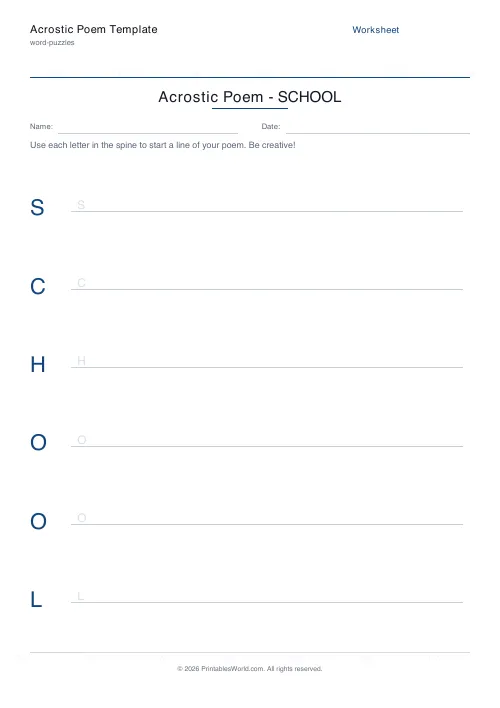 Acrostic Poem Template