What this tool does
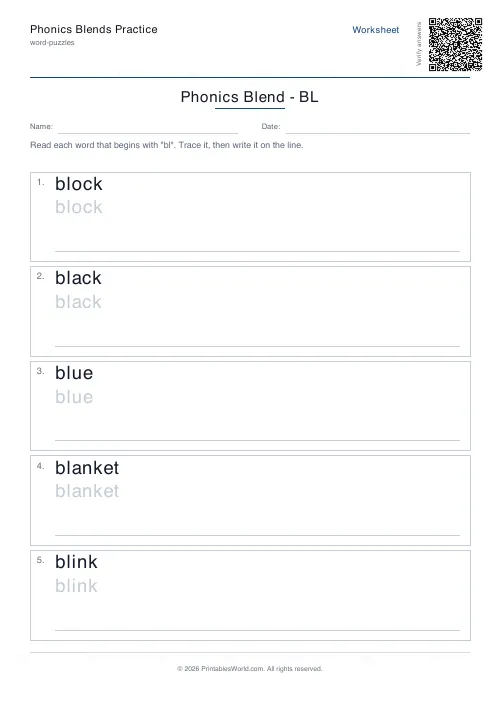
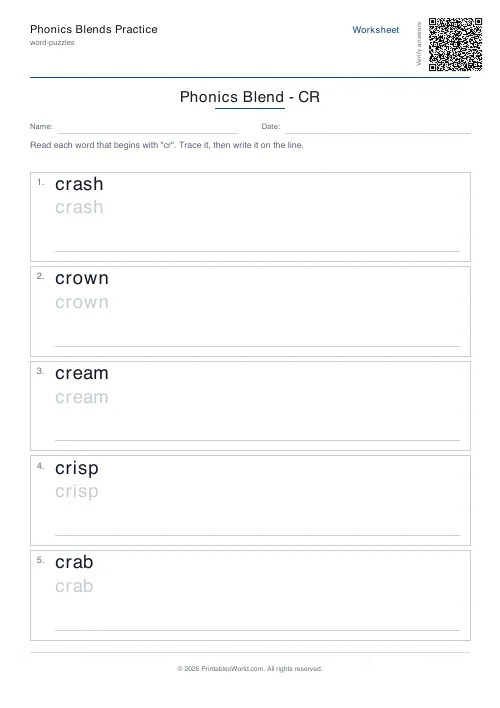
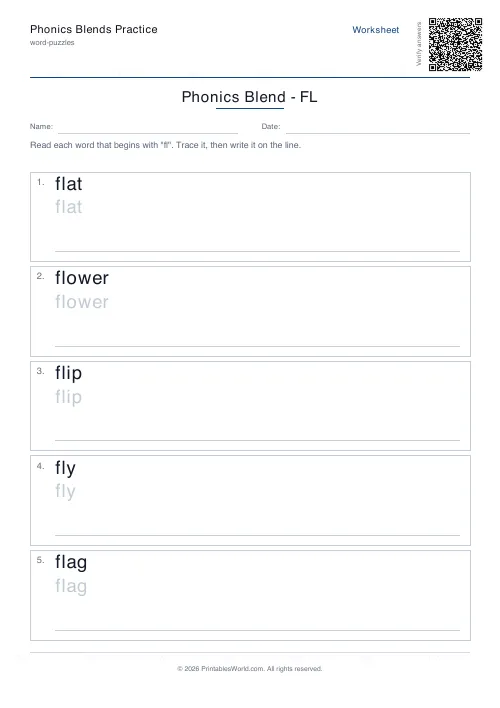
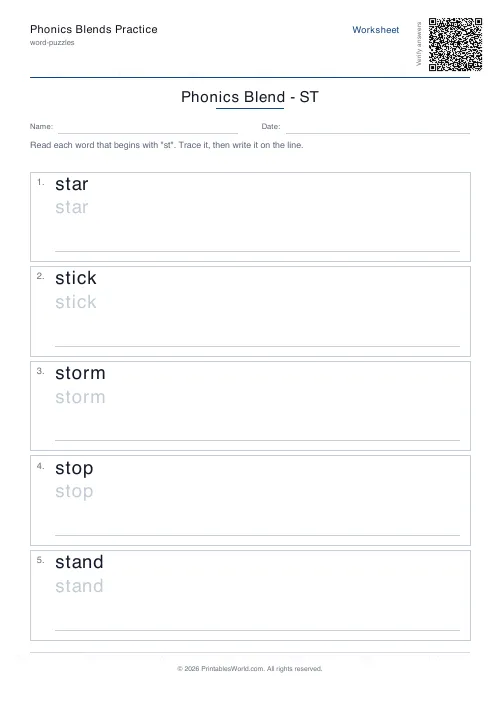
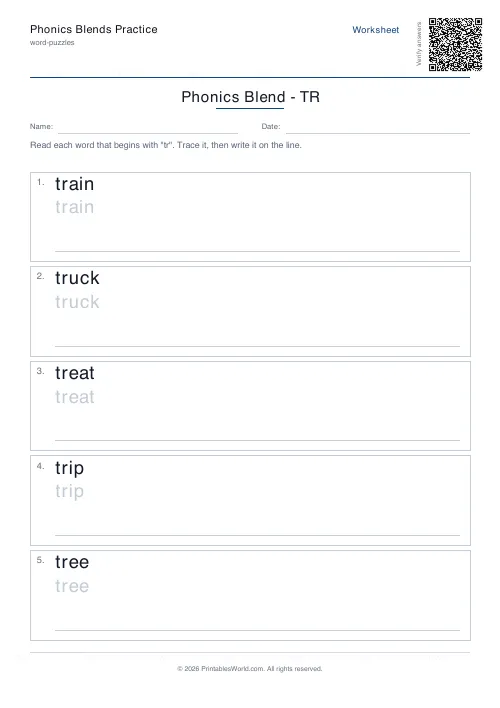
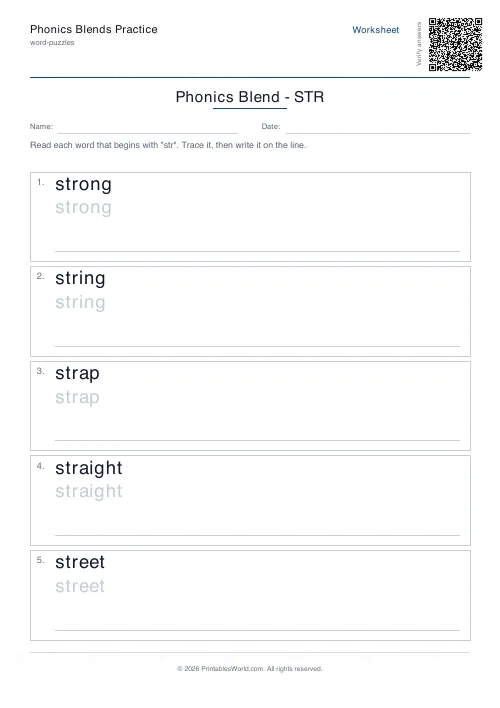
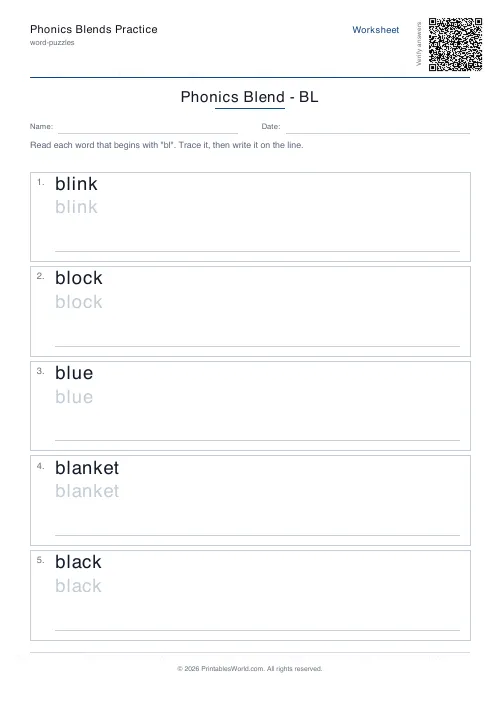
A practice sheet for one consonant blend: read the word, trace the faint copy, then write it. Twenty blends to choose from, including the three-letter str and spr, at 3 to 8 example words a page.
People also used
Feedback
Spotted something off with this tool?
One blend, one page
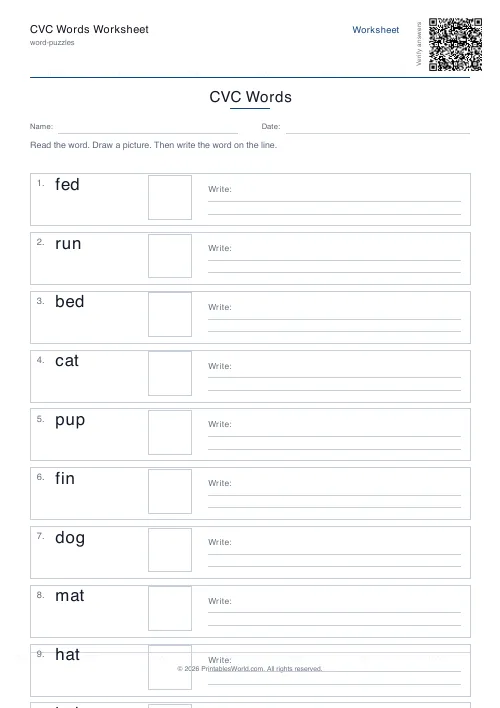
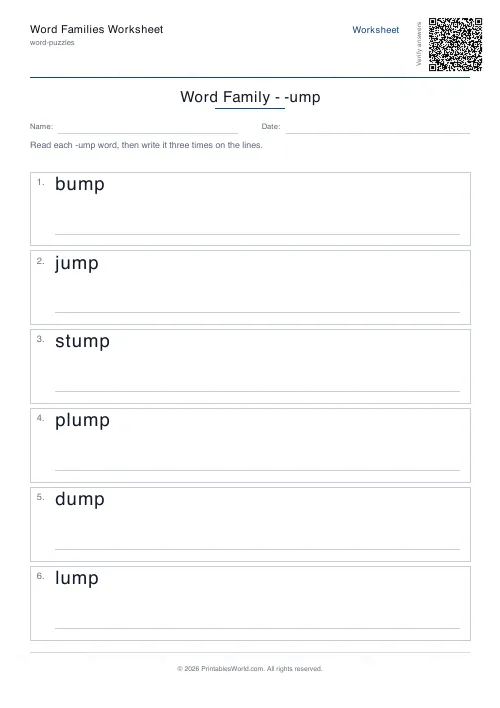
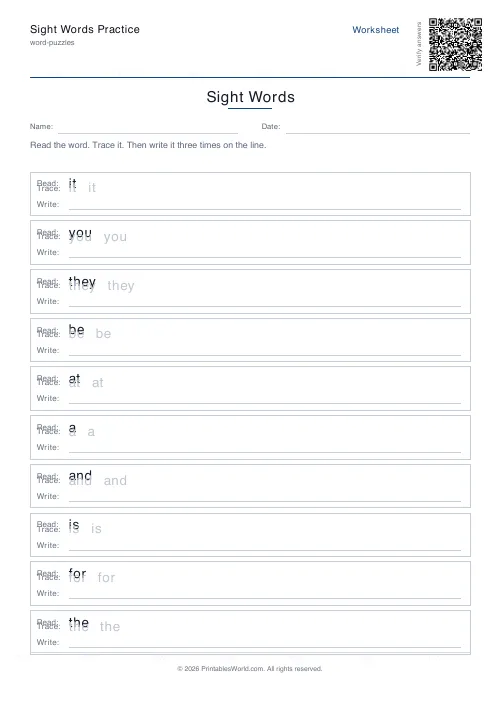
Pick a blend and the sheet builds itself from words that start with it. Each row carries three things: the word to read, a faint copy to trace over, and an empty line where it has to be written unaided.
Twenty blends are available: bl, br, cl, cr, fl, fr, gl, gr, pl, pr, sl, sm, sn, sp, st, sw, tr, tw, and the three-letter str and spr. Each has eight example words, and the sheet takes between three and eight of them at random, so two printings of the same blend are not the same page.
Why one blend at a time
Because a blend is not a new sound. It is two sounds said quickly, and the whole difficulty is holding both while the mouth moves between them.
A child who can say /b/ and can say /l/ will still say "back" for "black", and that is not a knowledge gap — it is a motor one. It gets fixed by repetition of the same blend across several words in a row, which is exactly what a single-blend page provides and exactly what a mixed page does not. Mixed blend sheets look more efficient and teach considerably less.
The three columns, in order
Read comes first. The child has to hear the target before producing it. Say the word, then say it slowly enough that both consonants are audible, then at normal speed again.
Trace is the bridge. The letters are printed faint, so the hand does the movement while the eye still has the model.
Write is the actual test. If the traced copy is fine and the written one drops a letter, the blend has not landed yet, and the answer is another sheet of the same blend rather than a different one.
The three-letter blends are a different job
str and spr are on the same tool but they are not the same lesson. Three consonants in a row is where children who are coping with bl and tr start to come apart, because the working-memory load of holding three sounds is genuinely higher and the mouth movements are less forgiving.
Save them until the two-letter blends are secure. Introducing str early tends to produce a child who says "steet" for "street" and has now practised that.
The options
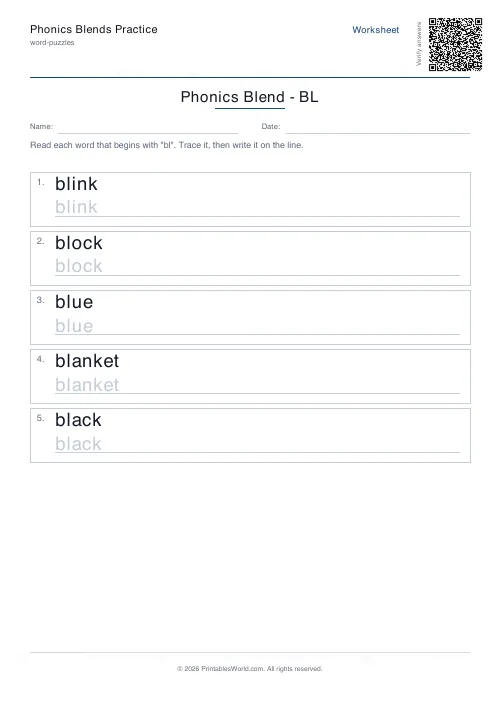
Blend, word count from 3 to 8, a worksheet title, an instruction line you can rewrite, and optional Name and Date fields. A4 or US Letter.
Three words suits a tired Reception child at the end of a session. Eight is a full page for a Year 1 pupil who is working on their own and does not need you sitting beside them.
Beyond the sheet
Ask for a word beginning with the blend that is not on the page. Producing one from nothing is a much stronger sign than reading one that is printed, and it takes about four seconds.
Print at 100% on A4 or US Letter. The tracing letters print in a light grey that stays visible under pencil.
FAQs
Quick answers
What is a consonant blend?
Two or three consonants that keep their separate sounds when read together. For example "bl" in "black", or "str" in "street".
Which blends are available?
Twenty common blends: bl, br, cl, cr, fl, fr, gl, gr, pl, pr, sl, sm, sn, sp, st, sw, tr, tw, plus the three-letter blends str and spr.
How many words per page?
Three to eight bordered rows per sheet. Five is the comfortable default.
Can I add my own blend?
Not yet. Choose from the built-in list above. The engine ships with five example words per blend so the worksheet stays packed.
Related tools
Further reading
Word Puzzles
Phonics at home: CVC words, blends and beyond
The order matters more than the materials, and one small thing, saying pure sounds rather than "buh" and "cuh", makes blending dramatically easier.
6 min read
Literacy & Spelling
Do word searches help spelling? What works
Do word searches help spelling, or just fill time? What they practise, what the evidence suggests, and how to turn a spelling list into useful recall practice.
8 min read
More like this
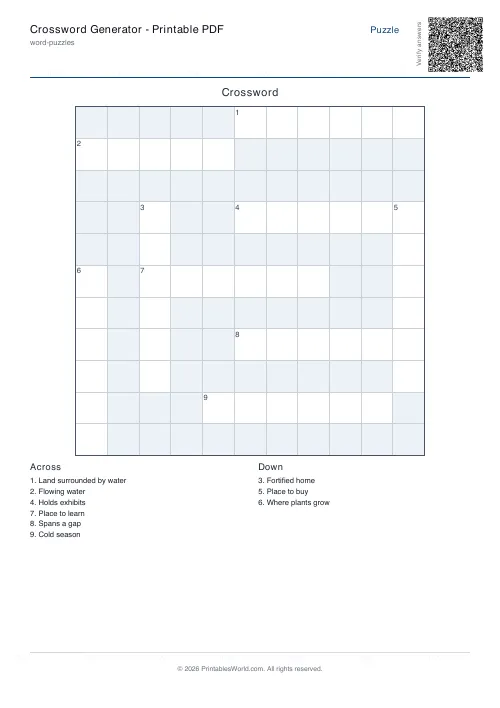 Crossword Generator: Printable PDF
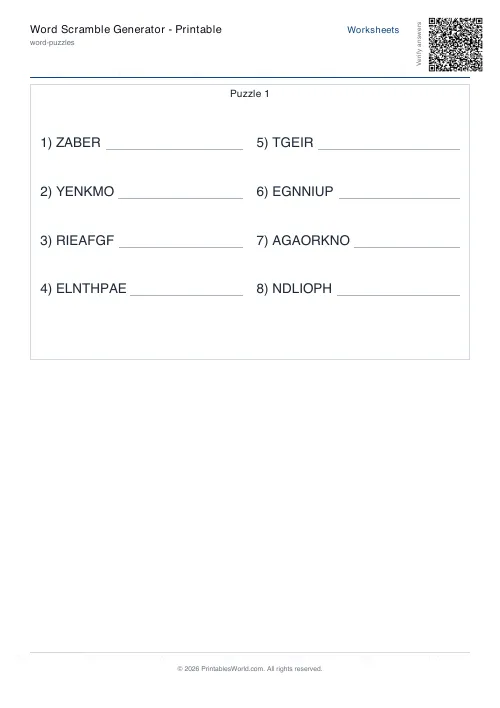 Word Scramble Generator: Printable
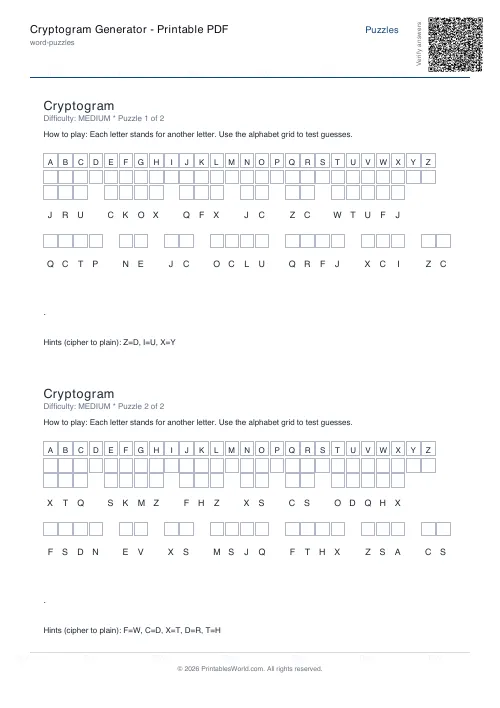 Cryptogram Generator: Printable PDF
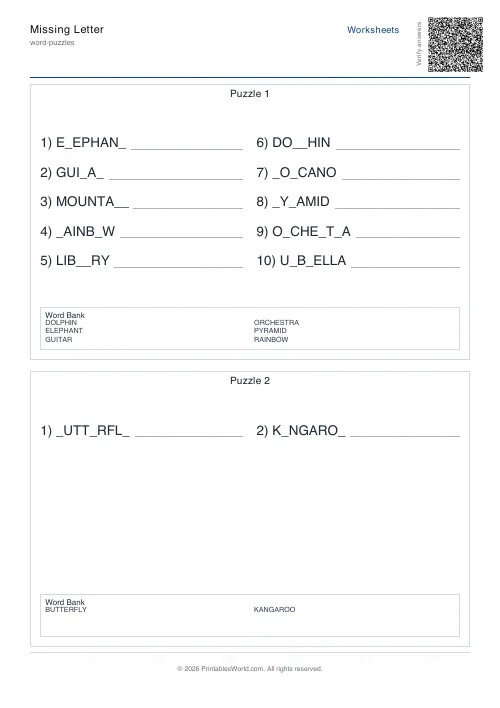 Missing Letter Generator
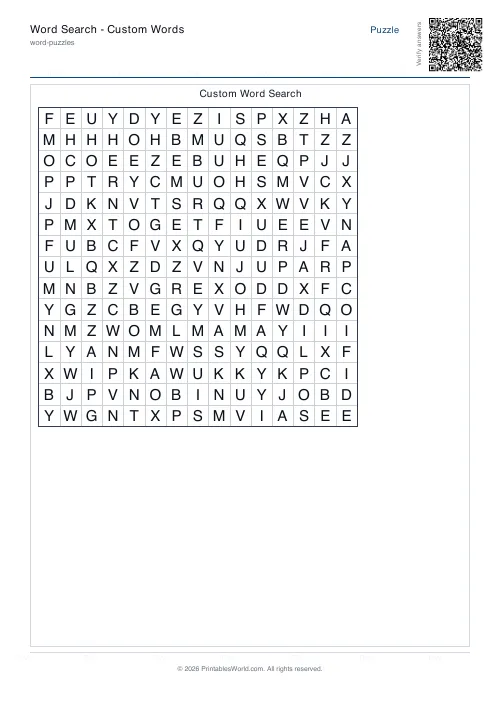 Word Search: Custom Words
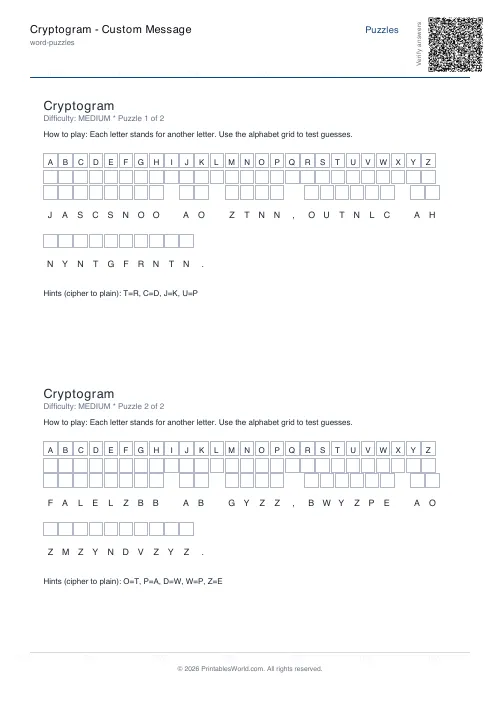 Cryptogram: Custom Message
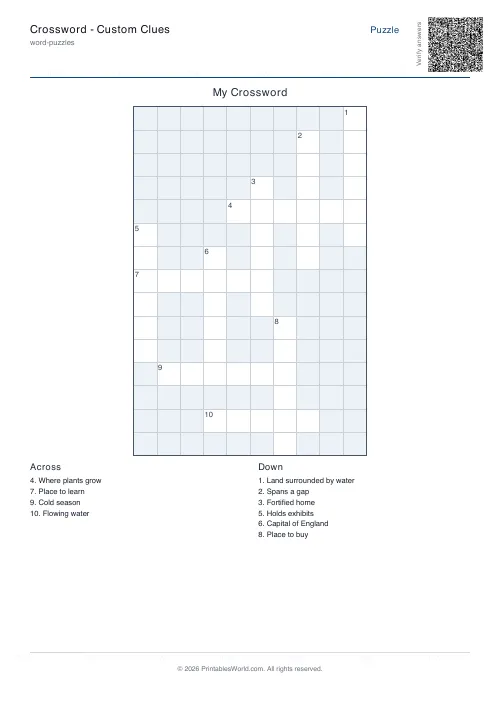 Crossword: Custom Clues
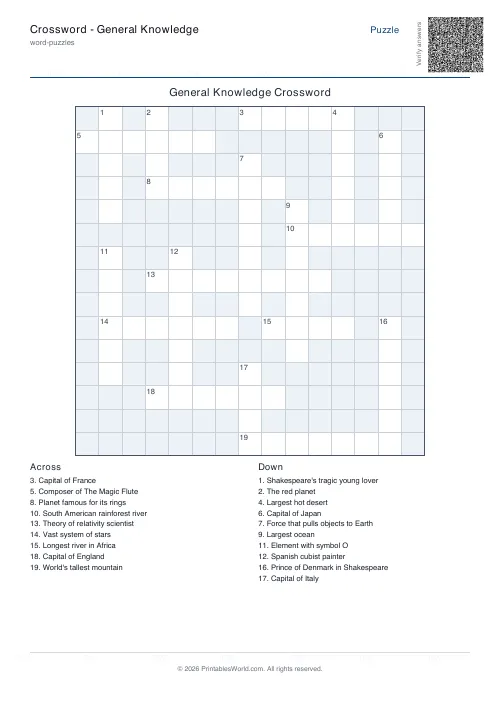 Crossword: General Knowledge
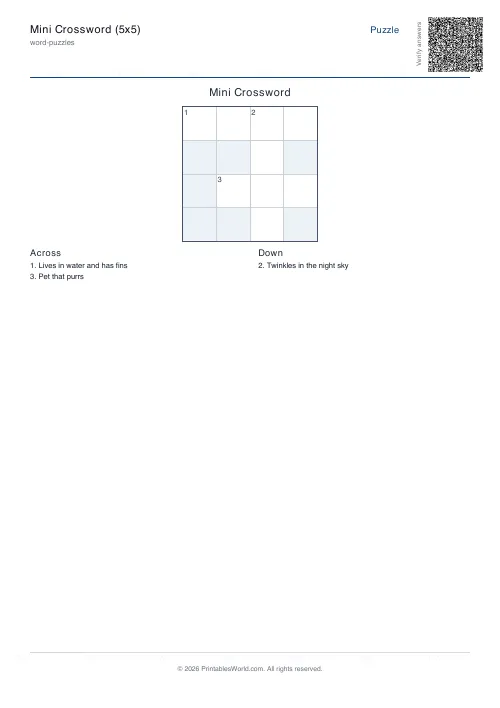 Mini Crossword
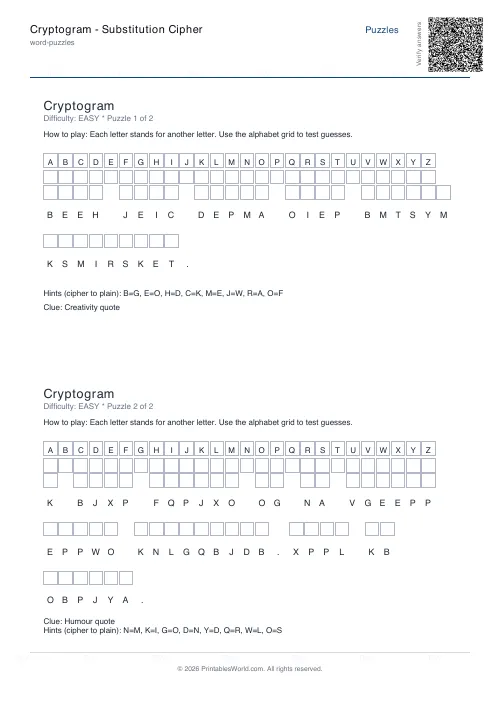 Cryptogram: Substitution Cipher
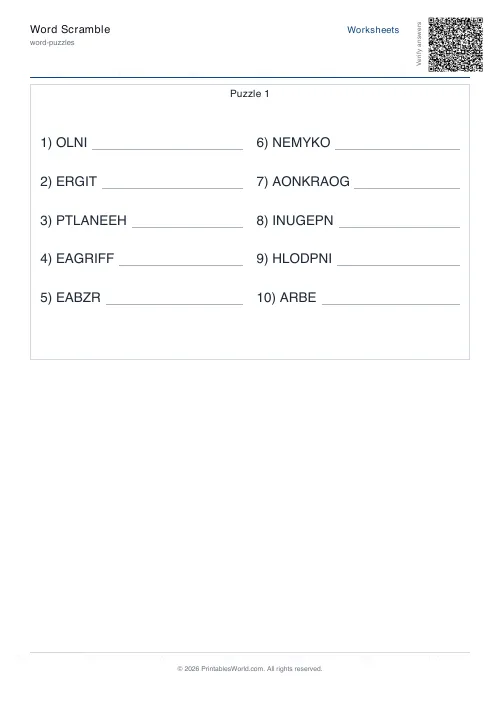 Word Scramble Generator
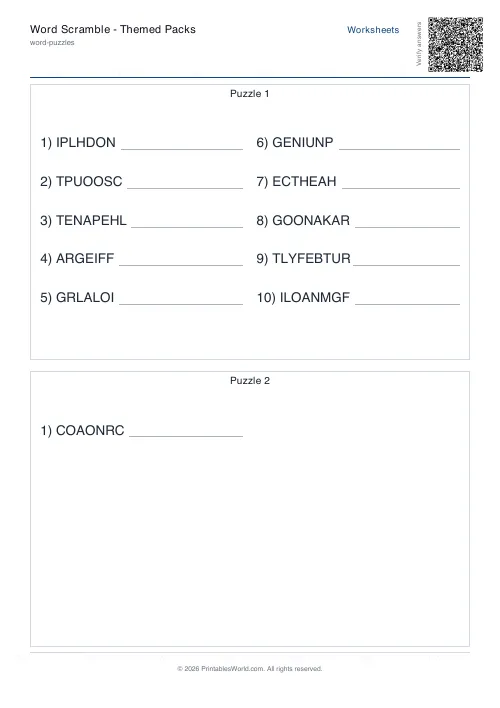 Word Scramble: Themed Packs
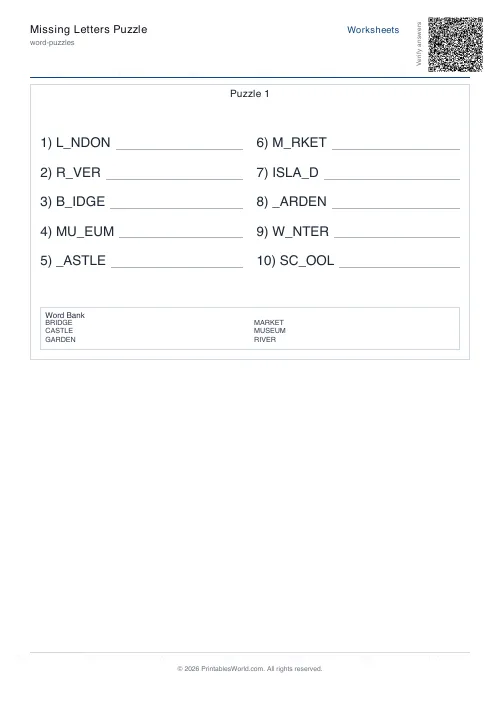 Missing Letters Puzzle
 Acrostic Poem Template