What this tool does
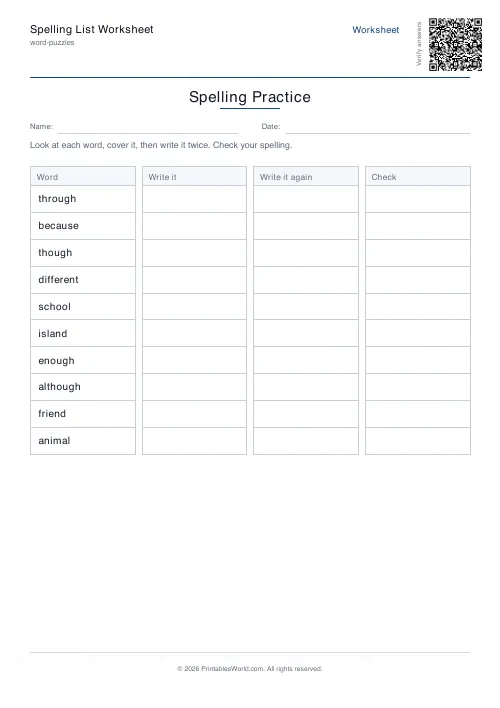
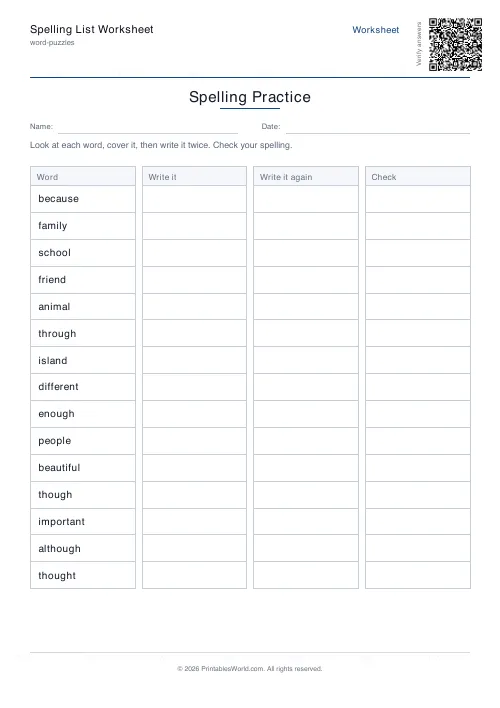
A look, cover, write, check spelling sheet. Each row prints the word and gives three blank columns: two to write it from memory and one to check. Eight to sixteen words, from the built-in list or your own.
People also used
Feedback
Spotted something off with this tool?
Look, cover, write, check — on one sheet
Every row prints the target word, then three empty columns. The child looks at the word, covers it, writes it in the first column, writes it again in the second, and uses the third to check against the original.
Eight to sixteen words per page. Paste in your own list, or use the built-in one, which is fifteen of the words English-speaking children most reliably get wrong: because, friend, school, people, beautiful, thought, enough, through, island, and the rest of that family.
The method is old and it works for a specific reason
The covering is the whole thing. A child copying a word letter by letter while looking at it is exercising their eyes and their pencil grip, and their memory is not involved at all — which is why copying out spellings ten times each produces so little for the effort.
Covering forces retrieval. The word has to be rebuilt from memory, and the rebuilding is what makes the memory. Same principle as flashcards. Same principle as testing yourself instead of re-reading your notes, which is among the better-established findings in the psychology of learning.
Two write columns rather than one because the second attempt is where you see whether the first was luck.
What to do with the check column
Not just a tick. If the spelling is wrong, the useful action is to mark the exact letter where it went wrong, not the whole word.
"Becuase" and "becaus" are two different errors. One is a transposition, the other a truncation, and they want different fixes. A word crossed out whole tells a child they failed. A circle round the two swapped letters tells them what to do on Thursday.
Sizing it
Word count from 8 to 16, your own word list, a worksheet title, an instruction line, and optional Name and Date fields. A4 or US Letter.
Rows are sized to fit the count, so a sheet of eight has taller rows than one of sixteen. If a child's handwriting is large, ask for fewer words rather than accepting cramped columns.
How many words, and how often
Ten words a week is the convention in most schools. It is reasonable. The frequency matters more than the number, though.
Ten words on Monday and a test on Friday, with nothing between, is a well-known way to produce a good Friday score and no lasting spelling. The same ten words practised for four minutes on four separate days will outlast it by a long way. This sheet is short by design so that four minutes is enough for it.
Choosing what goes on the list
The best source is the child's own writing. A word they have misspelled twice in their own work is a word they are actively using and getting wrong, which is exactly where the effort pays.
The built-in list is a fallback for when you have not got one of those to hand. It is deliberately full of words whose spelling does not follow from their sound, since those are the ones a phonics-first reader will keep getting wrong until somebody makes them look.
Print at 100% on A4 or US Letter.
FAQs
Quick answers
What is the look-cover-write-check method?
A four-step memorisation routine: look at the word, cover it, write it from memory, then uncover and check. Great for visual learners.
Can I use my own spelling list?
Yes. Paste a comma- or newline-separated list and the worksheet rebuilds with your words.
How many words per page?
Eight to sixteen words fit on one printable sheet, depending on the row height.
Is there a teacher key?
No key is needed. The target word is printed in the first column for self-checking.
Related tools
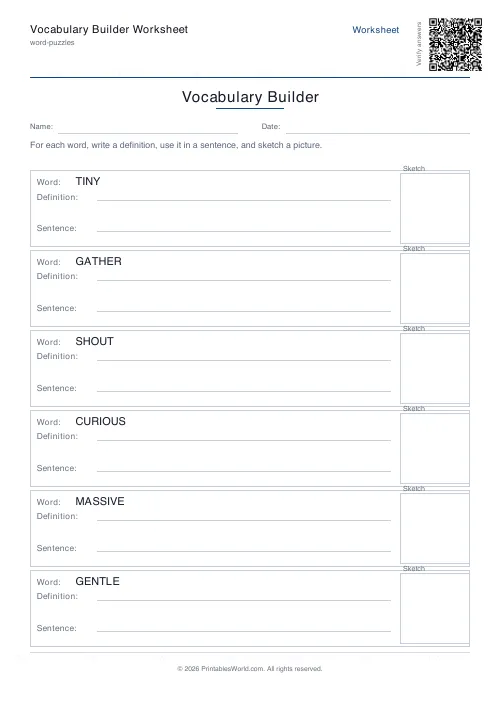
Further reading
Literacy & Spelling
Do word searches help spelling? What works
Do word searches help spelling, or just fill time? What they practise, what the evidence suggests, and how to turn a spelling list into useful recall practice.
8 min read
Word Puzzles
Prefixes and suffixes: a simple teaching guide
Learning that "un-" means not unlocks hundreds of words at once. Here are the affixes worth teaching first and the three spelling rules that cause most errors.
5 min read
Word Puzzles
Fun ways to build vocabulary in kids
Children learn most words by meeting them repeatedly in context, not by memorising lists. Here is what that means practically, and where word lists still earn their place.
5 min read
More like this
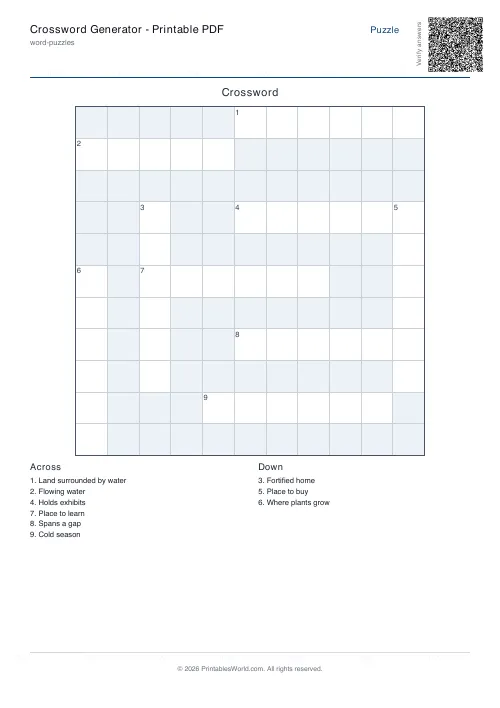 Crossword Generator: Printable PDF
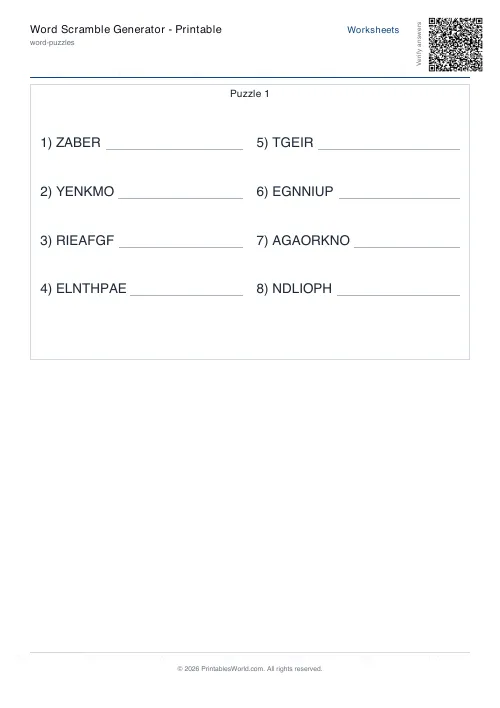 Word Scramble Generator: Printable
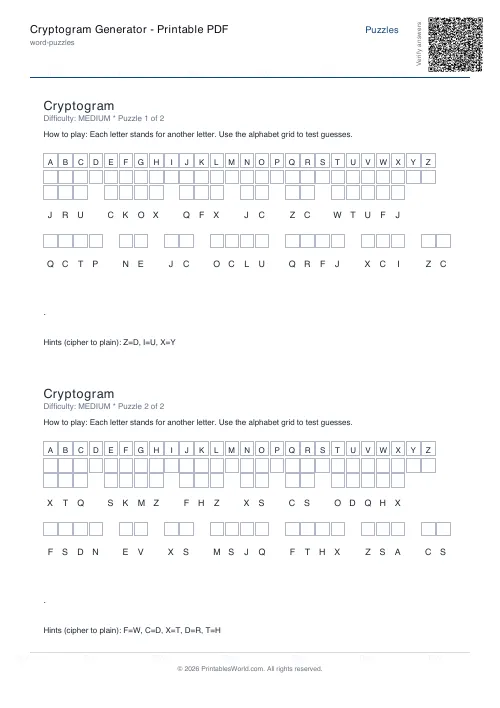 Cryptogram Generator: Printable PDF
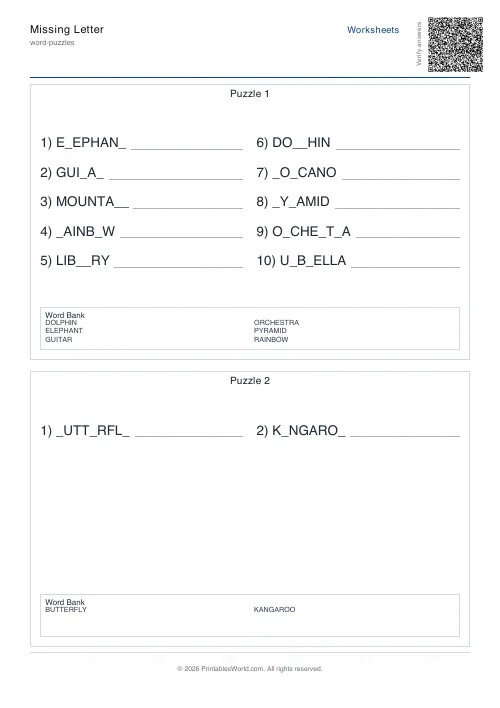 Missing Letter Generator
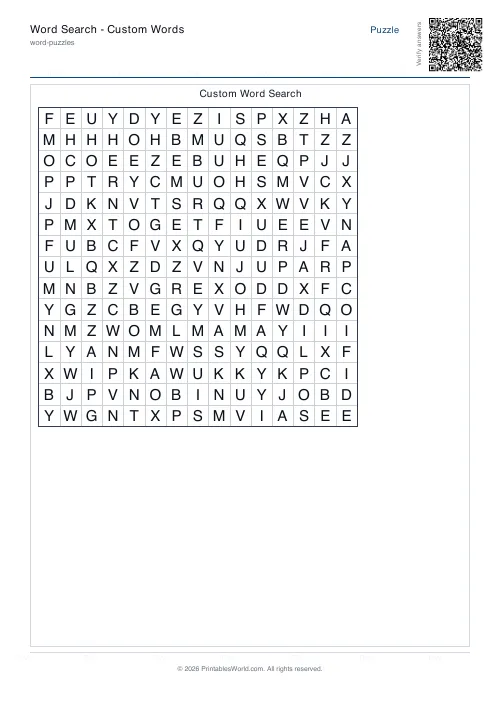 Word Search: Custom Words
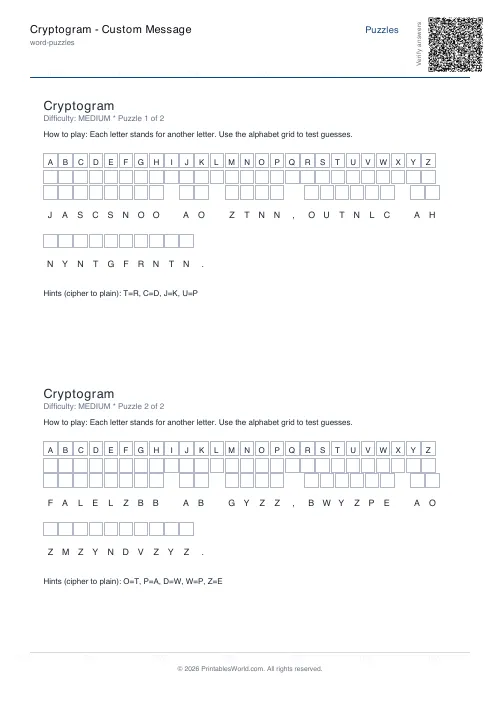 Cryptogram: Custom Message
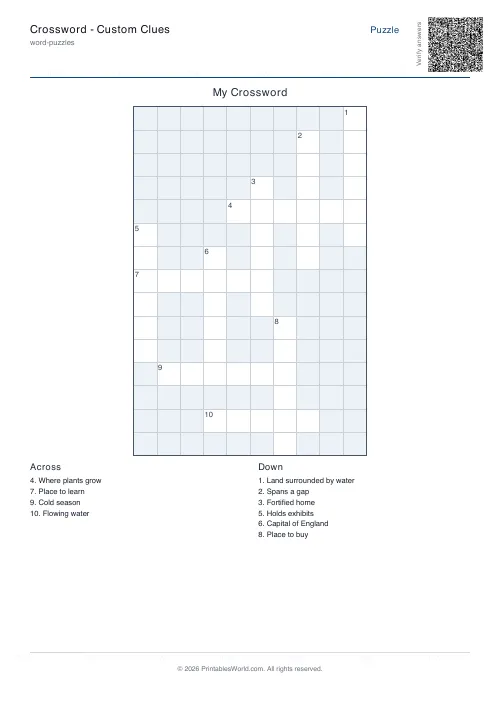 Crossword: Custom Clues
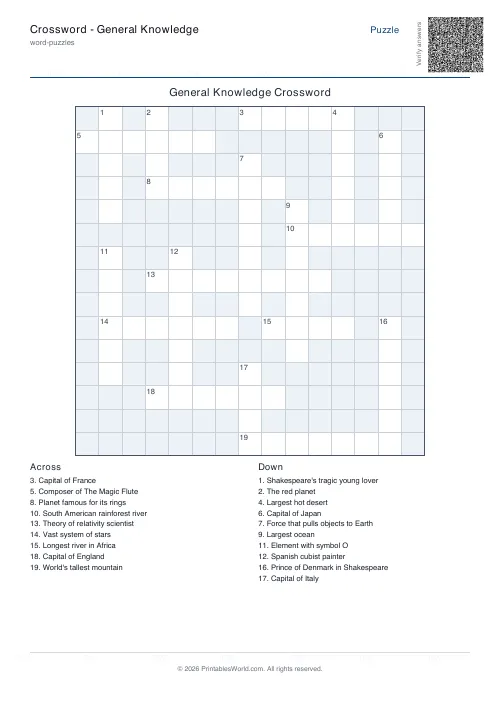 Crossword: General Knowledge
 Mini Crossword
 Cryptogram: Substitution Cipher
 Word Scramble Generator
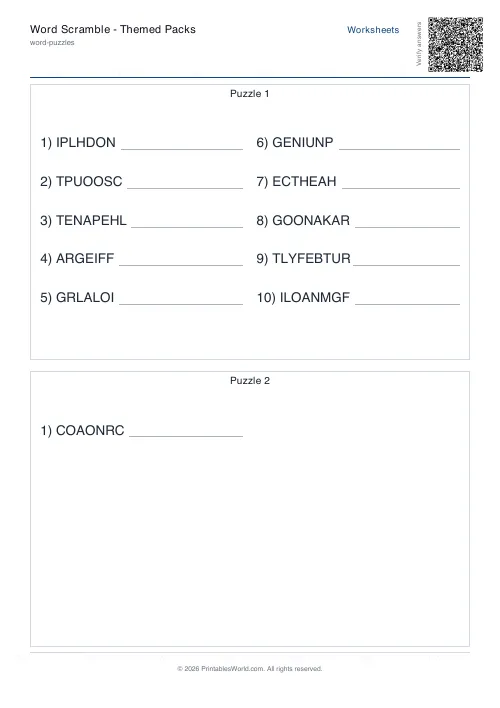 Word Scramble: Themed Packs
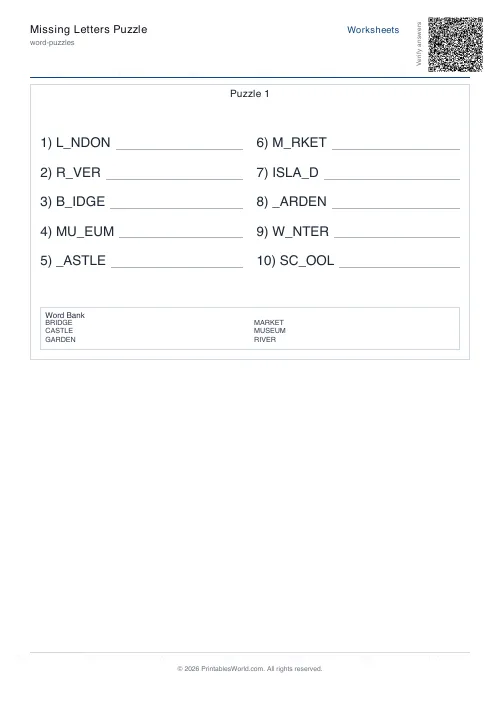 Missing Letters Puzzle
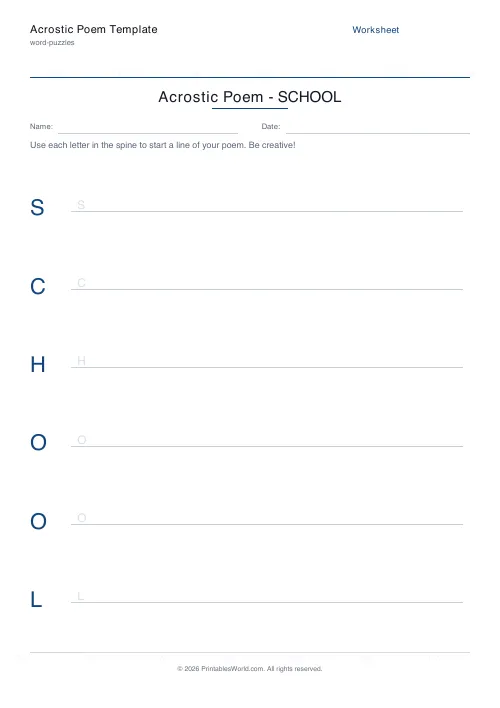 Acrostic Poem Template