What this tool does
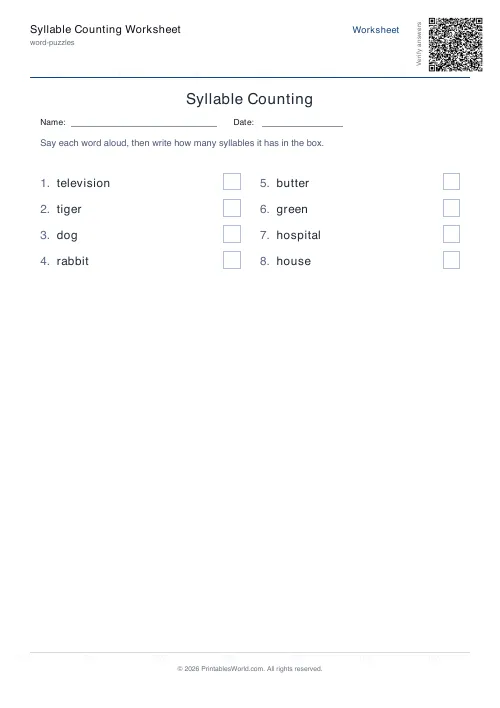
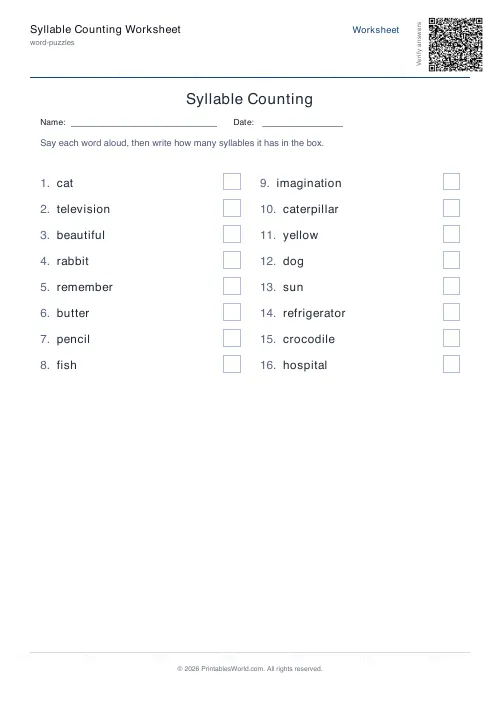
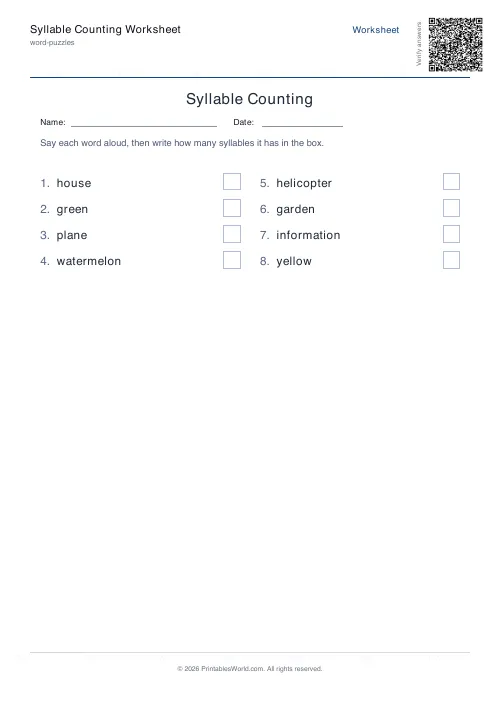
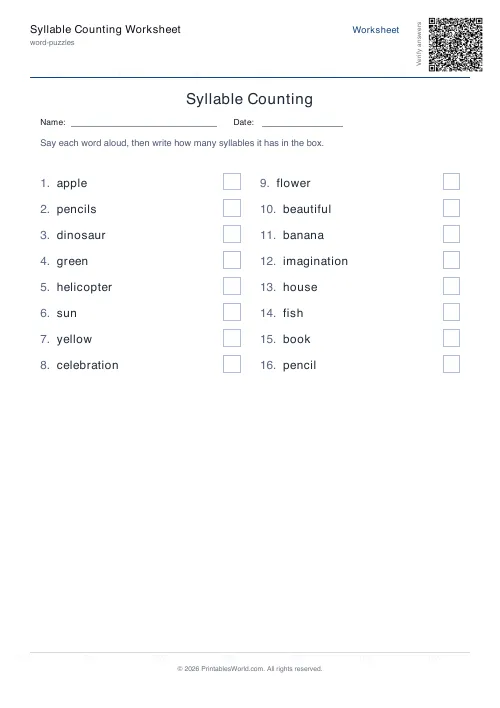
Printable syllable-counting worksheets built from a hand-checked word bank. Each word prints beside a small box where the pupil writes how many beats it has. Four to sixty words a sheet, twenty-four by default, reshuffled on every generation, with an optional answer key whose counts are verified rather than guessed.
People also used
Feedback
Spotted something off with this tool?
A word, a box, a number
That is the whole sheet. Say the word, clap the beats, write the count.
The words come from a curated bank with counts checked by hand rather than from an automatic syllable splitter, which matters more than it sounds: algorithmic splitting gets English wrong often enough that an answer key produced that way will disagree with the teacher two or three times a page, and the child who was right gets marked wrong. Every generation reshuffles the bank and mixes one-, two-, three-, four- and five-beat words.
Between four and sixty words, twenty-four unless you change it.
What a syllable actually is, for a six-year-old
One beat of sound, built around one vowel sound. Cat has one. Rab-bit has two. El-e-phant has three.
Two physical tricks work better than any definition. Clap once for each beat while saying the word slowly. Or rest the back of a hand under the chin and count how many times the jaw drops, which is more reliable than clapping because the jaw only moves for a vowel and a child cannot fake it. Both turn an abstract idea into something the body reports on, and the second one settles arguments about words like fire.
Knowing where a word breaks is what lets a child decode a long one, put the stress in the right place reading aloud, and spell by chunks rather than letter by letter.
Making it a game
Stand the class up and jump once per beat instead of clapping. Louder, and considerably more accurate, because a jump is harder to fudge than a clap.
Or pair them: one reads the word, the other claps it, then they swap. The reader has to say it slowly enough to be clapped, which is itself the skill. Afterwards, sort the same words into columns by syllable count and the link between the sound and the spelling chunks starts to show.
Start on one and two beats until the technique is secure, then mix in banana and helicopter and refrigerator for whoever needs stretching.
On the sheet
Set the word count, decide about the answer key and the name and date fields, and press Generate New until the mix looks right for the group in front of you. A4 or US Letter.
FAQs
Quick answers
How do you count syllables in a word?
Say the word slowly and clap or tap once for each beat of sound. Each beat is built around a vowel sound, so cat has one syllable, rab-bit has two, and el-e-phant has three. Resting a hand under the chin and counting how many times it drops also works.
What year group is this for?
Counting syllables is usually introduced in Reception and Year 1 (Pre-K to Grade 1) and revisited as children read longer words. Using more words and the longer entries in the list extends the worksheet for older pupils.
Are the syllable counts always correct?
Yes. The words come from a curated, hand-checked list with verified syllable counts, so the answer key is reliable. The tool does not try to guess counts automatically.
Can I make every worksheet different?
Yes. Each generation shuffles the word list, so you can print a unique sheet for every pupil or lesson. Press Generate New to reshuffle the preview.
Related tools
Further reading
Word Puzzles
Sight words: the complete teaching guide
Sight words are usually taught as words to memorise. Most of them are partly decodable, and treating them that way works better. Here is how, and how many to teach at once.
6 min read
Literacy & Spelling
Do word searches help spelling? What works
Do word searches help spelling, or just fill time? What they practise, what the evidence suggests, and how to turn a spelling list into useful recall practice.
8 min read
Word Puzzles
Phonics at home: CVC words, blends and beyond
The order matters more than the materials, and one small thing, saying pure sounds rather than "buh" and "cuh", makes blending dramatically easier.
6 min read
More like this
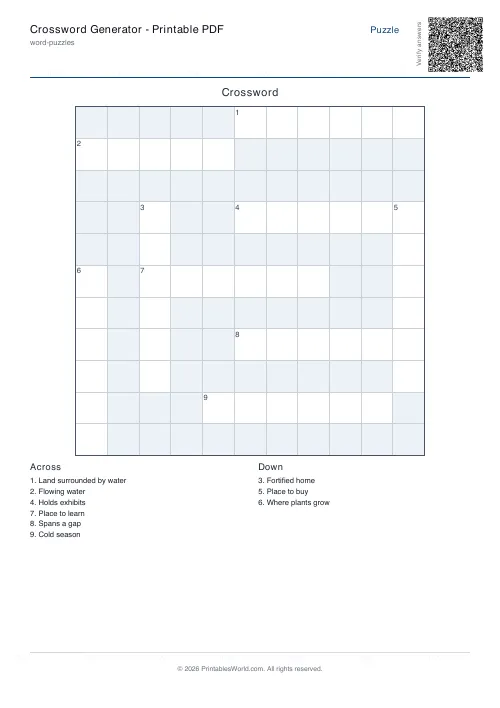 Crossword Generator: Printable PDF
 Word Scramble Generator: Printable
 Cryptogram Generator: Printable PDF
 Missing Letter Generator
 Word Search: Custom Words
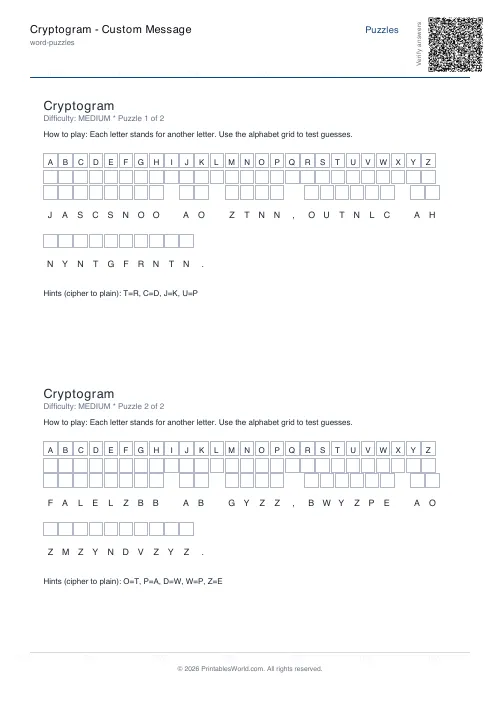 Cryptogram: Custom Message
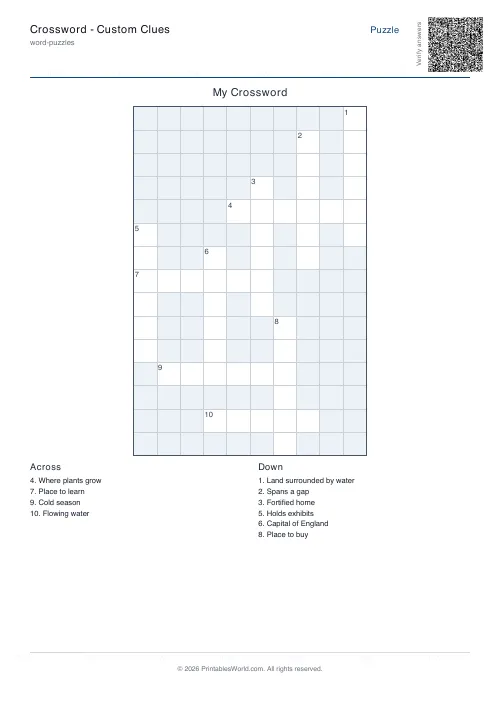 Crossword: Custom Clues
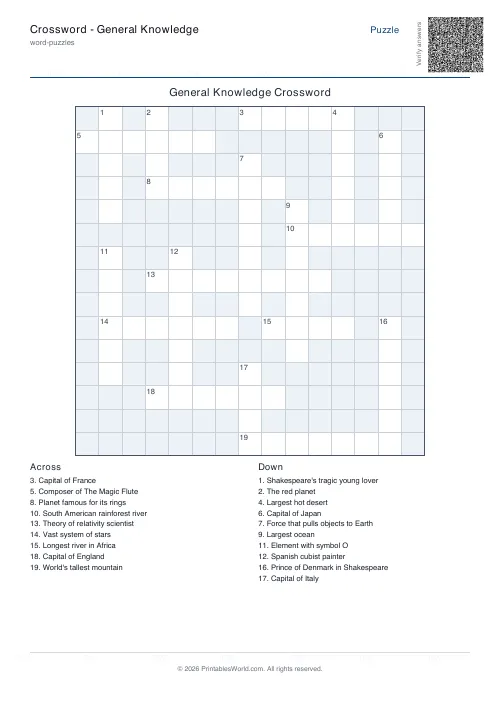 Crossword: General Knowledge
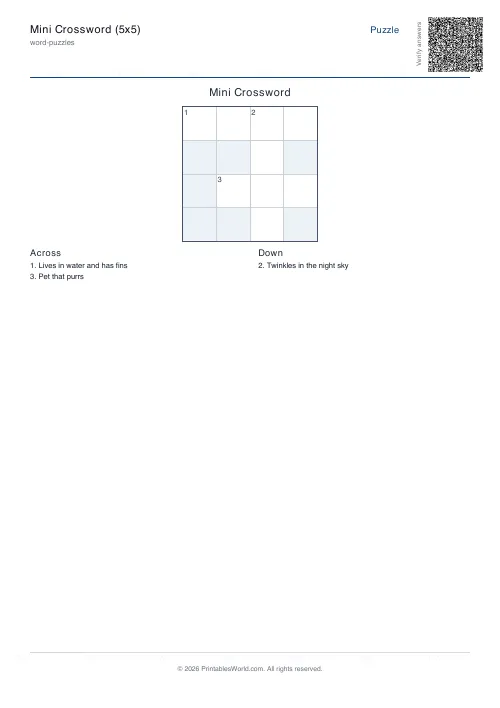 Mini Crossword
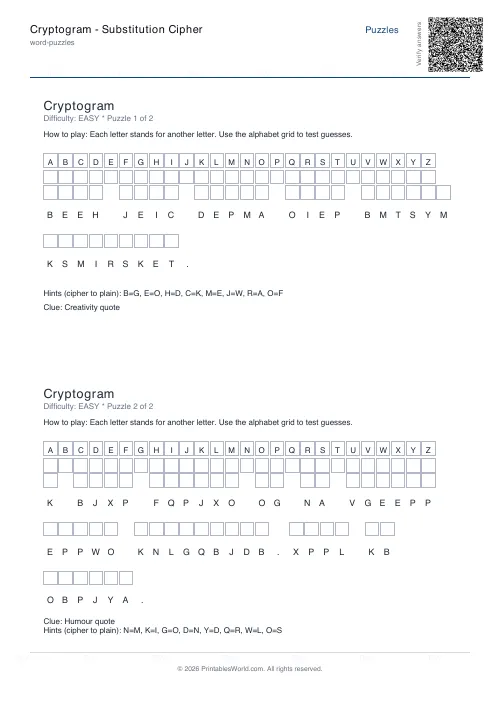 Cryptogram: Substitution Cipher
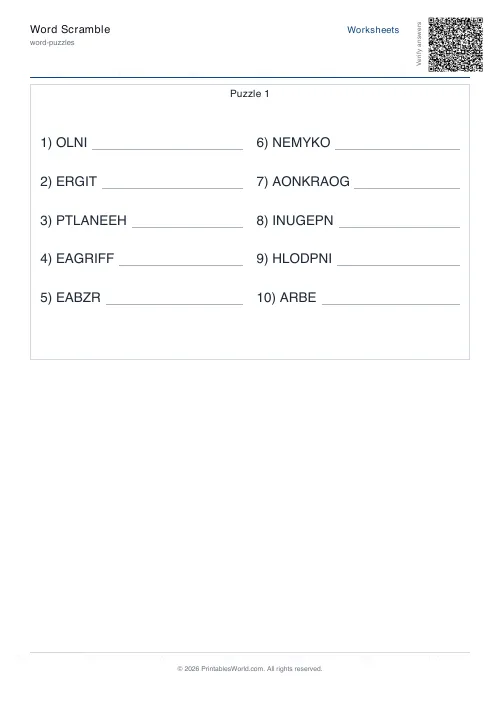 Word Scramble Generator
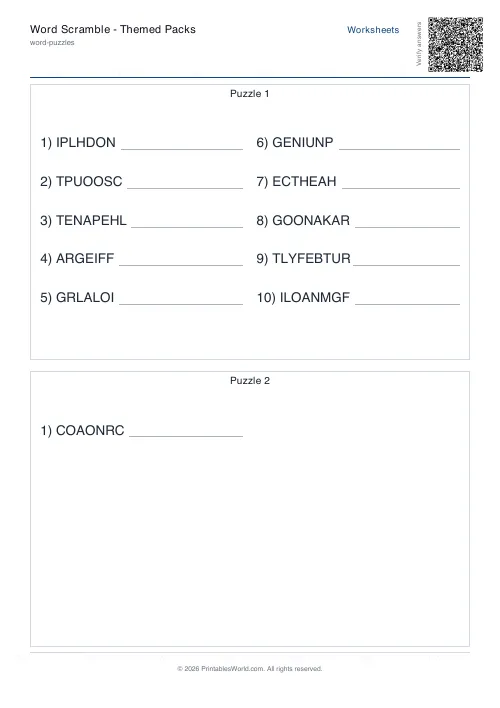 Word Scramble: Themed Packs
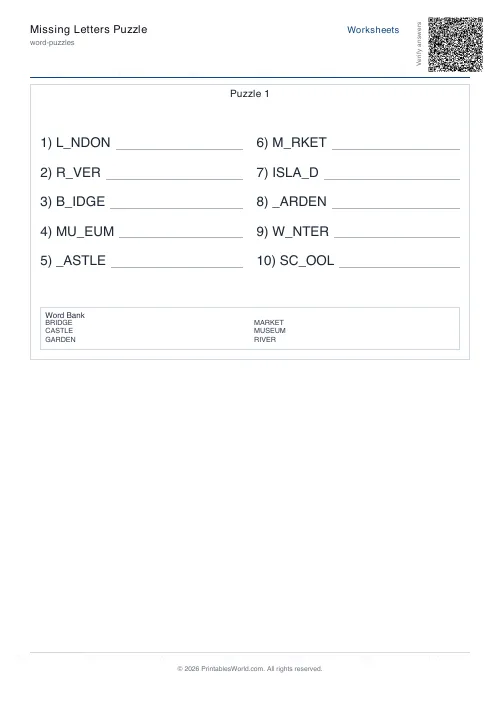 Missing Letters Puzzle
 Acrostic Poem Template