What this tool does
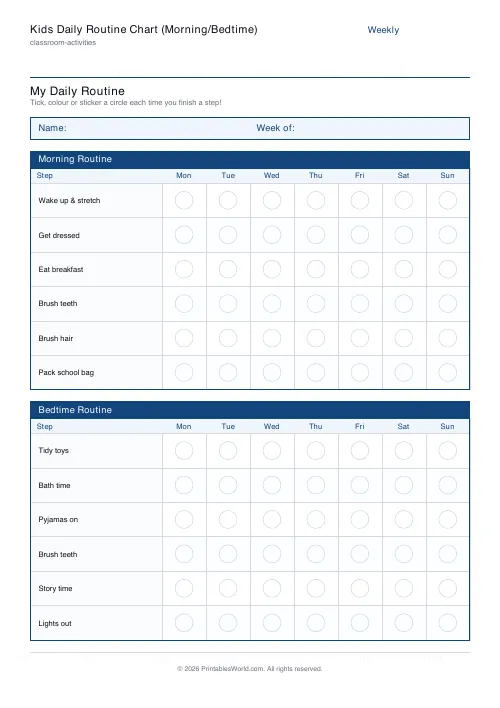
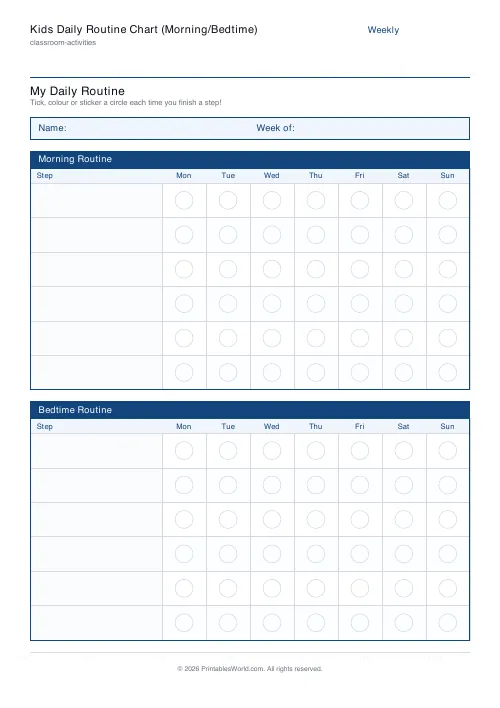
A visual routine chart with two blocks — morning and bedtime by default — each listing your own steps against seven days of sticker circles.
People also used
Feedback
Spotted something off with this tool?
Two blocks, seven days
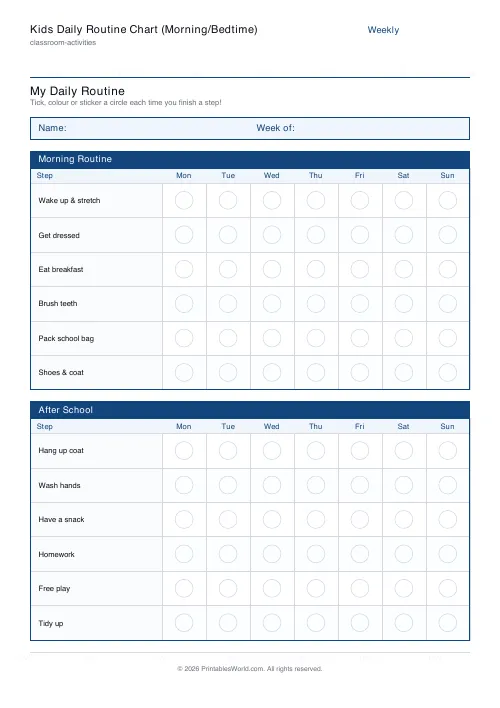
The sheet stacks two routine blocks, headed Morning Routine and Bedtime Routine unless you rename them. Each block lists your own steps down the left and runs them against seven day columns, with a soft circle in every cell for a tick or a sticker.
A name strip runs across the top. Everything else is yours to write, because no two households have the same morning.
Why the chart does the nagging
A child who has been told six times to put their shoes on has heard an adult's voice six times. A child who checks a chart has answered their own question.
That shift is the entire point. The chart is neutral, it never sounds cross, and it does not need to be obeyed — it only needs to be consulted. Parents who use one consistently report the same thing: fewer instructions per morning, and less of the specific exhaustion that comes from being the person who has to remember everything on everyone else's behalf.
Writing the steps
Break them down further than feels necessary.
"Get ready for school" is four or five separate actions to an adult and one impossible instruction to a five-year-old. Dressed. Breakfast. Teeth. Shoes. Bag by the door. Each of those is a line, and each is a thing that can be finished, which is what makes it tickable.
Six to eight steps a block is about right. More than that and the chart becomes something to be got through rather than something to be used.
For children who cannot read yet
Draw in the boxes, or stick a small picture beside each step. A photograph of your own child doing the step works better than clipart, because it is unambiguous and they are enormously interested in it.
Let them help make it. A chart a child has drawn on is theirs; a chart handed to them is another instruction.
Bedtime especially
The evening routine is where this earns its keep, because bedtime resistance is very often uncertainty rather than defiance — the child does not know how many things stand between now and lights out, so every step is a negotiation.
A visible sequence removes the negotiation. Five things, in this order, every night, and afterwards it is dark. Sleep researchers keep finding the same result about consistent bedtime routines, and the chart is simply the cheapest way to make a routine consistent when two adults are running it on alternate nights.
Keeping it going
Put it at the child's eye height, not yours. Expect to redraw it every couple of months as the routine changes.
And expect the novelty to wear off after two weeks, which is normal. The chart does not stop working; it stops being exciting, and it goes on working quietly after that.
FAQs
Quick answers
What is the difference between this and the chore chart?
This chart is built around a child's daily routine. A morning block and a bedtime block of ordered steps. The chore chart is a single grid of jobs. Use this one for getting-ready and wind-down sequences.
Can I rename the Morning and Bedtime blocks?
Yes. Each block has an editable heading. Rename them to anything, such as "After School", "Homework" or classroom routines like "Arrival" and "Home Time".
Can I print blank rows and fill them in by hand?
Yes. Leave a block's steps blank and it prints empty rows ready to write in. Handy if your routine changes week to week.
How many steps can each routine have?
Up to 8 steps per block. Five or six clear steps usually work best so younger children are not overwhelmed.
Related tools
Star of the Week Certificate
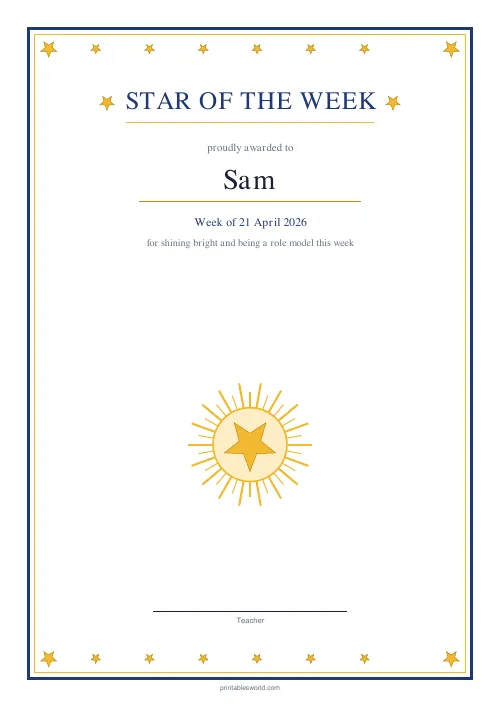
A bright "Star of the Week" certificate with a golden star frame.
Reward Coupons / Brag Tags
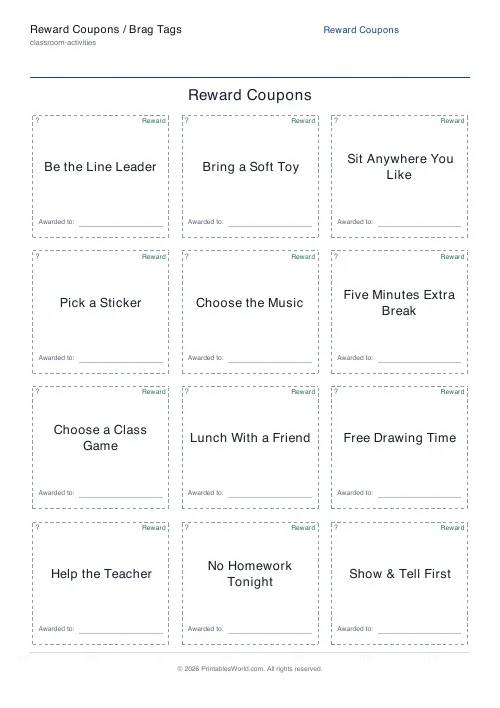
Print a sheet of cut-out reward coupons and brag tags.
All About Me Worksheet
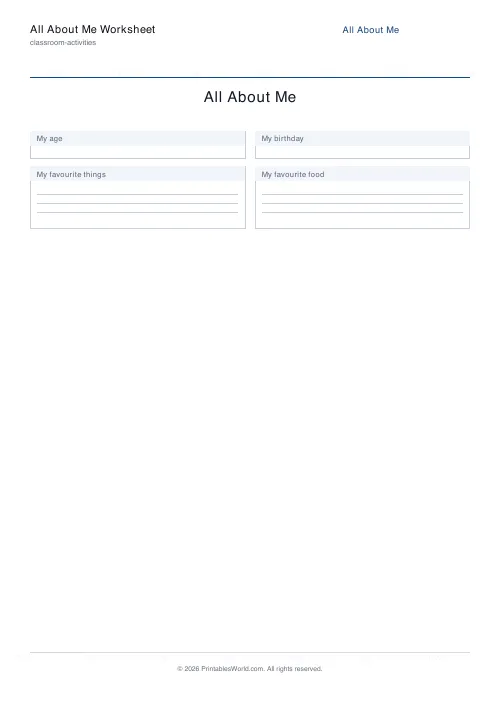
A back-to-school fill-in sheet for every pupil.
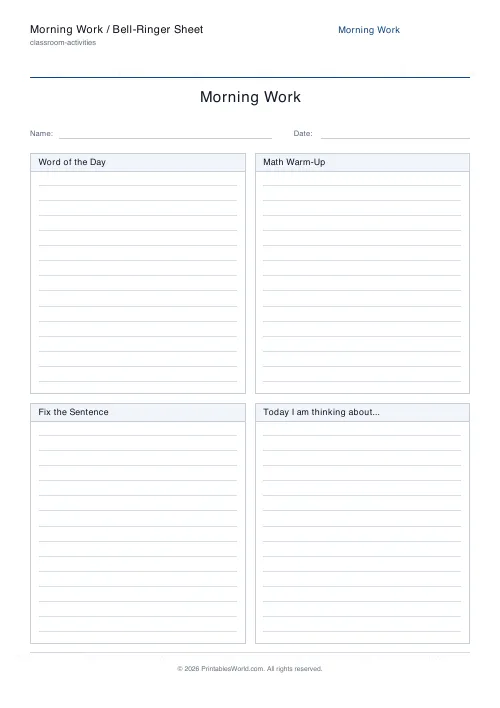
Morning Work / Bell-Ringer Sheet Generator
Build a daily morning work or bell-ringer page with your own titled prompt boxes.
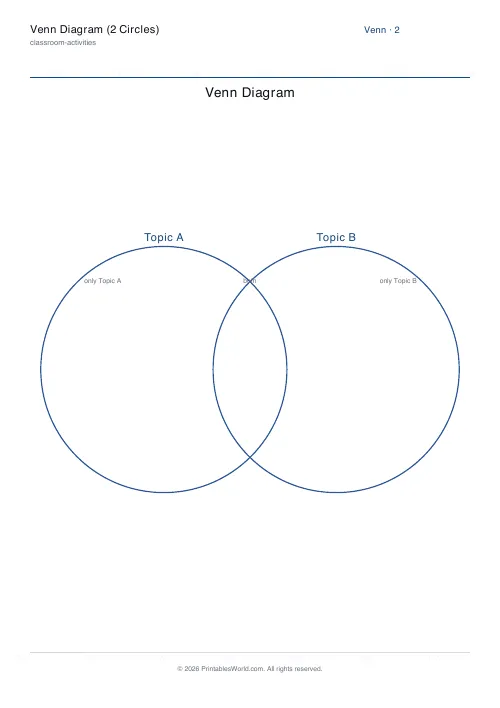
Venn Diagram (2 Circles)
Blank two-circle Venn diagram with custom labels for comparing and contrasting.
Further reading
Classroom Activities
Positive reinforcement in the classroom: charts that work
Reward charts work when they name a specific behaviour and fade over time. They backfire when they rank children publicly. Here is the difference in practice.
5 min read
Classroom Activities
Back-to-school printables every teacher needs
Sorted by when you will actually need them: the two things to print before the children arrive, the week-one set, and the routines worth establishing while everyone is still compliant.
5 min read
Classroom Activities
20 classroom games that need zero prep
Games organised by the gap they fill: two minutes at the end of a lesson, ten minutes before assembly, or a whole wet lunchtime. Almost all need nothing but a voice.
6 min read