What this tool does
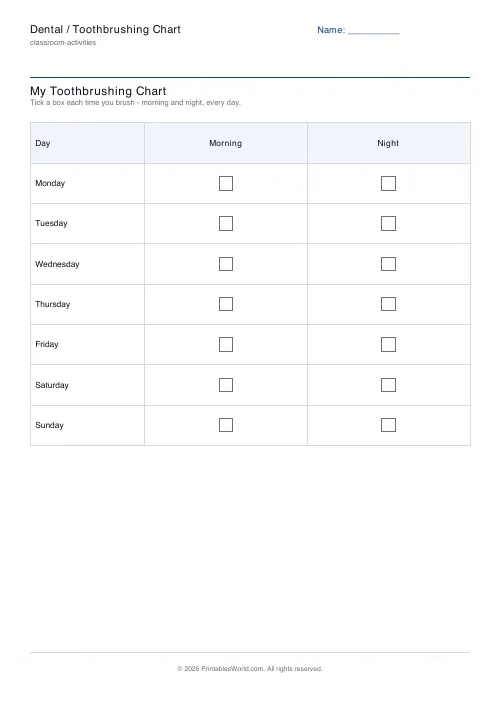
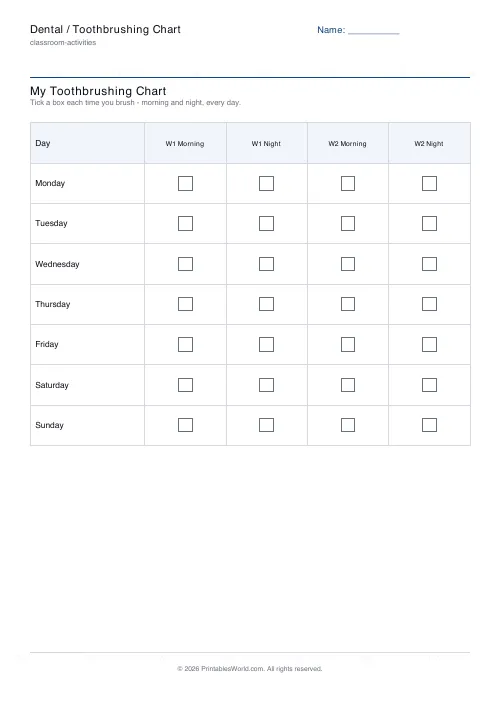
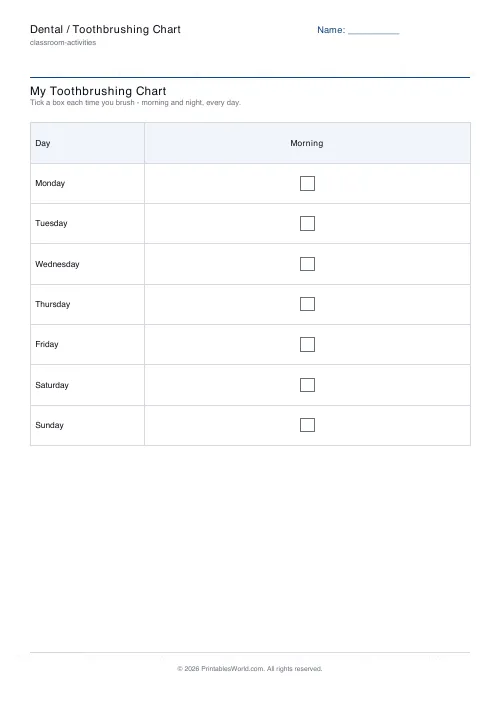
A toothbrushing chart: seven weekday rows with a morning and a night box on each. Print one week or two, and turn either column off.
People also used
Feedback
Spotted something off with this tool?
Fourteen boxes
Monday to Sunday down the side. Morning and night across the top. A box at every intersection, and the child's name above the lot.
Print one week or two. If your household only ever tracks the evening brush, turn the morning column off and the sheet reflows around it.
Twice a day, and the second one matters more
Both boxes are there because dentists everywhere give the same advice. Twice a day, two minutes, last thing at night and one other time.
The night brush is the important one. Saliva flow drops during sleep, which removes the mouth's own defence for eight hours, so whatever is on the teeth at bedtime stays there working all night. Missing the morning brush costs less than missing the evening one — worth explaining to a child, who will usually accept a reason more readily than a rule.
Spitting, not rinsing
The advice most families are surprised by. Spit the toothpaste out, and do not rinse afterwards.
Rinsing washes away the fluoride that has just been applied, which is the part actually doing the work. Leaving the residue on the teeth is free and roughly doubles the benefit of the two minutes just spent.
Two minutes is longer than it feels
Almost everybody, adults included, brushes for about forty-five seconds while believing it was two minutes.
Use a timer. A sand timer, a song, an electric brush that buzzes every thirty seconds — it hardly matters which, so long as it is the same one every night and the length stops being a matter of opinion.
Using the chart
Stick it on the bathroom wall at the child's height. Tick it together immediately after brushing, not later — the mark is part of the routine, not a report on it.
Two weeks is usually enough to establish the habit, and it is also roughly how long a chart holds a small child's attention. Print another if it is working, and stop when it has become automatic. The aim is to make the chart unnecessary.
Related
For the whole morning and evening sequence rather than the teeth alone, the daily routine chart.
FAQs
Quick answers
How many days does the chart cover?
Each chart covers a full week, Monday to Sunday. Choose the two-week option to fit a fortnight on a single page side by side.
Can I track only one brushing session a day?
Yes. Toggle off either the Morning or the Night column. At least one tracking column is always kept so the chart is never empty.
What paper size does it use?
Choose A4 or US Letter before exporting so the chart matches your printer. The boxes and rows scale to the paper either way.
Is this suitable for classroom or dental-health weeks?
Yes. Teachers can print one chart per child, and dentists can send a chart home to track brushing before a check-up.
Related tools
Star of the Week Certificate
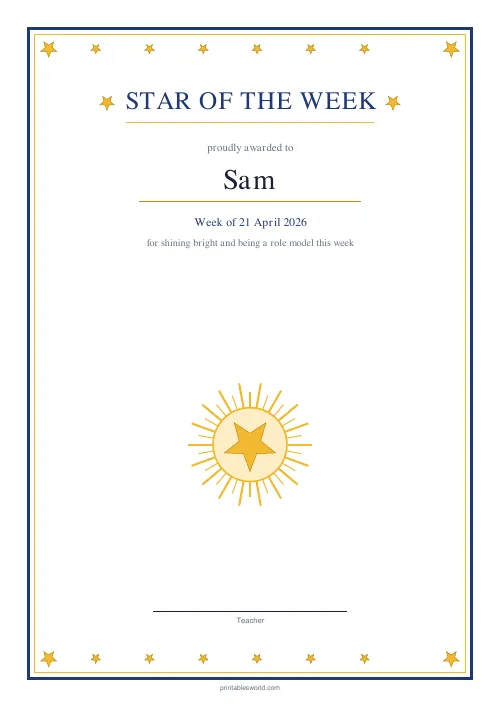
A bright "Star of the Week" certificate with a golden star frame.
Certificate of Achievement
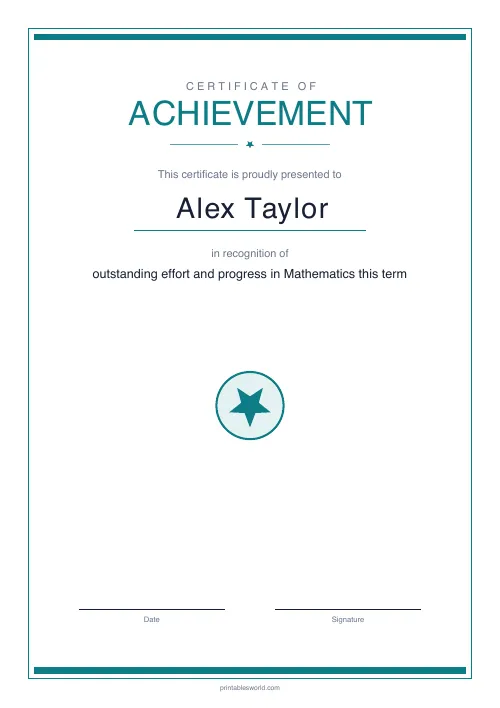
Formal classroom certificate with name, reason, date, and signature line.
Reward Coupons / Brag Tags
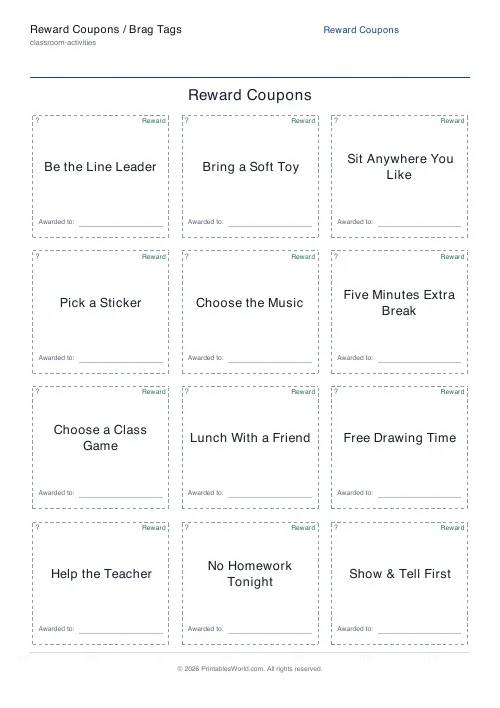
Print a sheet of cut-out reward coupons and brag tags.
All About Me Worksheet
A back-to-school fill-in sheet for every pupil.
Advent / Countdown Calendar
Printable numbered countdown calendar with write-in boxes for each day.
Further reading
Classroom Activities
Positive reinforcement in the classroom: charts that work
Reward charts work when they name a specific behaviour and fade over time. They backfire when they rank children publicly. Here is the difference in practice.
5 min read
Classroom Activities
Back-to-school printables every teacher needs
Sorted by when you will actually need them: the two things to print before the children arrive, the week-one set, and the routines worth establishing while everyone is still compliant.
5 min read
Classroom Activities
Bingo in the classroom: 10 subjects, one game
Bingo works in almost every subject because the mechanic never changes. Only the call does. Ten variations, and the one rule that turns it from a filler into retrieval practice.
4 min read