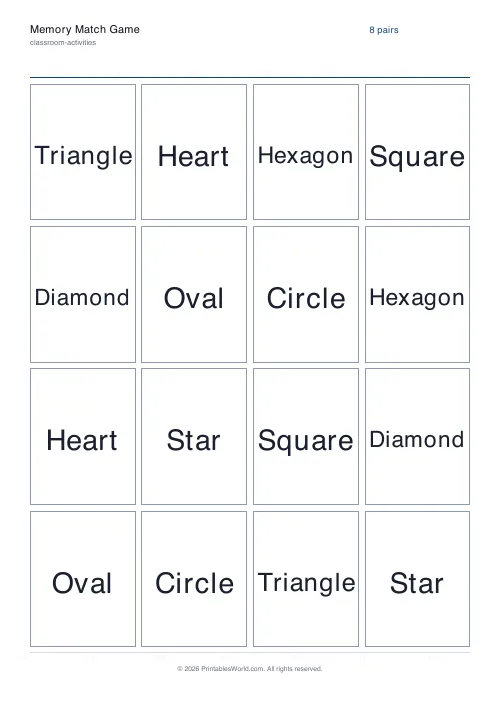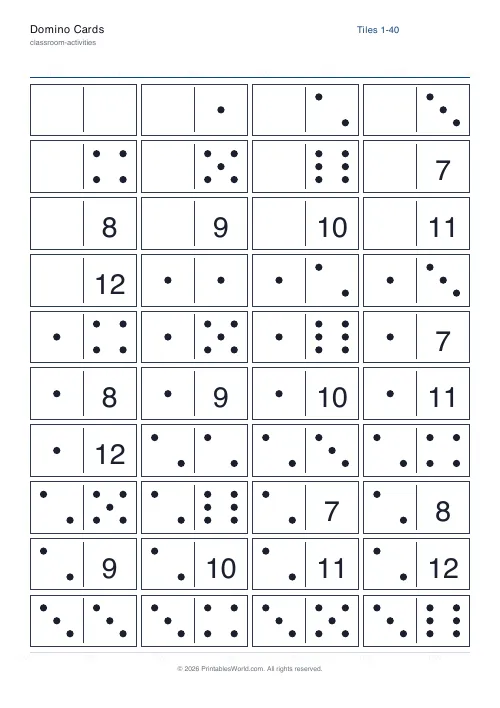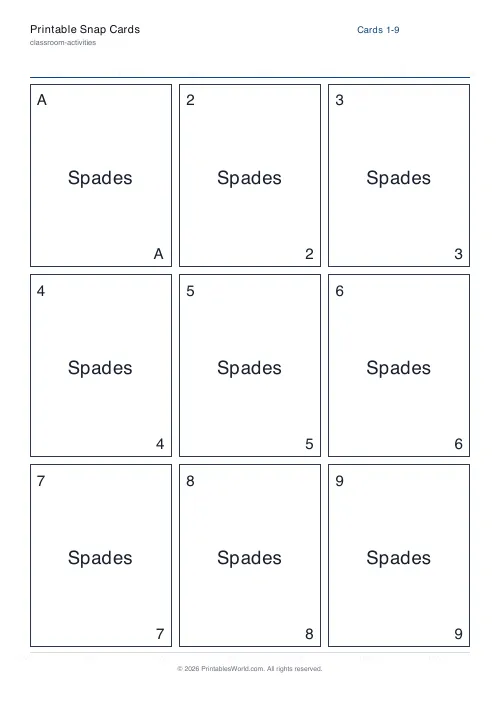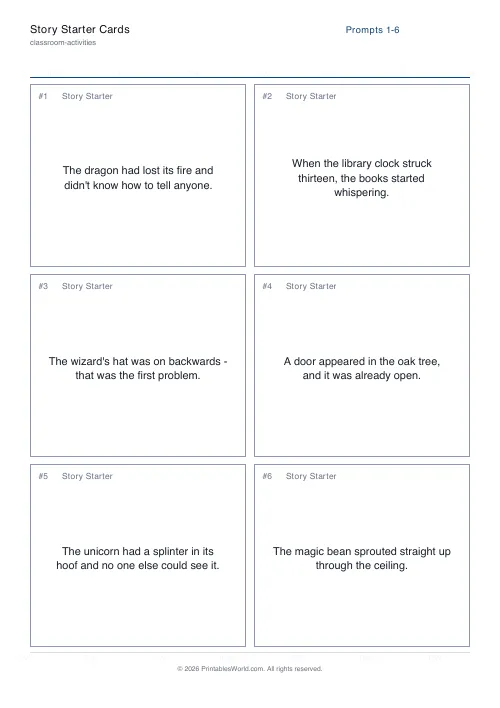
What this tool does
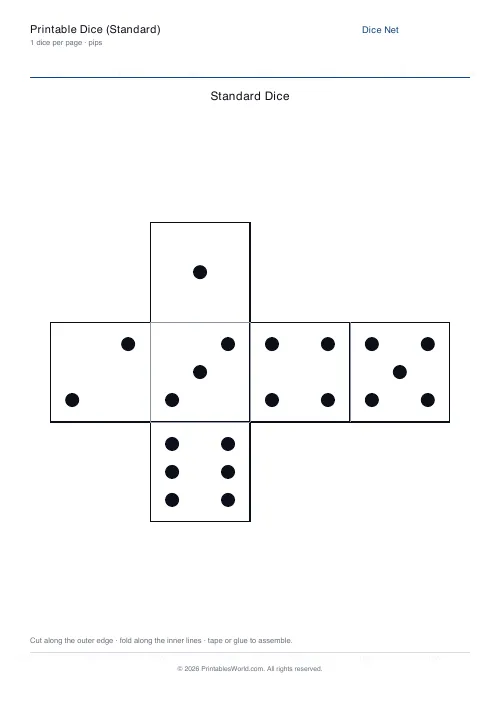
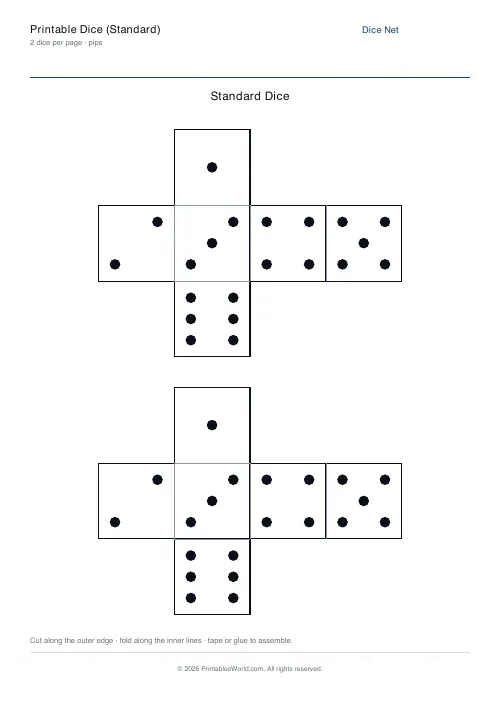
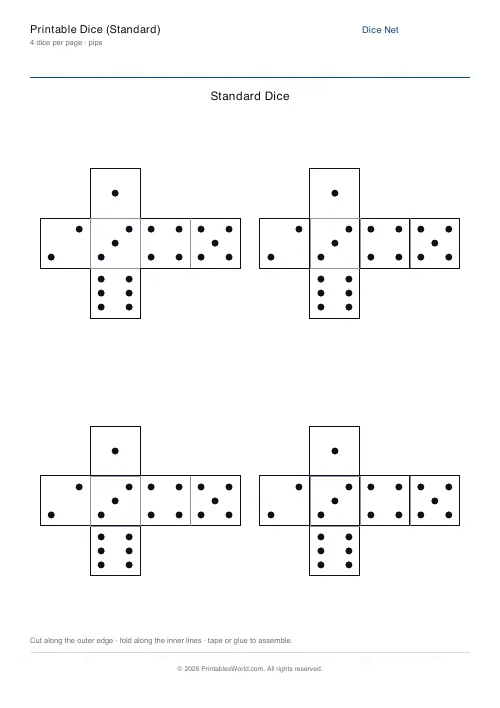
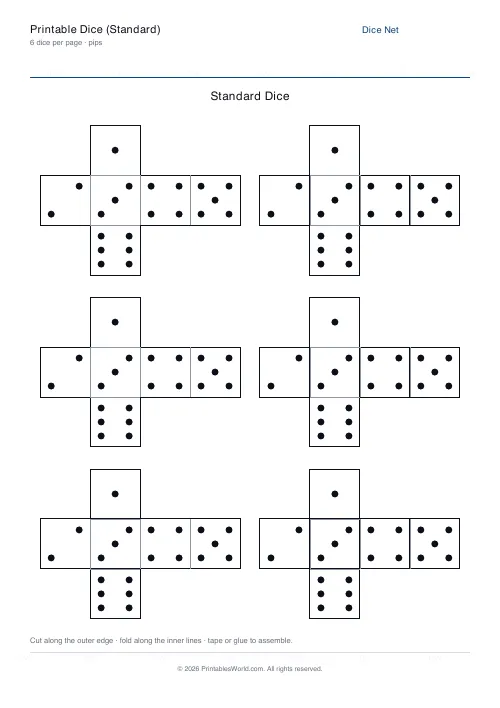
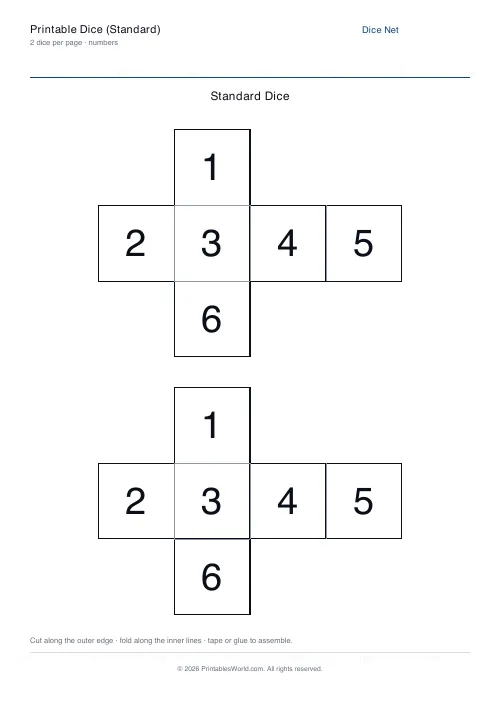
Foldable six-sided dice nets in the classic cross layout, with a solid cutting outline and lighter fold lines. Pips or numbers, one to six dice a page.
People also used
Feedback
Spotted something off with this tool?
Dice nets you cut out and fold
Each die prints as a cross-shaped net: six squares laid flat, a solid line to cut round the outside and lighter lines to fold along. Fold, tuck, glue and you have a cube.
One to six per page. Fewer means larger, so a single die fills the sheet and six gives you a set of small ones.
Pips or numbers
Pips are the traditional dot patterns and they are the better choice for young children, because a pip die can be counted. A child who does not yet recognise the numeral 5 can still count five dots, and after a few games they stop counting and start recognising the pattern — which is subitising, and it is a genuinely useful thing to build.
Numbers suit older players and anyone using dice for arithmetic, where the numeral is the thing you want read.
Making one that actually rolls
This is the part worth getting right, because a printed die that lands the same way every time is worse than no die.
Print on the heaviest paper your printer takes, or glue the sheet to card before cutting. Fold every line before assembling — score along a ruler with a dry ballpoint first if the card is thick. Stuff the cube lightly with a scrap of paper before closing the last flap, which stops it collapsing and makes it heavier and less bouncy.
Even then it will not be as fair as a moulded plastic die. Cardboard cubes are slightly biased by the glue seam. For a game that matters, roll it twenty times and see; for a classroom activity, it is entirely fine.
What printable dice are for
The obvious answer is that you have lost yours, and that is a real use.
The better one is that a die you made yourself gets treated differently. A class that has cut and folded their own dice will play the number game more willingly than one handed a tub of plastic ones, and the folding is itself decent fine-motor work.
Two dice give you sums from 2 to 12 with the familiar bell-shaped spread — 7 comes up six times as often as 2 — which is a whole probability lesson available for the cost of one printed sheet and forty rolls.
What is adjustable
Dice per page (1–6), pips or numbers, and a title. A4 or US Letter.
Print at 100%. Scaling shifts the fold lines relative to the cut line and the cube stops closing properly.
FAQs
Quick answers
How do I assemble the dice?
Cut along the outer solid edge, fold along the inner grey lines, and tape or glue the tabs together. Card stock works better than plain paper.
Pips or numbers?
Pips (traditional dots) look like real dice and are easier for very young children to read. Numbers are clearer for maths activities.
How many dice fit on a page?
Between 1 and 6. Fewer dice means each net prints larger and is easier to fold cleanly.
What paper should I print on?
Card stock (around 160 gsm or heavier) holds folds best. Plain paper works but the finished dice will be flimsier.
Related tools
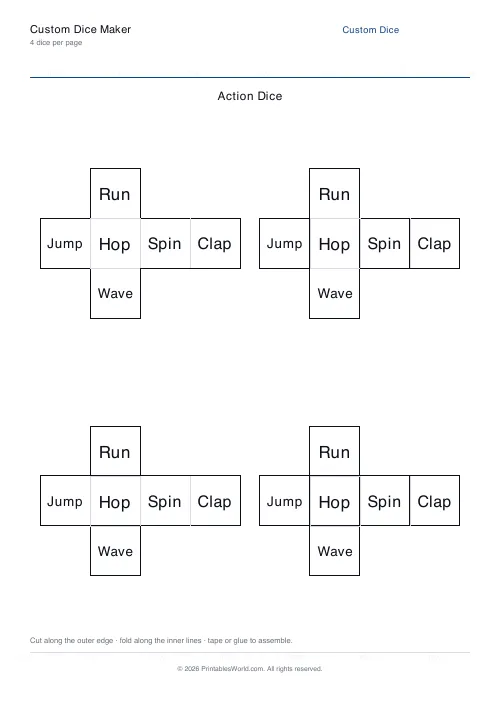
Custom Dice Maker
Foldable six-sided dice nets with your own face labels. Words, letters, or emoji.
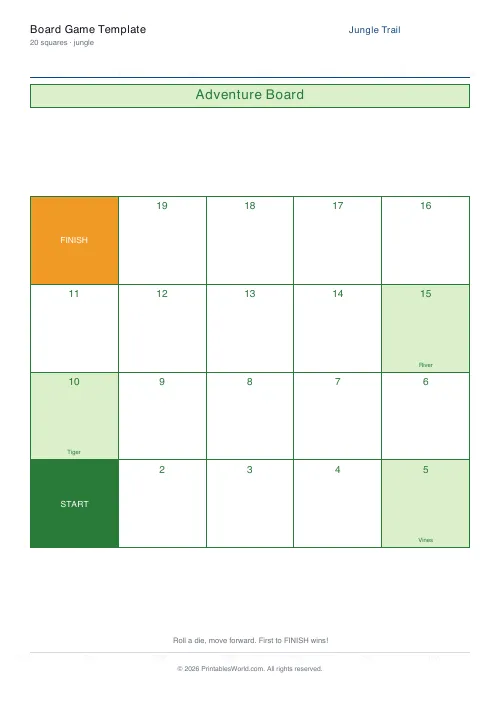
Board Game Template
Printable snaking board game with Start, Finish, and themed milestone squares.
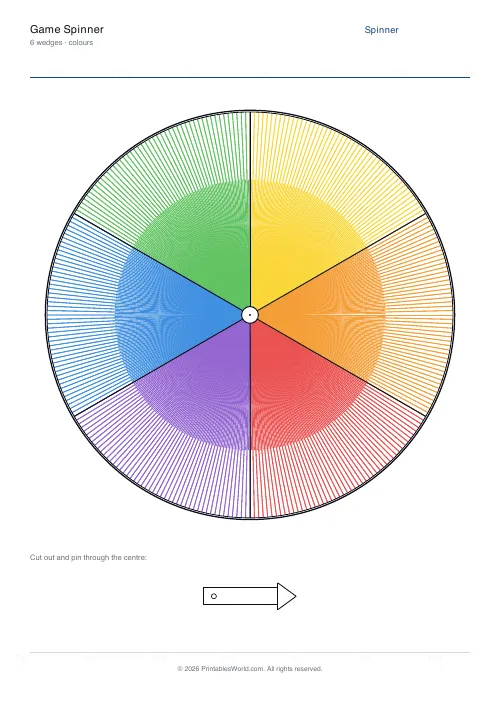
Game Spinner Generator
Printable spinner with 3–8 wedges plus a cut-out arrow template.
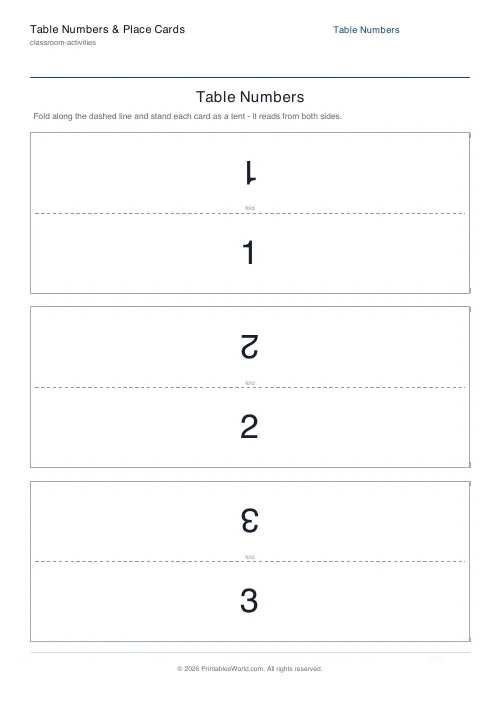
Table Numbers & Place Cards
Foldable tent cards. Large table numbers and guest place cards that read from both sides.
Further reading