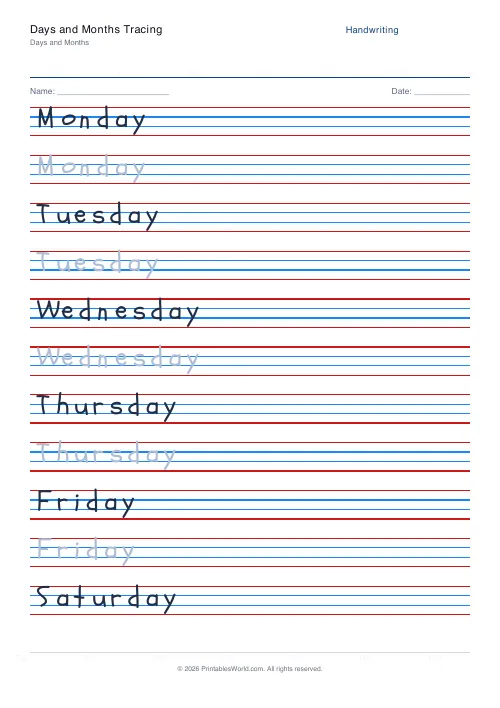
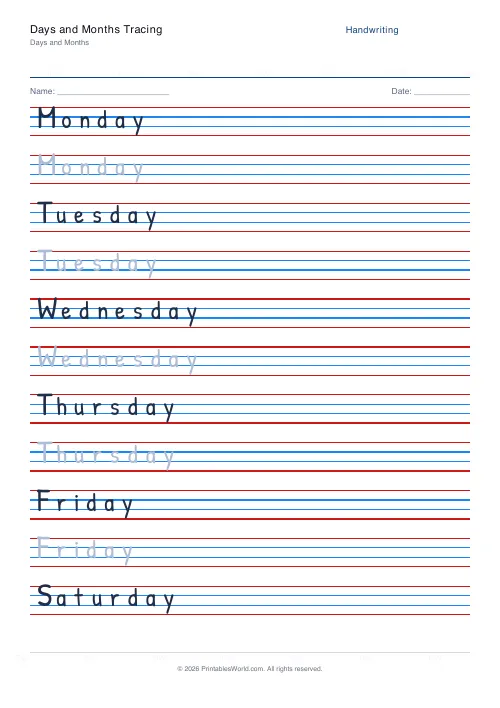
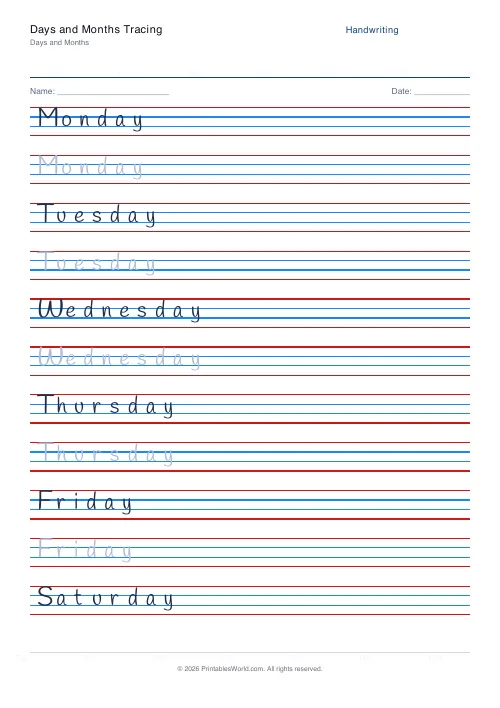
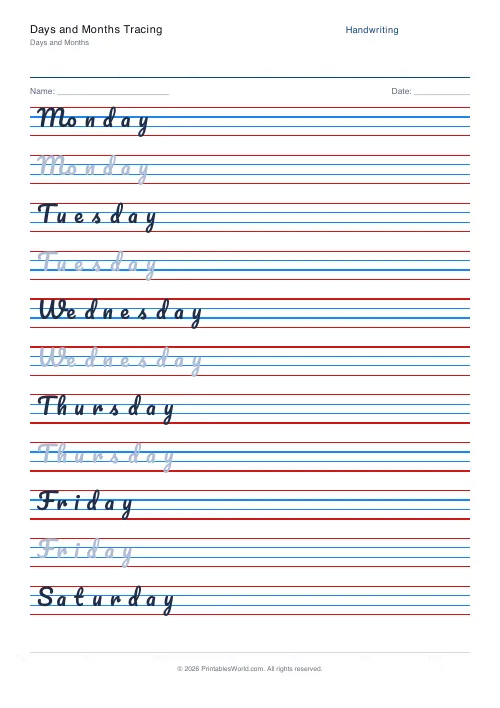
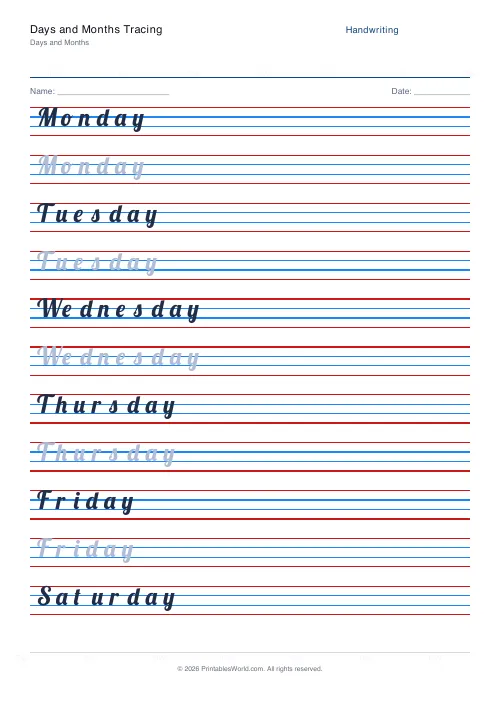
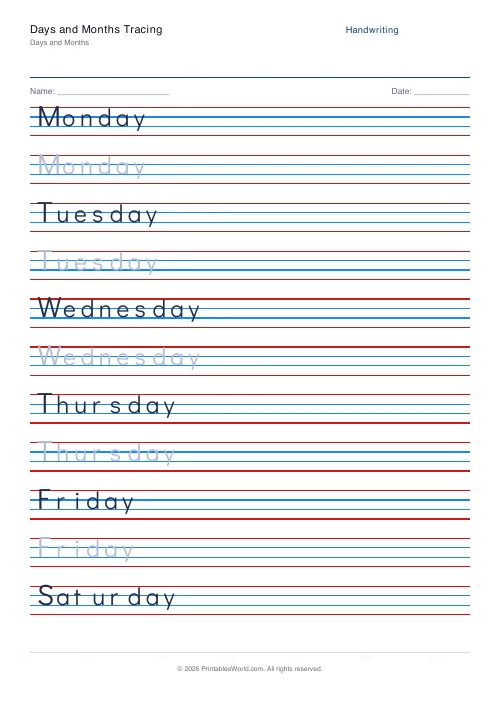
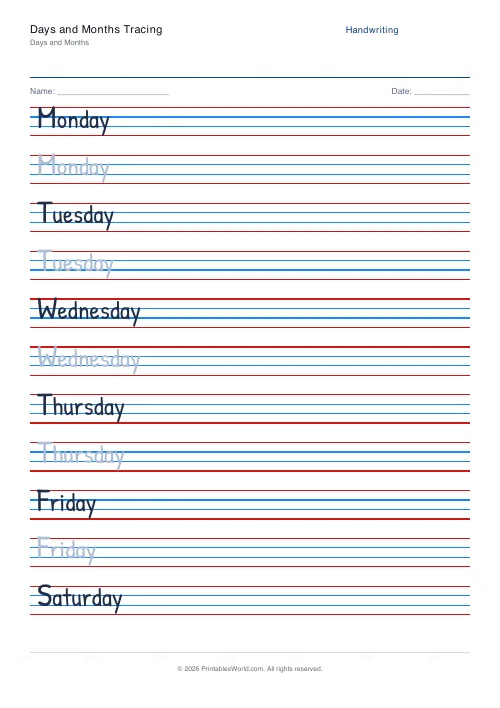
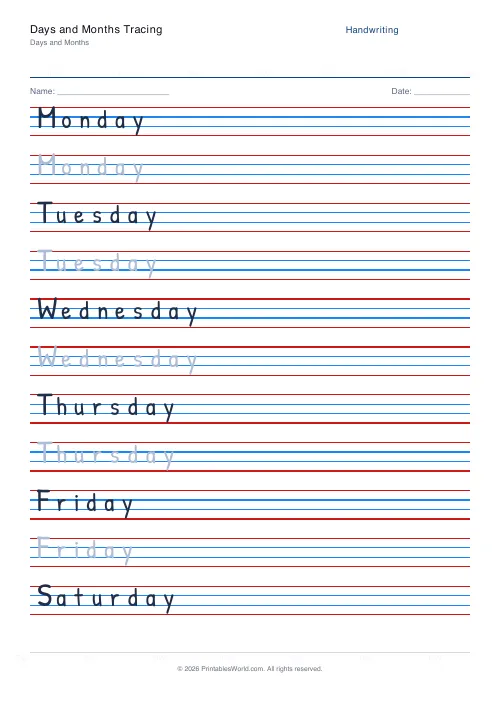
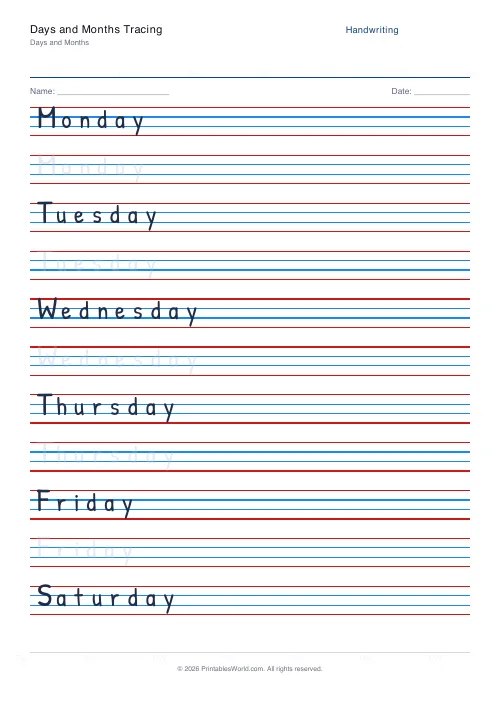
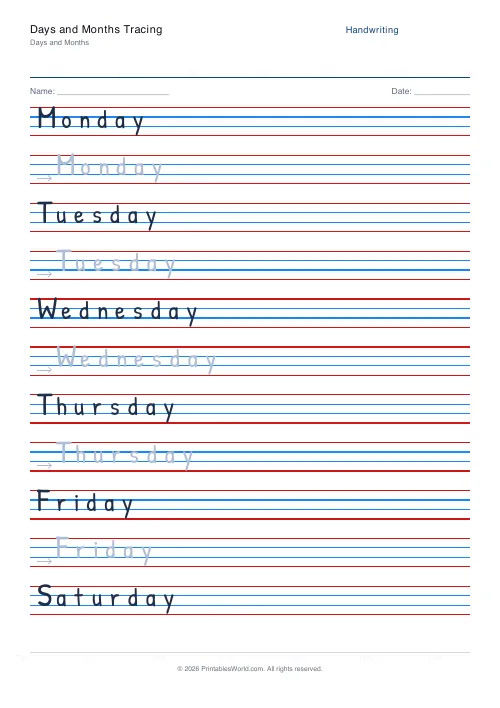
What this tool does
The days of the week and the months of the year, set as trace-and-copy rows on four-line ruling. Two lists a child will be writing for the next decade.
People also used
Feedback
Spotted something off with this tool?
Two lists worth getting right
Monday through Sunday, January through December, printed as trace-and-copy rows on the standard four-line ruling.
They are here as a handwriting sheet and they do two jobs, because these are also words a child will write on nearly every piece of dated work for the next decade.
Capitals, always
The rule this sheet quietly teaches, and one children get wrong for years.
Days and months are proper nouns in English and take a capital. The seasons do not: spring stays lowercase, and so does every one of the other three. That inconsistency is arbitrary enough that no child works it out unaided.
It also differs by language. A child from a Spanish-speaking family has seen lunes written lowercase, correctly, all their life. So has a French speaker with janvier. The English rule will look arbitrary to them, because it is.
The spellings that actually cause trouble
Wednesday, which nobody pronounces the way it is spelled. Saying it as "Wed-nes-day" while writing it is the standard trick and it works.
February, for the same reason — the first r goes missing in speech and therefore in writing.
Tuesday and Thursday, which get confused with each other, and both of which are commonly misspelled.
August, which is short and looks wrong to children who expect a longer month.
Where the names come from
Worth ten minutes with an older class, because it makes the spellings memorable rather than arbitrary.
Wednesday is Woden's day, which explains the buried d. Thursday is Thor's. Saturday belongs to Saturn, and is the only English weekday named for a Roman god rather than a Norse one. Then there is the odd business of September through December, whose names mean seventh to tenth while they sit ninth to twelfth in the year — because the Roman calendar used to start in March.
That last one reliably produces an argument, which is the point.
What you can change
The text is editable, so a sheet can carry just the days, just the months, or only the four that keep coming back wrong. Plus font, trace style, rows per line, ruling colour and line height. A4 or US Letter at 100%.
Twelve months is a long sheet. Six at a time, twice, produces better handwriting than all twelve in one sitting.
FAQs
Quick answers
Are days and months always capitalised?
Yes. In English, days and months are proper nouns and always start with a capital letter. The default list models the correct capitalisation.
Can I split it onto multiple sheets?
Yes. The engine paginates automatically. Long word lists spill onto a second page so each row keeps the same band size.
Which font is used?
Patrick Hand. A friendly print-style font. Switch fonts in the settings panel to match a school scheme.
Can I edit the list?
Yes. Edit the practice text to focus on weekdays only, months only, or specific spellings the child needs to revise.
Related tools
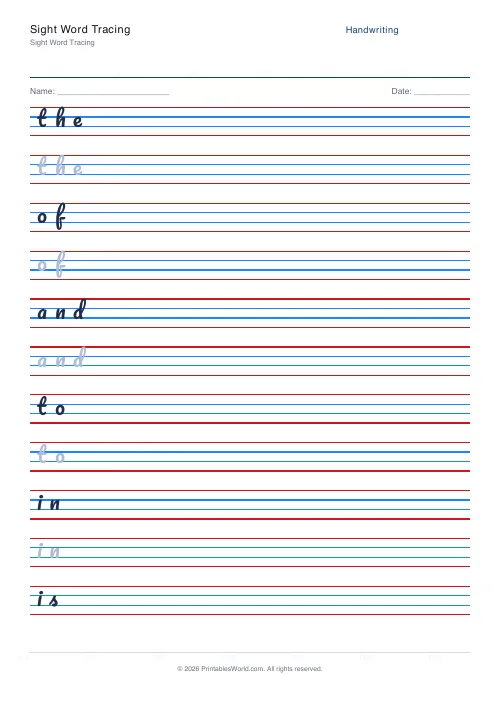
Sight Word Tracing
Trace and copy the most common high-frequency words.
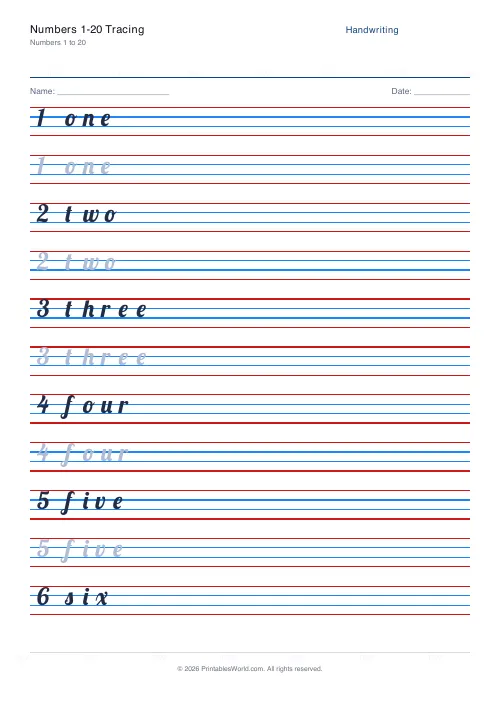
Numbers 1-20 Tracing
Trace and write the numbers one through twenty.
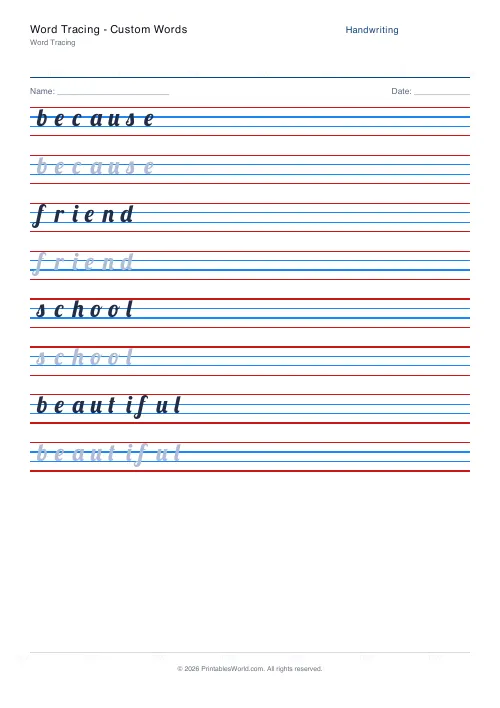
Word Tracing: Custom Words
Enter a word list and generate a tracing sheet on 4-line ruling.
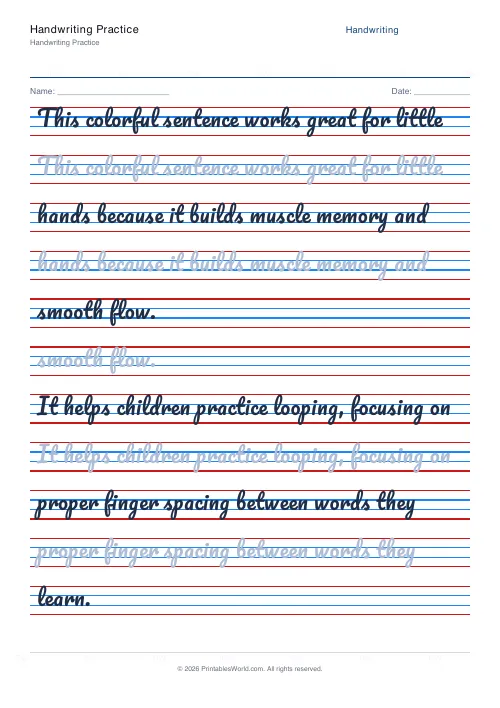
Handwriting Practice Generator
Create custom 4-line handwriting practice sheets with trace rows, adjustable guides, and your own text.
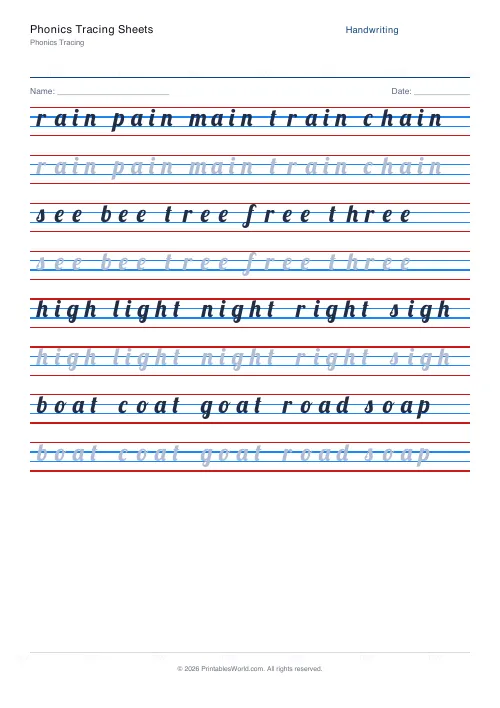
Phonics Tracing Sheets
Trace words grouped by phonics sound. Ai, ee, igh, oa and more.
Further reading
Handwriting
Dotted vs solid trace lines: what works best for beginners
Each trace style removes a different amount of support. The mistake is staying on one too long. Tracing feels productive and teaches less than copying.
4 min read
Handwriting
How to teach cursive at home: a step-by-step plan
A simple step-by-step plan for teaching cursive at home, with letter families grouped by stroke, a four-week practice sequence, and free printable sheets to download.
8 min read
More like this
- Handwriting Practice Generator
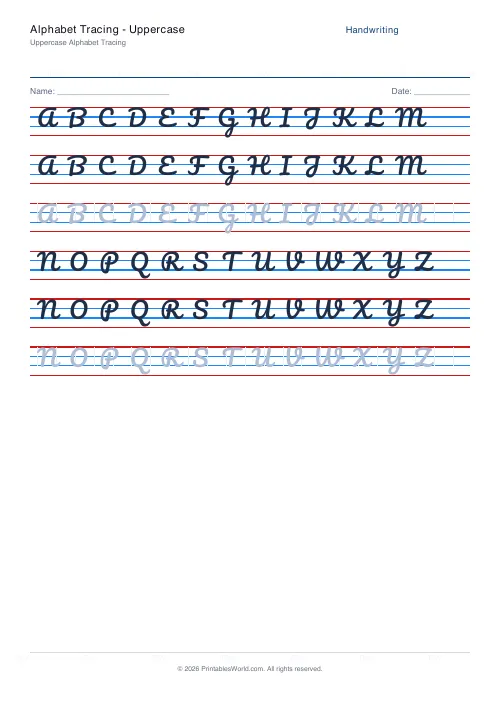 Alphabet Tracing: Uppercase
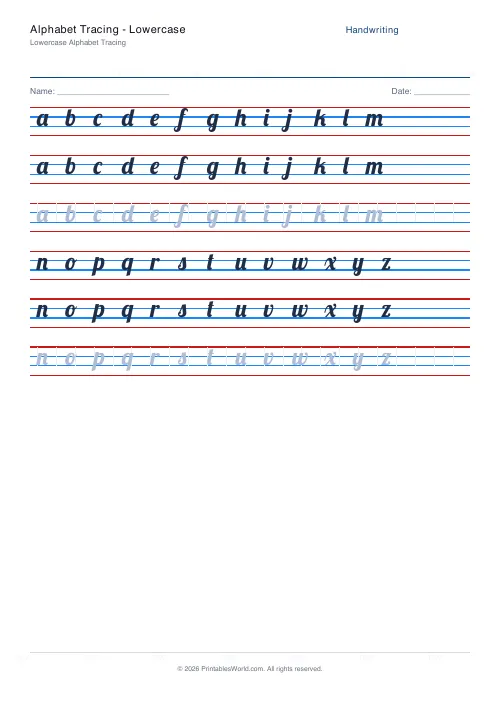 Alphabet Tracing: Lowercase
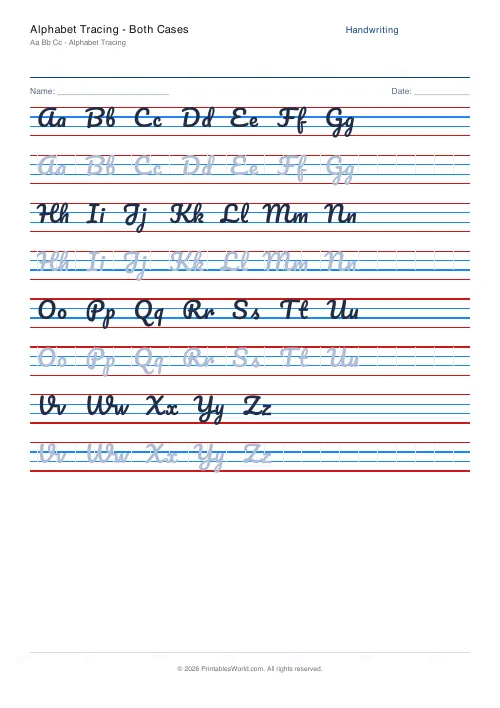 Alphabet Tracing: Both Cases
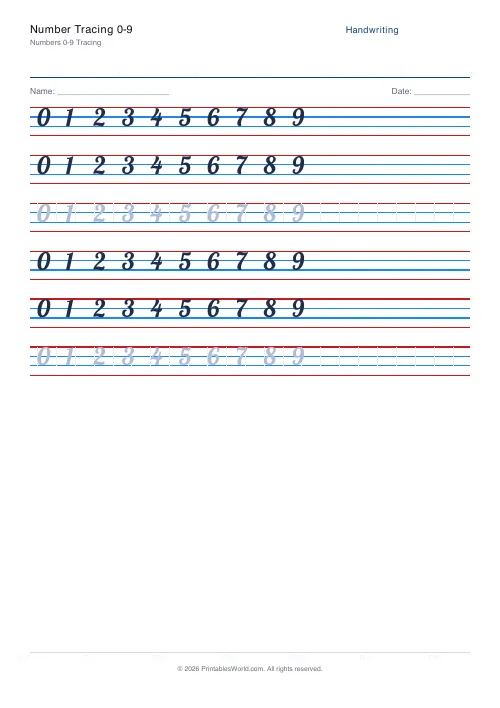 Number Tracing 0-9
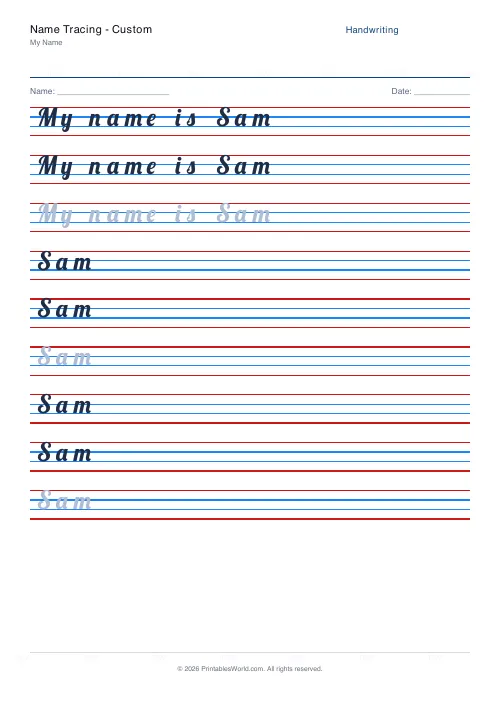 Name Tracing: Custom
- Word Tracing: Custom Words
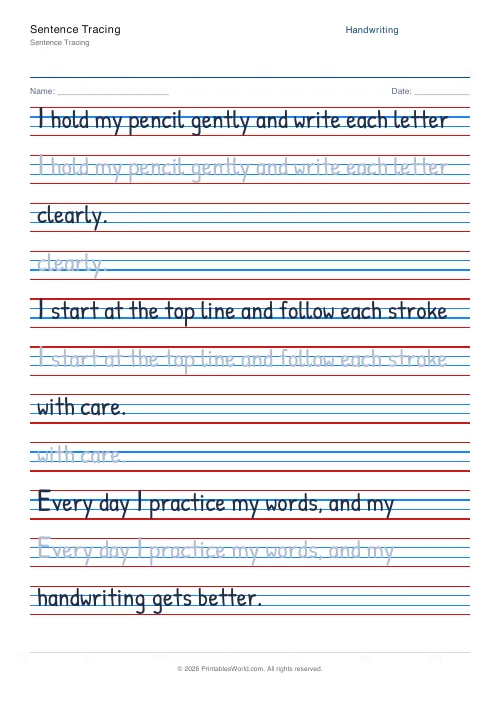 Sentence Tracing
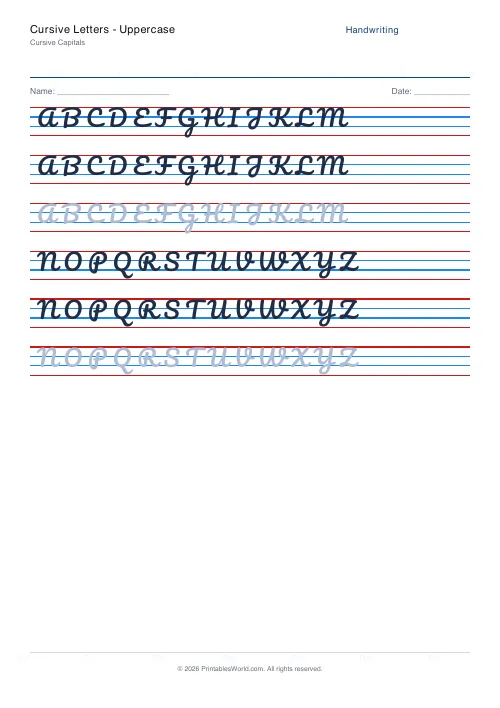 Cursive Letters: Uppercase
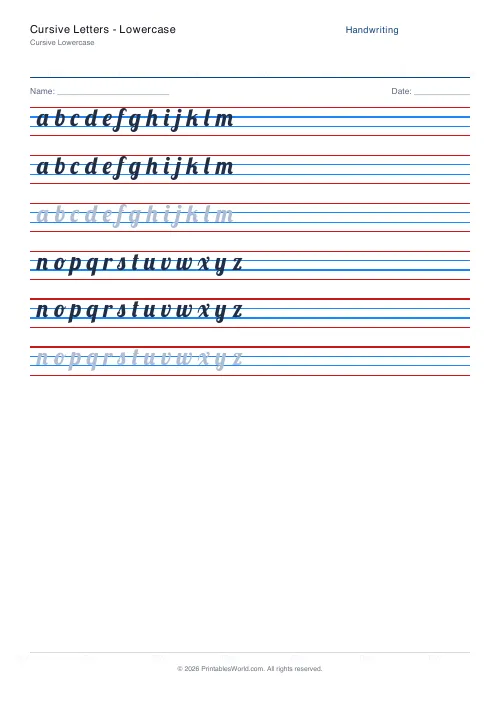 Cursive Letters: Lowercase
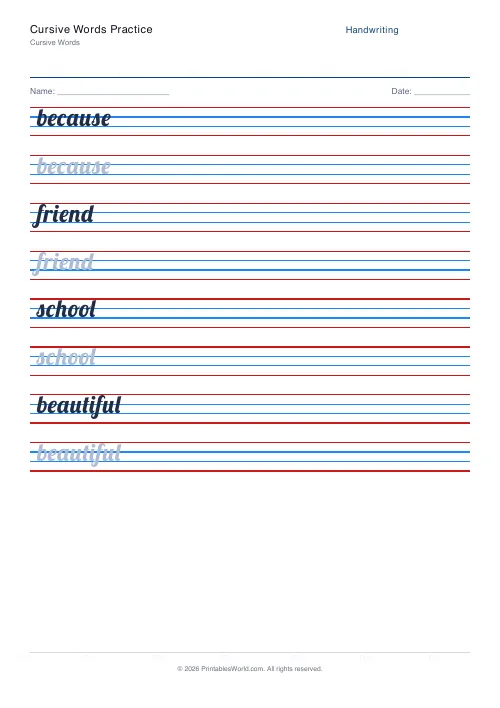 Cursive Words Practice
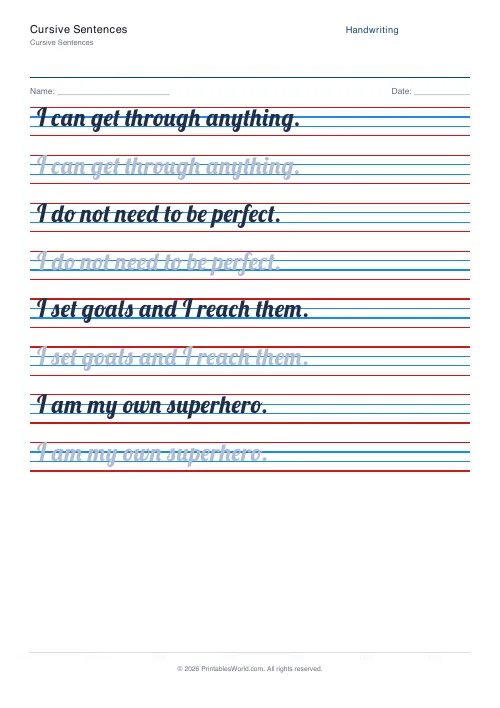 Cursive Sentences
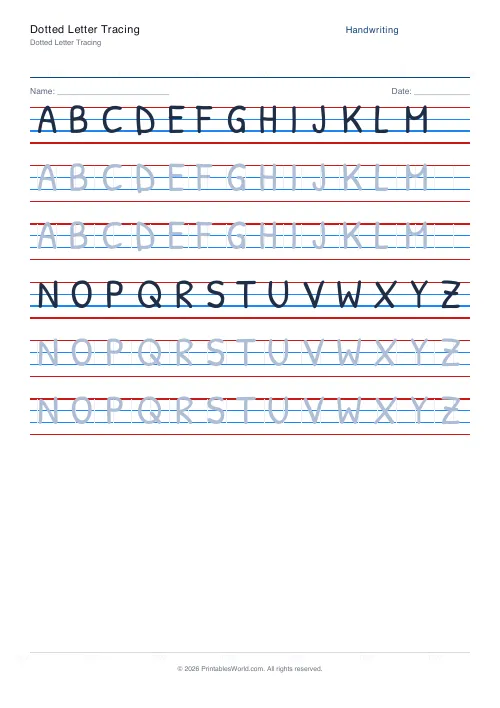 Dotted Letter Tracing
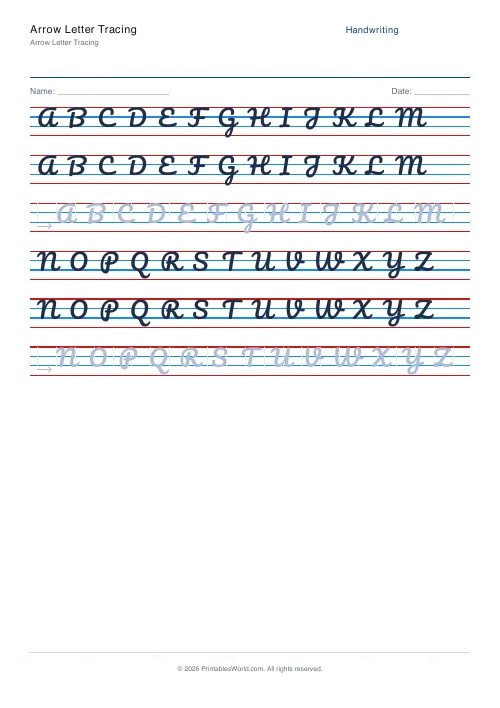 Arrow Letter Tracing