What this tool does
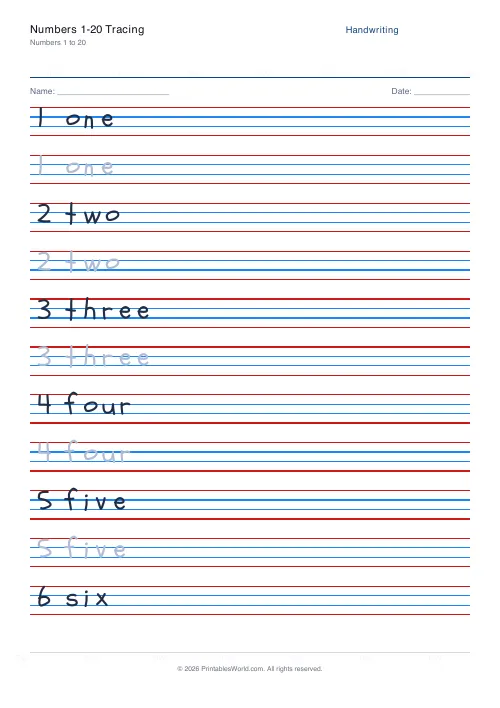
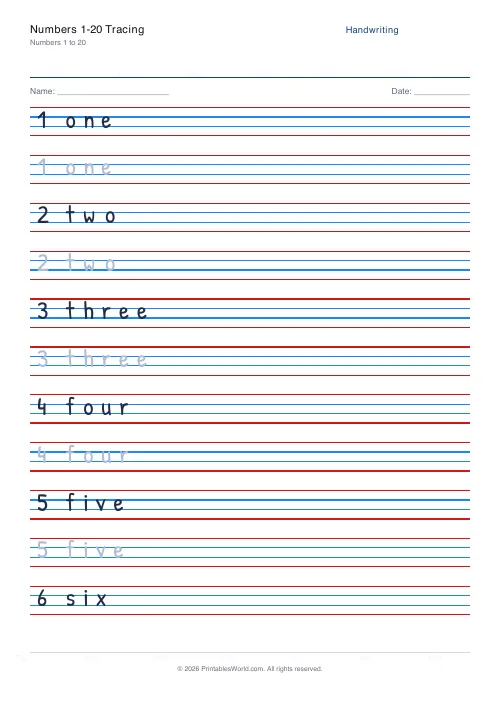
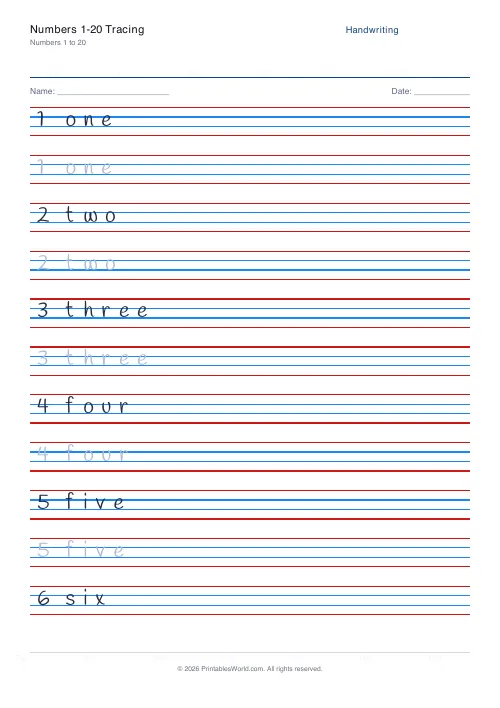
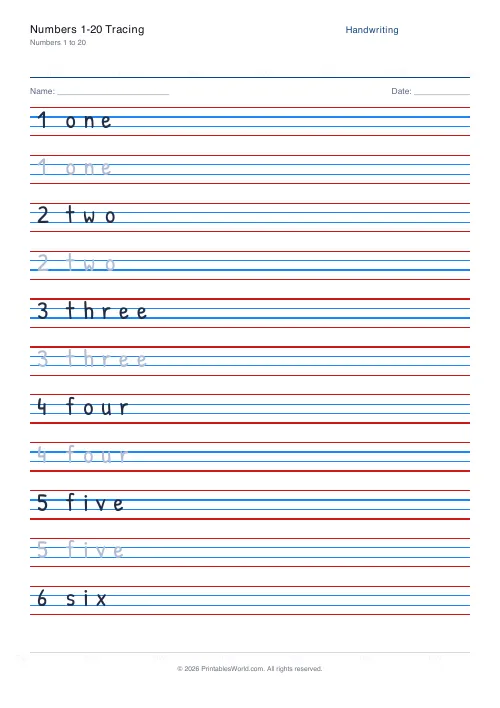
Digits paired with their written words, one to twenty, as trace-and-copy rows. Learns the numeral and the spelling in the same exercise.
People also used
Feedback
Spotted something off with this tool?
1 one, 2 two, all the way to twenty
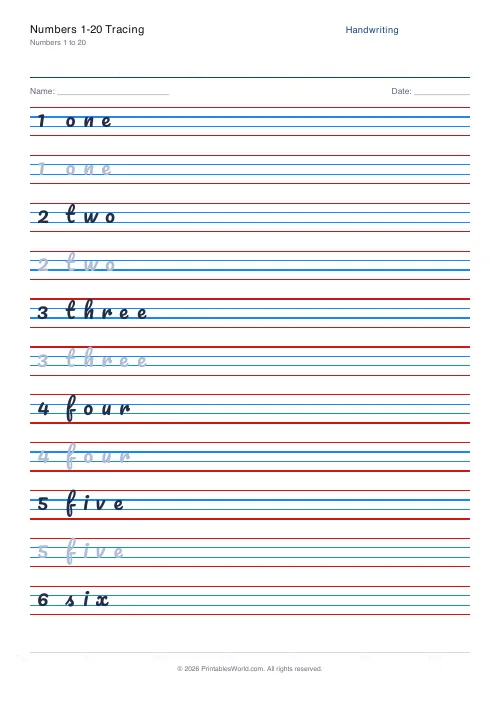
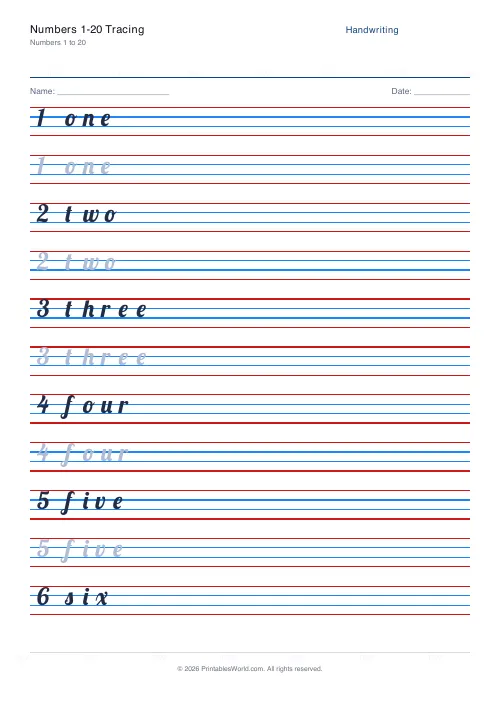
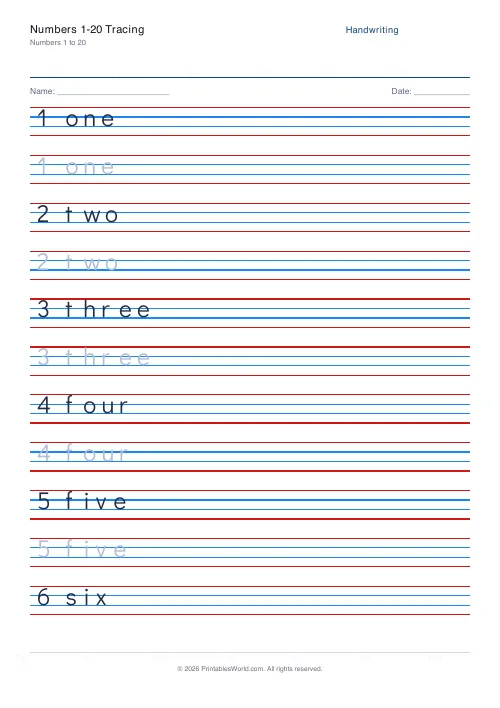
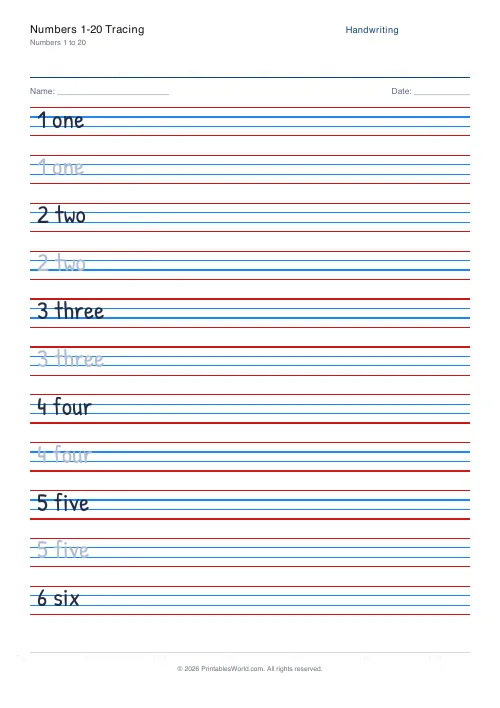
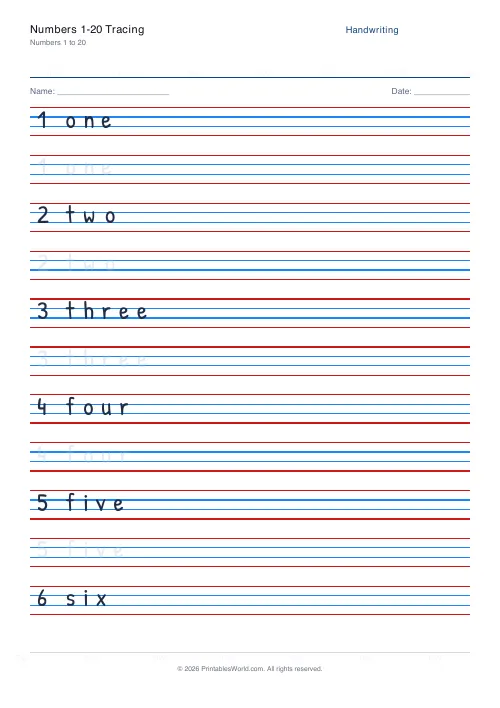
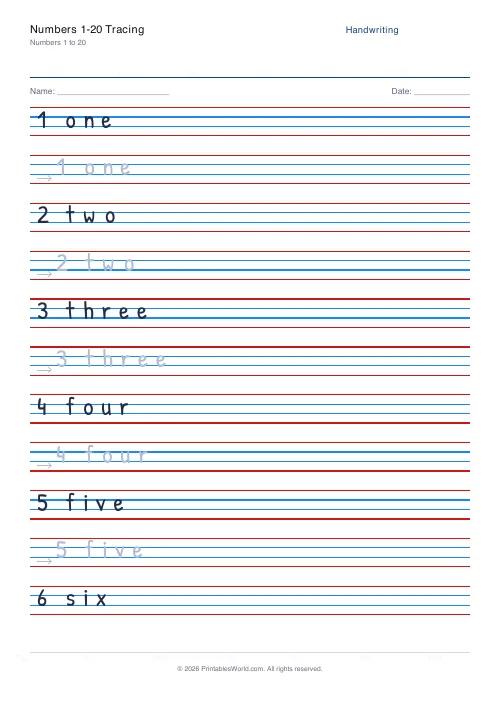
Each line carries the digit followed by its word, printed as a traceable model with a copy row underneath on four-line ruling.
Twenty lines is a long sheet, and the text is editable, so most people should cut it down.
Pairing the two is the whole point
A digit and its word are the same number in two notations, and children learn them separately unless somebody puts them side by side.
The written forms matter more than they appear to. Number words turn up constantly in word problems, in instructions, in stories and in cheques, and a child who can write 7 but not seven is stuck the moment a question is phrased in prose rather than in symbols.
Where the spellings go wrong
Predictably. In the same four places, every time.
Eight, which has a silent gh and no phonetic logic at all. Four and forty, where the u appears in one and vanishes in the other — this one catches out adults. Nine and ninety, which does the same thing with the e.
And the teens as a group: eleven and twelve follow no pattern whatsoever, and thirteen and fifteen are not spelled the way three and five would suggest.
Split it into three sheets
One to ten, then eleven to twenty, then the awkward ones from both.
Twenty lines in one sitting gets you careful handwriting for the first six and something rather different afterwards. The practice text field accepts any subset you like, and three short sheets spread across a week will teach considerably more than one long one attempted on Monday morning.
The teens are worth their own lesson
Not because of the spelling. Because of the language.
English says "thirteen" for 13 — three, then ten — but "twenty-one" for 21, ten first. Several languages, including Mandarin, are entirely regular here ("ten-three", "two-ten-one"), and children learning those tend to grasp place value earlier. English speakers have to memorise eleven through nineteen as exceptions before the pattern starts.
Knowing that explains why the teens are hard, which is worth telling a child who thinks they are the problem.
The controls
The text, font, trace style, rows per line, character boxes, ruling colour and line height. A4 or US Letter at 100%.
For the digits by themselves, printed larger and with no words attached, use the 0 to 9 sheet.
FAQs
Quick answers
Why include the number words?
Pairing each digit with its written form helps early learners link the symbol to its spelling. Especially useful for the tricky teens.
Can I switch to digits only?
Yes. Edit the practice text to leave only the numerals, or only the words.
Does it support numbers above 20?
You can extend the list as far as you like. Add new lines for 21, 22 and beyond. The engine paginates automatically.
What font does it use?
Patrick Hand. Clear, child-friendly numerals that match common reception / kindergarten letter schemes.
Related tools
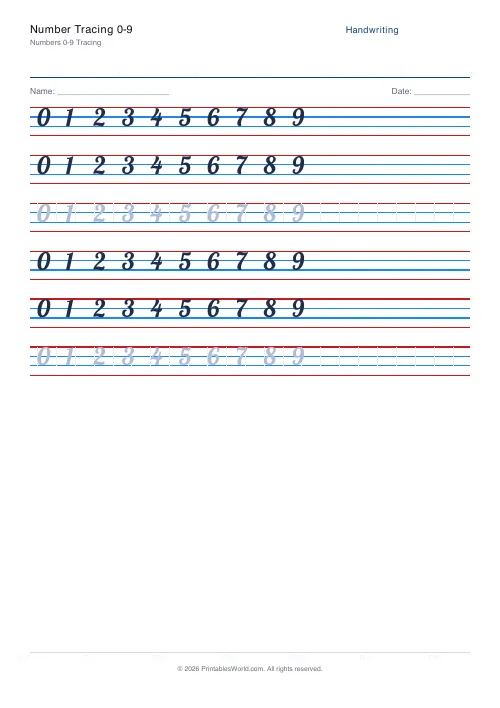
Number Tracing 0-9
Trace and write numbers 0-9 with practice rows on lined paper.
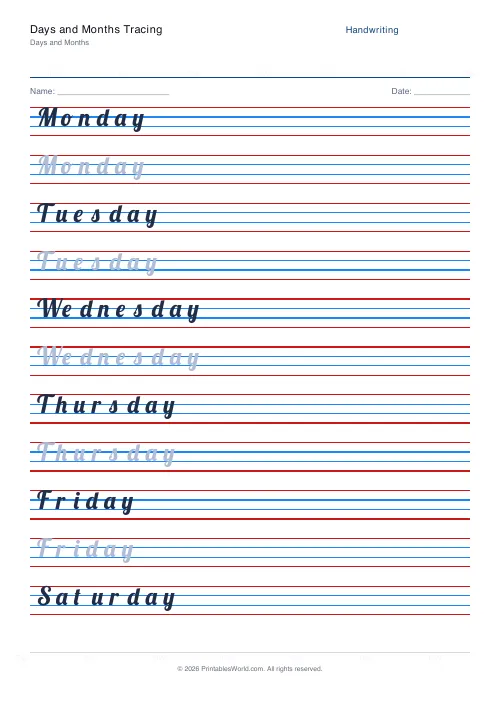
Days and Months Tracing
Trace and copy days of the week and months of the year.
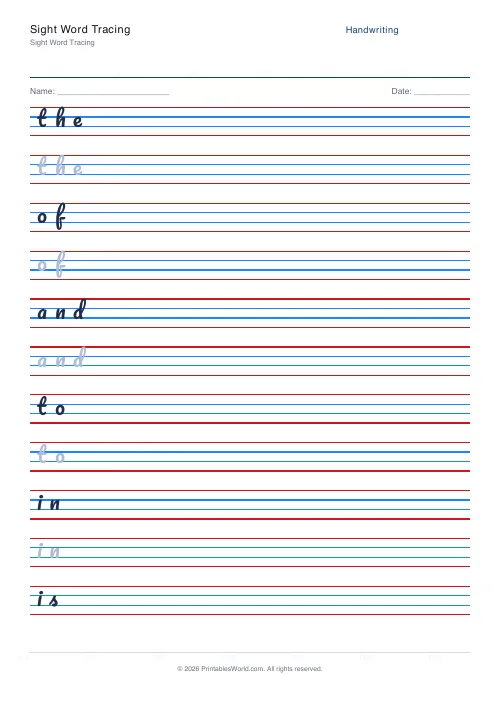
Sight Word Tracing
Trace and copy the most common high-frequency words.
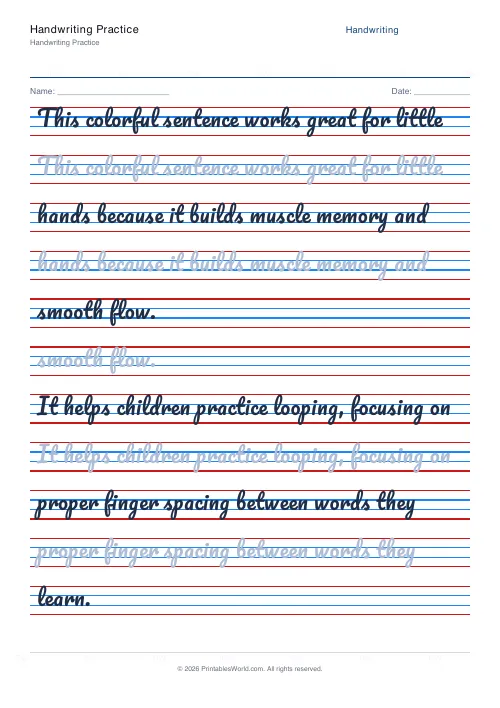
Handwriting Practice Generator
Create custom 4-line handwriting practice sheets with trace rows, adjustable guides, and your own text.
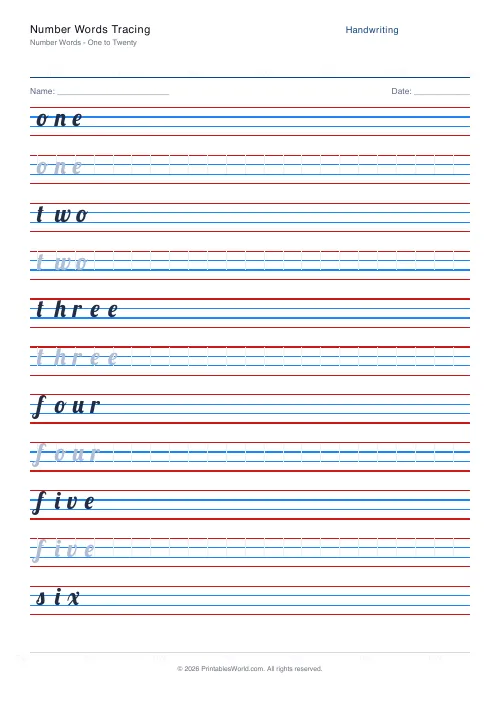
Number Words Tracing
Trace the number words one to twenty on 4-line ruling.
Further reading
Handwriting
Dotted vs solid trace lines: what works best for beginners
Each trace style removes a different amount of support. The mistake is staying on one too long. Tracing feels productive and teaches less than copying.
4 min read
Handwriting
Print vs cursive: which should children learn first?
Countries disagree, schools disagree, and the research is thinner than either side suggests. Here is what print and cursive each actually do well, and a practical way to decide for one child.
6 min read
More like this
- Handwriting Practice Generator
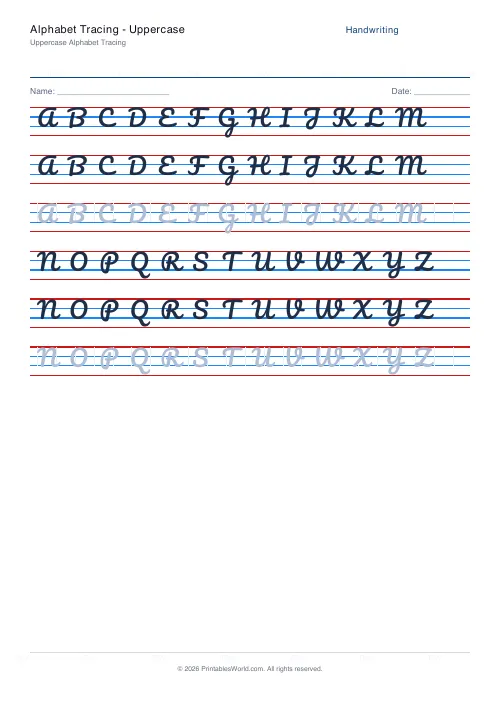 Alphabet Tracing: Uppercase
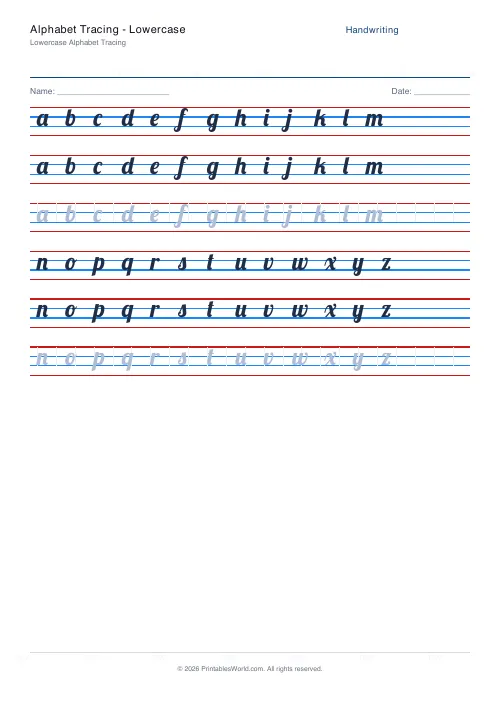 Alphabet Tracing: Lowercase
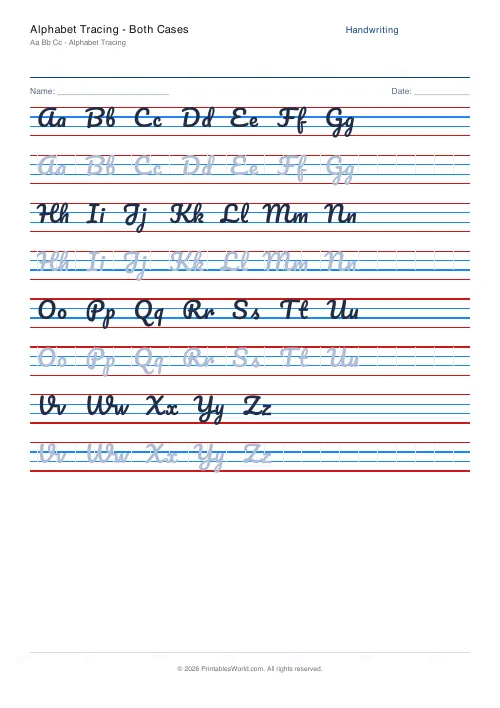 Alphabet Tracing: Both Cases
- Number Tracing 0-9
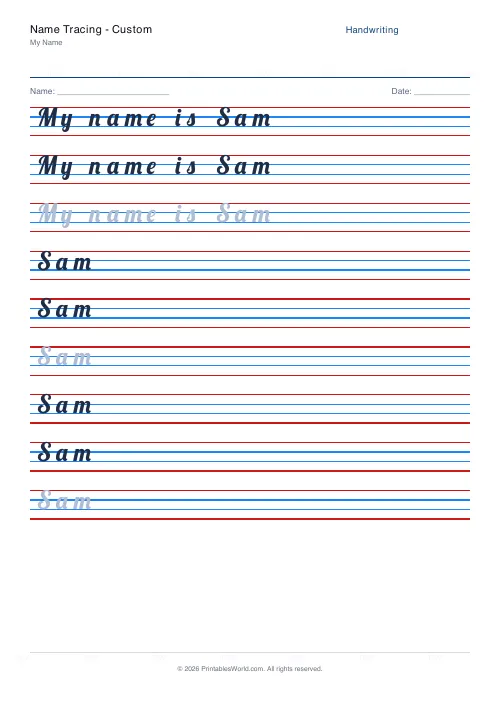 Name Tracing: Custom
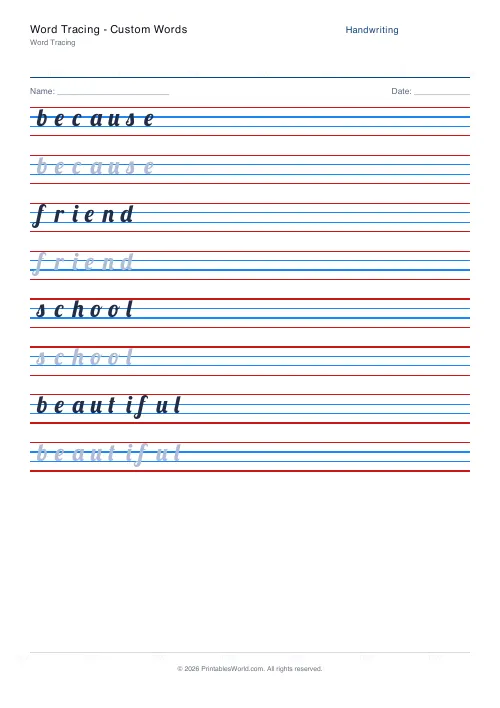 Word Tracing: Custom Words
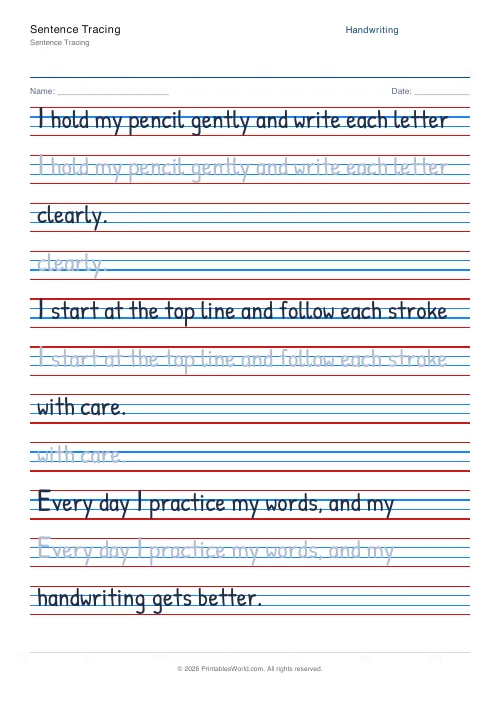 Sentence Tracing
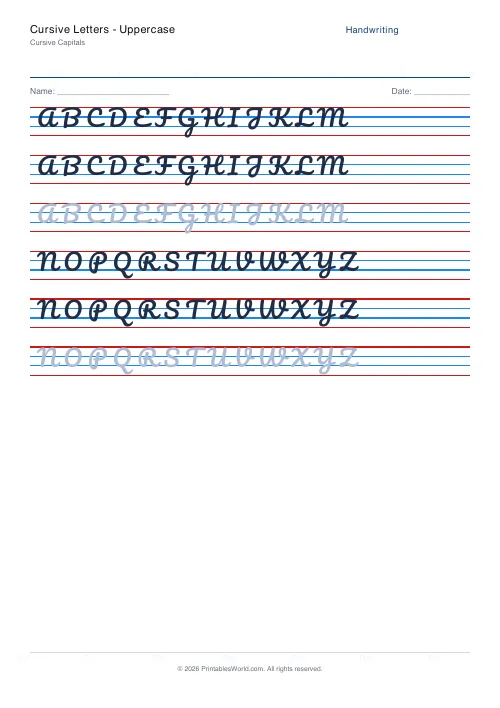 Cursive Letters: Uppercase
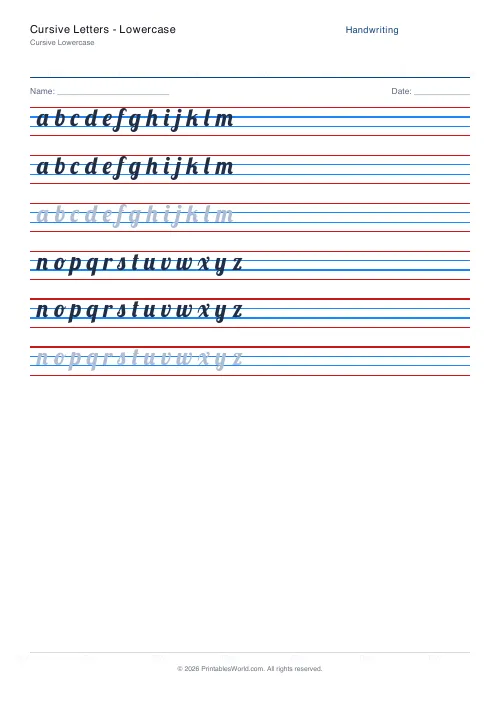 Cursive Letters: Lowercase
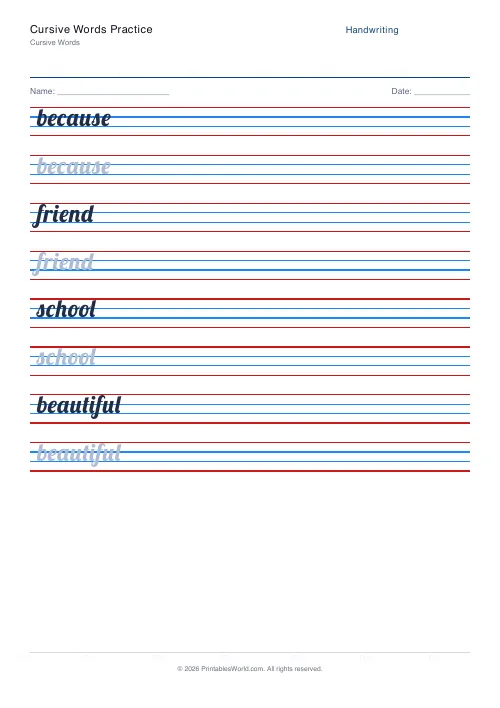 Cursive Words Practice
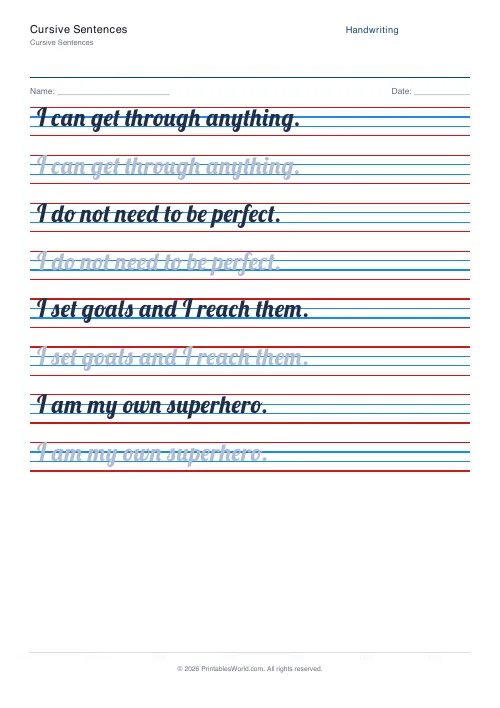 Cursive Sentences
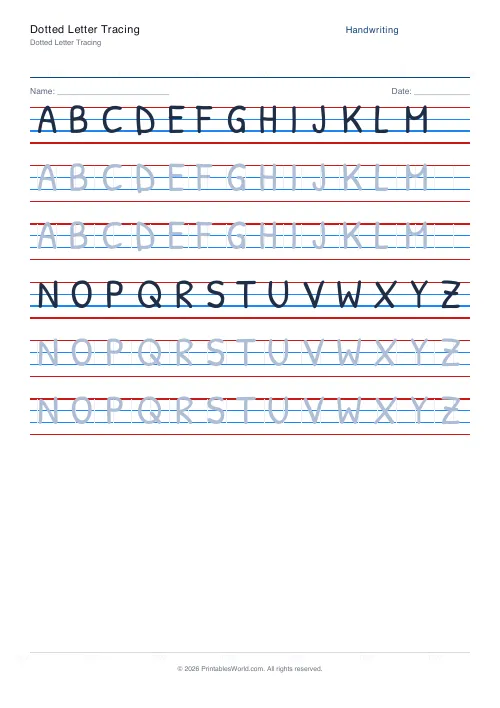 Dotted Letter Tracing
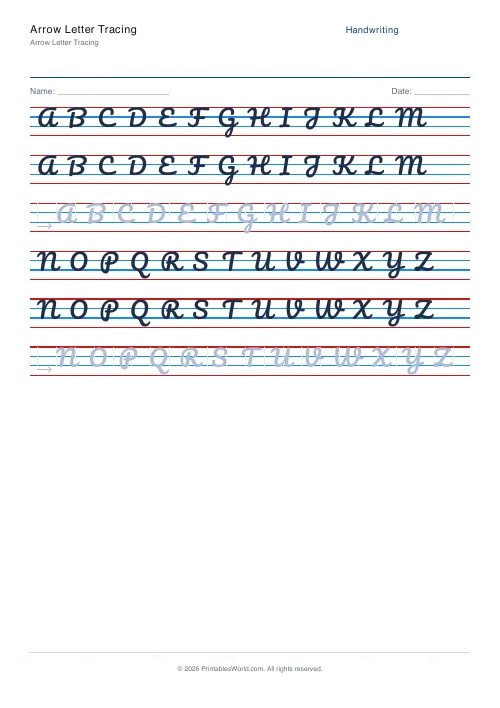 Arrow Letter Tracing