What this tool does
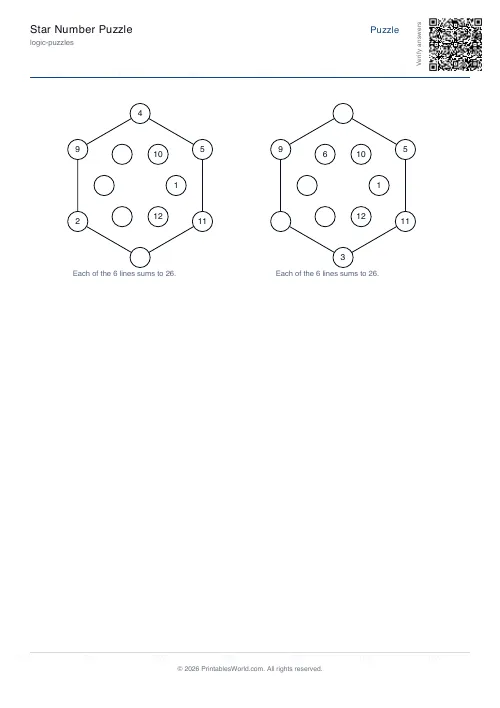
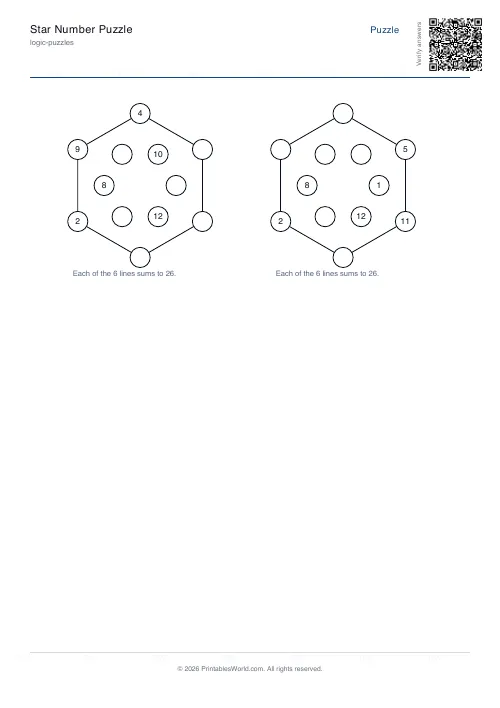
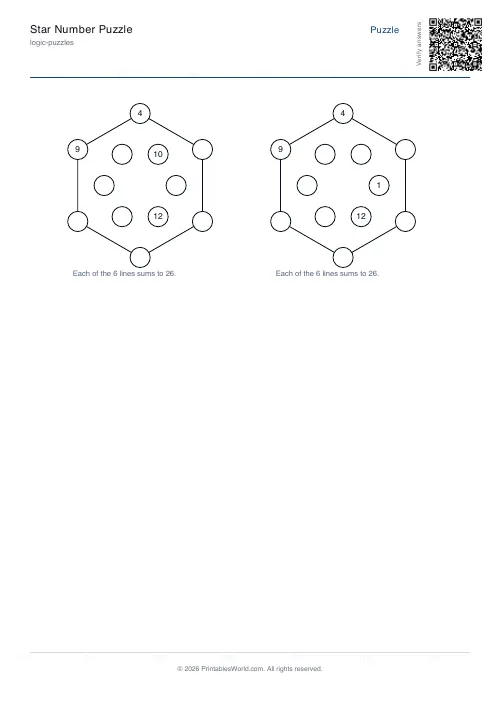
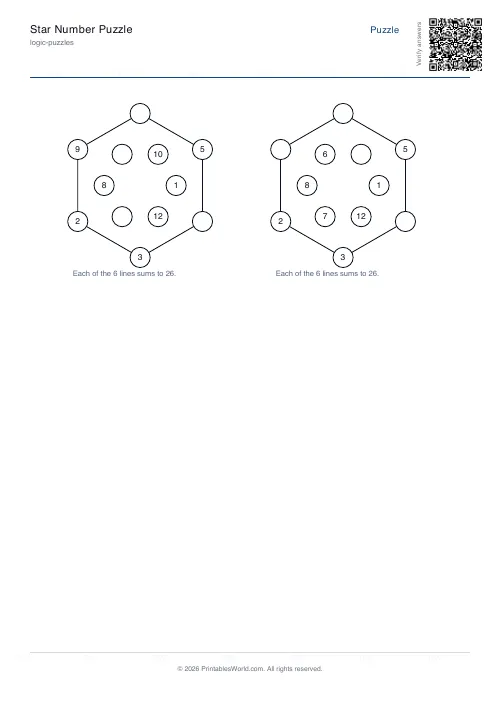
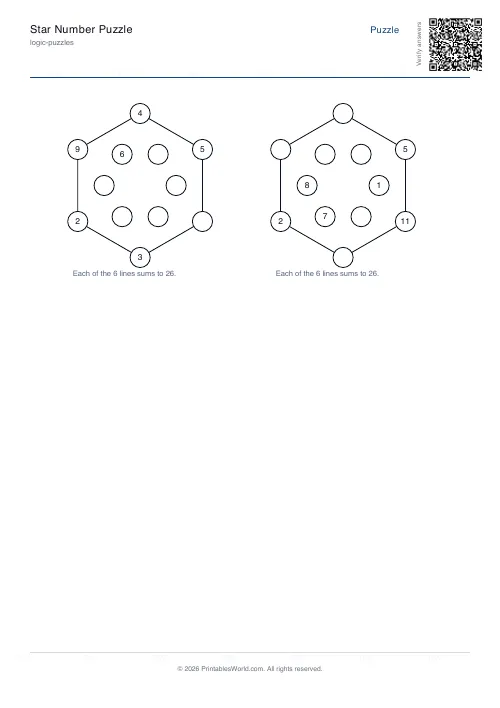
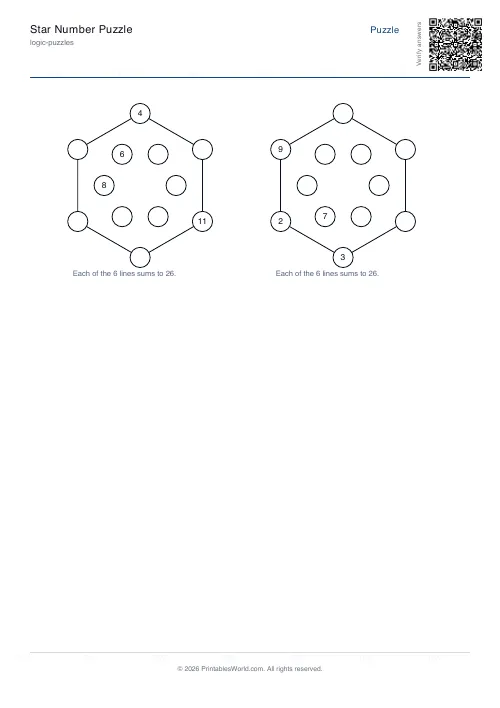
Magic star puzzles on a six-pointed hexagram. Place 1 to 12 in the twelve cells so all six lines of four sum to 26. Choose how many stars per page and how many numbers to hide; the answer is checked to be the only one.
People also used
Feedback
Spotted something off with this tool?
Magic stars: twelve numbers, six lines, every line 26
A hexagram has twelve cells — six outer points and the six places where the two triangles cross. Put the numbers 1 to 12 in them so that each of the six lines of four cells adds to 26.
Why 26 and not some other number? The twelve numbers total 78. Every cell sits on exactly two lines, so adding up all six lines counts each number twice: 156. Divide by six lines and you get 26, with no choice in the matter. It is worth doing that piece of arithmetic with a class before handing out the sheet, because it turns an arbitrary-looking target into a consequence.
Every puzzle is a different star
There are many valid magic hexagrams, not one. This generator searches for a fresh arrangement per puzzle instead of reprinting a stock answer with different cells hidden, and across sixty generated puzzles fifty-six of the underlying stars came out distinct.
That matters more than it sounds. A solver who does two puzzles built on the same hidden solution has memorised the answer without noticing, and every subsequent sheet is a recall exercise instead of a deduction one.
Blanks, and why you may get fewer than you asked for
You choose how many of the twelve numbers to hide, from 2 to 10, and how many stars share a page, from 1 to 4.
The generator removes numbers one at a time and checks after each removal that exactly one completion still exists. If removing the next number would leave two possible answers, that number stays. Ask for 10 blanks and you will typically get eight or nine, because past that point a hexagram stops being determined. A puzzle with a printed answer that is not the only answer is worse than a slightly easier puzzle, so the generator takes the easier puzzle.
How to solve one
Start from a line with three numbers on it. The fourth is forced by subtraction. No reasoning required.
When nothing is forced, use the totals. Each cell belongs to two lines, so a number placed at a crossing constrains two sums at once, which makes the inner cells more powerful than the outer points and a better place to work from. Count what remains unplaced and check whether the numbers left can even reach the sums you still need; that check kills a wrong branch several moves before the contradiction becomes obvious.
Who it is for
It is addition practice that does not look like addition practice, which makes it useful for the child who has decided they dislike sums. The arithmetic is trivial — adding four small numbers — but the search is not, so the practice happens as a side effect of the puzzle.
Solutions print on their own page when the toggle is on, showing all twelve numbers for every star on the sheet. Print at 100% on A4 or US Letter.
FAQs
Quick answers
What is the magic line sum?
26. That is the constant for the standard hexagram magic star using digits 1-12.
How many cells are blanked?
Default 6 of 12; tune it for difficulty.
How many per page?
Up to four stars per page in a 2-column layout.
Want a similar challenge?
Try the Magic Square 3x3 or 4x4 variants.
Related tools
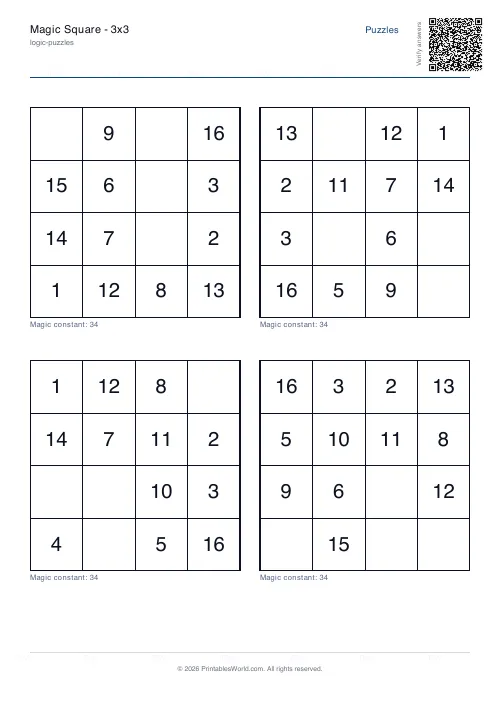
Magic Square: 3x3
Complete the 3x3 grid so all rows, columns, and diagonals sum equally.
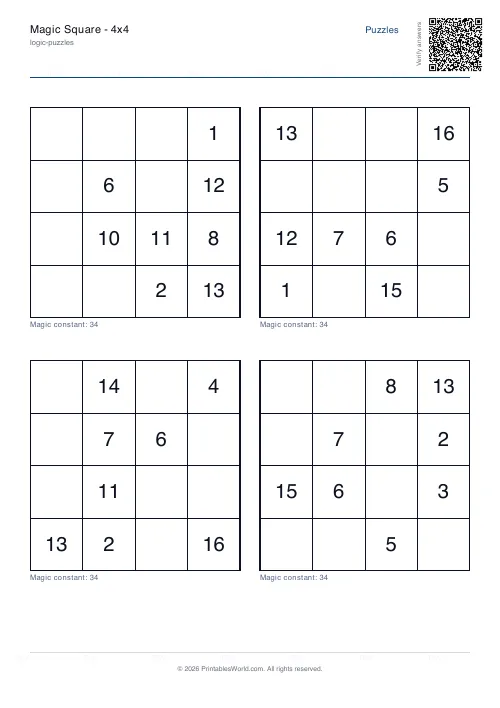
Magic Square: 4x4
Harder 4x4 magic squares with larger number ranges.
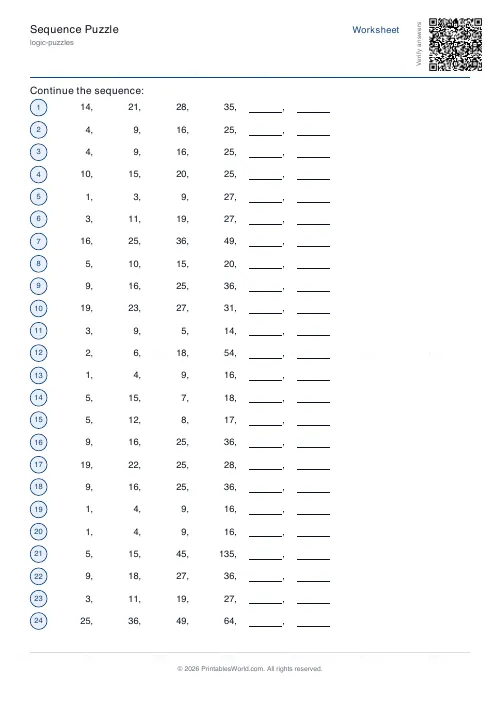
Sequence Puzzle
Continue number and shape sequences. Simple to algebraic nth-term level.
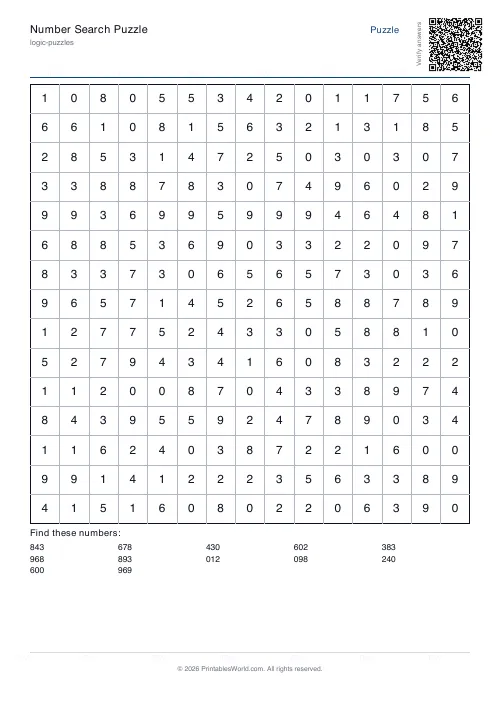
Number Search Puzzle
Find hidden numbers in a grid of digits. Configurable number length.
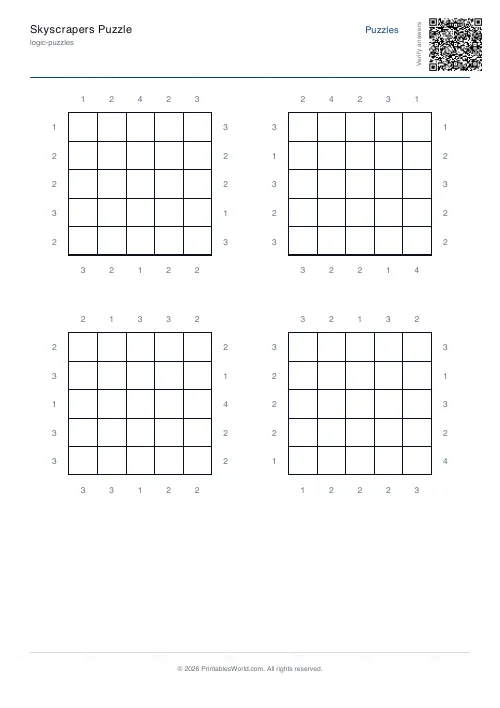
Skyscrapers Puzzle
Place buildings of different heights so clue numbers match visible buildings.
Further reading
Logic Puzzles
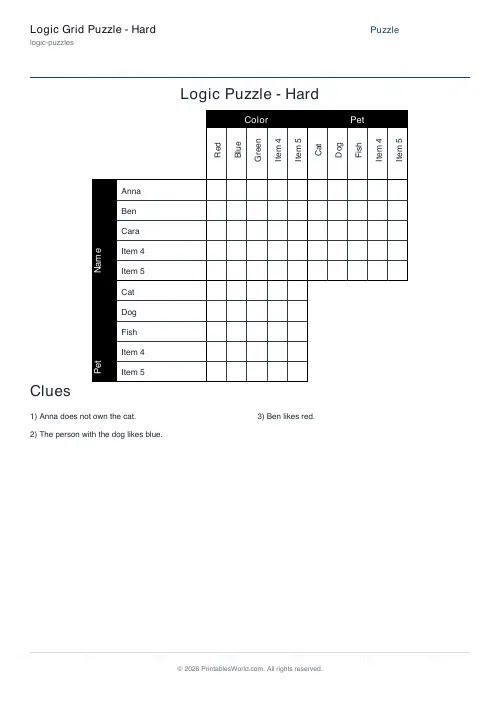
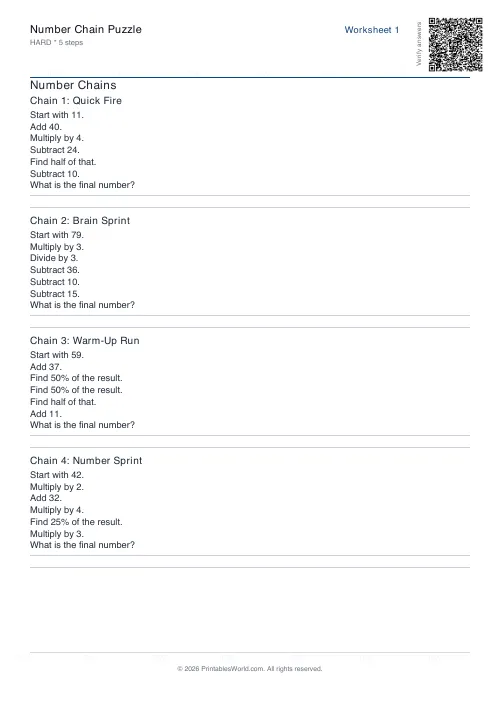
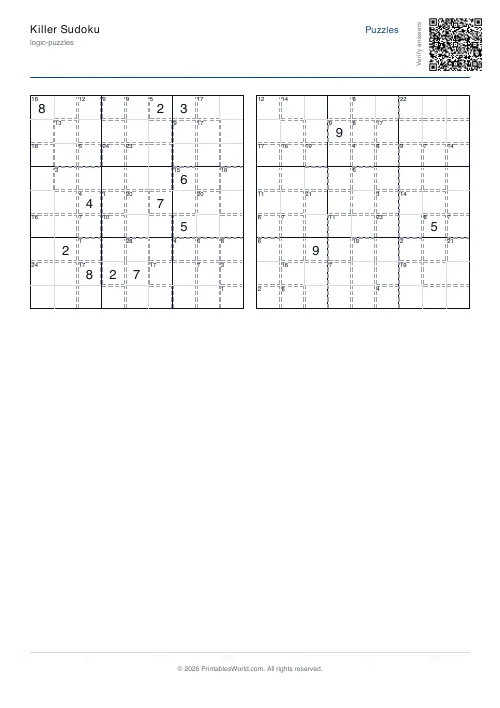
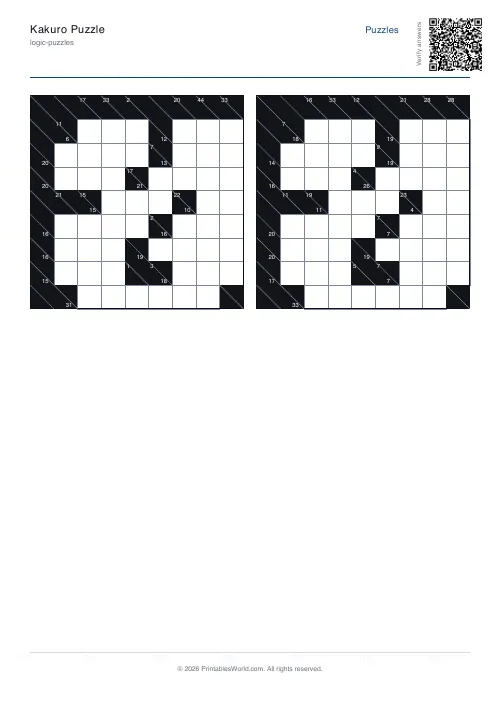
Kakuro, killer sudoku and other number puzzles explained
If sudoku has stopped being a challenge, these are the natural next steps. And unlike sudoku, most of them genuinely involve arithmetic.
5 min read
Logic Puzzles
The benefits of logic puzzles for developing brains
Logic puzzles teach deduction and persistence, which are worth having. The claim that they make children generally smarter is weaker than the marketing suggests.
5 min read
Puzzles & Brain Games
Printable brain games for seniors: a free puzzle pack
A free printable puzzle pack for older adults, with a sample seven-day plan, large-print and easier-difficulty tips, and how to use the Logic Puzzles collection.
7 min read