What this tool does
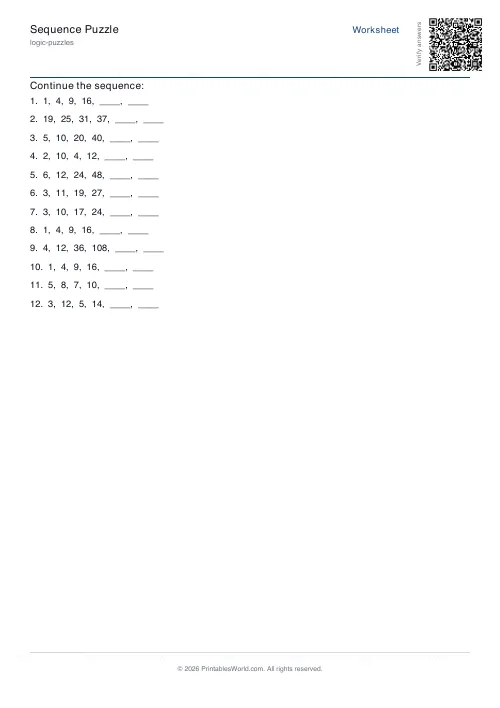
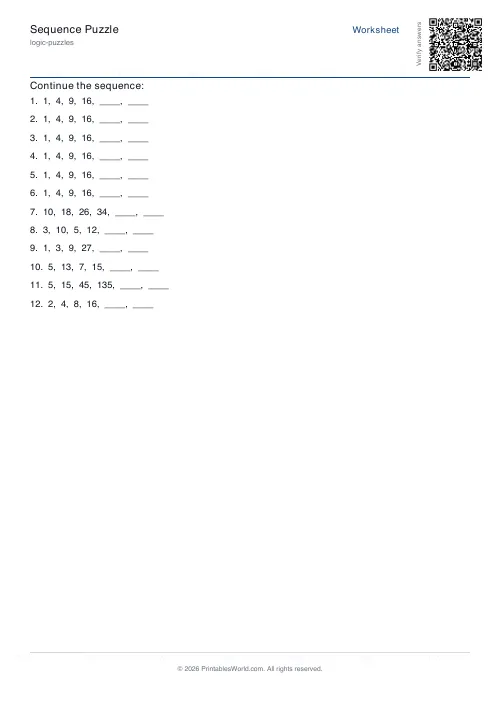
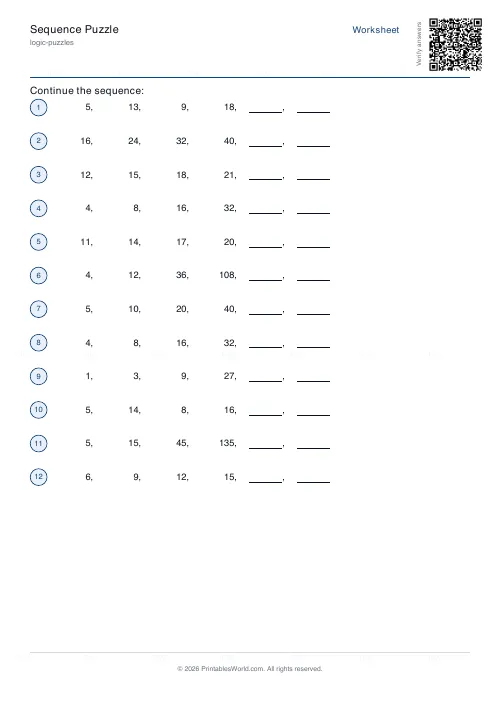
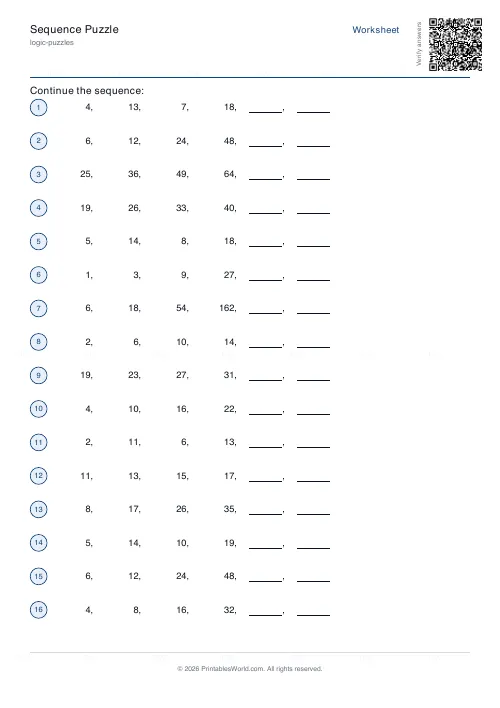
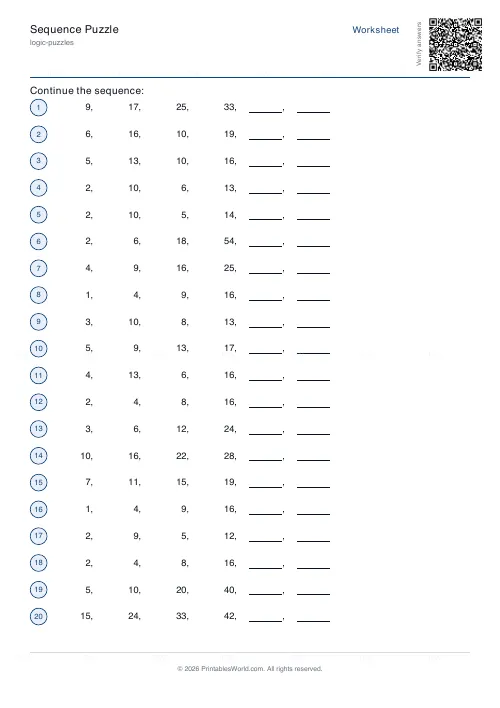
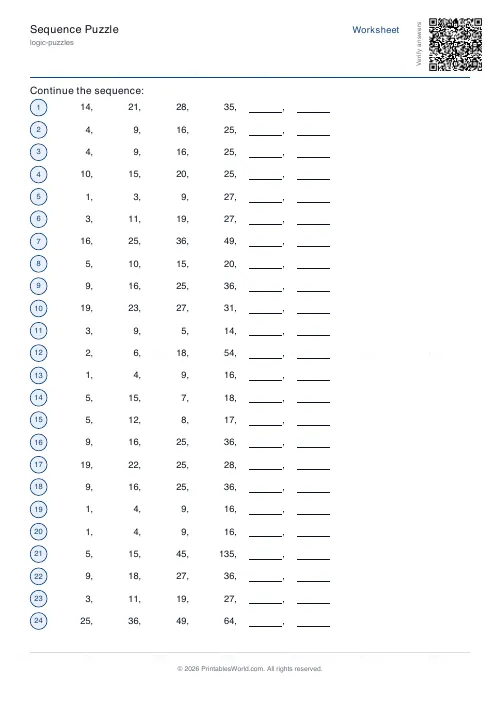
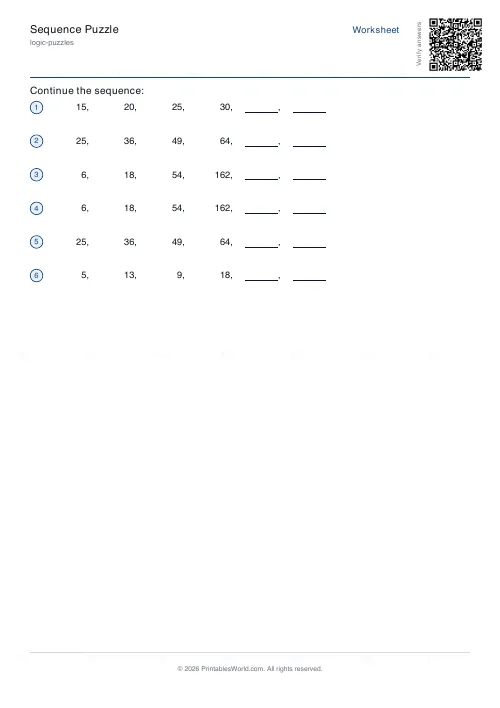
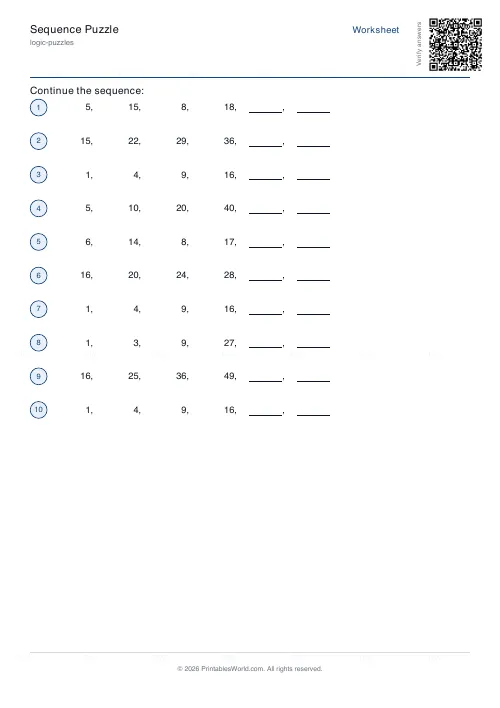
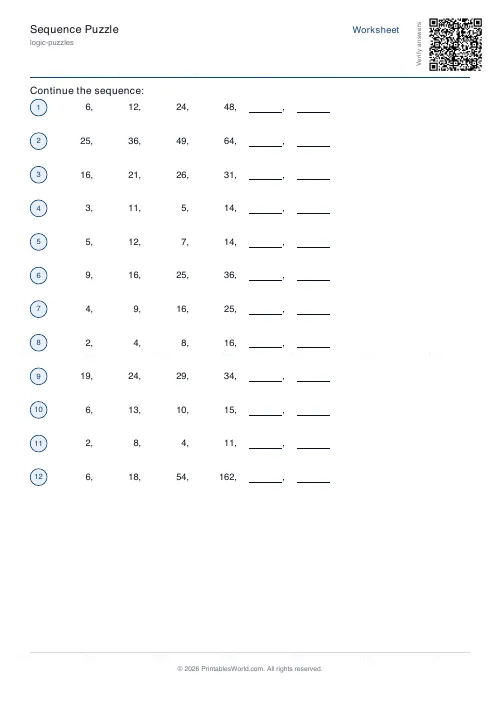
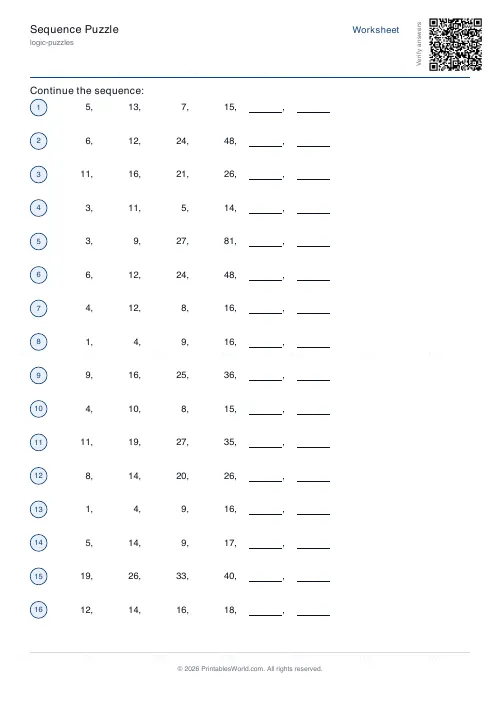
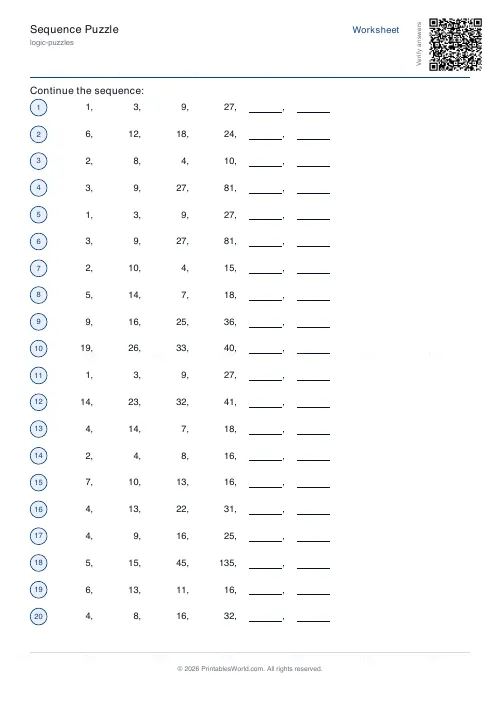
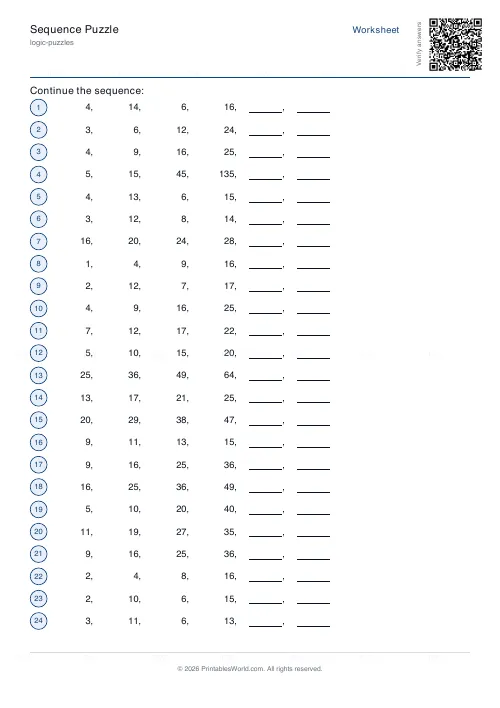
Continue-the-sequence worksheets. Every item shows four terms and asks for the next two. Rules come from four families: add a constant, multiply by a constant, square numbers, and two sequences woven together. Six to 24 items a sheet, and the answer page names the rule.
People also used
Feedback
Spotted something off with this tool?
Sequence worksheets where the answer page tells you the rule
Each item is six numbers long. The first four are printed and the last two are blank, so the solver has to work out the rule and then apply it twice — which is a better test than one blank, because applying a rule once can be a lucky guess and applying it twice usually is not.
The four rule families
- Add a constant. Start anywhere from 1 to 20, step from 2 to 9. The easiest family, and the first one everybody tries.
- Multiply by a constant. Doubling or tripling from a start of 1 to 6. These run away quickly: begin at 6, triple, and the sixth term is 1,458.
- Square numbers. Six consecutive squares. The gaps grow, which is the tell.
- Two sequences woven together. Odd positions follow one arithmetic rule and even positions another, with the two starts kept far enough apart that the woven terms never collide and read as a single muddled run instead of two clean ones.
That last family is the one worth the sheet. A solver who has only met "add 3" sequences will hunt for a single step, not find one, and decide the question is broken. Learning to read every other term is a real technique, and it is the bridge from pattern-spotting to algebra.
How many items
Between 6 and 24, defaulting to 12. Twelve is about a fifteen-minute exercise for a competent Year 5 pupil and about a starter task for a secondary class.
The rule family for each item is chosen at random, so a 24-item sheet lands at roughly six of each. There is no way to drill a single family here. For most purposes the mixture is the point anyway, since knowing which question to ask is most of the skill.
The answer page
It gives the two missing terms and names the rule in words: "add 7", "multiply by 3", "square numbers (3², 4², 5², …)", "two interleaved sequences (add 4 and add 2)".
Naming the rule matters when you are marking. A pupil who wrote the right numbers by extending the differences without ever seeing the rule has done something different from one who spotted it, and a rule stated in words gives you the language to have that conversation.
Why sequences are worth the time
Because "what is the rule?" is the question algebra is built on, and it arrives years before the notation does.
A pupil fluent at reading a sequence has already met the idea of a general term, of a constant difference, and of a rule that holds at every position and not only at the next one. So when nth terms turn up on the timetable, that pupil is being handed notation for something they can already do. Much easier than meeting both at once.
Print at 100% on A4 or US Letter. Every sheet is generated fresh; the seed reproduces one exactly.
FAQs
Quick answers
What kinds of sequences appear?
Arithmetic (add a constant), geometric (multiply by a constant), square numbers, and two interleaved sequences.
How many items per worksheet?
Default 12; up to 24 fit on a page.
Are answers explained?
Yes. The optional answer page shows the rule and the missing values.
Want a different challenge?
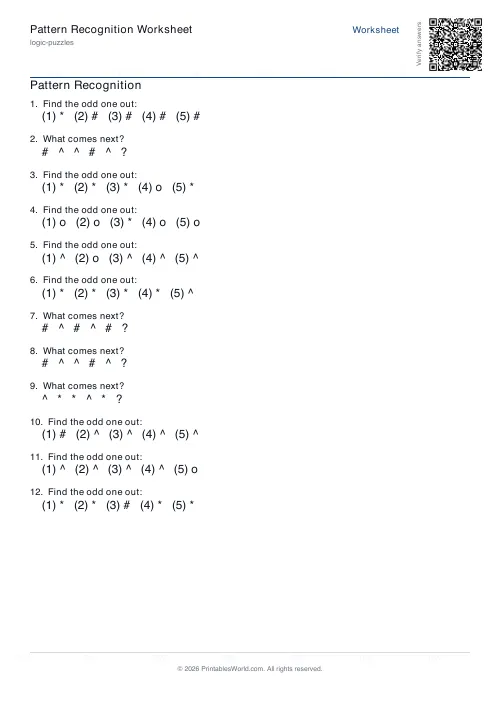
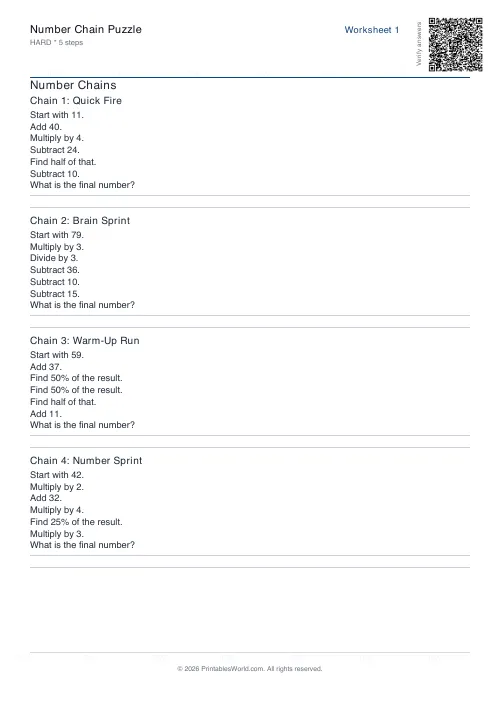
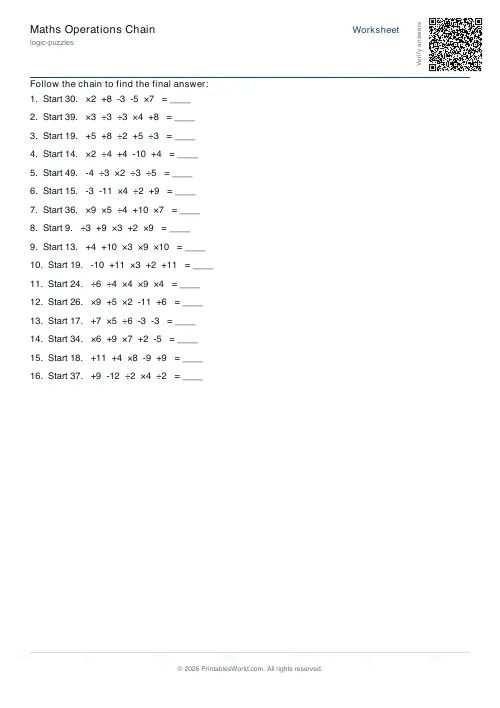
Try Pattern Recognition for visual patterns, or Number Chain for step-by-step arithmetic.
Related tools
Further reading
Logic Puzzles
The benefits of logic puzzles for developing brains
Logic puzzles teach deduction and persistence, which are worth having. The claim that they make children generally smarter is weaker than the marketing suggests.
5 min read
Logic Puzzles
Kakuro, killer sudoku and other number puzzles explained
If sudoku has stopped being a challenge, these are the natural next steps. And unlike sudoku, most of them genuinely involve arithmetic.
5 min read
Puzzles & Brain Games
Printable brain games for seniors: a free puzzle pack
A free printable puzzle pack for older adults, with a sample seven-day plan, large-print and easier-difficulty tips, and how to use the Logic Puzzles collection.
7 min read