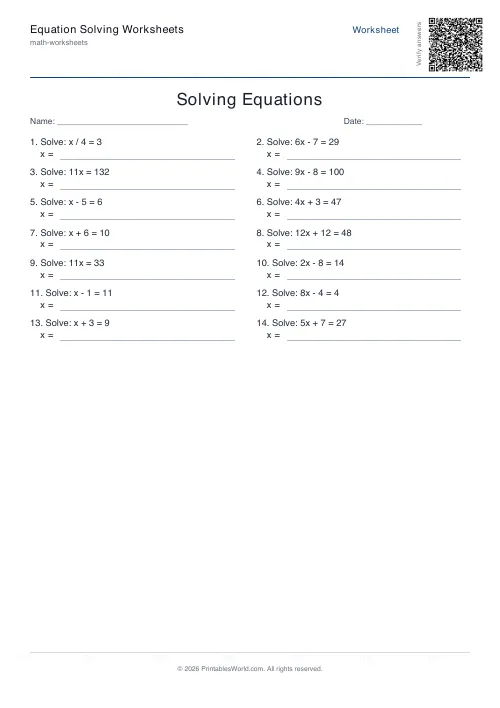
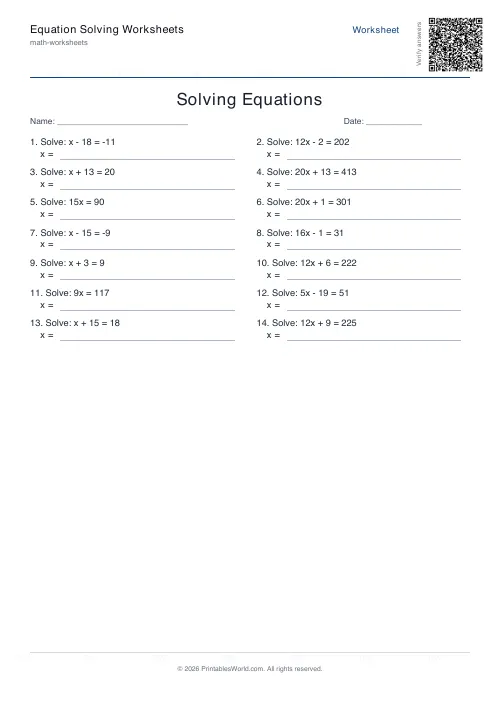
What this tool does
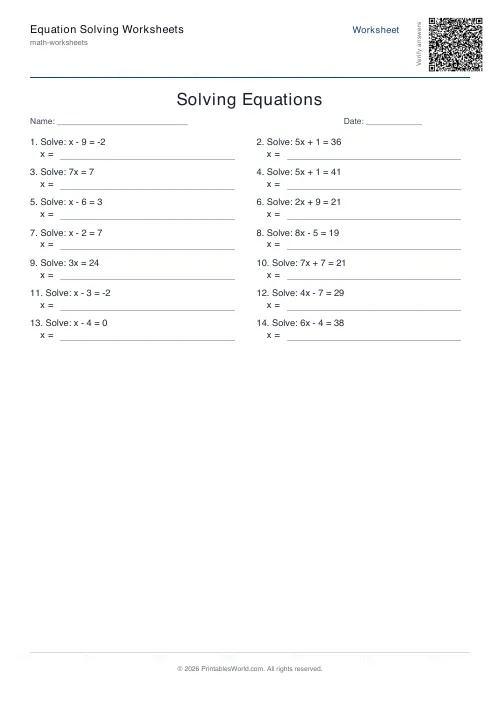
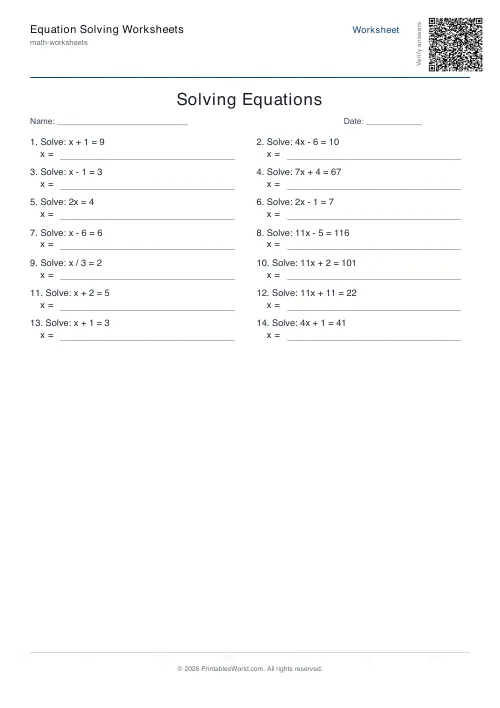
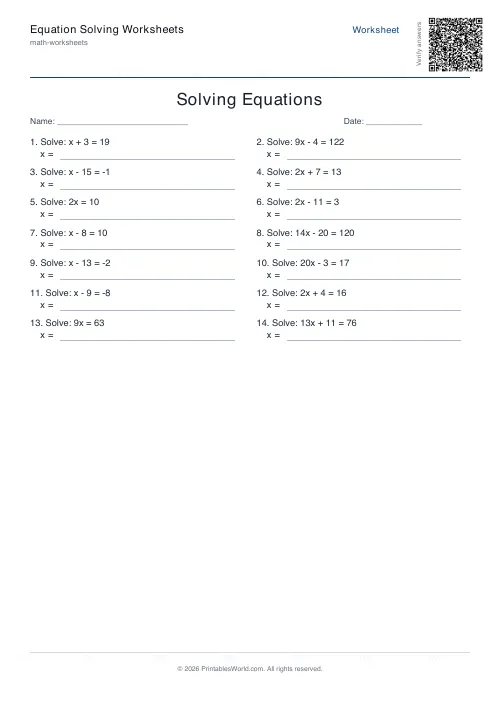
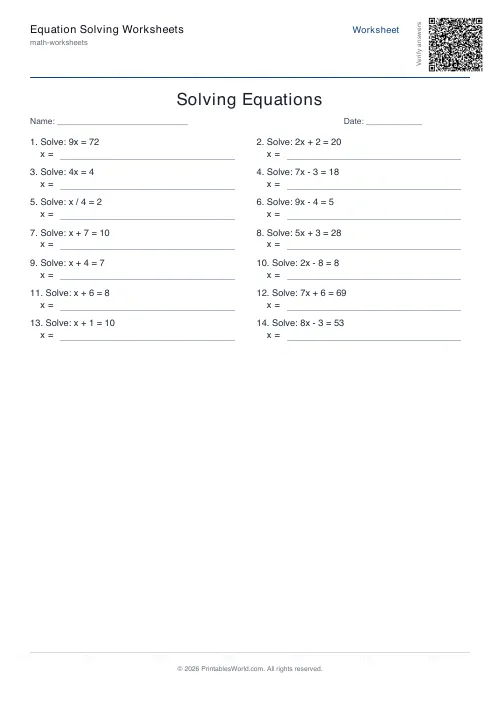
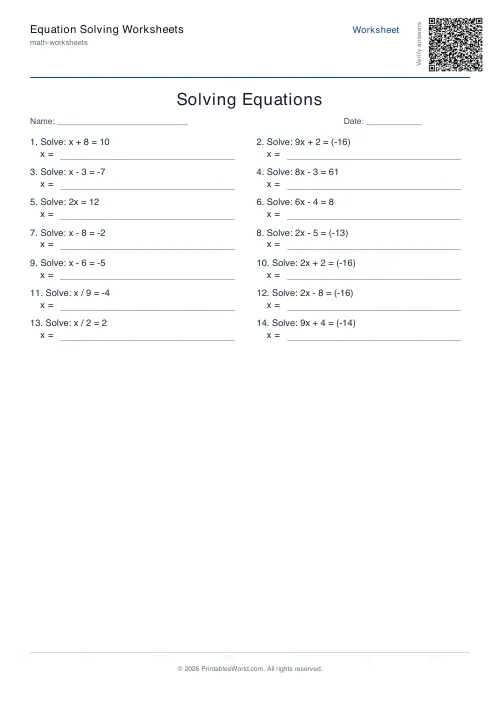
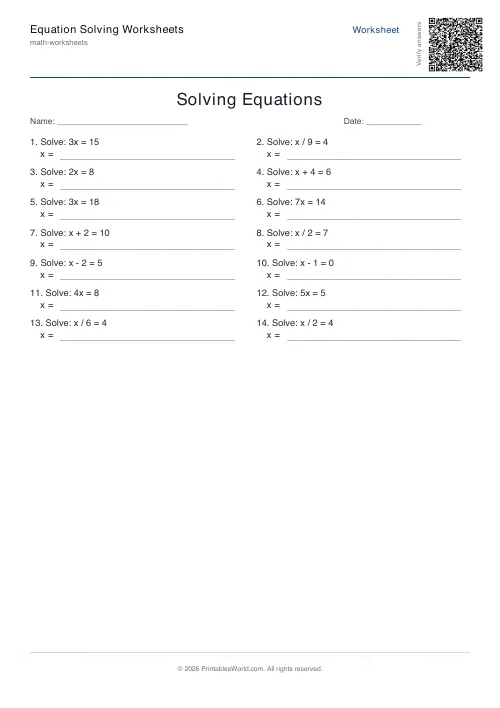
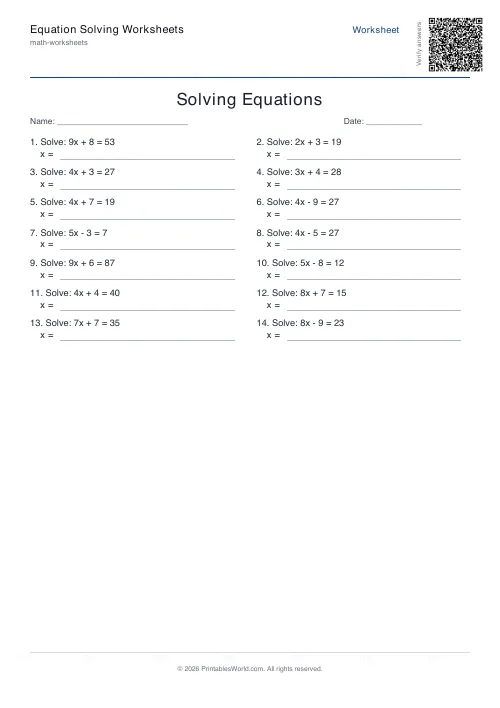
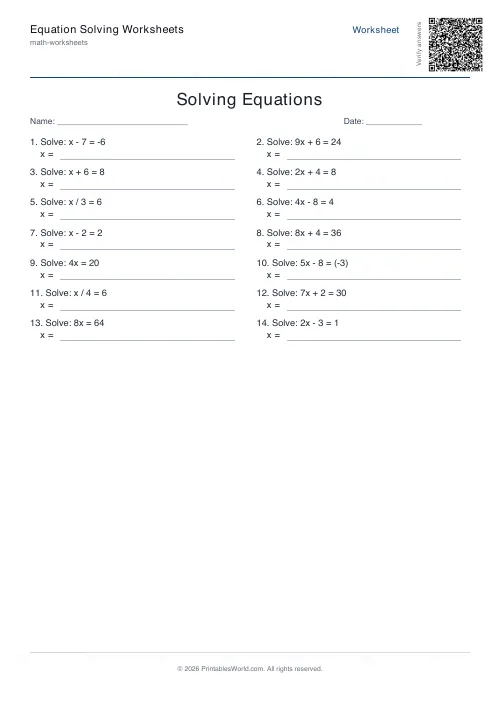
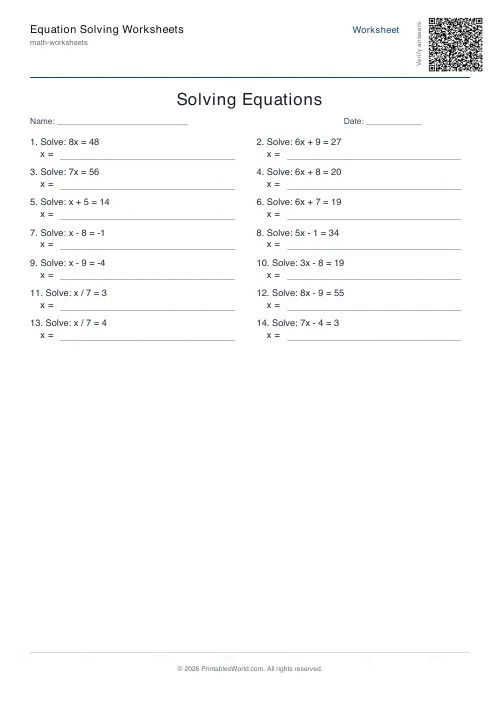
Linear equation practice: one-step, two-step, or a mix. Cap the coefficients, allow negative solutions if you want them, and print up to 40 problems with an answer key.
People also used
Introduction to Algebra Worksheets
Printable beginner algebra practice. Evaluate, simplify, and substitute.
Ratio & Proportion Worksheets
Printable ratio and proportion practice. Simplify, share, and scale.
Number Sequences & Patterns Worksheets
Printable number pattern practice. Arithmetic, geometric, and quadratic sequences.
Feedback
Spotted something off with this tool?
One-step, two-step, or both on the same page
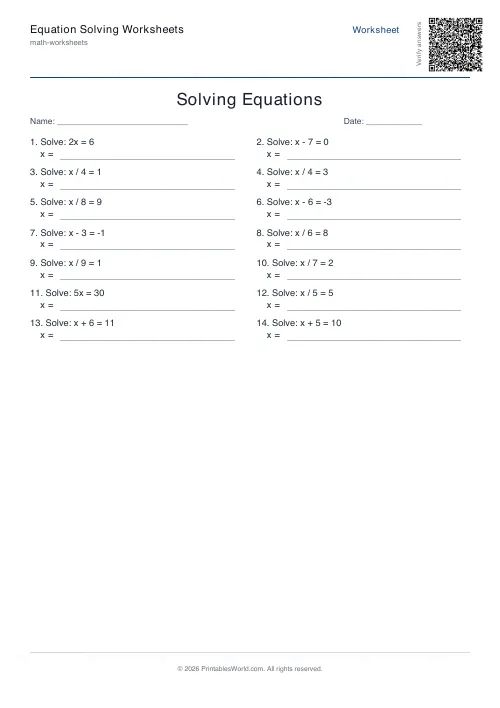
One-step equations come in four shapes: x + a = b, x − a = b, ax = b, and x ÷ a = b. One operation to undo, and the whole lesson is recognising which one.
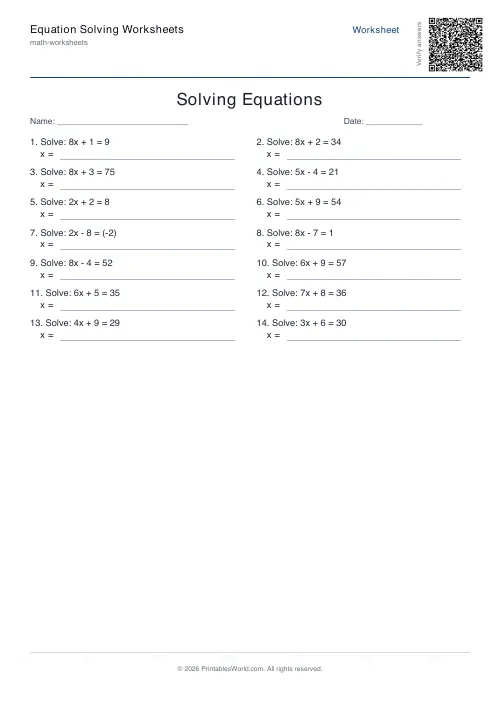
Two-step equations are all of the form ax + b = c or ax − b = c. Two operations, and now the order matters — undo the addition first, then the multiplication, which is the reverse of the order they appear in.
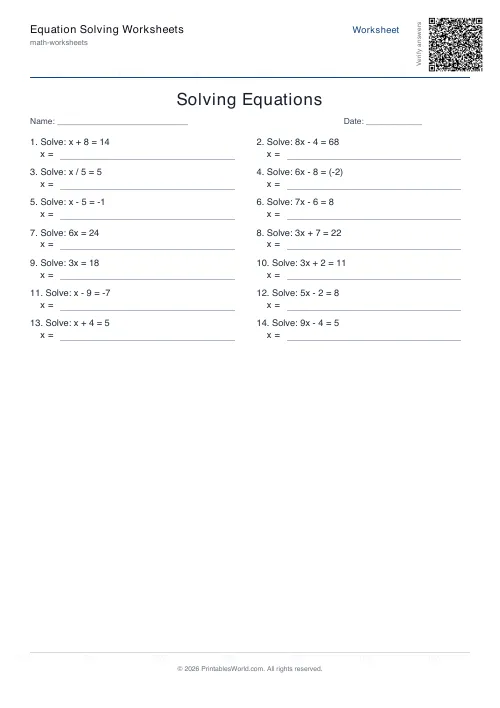
Mixed puts both on the sheet. Worth doing once two-step is secure, because deciding how many steps a problem needs is itself a skill and a page of nothing but two-steps never asks for it.
Every answer has been checked against its own equation
Problems are built backwards from a chosen value of x, so the equation is constructed to have that answer rather than solved after the fact. There is no rounding anywhere and every solution is a whole number.
That last point is deliberate. An equation whose answer is 2.4 is not harder algebra, it is the same algebra plus decimal arithmetic, and it turns a mistake in the method into a mistake in the division. Keep those separate while the method is being learned.
Negatives change the sheet more than the setting suggests
Switch them on and about a third of the answers become negative, with the right-hand side printed in brackets when it is negative: 3x + 7 = (−2).
This is where most of the errors in the whole topic live. A pupil comfortable with 3x + 7 = 22 will routinely produce x = 3 for 3x + 7 = −2, because the sign gets dropped somewhere in the middle. Leave negatives off until the positive case is automatic, then turn them on and expect the marks to fall.
The coefficient cap
Between 2 and 20. It bounds the numbers in the equation and the size of the answer.
Low, at 5 or 6, and the arithmetic disappears entirely, which is what you want when the method is new — a pupil who fails at 3x = 12 has an algebra problem, not a times-tables one. High, at 20, and correct method still needs correct arithmetic to produce a correct answer, which is closer to an exam.
What the form offers
Mode, coefficient cap (2–20), negatives on or off, problems per sheet (1–40), the answer key, a title and Name and Date fields. A4 or US Letter.
The habit worth building
Substitute the answer back in. Every equation on this sheet can be checked in about five seconds, and a pupil in the habit of checking catches their own sign errors without you.
It also changes what the answer key is for. Instead of being the source of truth, it becomes the thing you compare with after you have already convinced yourself — which is what solving an equation is supposed to feel like.
Print at 100% on A4 or US Letter.
FAQs
Quick answers
What types of equations are generated?
One-step equations like x + 3 = 10, and two-step equations like 2x + 5 = 17. Every problem has an integer solution.
Do the problems use negative numbers?
Only when "Allow negatives" is turned on. With that setting, the solution or a term can be negative.
Is there an answer key?
Yes. Turn on "Include answer key" and the PDF will append a page with the solutions.
Who is this for?
Typically Years 7–9 (UK) or Grades 6–8 (US), depending on how early algebra is introduced.
Related tools
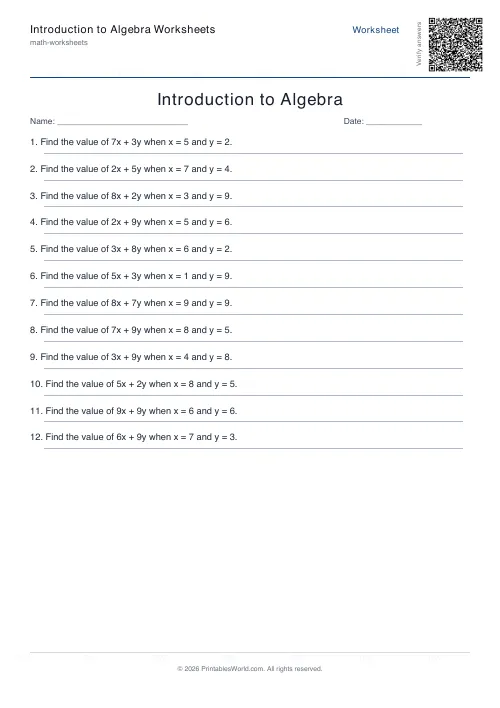
Introduction to Algebra Worksheets
Printable beginner algebra practice. Evaluate, simplify, and substitute.
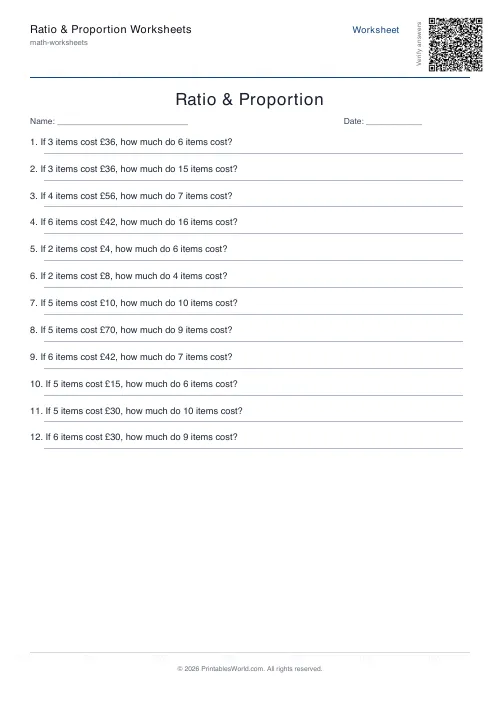
Ratio & Proportion Worksheets
Printable ratio and proportion practice. Simplify, share, and scale.
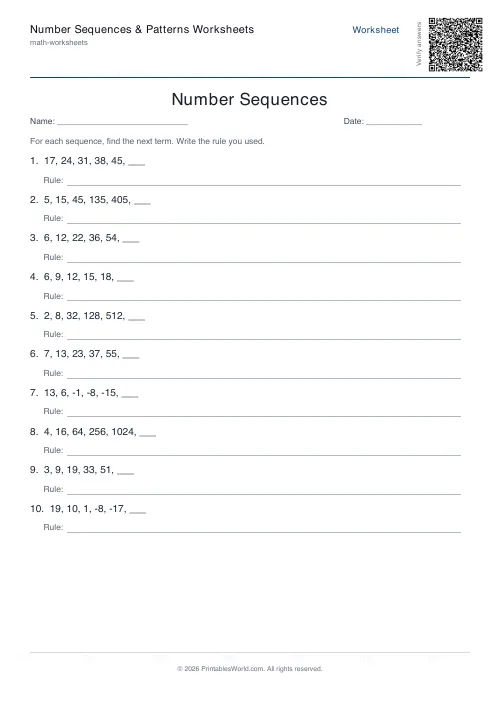
Number Sequences & Patterns Worksheets
Printable number pattern practice. Arithmetic, geometric, and quadratic sequences.
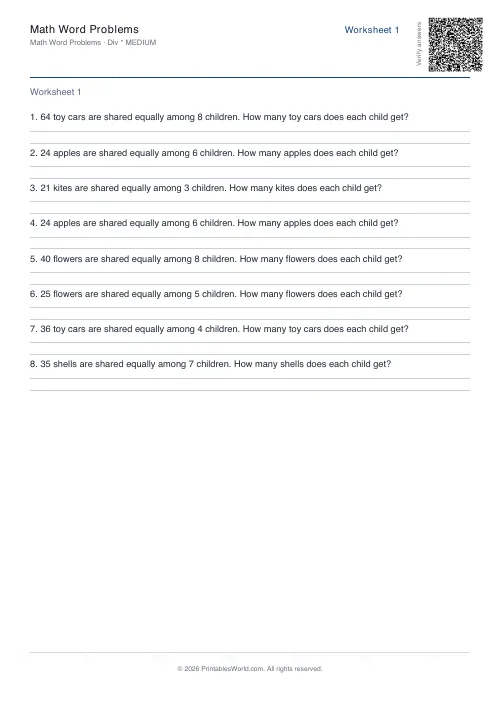
Math Word Problems Generator
Generate printable math word problem worksheets with customisable topics, difficulty, and answer keys.
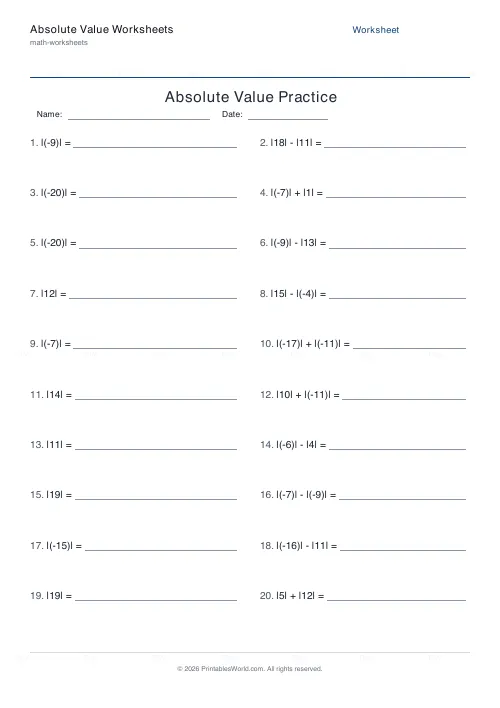
Absolute Value Worksheets
Generate worksheets to evaluate, compare, or solve absolute value expressions and equations.
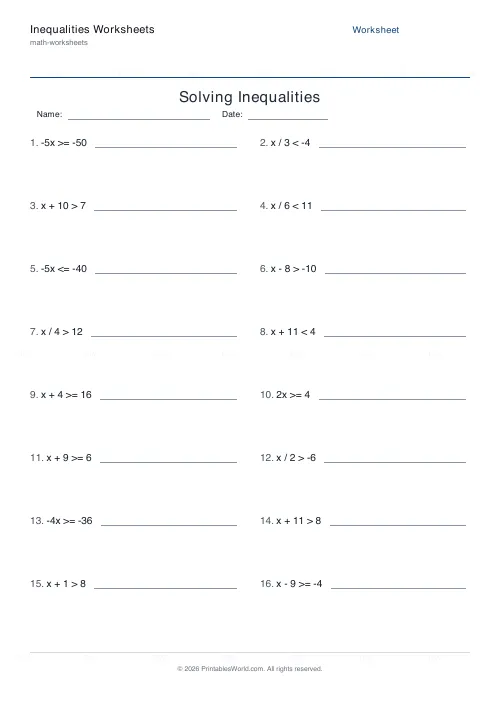
Inequalities Worksheets
Generate printable worksheets for solving one-step and two-step linear inequalities, with answer keys.
Further reading
Math Worksheets
Understanding BODMAS and PEMDAS: order of operations explained
BODMAS and PEMDAS describe the same rule in different words. The trouble is that both hide two facts the acronym cannot express. Which is where nearly every mistake comes from.
5 min read
Math Worksheets
Making maths fun: 15 ways to practise without tears
Maths tears are usually about difficulty, length or fear of being wrong, not about maths. Fifteen practical changes, grouped by which of those three problems they actually solve.
6 min read
Math Worksheets
How to read and interpret bar charts with kids
Reading a bar chart is easy; interpreting one is not. Four questions turn a chart from something children decode into something they can reason about.
4 min read
More like this
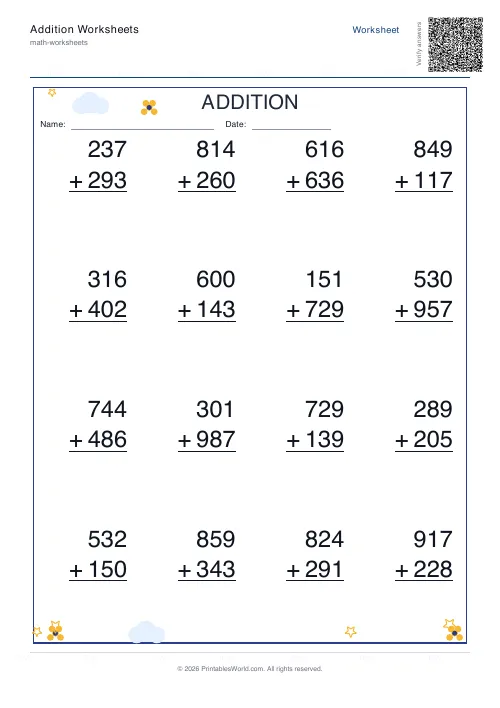 Addition Worksheets Generator
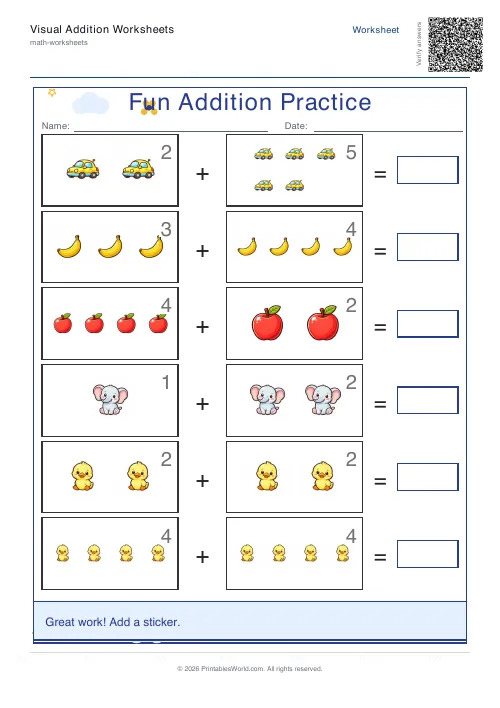 Visual Addition Worksheets Generator
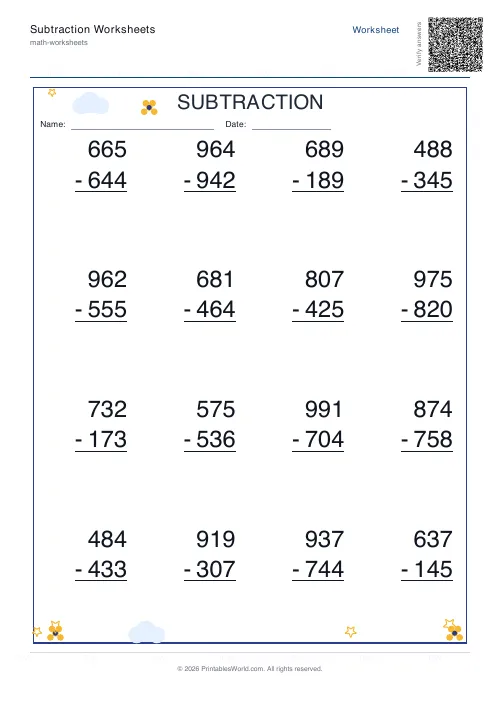 Subtraction Worksheets Generator
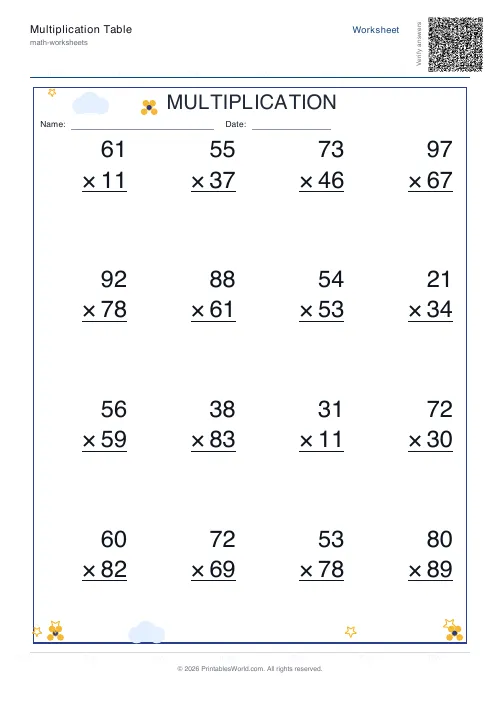 Multiplication Table Generator
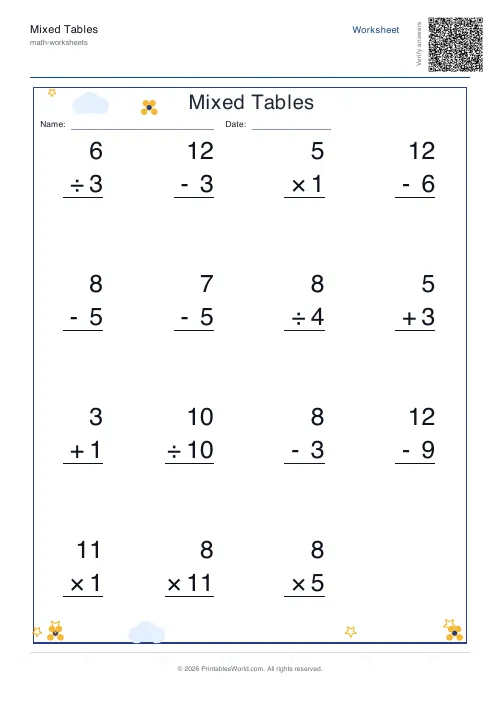 Mixed Tables Generator
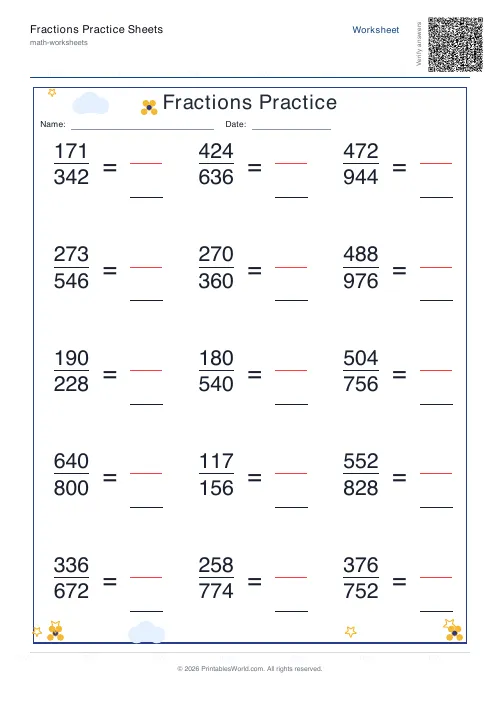 Fractions Practice Sheets Generator
- Math Word Problems Generator
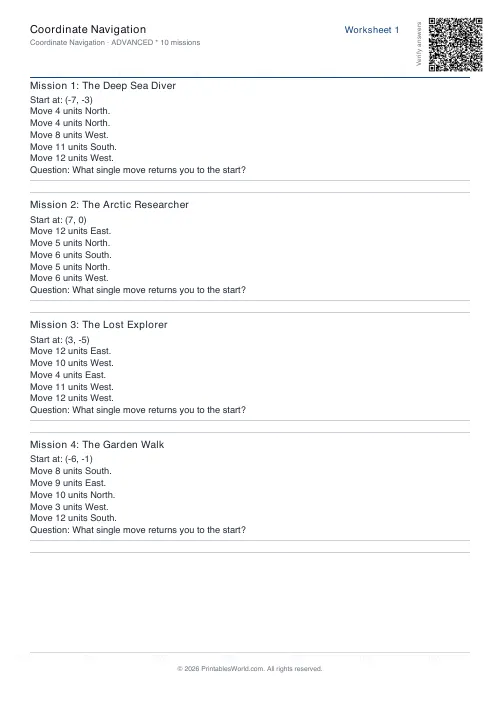 Coordinate Navigation Generator
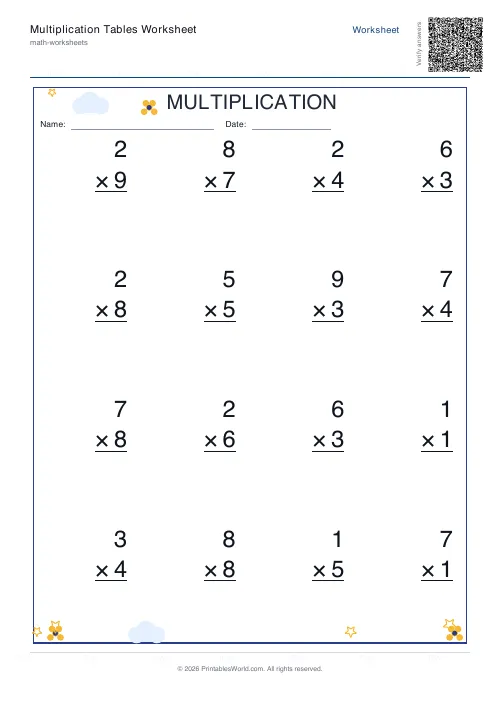 Multiplication Tables Worksheet
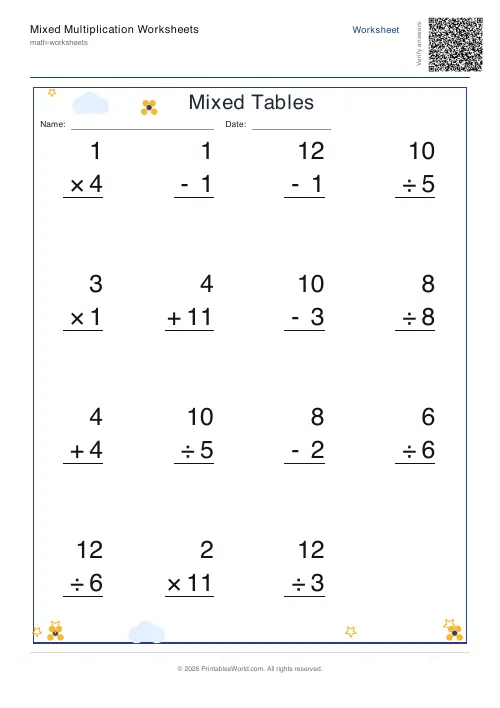 Mixed Multiplication Worksheets
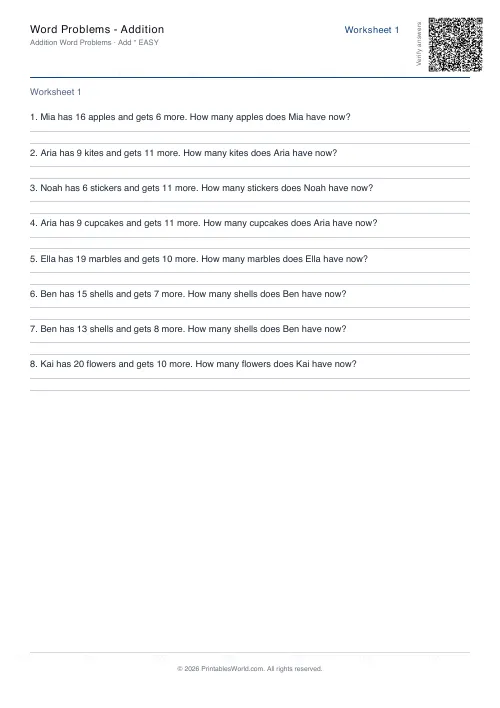 Word Problems: Addition
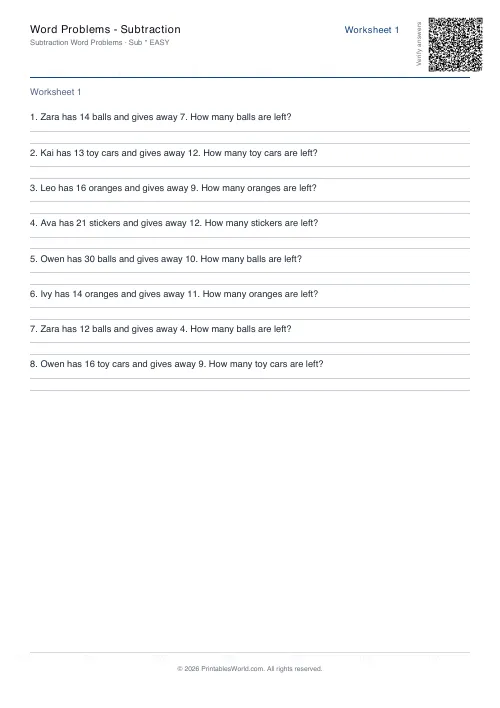 Word Problems: Subtraction
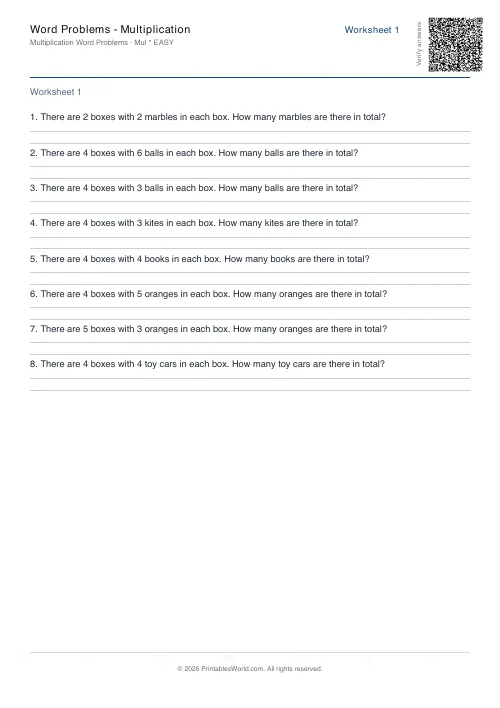 Word Problems: Multiplication
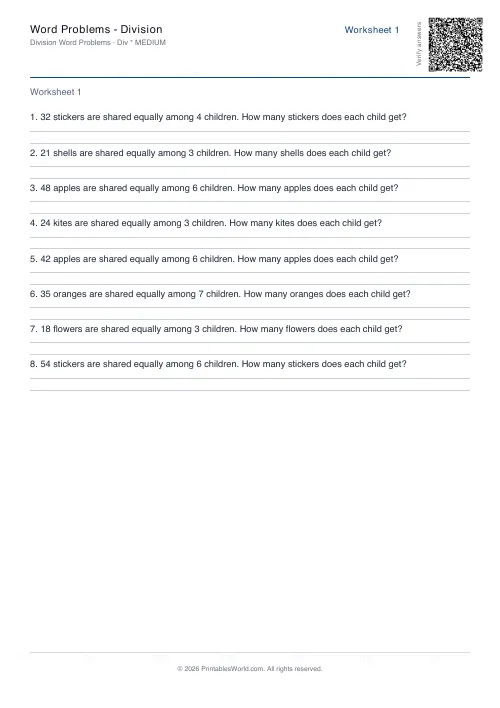 Word Problems: Division