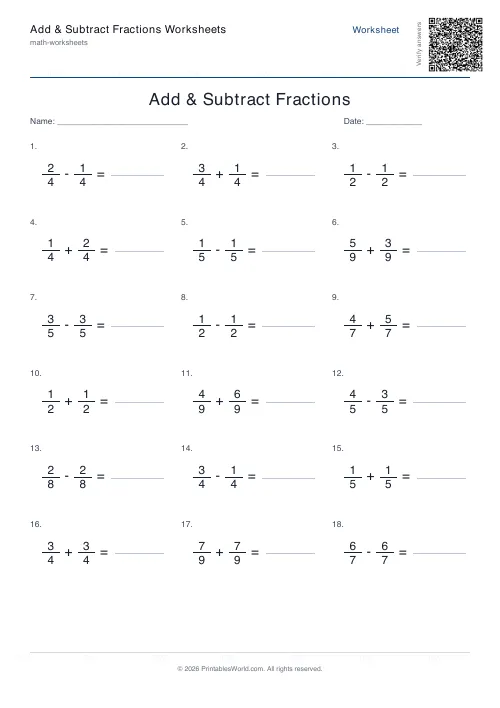
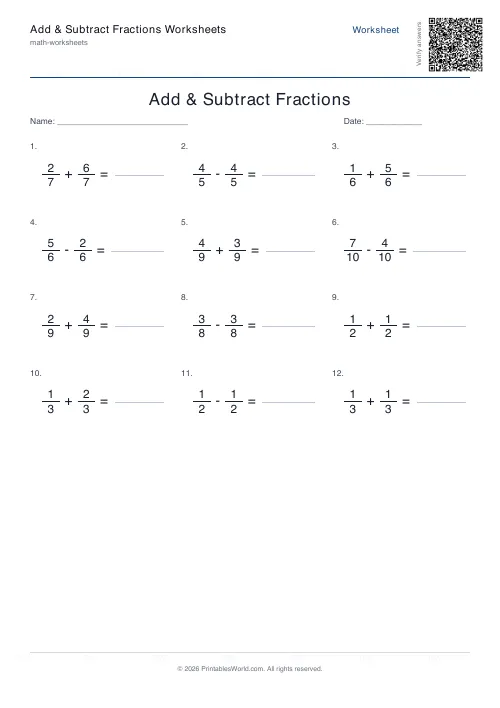
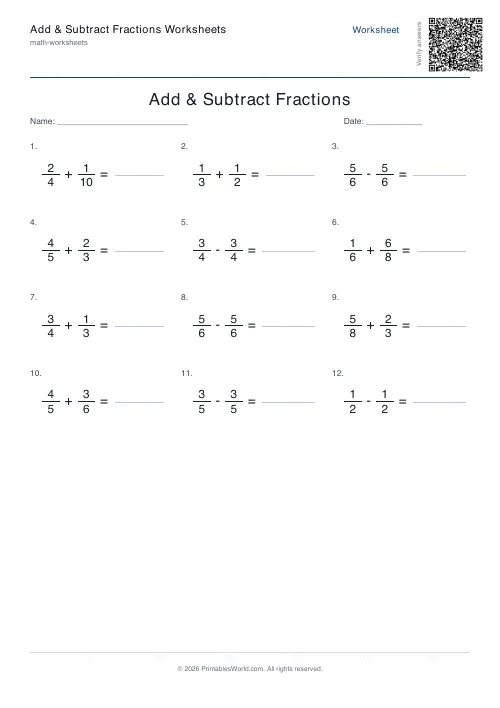
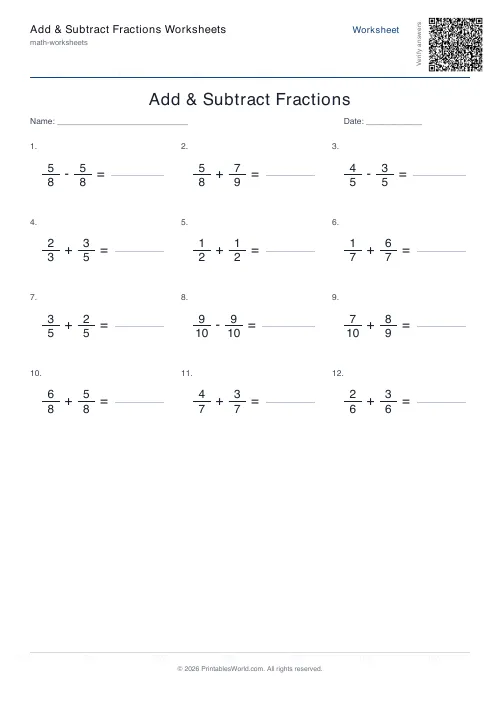
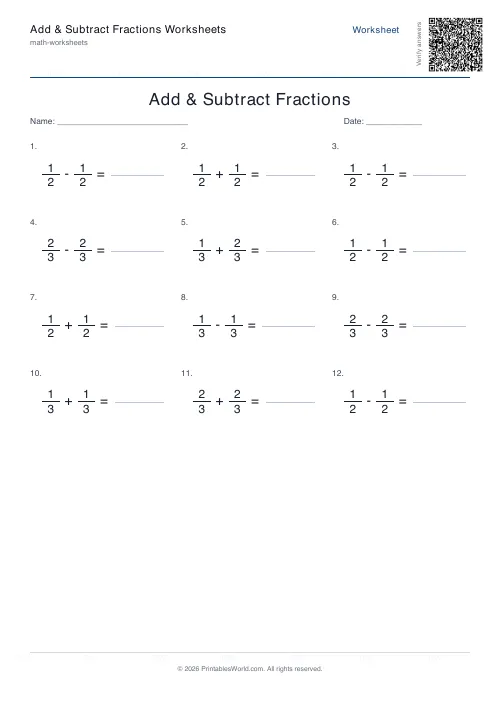
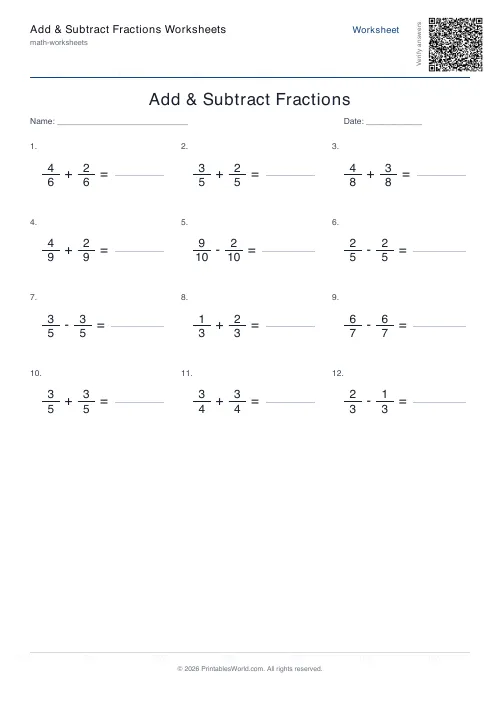
What this tool does
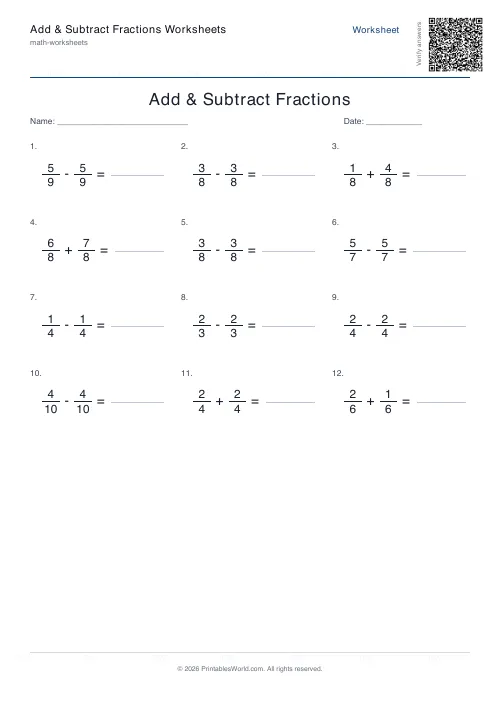
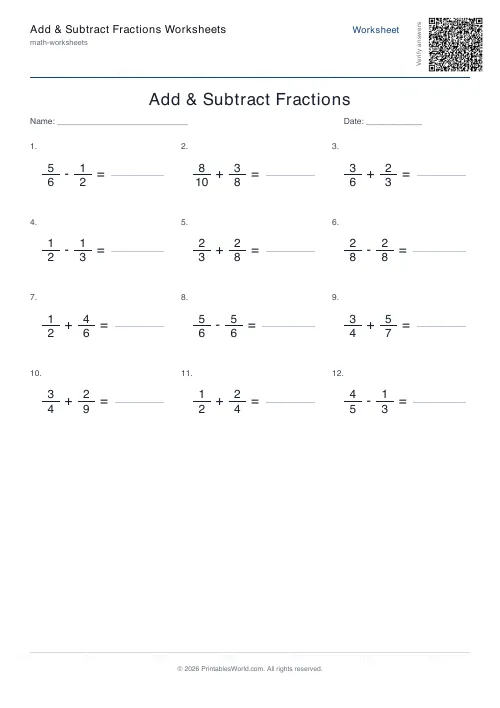
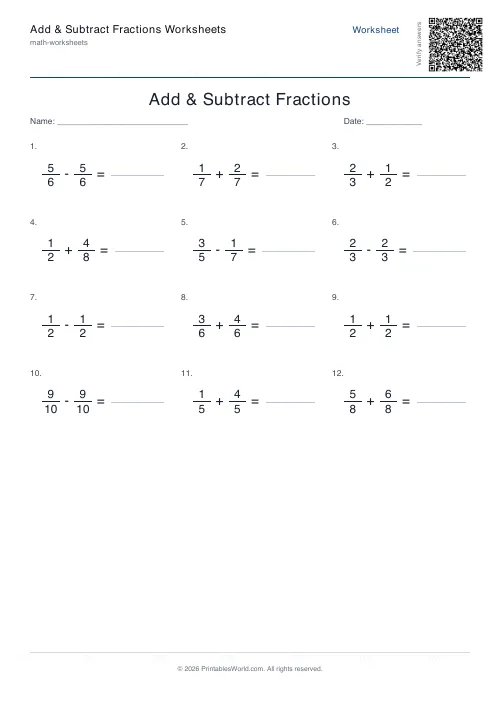
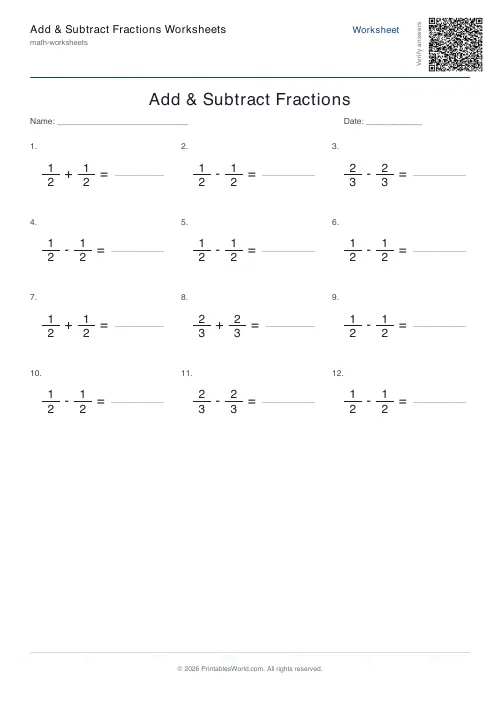
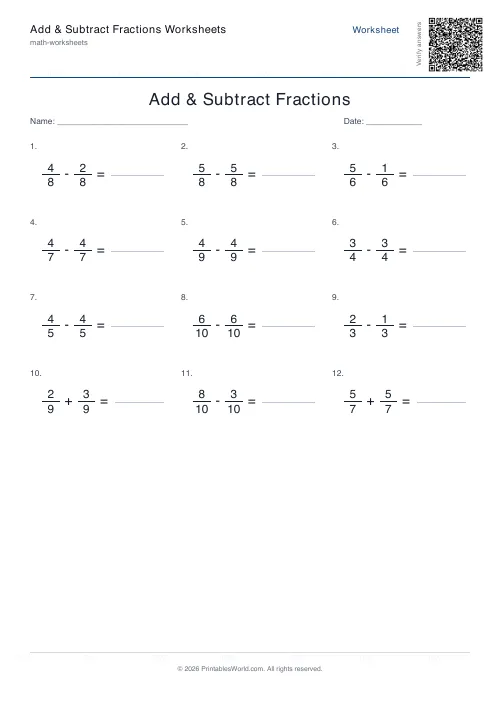
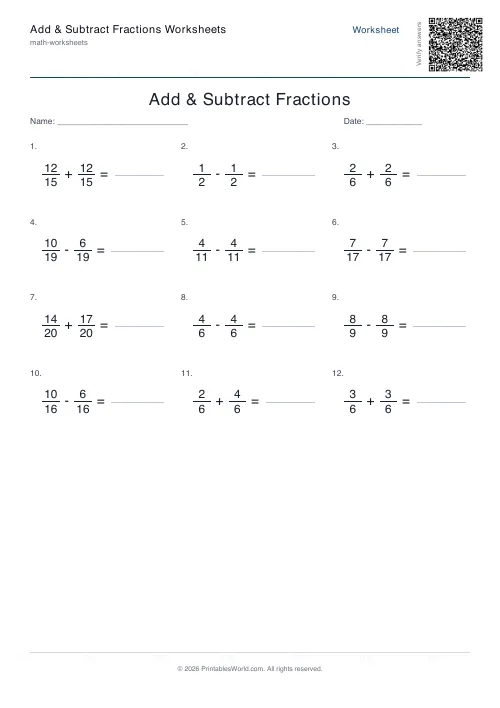
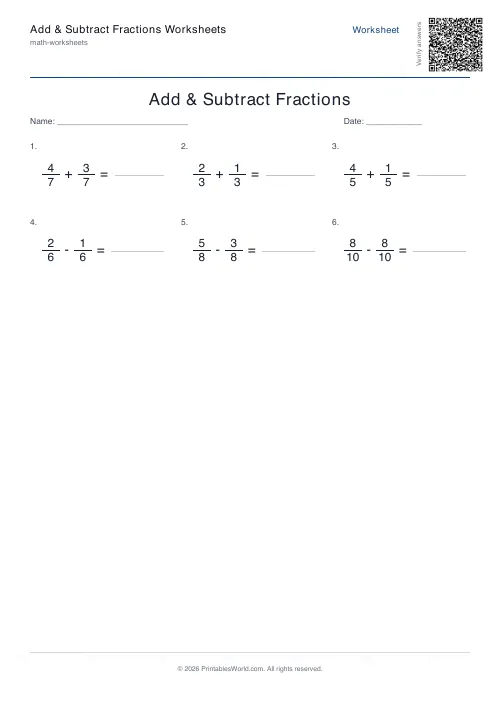
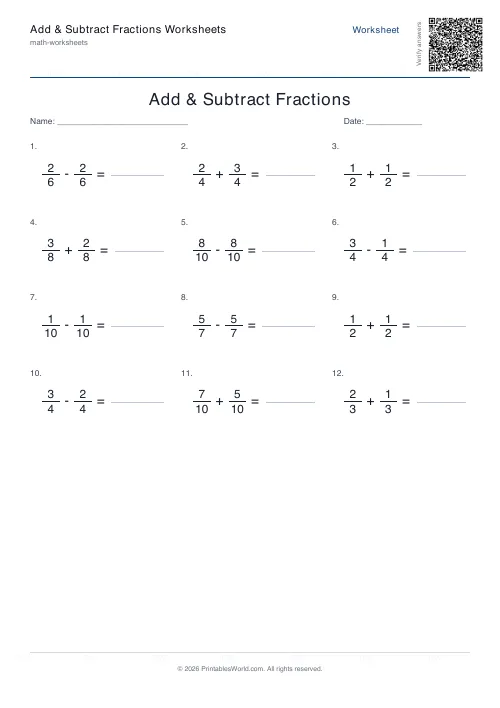
Adding and subtracting fractions, with the denominators under your control: all the same, all different, or a mix. Up to 30 problems a sheet, every answer simplified, and an optional key.
People also used
Fractions: Multiplication and Division
Printable multiply and divide fractions worksheets.
Fractions Practice Sheets Generator
Generate printable fraction simplification worksheets with custom ranges, layouts, and answer keys.
Math Word Problems Generator
Generate printable math word problem worksheets with customisable topics, difficulty, and answer keys.
Feedback
Spotted something off with this tool?
Adding and subtracting fractions, with the denominators as the dial
The setting that matters is not the number of problems. It is whether the two fractions share a denominator.
Same denominator is one skill: add the numerators, leave the bottom alone, simplify. Different denominators is a different and much larger one, because you cannot start until you have found a common denominator, and that is where the topic actually gets hard. Mixed puts both on the page, which is the right sheet once the second skill is in place and the wrong one before.
The denominator cap runs from 3 to 20 and controls how awkward the common denominator gets.
What the answers are guaranteed to be
Every result is reduced to lowest terms before it reaches the key, so 6/8 never appears as an answer — it prints as 3/4.
No result is negative. Subtraction problems are generated with the larger fraction first, which keeps the sheet inside the range a primary class has met. Some answers are improper — 7/5 rather than 1 2/5 — which is worth mentioning before you hand it out, because a class taught to convert to mixed numbers will do that and their answer will look different from the key while being the same number.
The cap is worth thinking about
Set it low, at 6 or 8, and the common denominators stay small and mostly familiar: halves, thirds, quarters, sixths. A child can find them without a method.
Set it at 20 and pairs like 7/12 and 5/18 turn up, where the common denominator is 36 and there is no way to reach it except by actually knowing how. That is the point at which a pupil who has been guessing is found out.
Raise it once, not gradually. The jump from "I can see it" to "I need a method" is the lesson, and it does not happen if the numbers creep.
Choices
Denominator mode, the maximum denominator (3–20), problems per sheet (1–30), the answer key, a worksheet title and optional Name and Date fields. A4 or US Letter.
Marking, and the mistake to look for
The one that matters is adding the denominators: 1/4 + 1/4 = 2/8. It is an entirely reasonable thing to try, since it is what addition does everywhere else, and a child who does it has not misremembered a rule but understood the notation differently.
Nothing about the answer key catches that. You have to look at the working, which is why a sheet of same-denominator problems is worth marking properly even though it looks trivial.
Print at 100% on A4 or US Letter. Every sheet is generated fresh.
FAQs
Quick answers
Do the answers come simplified?
Yes. The answer key simplifies each sum / difference down to its lowest terms.
Can the answer be negative?
No. Subtraction problems are arranged so the first fraction is always at least as big as the second.
Is there an answer key?
Yes. Turn on "Include answer key" and the PDF will add a second page with simplified answers.
Which age group is this for?
Typically Years 4–6 (UK) or Grades 4–6 (US), where adding and subtracting fractions is introduced.
Related tools
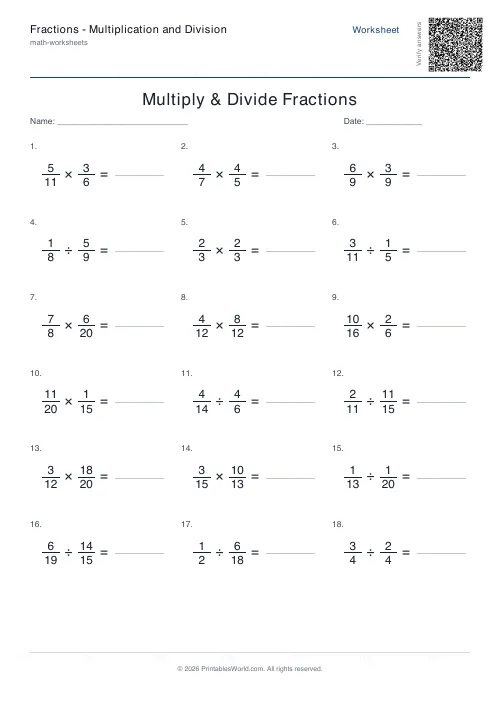
Fractions: Multiplication and Division
Printable multiply and divide fractions worksheets.
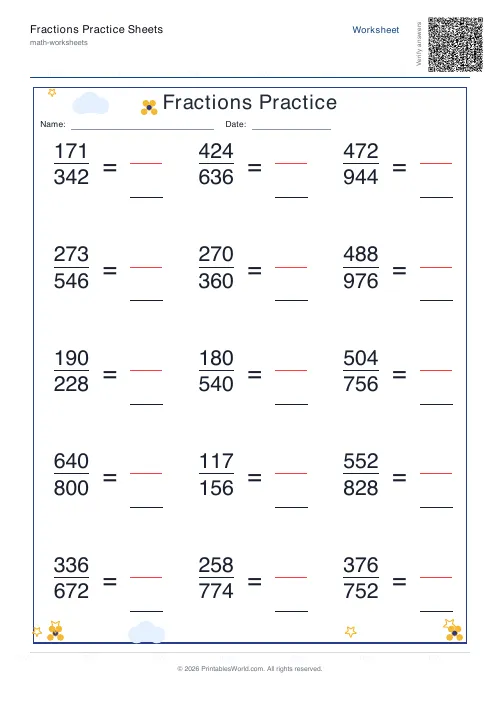
Fractions Practice Sheets Generator
Generate printable fraction simplification worksheets with custom ranges, layouts, and answer keys.
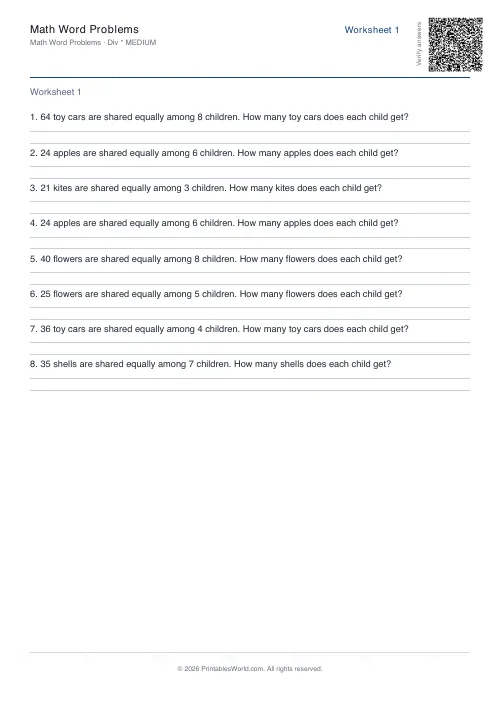
Math Word Problems Generator
Generate printable math word problem worksheets with customisable topics, difficulty, and answer keys.
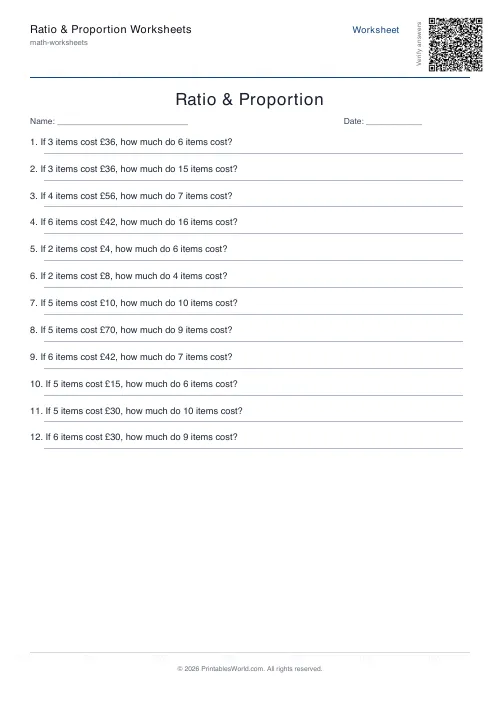
Ratio & Proportion Worksheets
Printable ratio and proportion practice. Simplify, share, and scale.
Further reading
Math Worksheets
Fractions made simple: teaching fractions at home
Fractions go wrong when the rules arrive before the meaning. Here is the order that works, the four misconceptions to head off early, and how to use everyday objects before any worksheet.
6 min read
Math & Numeracy
How to help a child who's stuck on times tables
A simple two week plan to help child with times tables, using short daily practice and free printable multiplication grids you can customise and print.
7 min read
More like this
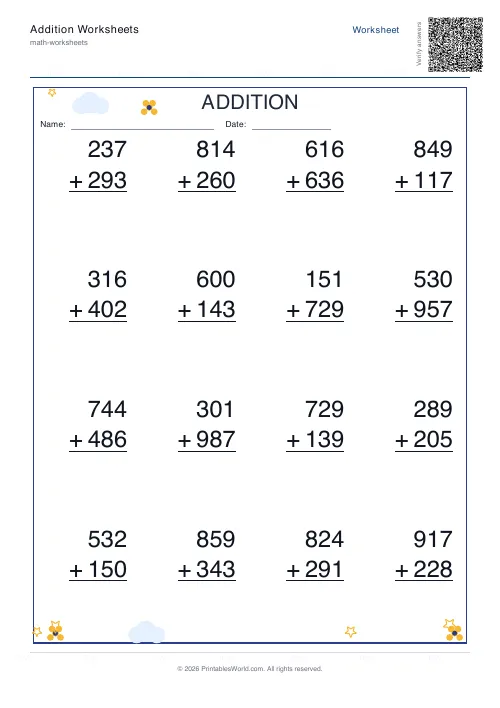 Addition Worksheets Generator
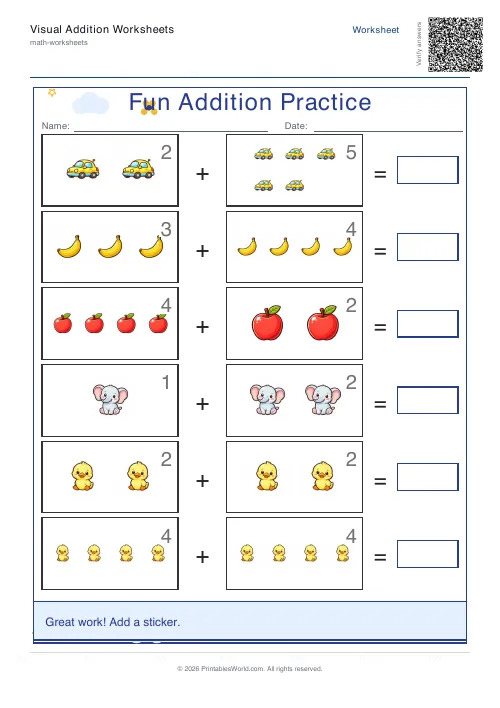 Visual Addition Worksheets Generator
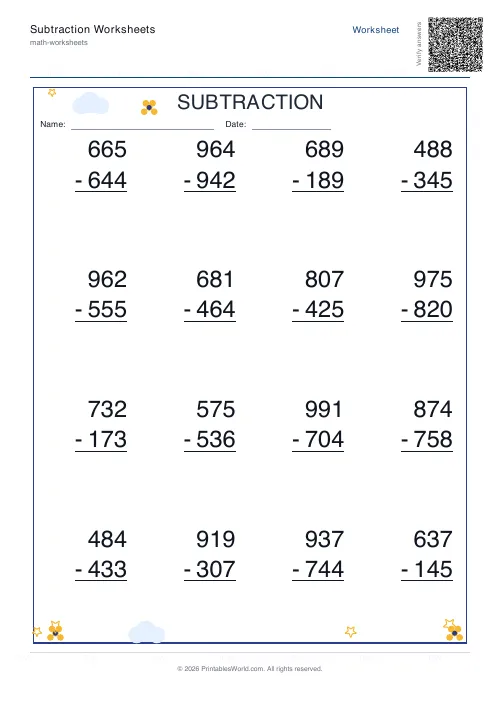 Subtraction Worksheets Generator
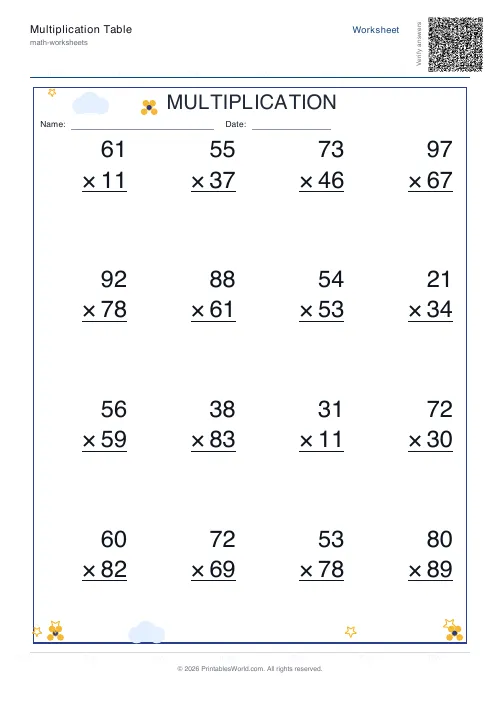 Multiplication Table Generator
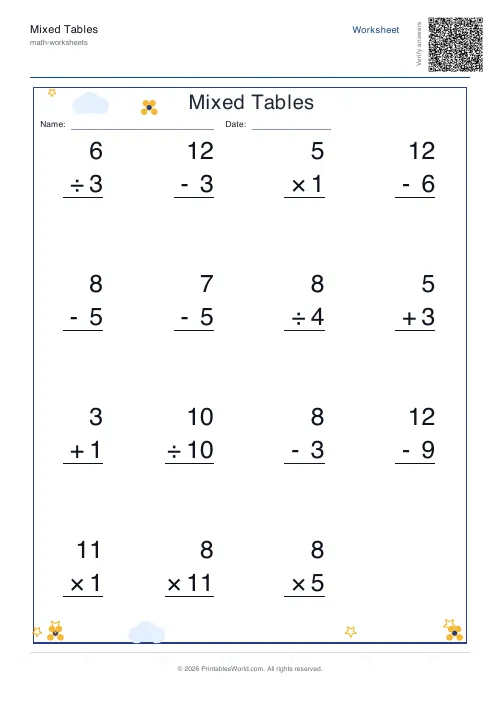 Mixed Tables Generator
- Fractions Practice Sheets Generator
- Math Word Problems Generator
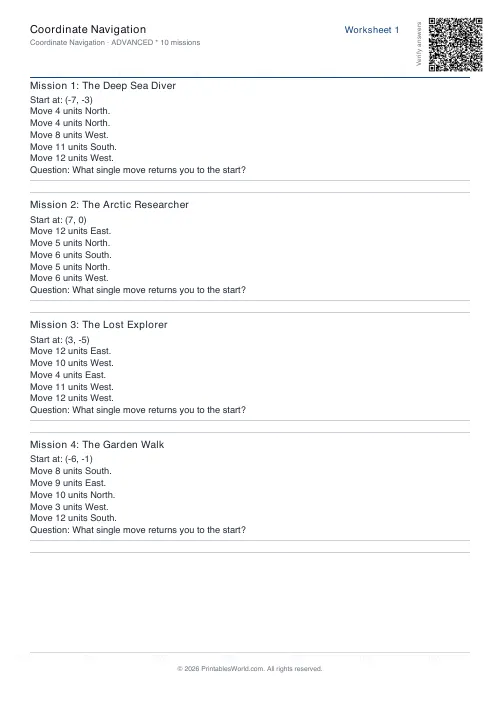 Coordinate Navigation Generator
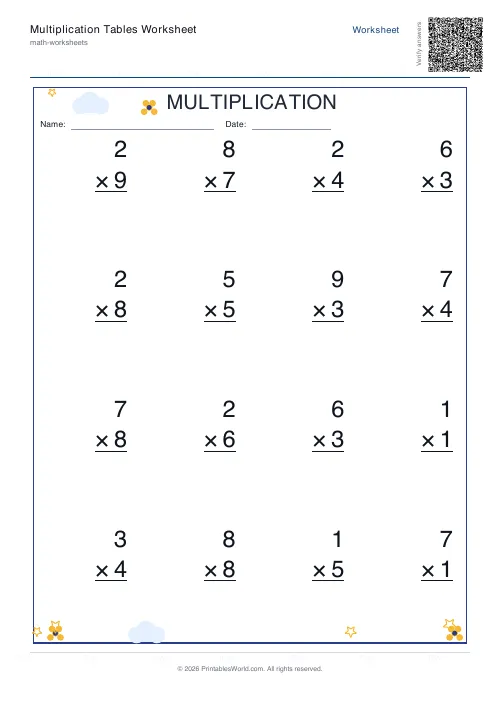 Multiplication Tables Worksheet
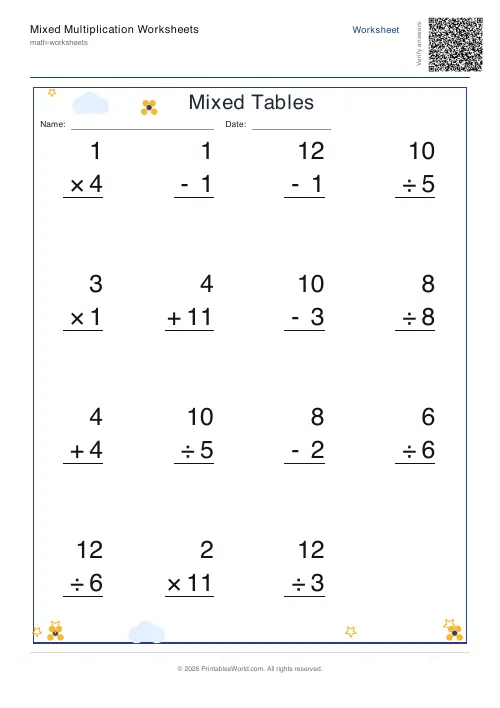 Mixed Multiplication Worksheets
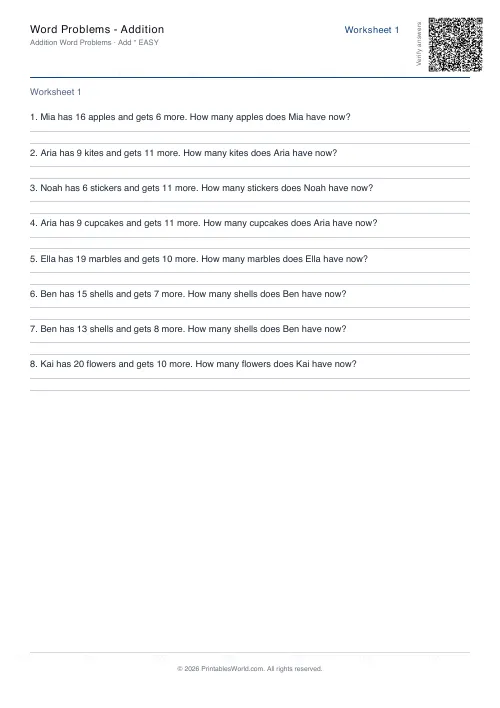 Word Problems: Addition
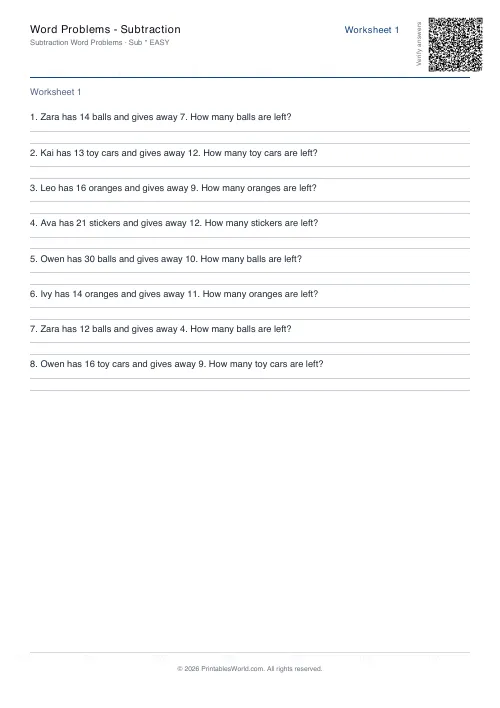 Word Problems: Subtraction
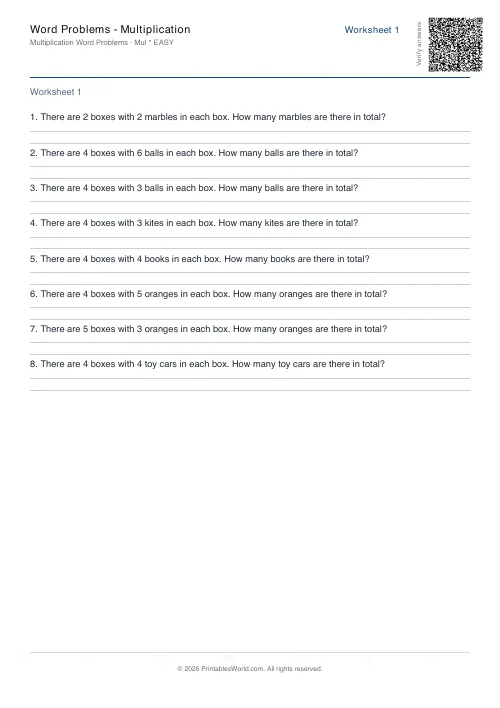 Word Problems: Multiplication
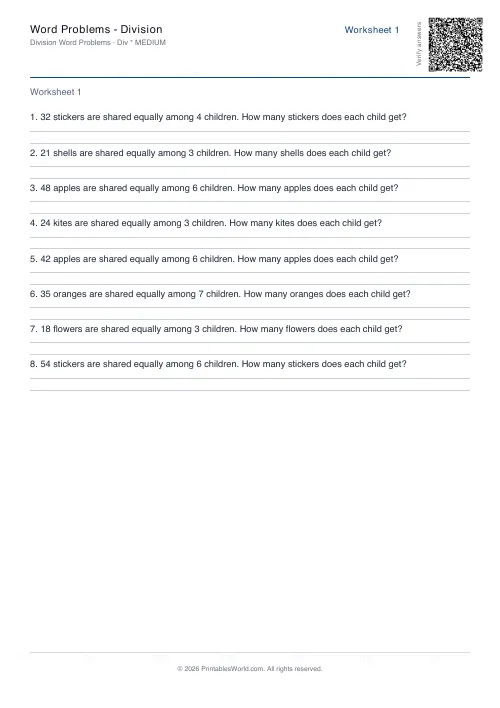 Word Problems: Division