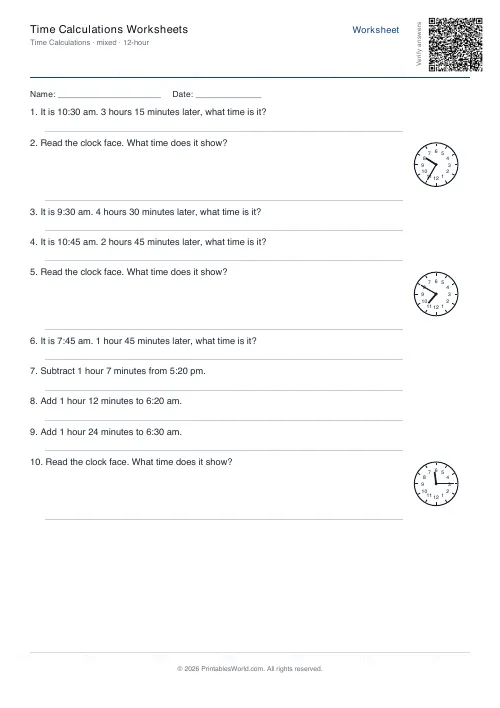
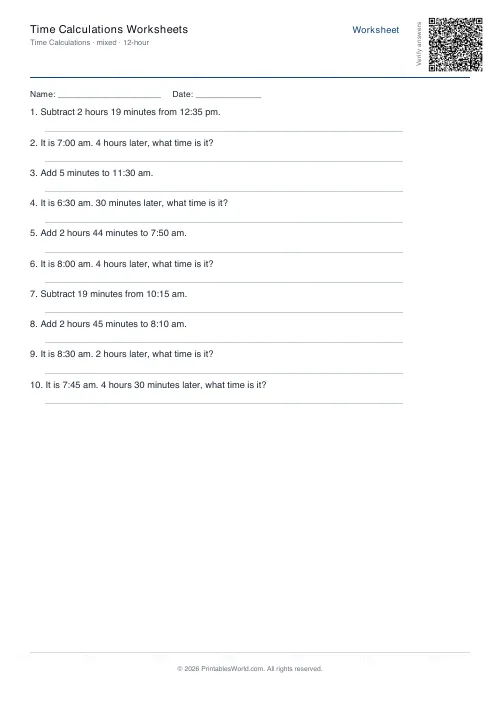
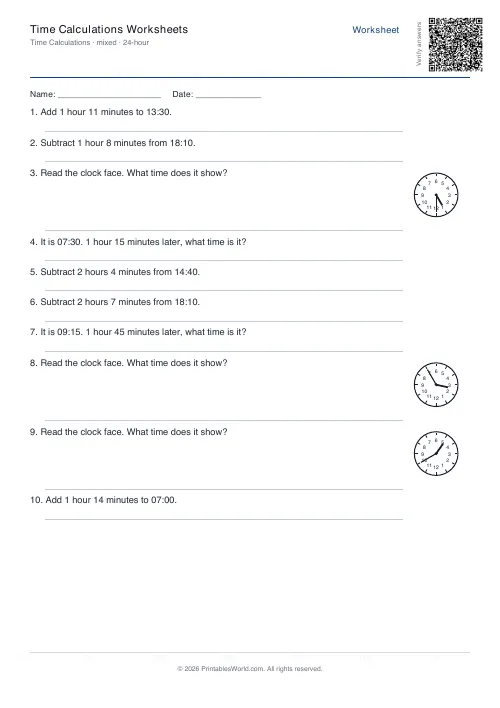
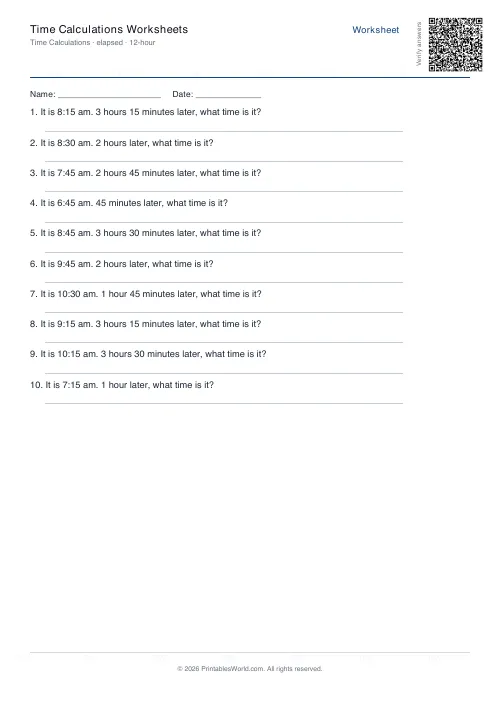
What this tool does
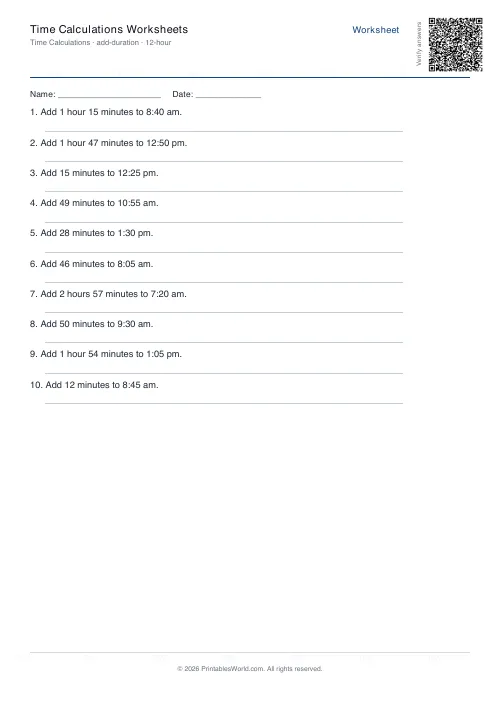
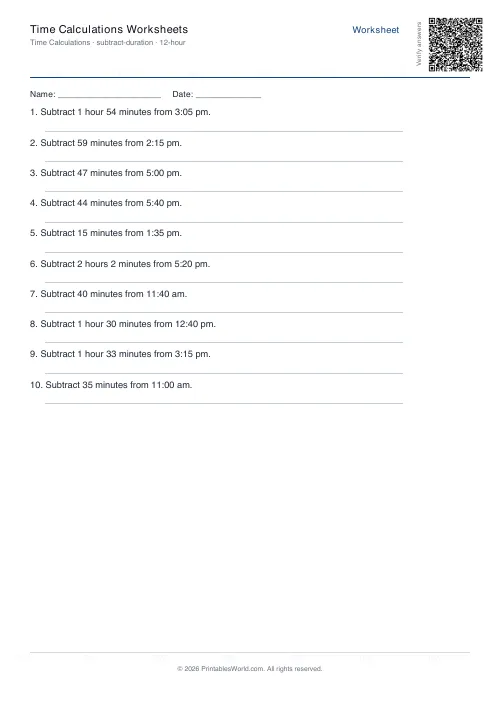
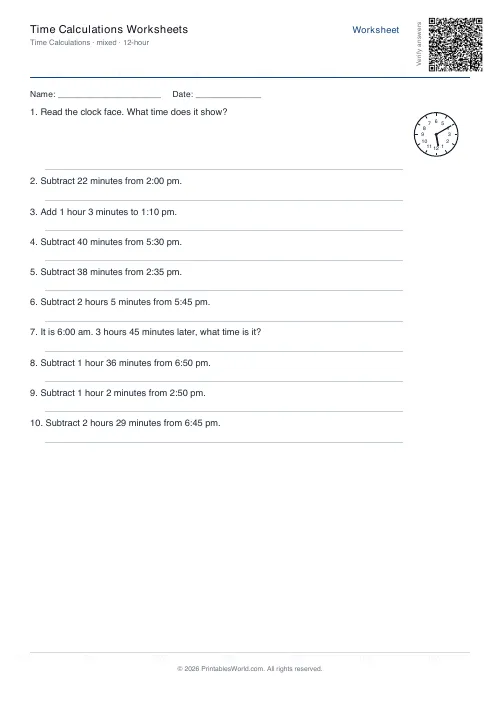
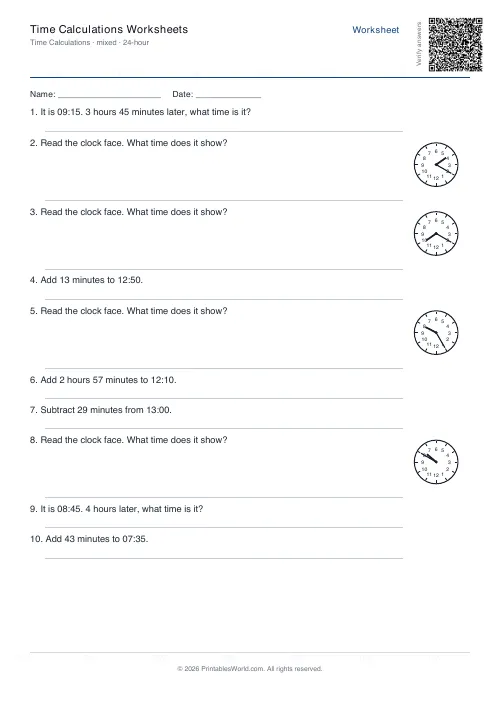
Four kinds of time question: elapsed time, adding a duration, subtracting one, and reading a drawn analogue clock face. Choose one or mix them, in 12- or 24-hour notation.
People also used
Math Word Problems Generator
Generate printable math word problem worksheets with customisable topics, difficulty, and answer keys.
Money Maths Worksheets
Print money maths worksheets with coin addition, making change, and word problems in £, $, or €.
Measurement Worksheets
Convert length, mass, and volume units. Mm ↔ cm ↔ m, g ↔ kg, ml ↔ l.
Feedback
Spotted something off with this tool?
Four question types
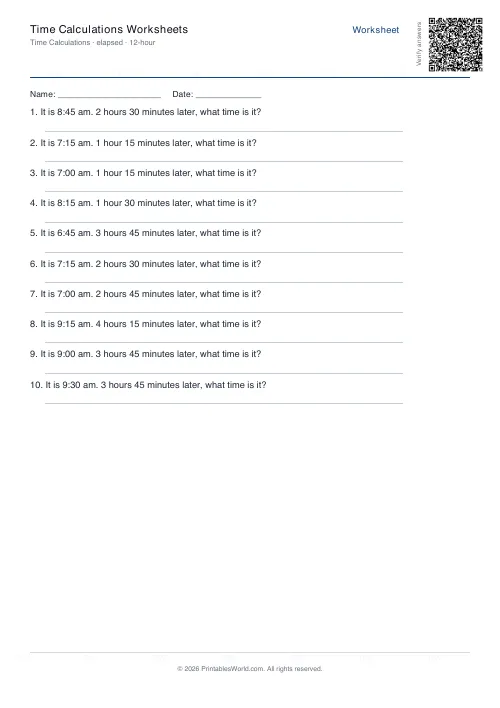
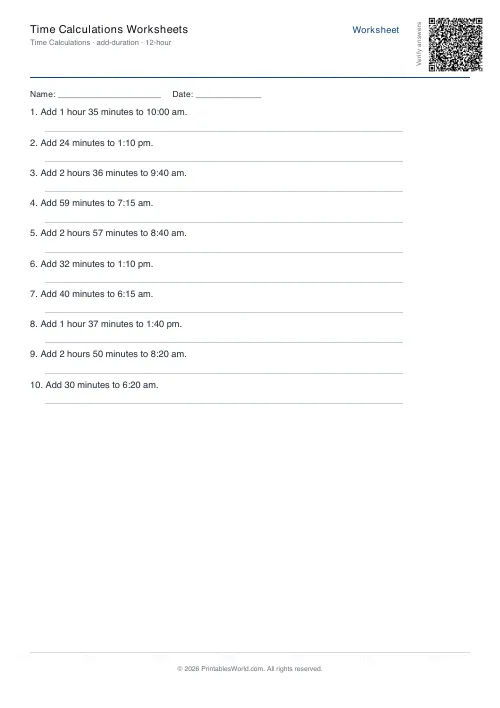
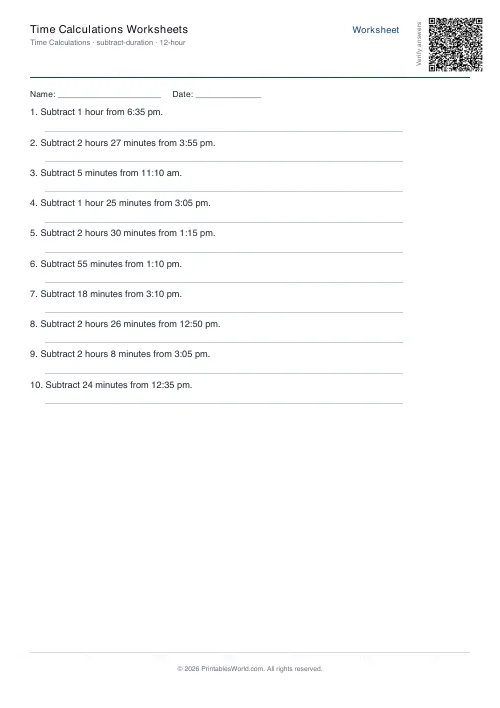
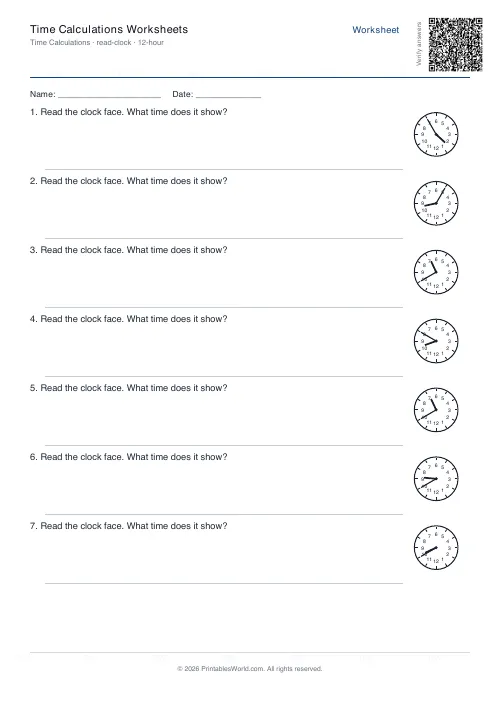
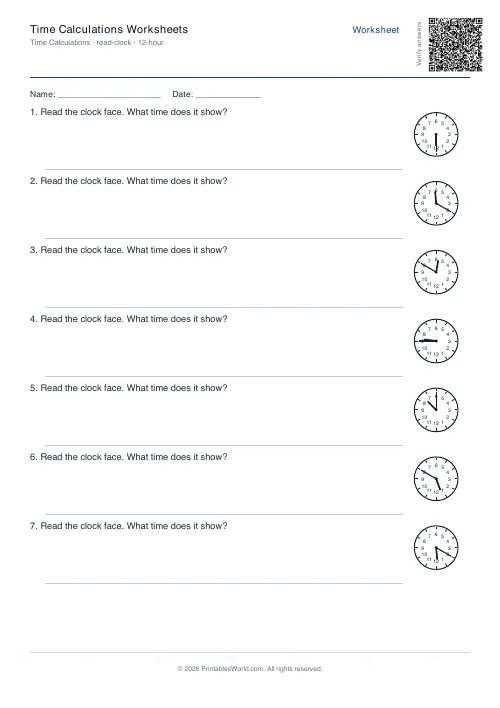
Elapsed time gives two times and asks for the gap. Add a duration gives a start and a length. Subtract a duration works backwards from an end time. Read the clock draws an analogue face and asks what it shows.
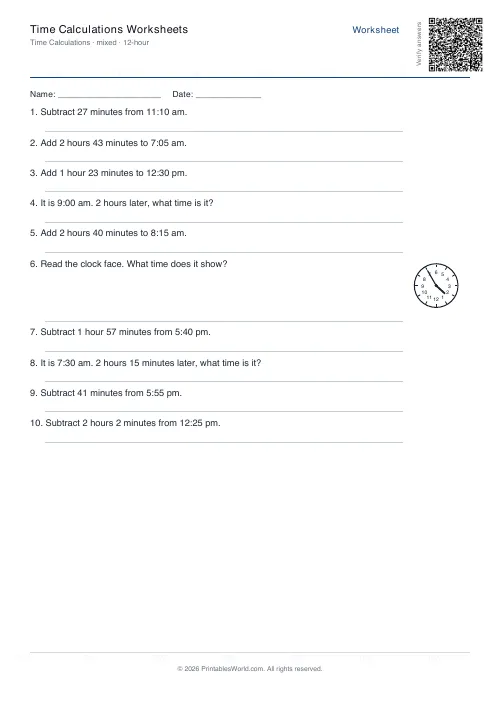
Mixed rotates through all four. Ten questions by default, with an answer key, and everything switches between 12- and 24-hour notation.
Time is base 60, and that is the difficulty
Everything else a child calculates is base 10. Here, sixty minutes carry into an hour instead of a hundred, and very nearly every error on the topic traces back to that single fact about how we happen to count time.
The classic: 2:45 plus 30 minutes answered as 2:75. It is not a careless slip, it is the correct base-10 method applied to a base-60 quantity, and it needs teaching rather than correcting.
Count on through the hour
The method that works, and it is the same one that works for money.
From 2:45 to 5:20, do not attempt a column subtraction. Count up: 15 minutes gets you to 3:00, two hours gets you to 5:00, another 20 gets you to 5:20. Two hours 35. That is quick, it is reliable, and it never requires borrowing across a base that is not ten.
A blank number line drawn underneath makes it visual for anyone who needs it.
The clock faces matter
Reading an analogue face is a separate skill from time arithmetic, and it is disappearing. Almost every clock a child sees now is digital.
It is still worth having. Analogue faces show duration in a way digits do not — the gap between now and half past is visibly a quarter of the circle, and that spatial sense of elapsed time is genuinely useful. Include the clock questions even when the arithmetic is the target.
12-hour and 24-hour
Start with 12-hour, since it matches how people speak. Move to 24-hour when timetables arrive, which is where it becomes necessary rather than academic.
The conversion trips pupils twice: 12:30pm is 12:30 and not 24:30, and 12:30am is 00:30. Both midday and midnight are exceptions to the add-twelve rule, and both are worth setting deliberately.
Where it is used
Bus and train timetables, which is the classic exam context and a genuinely useful skill. Cooking times, working out when to leave, shift lengths, how long a journey took.
Level: roughly ages seven to twelve, with clock reading starting earlier and 24-hour work later.
FAQs
Quick answers
Can I mix elapsed time and duration problems on one worksheet?
Yes. Select "mixed" mode and the generator will randomise all four problem types, elapsed time, add duration, subtract duration, and analog clock reading, across the number of questions you specify.
How do I switch between 12-hour and 24-hour time?
Use the 12/24-hour toggle before generating your worksheet. 12-hour mode displays times like 3:45 pm; 24-hour mode shows 15:45. The generator applies your choice to every problem and the answer key.
What does the analog clock mode look like?
The generator draws a circular clock face with hour and minute hands positioned at the correct time. Students write the time shown underneath each clock. Clocks use five-minute intervals for clarity.
Can I print the answer key on a separate page?
Yes. When you tick "Include answer key," the PDF appends a solutions page listing every problem number and its correct answer in the same order as the worksheet.
How many problems fit on one page?
The layout engine fits between 6 and 12 problems per page depending on whether you've enabled analog clock faces (which take more vertical space) and the length of the problem text. If you request more problems than fit on one page, the generator adds extra pages automatically.
Do the problems cross midnight or noon?
Yes, especially in add-duration and subtract-duration modes. For example, "Add 3 hours to 10:30 pm" produces 1:30 am, and "Subtract 2 hours from 1:00 am" gives 11:00 pm. These boundary-crossing problems strengthen mental-arithmetic skills.
Can I customise the worksheet title?
Absolutely. Type any heading you like in the title field. "Week 5 Homework," "Time Quiz A," or your student's name. Leave it blank for a generic "Time Calculations" heading.
Related tools
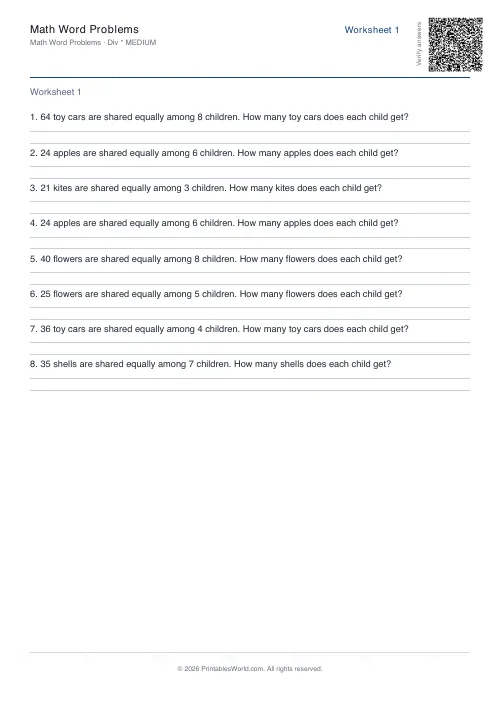
Math Word Problems Generator
Generate printable math word problem worksheets with customisable topics, difficulty, and answer keys.
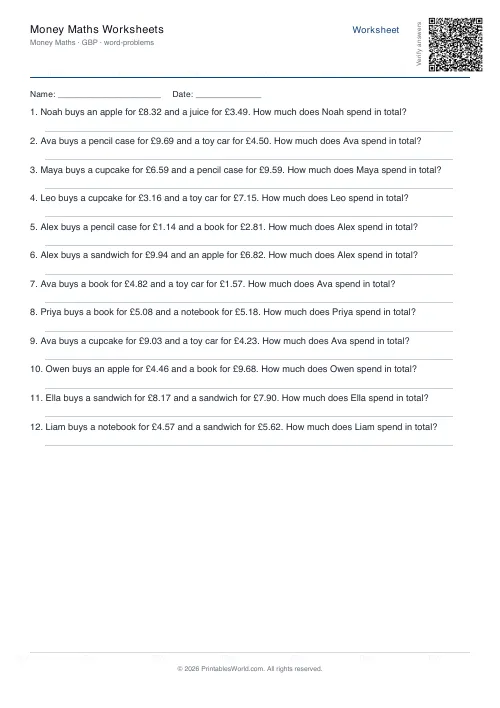
Money Maths Worksheets
Print money maths worksheets with coin addition, making change, and word problems in £, $, or €.
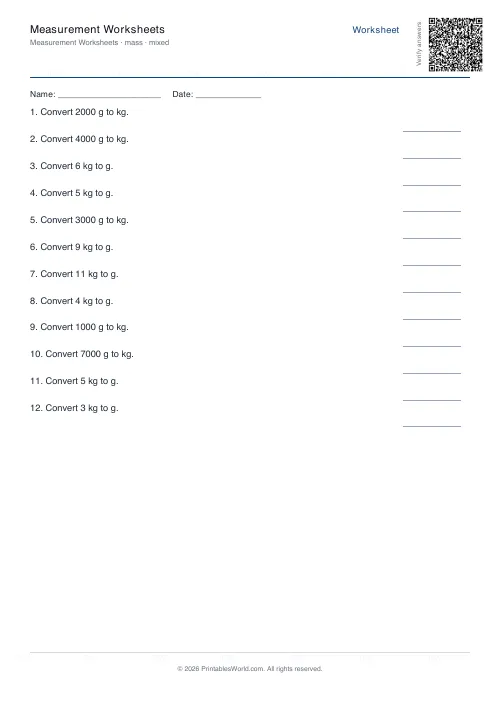
Measurement Worksheets
Convert length, mass, and volume units. Mm ↔ cm ↔ m, g ↔ kg, ml ↔ l.
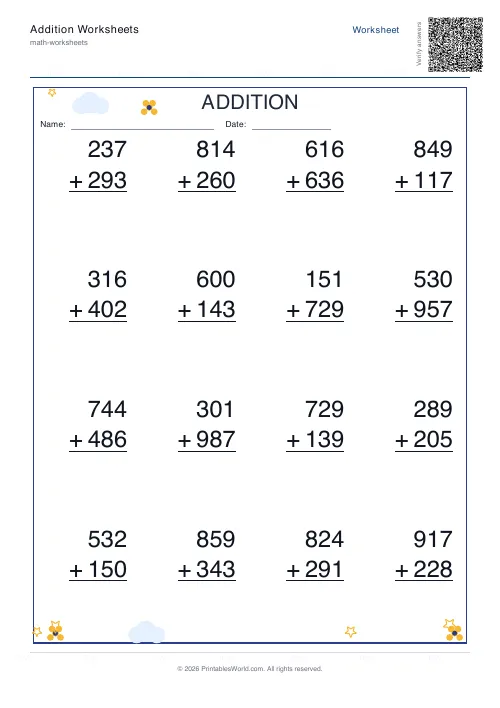
Addition Worksheets Generator
Free printable addition worksheets in tables or line-by-line layouts.
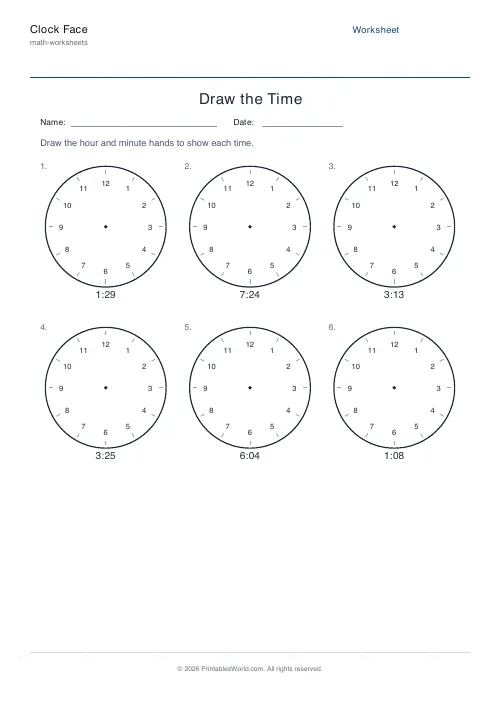
Clock Face Generator
Draw the hands on the clock to match each given time.
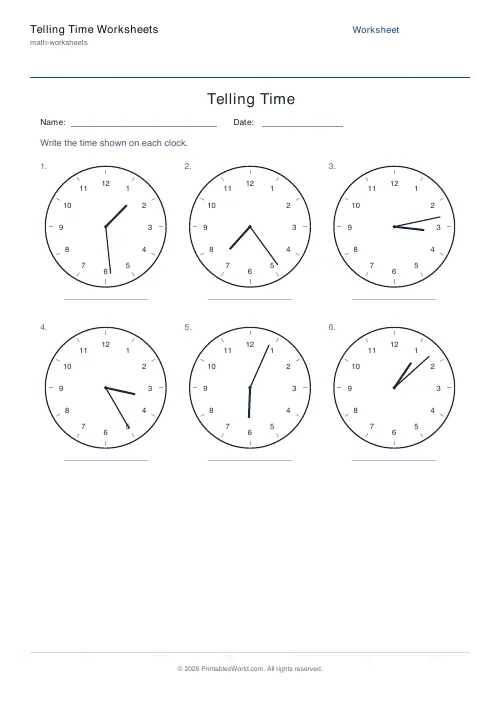
Telling Time Worksheets
Read analogue clocks to the hour, half, quarter, and minute.
Further reading
More like this
- Addition Worksheets Generator
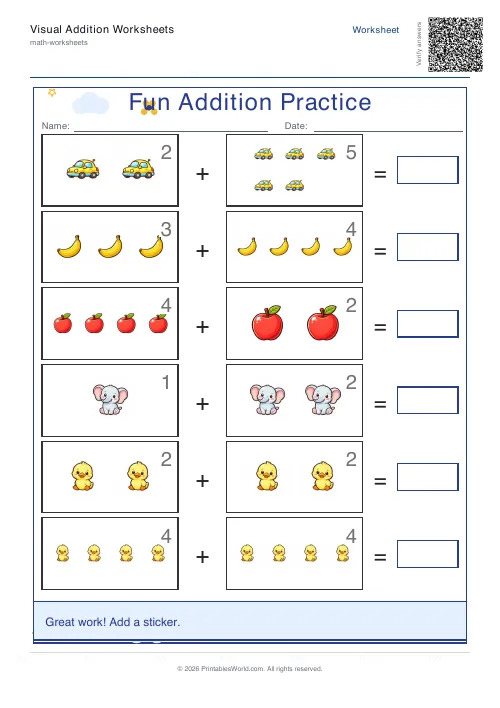 Visual Addition Worksheets Generator
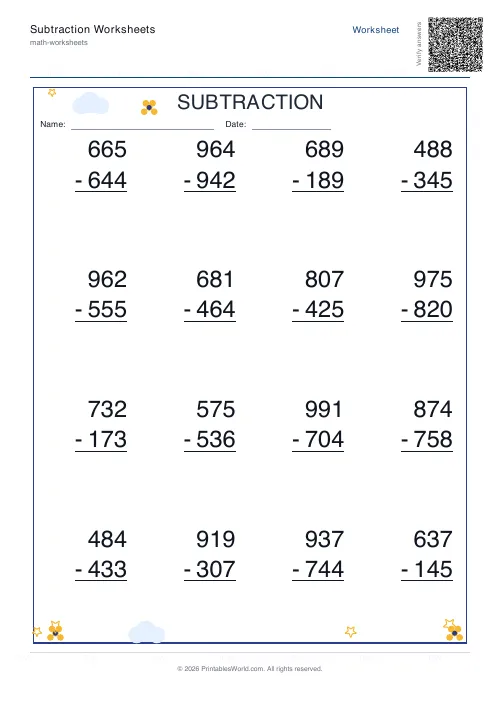 Subtraction Worksheets Generator
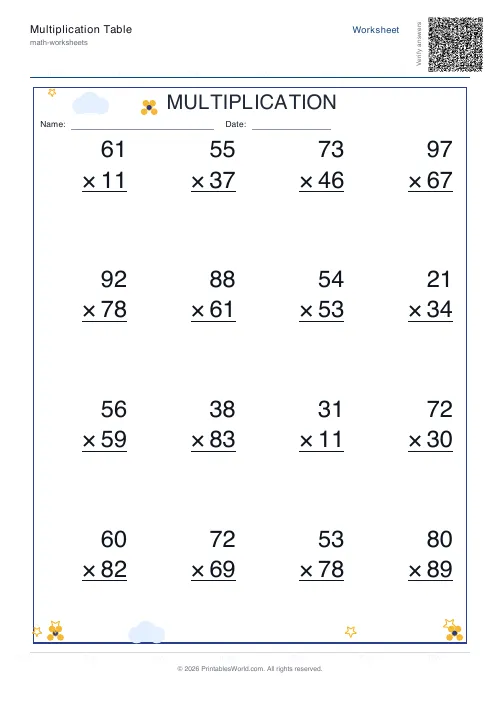 Multiplication Table Generator
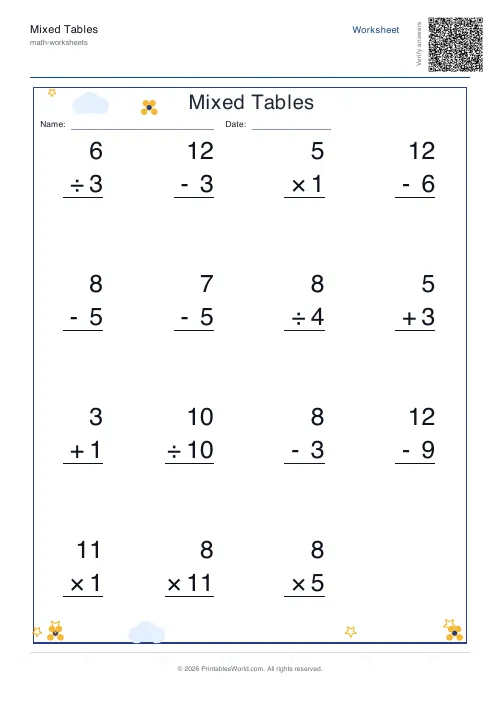 Mixed Tables Generator
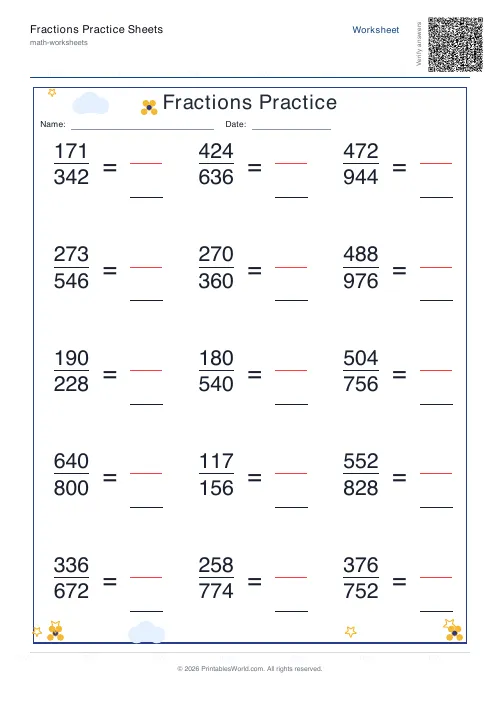 Fractions Practice Sheets Generator
- Math Word Problems Generator
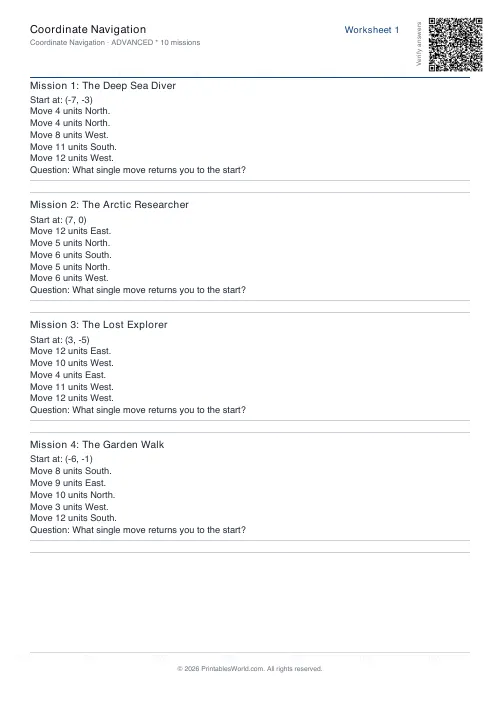 Coordinate Navigation Generator
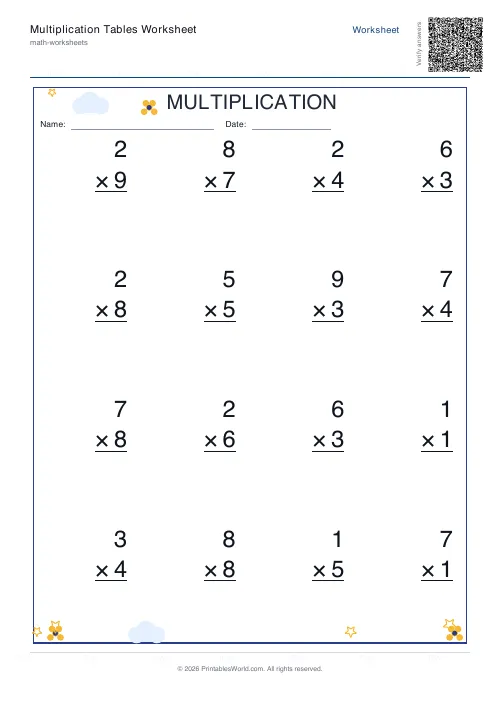 Multiplication Tables Worksheet
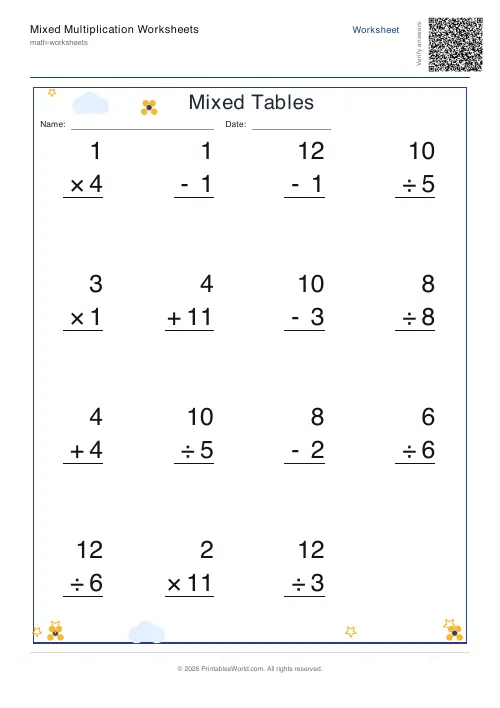 Mixed Multiplication Worksheets
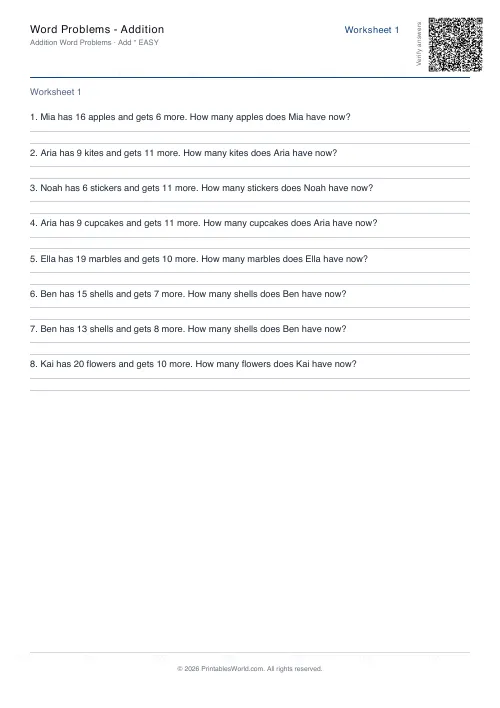 Word Problems: Addition
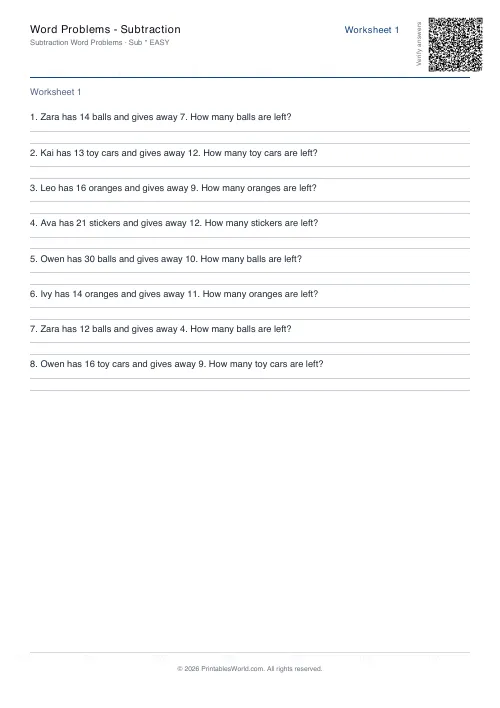 Word Problems: Subtraction
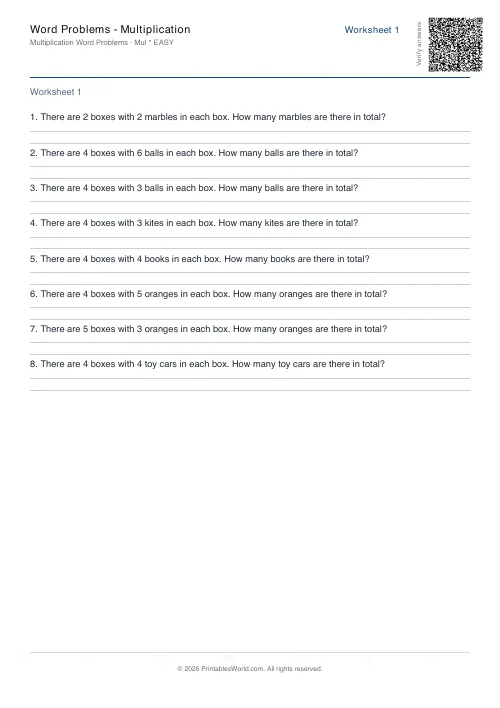 Word Problems: Multiplication
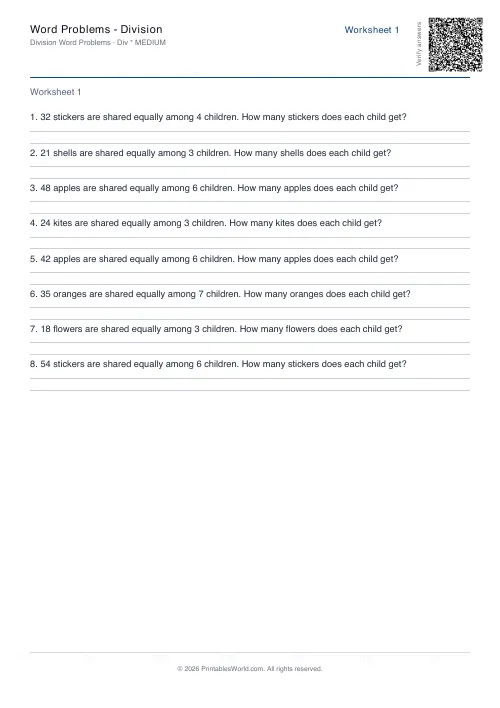 Word Problems: Division