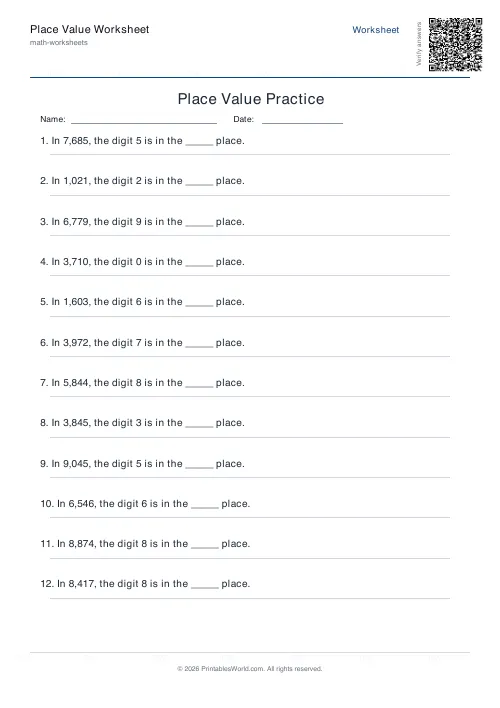
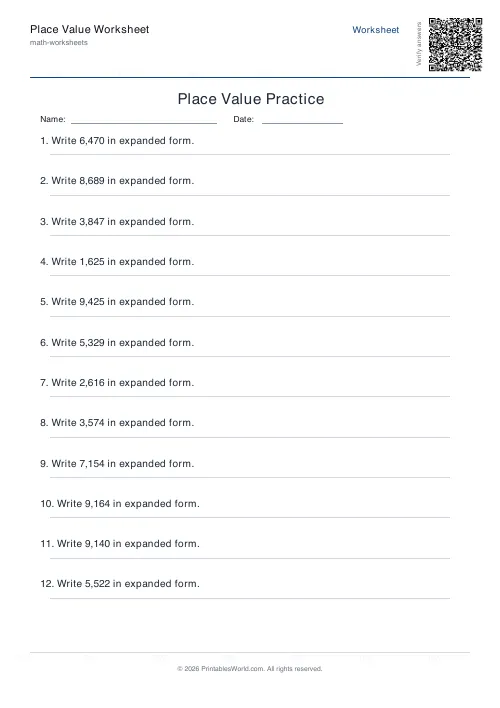
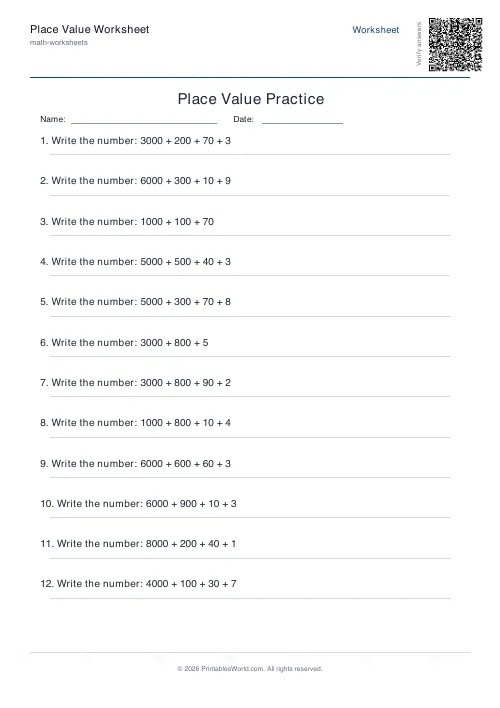
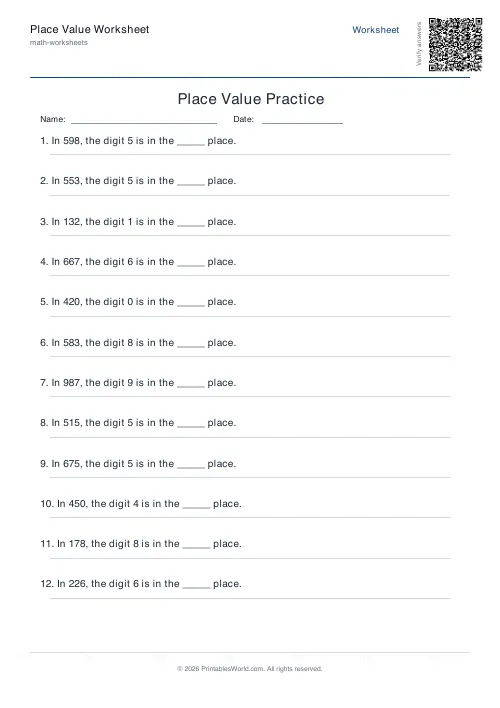
What this tool does
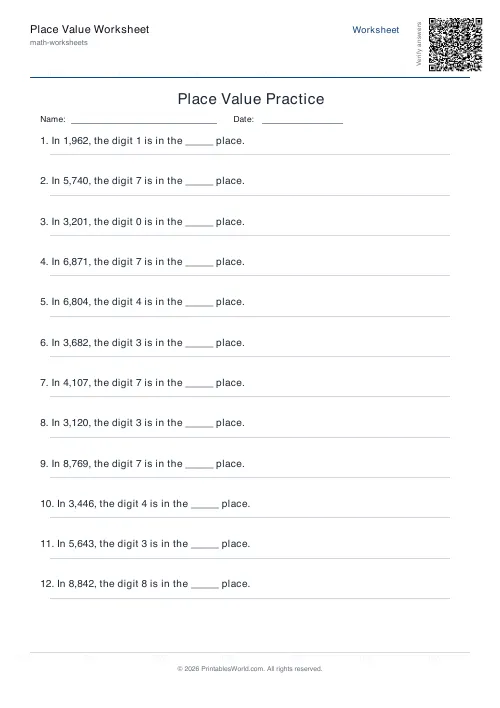
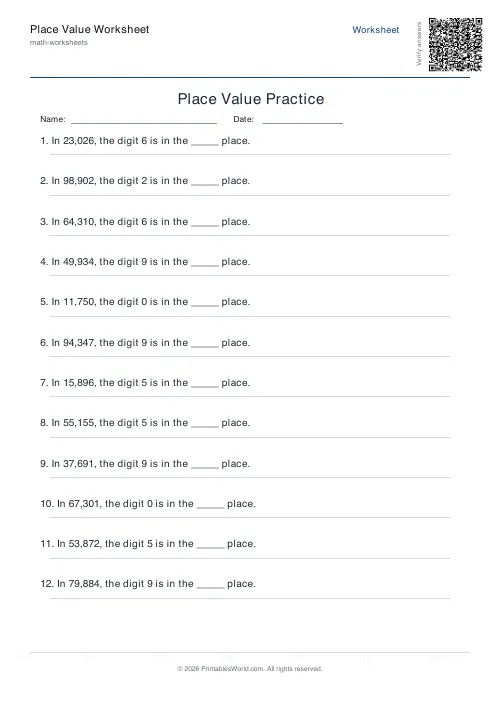
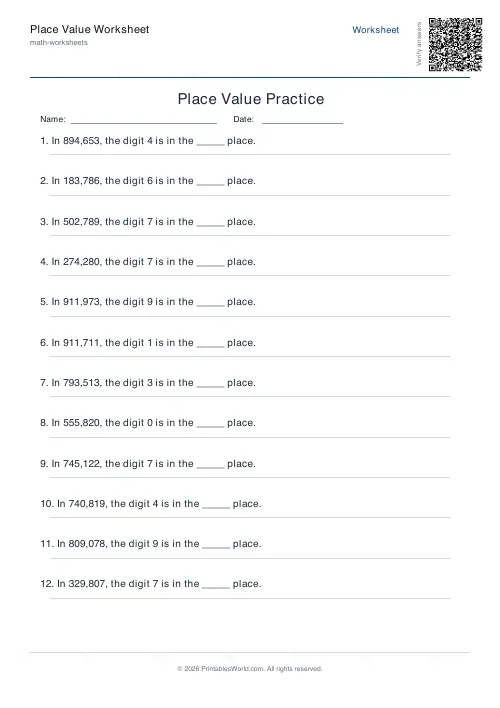
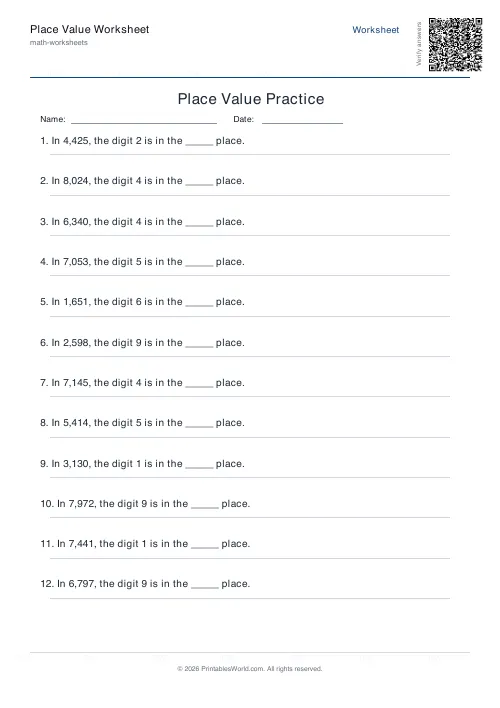
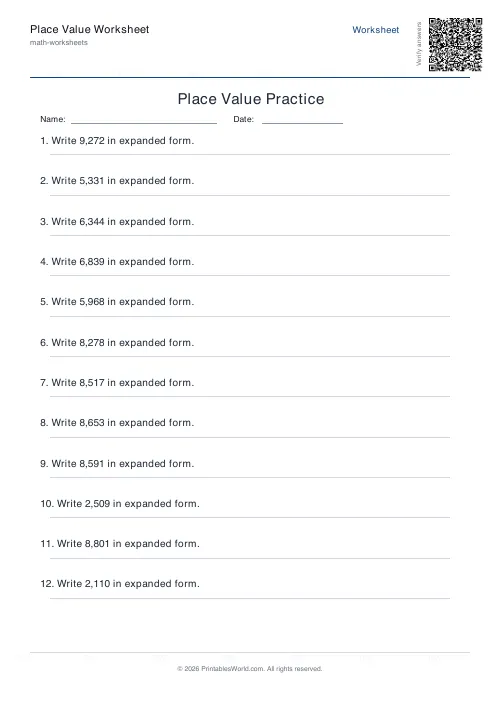
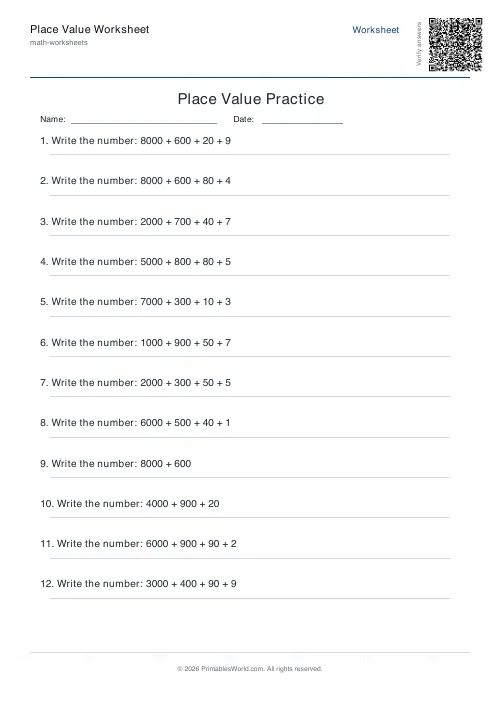
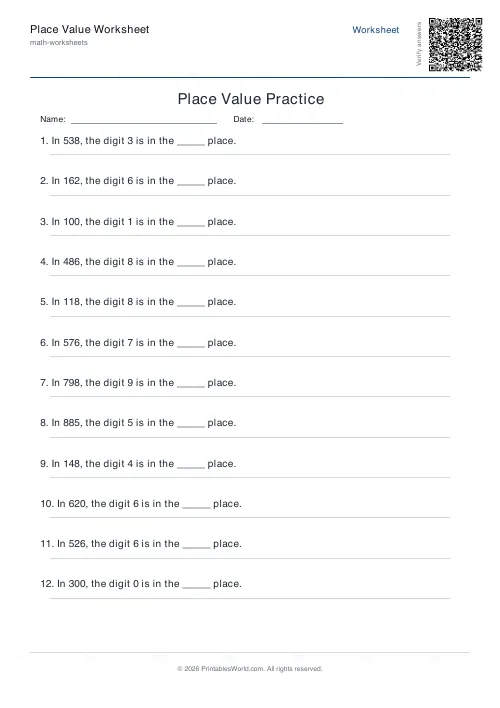
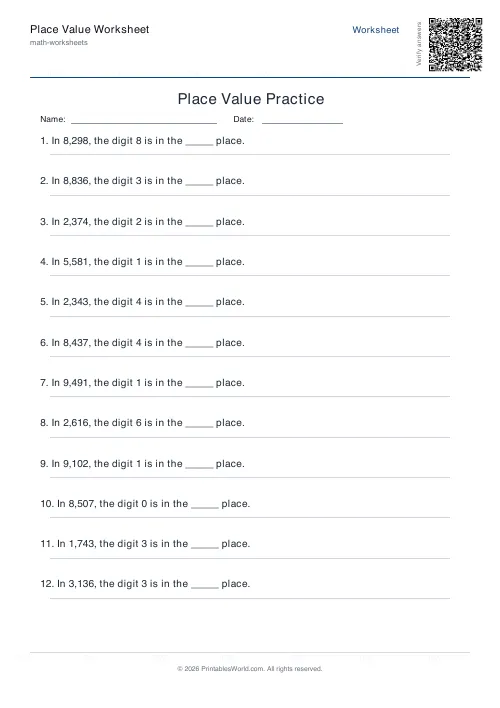
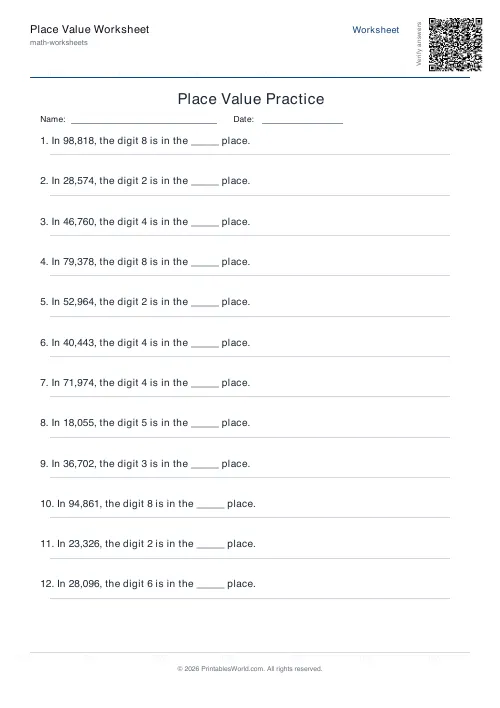
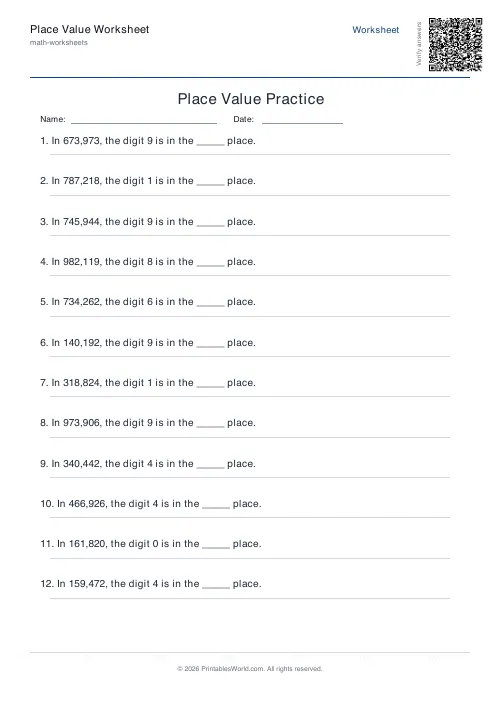
Place-value practice in three modes. Identify the place of a highlighted digit, expand a number into its parts, or compose a number back from them. Three digits up to six, with comma separators on thousands and above so the large numbers stay readable, and an answer key.
People also used
Rounding Numbers Worksheet Generator
Generate free printable rounding worksheets for whole numbers and decimals with answer keys.
Greater Than / Less Than Worksheets
Free printable greater than / less than worksheets with customizable digit counts and answer keys.
Number Bonds Worksheet Generator
Print customisable number bonds worksheets for sums to 10, 20 or 100 with optional answer keys.
Feedback
Spotted something off with this tool?
Three modes, and the third one is the test
Identify shows a number with one digit picked out and asks what place it sits in. The 7 in 47,852 is in the thousands, and it means 7,000.
Expand takes 47,852 and asks for 40,000 + 7,000 + 800 + 50 + 2. That is the multiplicative nature of place value written out.
Compose runs it backwards: given 40,000 + 7,000 + 800 + 50 + 2, write the number. This is the harder direction and the one that shows whether the idea has landed, because a child can expand by copying digits into a pattern without understanding any of it.
Why this is the concept everything else rests on
A pupil who genuinely knows the 3 in 347 means three hundreds does not line up a decimal point wrongly, and does not put a column-addition carry in the wrong place.
Almost every persistent arithmetic error in upper primary traces back here. So if a child is reliably making column mistakes, the useful diagnostic is not more column practice, it is a compose-mode sheet: somebody who cannot turn 5,000 + 300 + 70 + 2 into 5,372 has a gap that no amount of drilling addition will close.
Digit count is the whole difficulty setting
Three digits through to six. Three is early Year 2 or 3. Six digits is a stretch for Year 6, and the jump is bigger than it looks, because reading a six-digit number aloud correctly is itself a skill.
The leading digit is never zero, so a four-digit question is genuinely four digits. Thousands and above print with comma separators, which keeps large numbers readable and quietly teaches the grouping convention at the same time.
Same mode, different digit count, is the cheapest differentiation available: everybody works on the same idea and nobody has a visibly different sheet.
Two worked ones
Expand mode, five digits. The number 68,143 comes up, and the answer is 60,000 + 8,000 + 100 + 40 + 3.
Compose mode, same digit count. The question reads 90,000 + 2,000 + 500 + 60 + 7 and the answer is 92,567. Note the zero in the tens of the first example and none in the second: the sheets that contain a zero place are the ones that separate understanding from pattern-matching, because a child copying digits will drop it.
Practising it out loud
- Read numbers using place-value language rather than as digits. Four ten-thousands, seven thousands, eight hundreds, five tens, two.
- Keep a place-value chart beside the sheet when five and six digits first appear.
- Alternate expand and compose. The inverse pairing surfaces misconceptions much faster than either alone.
- Connect it to column addition the same week, so the pupil sees why any of it matters rather than filing it as its own topic.
Scope
Whole numbers only. For decimal place value, this pairs with the rounding and decimals generators rather than covering it.
Expanded form is written with plus signs and never in words, so 40,000 + 2,000 + 800 + 50 + 7 rather than forty-two thousand and so on. Word form is a different skill and mixing the two on one sheet muddles both.
FAQs
Quick answers
What does each mode do?
"Identify" asks students to name the place of a given digit. "Expand" asks them to write the number in expanded form. "Compose" gives the expanded form and asks for the number.
How many digits can I use?
You can choose 3 to 6 digits. Larger digit counts are good for upper primary and early middle-school practice.
Are numbers displayed with commas?
Yes, thousands and above use comma separators so large numbers stay readable.
Is an answer key included?
Yes. Toggle "Include answer key" to add an answers page to the PDF.
Related tools
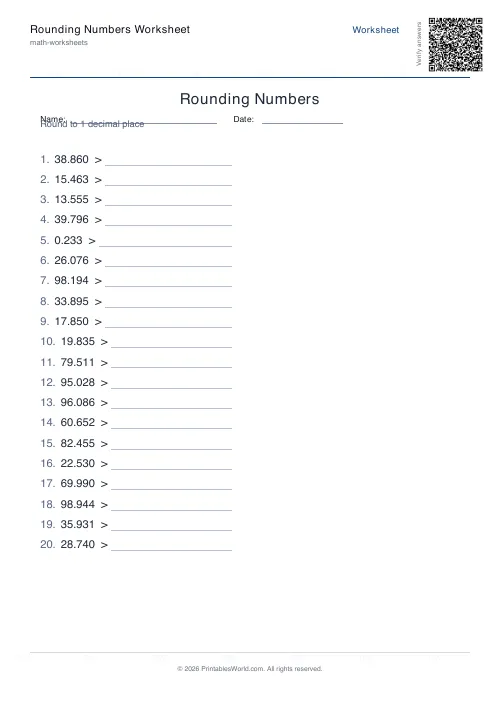
Rounding Numbers Worksheet Generator
Generate free printable rounding worksheets for whole numbers and decimals with answer keys.
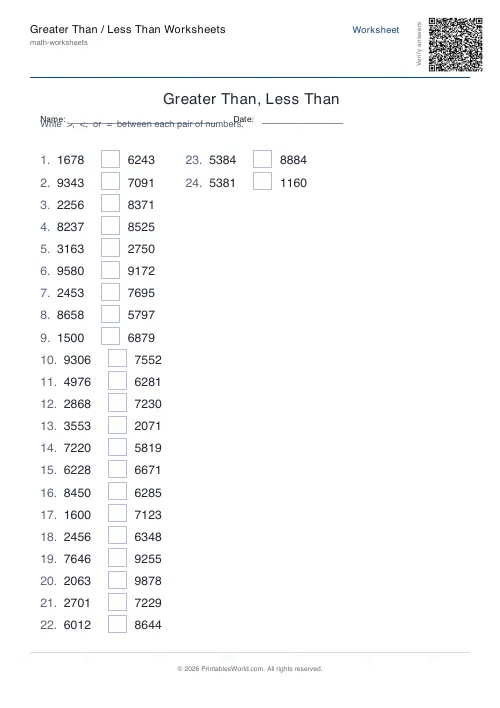
Greater Than / Less Than Worksheets
Free printable greater than / less than worksheets with customizable digit counts and answer keys.
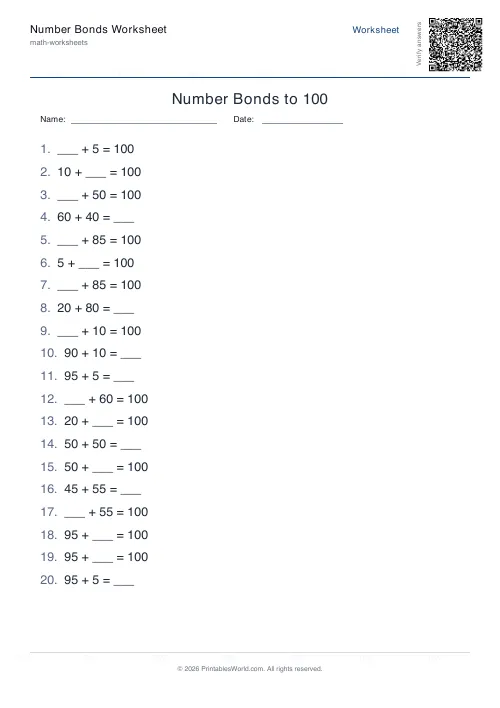
Number Bonds Worksheet Generator
Print customisable number bonds worksheets for sums to 10, 20 or 100 with optional answer keys.
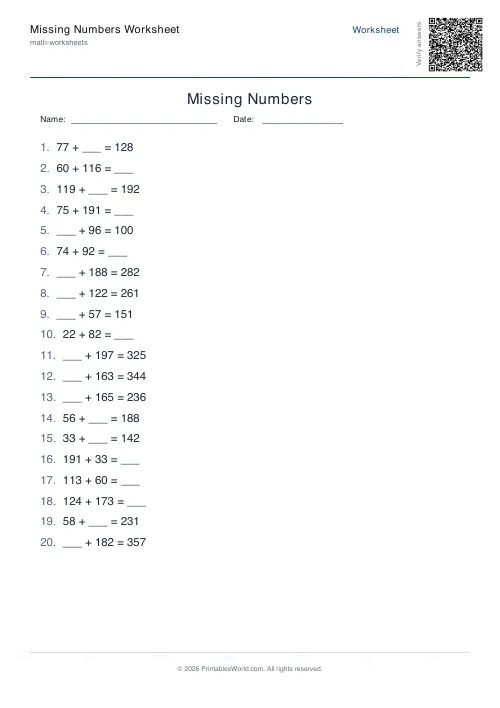
Missing Numbers Worksheet Generator
Free printable fill-in-the-missing-number worksheets for addition, subtraction, multiplication and division.
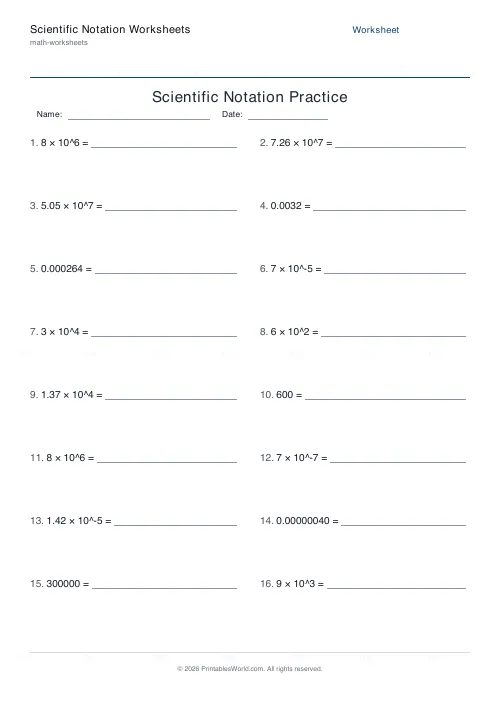
Scientific Notation Worksheets
Generate practice sheets for converting between standard form and scientific notation, covering both large and small numbers.
Further reading
Math Worksheets
Ten frames and number bonds: early maths foundations
A ten frame is two rows of five. That arrangement does something a row of counters cannot. It makes quantities visible without counting, which is where number sense starts.
5 min read
Math Worksheets
Addition strategies: number lines, regrouping and more
Column addition is the destination, not the route. Here are the strategies that come before it, why each matters, and how to tell which one a child is actually using.
5 min read
Math Worksheets
How many maths worksheets per day? A parent's guide
The honest answer is less than most parents assume. And the number of questions matters less than whether the session ends well.
5 min read
More like this
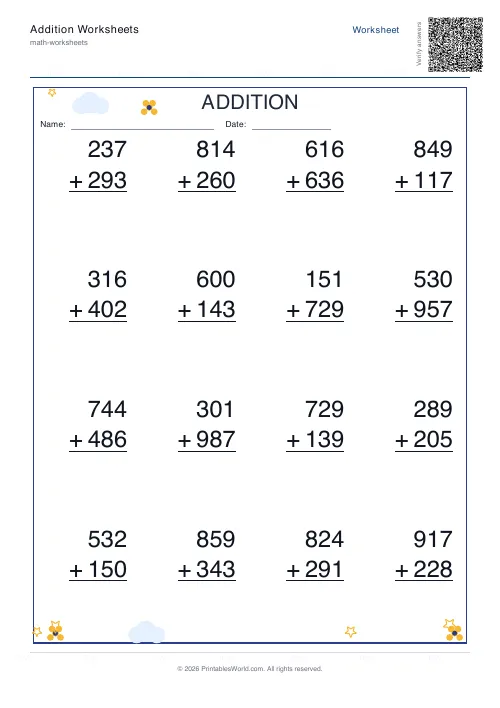 Addition Worksheets Generator
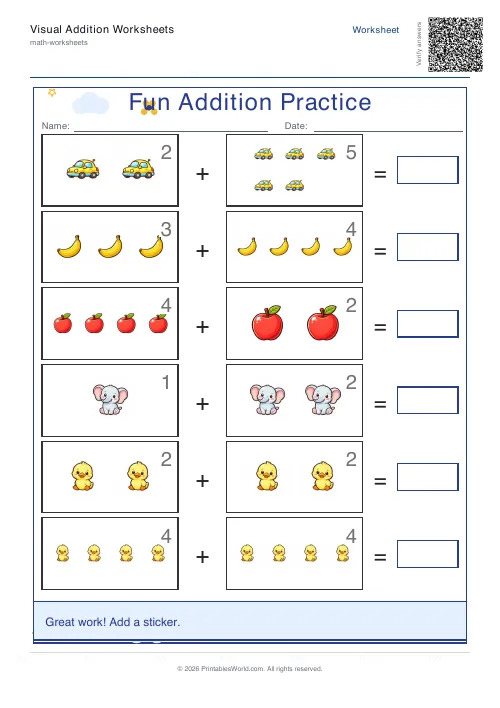 Visual Addition Worksheets Generator
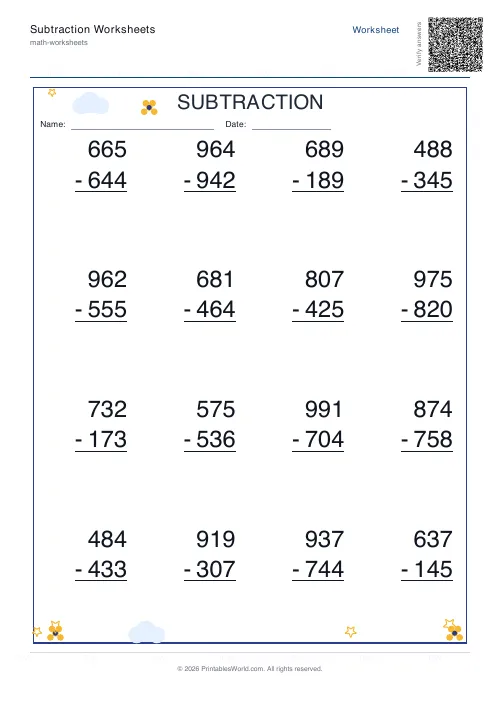 Subtraction Worksheets Generator
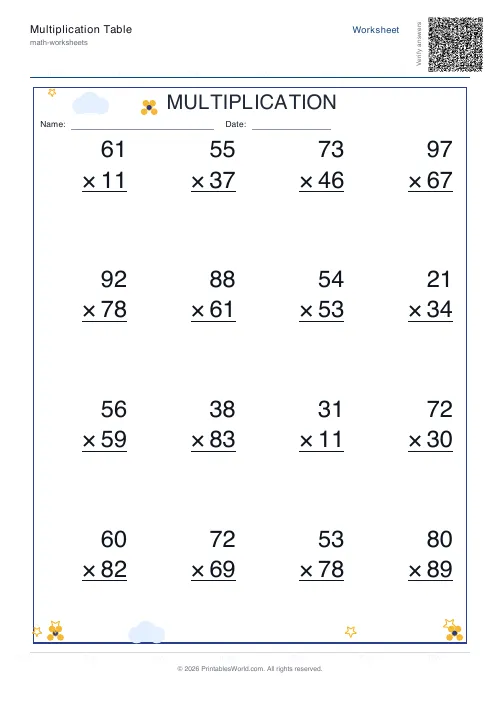 Multiplication Table Generator
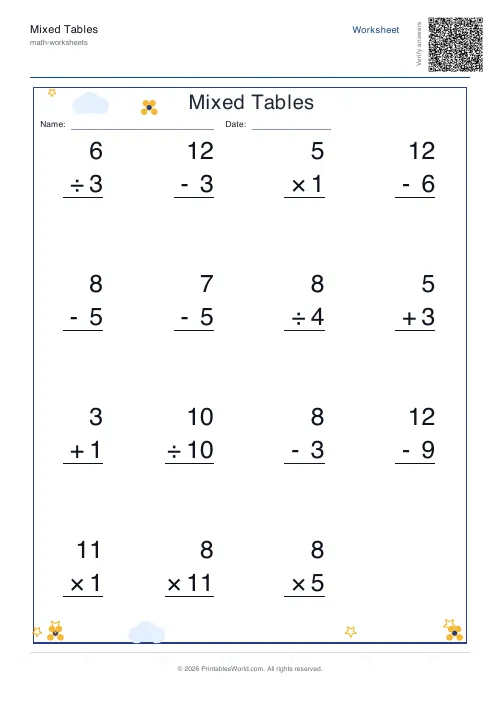 Mixed Tables Generator
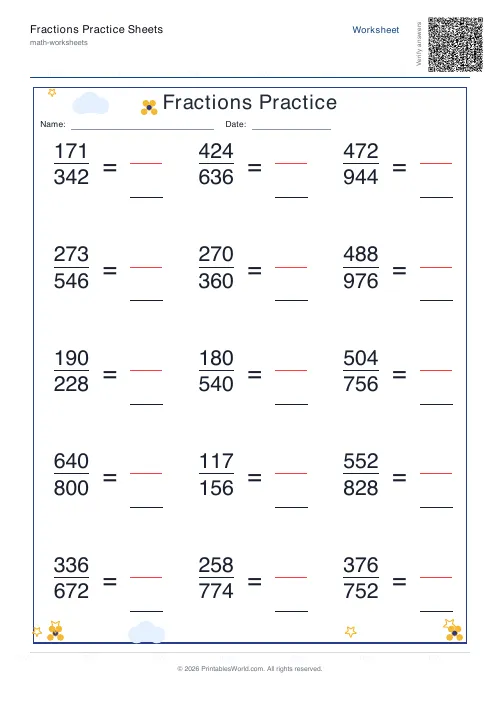 Fractions Practice Sheets Generator
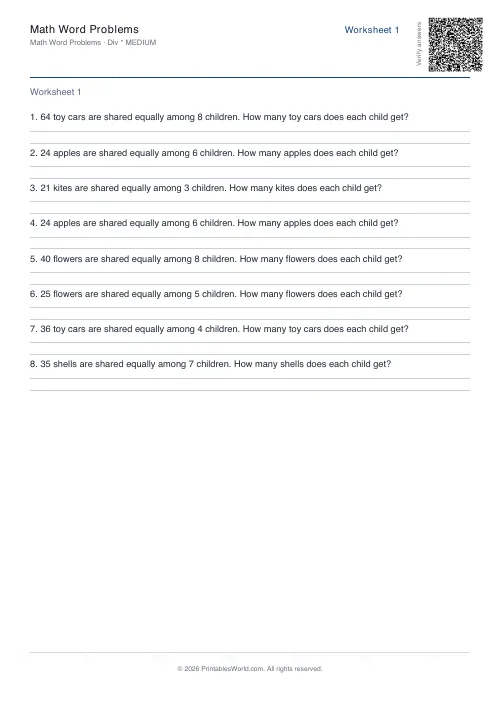 Math Word Problems Generator
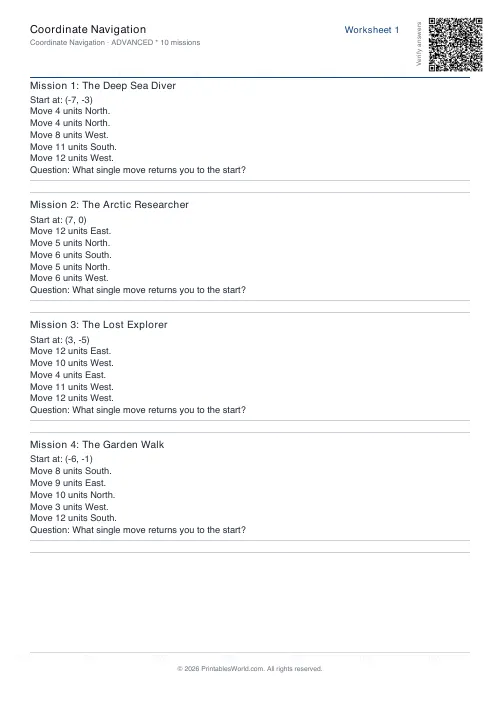 Coordinate Navigation Generator
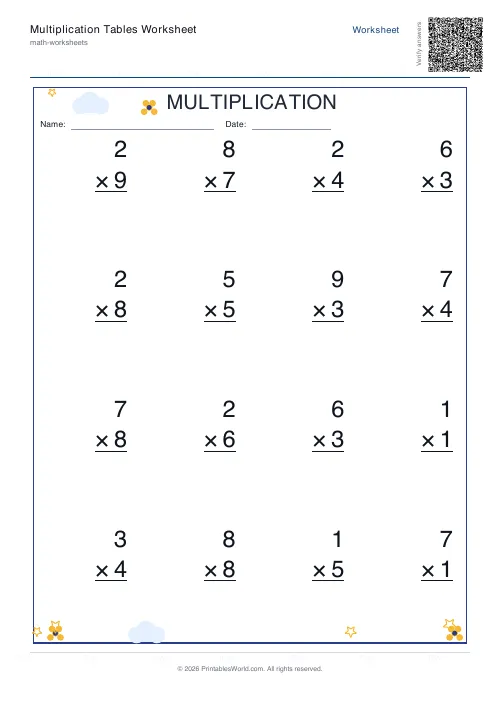 Multiplication Tables Worksheet
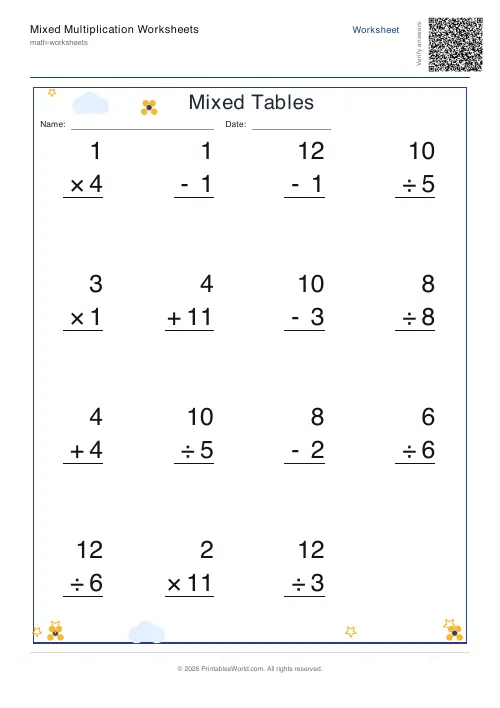 Mixed Multiplication Worksheets
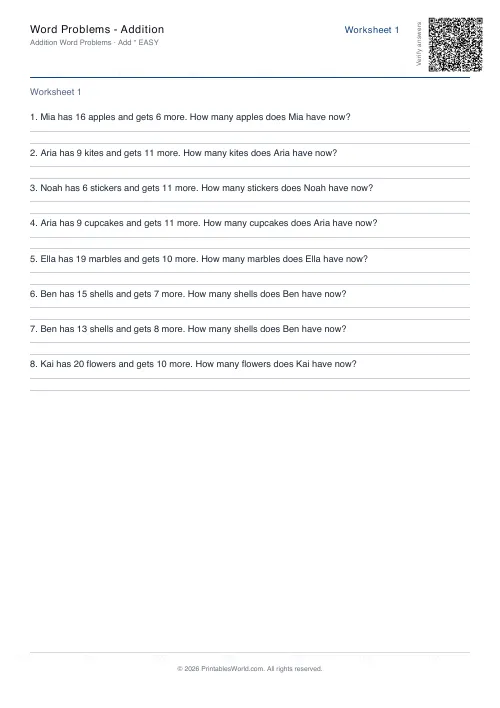 Word Problems: Addition
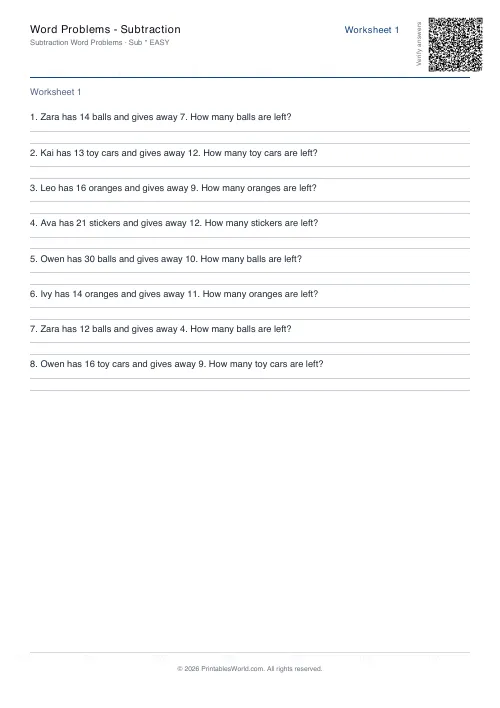 Word Problems: Subtraction
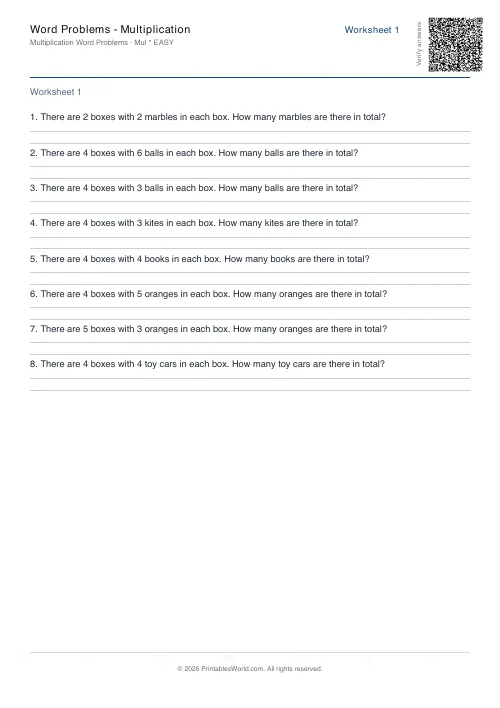 Word Problems: Multiplication
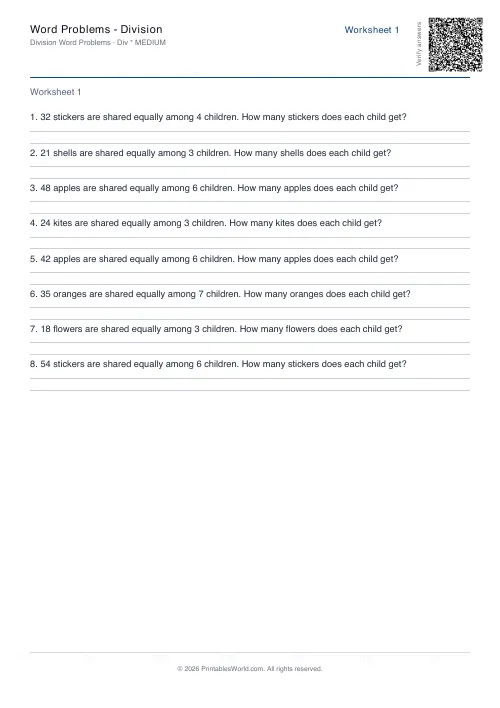 Word Problems: Division