What this tool does
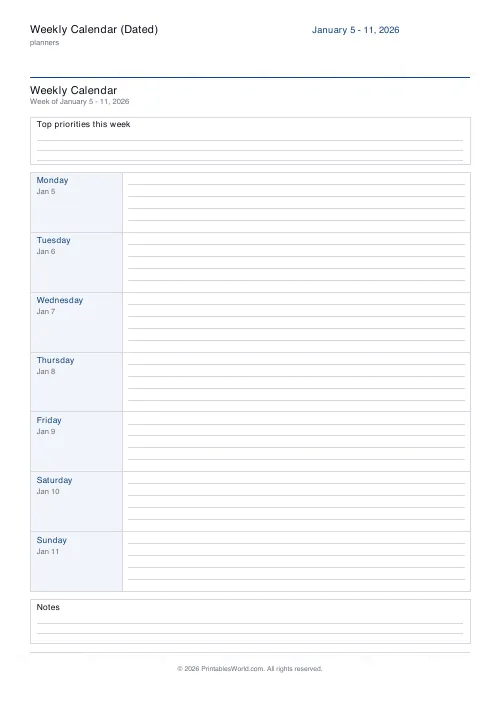
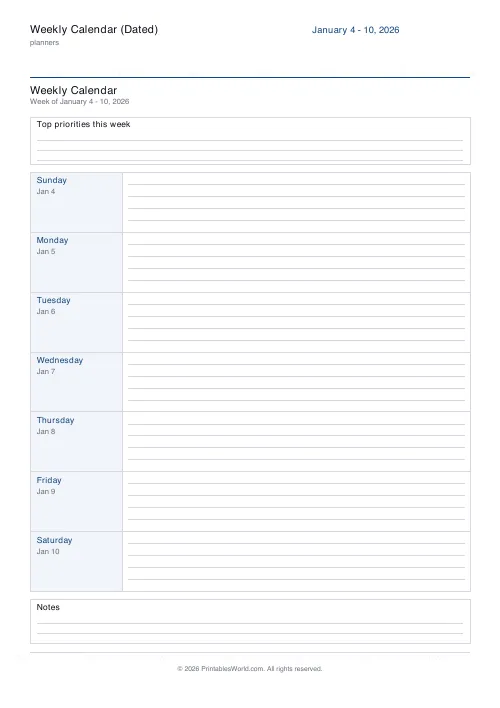
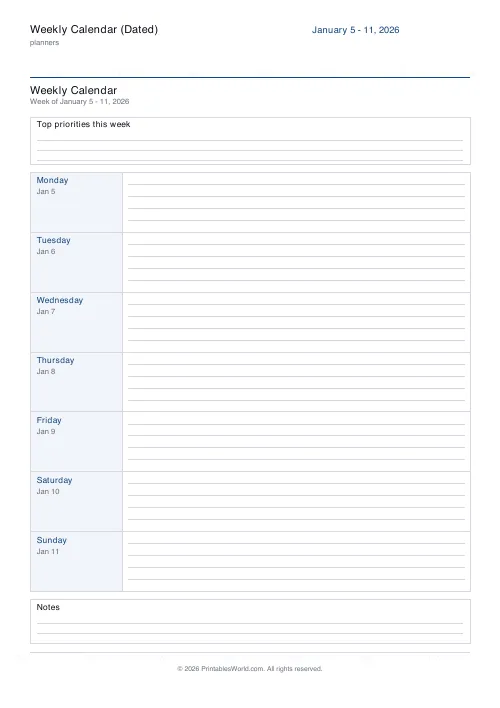
A dated weekly spread: real weekday names with the actual dates on them. Pick a start date, one to eight weeks, and seven rows or seven columns.
People also used
Feedback
Spotted something off with this tool?
Real dates, not blanks
Unlike an undated weekly planner, this one prints the actual calendar dates. Give it any day and it snaps back to the start of that week, then lays out seven days with their real names and numbers.
One to eight consecutive weeks in a single PDF. Weeks start Monday or Sunday, and the days run as seven horizontal rows or seven vertical columns.
Rows or columns
Rows give each day a wide, shallow strip. Good for appointments and short entries, and much easier to read across — you can see the whole of Tuesday in one line.
Columns give each day a tall, narrow space and put the seven side by side. That is the layout for comparing days: three evenings booked in a row is obvious in columns and easy to miss in rows.
Rows for recording. Columns for planning.
Print the term, not the week
The week count goes to eight because printing one week at a time is exactly where the habit dies: you forget on the Sunday, the week starts without a sheet, and by Wednesday the whole system has quietly stopped without anybody deciding to stop it.
Eight weeks stapled together is a half-term. Print it once and there is nothing left to remember.
Which day the week starts
Monday is the international standard and the usual choice in Britain and Europe. Sunday is conventional in North America and Japan.
Pick the one that matches the calendars around you. A planner that disagrees with the wall calendar is a reliable source of the exact error it exists to prevent, and it takes a surprisingly long time to notice.
Priorities and notes
A priorities box sits at the top of each week, a notes strip at the foot. Switch either off and the days expand to fill the page.
Keep the priorities box for the week rather than the day — two or three things that would make this a good week. Daily tasks belong in the day rows, and mixing the two levels makes both harder to read.
Where a dated sheet beats an undated one
Anywhere the date has to be on the page itself. A shift rota, a medication schedule, a training block in the weeks before a race, a revision timetable counting down to an exam that is not going to move.
It also removes the small tax of writing the dates in yourself, which is trivial once and tiresome forty times.
Related: the undated weekly planner, which suits a routine that repeats, and the monthly planner for the wider view.
FAQs
Quick answers
Does it fill in the real dates?
Yes. You pick a start date and every day cell prints with its weekday name and the actual calendar date. The page header shows the full date range for the week.
Can the week start on Sunday?
Yes. Toggle the week start to Sunday and the days reorder Sunday to Saturday. The start date snaps back to the chosen first day of the week.
Can I print several weeks at once?
Yes. Set the weeks field from 1 to 8 and the generator prints that many consecutive weeks, one per page, each with its own correct dates.
What paper sizes are supported?
A4 and US Letter. The rows or columns reflow to fill the chosen paper without cropping.
Related tools
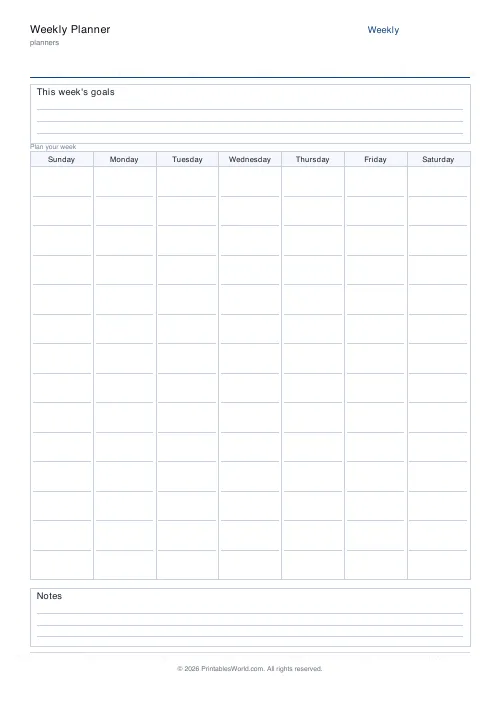
Weekly Planner
Weekly spread with seven day columns, a goals box, and a notes strip.
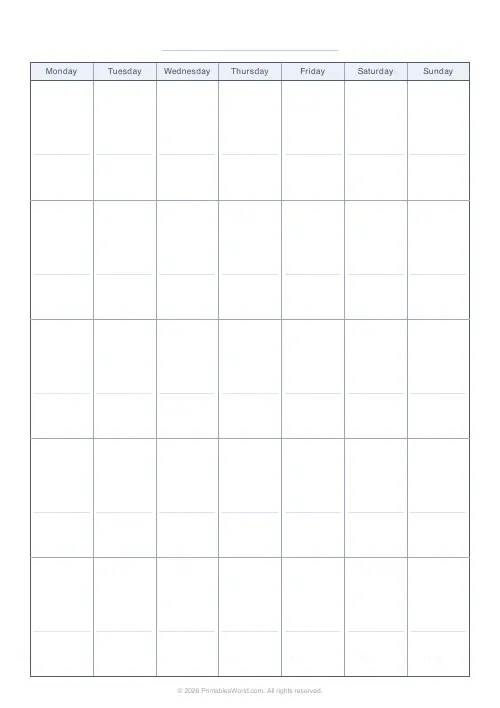
Blank Calendar Grid
An undated month calendar to fill in by hand.
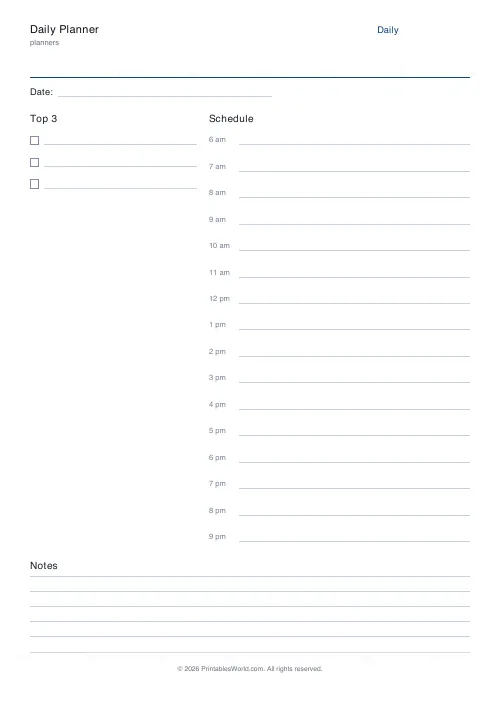
Daily Planner
One-page daily planner with priorities, hourly schedule, and a notes strip.
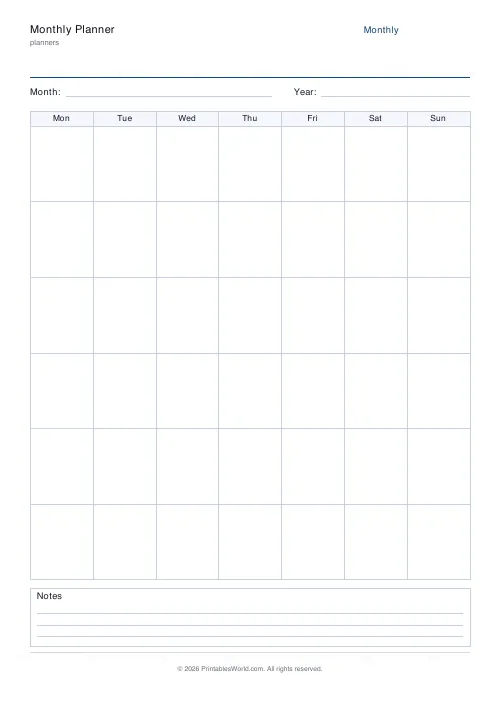
Monthly Planner
Blank month grid with weekday headers and an optional notes footer.
Further reading
Planners
Meal planning 101: save time and money every week
A weekly meal plan saves money mainly by changing how you shop. Here is a thirty-minute method, the shortcuts that keep it going, and the mistake that ends most plans in week three.
5 min read
Planners
Study planning for exams: a student's complete guide
A revision timetable is only as good as what goes in the slots. Here is how to build one backwards from the exam date, and which study methods the evidence actually supports.
5 min read
Planners
Baby's first year: tracking sleep, feeds and milestones
Tracking helps most in the early weeks and can become a burden after them. Here is what is genuinely worth logging, why, and when to stop.
5 min read