What this tool does
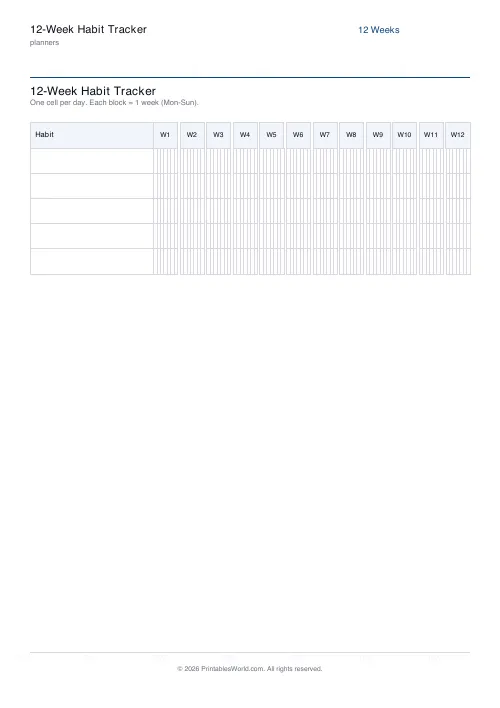
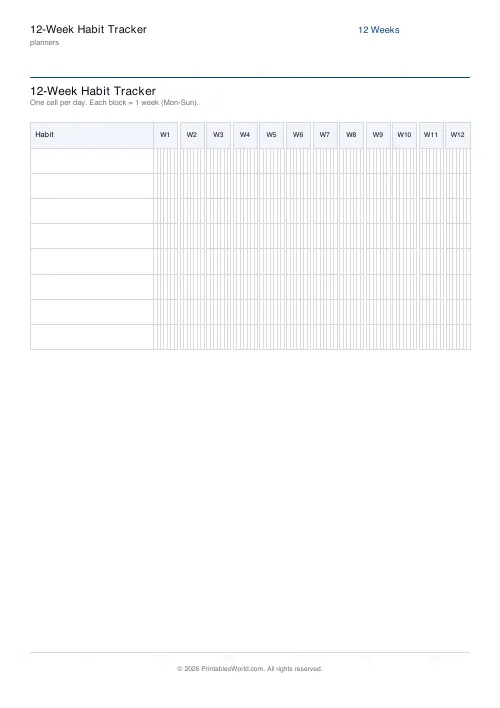
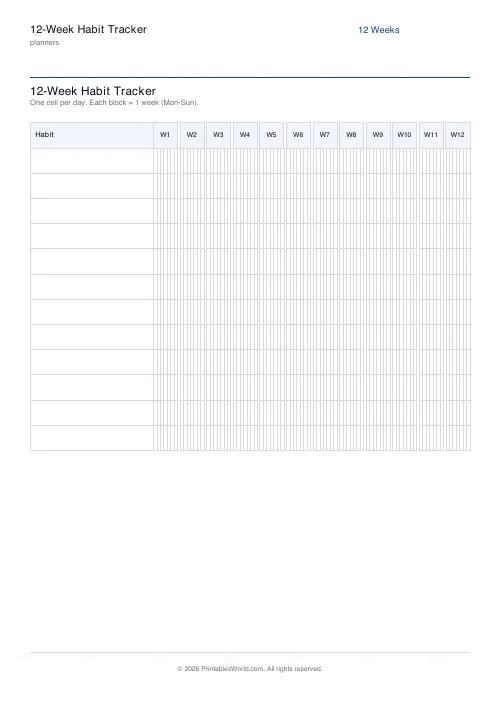
Three to eight habits, each with 84 daily cells grouped into twelve weekly blocks, on one page. Built for a quarter-long challenge rather than a month.
People also used
Feedback
Spotted something off with this tool?
Twelve weeks, grouped so you can see the rhythm
Each habit gets a row of 84 cells, divided into twelve visible blocks of seven. Three to eight habits per page.
The grouping is the design decision. An undivided run of 84 boxes is a wall of grid you cannot read; blocks of seven let you see at a glance that weeks three and four went well and week five did not.
Why twelve weeks rather than thirty days
Because it is long enough to contain the part where it stops being novel.
Almost anything survives the first fortnight on enthusiasm alone. Weeks three to six are where the interesting failures happen — the holiday, the illness, the week at work that ate everything — and a thirty-day sheet ends before most of them.
Twelve weeks is also roughly a training block, a school term, and a quarter, so it lines up with how most people's years are already divided.
Three to eight habits, and three is not a small number
Eighty-four days times eight habits is 672 boxes, which is a lot of daily commitment to sustain for three months.
The evidence on this is fairly consistent: attempting several changes at once does worse than attempting one or two, because the effort is shared out and none of them gets enough. Over twelve weeks that effect compounds. Three habits you actually keep will beat eight you abandon in April.
Expect the missed weeks and plan for them
Nobody completes 84 consecutive days of anything. A sheet with three broken weeks in it is a successful sheet.
What matters is what happens after a gap. The habit research that is worth reading finds that a single missed day has essentially no effect on the habit forming; it is the abandonment after a miss that does the damage. Getting back on the row is the skill, and the blocks make it visible that one bad week did not undo the previous four.
Read it weekly, not daily
Look at the page once a week, on the same day, and count blocks rather than boxes.
A block with five or six ticks is a good week. Three consecutive weak blocks is a signal that something structural has changed — a new commitment, a different schedule — and the answer is usually to change the habit rather than to try harder at it.
On the form
A title, how many habits (3 to 8), and your habit names. A4 or US Letter, printed at 100%.
Print it once and keep it somewhere it will be seen. For a shorter run, the 30-day tracker takes up to fifteen habits.
FAQs
Quick answers
Why 12 weeks?
Twelve weeks is roughly a quarter. Long enough to form habits and see real change, but short enough to stay motivated without losing track.
How many habits fit comfortably?
Between 3 and 8 works well. Above 8 the daily cells get quite small; print on the biggest paper you have if you need the full range.
Do I need to start on a Monday?
The grid is week-agnostic. Week 1 day 1 is simply the first day you start. Add a start date to the title if you want a date-anchored view.
Can I track the same habit on multiple trackers?
Yes. Pair the 12-week tracker with the 30-day tracker or mood tracker to see short-term consistency alongside the quarter-long view.
Related tools
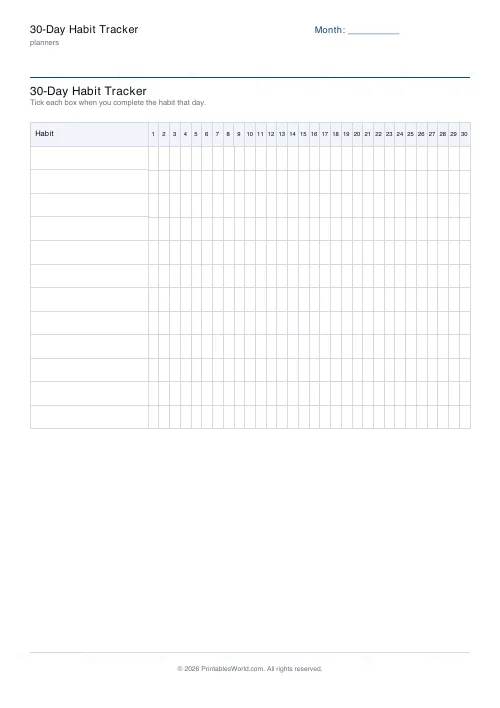
30-Day Habit Tracker
A printable 30-day habit grid to tick off every morning. One row per habit.
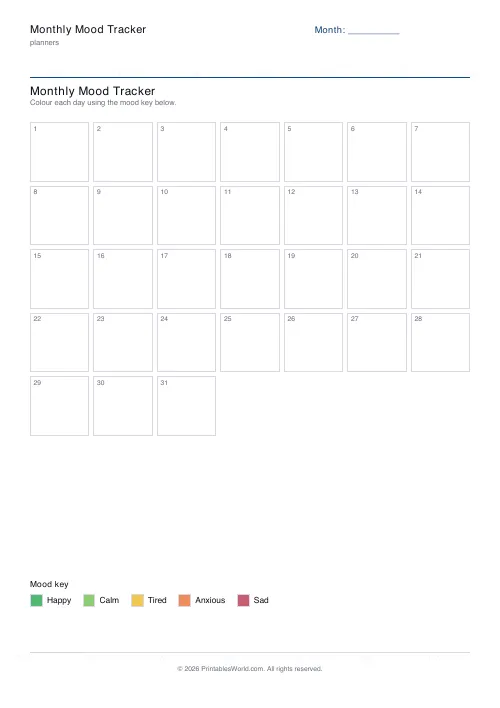
Monthly Mood Tracker
Colour-in mood tracker with 31 day cells and a customisable mood key.
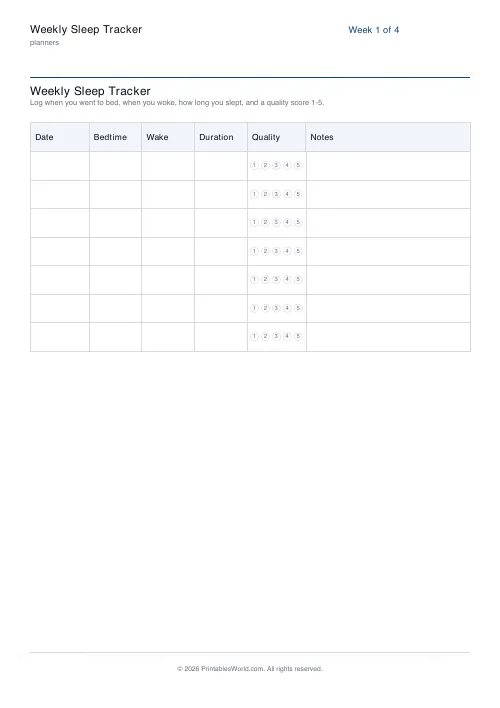
Weekly Sleep Tracker
Log bedtime, wake time, duration, and quality for 1–4 weeks at a time.
Planner Maker: Custom Printable Planner Pages
Build custom printable planner pages with lines, boxes, text and checklists in precise millimetre layouts.
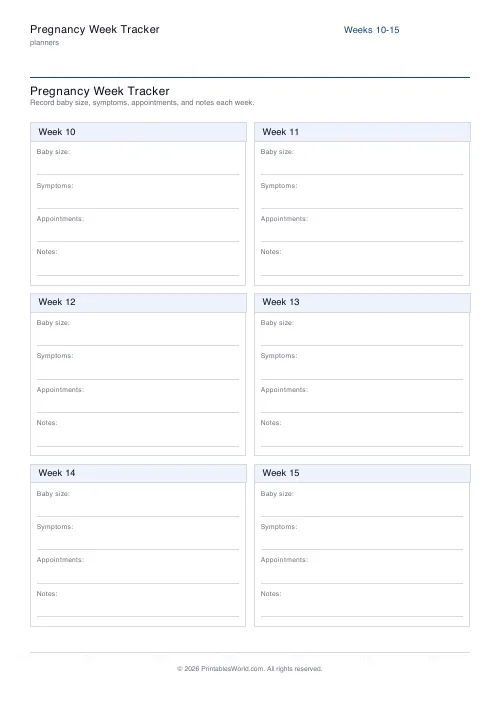
Pregnancy Week Tracker
40-week pregnancy tracker with space for baby size, symptoms, and appointments.
Further reading
Planners
How to track habits that actually change your life
Habit tracking works because it makes an invisible process visible. It fails when you track too many things, or when protecting the streak becomes more important than the habit.
5 min read
Planners
How to pay off debt faster with a payoff tracker
One method costs less; the other is easier to stick to. Here is how to choose between them honestly, and why a visual tracker changes the odds either way.
5 min read
Planners
Meal planning 101: save time and money every week
A weekly meal plan saves money mainly by changing how you shop. Here is a thirty-minute method, the shortcuts that keep it going, and the mistake that ends most plans in week three.
5 min read