What this tool does
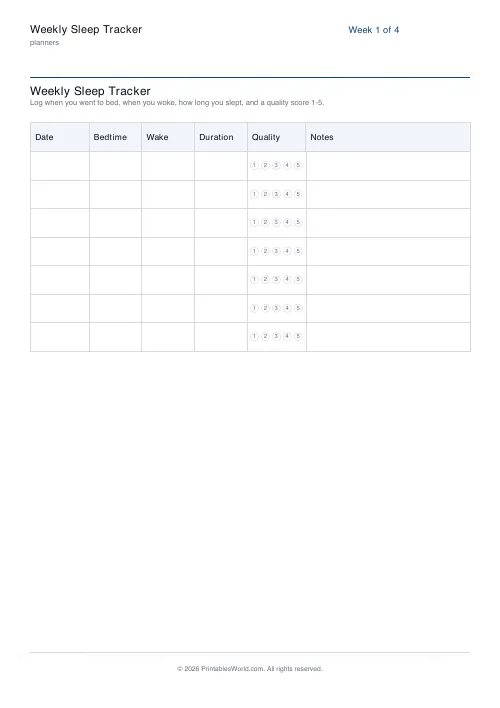
A week of sleep on a page: bed time, wake time, hours slept, a 1 to 5 quality score and a notes line. One to four weeks per download.
People also used
Feedback
Spotted something off with this tool?
Five columns, seven rows
When you went to bed, when you woke, how long that came to, a quality score out of five, and a line of notes. One to four weeks in a single download.
Bed time and sleep time are different numbers
The distinction that makes a sleep log worth keeping, and the one most people blur.
Time in bed is when you turned the light out. Time asleep is what you actually got. The gap between them — how long it took to fall asleep, plus whatever you were awake for in the night — is where most sleep problems live, and a log that records only "eight hours in bed" hides it completely.
Record both honestly and the pattern usually becomes obvious inside two weeks.
Fill it in in the morning, roughly
Estimates are fine. Precision is actively counterproductive.
Clock-watching in the night makes sleep worse, reliably — it is one of the behaviours sleep clinicians specifically ask people to stop. So write "about half eleven" rather than checking, and never work out the arithmetic at three in the morning.
A rough log kept for a month beats an exact one abandoned on Thursday.
The notes column is where the causes are
The numbers tell you what happened. The notes tell you why, and only one of those can be acted on.
Worth recording: caffeine after mid-afternoon. Alcohol. Exercise, and what time it happened. Screens late, a late meal, a stressful day, illness, and the time you got up regardless of when you finally slept. Three weeks of "slept badly, glass of wine" is a pattern nobody spots in the moment and everybody spots on paper.
Wake time matters more than bed time
The single most consistent piece of advice in sleep research, and the one people follow least.
A fixed wake time anchors the body clock; a fixed bed time does not, because you cannot decide to fall asleep. Lying in at the weekend to catch up shifts the clock later and makes Monday worse, which is why the log's most useful column is often the one recording when you got up.
A caution
This is a paper log for your own use, not a diagnostic tool. Sleep tracking helps you notice patterns and it can also make things worse for some people — there is a recognised pattern of anxiety about sleep data that is itself bad for sleep.
If the log is making you more anxious, stop keeping it. And if the problem is persistent, take a few completed weeks to a doctor rather than self-treating from them — a filled-in log is genuinely useful in that appointment.
Settings: a title and how many weeks (1 to 4). A4 or US Letter, printed at 100%.
FAQs
Quick answers
How many weeks can I print at once?
Between 1 and 4. Each week lives on its own page so you can clip them into a binder or fold them into a journal.
Should I fill it in the morning or evening?
Fill it the morning after. You will know bedtime, wake time, and quality together, and the data stays accurate.
What should I track in the notes column?
Anything that might affect sleep: caffeine, screens, stress, exercise, or whether you napped. Patterns become obvious after a few weeks.
Why include a 1–5 quality score?
Duration alone does not capture how rested you feel. A quick subjective score helps you spot nights that were long but low-quality.
Related tools
30-Day Habit Tracker
A printable 30-day habit grid to tick off every morning. One row per habit.
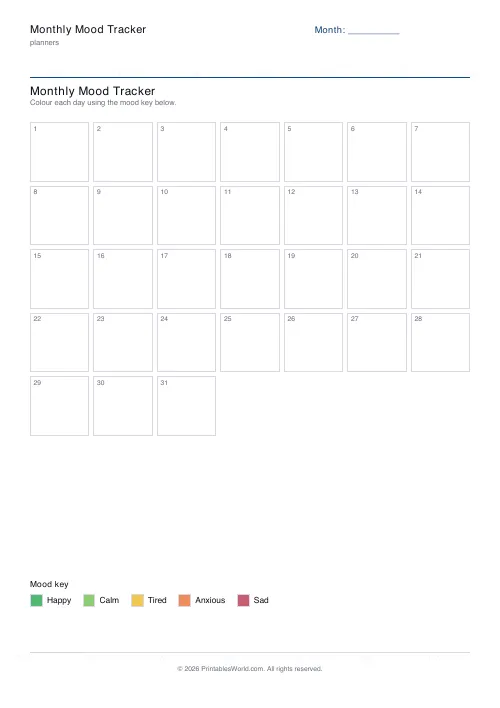
Monthly Mood Tracker
Colour-in mood tracker with 31 day cells and a customisable mood key.
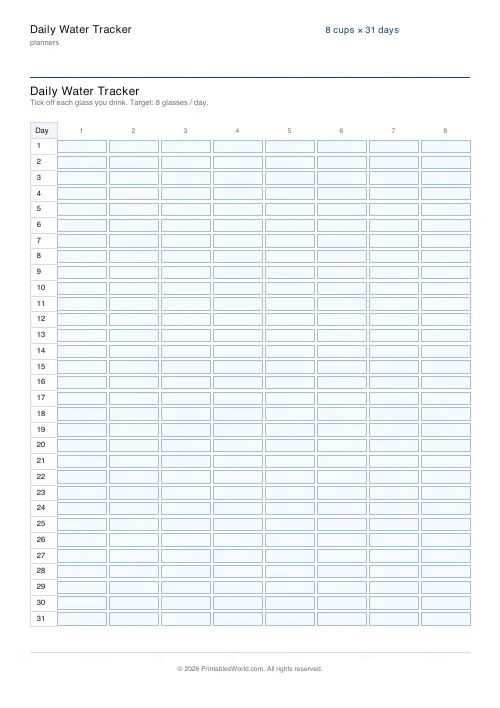
Daily Water Tracker
Tick off 8 glasses a day for a full month. Printable, one page, no app required.
Planner Maker: Custom Printable Planner Pages
Build custom printable planner pages with lines, boxes, text and checklists in precise millimetre layouts.
Further reading
Planners
Meal planning 101: save time and money every week
A weekly meal plan saves money mainly by changing how you shop. Here is a thirty-minute method, the shortcuts that keep it going, and the mistake that ends most plans in week three.
5 min read
Planners
How to pay off debt faster with a payoff tracker
One method costs less; the other is easier to stick to. Here is how to choose between them honestly, and why a visual tracker changes the odds either way.
5 min read
Planners
Baby's first year: tracking sleep, feeds and milestones
Tracking helps most in the early weeks and can become a burden after them. Here is what is genuinely worth logging, why, and when to stop.
5 min read