What this tool does
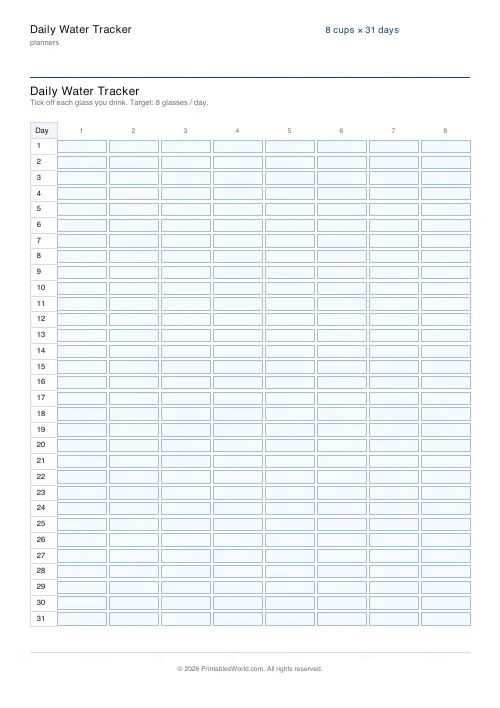
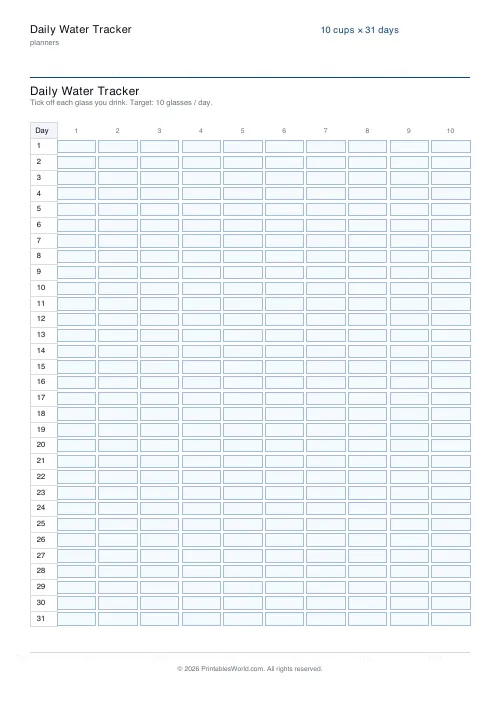
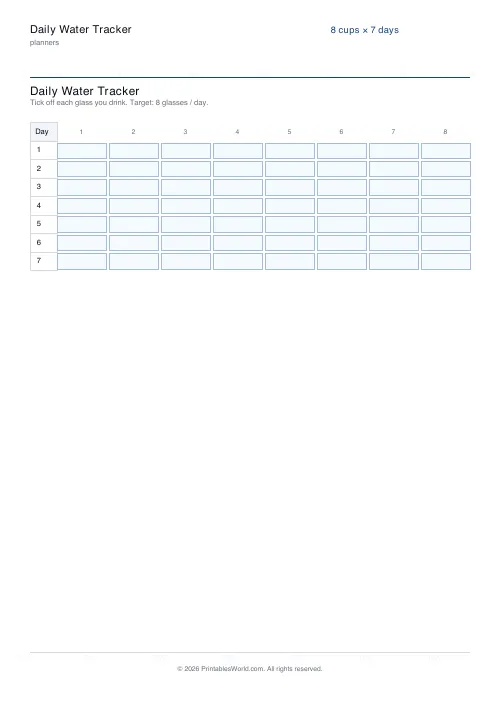
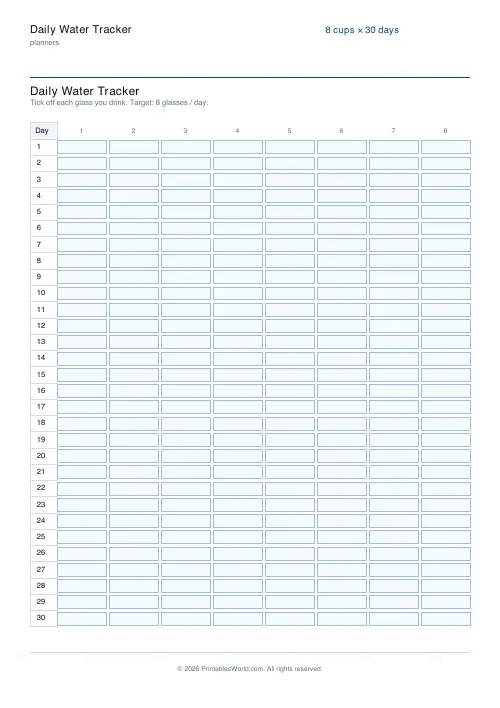
A hydration grid for the fridge. Each row is a day, each column is one glass, and you tick a circle as you drink. Eight glasses a day over thirty-one days by default, adjustable to anywhere between four and twelve glasses and down to a shorter run of days. One page, A4 or US Letter.
People also used
Feedback
Spotted something off with this tool?
A month of hydration on one page
Rows are days. Columns are glasses. Tick one circle each time you drink, and the question of whether you got there today stops being a guess.
Eight glasses across thirty-one days is the default and fills a single sheet. Push the glass target anywhere from four to twelve and the grid rescales so a twelve-column row stays readable and an eight-column one stays roomy. Shorten the day count if you would rather run a fortnight than a month.
Thirst is a late signal
That is the actual problem. By the time you feel thirsty you have been behind for a while, so a habit that waits for the body to prompt it will always run short.
A grid on the fridge prompts earlier and cheaper. A row half-full at two in the afternoon is a piece of information you can act on before the slump arrives, and it takes no effort to read. Over a fortnight the same grid shows drift: three complete rows followed by four with three ticks each is a pattern, and it is visible without any analysis at all.
Why a whole month rather than a day
A one-day sheet asks a question with an obvious answer. Did you drink today. You already know.
A month shows streaks and gaps, and streaks and gaps are the only part that predicts anything. You find out that weekdays are reliable and weekends collapse, or that the first ten days go beautifully and then it slides. Neither of those is visible at a fortnight and both are obvious at a month. Keep the sheet somewhere you pass in the morning and again in the evening, so the day ends with a glance at the row rather than at nothing.
Who ends up sticking one on the fridge
Anyone building a first habit
Water is the cheapest keystone habit there is. Nothing to buy, nothing to schedule, and a visible result within a day.
Desk workers
Screen work eats hydration entirely. Coffee at nine, nothing until lunch, and then wondering about the headache at three.
Active people
Training weeks genuinely raise the requirement. Set the target to ten or twelve during a heavy block and drop it back afterwards.
Households with teenagers
One sheet per person on the same fridge teaches the habit without anybody having to nag about it.
Anyone told to drink more by a clinician
A ticked grid is a record. It reassures the person doing it and it answers the question at the next appointment.
Ten days in
Eight glasses, thirty-one days. Day one goes well: four before lunch, three in the afternoon, one with dinner, full row. Day two is meetings and ends at five ticks.
By day ten there are five full rows and five short ones, and the short ones are all the same kind of day. That is the whole value of the sheet, and it took no thought to produce. The fix follows on its own, which in this case is usually a litre bottle that goes wherever you go rather than a resolution to try harder.
Small rules that make it work
- Tick as you drink, never at bedtime. Retro-ticking is guessing with extra steps, and it is how the sheet stops being true.
- Pick one glass and stick to it. The size hardly matters; being consistent about it does, because a row of eight ticks means nothing if three of them were a mug and five were a pint.
- Start the day with one, before anything else.
- Do not chase the exact volume. Enough that you are not thirsty is the target, and the grid is a prompt rather than a measurement.
FAQs
Quick answers
How much water should I aim for?
Eight 250 ml glasses is a common target (about 2 litres), but climate, activity, and body size all change that. Pick a number you will actually hit.
Can I change the number of glasses per day?
Yes. Set anything from 4 to 12. The grid rescales so the page stays balanced whatever target you choose.
Do the cups have to be 250 ml?
No. Use whatever size of glass, bottle, or cup you normally drink from. One tick = one container.
Can I print fewer than 31 days?
Yes. Drop the day count if you only want a week or fortnight. The unused rows just disappear instead of printing blank.
Related tools
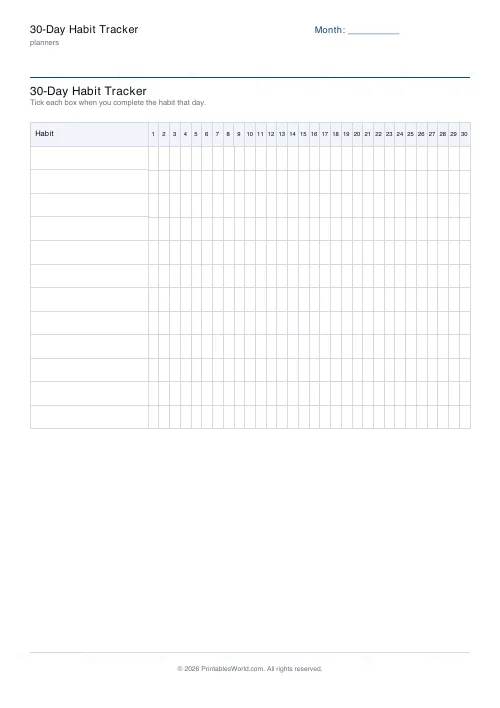
30-Day Habit Tracker
A printable 30-day habit grid to tick off every morning. One row per habit.
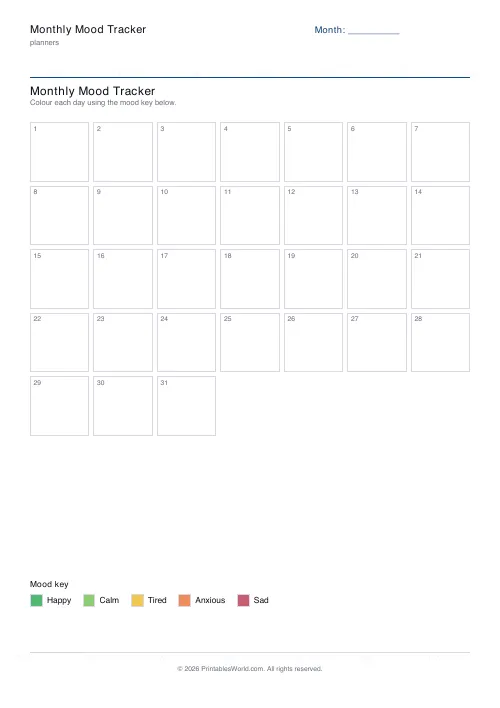
Monthly Mood Tracker
Colour-in mood tracker with 31 day cells and a customisable mood key.
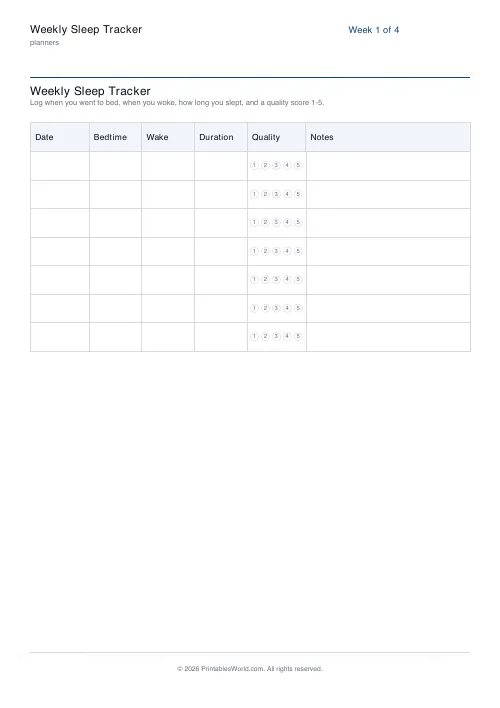
Weekly Sleep Tracker
Log bedtime, wake time, duration, and quality for 1–4 weeks at a time.
Planner Maker: Custom Printable Planner Pages
Build custom printable planner pages with lines, boxes, text and checklists in precise millimetre layouts.
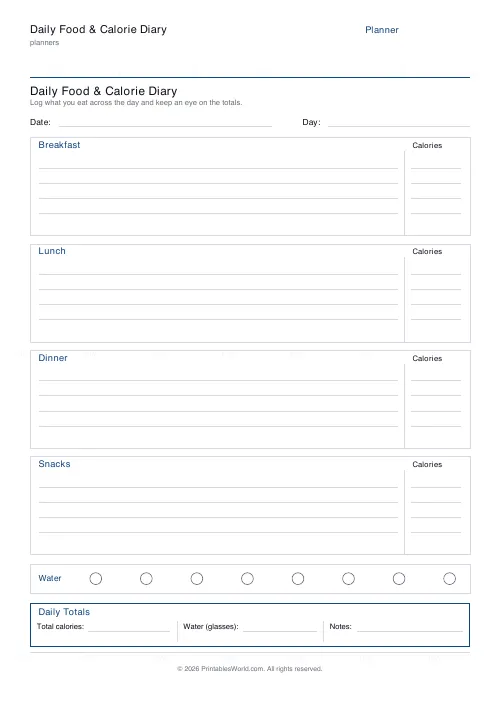
Daily Food & Calorie Diary
One-page printable food log: breakfast, lunch, dinner, snacks, water and daily totals.
Further reading
Planners
How to pay off debt faster with a payoff tracker
One method costs less; the other is easier to stick to. Here is how to choose between them honestly, and why a visual tracker changes the odds either way.
5 min read
Planners
How to build a daily routine that actually sticks
Most routines fail in week two, when motivation runs out and nothing has replaced it. The fix is structural: fewer items, fixed anchors, and a plan for the day you miss.
6 min read
Planners
Study planning for exams: a student's complete guide
A revision timetable is only as good as what goes in the slots. Here is how to build one backwards from the exam date, and which study methods the evidence actually supports.
5 min read