What this tool does
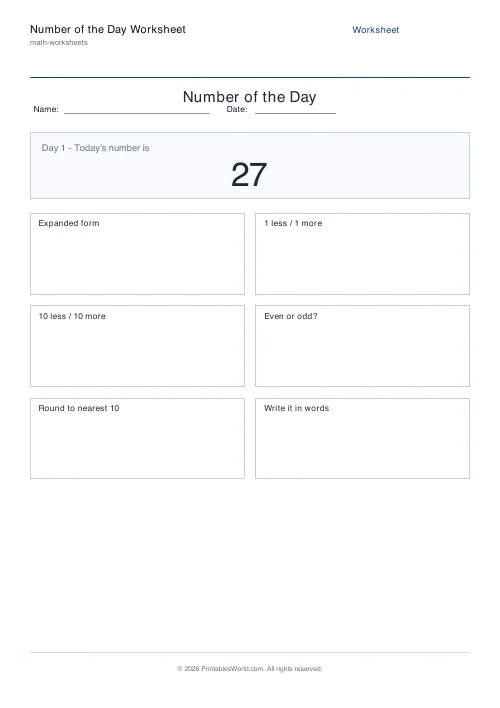
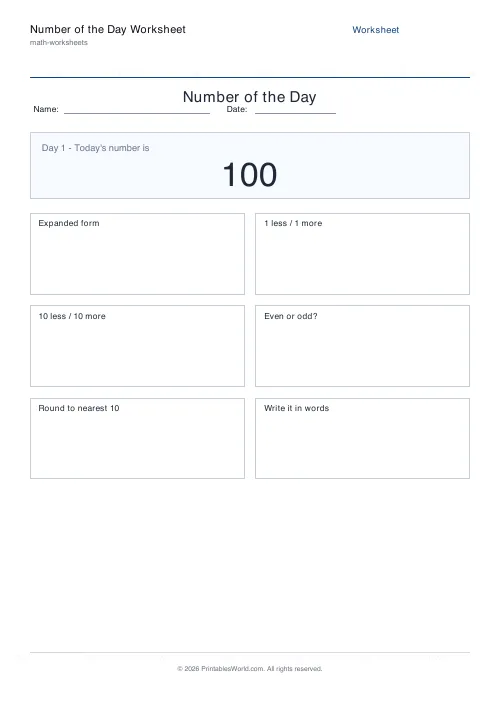
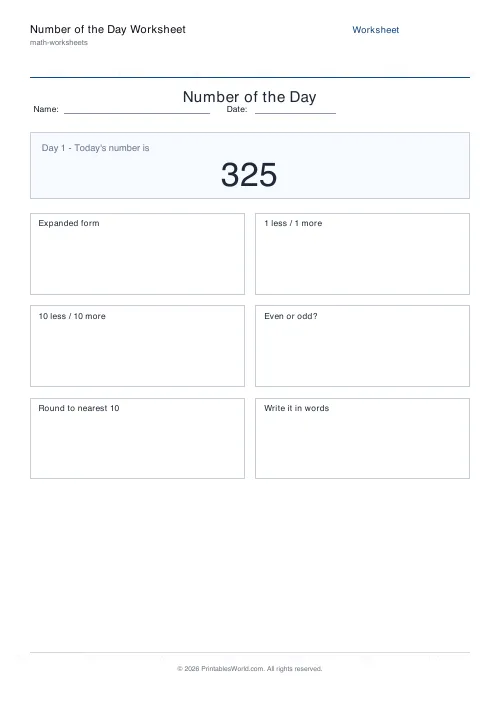
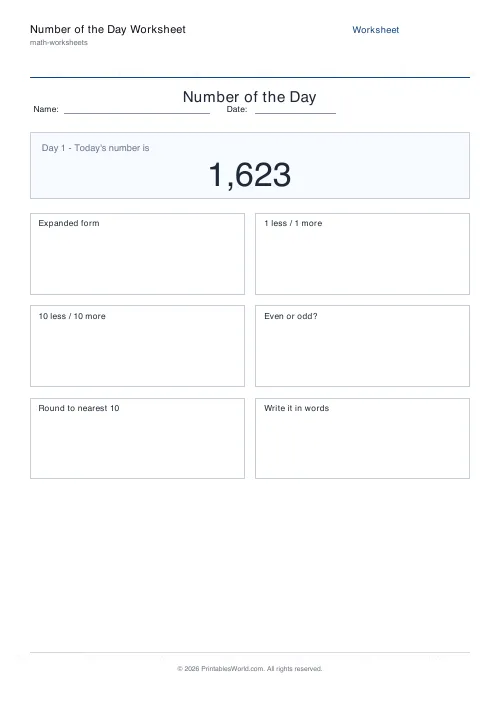
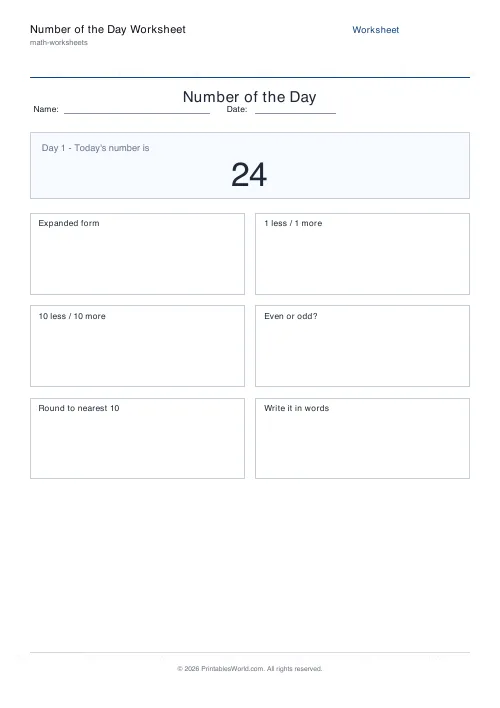
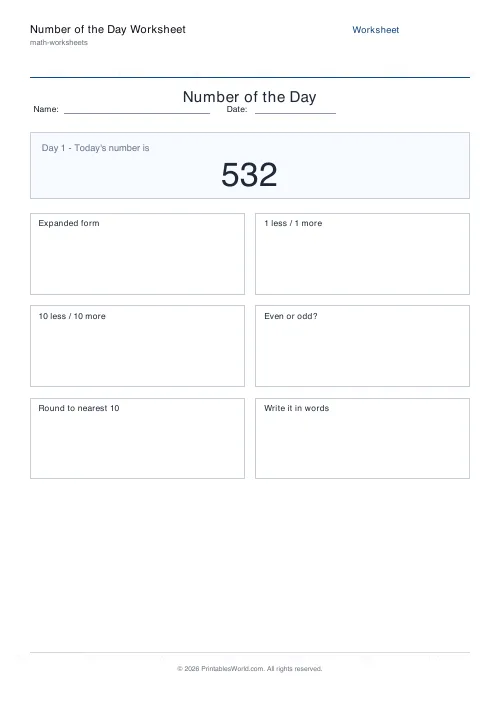
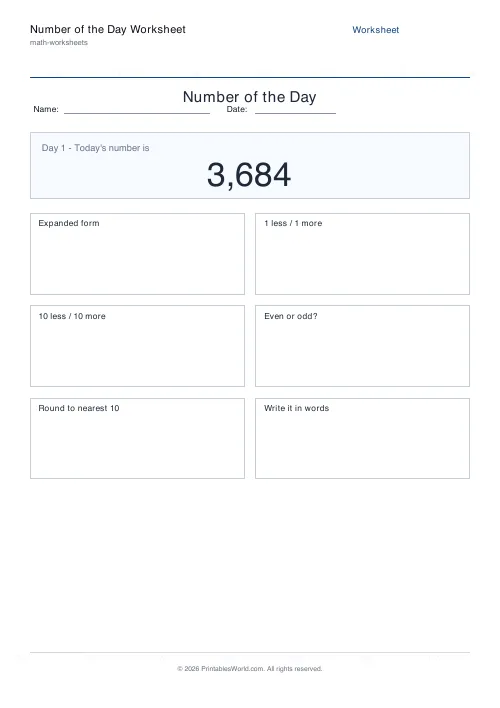
Number-of-the-day pages: one featured number per sheet, then task boxes for expanded form, one and ten more or less, odd or even, rounding, word form and more. Optional answer key.
People also used
Place Value Worksheet Generator
Free printable place value practice. Identify, expand and compose numbers.
Rounding Numbers Worksheet Generator
Generate free printable rounding worksheets for whole numbers and decimals with answer keys.
Number Bonds Worksheet Generator
Print customisable number bonds worksheets for sums to 10, 20 or 100 with optional answer keys.
Feedback
Spotted something off with this tool?
One number, worked every way
Each page features a single number at the top — drawn from a range you set — and beneath it a grid of task boxes that all interrogate that same number.
You pick which boxes appear and in what order. Expanded form. One more and one less, ten more and ten less. Odd or even, rounding to the nearest ten or hundred, doubling, halving, place value, word form, a tally box, a number line. Print one page or a term's worth, with an answer key if you want one.
Why one number
Because number sense is not the same thing as calculation, and a page of sums does not build it.
A child who can add 347 and 200 correctly may still have no feel for what 347 is: that it sits between 300 and 400, closer to 350, that it is odd, that it is three hundreds and four tens and seven ones, that it is written "three hundred and forty-seven". Approaching one number from nine directions in ten minutes builds exactly that, and it transfers to everything afterwards.
Setting the range
The default is 100 to 999, which suits Year 3 or thereabouts.
Drop it to 10–99 for two-digit work, or push it to 1000–9999 once thousands are in play. The most useful thing you can do is move the range slowly — the point is repetition of the operations, not a new challenge every day, and a child who meets the same tasks on a slightly bigger number each week gets both.
Choosing the boxes
Fewer boxes, done properly, beats a crowded page.
Six is a comfortable default. Start with expanded form, one more and less, and odd or even; add rounding once place value is secure, since rounding is where the misconceptions live. Word form is the one children resist and the one that most reliably catches a gap — a child who writes "three hundred and fourty seven" is telling you something useful.
The number line box is worth including regularly. Placing a number on a line is a genuinely different skill from naming it, and it is the one that predicts later work with fractions and decimals.
How to run it
Daily, at the same time, for ten minutes. The routine is most of the benefit.
Print a week at a time, or a whole term and staple it into a booklet. The answer key means a teaching assistant, a parent or the child themselves can mark it, which is what keeps a daily routine survivable past October.
FAQs
Quick answers
What is a Number of the Day worksheet?
It is a daily maths warm-up built around one featured number. The student explores that number through several quick tasks such as expanded form, one and ten more or less, even or odd, rounding, and writing it in words.
Can I choose which tasks appear?
Yes. Pick any combination of the eleven task cells — expanded form, 1 less / 1 more, 10 less / 10 more, even or odd, round to 10, round to 100, double / half, place value, write in words, tally marks, and number line.
How many numbers can I print at once?
Up to 30 pages, with one featured number per page, so you can build a week or a month of daily warm-ups in a single PDF.
Is an answer key included?
Yes. Toggle "Include answer key" to append answer pages that repeat each day's grid with every box filled in.
Related tools
Place Value Worksheet Generator
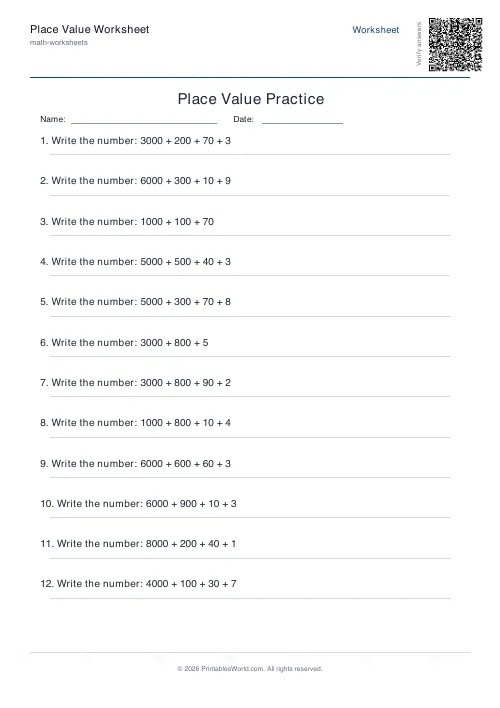
Free printable place value practice. Identify, expand and compose numbers.
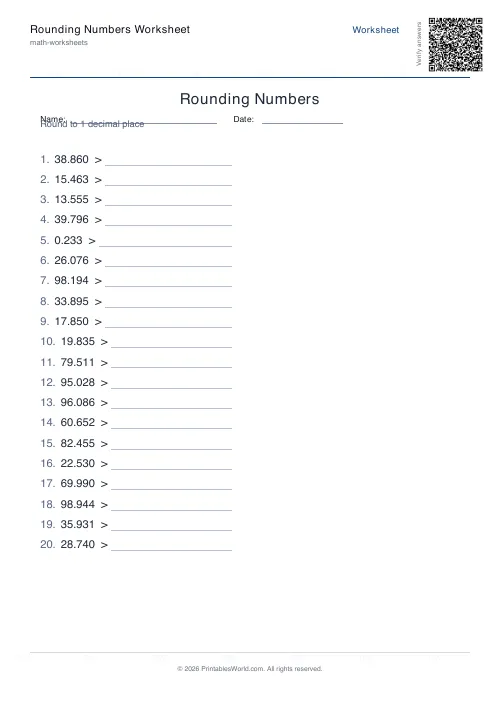
Rounding Numbers Worksheet Generator
Generate free printable rounding worksheets for whole numbers and decimals with answer keys.
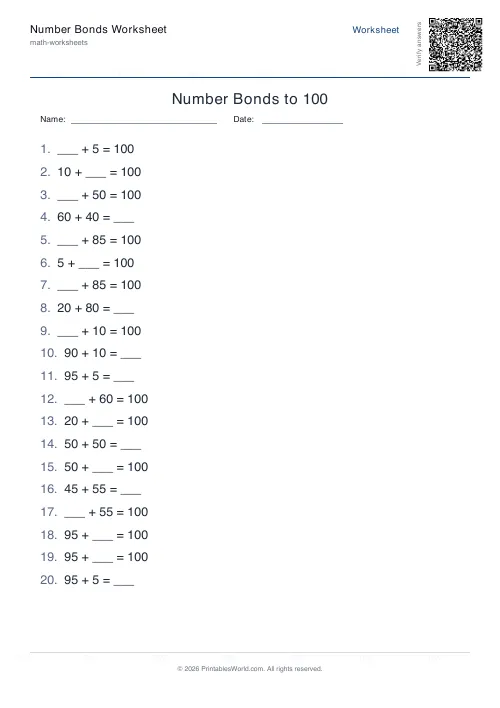
Number Bonds Worksheet Generator
Print customisable number bonds worksheets for sums to 10, 20 or 100 with optional answer keys.
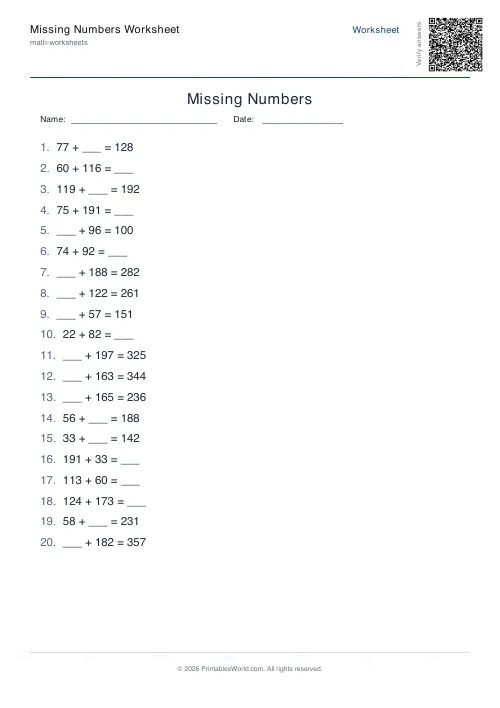
Missing Numbers Worksheet Generator
Free printable fill-in-the-missing-number worksheets for addition, subtraction, multiplication and division.
Further reading
Math Worksheets
How many maths worksheets per day? A parent's guide
The honest answer is less than most parents assume. And the number of questions matters less than whether the session ends well.
5 min read
Math Worksheets
Ten frames and number bonds: early maths foundations
A ten frame is two rows of five. That arrangement does something a row of counters cannot. It makes quantities visible without counting, which is where number sense starts.
5 min read
Math Worksheets
Addition strategies: number lines, regrouping and more
Column addition is the destination, not the route. Here are the strategies that come before it, why each matters, and how to tell which one a child is actually using.
5 min read
More like this
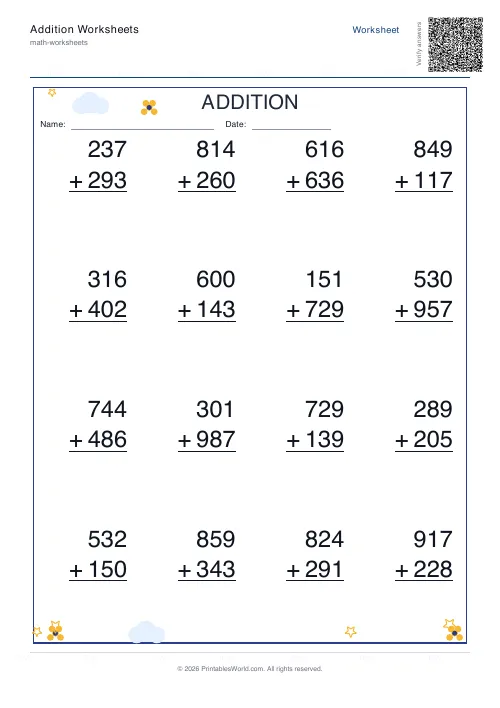 Addition Worksheets Generator
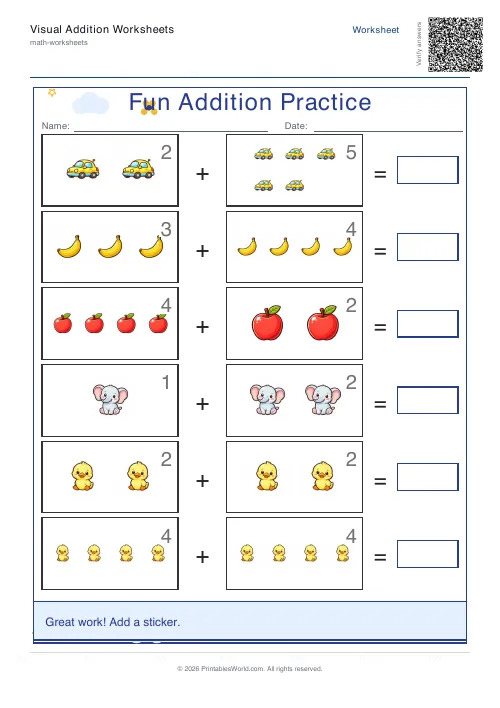 Visual Addition Worksheets Generator
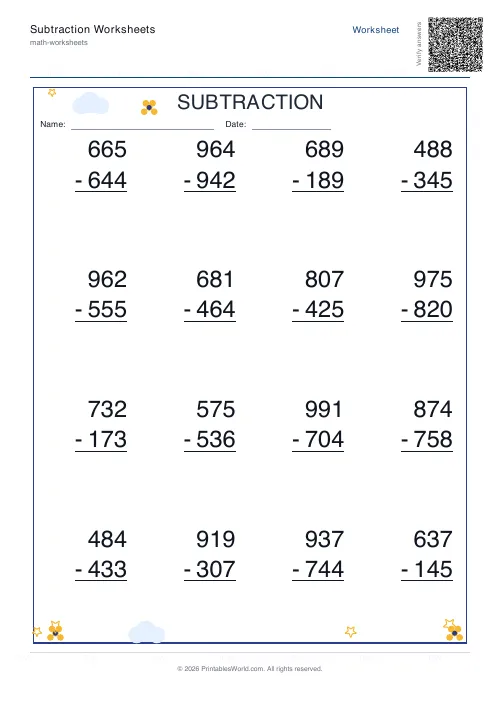 Subtraction Worksheets Generator
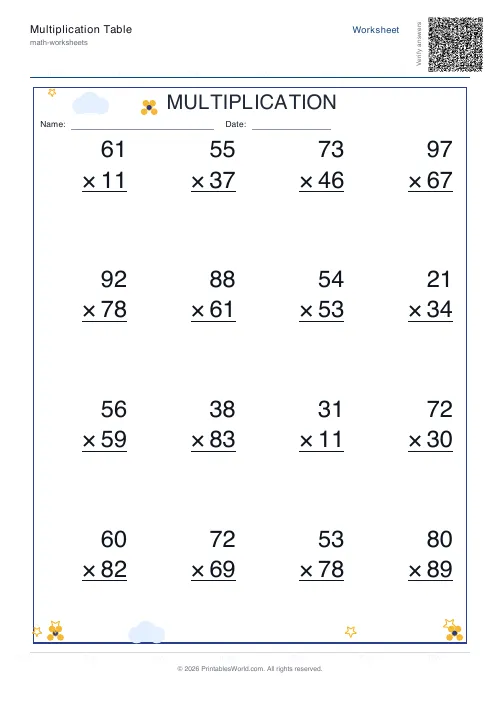 Multiplication Table Generator
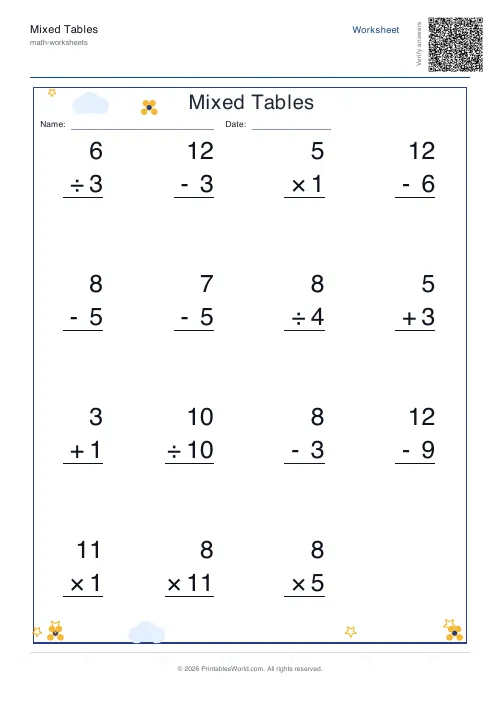 Mixed Tables Generator
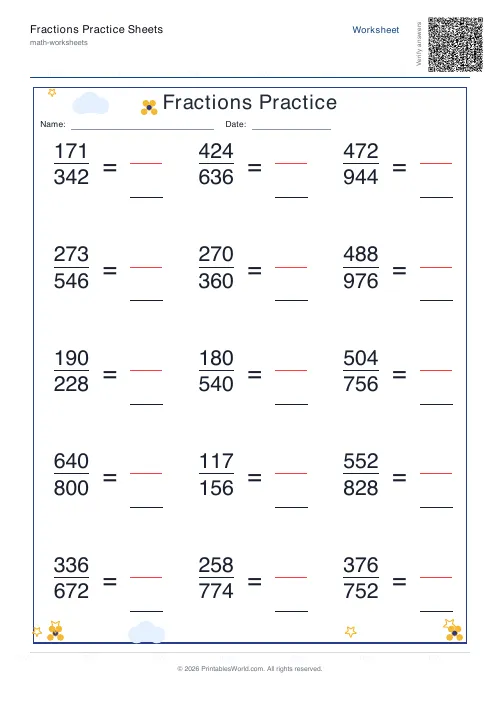 Fractions Practice Sheets Generator
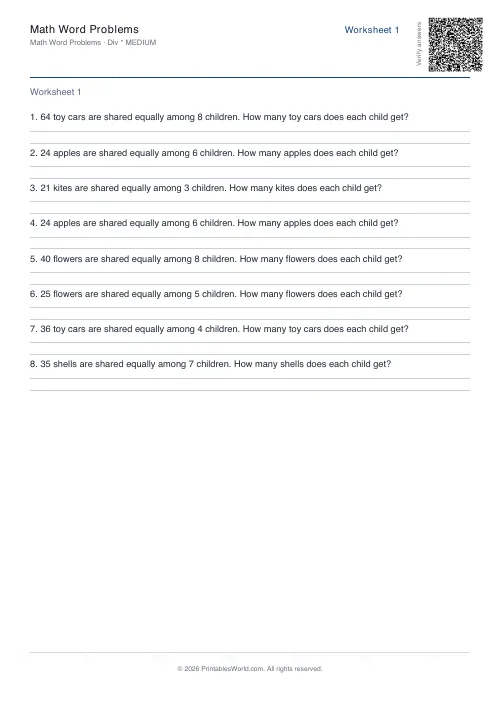 Math Word Problems Generator
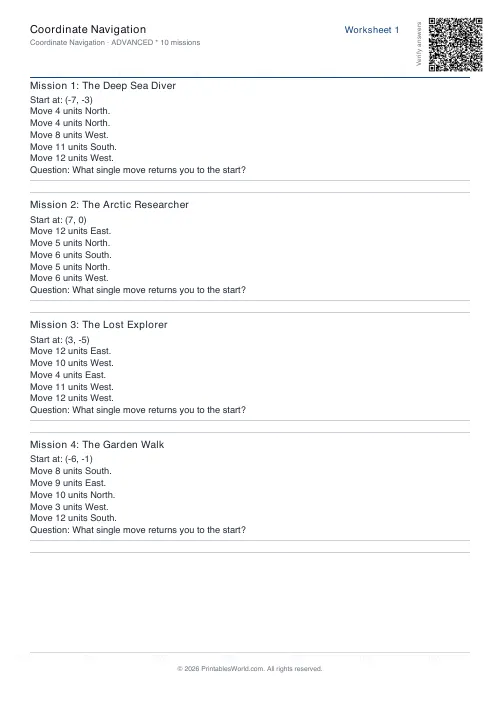 Coordinate Navigation Generator
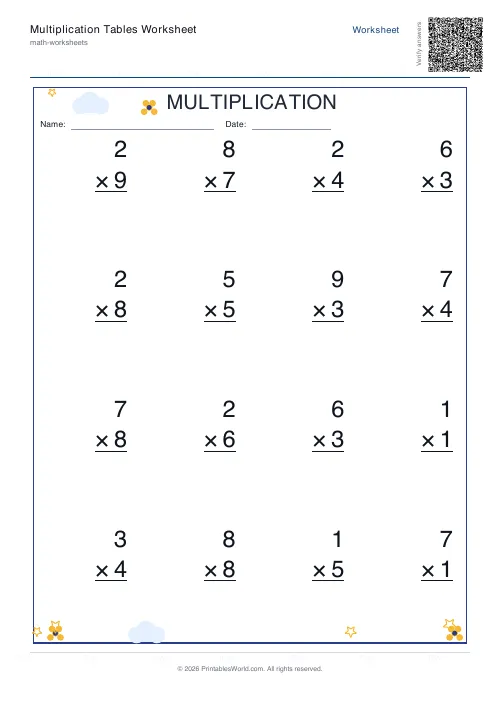 Multiplication Tables Worksheet
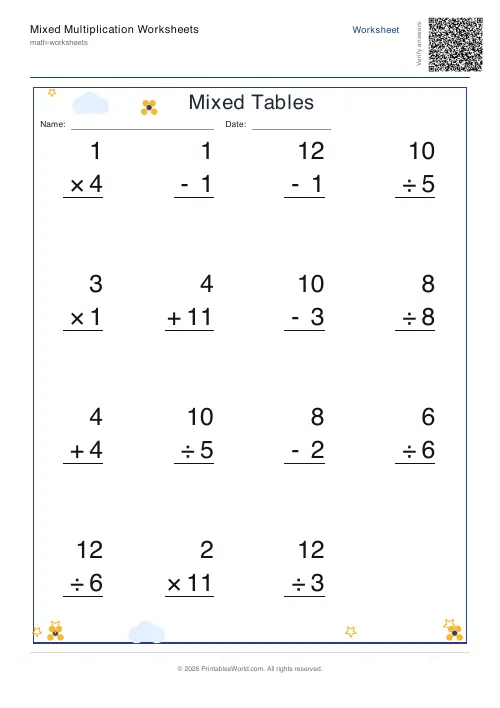 Mixed Multiplication Worksheets
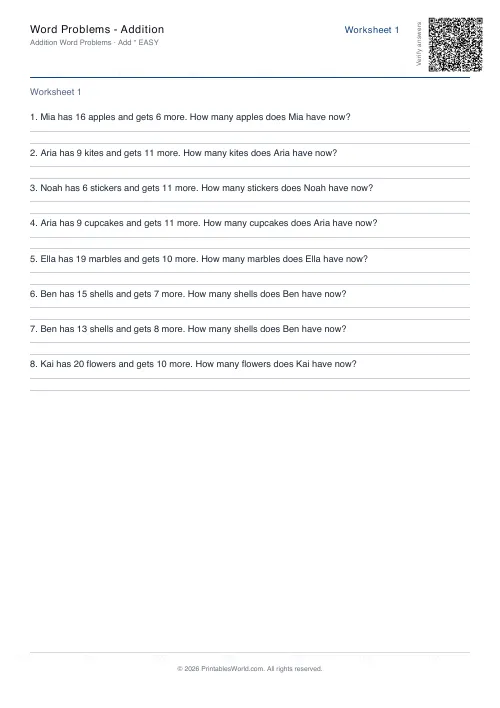 Word Problems: Addition
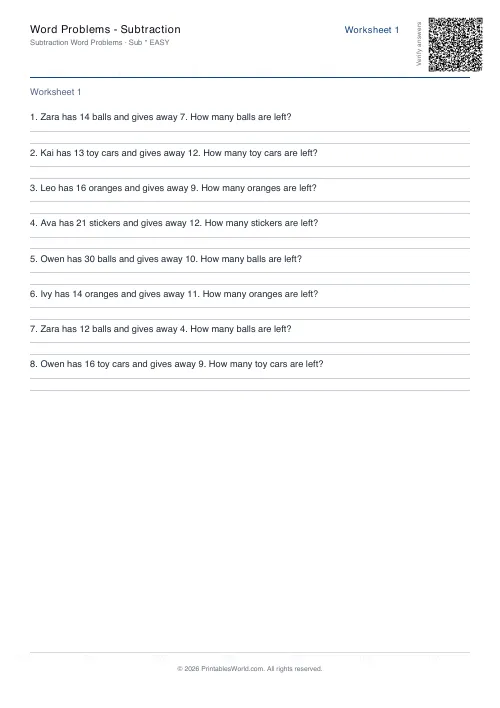 Word Problems: Subtraction
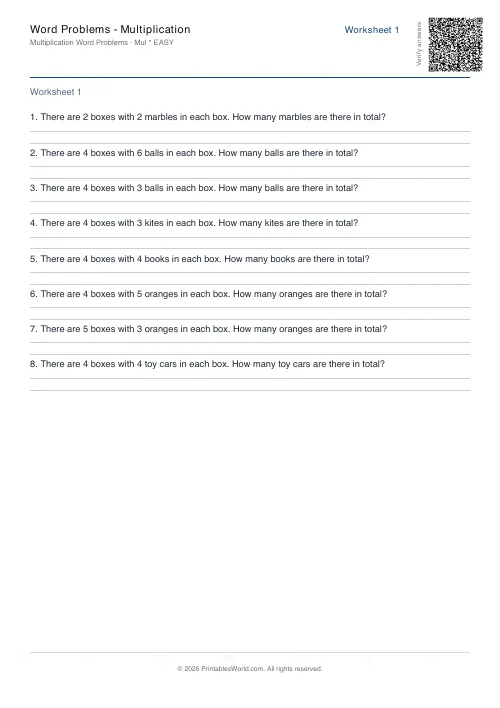 Word Problems: Multiplication
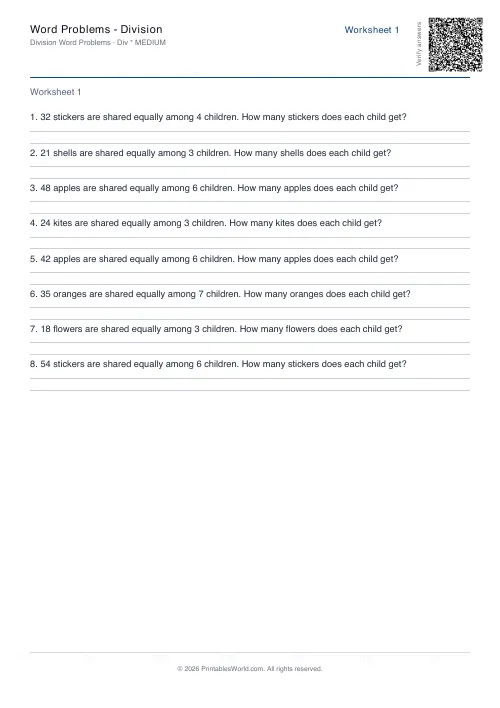 Word Problems: Division