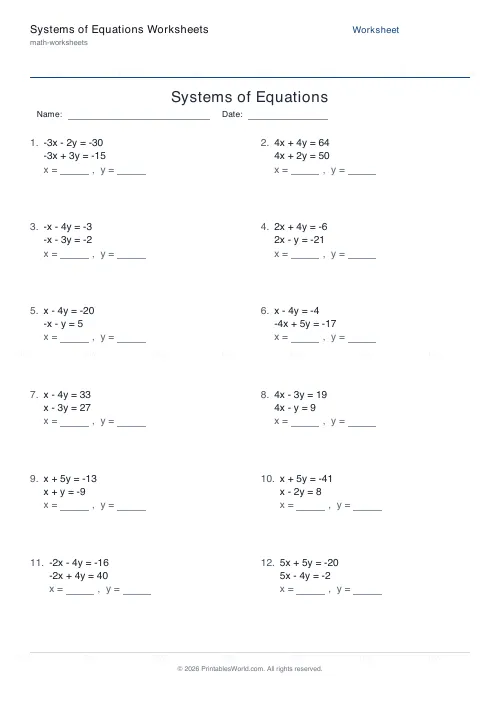
What this tool does
Pairs of linear equations with whole-number solutions. Shape them for substitution, for elimination, or mix the two. Answer key lists each solution as (x, y).
People also used
Equation Solving Worksheets
Printable one-step and two-step linear equations to solve.
Introduction to Algebra Worksheets
Printable beginner algebra practice. Evaluate, simplify, and substitute.
BODMAS Order of Operations Generator
Order-of-operations practice with brackets, exponents and mixed arithmetic.
Feedback
Spotted something off with this tool?
Two equations, one point
Every problem is a 2×2 linear system with a unique integer solution, so the answer key is always a clean pair of whole numbers. No fractions arriving unannounced halfway through a class.
Twelve problems by default, and the mode decides how the coefficients are built.
The three modes
Substitution gives one equation an isolated variable — a coefficient of 1 — so rearranging is a single step and the method is the obvious one to reach for.
Elimination arranges a shared coefficient across the two equations, ready to cancel when you add or subtract them.
Mixed blends both, which is the harder and more realistic set: the pupil has to look at the system and decide what to do with it, rather than applying the method the sheet was headed with.
Teaching order
Substitution first. It follows directly from what pupils already do with a single equation, and it requires no new idea beyond "put this in place of that".
Elimination second, and it usually needs more explanation than teachers expect. Adding two equations together feels illegitimate to a pupil who has been told an equation is a balance — the useful line is that both sides are being added to both sides, which keeps the balance intact.
Then mixed, and not before both are secure. Choosing a method is a separate skill and it cannot be practised while either method is still shaky.
Checking answers
A solution goes into both equations and satisfies both. That is the whole check, and it takes twenty seconds.
Insist on it. A pupil who checks catches their own sign errors, which are the overwhelming majority of mistakes here, and the habit is worth more over a year than the marking is.
Why integer solutions
Because a pupil learning elimination should be fighting the method, not the arithmetic.
Fractional solutions are perfectly real and they belong in later work, but a sheet full of them means an error at step two produces an ugly number at step four with no signal that anything went wrong. Integer answers self-check: if x comes out as 17/3, something is wrong further back, and the pupil can find it themselves.
Where this sits
GCSE and equivalent, typically ages fourteen to sixteen, and again at the start of A-level as revision. It also appears in the algebra strand of most reasoning and entrance papers.
Groundwork: equation solving and introduction to algebra.
FAQs
Quick answers
Do all the systems have whole-number solutions?
Yes. The generator picks the integer solution (x, y) first and builds the equations around it, so every problem solves to a clean pair of whole numbers. That makes it easy to check answers by substituting them back into both equations.
What is the difference between the substitution and elimination modes?
Substitution mode gives every problem an equation with an isolated variable (coefficient 1), so one expression drops neatly into the other. Elimination mode matches the x-coefficients across the two equations so they cancel when you add or subtract. Mixed mode combines both styles on one sheet.
Can a system have no solution or infinitely many solutions?
No. The generator rejects any coefficient set with a zero determinant, so every system has exactly one unique solution. It never produces parallel-line (no solution) or identical-line (infinite solutions) cases.
How many problems can I put on one sheet?
Between 4 and 30. The systems are arranged in two columns with space for both equations and an answer line, so 12 to 16 is a comfortable amount for most classes. Higher counts shrink the text to keep everything on one page.
Does the answer key show the full working?
The answer key lists the final solution to each problem as an ordered pair, for example x = 3, y = 2. It does not show step-by-step working, so students still practise the method themselves while you mark against the correct result.
Will the same settings always produce the same worksheet?
The generator uses a seeded random source, so a given configuration reproduces the same set of problems and a matching answer key. Changing any setting regenerates a fresh set.
Does this print correctly on US Letter as well as A4?
Yes. The layout is designed to fit both A4 and US Letter without cropping or scaling. Choose your paper size in the tool and print directly.
Related tools
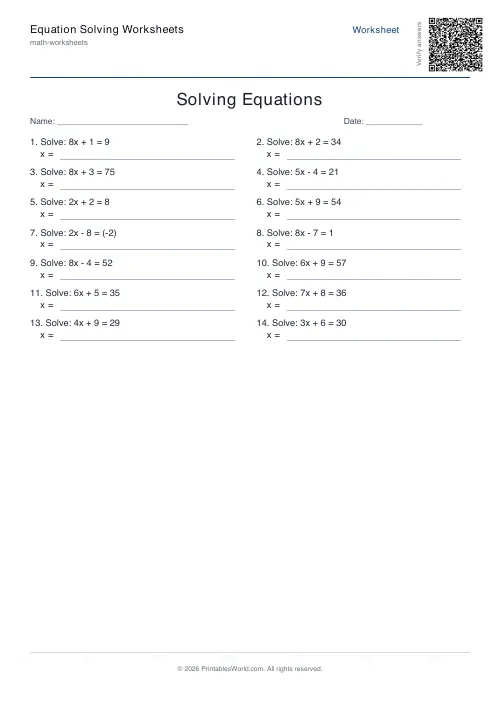
Equation Solving Worksheets
Printable one-step and two-step linear equations to solve.
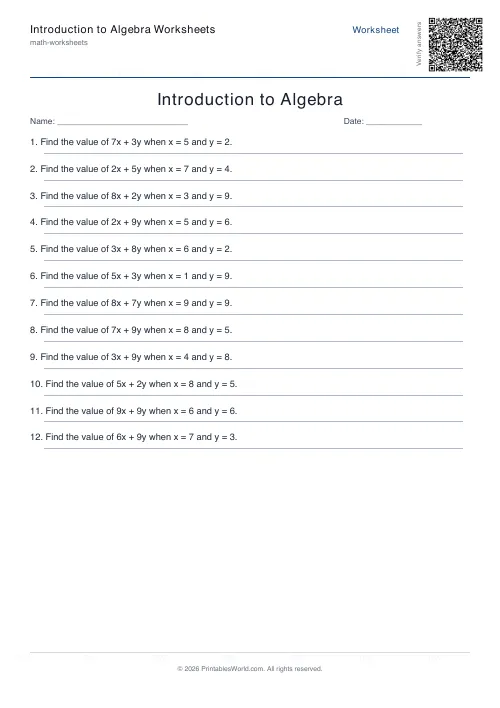
Introduction to Algebra Worksheets
Printable beginner algebra practice. Evaluate, simplify, and substitute.
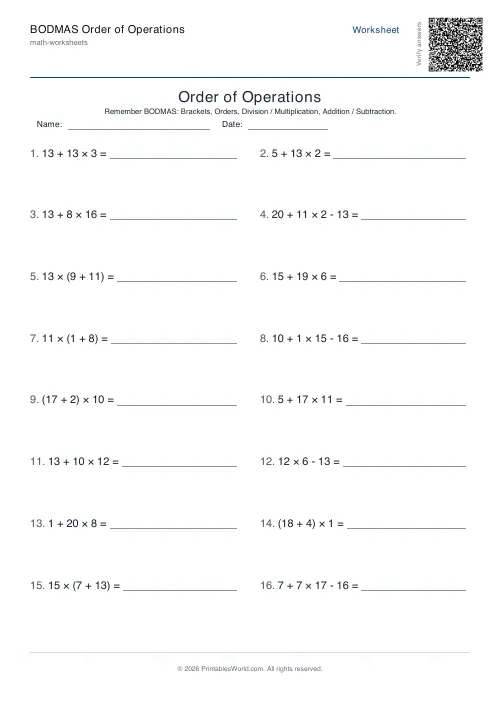
BODMAS Order of Operations Generator
Order-of-operations practice with brackets, exponents and mixed arithmetic.
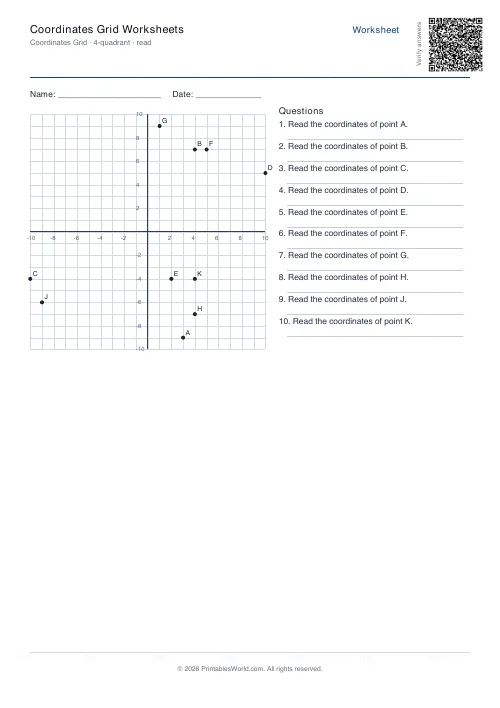
Coordinates Grid Worksheets
Create printable coordinate grid worksheets with 1-quadrant or 4-quadrant layouts.
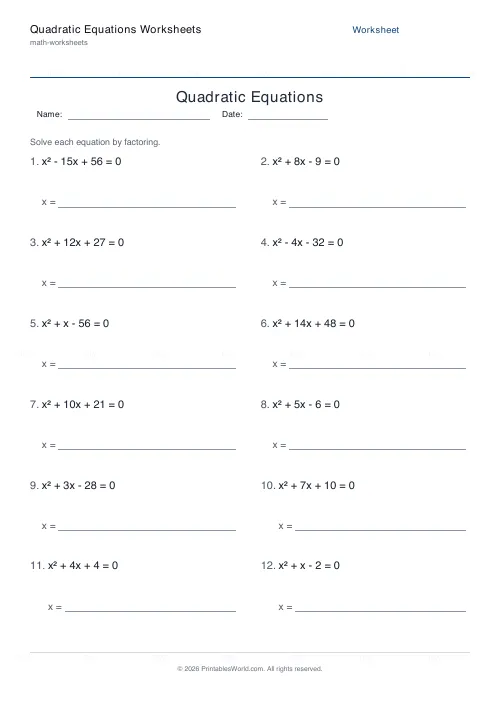
Quadratic Equations Worksheets
Generate printable quadratic equation worksheets with clean integer roots, solvable by factoring or the quadratic formula.
Further reading
More like this
 Addition Worksheets Generator
 Visual Addition Worksheets Generator
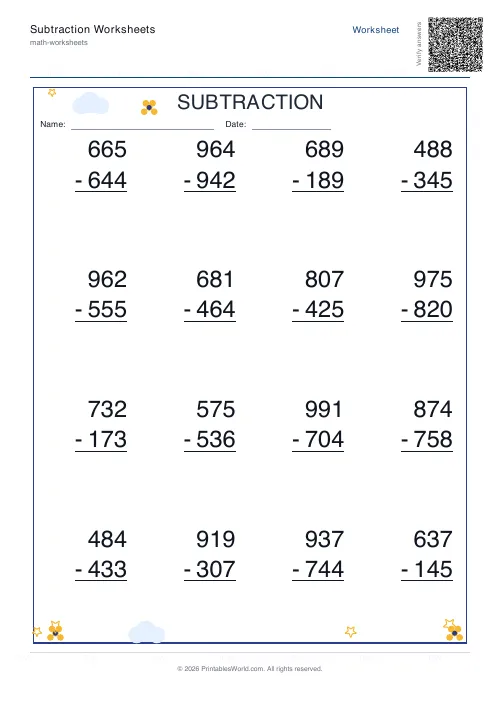 Subtraction Worksheets Generator
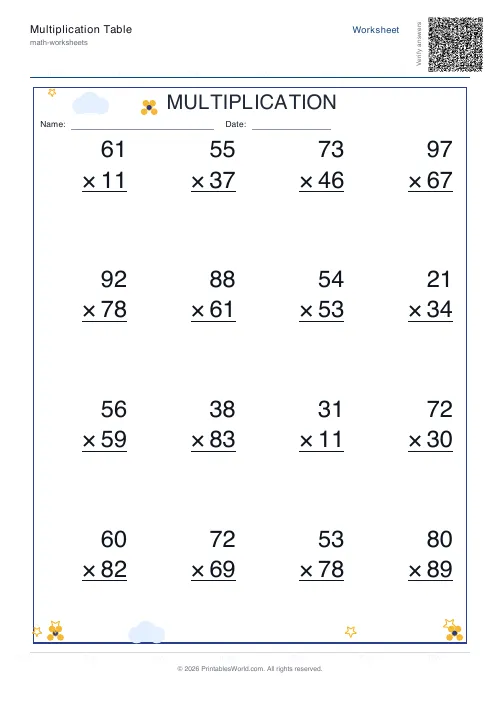 Multiplication Table Generator
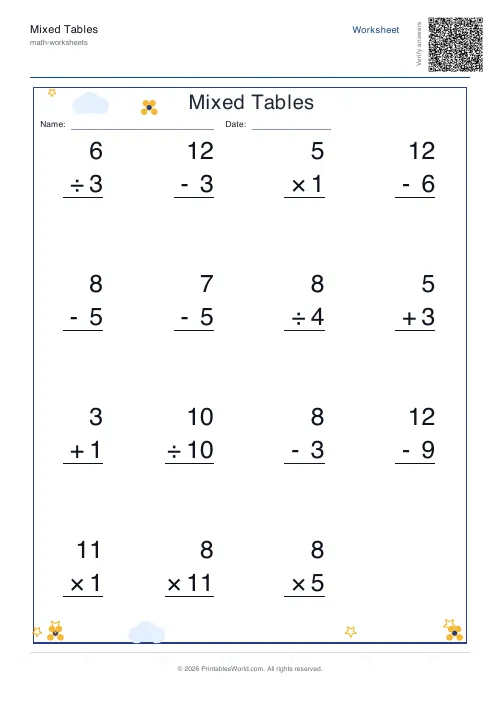 Mixed Tables Generator
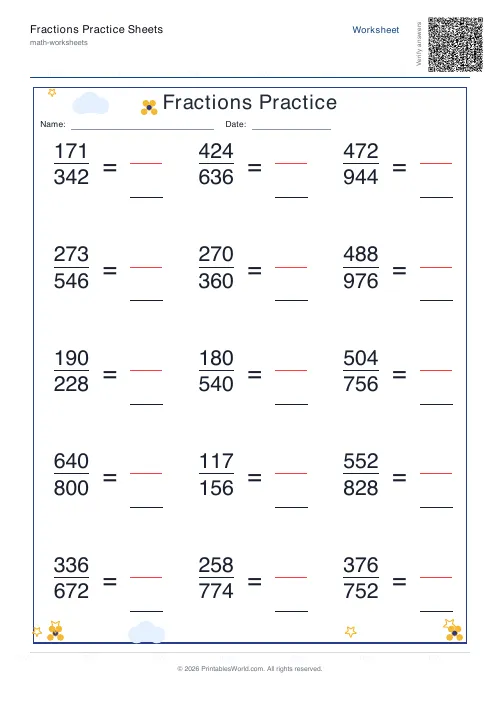 Fractions Practice Sheets Generator
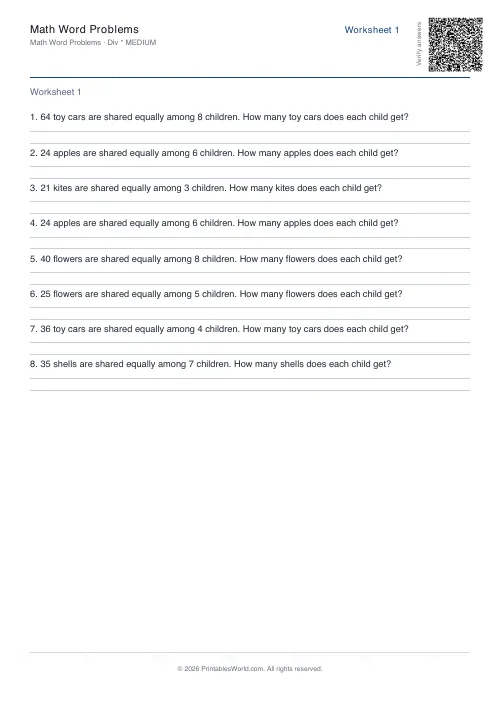 Math Word Problems Generator
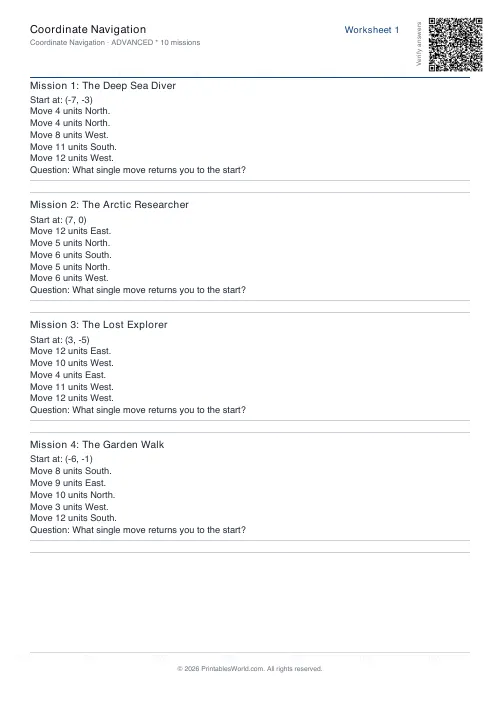 Coordinate Navigation Generator
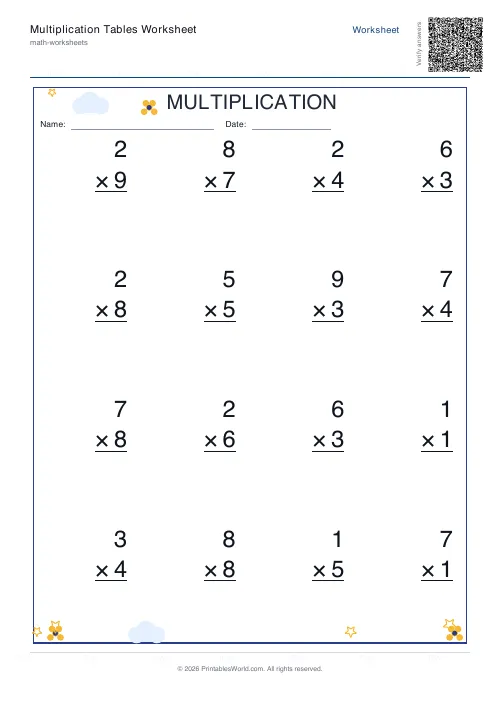 Multiplication Tables Worksheet
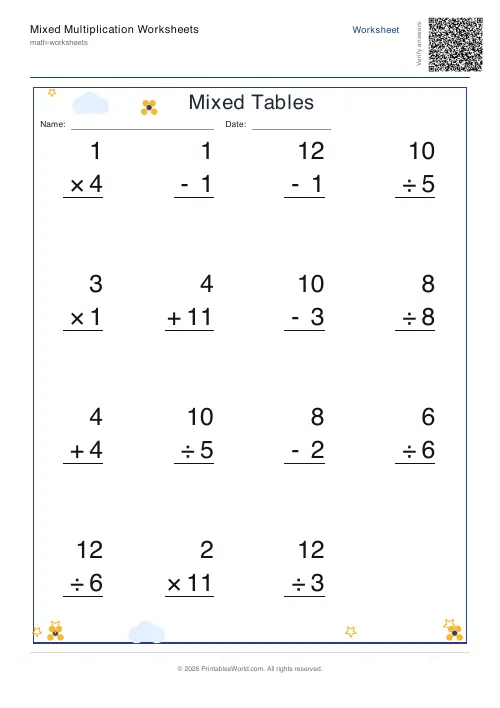 Mixed Multiplication Worksheets
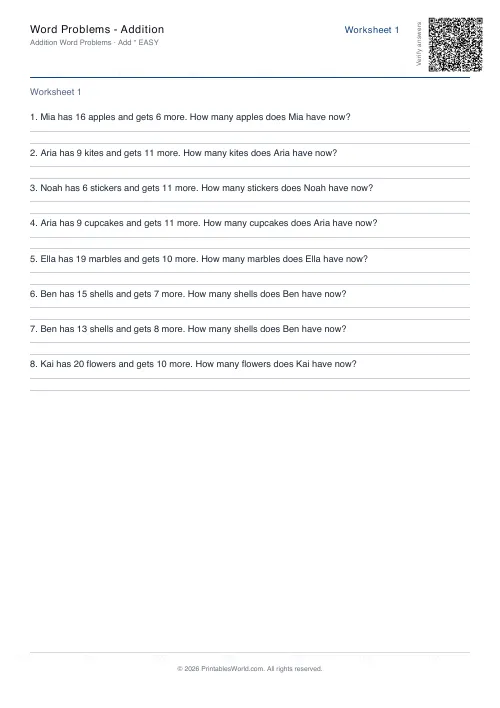 Word Problems: Addition
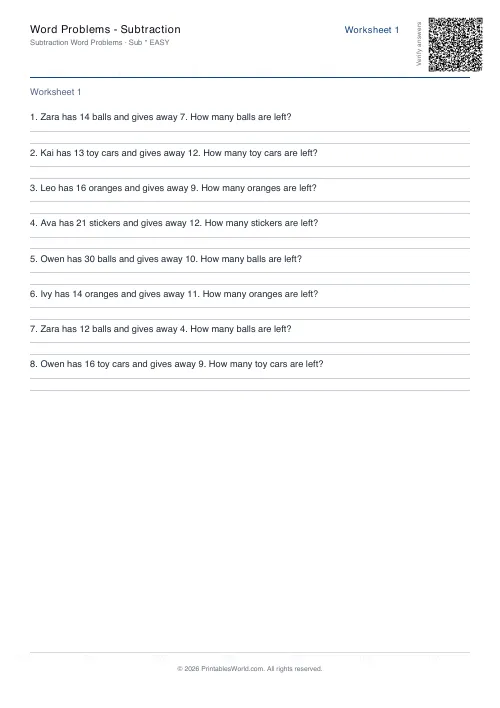 Word Problems: Subtraction
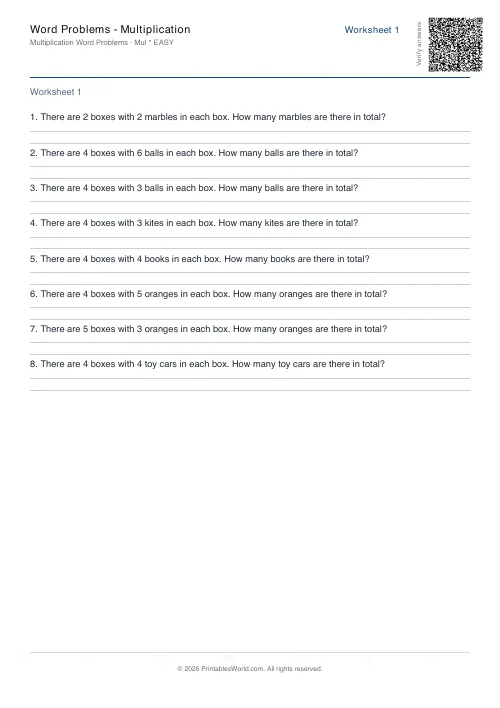 Word Problems: Multiplication
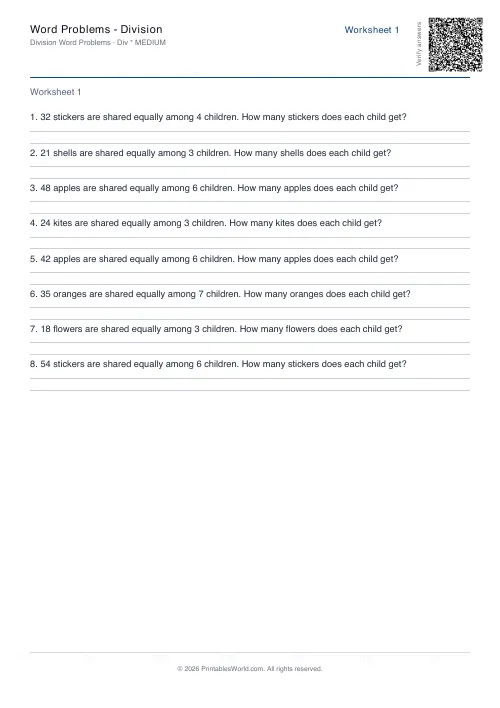 Word Problems: Division