What this tool does
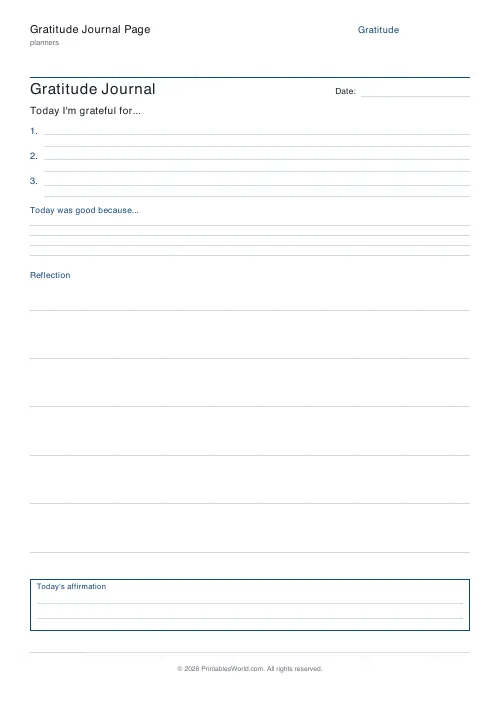
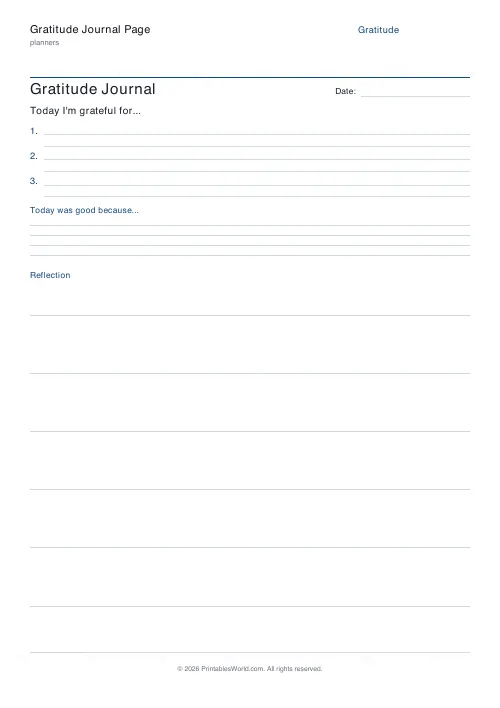
A one-page daily gratitude sheet: three things you are grateful for, what made the day good, and a reflection space. The affirmation line can be switched off.
People also used
Feedback
Spotted something off with this tool?
Three things, then why the day went the way it did
Space for three things you are grateful for, a line about what made today good, and a larger area to reflect in. An affirmation strip prints at the top and can be turned off.
Specific beats grand
This is the difference between a gratitude practice that works and one that becomes a chore by the second week.
"My family" is the entry everybody writes and nobody feels. "The way my daughter explained her day at dinner without being asked" is a different kind of entry, because it happened, it happened today, and recalling it involves actually returning to the moment.
The generic version is faster and does nothing. If a line could have been written on any day of your life, it is not doing the work.
What the evidence actually supports
Gratitude journalling is one of the better-studied interventions in positive psychology, and the honest summary is: modest effects, reasonably consistent, in the region of small-to-moderate improvements in mood and life satisfaction.
It is not a treatment for depression and it should not be offered as one. Where it does appear to help is in shifting attention — noticing good things at the time because you know you will be writing them down later, which is a different mechanism from the writing itself.
Worth knowing so the expectation is right. A sheet a day will not transform anybody's life, and it costs three minutes.
Less often is often better
One of the more useful findings in this literature is that writing gratitude entries once or twice a week produced larger benefits than doing it daily, apparently because daily practice makes it routine and routine makes it stop landing.
So print a stack and use it two or three times a week rather than forcing a daily streak. This is one of the few habits where the streak is not the point.
The reflection space
Larger than the other fields on purpose. It is for the day that was not good, which is when this sheet is worth more rather than less.
A hard day with a truthful reflection on it is a more useful page than a comfortable day with three easy entries. Do not skip the sheet on bad days; that is when writing changes something.
The affirmation line
On by default and easily switched off. Some people find a printed affirmation steadying; others find it faintly embarrassing, and a sheet you feel silly using is a sheet you stop using.
Turn it off if that is you. Nothing else on the page depends on it.
What the generator asks for
A title and the affirmation on or off. A4 or US Letter, printed at 100%.
FAQs
Quick answers
How often should I use it?
Most people find a daily or weekly rhythm works best. Print a stack and keep it by your bed.
What is the affirmation box for?
A short line you repeat to yourself. Toggle it off if you prefer a cleaner, more minimal page.
Is this suitable for kids?
Yes. The prompts are gentle enough for children, and teachers often use it as a morning check-in.
Can I use it in the evening?
It works beautifully as an evening wind-down, especially the reflection section.
Related tools
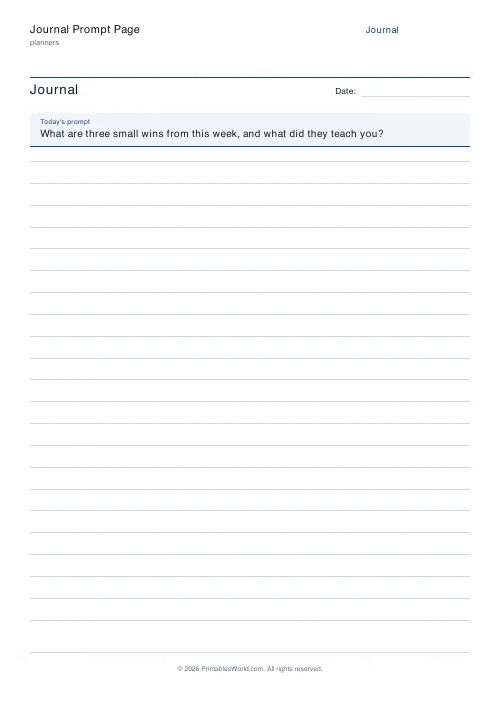
Journal Prompt Page
Printable journal page. One printed prompt at the top, full ruled writing area below.
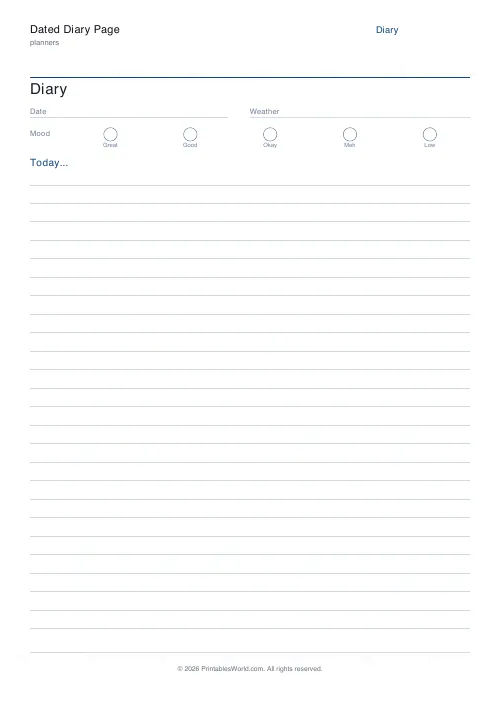
Dated Diary Page
Printable dated diary page with weather, mood icons, and a "Today…" prompt.
Brain Dump Page
A single-page brain dump. Dotted or lined writing area with a clean header.
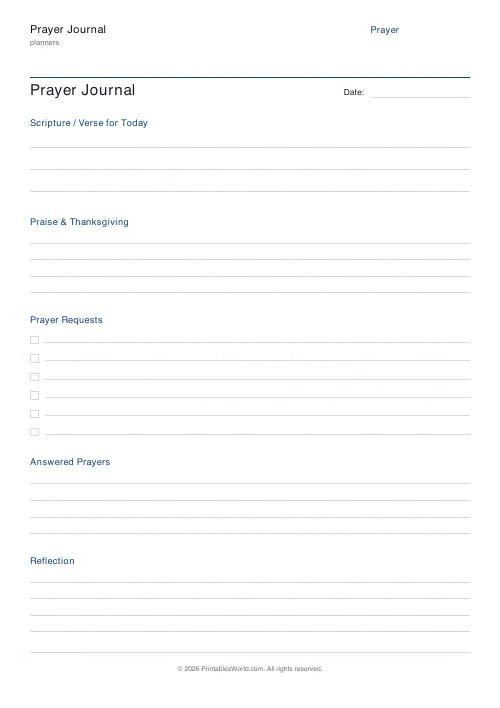
Prayer Journal
One-page printable prayer journal: Scripture, praise, requests, answered prayers and reflection.
Further reading
Planners
Meal planning 101: save time and money every week
A weekly meal plan saves money mainly by changing how you shop. Here is a thirty-minute method, the shortcuts that keep it going, and the mistake that ends most plans in week three.
5 min read
Planners
Chore charts that motivate kids (without nagging)
Most chore charts fail for the same three reasons. Here is what to put on one by age, whether to attach money, and how to stop being the person who remembers everything.
5 min read