What this tool does
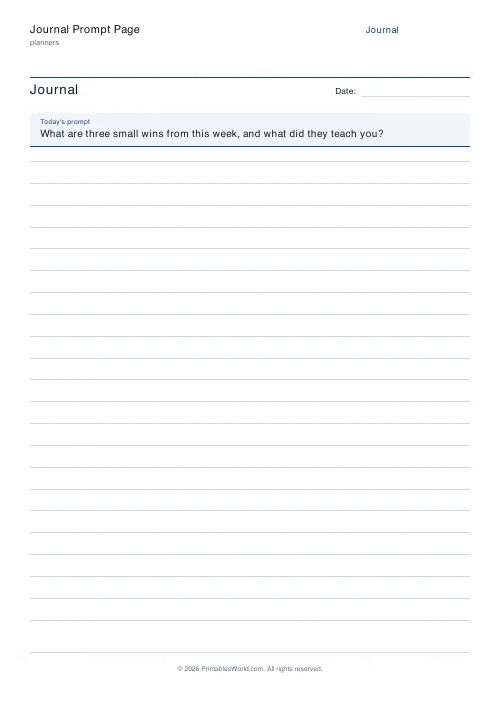
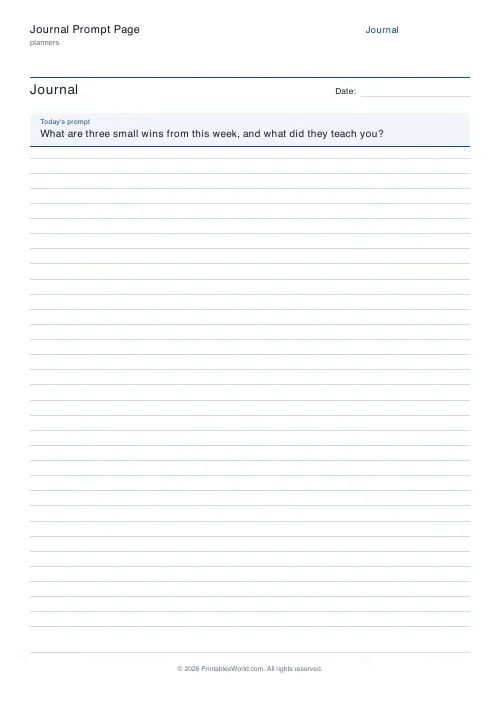
A prompt across the top of the page and ruled lines underneath, at wide or narrow spacing. Write your own prompt or keep the one it comes with.
People also used
Feedback
Spotted something off with this tool?
A question, then room to answer it
One prompt across the top and ruled writing lines below it, at wide or narrow spacing. That is the whole sheet. The restraint is deliberate: a journal page carrying boxes, headings and a mood tracker has become a form, and forms get filled in rather than written on.
The prompt is doing one job
Removing the blank page.
Most people who mean to keep a journal stop because they open it, find nothing to say, and close it. A question already on the paper removes that moment entirely: there is no decision to make about what to write about, only the writing.
That is also why a printed prompt beats a list of prompts to choose from. Choosing is the part that stalls people.
What makes a prompt work
Specific beats broad. "What went well today?" produces a sentence. "What did somebody say today that you keep thinking about?" produces a paragraph, because it points at something particular rather than asking for a summary.
Answerable beats profound. "What is the meaning of your life?" gets nothing. "What would you do with a free Tuesday?" gets a page.
And a question about a specific past event beats one about feelings in general — memory gives you material, and abstraction does not.
Why paper rather than a notes app
Slower, which is the advantage. Handwriting runs at roughly a third of typing speed, and that gap forces a kind of editing-while-thinking that typing lets you skip.
It is also unshareable and unsearchable, which sounds like a drawback and is the reason people write more honestly on it. A page nobody will ever scroll past invites a different sort of sentence.
Using it with children
Journal writing is one of the few ways to get extended writing out of a reluctant writer, because there is no right answer and nothing to be marked on.
Say explicitly that spelling does not count on this sheet. A child who is thinking about spelling is not thinking about what they want to say, and for this exercise the second one is the whole point. Mark the ideas or mark nothing.
Sizing it
A title, the prompt, and wide or narrow line spacing. A4 or US Letter, printed at 100%. Wide suits large handwriting and a first attempt; narrow fits considerably more words on the page.
Print a stack with different prompts and keep them somewhere visible. A journal that lives in a drawer is a journal nobody writes in.
FAQs
Quick answers
Can I choose my own prompt?
Yes. Type any prompt in the text field and it prints verbatim at the top of the page.
Wide or narrow lines. Which should I pick?
Wide lines (26pt) give bigger handwriting more room. Narrow (18pt) fits more words.
Does it work for classroom writing prompts?
Yes. Type the prompt once, print a stack, and hand one to each student.
Can I leave the prompt blank?
Yes. The prompt box still prints with an empty heading, giving you a clean lined sheet.
Related tools
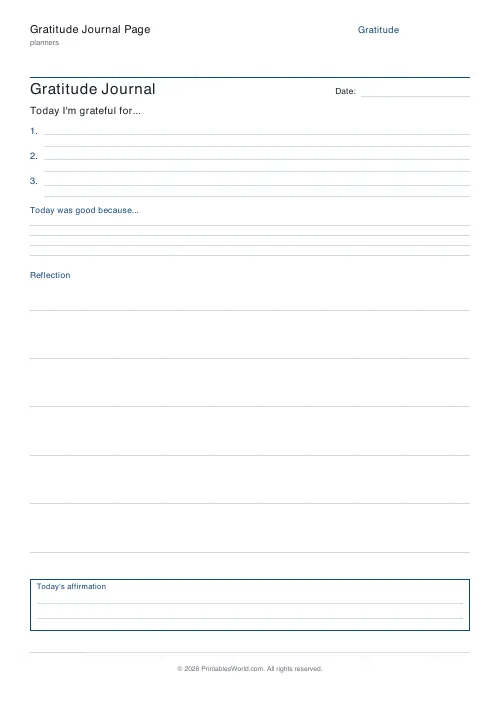
Gratitude Journal Page
Printable gratitude journal. Three gratitudes, a win, and a reflection space.
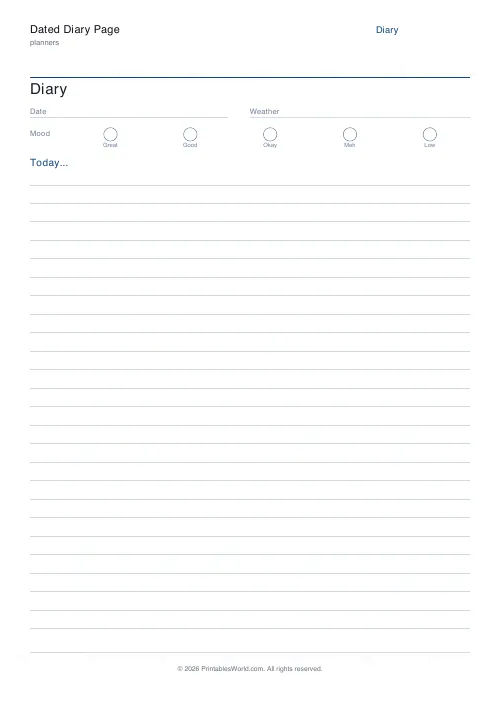
Dated Diary Page
Printable dated diary page with weather, mood icons, and a "Today…" prompt.
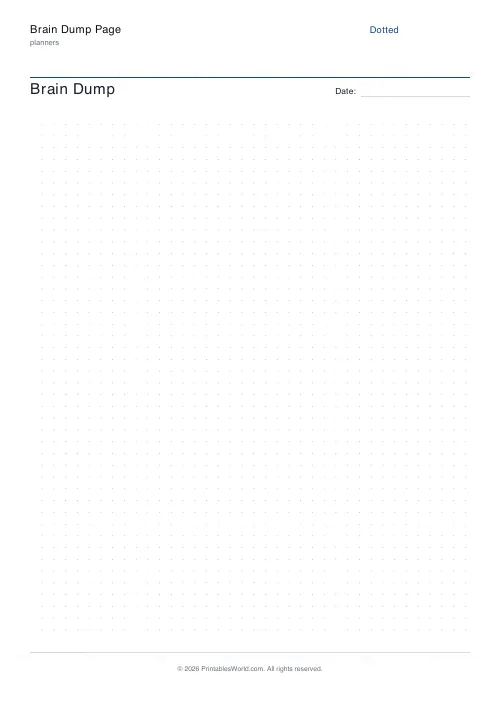
Brain Dump Page
A single-page brain dump. Dotted or lined writing area with a clean header.
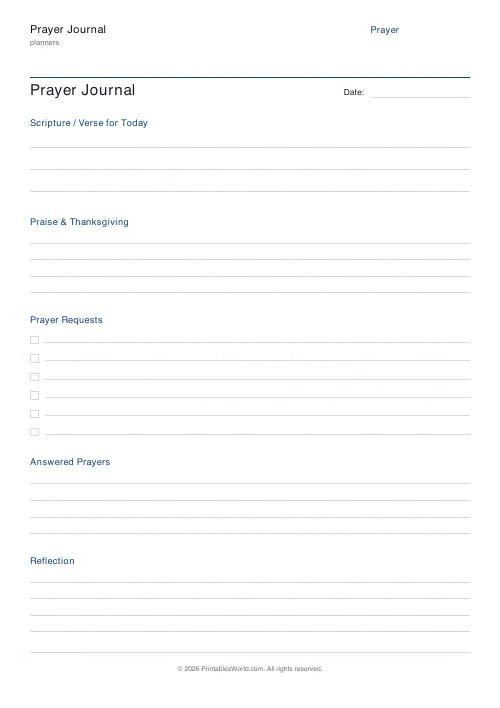
Prayer Journal
One-page printable prayer journal: Scripture, praise, requests, answered prayers and reflection.
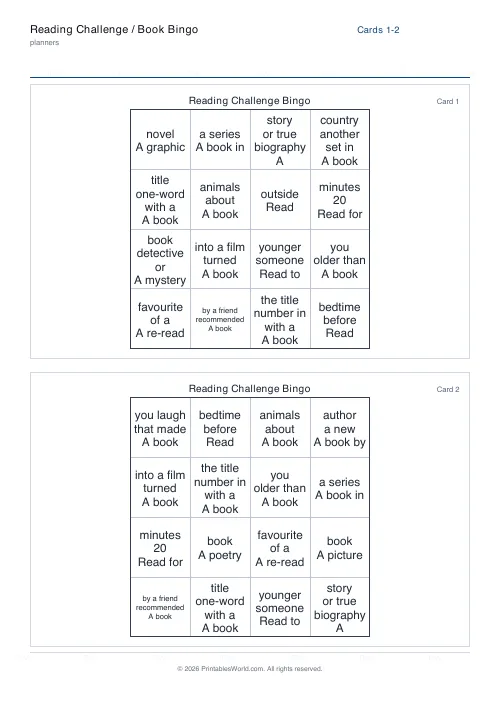
Reading Challenge / Book Bingo
Turn a reading challenge into a playful bingo card. One prompt per square.
Further reading
Planners
Study planning for exams: a student's complete guide
A revision timetable is only as good as what goes in the slots. Here is how to build one backwards from the exam date, and which study methods the evidence actually supports.
5 min read
Planners
How to pay off debt faster with a payoff tracker
One method costs less; the other is easier to stick to. Here is how to choose between them honestly, and why a visual tracker changes the odds either way.
5 min read
Planners
Chore charts that motivate kids (without nagging)
Most chore charts fail for the same three reasons. Here is what to put on one by age, whether to attach money, and how to stop being the person who remembers everything.
5 min read