What this tool does
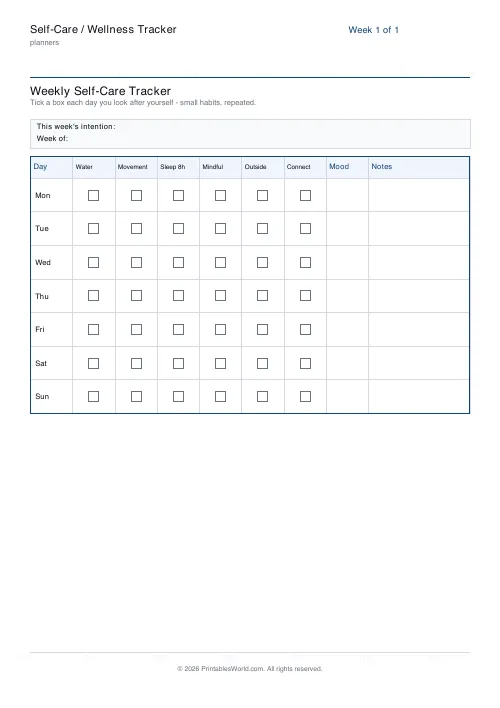
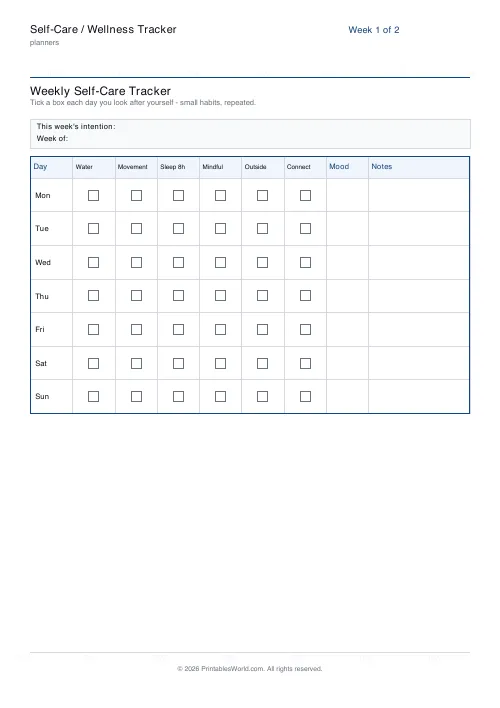
A weekly tick-box tracker with seven day rows, a column for each habit you choose, a mood box, a notes column and an intention strip at the top. One to four weeks per download.
People also used
Feedback
Spotted something off with this tool?
A paper habit tracker, one week to a page
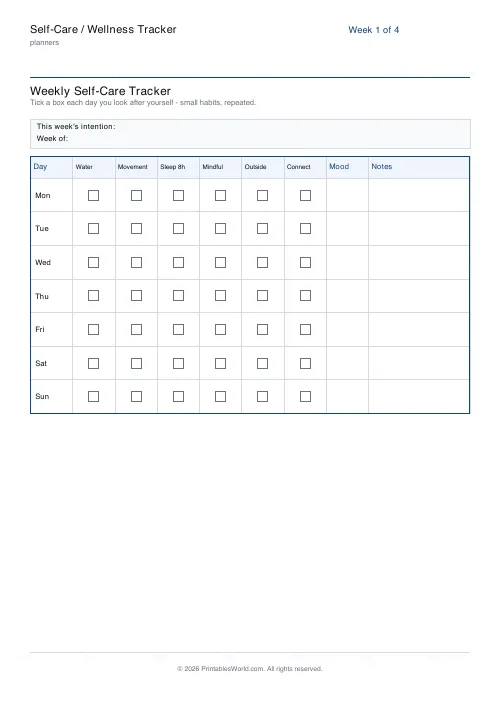
Seven dated rows down the page, one column per habit, a mood box, a notes column, and a strip at the top for the week's intention. Tick the boxes with a pen.
Six habits come pre-filled — Water, Movement, Sleep 8h, Mindful, Outside, Connect — and all of them are yours to replace with whatever you are actually working on. Print one to four weeks at a time.
Six habits is the ceiling for a reason
The layout will take your list, but the useful number is smaller than you think, and it is smaller than the number you will want to write down on the day you print it.
Habit research fairly consistently finds that people attempting several changes at once do worse than people attempting one or two — the effort is shared out, none of them gets enough, and the whole set is abandoned together after about eleven days. Three habits you tick most days beats six you tick twice.
If you must have six, make four of them things you already do. A tracker with some guaranteed ticks on it is a tracker you keep looking at.
What the notes column is for
Not a diary. One phrase about why the day went the way it did.
The ticks tell you what happened; the notes tell you why, and the why is the only part you can act on. Three weeks of "slept badly — late shift" is a scheduling problem, not a willpower one, and you would never see it from the boxes alone.
The mood box and the intention strip
The mood box is deliberately small and deliberately vague. Do not overthink it; a face or a number is enough. Its value is comparative — it only means something once there are three weeks of them to look across.
The intention strip at the top is one sentence for the week, written before the week starts. "Be in bed by eleven" is a good one. "Be healthier" is not, because nothing on Wednesday will tell you whether you did it.
Why paper
An app does this and does it with less friction. Paper wins on two things: it is visible without being opened, and it does not notify you.
Stick the sheet on the fridge or inside a cupboard door and the reminder is passive and constant. That is a different mechanism from a phone alert, and for a lot of people it is the one that survives past the second week.
The options
A title, your habit list, and one to four weeks per download. Paper size A4 or US Letter.
Four weeks printed at once and stapled makes a month you can flick back through, which is when the patterns become visible. Print at 100%.
FAQs
Quick answers
Can I choose my own habits to track?
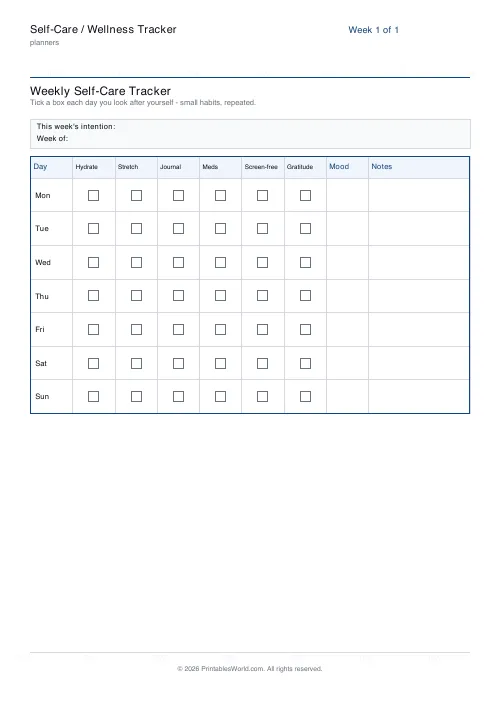
Yes. Type your own habit names as a comma-separated list, up to eight. Each one becomes a daily tick-box column, and Mood and Notes are always added automatically.
How many weeks can I print at once?
Pick 1 to 4 weeks. Each week prints on its own page so you can tear them out and pin them up one at a time.
Is this a medical or mental-health tool?
No. It's a gentle paper record for everyday self-care habits and mood. It doesn't diagnose or treat anything. For health concerns, please speak to a professional.
What do I write in the Mood column?
Whatever you'll keep up. A single word, a score out of ten, or a small face. Pick one scale and stick with it so you can compare days at a glance.
Related tools
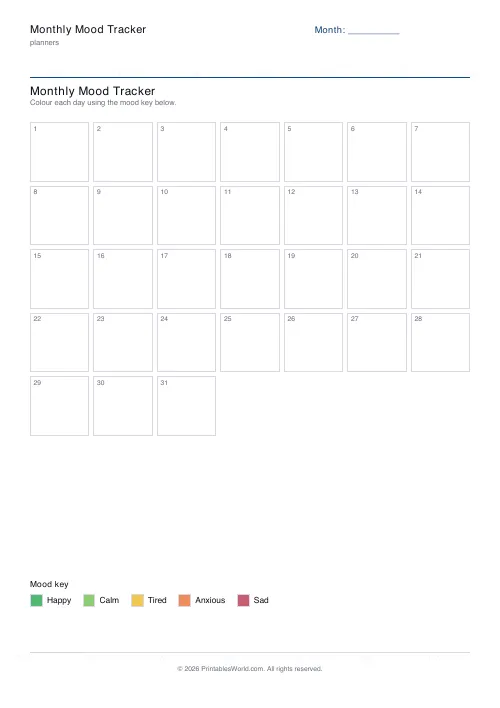
Monthly Mood Tracker
Colour-in mood tracker with 31 day cells and a customisable mood key.
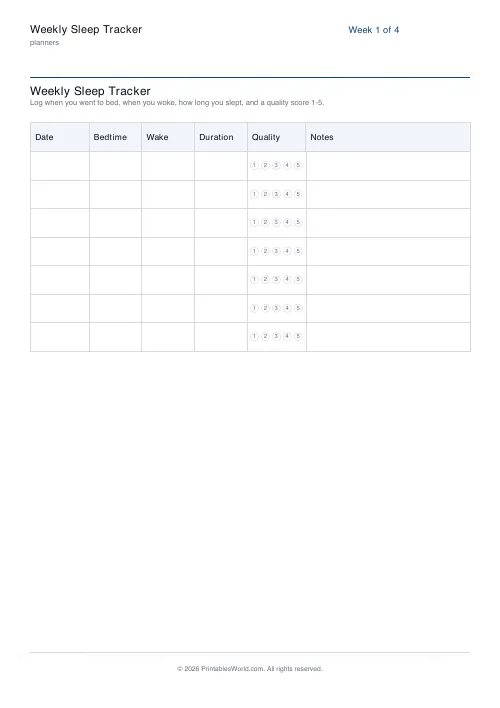
Weekly Sleep Tracker
Log bedtime, wake time, duration, and quality for 1–4 weeks at a time.
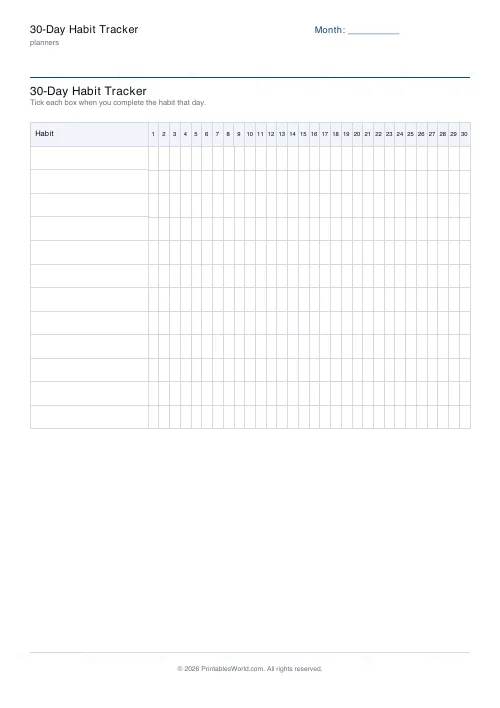
30-Day Habit Tracker
A printable 30-day habit grid to tick off every morning. One row per habit.
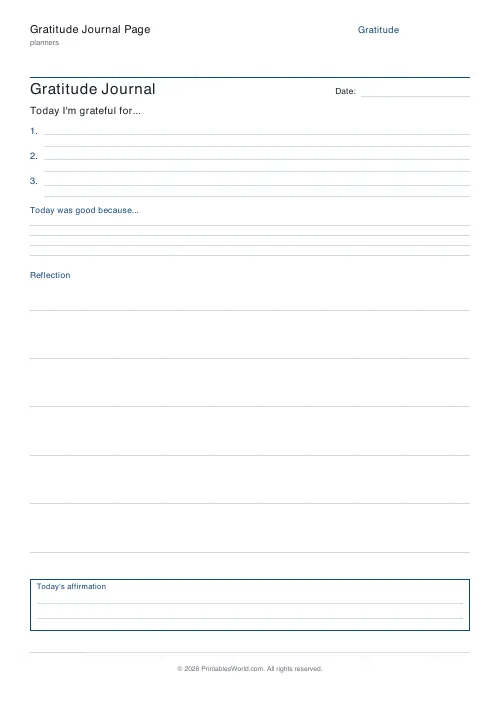
Gratitude Journal Page
Printable gratitude journal. Three gratitudes, a win, and a reflection space.
Further reading
Planners
How to pay off debt faster with a payoff tracker
One method costs less; the other is easier to stick to. Here is how to choose between them honestly, and why a visual tracker changes the odds either way.
5 min read
Planners
How to track habits that actually change your life
Habit tracking works because it makes an invisible process visible. It fails when you track too many things, or when protecting the streak becomes more important than the habit.
5 min read
Planners
How to build a daily routine that actually sticks
Most routines fail in week two, when motivation runs out and nothing has replaced it. The fix is structural: fewer items, fixed anchors, and a plan for the day you miss.
6 min read