What this tool does
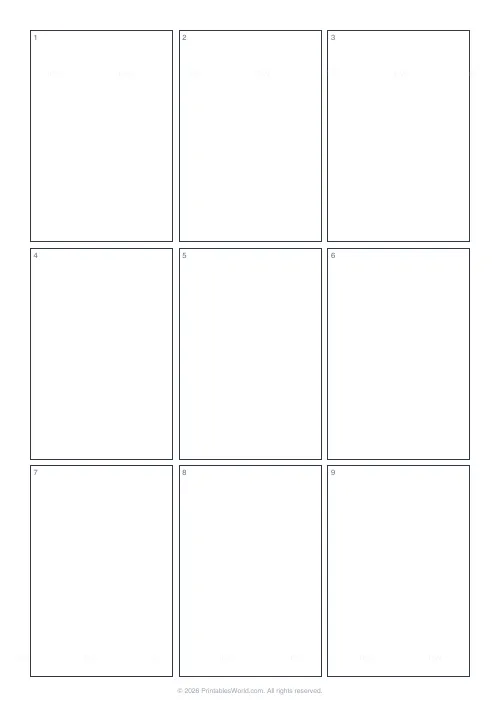
Nine equal numbered panels in a 3×3 grid, the classic comic book page. Blank, with the numbering there so pacing can be planned before anything is drawn.
People also used
Feedback
Spotted something off with this tool?
The nine-panel grid
Three by three, every panel the same size, each one numbered. This is the standard comic book page, and it comes with a history: Watchmen held to it for almost every page of the book, which is where most people have met it.
Why a rigid grid is a creative decision
Nine identical boxes look like a constraint. They work as a discipline.
Because every panel takes the same amount of page, every panel takes roughly the same amount of the reader's time. That gives you a steady, mechanical rhythm — and once the rhythm is fixed, anything you do inside it stands out. A quiet panel between two loud ones reads as a pause. A repeated composition across three panels reads as time passing.
Variable panel sizes give you more tools and a mushier beat. This grid gives you fewer tools and a metronome, and a great many good comics have chosen the metronome on purpose.
Nine is a lot of story
It is enough for a scene with a beginning, a development and an end, or for a single moment stretched out across nine views.
That second option is worth trying with a class. Nine panels of one thing happening slowly — a glass falling, a decision being made — teaches more about pacing than nine panels of nine different events, and it is a much harder exercise than it sounds.
Plan it before drawing
Nine one-line descriptions on scrap paper first. The commonest failure on a page this size is running out of story around panel six and padding the rest.
A useful check: does anything change between panel four and panel five? If two adjacent panels could be swapped without loss, one of them is not earning its place.
Working within the boxes
Vary what happens inside the panel rather than the panel itself. Close, then wide, then close again. A panel with no figures in it. A panel that repeats the previous one exactly except for one detail.
Those are the moves the grid makes available, and they are invisible on a page where the panels are already different shapes.
Printing
A4 or US Letter at 100%. Nine panels on a page means each is small, so a fine pen suits it better than a thick one, and lettering wants planning before it is drawn.
For fewer, larger panels there is a six-panel and a four-panel version.
FAQs
Quick answers
Is 9 panels standard in comics?
Yes. The 3×3 grid is one of the most widely used comic book page layouts.
Are the panels numbered?
Yes. A small reference number in the top-left of each panel.
Is there a bigger version?
For larger panels use the 4- or 6-panel templates.
Will it print on A4?
Yes. A4, US Letter, and US Legal are supported.
Related tools
Comic Strip Template: 6 Panel
Six numbered panels for medium-length comic strips.
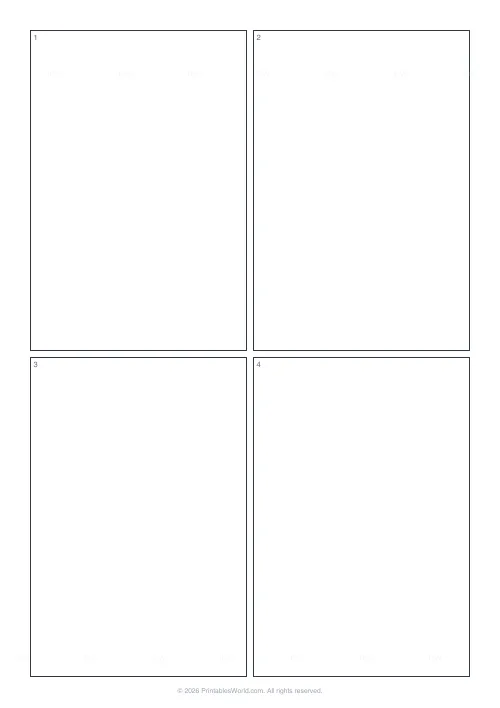
Comic Strip Template: 4 Panel
Four equal panels for short comic strips and creative writing.
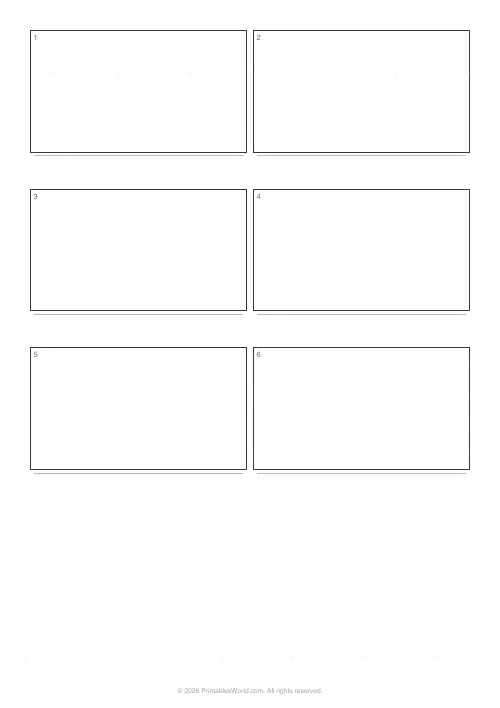
Storyboard Template
Six 16:9 frames in a 2×3 grid with caption strips for film and animation.
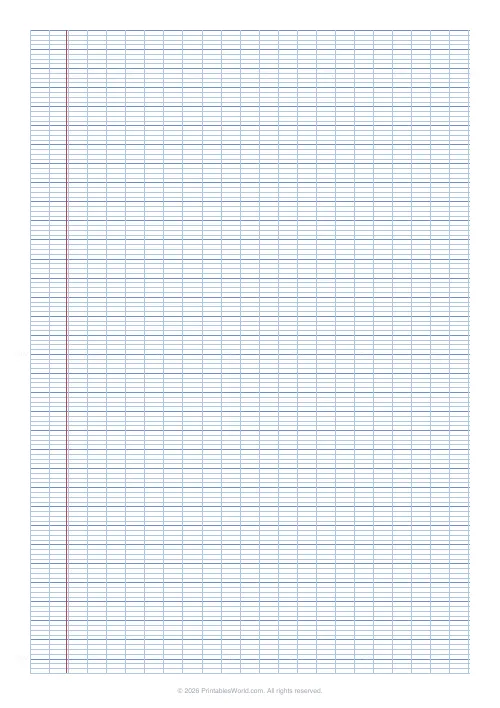
French Ruled (Séyès) Paper
The classic French cahier Séyès grid. 2 mm rules, 8 mm baselines, and an optional red margin.
Further reading
Printable Paper
Bullet journalling with dot grid paper: a starter guide
The bullet journal was designed to be fast, not beautiful. Here is the original system, why dot grid suits it better than lines or blank, and the four pages you actually need.
5 min read
Printable Paper
Graph paper sizes: which grid for which task
What graph paper sizes and grid spacings mean, how to match a grid to maths, art or design, and how to set it all in the free graph paper generator.
7 min read
Printable Paper
The best note-taking paper for students (Cornell, grid, lined)
The paper you take notes on quietly decides how you review them. Here is what each format is actually for, and which subjects each suits.
4 min read