What this tool does
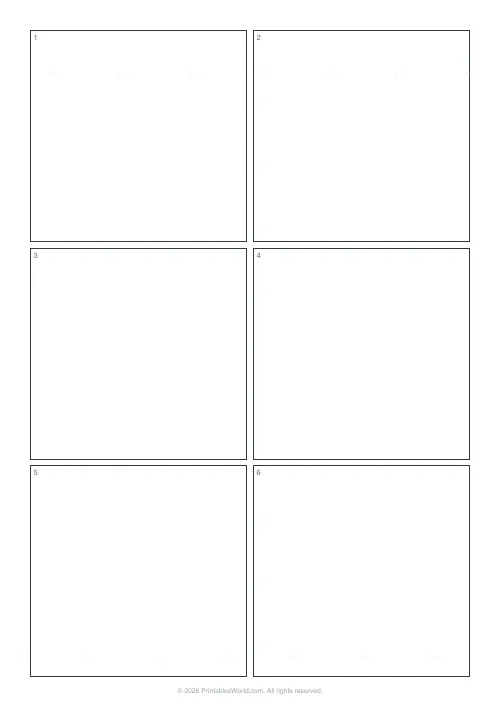
Six equal numbered panels in a 2×3 portrait layout. Blank, so the drawing and the lettering are yours.
People also used
Feedback
Spotted something off with this tool?
Six boxes, numbered, nothing else
Two columns by three rows, all panels the same size, each numbered in the corner. No speech bubbles. No gutters to fill in. No title box.
What six gives you that four does not
Room for a middle. A four-panel strip is setup, complication, turn, punchline — a joke shape, and a tight one.
Six lets the situation develop before it turns. You can spend two panels establishing rather than one, or put two beats between the complication and the resolution, which is the difference between a gag and a short story.
It is also where pacing becomes a decision. Four panels nearly force the structure on you. Six leave you to choose where the time goes, and that choosing is the part actually worth practising.
Plan in words first
Six one-line descriptions, written before a pencil touches the boxes. It takes two minutes and it prevents the standard outcome: a beautiful first panel, a smaller second, and the whole ending crushed into panel six with a caption explaining what happened.
Six lines that do not work as a story will not be rescued by drawing. Better to find that out on scrap paper than on panel five.
The panels are equal on purpose
Real comics vary panel size for pacing — a wide panel slows a moment down, a small one speeds it up. That is a genuine technique and it is not what this sheet is for.
Equal panels remove a decision and let the writer concentrate on sequence. Once that is comfortable, ruling your own panels on blank paper is the next step, and it is the point at which somebody has started making comics rather than filling in a template.
Where it gets used
Retelling a story in six moments, which is a comprehension task disguised as drawing and works far better than a written summary for some children.
Sequencing in science, a historical event, instructions drawn rather than written, and a social story showing a situation and a way through it. Also, straightforwardly, a comic — which is a legitimate use of a lesson.
Printing
A4 or US Letter at 100%. Print several: anybody making a strip will want a second sheet for the redraw, and the redraw is almost always better than the first attempt.
FAQs
Quick answers
How are the panels arranged?
2 across × 3 down on a portrait page, six equal panels.
Are the panels numbered?
Yes. A small number in the top-left of each panel for reference.
When should I use 6 panels vs 9?
6 panels works for short story arcs. 9 panels is better for full comic-book pages.
Will it print on US Letter?
Yes. A4, US Letter, and US Legal are supported.
Related tools
Comic Strip Template: 4 Panel
Four equal panels for short comic strips and creative writing.
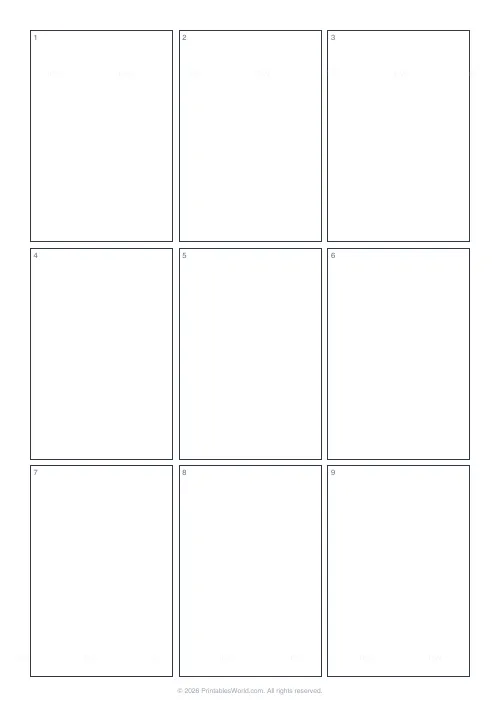
Comic Strip Template: 9 Panel
Nine-panel grid. The classic comic book page layout.
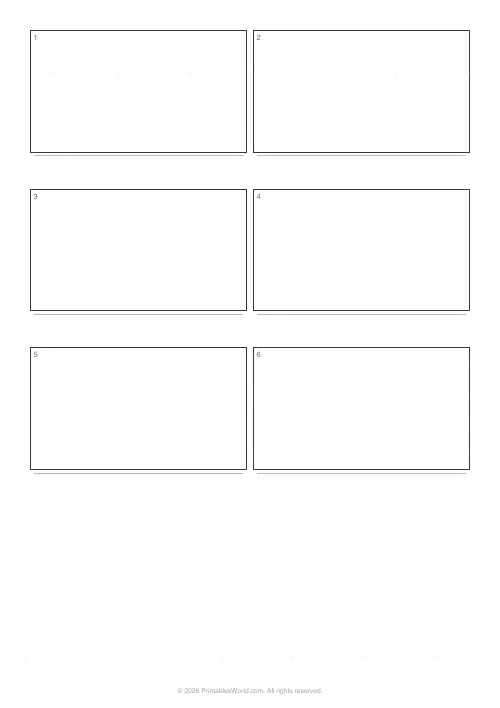
Storyboard Template
Six 16:9 frames in a 2×3 grid with caption strips for film and animation.
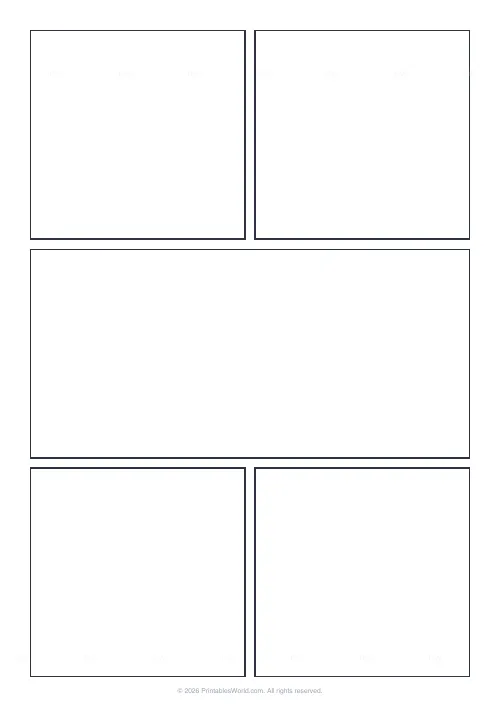
Manga Panel Template
Pre-ruled manga and comic page layouts with gutters and a bleed guide.