What this tool does
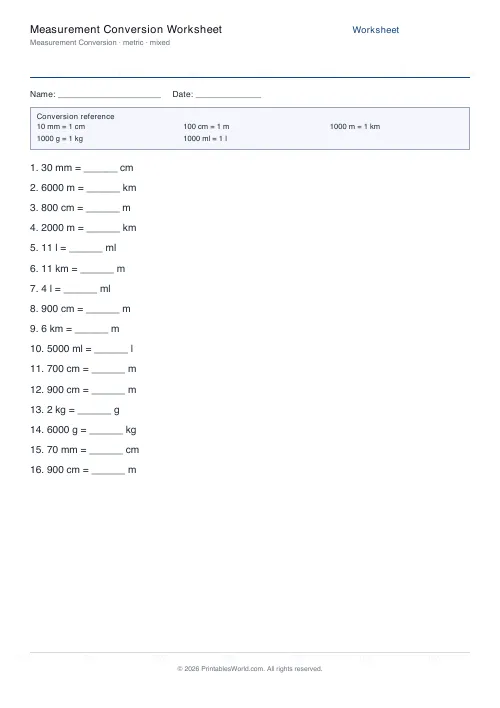
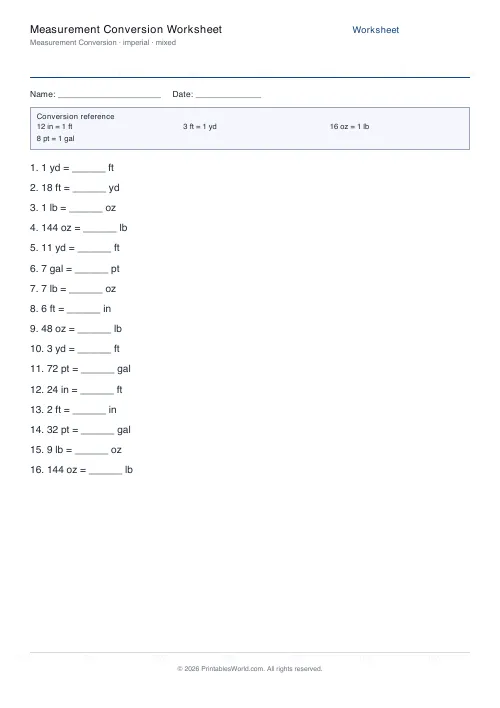
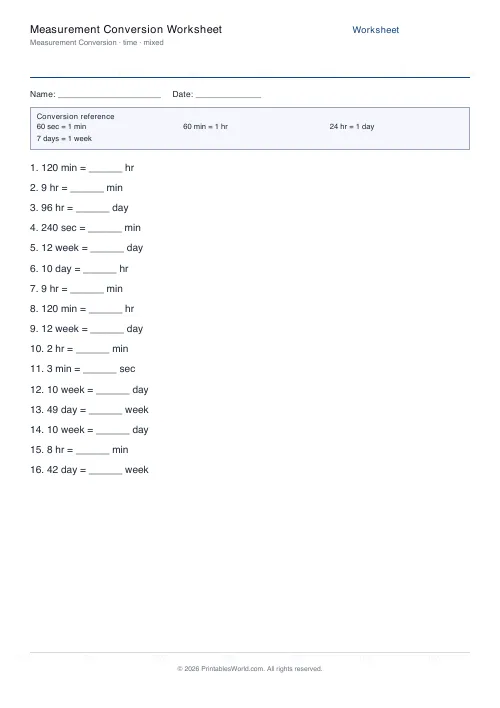
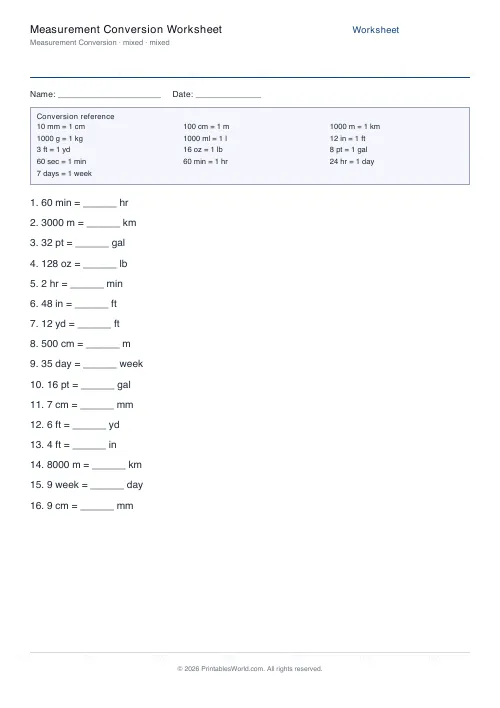
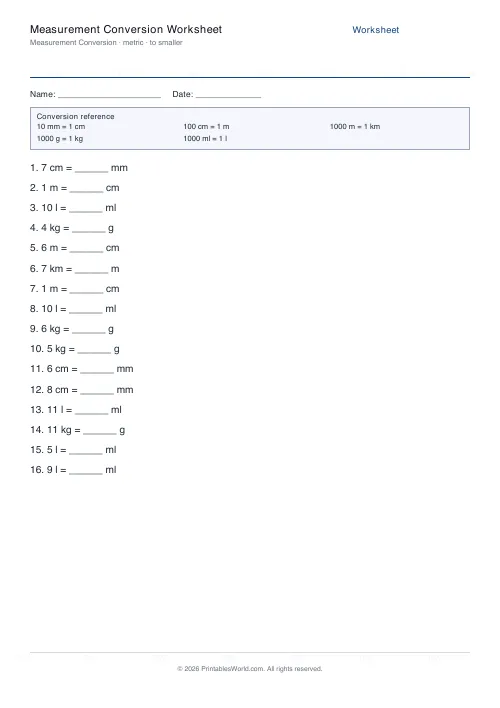
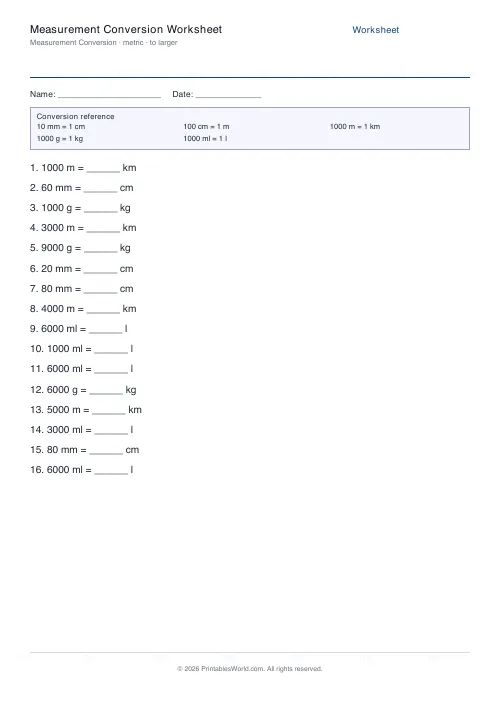
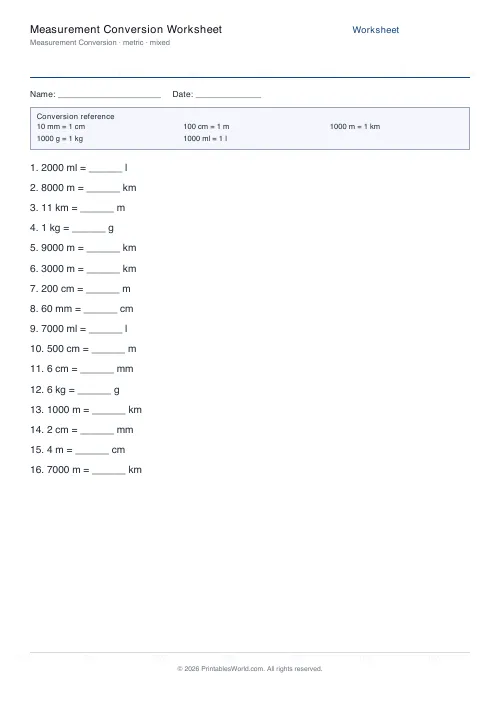
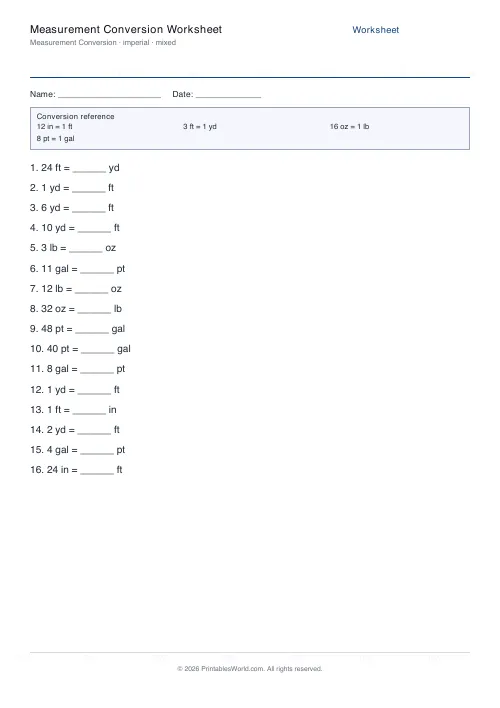
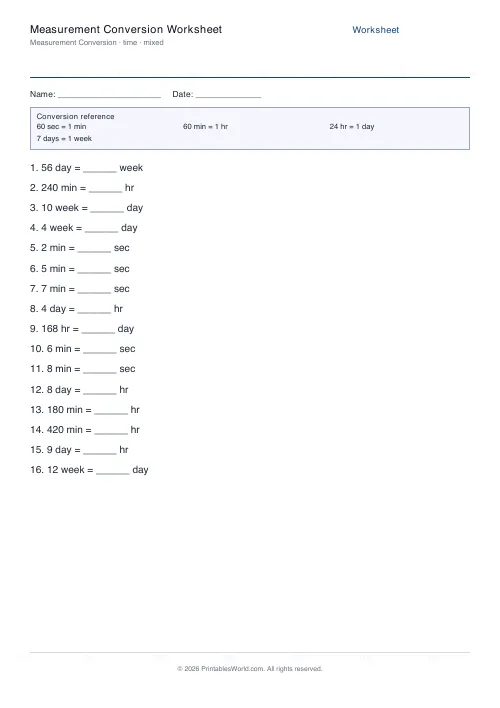
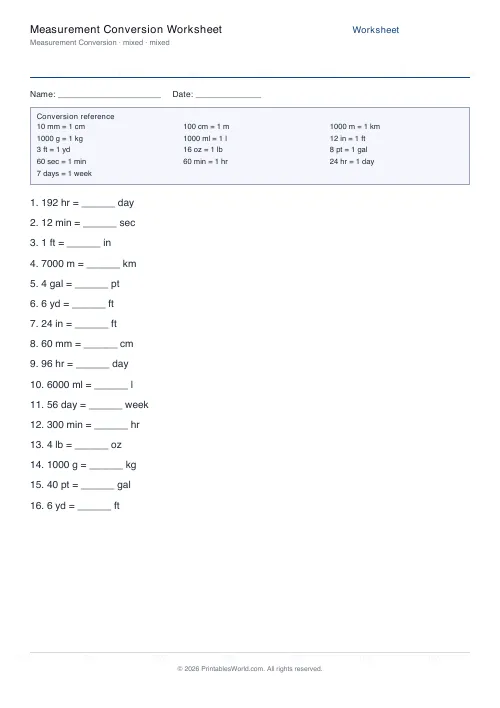
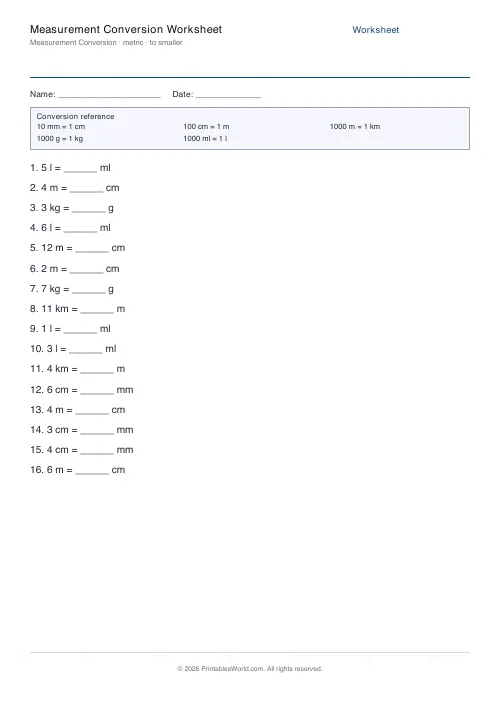
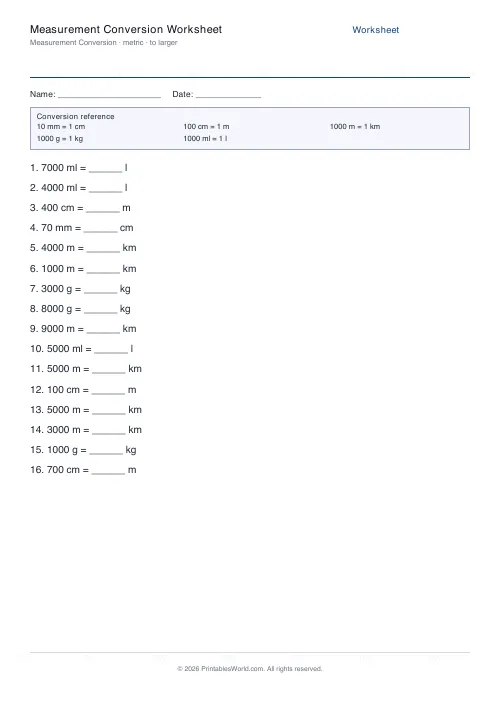
Unit-conversion worksheets across metric units, imperial ones, and time. Each problem prints as a fill-in equation like 3 ft = ______ in. Choose a unit family and a direction, four to forty problems, an optional reference card at the top of the page holding the factors, and an answer key. Every value comes out whole.
People also used
Measurement Worksheets
Convert length, mass, and volume units. Mm ↔ cm ↔ m, g ↔ kg, ml ↔ l.
Perimeter and Area Worksheets
Generate perimeter and area worksheets for rectangles, squares, triangles, and compound shapes.
Time Calculations Worksheets
Print elapsed-time, duration arithmetic, and analog-clock worksheets with 12- or 24-hour formats.
Feedback
Spotted something off with this tool?
Fill-in-the-blank equations, with clean answers
Each problem is one line: 3 ft = ______ in. Choose which family of units it draws from and which way the conversion runs.
The generator picks clean multiples so every answer is a whole number. That is a deliberate constraint rather than a limitation, because a conversion sheet is testing whether the pupil multiplies or divides, and a decimal answer adds a second failure point that tells you nothing about the skill being assessed.
Direction is the actual difficulty
Large to small, small to large, or mixed.
Almost every error on this topic is a direction error. A pupil who knows there are 100 centimetres in a metre will still divide when they should multiply, because they memorised the number and not what to do with it. Running a sheet in one direction only lets them settle into a rhythm and hides the problem; the mixed sheet is where it surfaces.
Teach one direction until it is automatic, then the other, then mix. The mixed sheet is the assessment, not the practice.
Three families, and why imperial is harder
Metric runs on tens: 10 mm to a centimetre, 100 cm to a metre, 1000 m to a kilometre, 1000 g to a kilogram, 1000 ml to a litre. Once a child spots that everything is a power of ten, the arithmetic collapses into moving a decimal point.
Imperial offers no such help. Twelve inches to a foot, three feet to a yard, sixteen ounces to a pound, eight pints to a gallon. Each factor has to be learned on its own, and the multiplication is genuinely harder because none of it is a round number.
Time is the sneaky one: sixty seconds, sixty minutes, twenty-four hours, seven days. Children assume it behaves like metric and it does not, and the sixty-to-sixty-to-twenty-four sequence catches out a lot of them.
Mixed pulls from all three, which is the version to save for revision.
The reference card
On by default, printed at the top of the page with the factors on it.
Leave it on while the skill is new. The task then is applying a factor, not recalling one, and those are two separate things that get muddled if you test both at once. Turn it off once the direction is reliable, and the same sheet becomes a recall test without you changing anything else.
It is also the honest option for imperial work, where nobody sensibly expects a Year 4 to have sixteen ounces to a pound committed to memory.
Where it turns up beyond maths
Science practicals, constantly. A pupil measuring in millilitres and reporting in litres is doing this exact conversion under time pressure, and getting it wrong there costs an experiment rather than a mark.
Cooking is the other one, and it is the version children volunteer for. Doubling a recipe that lists grams and millilitres is unit conversion with a cake at the end of it.
FAQs
Quick answers
Which units are covered?
Metric (mm, cm, m, km, g, kg, ml, l), imperial / US customary (in, ft, yd, oz, lb, pt, gal) and time (sec, min, hr, day, week). The Mixed group picks problems from all three families.
What is the conversion reference card?
An optional box at the top of the worksheet listing the conversion factors for the chosen unit group, so learners can look up the factor while they practise. Turn it off to make the sheet a closed-book test.
Are the answers always whole numbers?
Yes. The generator picks clean multiples so every converted value comes out as a whole number, keeping the worksheet tidy and easy to mark.
Do I get an answer key?
Yes. Include answer key is on by default and appends a matching answers page.
Related tools
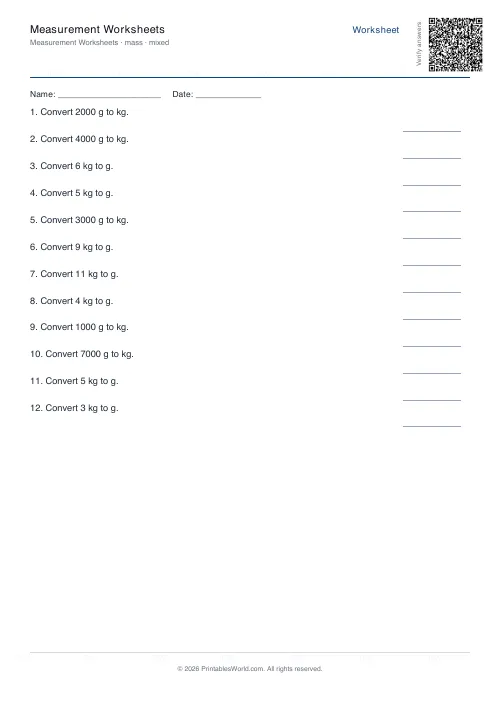
Measurement Worksheets
Convert length, mass, and volume units. Mm ↔ cm ↔ m, g ↔ kg, ml ↔ l.
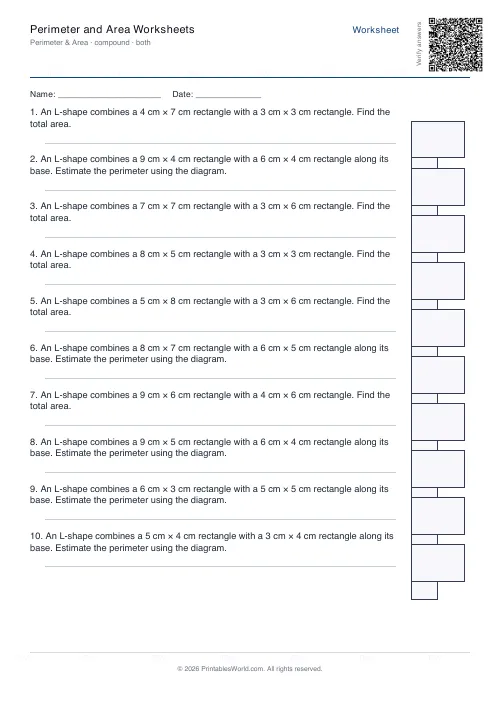
Perimeter and Area Worksheets
Generate perimeter and area worksheets for rectangles, squares, triangles, and compound shapes.
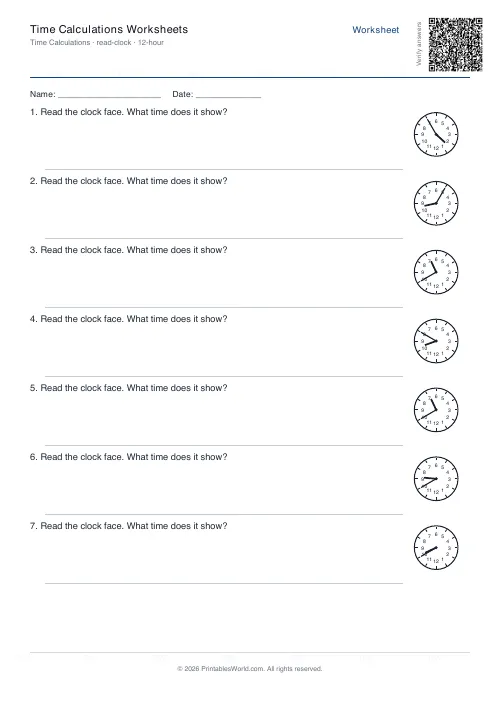
Time Calculations Worksheets
Print elapsed-time, duration arithmetic, and analog-clock worksheets with 12- or 24-hour formats.
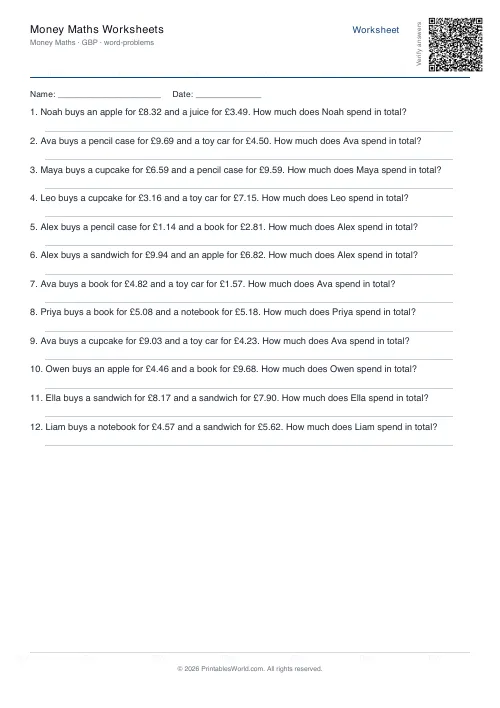
Money Maths Worksheets
Print money maths worksheets with coin addition, making change, and word problems in £, $, or €.
Further reading
Math & Numeracy
How to help a child who's stuck on times tables
A simple two week plan to help child with times tables, using short daily practice and free printable multiplication grids you can customise and print.
7 min read
Math Worksheets
How many maths worksheets per day? A parent's guide
The honest answer is less than most parents assume. And the number of questions matters less than whether the session ends well.
5 min read
More like this
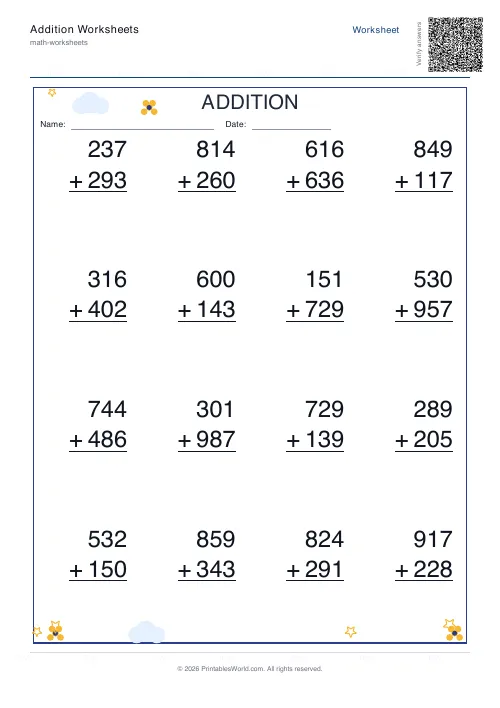 Addition Worksheets Generator
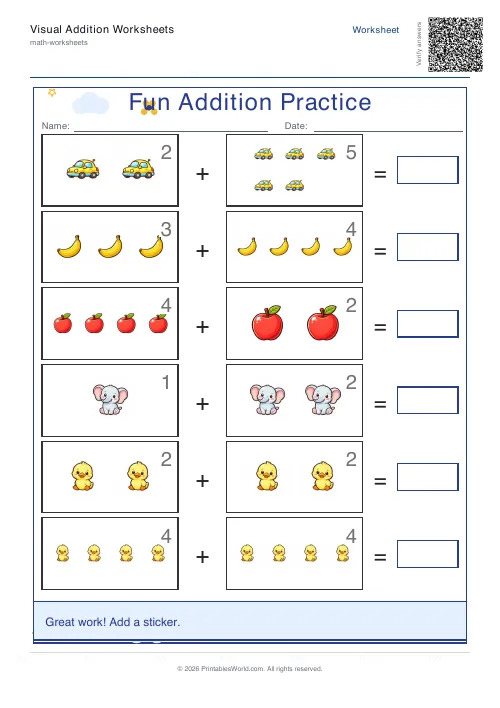 Visual Addition Worksheets Generator
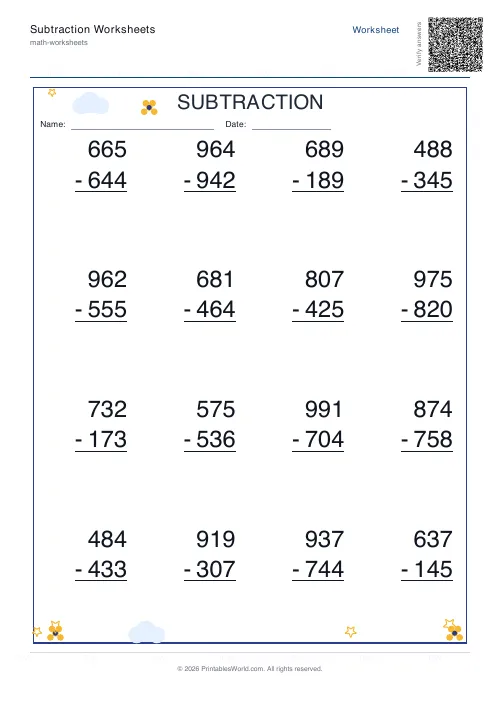 Subtraction Worksheets Generator
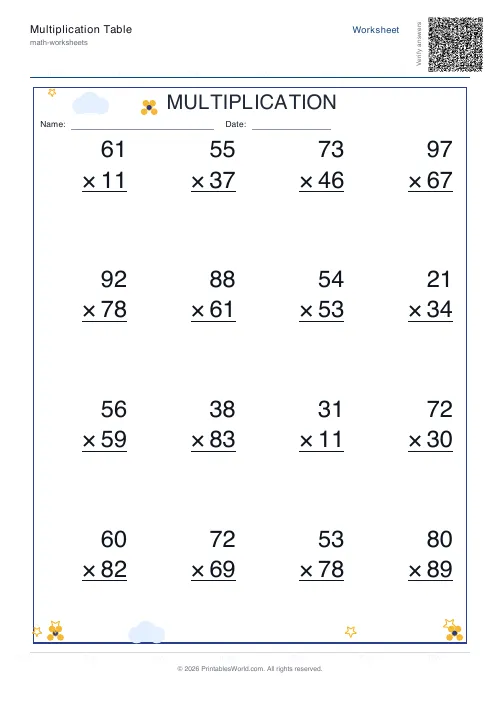 Multiplication Table Generator
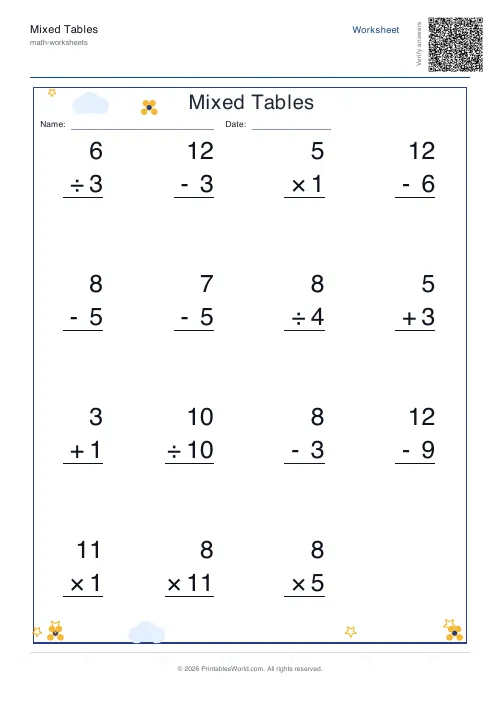 Mixed Tables Generator
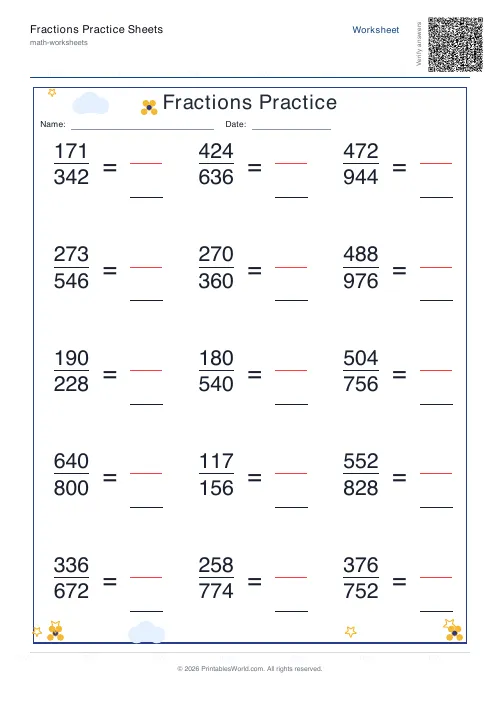 Fractions Practice Sheets Generator
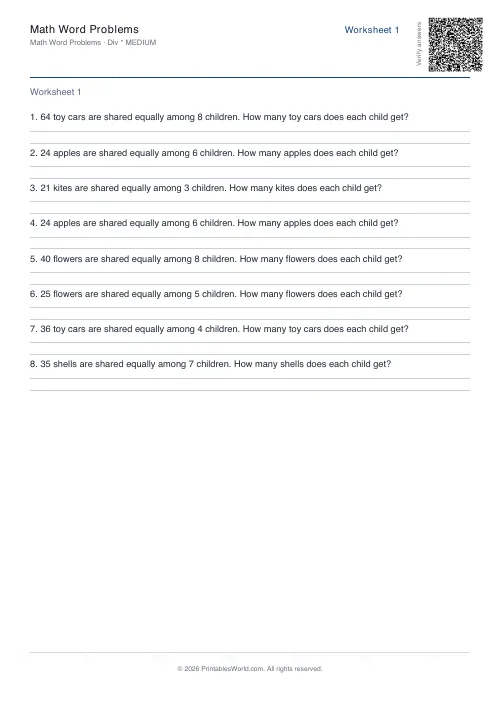 Math Word Problems Generator
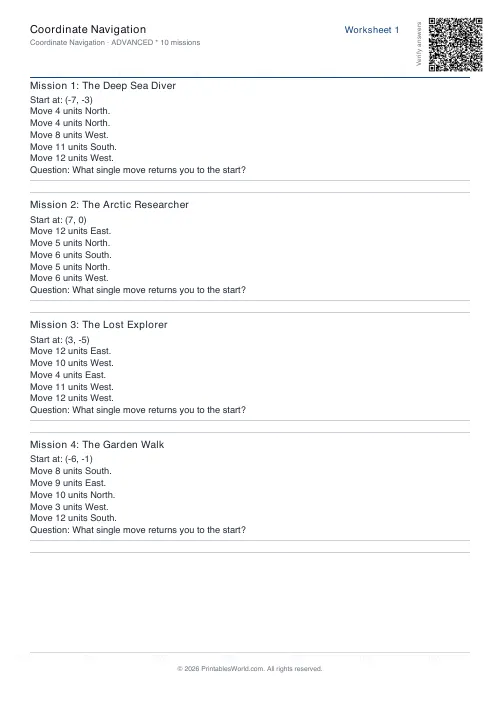 Coordinate Navigation Generator
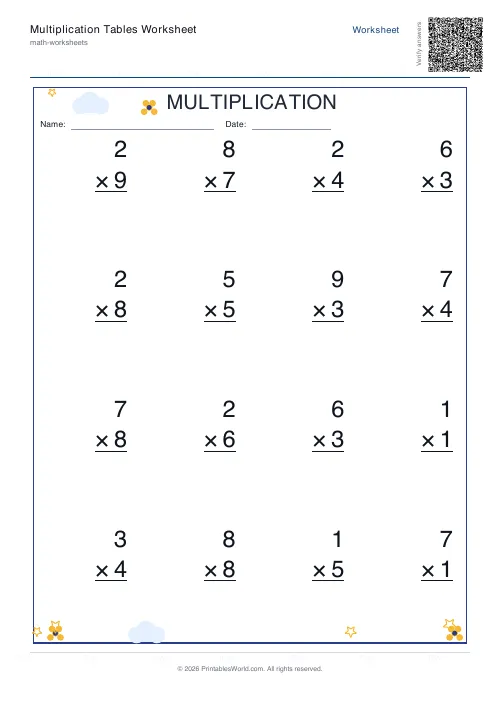 Multiplication Tables Worksheet
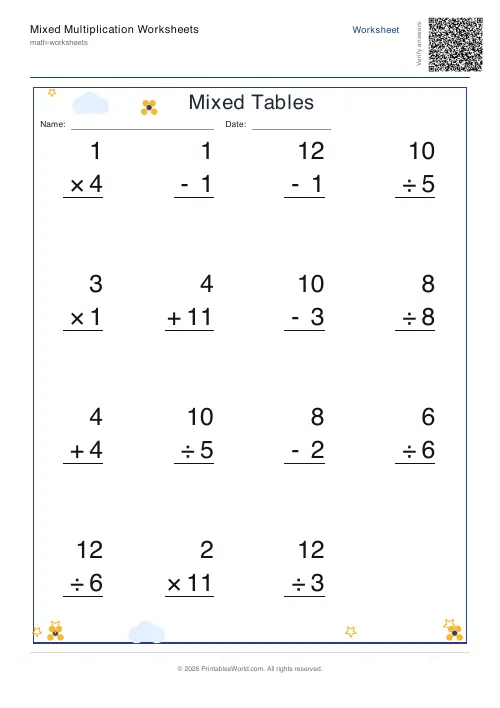 Mixed Multiplication Worksheets
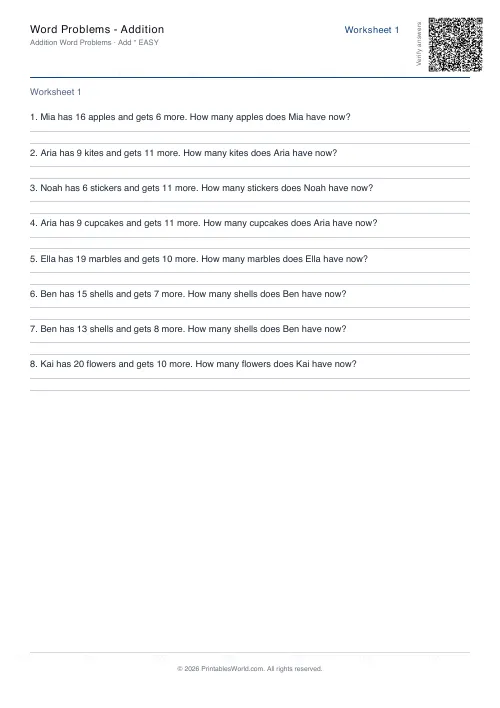 Word Problems: Addition
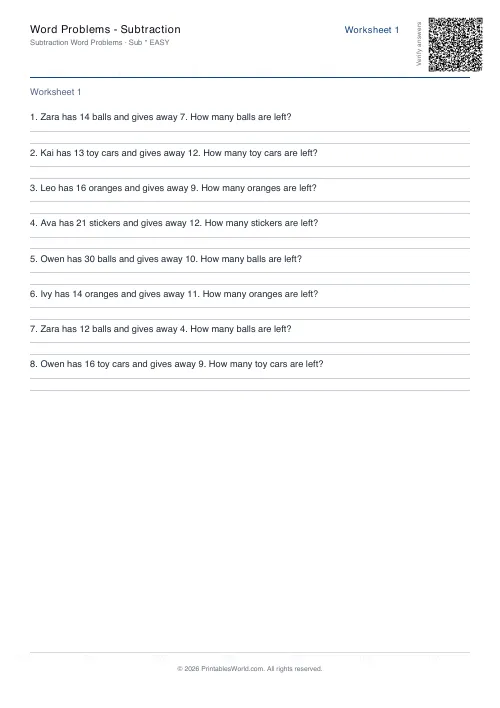 Word Problems: Subtraction
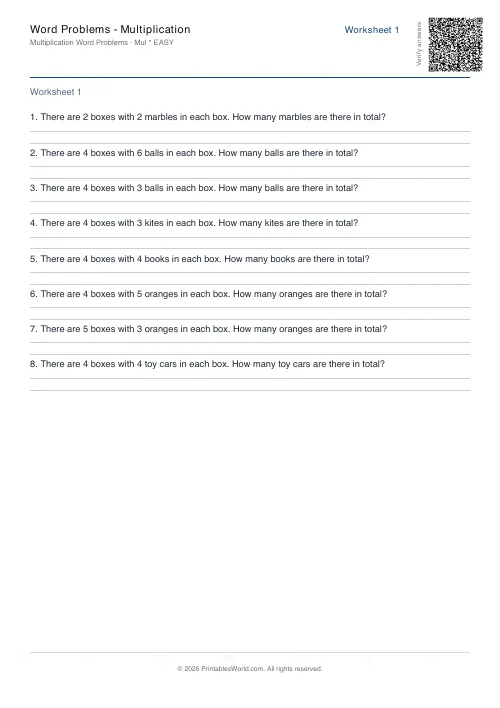 Word Problems: Multiplication
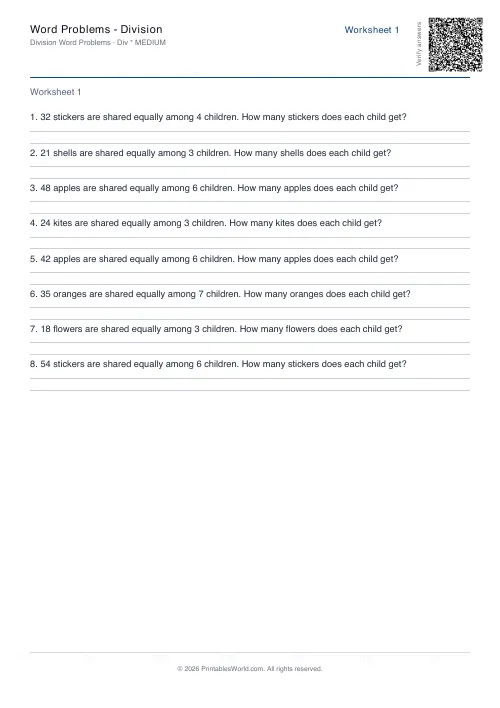 Word Problems: Division