What this tool does
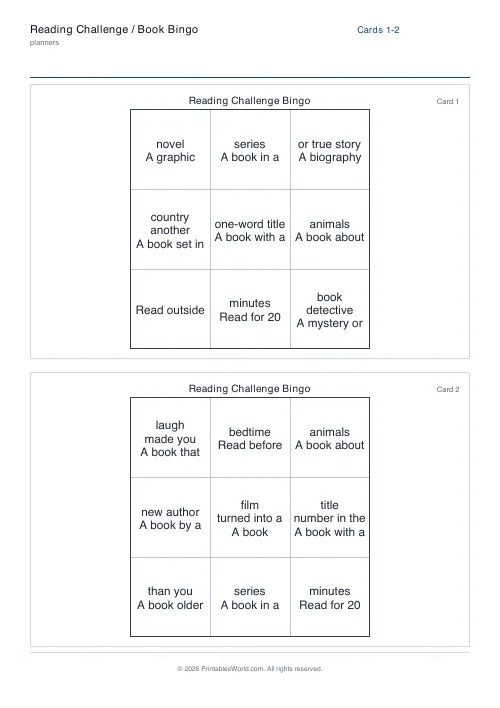
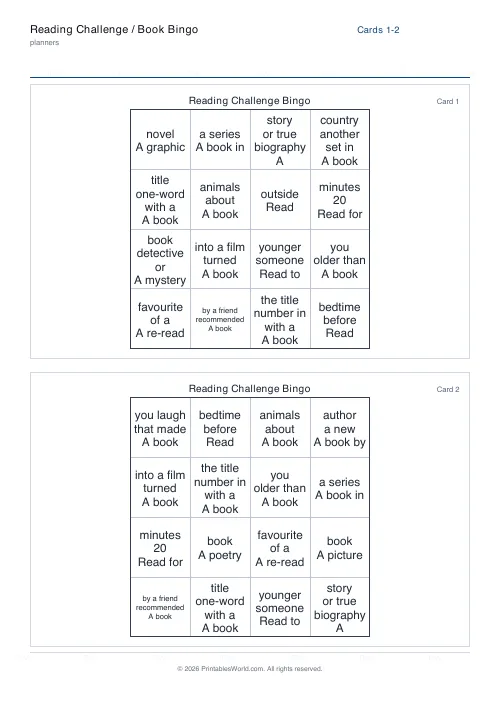
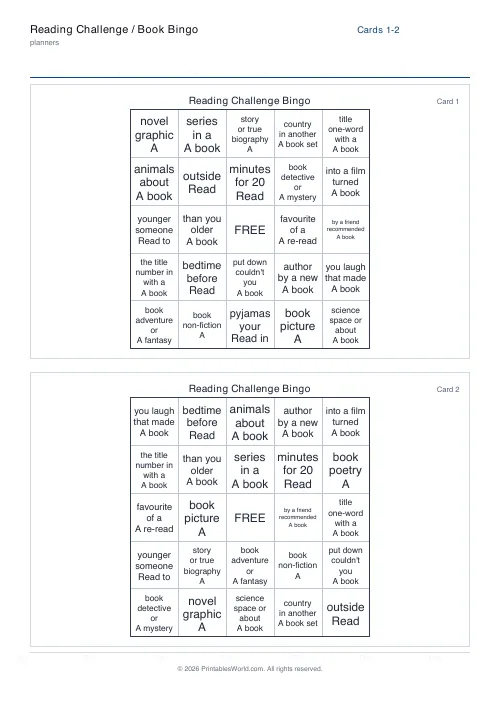
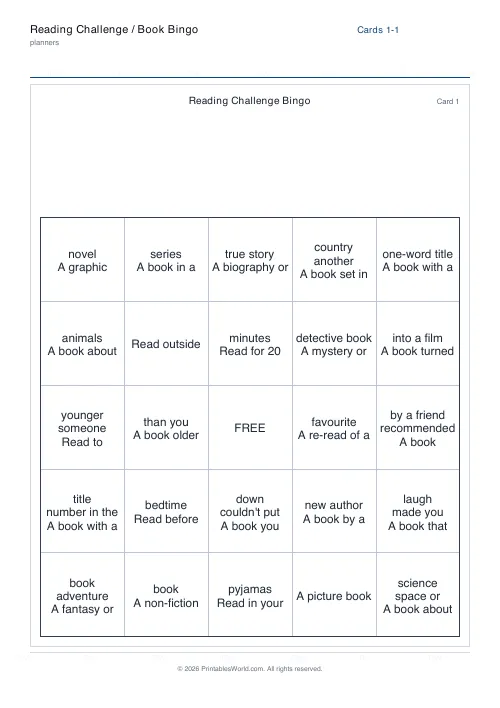
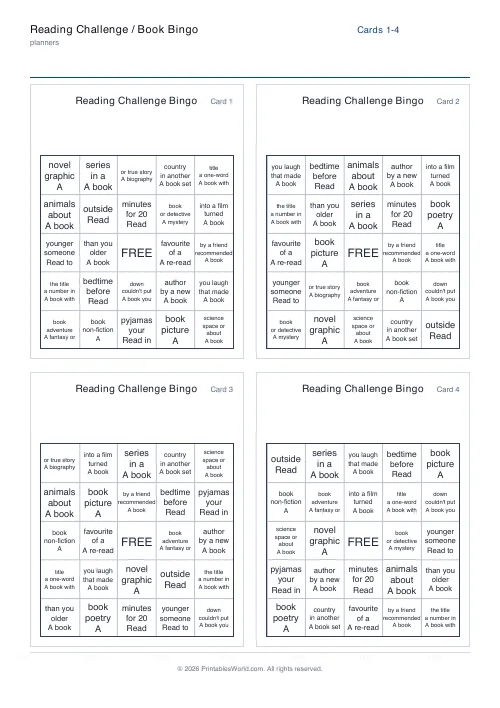
A 5×5 reading bingo card built from 25 challenges — a graphic novel, a book set abroad, read outside — with a free centre square. Every card is shuffled differently.
People also used
Reading Log Template
Printable reading log. Track titles, authors, dates, ratings, and reviews.
Annual Book Tracker
Print a single-page annual reading log with twelve months and space for every book you finish.
Reward Chart for Kids
Printable weekly reward chart with named rows and tick boxes for each day.
Feedback
Spotted something off with this tool?
Twenty-five challenges, shuffled
The card comes loaded with twenty-five reading prompts: a book by a new author, a non-fiction book, a graphic novel, twenty minutes of reading, a book set in another country, a poetry book, one that made you laugh, one a friend recommended, reading outside, a mystery, something from a series.
Every card is shuffled from that list, so a class of thirty gets thirty different arrangements. The centre square is free by default, and ten cards print two to a page.
Why bingo rather than a reading log
Because a log counts books and a bingo card changes which books get picked up.
Children left to themselves read the same kind of thing repeatedly, usually a series, and there is nothing wrong with that except that it is narrow. A square saying "a poetry book" is a nudge with a game attached — and a child who wants the line completed will read the poetry book, which they would not have done if simply told to.
Replace the squares
The list is fully editable and the defaults are a starting point rather than a curriculum.
Write squares for your own shelf, your own class, your own summer. "A book from the library's second floor." "Something Mum read as a child." "A book with a map in the front." Local and specific beats generic every time, because a child recognises that somebody wrote it for them.
Keep at least a third of the squares easy. A card where every square is a stretch gets abandoned in week two.
The free centre
It is not laziness — it makes four of the twelve possible lines reachable with four squares rather than five, which matters at the start when nothing is filled in.
Turn it off for older readers or for a longer challenge, where the extra square is the point.
Ways to run it
A line for a small prize, the full card for a bigger one. That is the usual shape and it works from about age six upwards.
Summer reading challenges are the obvious use, since the six-week gap is where reading progress is lost. Also form-time competitions, book clubs, holiday clubs, and families who want the summer to contain something other than a screen. Two cards to a page means one A4 sheet covers a pair of siblings.
Print a call sheet
The generator can produce one, which is useful if you are running it as an actual game rather than a challenge — and card numbers can be printed so thirty cards do not become anonymous by Wednesday.
Related: the reading log for recording what was read, and the bingo card generator for any other word list.
FAQs
Quick answers
What is reading challenge bingo?
It is a bingo card where every square is a reading goal, like "a non-fiction book" or "read for 20 minutes", instead of a number. Players cross off a square each time they complete that kind of reading and aim for a line or a full board.
How many prompts do I need?
At least as many as there are squares: 9 for a 3×3 card, 16 for 4×4, and 24 for a 5×5 with a FREE centre (25 without). Adding extra prompts makes each card a different mix.
Are the cards unique for a class set?
Yes. Each card uses a different shuffle of your prompt list, so every pupil's board looks different even though they share the same reading goals.
Can I reprint the exact same set later?
Yes. Enter a seed and keep the same prompt list, and the tool will regenerate an identical set of cards.
Related tools
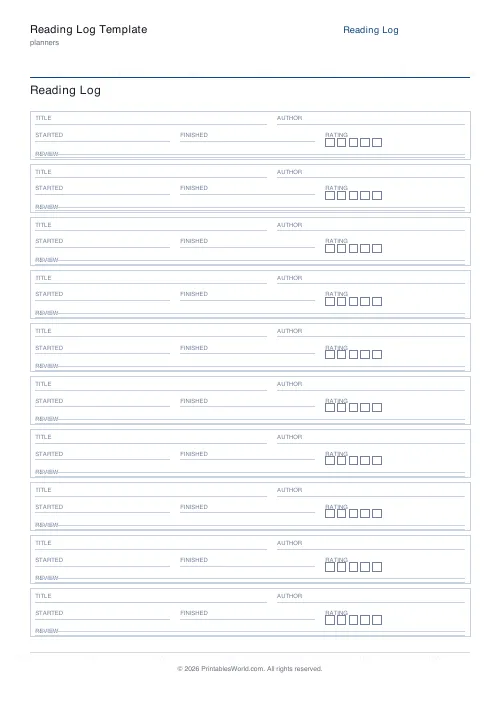
Reading Log Template
Printable reading log. Track titles, authors, dates, ratings, and reviews.
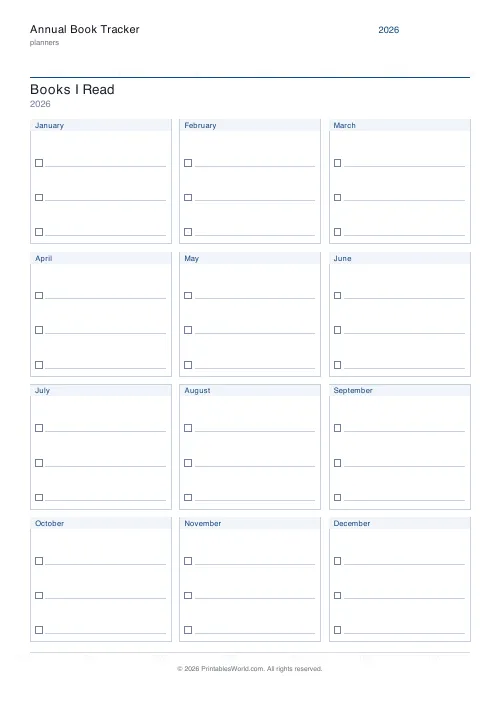
Annual Book Tracker
Print a single-page annual reading log with twelve months and space for every book you finish.
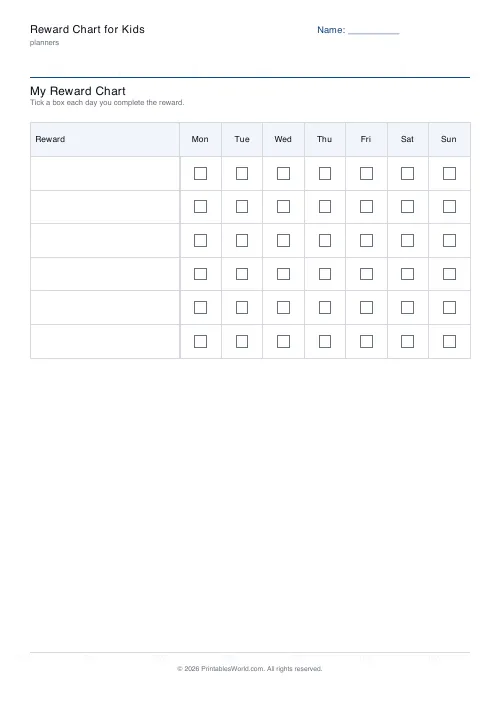
Reward Chart for Kids
Printable weekly reward chart with named rows and tick boxes for each day.
Further reading
Planners
Study planning for exams: a student's complete guide
A revision timetable is only as good as what goes in the slots. Here is how to build one backwards from the exam date, and which study methods the evidence actually supports.
5 min read
Planners
How to pay off debt faster with a payoff tracker
One method costs less; the other is easier to stick to. Here is how to choose between them honestly, and why a visual tracker changes the odds either way.
5 min read
Planners
Chore charts that motivate kids (without nagging)
Most chore charts fail for the same three reasons. Here is what to put on one by age, whether to attach money, and how to stop being the person who remembers everything.
5 min read