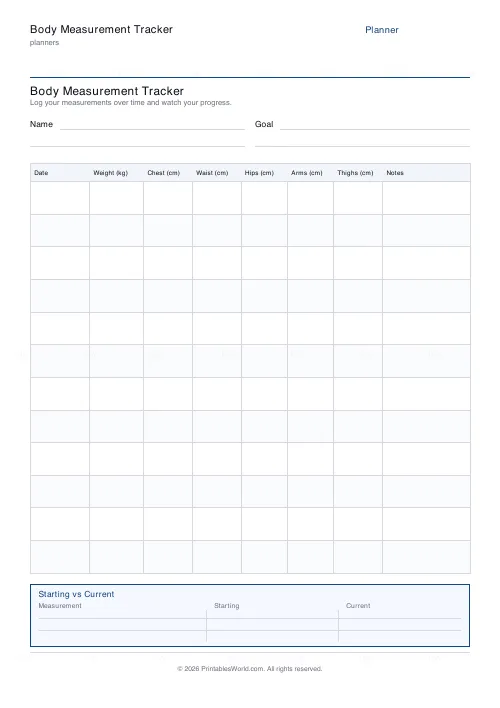
What this tool does
A measurement log: date, weight, chest, waist, hips, arms, thighs, notes, in centimetres or inches. 8 to 20 rows.
People also used
Feedback
Spotted something off with this tool?
Eight columns
Date and weight. Then chest, waist, hips, arms, thighs, and a notes column at the end. Eight to twenty rows.
Choose centimetres, which puts weight in kilograms, or inches, which puts it in pounds. The column headers change with the choice so nothing has to be converted mentally.
Why the tape measure beats the scales
Weight is a single number that conflates several things, and it moves for reasons that have nothing to do with progress.
Water and salt shift it. So does sleep, so do hormones, so does whatever is currently in your digestive system — a couple of kilograms inside a week, easily. Muscle is also denser than fat, so somebody training seriously can get visibly leaner while the scales do nothing at all — a genuinely common and thoroughly demoralising experience for anyone watching only that one number.
Measurements do not have that problem. A waist that has lost four centimetres has lost four centimetres.
Measure the same way every time
Consistency matters more than technique. Inconsistency is where most of the apparent noise comes from.
Same time of day, first thing in the morning is best. Same points on the body — waist at the narrowest part or at the navel, but always the same one. Tape snug and level, not pulled tight. Relaxed, not holding your stomach in or flexing.
Write the exact spot in the notes column on the first row. In six weeks you will not remember which rib you measured from.
Fortnightly, not daily
Measurements move slowly and daily readings are almost entirely noise, which is discouraging for no reason at all.
Every two weeks is frequent enough to see a trend and infrequent enough that the trend is real. Monthly is fine too. Compare across three or four entries rather than against the last one.
The notes column
Training changes, illness, a holiday, a new medication, a week of poor sleep. These explain the entries that otherwise look inexplicable, and without them a flat fortnight reads as failure rather than as the week you had flu.
A word on what this is for
It is a record, not a verdict. Numbers on a page describe a body; they do not evaluate it, and a measurement that has not moved is information rather than a judgement.
If tracking measurements is something that has been difficult for you in the past, or becomes preoccupying, it is entirely reasonable not to keep one — and worth talking to your GP about.
FAQs
Quick answers
How many rows can I track on one sheet?
Between 8 and 20 rows per page. The default is 12, which suits a full year of monthly check-ins or a three-month block of weekly ones.
Can I use inches instead of centimetres?
Yes. Switch units to inches and the column headers show inches for measurements and pounds for weight; the default is centimetres and kilograms.
Which measurements does it track?
Date, weight, chest, waist, hips, arms and thighs, plus a Notes column for context like training block, sleep or how you felt.
Is this a fillable PDF?
No. It prints as a clean worksheet you fill in by hand. That keeps it universal, works offline, and needs no PDF editor or app.
How often should I take my measurements?
Weekly or monthly is ideal. Daily measuring picks up too much natural fluctuation to show a clear trend, so a steady cadence works best.
What is the starting-vs-current box for?
It is a small summary to record your baseline numbers beside your latest ones, so your total progress is visible at a glance without scanning every row.
Should I measure at a particular time of day?
First thing in the morning, before eating or drinking, is the most consistent. Measuring at the same time each check-in keeps your data comparable.
Related tools
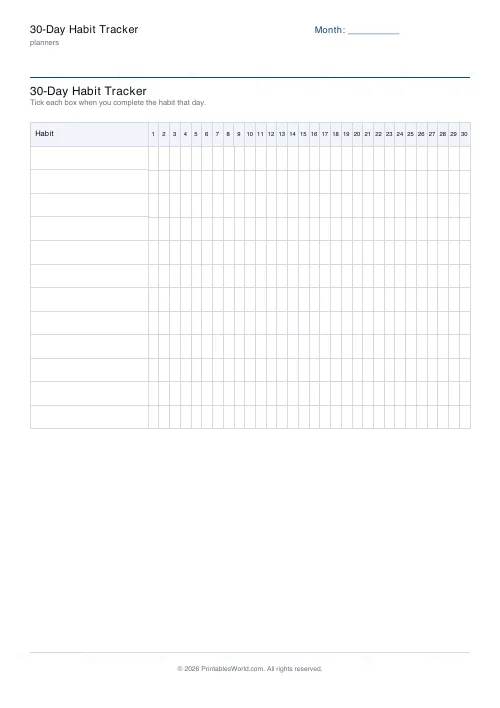
30-Day Habit Tracker
A printable 30-day habit grid to tick off every morning. One row per habit.
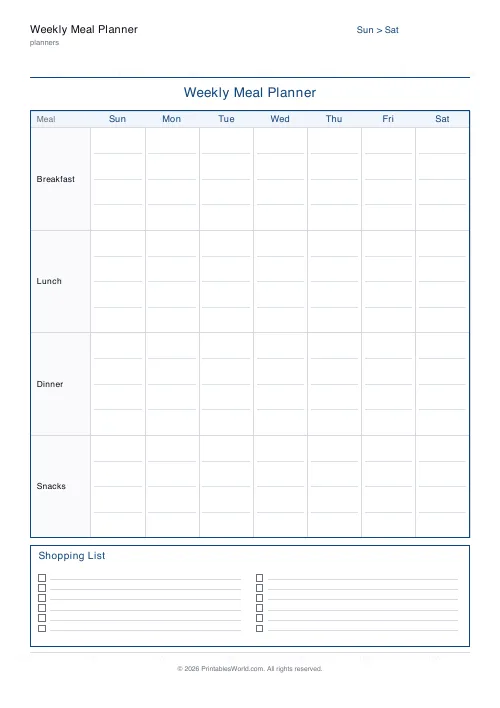
Weekly Meal Planner
Plan seven days of breakfast, lunch and dinner on one printable page.
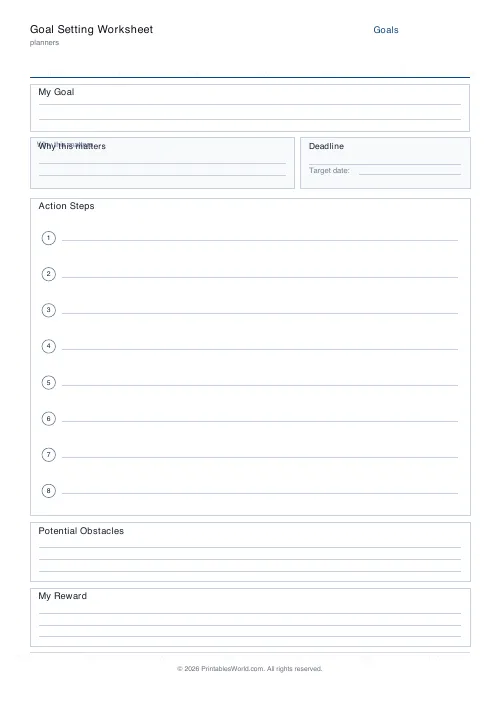
Goal Setting Worksheet
One-page goal worksheet: goal, why, deadline, steps, obstacles, and rewards.
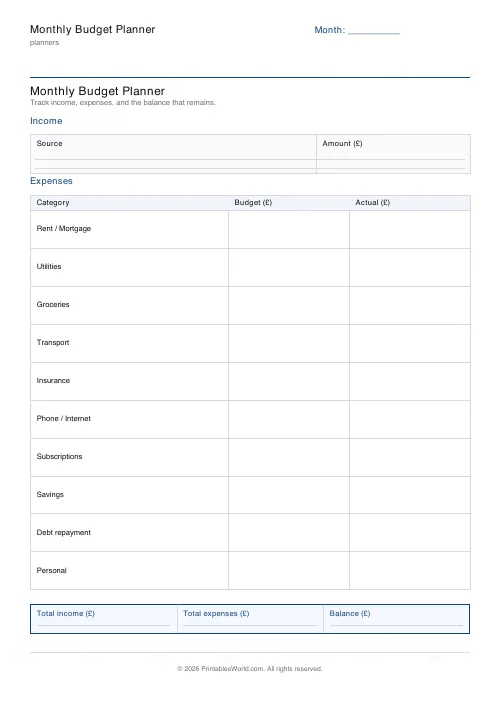
Monthly Budget Planner
One-page printable budget: income, categorised expenses, balance summary.
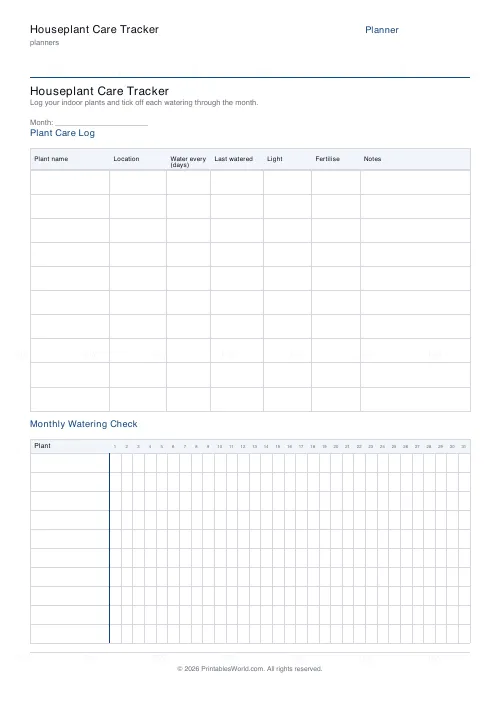
Houseplant Care Tracker
One-page printable plant care log: watering intervals, light, fertilise, and a monthly watering grid.
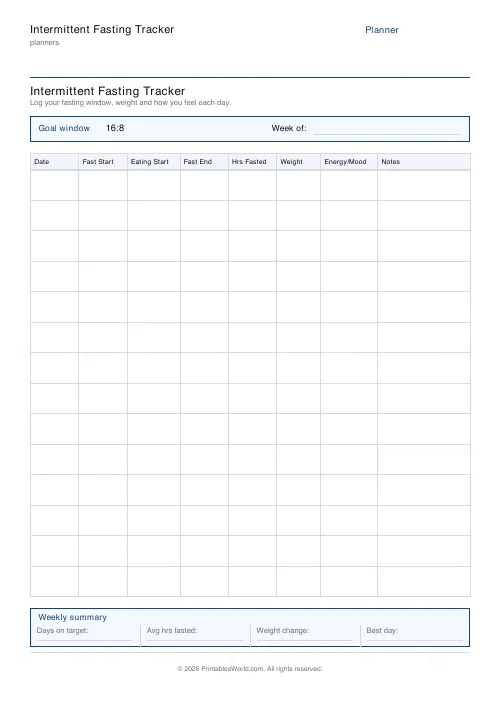
Intermittent Fasting Tracker
One-page printable IF log: fasting window, weight, energy and notes with a weekly summary.
Further reading
Planners
How to pay off debt faster with a payoff tracker
One method costs less; the other is easier to stick to. Here is how to choose between them honestly, and why a visual tracker changes the odds either way.
5 min read
Planners
Time blocking for beginners: a complete guide
Time blocking is deciding when each task happens, not just what. Here is how to size blocks realistically, what to do when the day breaks, and why most beginners over-schedule.
5 min read
Planners
Study planning for exams: a student's complete guide
A revision timetable is only as good as what goes in the slots. Here is how to build one backwards from the exam date, and which study methods the evidence actually supports.
5 min read