What this tool does
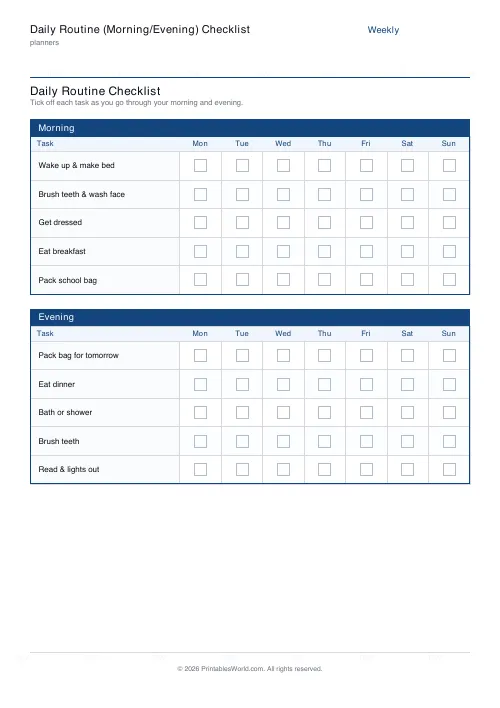
A two-column routine sheet — morning on one side, evening on the other — with your own task list in each. Both the column headings and the tasks are editable.
People also used
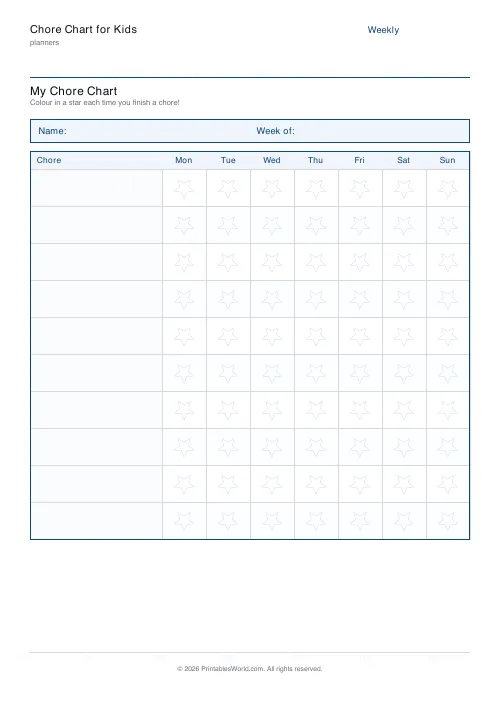
Chore Chart for Kids
Printable weekly chore chart for children. Rows of chores × 7 days of star boxes.
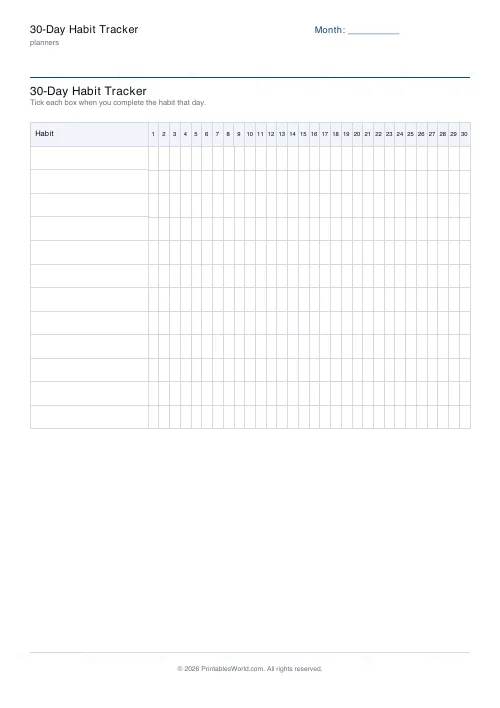
30-Day Habit Tracker
A printable 30-day habit grid to tick off every morning. One row per habit.
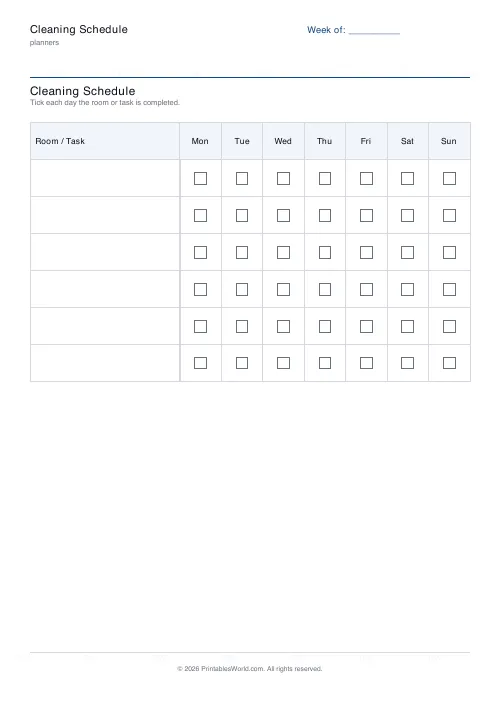
Cleaning Schedule
Print a weekly cleaning schedule grid with custom rooms and tasks across Monday to Sunday.
Feedback
Spotted something off with this tool?
Two columns
A morning list and an evening list, side by side. Headings and tasks are both yours to change. The defaults are a starting point, not a prescription.
Out of the box the morning runs: wake and make the bed, brush teeth and wash, get dressed, eat breakfast, pack the bag. The evening: tidy and pack for tomorrow, then dinner, a bath or a shower, teeth, reading, lights out.
Why the two ends of the day
Because those two stretches either run themselves or go wrong entirely. There is very little in between.
A morning that works is a morning nobody thinks about. A morning that does not work costs twenty minutes, some shouting, and a day that starts badly for everyone in the house. The same is true in reverse at bedtime, and both are almost entirely a matter of sequence rather than effort.
The evening list is doing the morning's work
The part people miss. Half of a good morning happens the night before it.
Bag packed, clothes out, lunch made, keys where they live. Every one of those moved from a rushed morning into a calm evening is a decision removed from the hardest ten minutes of the day, and it costs nothing extra — the same task, done at a better time.
Keep the steps small
"Get ready" is not a step. It is four or five, and a child hearing it as one instruction cannot begin.
Break it down further than feels necessary: dressed, teeth, shoes, bag, coat. Each has to be a thing that can be finished, because finishing is what makes it tickable and ticking is the mechanism.
Not only for children
It works for anyone whose mornings are chaotic, which is a large number of adults, and it works particularly well for anyone who finds sequencing difficult — the list carries the order so working memory does not have to.
It also works for a household, with one column per person, or as a shared list for two adults dividing the same set of jobs.
Stick it up and expect to redraw it
At eye height, wherever the routine happens. Expect the first version to be wrong: one task nobody does, one missing, one in the wrong order.
Reprint it after a fortnight. A checklist that matches the actual routine gets used; one that describes an idealised routine gets ignored within a week.
Related: the kids' routine chart adds seven days of sticker circles to the same idea.
FAQs
Quick answers
Is this a fillable PDF or a printable template?
It is a printable template. You tick the boxes by hand. Print a fresh copy whenever you start a new week.
How many tasks can I add to each routine?
Up to eight tasks in the morning and eight in the evening. Five or six per section usually works best so the boxes stay big enough to tick comfortably.
Can I use it for an adult routine, not just kids?
Yes. Load the Adult preset for a grown-up morning launch and evening wind-down, or type completely custom tasks for either section.
Can I rename the Morning and Evening sections?
Yes. Change the section labels to anything you like. AM / PM, Before School / Before Bed, or a person's name.
Related tools
Chore Chart for Kids
Printable weekly chore chart for children. Rows of chores × 7 days of star boxes.
30-Day Habit Tracker
A printable 30-day habit grid to tick off every morning. One row per habit.
Cleaning Schedule
Print a weekly cleaning schedule grid with custom rooms and tasks across Monday to Sunday.
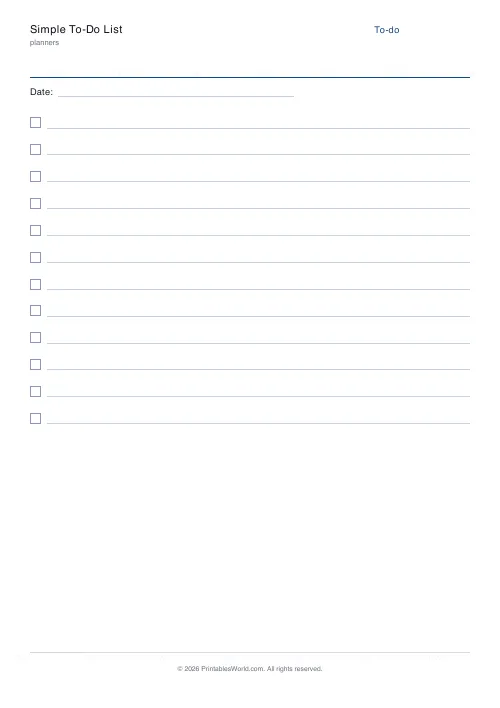
Simple To-Do List
Minimal printable to-do list with tick boxes and a configurable item count.
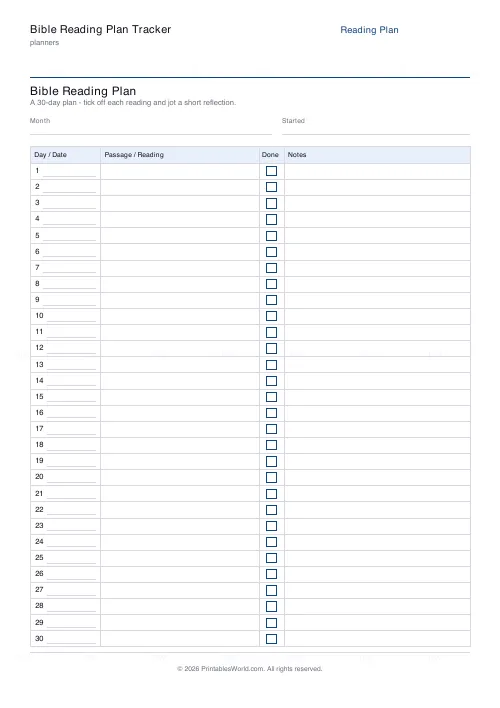
Bible Reading Plan Tracker
Printable daily Bible reading tracker: day, passage, tick box and notes.
Further reading
Planners
How to track habits that actually change your life
Habit tracking works because it makes an invisible process visible. It fails when you track too many things, or when protecting the streak becomes more important than the habit.
5 min read
Planners
Baby's first year: tracking sleep, feeds and milestones
Tracking helps most in the early weeks and can become a burden after them. Here is what is genuinely worth logging, why, and when to stop.
5 min read
Planners
How to build a daily routine that actually sticks
Most routines fail in week two, when motivation runs out and nothing has replaced it. The fix is structural: fewer items, fixed anchors, and a plan for the day you miss.
6 min read